Friday, December 26, 2025
Home Blog Page 1098

Haniyeh: Israel will be held responsible for assassination of al-Arouri

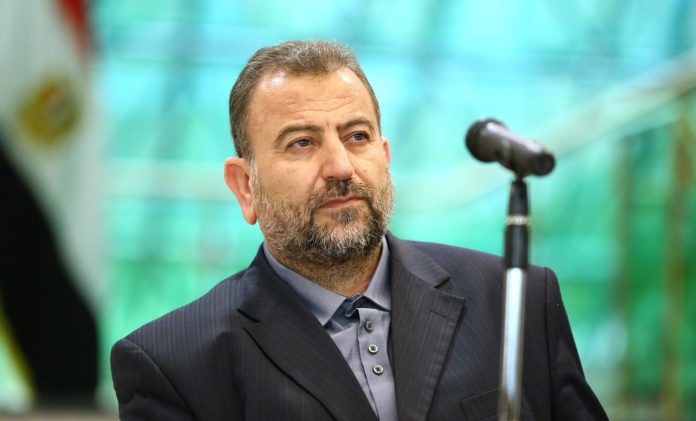
Saleh al-Arouri

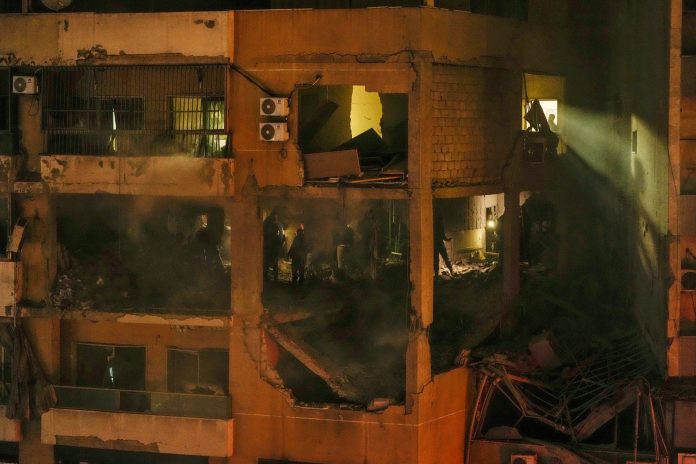
Haniyeh made the remarks on Tuesday, shortly after an Israeli drone attack against a southern suburb of the Lebanese capital Beirut led to the martyrdom of six people, including Arouri.

“We mourn the martyrdom of the fighting leader and great national figure, Sheikh Saleh Al-Arouri, as well as Al-Qassam commanders Samir Fandi and Azzam Al-Aqra’, and a group of martyrs, following a cowardly Zionist operation in Beirut,” said Haniyeh.

“The Zionist occupation’s assassination of leader Al-Arouri and his brothers is a complete act of terrorism and a violation of Lebanon’s sovereignty, expanding the scope of its aggression on our people and our nation,” he stated.

“The Nazi-Zionist occupation bears responsibility for this aggression,” he added.

“The pure blood of the martyred leader Sheikh Saleh al-Arouri and his brothers has mingled with the blood of tens of thousands of martyrs of our people in the Gaza Strip, the West Bank, and abroad.”

The Hamas political bureau chief went on to say that “a movement that offers its leaders and founders as martyrs for the dignity of our people and nation will never be defeated.”

“These attacks only strengthen its strength, resilience, and unwavering determination. This is the history of the resistance and the movement: following the assassination of its leaders, it becomes even stronger and more determined,” he stated.

Arouri, who used to serve as the deputy head of the Political Bureau of the Gaza Strip-based Palestinian resistance movement of Hamas, was known as the “architect” of the October 7 operation by Gaza’s resistance groups, during which hundreds were taken captive.

Meanwhile, the head of the Palestinian Islamic Jihad movement also condemned the Israeli act of terrorism.

In his statement, commander Ziad al-Nakhalah said, “Sheikh Saleh al-Arouri was one of the distinguished and devoted leaders of the Palestinian people.”

“We have lost him when we needed his presence the most. He was a leader who instilled confidence and tranquility in those around him and those he dealt with,” he stated.

“We have lost him as a leader and a person who believed in the justice of the Palestinian people’s fight until martyrdom, and he achieved it in the glory of Palestine and the resistance, in its glory that is manifested today in the jihad and heroism of the Palestinian people in Gaza, the West Bank, across Palestine, and beyond. We pray to Allah to accept him graciously,” he added.
Iran’s UN Envoy: Israel fully responsible for moves against Islam Republic

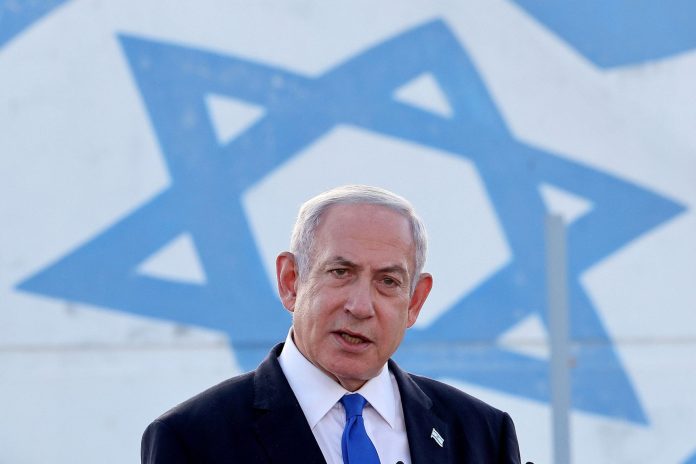
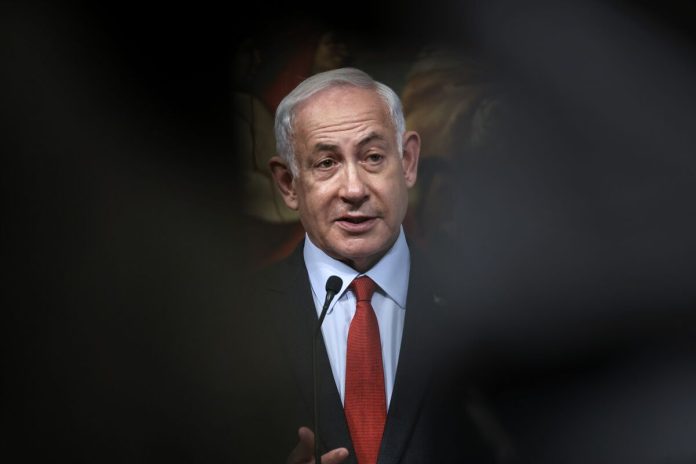
Benjamin Netanyahu

“The Israeli regime bears full responsibility for all of its wrongful international actions against Iran and should be accountable for them,” wrote Amirsaeid Irvani in a letter to the UN Secretary General and also the French ambassador to the world body, who holds the rotating presidency of the UN Security Council.

“The Islamic Republic of Iran strongly emphasizes its legitimate and inherent rights, as stipulated in international laws and the UN Charter, to firmly respond to any threat and illegal move originating from the Israeli regime,” added Iran’s ambassador.

“Iran also stresses its steely determination to exercise these rights to safeguard its security, national interests and people against any threats or attacks,” he explained.

The top diplomat touched upon Israeli Prime Minister Benjamin Netanyahu’s threat to use military force against Iran over its nuclear program.

“Such hostile comments are a blatant violation of the fundamental principles of international law and the UN Charter,” Iravani said.

Elsewhere in his remarks, Iran’s ambassador to the UN called on the world body to take prompt action to stop Israeli atrocities against Palestinians.

More than 21,000 Palestinians have so far been killed in Israeli carnage against Gaza since early October.

Only 15% of Israelis want Netanyahu to serve as PM after Gaza war: Report

Netanyahu

Despite the low number, many more still support his war on Gaza, according to the Reuters news agency, which cited a new poll by the Israel Democracy Institute (IDI).

The IDI poll found that 56 percent of those questioned said continuing the military offensive was the best way to recover Israeli captives.

Meanwhile, 24 percent thought a swap deal including the release of thousands more Palestinian prisoners from Israel’s jails would be best.

Netanyahu’s political rival and present war cabinet partner, Benny Gantz, garnered support from 23 percent of interviewees. About 30 percent named no preferred leader.

The poll was conducted among 746 respondents between December 25 and December 28, with a 95 percent confidence level, the IDI said.

Successive surveys have found his popularity has fallen sharply since October 7.

Netanyahu has recently stated that he will not resign from office after facing criticism for failing to anticipate the October 7 attacks by Hamas.

Israel has pounded the Gaza Strip from the air and ground since the Hamas’ Oct. 7 attack, killing at least 22,000 Palestinians, mostly women and children, and injuring 57,000 others, according to health authorities in the enclave.

Nearly 1,200 Israelis are believed to have been killed in the Hamas attack.

The Israeli onslaught has left Gaza in ruins, with 60% of the enclave’s infrastructure damaged or destroyed, and nearly 2 million residents displaced amid acute shortages of food, clean water and medicine.

Iran warns against new “Israel adventurism” following Hamas leader assassination in Beirut

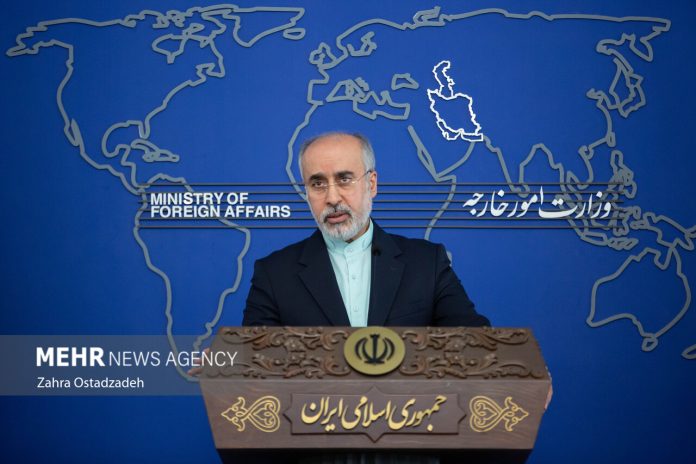
Nasser Kanaani

Nasser Kanaani strongly condemned “the despicable action of the Zionist regime” in the assassination of Sheikh Saleh al-Arouri, the vice president of Hamas along with six other members of the Palestinian movement in the Lebanese capital, Beirut.

Kanaani emphasized the responsibility of international institutions, particularly the United Nations Security Council, for an immediate and effective response to these terrorist acts, while also highlighting that “the accountability for the consequences of the new round of adventurism pursued by the Zionist regime is directed solely at this regime and its backers.”

Kanaani described the assassination of Saleh al-Arouri as a result of the Israel’s desperation and its immense, irreparable defeat in the face of the Palestinian resistance groups and people in Gaza.

He also condemned the violation of Lebanon’s sovereignty and territorial integrity by the Israeli regime.

Survivors of Hamas attack sue Israeli security forces, over 22k Palestinians killed

Israeli Settlers

Forty-two plaintiffs who attended the Supernova rave, near the besieged Gaza Strip, filed a civil suit for $56m at a Tel Aviv court against the Israeli military, police, defence ministry and the Shin Bet security service.

The festival was amongst several locations attacked by Palestinian fighters three months ago, in an assault that killed around 1,140 people, mostly civilians. Around 240 others were taken as captives to Gaza.

“Hamas murdered 364 partygoers, and kidnapped 40 to Gaza, some of whom were released, and some of whom are missing. Many were injured physically or mentally, including the plaintiffs,” the civil action read.

“A single phone call by IDF officials to the commander responsible for the party to disperse it immediately in view of the expected danger would have saved lives and prevented the physical and mental injuries of hundreds of partygoers, including the plaintiffs,” the lawsuit continued.

“The negligence and the gross oversight is beyond belief.”

The suit included claims of loss of current and future earnings, pain and suffering and medical expenses.

It cited reports which claimed that senior Israeli officials expressed concern over the party, and some even opposed it being held.

“On the night between 6 October and 7 October, at least two IDF assessments were held due to unusual incidents on the Gaza Strip border, one near midnight and another assessment close to 3am, several hours before the Hamas attack,” the lawsuit noted.

It added that plaintiffs were shocked that despite fears amongst security officials that Palestinian fighters could carry out an attack, there was no order to disperse the event.

In addition, the lawsuit added that the Israeli military’s security for the event was inadequate, due to the Simchat Torah religious holiday. Only 27 police officers were stationed at the party, it said.

“The event was held a small distance from the Strip’s border. The noise from the party was heard by Gazan residents and revellers were an easy target for the terror attack,” stated attorney Shimon Buchbut, a retired air force commander citied in the lawsuit.

Last month, the New York Times reported that Israeli officials obtained Hamas’s battle plan for the 7 October attack more than a year before it happened, but dismissed it as too ambitious.

Officials had acquired a 40-page document that Israel named “Jericho Wall”, which laid out the attack plans in precise detail.

The plan did not set a date for the attack, but did include “details about the location and size of Israeli military forces, communication hubs and other sensitive information”.

It detailed the use of rocket attacks to distract Israeli soldiers, drones to disable security measures, and overrunning the Israeli military base in Re’im kibbutz, near where the rave took place.

The report stated that an intelligence analyst in Israel’s Unit 8200 warned in July that Hamas had carried out a day-long training exercise similar to the plans outlined in Jericho Wall.

The analyst said it included a dry run of shooting down an Israeli aircraft and taking over a kibbutz and a military training base, and killing all its cadets.

A military official in Israel’s division responsible for containing threats from Gaza reportedly applauded the analysis but called it a “totally imaginative” scenario.

Nearly 22,000 Palestinians in Gaza – mostly women and children – have been killed by Israeli bombardment since the war began nearly three months ago.پ

Hamas says it carried out the attack in response to Israeli settlers’ violence and the repeated desecration of the al-Aqsa Mosque.

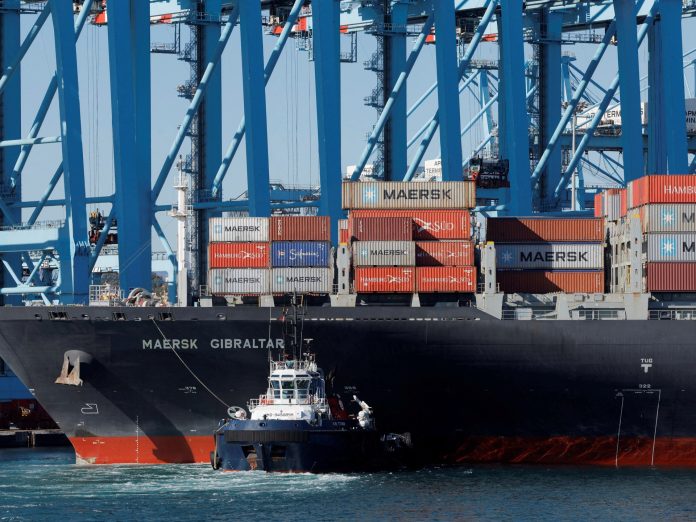
Container shipping companies’ stocks soar amid Houthi strikes off Red Sea

Shipping firms Red Sea passage

Yemen’s Houthis have continued to impact vital trade routes in the Red Sea, forcing shipping companies to re-route.

The attacks have affected a route vital to East-West trade, especially of oil, as ships access the Suez Canal via the Red Sea, according to Reuters. In response, some shipping companies have instructed vessels to instead sail around southern Africa, a slower and therefore more expensive route.

Israeli container shipping company Zim’s share price was up 13.37 percent on Tuesday, while Maersk, the Danish shipping giant operating more than 700 vessels, was up 6.38 percent.

Container shipping companies rallied despite the general stock market slumping, with the S&P 500 down .57 percent.

The Red Sea sits between the Bab al-Mandab Strait in the south and the Suez Canal in the north. It accounts for 12 percent of global trade, including 30 percent of all container ship traffic.

Vessels that avoid the waterway and ply trade between the east and west have to take the more circuitous route around the Cape of Good Hope in Africa.

On Sunday, the US directly engaged with the Houthis for the first time in the Red Sea, killing 10 Houthi fighters as they attacked a Maersk vessel.

In another escalation, Iran announced Monday it dispatched a naval frigate to the Red Sea.

The geopolitical chaos is proving to be a windfall for container ship companies, which can charge higher freight rates because they have to take longer journeys around the Cape of Good Hope in Africa.

Yemenis have declared their open support for Palestine’s struggle against the Israeli occupation since the regime launched a devastating war on Gaza on October 7 after the territory’s Palestinian resistance movements carried out a surprise retaliatory attack, dubbed Operation Al-Aqsa Storm, against the occupying entity.

The relentless Israeli military campaign against Gaza has killed nearly 22,000 people, most of them women and children. Another 57,000 individuals have been wounded.

Yemeni forces have also launched missile and drone attacks on targets in the Israeli-occupied territories after the regime’s aggression on Gaza.

Iran launches 1st cryogenic loading arm, highlights petrochemical industry’s path to self-sufficiency

Petrochemi

Shahmirzaei highlighted the achievement, breaking the Western monopoly on cryogenic arms.

He emphasized Iran’s petrochemical industry standing on the cusp of self-sufficiency in technology, equipment production, and goods manufacture.

Underlining the industry’s drive for autonomy, Shahmirzaei celebrated the loading of petrochemical ammonia shipment for exoort.

The strategy to enhance petrochemical product  supply is said to aim to bolster downstream industries, propelling domestic product supply by nearly 1.3 million tons.

Hamas deputy leader killed in Israeli drone attack in southern Beirut

Saleh al-Arouri

An explosion hit southern Beirut on Tuesday night, destroying several cars and killing several people, including al-Arouri.

The Palestinian Hamas Resistance movement has officially confirmed the death of al-Arouri.

Hamas media also released the names of two leaders of the group’s armed wing, the al-Qassam Brigades, killed along with al-Arouri in the Israeli raid.

Samir Findi Abu Amer and Azzam Al-Aqraa Abu Ammar were killed alongside the senior Hamas official in Beirut’s southern suburb of Dahiyeh, according to Hamas’s al-Aqsa TV channel.

Dahiyeh, where the blast took place, is a residential area but also home to many members of the Lebanese armed movement Hezbollah, which is an ally of Hamas.

Al-Arouri was a founding member of the armed wing of Hamas, the Izz ad-Din al-Qassam Brigades, which led the attacks on southern Israel on 7 October, killing at least 1,200 Israelis.

He had long been living in exile in Lebanon after spending 15 years in Israeli prison. He was born in Ramallah in the occupied West Bank in 1966. In recent weeks, the deputy chief of Hamas’s political bureau acted as a spokesperson for Hamas and its strategy in the war in Gaza.

The Israeli Army demolished al-Arouri’s house in the occupied West Bank town of Aroura in October.

Israel has previously vowed to assassinate Hamas leaders outside of the occupied Palestinian territories, including in Lebanon, Qatar and Turkey.

The US government designated him as a “global terrorist” in 2015 and put out a $5m reward for information on him.

Al-Arouri’s assassination on Tuesday is a serious escalation by Israel, both against Hamas’s leadership abroad and Hezbollah.

Israeli military spokesman Rear Admiral Daniel Hagari has said that the military is at a “very high level of readiness – in all arenas, in defense and offense”, as Israel braces for retaliation by Hezbollah.

“We are in a high state of readiness for any scenario,” Hagari stressed, without acknowledging the strike.

Lebanon’s caretaker Prime Minister Najib Mikati has condemned the “new Israeli crime”, stressing that it was aimed at bringing Beirut into a new phase of confrontation.

“It has become clear to everyone near and far that the decision to go to war is in the hands of Israel and what is needed is to deter this and stop [Israel’s] aggression,” he wrote on X.

The Lebanese government announced that it will submit a complaint to the United Nations Security Council over what it called a “blatant” Israeli strike in the capital city of Beirut.

The Palestinian Authority has also condemned an Israeli strike in Beirut that killed senior Hamas official al-Arouri.

Palestinian Prime Minister Mohammad Shtayyeh on Tuesday said the assassination of the Hamas deputy leader was a  “crime perpetrated by known criminals” and warned about the “risks and consequences that could follow”, according to a statement issued by his office.

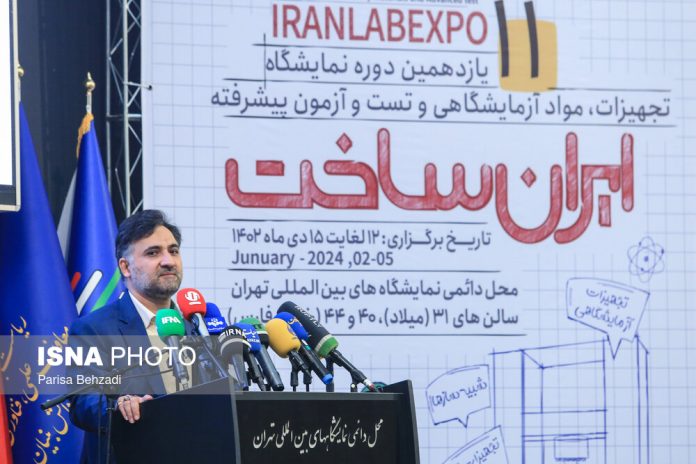
Iran-Manufactured exhibition transitions focus to industry, offers tax credit incentive

Rouhollah Dehghani Firouzabadi

Rouhollah Dehghani Firouzabadi, the Iranian Vice President for Science, Technology and Knowledge-Based Economy, emphasized the crucial need for laboratory equipment and testing machines within the industrial sector during the exhibition’s inauguration in Tehran on Tuesday.

Highlighting a strategic shift, Dehghani Firouzabadi said the exhibition will now collaborate not only with the Ministry of Science but also with key partners including the Ministries of Oil, Industry, Mine and Trade, and Agriculture Jihad.

He added that this collaboration aims to bridge the gap between academia and industry, acknowledging the shared necessity for advanced technological infrastructure.

the Iranian Vice President for Science, Technology and Knowledge-based Economy noted that one of the headline-grabbing initiatives announced at the event is the incorporation of tax credit incentives outlined in the knowledge-based production leap law. The move intends to entice and facilitate stronger connections between the industry and knowledge bases. This innovation-driven approach seeks to spur growth and innovation within Iran’s industrial landscape by fostering a conducive environment for technology integration and development.

Powerful explosions reported in several Ukrainian cities

Russia Ukraine War

The Russian Defense Ministry confirmed the strikes, saying it had used drones and long-range, high-precision weapons to target Ukrainian defense industry facilities that produce missiles, unmanned aerial vehicles and other military equipment.

The attack was also aimed at destroying storage facilities loaded with missiles and various types of ammunition, including those provided by Kiev’s Western backers, officials stated, adding that “all targets have been hit.”

Blasts were reported in several districts of Kiev by its mayor, Vitaly Klitschko, in the early hours of Tuesday morning. He said that some facilities and residential buildings had been cut off from power, adding that “in some areas, there is a temporary lack of pressure in the water supply network”.

Ukraine’s Energy Ministry claimed that the strikes had left about 260,000 of the city’s residents without access to electricity.

According to the mayor, there were several fires in Podolsky district in the western part of the Ukrainian capital; one warehouse building was affected. He added that another warehouse was on fire in the northwest of the capital.

Later, Klitschko claimed that 20 people had been injured as a result of a rocket strike in western Solomensky district, and that 19 of them had been hospitalized.

According to the Ukrainian Air Force, Russia scrambled nine MiG-31 fighters, which launched a barrage of Kinzhal hypersonic missiles. It also warned of “significant activity of enemy tactical aviation” in the waters of the Sea of Azov.

Several videos posted on social media show large fires in the Ukrainian capital, with one clip purporting to show a missile flying over the city.

Ukrainian officials also said that Moscow launched a “massive rocket attack” on Kharkov, which is located near the country’s border with Russia and less than 80 km away from Belgorod. Oleg Sinegubov, the head of the regional administration, claimed that there had been at least six rocket strikes, adding that there have been dozens of casualties.

Ukrainian President Volodymyr Zelensky claimed that four people died in the strikes and that another 92 were wounded, adding that the country’s emergency services are working to eliminate the fallout from the attack.

Vassily Nebenzia, Moscow’s envoy to the UN, said on Saturday that Kiev often deploys its air defense systems in residential districts in violation of international law, resulting in casualties among civilians.

The attack comes after the Russian Defense Ministry announced it had carried out high-precision missile strikes on Sunday, on airports where Ukrainian jets carrying UK-supplied Storm Shadow missiles were based. It claimed that all targets had been hit.

On Saturday, Ukrainian forces launched a powerful missile barrage at the Russian border city of Belgorod, killing 25 people, including five children, and injuring 109. Overnight on December 31-January 1, they also shelled Donetsk, with the strike claiming the lives of four people and wounding another 13.

On Monday, Russian President Vladimir Putin said that Kiev’s terrorist attacks wouldn’t go unanswered, vowing to ramp up strikes on Ukrainian military infrastructure. He stressed, however, that Moscow had no plans to retaliate in kind by targeting civilians.