Saturday, December 27, 2025
Home Blog Page 101

US claims Hamas planning ‘imminent ceasefire violation’

Hamas

“This planned attack against Palestinian civilians would constitute a direct and grave violation of the ceasefire agreement and undermine the significant progress achieved through mediation efforts,” department officials said in a statement shared on the social platform X.

The statement added that if the attack proceeds, the U.S. will take measures “to protect the people of Gaza and preserve the integrity of the ceasefire.”

“The United States and the other guarantors remain resolute in our commitment to ensuring the safety of civilians, maintaining calm on the ground, and advancing peace and prosperity for the people of Gaza and the region as a whole,” the statement concluded.

Following the initial phase of a 20-point peace plan agreed to by Israel and Hamas, with the deal itself overseen by President Donald Trump, Hamas has aimed to reassert its control over Gaza with a wave of retribution executions.

The group has killed at least 33 people as of Tuesday, when the ceasefire went into effect, according to Reuters.

Trump stressed on Tuesday that if Hamas did not lay down their weapons, “we will disarm them.” Should Hamas not follow the peace plan, the Israeli Defense Forces (IDF) are allowed to resume military operations in Gaza.

Iran’s FM: Snapback mechanism not activated, UNSC Resolution 2231 has officially expired

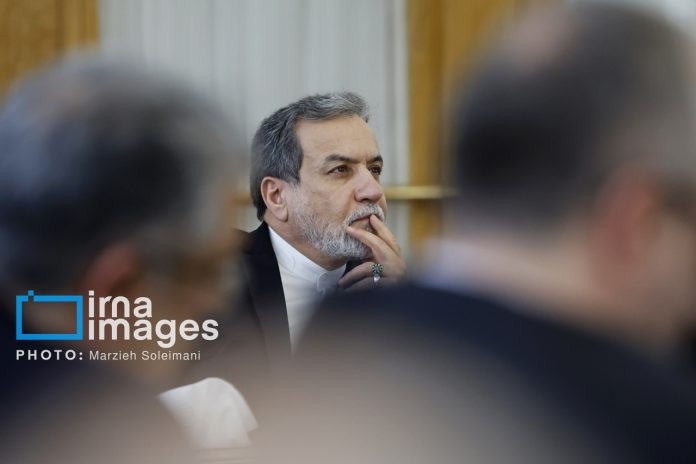
Abbas Araghchi

Araghchi stated that with the official expiration of Resolution 2231 on October 18, all UN Security Council restrictions on Iran have been lifted and the Iran issue is no longer on the Council’s agenda.

He added that this position is supported by over 120 countries, including members of the Non-Aligned Movement, which endorsed the same stance in their recent ministerial meeting in Uganda.

Russia, as a permanent UNSC member and its current rotating president, also issued an official statement confirming that it does not recognize any reinstatement of previous sanctions.

Araghchi said Iran, China, and Russia have expressed consistent positions in joint letters to the Security Council and the UN secretary general.

Meanwhile, Araghchi described Iran-Russia ties as “rooted in mutual trust, shared interests, and a long-term strategic outlook.”

He emphasized that strengthening coordination among Iran and like-minded countries in the Security Council remains vital for advancing national interests and maintaining regional stability.

Netanyahu seeking another term as Israeli PM

Benjamin Netanyahu

Netanyahu’s recent tenure has been defined by his controversial judicial reform, the Hamas hostage crisis, and the war in Gaza – issues for which he has received both criticism and praise.

In an interview with Israel’s Channel 14 on Saturday, the prime minister confirmed that he intends to seek another term in office, adding that he expects to win.

The polarizing leader of the right-wing Likud party served as prime minister from 1996 to 1999 and 2009 to 2021. He returned to office in December 2022 following the collapse of the ruling coalition.

Netanyahu has claimed that he is “the only person capable of keeping Israel safe” and boasted about his close ties with US President Donald Trump. He has taken a hardline stance on Hamas and initiated a 12-day air war with Iran in June.

The prime minister is currently on trial in three corruption cases, in which he denies any wrongdoing. He has also sought to limit the powers of Israel’s Supreme Court, triggering mass protests.

A Channel 12 poll published this week indicates that Likud would win 72 seats if the election were held today, remaining the largest faction in the Knesset. The uptick in popularity follows an internationally brokered ceasefire with Hamas and the release of the remaining hostages.


Afghanistan, Pakistan agree to immediate ceasefire after talks in Qatar

Qatar’s Ministry of Foreign Affairs said early on Sunday that Afghanistan and Pakistan had agreed to the ceasefire “and the establishment of mechanisms to consolidate lasting peace and stability between the two countries”.

Doha said the two countries also agreed to hold follow-up meetings in the coming days “to ensure the sustainability of the ceasefire and verify its implementation in a reliable and sustainable manner”.

Earlier, both sides said they were holding peace talks in Doha on Saturday as they sought a way forward, after clashes killed dozens and wounded hundreds in the worst violence between the two South Asian neighbours since the Taliban seized power in Kabul in 2021.

“As promised, negotiations with the Pakistani side will take place today in Doha,” Afghan government spokesperson Zabihullah Mujahid had said, adding that Kabul’s negotiating team, led by Defence Minister Mullah Muhammad Yaqoob, had arrived in the Qatari capital.

Pakistan’s Ministry of Foreign Affairs said earlier that the country’s defence minister, Khawaja Muhammad Asif, had led discussions with representatives of Afghanistan’s Taliban leadership.

“The talks will focus on immediate measures to end cross-border terrorism against Pakistan emanating from Afghanistan and restore peace and stability along the Pak-Afghan border,” the Foreign Office said.

Cross-border fighting between the one-time allies and Pakistani air strikes along their contested 2,600km (1,600-mile) frontier were triggered after Islamabad demanded that Kabul rein in rebels who had stepped up cross-border attacks in Pakistan, saying the fighters were operating from safe havens in Afghanistan.

The Taliban has denied giving haven to armed groups to attack Pakistan, and accuses the Pakistani military of spreading misinformation about Afghanistan and sheltering ISIL (ISIS)-linked fighters who have undermined the country’s stability and sovereignty.

Islamabad has denied Kabul’s accusations. Pakistan has accused Kabul of allowing armed groups to reside inside Afghanistan and wage war for years against the Pakistani state in a bid to overthrow the government and replace it with their strict brand of Islamic governance system.


Iran’s Islamic Revolution Guard Corps unveils two enhanced missiles

Iran Missile

The Qadr precision ballistic missile has been equipped with anti-electronic-warfare systems.

The Emad missile has also been upgraded and is operational.

The Qadr is an early-generation long-range missile in the country’s arsenal, with an operational range of about 1,350 to 1,950 kilometres, and it flies on a ballistic trajectory.

The Emad is among the weapons deployed in the IRGC’s new underground missile cities and is known as Iran’s first long-range, liquid-fuel ballistic missile fitted with a guided warhead.

The Emad has a range of 1,700 kilometres and can carry a warhead weighing 750 kilograms.

Iranian MP warns ex-FM Zarif over remarks on Russia’s role in nuclear talks

Javad Zarif

Mojtaba Zarei, a member of the parliament’s National Security and Foreign Policy Commission, wrote on X that if Zarif “fails to understand the sensitivity of the current situation,” the Attorney General’s Office “must immediately summon him to safeguard national security”.

Zarei urged Zarif to be silent and align with Iran’s national consensus, warning against statements that could “benefit the enemies of the nation”.

His remarks came after Zarif responded to Russian Foreign Minister Sergey Lavrov’s recent accusations and accused Moscow of undermining the JCPOA process.

Zarei cautioned that continued criticism could be seen as disrupting national security amid what he described as “a sensitive geopolitical moment for Iran”.

Hamas returns bodies of two more hostages, says Israel violating Gaza ceasefire

Israel Hamas Hostages

“Israel has received, via the Red Cross, the bodies of two hostages”, which were returned to Israeli security forces in Gaza, Netanyahu’s office said in a post on the X social media platform early on Sunday.

The prime minister’s office announced that the families of Israeli captives were updated on the return of the remains, and the two bodies had been transferred to Israel’s National Centre of Forensic Medicine for identification.

“The effort to return our hostages is ongoing and will not cease until the last hostage is returned,” the prime minister’s office added.

The Israeli military reported later that one of the bodies was confirmed to be that of Ronen Tomi Engel. The 54-year-old was killed during the Hamas attack on southern Israel on October 7, 2023, and his body was taken to Gaza.

Identification tests are continuing on the second set of remains, the military noted.

With the handover late on Saturday, Hamas has now returned the remains of 12 of the 28 bodies of captives being held in Gaza, a key demand by Israel in the week-old ceasefire deal to end the two-year war.

According to the deal, Hamas was to return all of the Israeli captives – both the living and dead – within 72 hours of its signing. In exchange, Israel was to release 360 bodies of deceased Palestinians and some 2,000 prisoners.

Hamas has stated that the widespread devastation in the Palestinian territory and the Israeli military’s continuing control of certain parts of Gaza have slowed the recovery of the bodies.

For days, Hamas and Israel have traded blame over violations of the US-mediated ceasefire.

On Saturday, Hamas accused the Netanyahu government of “fabricating flimsy pretexts” to not follow through on its commitments to the peace deal, as well as denouncing Israel’s refusal to open the Rafah crossing with Egypt as “a blatant violation” of the agreement.

On Friday, Israeli forces killed 11 members of a single family, including seven children, in an attack east of Gaza City.

The Palestinian Embassy in Egypt announced earlier on Saturday that the Rafah crossing, the main gateway for people in Gaza to leave and enter the enclave, would reopen on Monday.

But Netanyahu announced that the border crossing would remain closed until Hamas hands over the bodies of all the deceased captives.

The delivery of humanitarian aid into Gaza also remains slow despite the ceasefire deal.


Israel commits 47 violations since Gaza truce came into effect: Media office

Gaza War

The violations have led to the killing of at least 38 Palestinians and the wounding of 143 others.

“These violations varied between crimes of direct fire on civilians, crimes of deliberate bombing and targeting, and the arrest of a number of civilian citizens, practices that reflect the occupation’s continued aggressive approach despite the declaration of a ceasefire,” the office added.

“We note that these attacks were carried out by the occupation forces using military vehicles and tanks positioned on the outskirts of residential neighborhoods, electronic cranes equipped with sensors and remote targeting devices, and drones (quadcopters) that continue to fly over residential areas, carrying out shooting operations and directly targeting civilians.”

Hamas released 20 living Israeli hostages and handed over the remains of 11 more captives in exchange for nearly 2,000 Palestinian prisoners under the ceasefire agreement.

The deal was reached between Israel and Hamas last week, based on a plan presented by US President Donald Trump. Phase one included the release of Israeli hostages in exchange for Palestinian prisoners. The plan also envisages the rebuilding of Gaza and the establishment of a new governing mechanism without Hamas.

Since October 2023, Israeli attacks have killed nearly 68,000 Palestinians in Gaza, most of them women and children, and rendered it largely uninhabitable.


Hamas says will not commit to disarm until further negotiations

Hamas

Asked if Hamas would give up its arms, Nazzal said: “I can’t answer with a yes or no. Frankly, it depends on the nature of the project. The disarmament project you’re talking about, what does it mean? To whom will the weapons be handed over?”

Arab diplomats previously told Middle East Eye that mediators were in discussions with Hamas about turning its weapons over to Arab peacekeepers or locking up long-range weapons such as missiles instead of destroying them.

US President Donald Trump’s 20-point peace plan calls for Hamas’s demilitarisation. It also calls for a complete staged Israeli withdrawal from the Gaza Strip. The plan doesn’t provide a timeline for either step.

Nazzal stated Hamas will have a “clear” and definitive answer when they get to the negotiating table for phase two of the deal, and that other Palestinian groups would need to be consulted. The Popular Front for the Liberation of Palestine and Islamic Jihad both operate in Gaza.

Nazzal added that Hamas was looking for a three to five-year window for the ceasefire so that Gaza could be rebuilt for civilian purposes. His comments were the first time Hamas has publicly put a timeline on its expectations for the deal, and he was pressed by Reuters whether that prediction meant the group was buying time to rearm for another war.

“The goal is not to prepare for the next war – the goal is that we want a truce in which we rebuild the Gaza Strip because the average years needed to rebuild the Gaza Strip is at least five years, and I don’t want to say less or more, but this is the average,” he stated in response to the question.

“The priority for us in this period that we are putting forward is to build the Gaza Strip and return the Gaza Strip to normal civilian life, this is our priority,” he said.

“But if there are parties that want guarantees for the future after this period of time, then these countries need to offer real hope to the Palestinian people,” he added.

“The Palestinian people want an independent Palestinian state.”

The text of Trump’s 20-point plan says that Hamas will have no role in Gaza’s future governance, but offers members amnesty.

It calls for a body of technocratic Palestinians to run Gaza, overseen by a so-called “board of peace” chaired by Trump. The plan includes some soft language that says the Palestinian Authority may take over Gaza after unspecified reforms. It provides a brief mention of a potential Palestinian state.

On the ground, Hamas has demonstrated that it remains well-organised. Hamas security forces deployed throughout Gaza after the ceasefire. Trump himself said he approved of Hamas deploying to prevent crime, but then said he wanted the group to disarm.

Asked about the deployments, Nazzal said: ”This is a transitional phase. In a civil sense, there will be a technocratic administration as I said. On the ground, Hamas will be present,” he said.

He said after the transitional phase, there should be Palestinian elections.

Hamas has governed Gaza since 2007. Fighting between Hamas and its rival Fatah broke out after the former swept to power in Palestinian legislative elections the year before. In the end, Hamas consolidated its hold over Gaza, and Fatah in the occupied West Bank through the Palestinian Authority.

Reconciliation talks between Fatah and Hamas have been ongoing for years, but there has been little progress on mending ties to potentially stage fresh elections.


Analyst: Russia acts pragmatically while Iran treats politics as a matter of honor

Writing in the Etemad daily on Saturday, Abdi compared Iran’s foreign policy mindset with that of Russia, saying Moscow prioritizes national interests over prestige or sentiment.

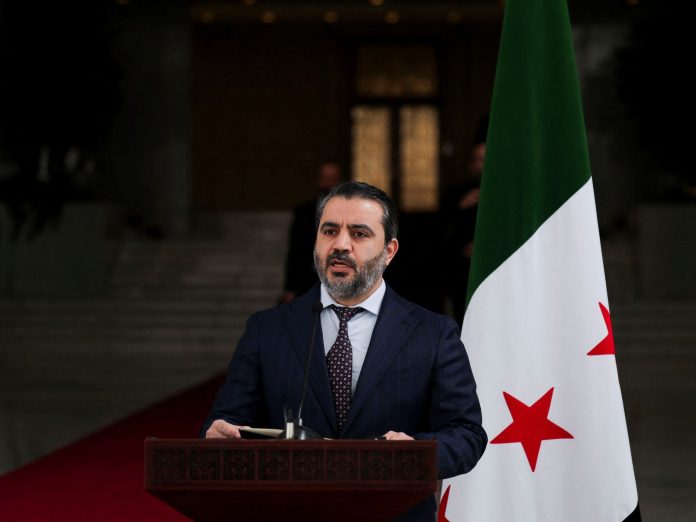
Referring to the recent meeting between Russian President Vladimir Putin and Syrian official Ahmed al-Sharaa, Abdi said the encounter may surprise some Iranians but is a normal occurrence in global diplomacy.

“For Russia, who rules in Syria is not a matter of pride or dignity; if necessary, Moscow could even give up (former Syrian president Bashar) Assad,” he wrote, adding that Russia’s policies are guided by interests, not emotions.

Abdi argued that Iran is unique in treating both foreign and domestic policy as matters of personal or moral honor, from foreign relations to social issues like hijab enforcement, internet restrictions, and public participation.

He warned that this inflexible attitude alienates citizens and backfires politically, concluding that “when politics has only one leg, it cannot walk toward reason or stability.”