
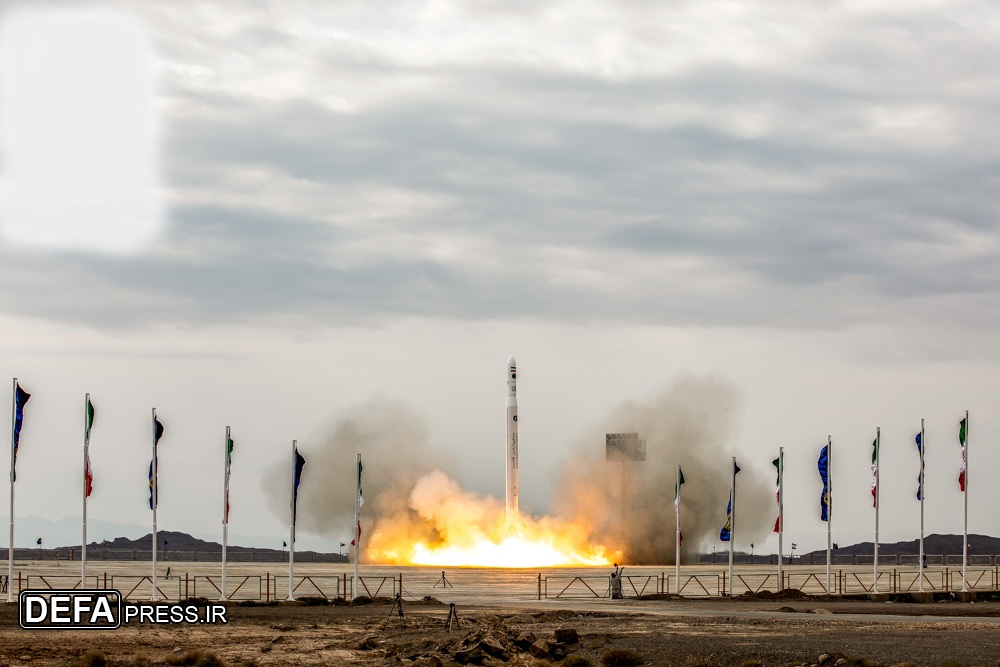
Commissioned by the Iranian Space Agency (ISA) and developed by the Iranian Space Research Center, the satellite was part of a multi-payload mission that also included Russia’s Unisphere-M3 and M4 satellites, along with 18 other satellites from various countries.
A notable feature of this launch was the display of the Iranian Space Agency’s logo on the Soyuz rocket, marking Iran’s formal participation in an international space mission.
The Soyuz has previously launched other Iranian satellites, including Khayyam, Pars-1, Kosar, and Hodhod.
Nahid-2 is designed to remain in orbit for five years and is equipped with an indigenous propulsion system capable of adjusting its altitude by up to 50 kilometers, crucial for maintaining its orbital position and operational stability.
Iranian engineers selected and developed a hot gas thruster system locally, using advanced components such as composite tanks, high-pressure valves, and control thrusters.
The satellite also features domestically produced lithium-ion batteries and thermal insulation materials, highlighting Iran’s growing capabilities in advanced aerospace technologies and its pursuit of self-reliance in the space sector.
