
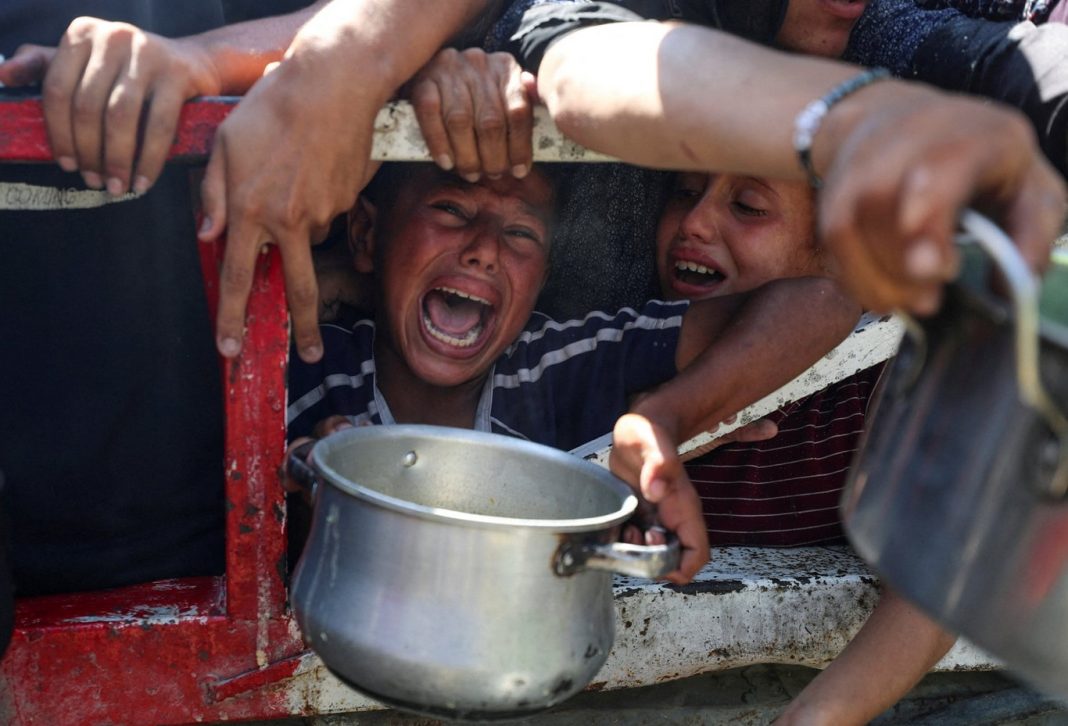
“Famine has been pushed back. Far more people are able to access the food they need to survive,” Guterres told a news conference at the UN headquarters in New York.
“Gains are fragile, perilously so.”
He said 1.6 million people in Gaza, more than 75% of the population, are projected to face “extreme levels of acute food insecurity and critical malnutrition risks.”
“And in more than half of Gaza, where Israeli troops remain deployed, farmland and entire neighborhoods are out of reach. Strikes and hostilities continue, pushing the civilian toll of this war even higher and exposing our teams to grave danger,” he added.
Guterres also renewed calls for “a durable ceasefire,” stating: “We need more crossings, the lifting of restrictions on critical items, the removal of red tape, safe routes inside Gaza, sustained funding, and unimpeded access, including for NGOs.”
The Integrated Food Security Phase Classification (IPC) released its news findings on Friday, noting that famine conditions in the enclave have been temporarily offset following a reduction in hostilities and improved access for humanitarian and commercial food deliveries. The latest report, however, warned that the overall situation in Gaza remains critical.
The UN chief also touched on Israel’s refusal to move onto the second phase of the Gaza ceasefire plan until the return of the remains of a final deceased hostage.
“It is essential to move to phase two, and I don’t think that we should have any pretext to avoid it,” said Guterres.
“It’s very important to move with the peace process as a whole. And it’s not only phase two. It’s to make sure that phase one, and namely the ceasefire, are fully implemented,” he added.
