Friday, January 2, 2026
Home Blog Page 964

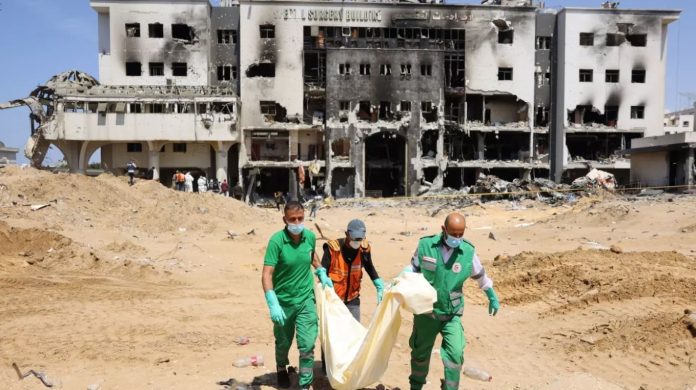
Palestinians recover hundreds of bodies in Gaza hospital after Israeli troop withdrawal

Gaza War

The Israeli army withdrew from Al-Shifa Hospital on April 1 following a two-week raid and from Khan Younis on April 7, leaving behind a massive trail of destruction.

The Palestinian Civil Defense Agency said that efforts were still ongoing to retrieve more bodies from both areas.

It appealed to the international community to provide specialized equipment and vehicles to help in the search for victims under the rubble of destroyed buildings.

Israel has waged a deadly military offensive on the Gaza Strip since an Oct. 7 cross-border attack by Hamas, which killed nearly 1,200 people.

Over 33,300 Palestinians have since been killed and nearly 76,000 others injured amid mass destruction and shortages of necessities.

The Israeli war, now in its 186th day, has pushed 85% of Gaza’s population into internal displacement amid acute shortages of food, clean water and medicine, while 60% of the enclave’s infrastructure has been damaged or destroyed, according to the UN.

Israel stands accused of genocide at the International Court of Justice (ICJ), which in January issued an interim ruling that ordered Tel Aviv to stop genocidal acts and take measures to guarantee that humanitarian assistance is provided to civilians in Gaza.

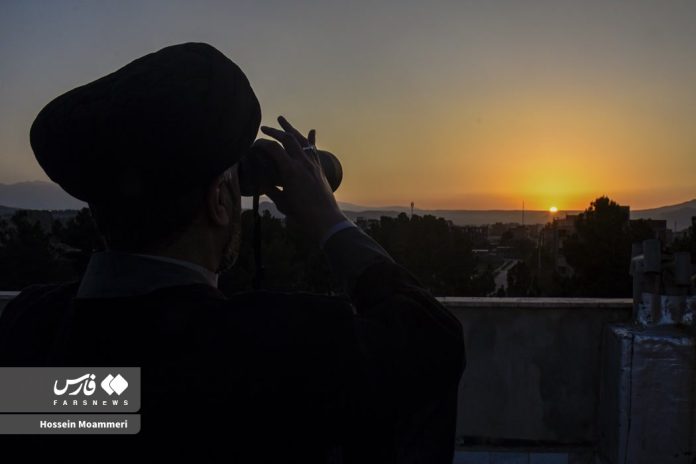
Iran to celebrate Eid al-Fitr Wednesday

In the capital Tehran, congregants will assemble at the Grand Mosalla Mosque to partake in Eid al-Fitr prayers, led by Ayatollah Seyyed Ali Khamenei, the Leader of the Islamic Revolution.

Similar ceremonies will be held across the nation.

Alongside Iran, countries such as Saudi Arabia, Kuwait, Qatar, Bahrain, Iraq, Palestine, Syria, Egypt, Lebanon, Yemen, and the United Arab Emirates have declared Wednesday as the commencement of this significant religious event.

Eid al-Fitr holds immense importance for Muslims globally, symbolizing the end of the rigorous dawn-to-sunset fasting observed throughout the entirety of Ramadan, which spans either 29 or 30 days.

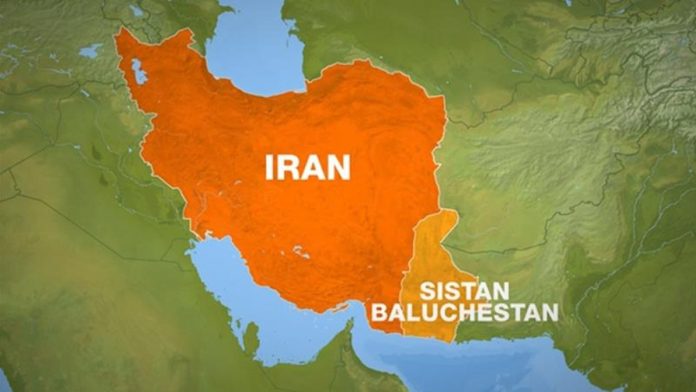
Six Iranian police officers killed in Jaish al-Adl terrorist attack in Sistan and Baluchestan

The terrorist attack targeted two police cars transporting officers from Sib and Soran to Mehrestan.

The convoy was ambushed on its return journey, resulting in the loss of five officers and injuries to two others. One of the injured succumbed to his wounds.

Security forces are intensifying efforts to apprehend those responsible for this heinous act.

Earlier last week, Jaish al-Adl terrorists, a Pakistan-based terrorist group, had launched a series of deadly coordinated attacks on two provincial cities of Chabahar and Jask trying to seize military bases.

They killed 15 security forces. In return, the security forces killed 18 terrorists involved in the terrorist attacks.

The Pakistan-based group, which wants to cede Iran’s Sistan and Baluchestan Province, is responsible for several terrorist attacks in the border region.

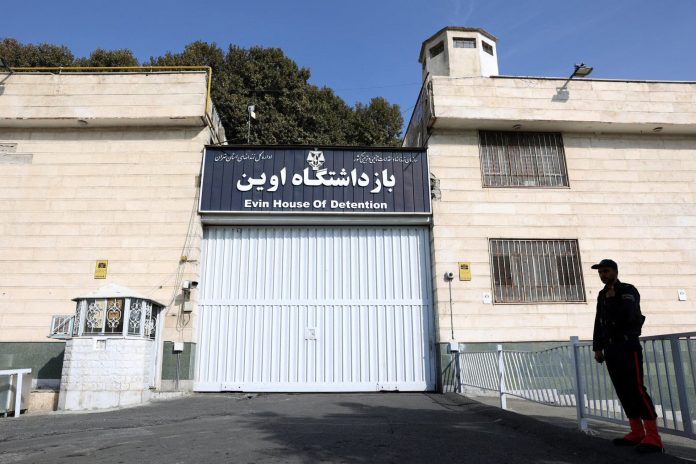
All arrested environmental activists in Iran freed

Evin Prison

The case, which began in February 2017 with the arrest of eight individuals, gained attention following the death of Kavos Seyyed Emami while in custody.

Sentences ranging from four to ten years were initially handed down, but recent announcements of amnesty have led to the release of the remaining activists.

They were charged with espionage and collaboration with the hostile government of the United States.

Morad Tahbaz was released last year in an exchange, while Abdolreza Kohpayeh and Sam Rajabi completed their sentences earlier.

In the latest development, Nilofar Bayani, Homan Jokar, Taher Qadirian, and Sepideh Kashani have been freed, with their remaining sentences forgiven.

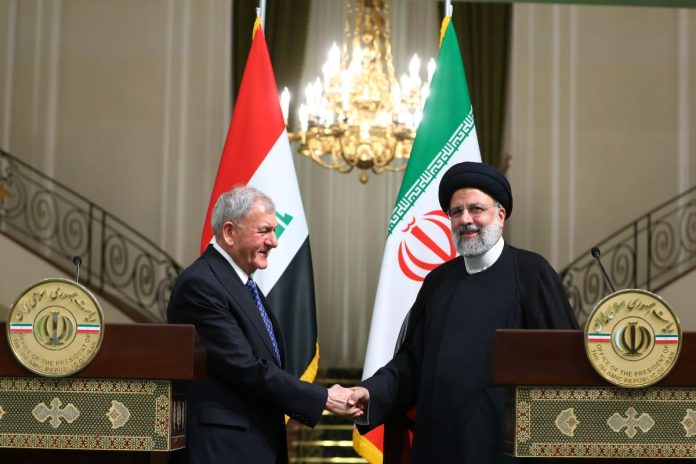
Iran, Iraq presidents call for promotion of bilateral ties, end to Palestinian suffering

Iran and Iraq Presidents Raisi and Rashid

The Iranian president also touched on the ongoing Israeli carnage in the Gaza Strip, calling on Islamic countries and “free people of the world” to take measures to stop the occupying regime’s atrocities.

Raisi rebuked the international bodies, especially the United Nations, for their failure to rein in the Israeli genocidal campaign since Oct. 7, which has so far left over 33,200 Palestinian killed, the vast majority of them women and children.

For his part, the Iraqi president congratulated his Iranian counterpart on Eid al-Fitr, which marks the end of the holy fasting month of Ramadan.

Rashid also urged Islamic nations to come up with a solution to put an end to the Palestinian suffering.

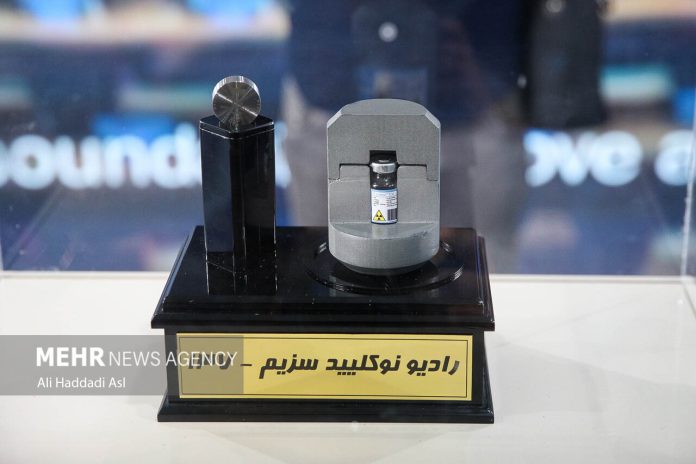
Iran to launch largest radiopharmaceutical center

Iran Radiopharmaceuticals

The director of the Atomic Energy Organization of Iran (AEOI), Mohammad Eslami told reporters on Tuesday, “We have a radiopharmaceutical company in Iran and the company is under sanctions. Basically, human rights and human lives have no meaning for the westerners.”

“Our country has managed to become a hub in radiopharmaceuticals in the region in a self-reliant manner, and this year, we will launch the largest radiopharmaceutical production center with the presence of the president,” he added.

Eslami also said that Iran will hold its first international nuclear conference within a month, adding experts from 30 countries have expressed willingness to take part in the event.

He stated that, “The conference will be an important event and for the first time we can have a realistic narrative of our country’s scientific and technological status with the literature appropriate for an international conference.”

For decades, Iran has been reeling from the US-led western sanctions over its nuclear program, which it says is solely for peaceful purposes.

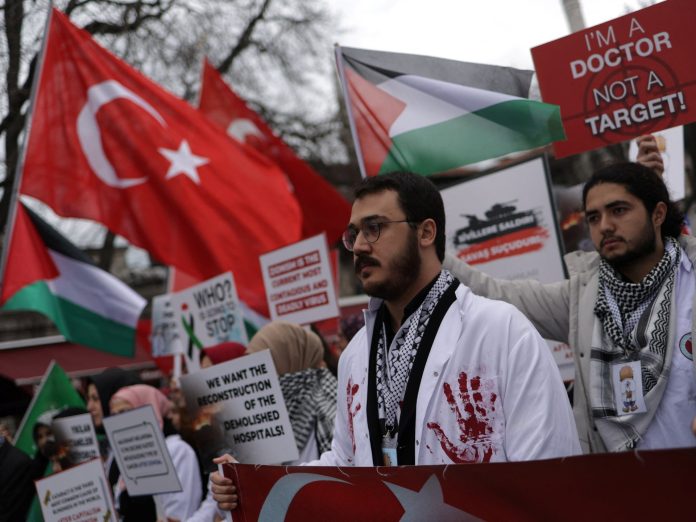
Turkey says imposed restrictions on export to Israel over Gaza war

The Turkish Trade Ministry said that Israel continues to “flagrantly violate international law”, ignoring calls for ceasefires and the uninterrupted provision of humanitarian aid to Gaza. These calls include decisions by the UN Security Council and judgments by the International Court of Justice.

“The decisions of the UN Security Council and the International Court of Justice are legally binding,” the ministry’s statement said.

“Turkey has repeatedly stated that it will monitor the implementation of all these decisions.”

Effective immediately, the ministry has restricted the export of 54 products to Israel, encompassing items such as aluminum wires, steel, cement, construction materials, granite, chemicals, pesticides, granites, engine oils, jet fuel, and bricks.

“This decision will remain in effect until Israel, acting within its obligations under international law, declares an immediate ceasefire in Gaza and facilitates a sufficient and uninterrupted flow of humanitarian aid to the Gaza Strip,” the statement added.

On Monday, Turkish Foreign Minister Hakan Fidan announced that Turkey would take certain measures against Israel following Tel Aviv’s refusal to grant aerial access to Gaza for humanitarian air drops.

This development occurred after the Turkish ruling Justice and Development Party (AKP) suffered a defeat in the 31 March local elections, losing votes to the Turkish Islamist New Welfare Party (YRP), which managed to secure victories over the AKP in several cities.

There is a consensus that the country’s economic problems, including declining real pensions and salaries amid runaway inflation, played a primary role in the AKP’s electoral defeat.

While Turkey’s continuing trade with Israel was not the biggest issue prompting conservative voters to stay home or switch parties, it was a factor among others, which even Turkish President Recep Tayyip Erdogan acknowledged during a party meeting earlier this week on the election results, according to party sources.

Speaking about the AKP’s worst election defeat since 2002, Erdogan stated on last week: “Unfortunately, even on an issue like the Gaza crisis, for which we did everything we could and paid the price, we failed to fend off political attacks and convince some people.”

Since the 7 October Hamas attack and subsequent Israeli war on Gaza, which Erdogan calls genocidal, Turkey has gradually increased its criticism of Tel Aviv. It recalled its ambassador for consultations, suspended energy talks, and backed Palestine on the international stage, from the UN General Assembly to western capitals through the Gaza Contact Group. Ankara also floated the idea of a guarantorship system to work towards a two-state solution.

In the early months of the conflict, while western capitals backed Israel’s war on Gaza, Erdogan used his platform to expose its genocidal actions. Turkey is also the largest humanitarian donor to Gaza, along with the UAE, according to Israeli government data, while dozens of Palestinian patients have travelled to Turkey from Gaza for medical treatment.

But it has avoided more punitive steps, arguing that they haven’t worked in the past when Ankara faced other crises with Tel Aviv. Although bilateral trade with Israel has dropped by 33 percent since 7 October, it has nonetheless continued.

Last year, as Turkish parliamentarians and pro-government circles boycotted companies accused of supporting Israel, one Turkish journalist began spotlighting the Turkish-Israeli trade. Metin Cihan, who lives in exile in Germany due to his past reporting on the killing of a Turkish girl, dug into open-source data on maritime trade.

“While Israel’s massacre continues, I listed the ships shipping from Turkey to Israel,” he posted on X (formerly Twitter) on 12 November, including the names of dozens of ships. He later shared another list, noting: “We were shipping from our ports to Israel with an average of seven ships a day. We sent 13 more ships yesterday.”

As he started to regularly publish the names of ships going between Israel and Turkey, his tweets received millions of views.

“Israel’s crude oil, fuel, iron and steel, etc. logistics were provided through our ports,” he added.

Cihan has also exposed persons and companies close to the government that trade with Israel.

US warns of sanctions against Chinese banks that aid Russia, citing Ukraine war

Russia Ukraine War
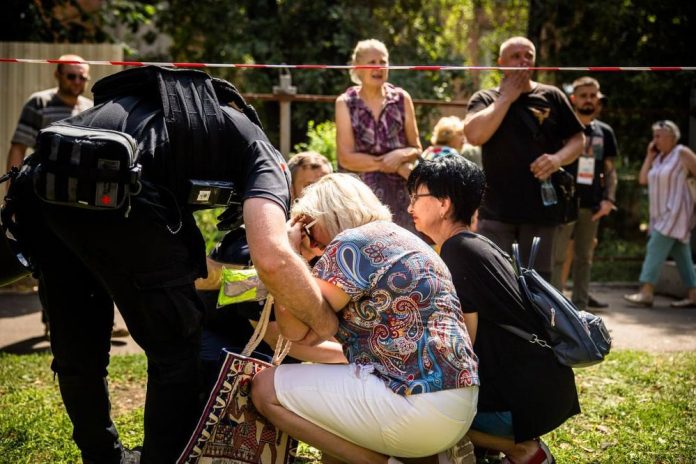
Local residents react at a site of an apartment building heavily damaged by a Russian missile strike in Kryvyi Rih.

“We continue to be concerned about the role that any firms, including those in the [People’s Republic of China], are playing in Russia’s military procurement,” Yellen said in remarks during a press conference at the close of her trip to China on Monday.

“I stressed that companies, including those in the PRC, must not provide material support for Russia’s war and that they will face significant consequences if they do,” she continued.

“And I reinforced that any banks that facilitate significant transactions that channel military or dual-use goods to Russia’s defense industrial base expose themselves to the risk of U.S. sanctions.”

The Joe Biden administration has previously warned China against supporting Russia’s war against Ukraine, which has now stretched on for more than two years.

Secretary of State Antony Blinken revealed last year that Beijing had provided Moscow with nonlethal assistance and was considering sending lethal aid.

Blinken, Yellen and other administration officials issued stern warnings to the Chinese government, and the State Department sanctioned several Chinese companies that it said were violating export control measures placed on Russia.

The latest warning from Yellen to Chinese banks comes as additional U.S. aid to Ukraine has stalled in Congress in the face of opposition from Republicans.

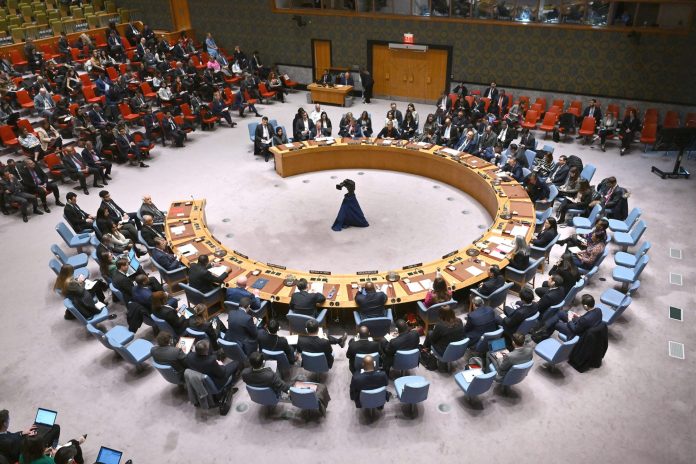
UNSC refers Palestine’s full membership bid to committee

UNSC

Malta’s U.N. Ambassador Vanessa Frazier proposed that the committee meet on Monday afternoon to consider the application, adding that deliberation has to take place this month. Malta is president of the Security Council for April.

“We sincerely hope after 12 years since we change our status to an observer state, that the Security Council will elevate itself to implementing the global consensus on the two state solution by admitting the state of Palestine for full membership,” Palestinian U.N. envoy Riyad Mansour told reporters after the meeting.

The Palestinian Authority last week formally asked for renewed consideration by the United Nations Security Council of its 2011 application to become a full member of the world body. The Palestinians are a non-member observer state at the United Nations, the same status as the Holy See.

The committee of the 15 members first assesses an application to see if it satisfies requirements for U.N. membership. The application can then either be shelved or put forward for a formal vote in the Security Council. Approval requires at least nine votes in favor and no vetoes by the U.S., Russia, China, France or Britain.

“The committee has to deliberate within the month of April,” Frazier told reporters ahead of the meeting.

The Security Council earlier on Monday met behind closed doors to discuss the letter from the observer state requesting renewed consideration of their application.

Mansour told Reuters last week that the aim was for the council to take a decision at an April 18 ministerial meeting on the Middle East.

Israel’s U.N. Ambassador Gilad Erdan stated earlier on Monday that a Palestinian state would be a threat to Israel’s national security.

“Granting the Palestinian statehood is not only a blatant violation of the UN Charter, it also violates the fundamental principle that everyone can understand of reaching a solution a lasting solution at the negotiating table,” Erdan told reporters.

“The UN has been sabotaging peace in the Middle East for years. But today marks the beginning of the point of no return.”


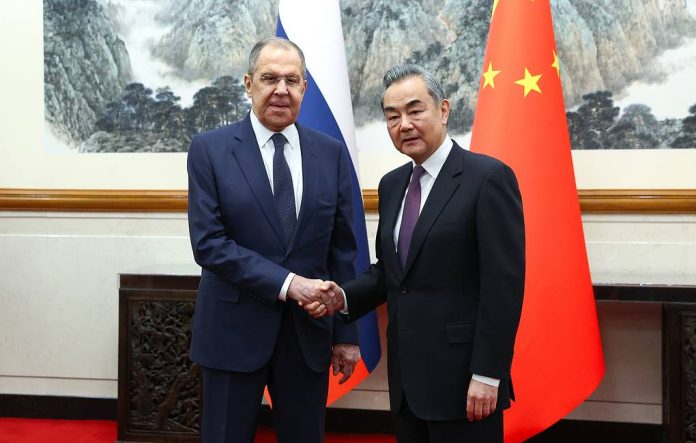
China says supports holding conference on Ukraine with participation of Moscow, Kiev

Lavrov Wang

“We hope for the soonest ceasefire. China supports the timely convening of an international conference which both Russia and Ukraine would agree to, with the equal participation of all sides and a fair discussion of all peace plans,” he said at a joint press conference with his Russian counterpart Sergey Lavrov following bilateral talks in Beijing.

The top Chinese diplomat reiterated that on the Ukrainian issue, China firmly follows the four principles set forth by Chinese President Xi Jinping.

In March 2022, Xi laid these four principles out, emphasizing that they must be implemented in the context of the Ukrainian conflict. According to him, it is necessary to respect the sovereignty and territorial integrity of all countries, as well as the goals and principles of the UN Charter, seriously treat the legitimate security interests of all countries and support all efforts on a peaceful settlement of the crisis. Later, these principles formed the foundation of China’s official position on the political settlement of the Ukrainian crisis published in February 2023.

Chinese authorities are decisively against unilateral pressure measures, Wang continued.

“We will stand out for support of universally accessible economic globalization, decisively counter unilateral measures and protectionism,” the minister stated.

Unilateral sanctions “violate international law, undermine the global order and contradict the trend of global development”, Wang said.

“The Chinese side is decisively against that,” the foreign minister stressed.

Lavrov said at the news conference with Wang that Russia and China agreed that any meetings on Ukraine ignoring Moscow’s interests are futile.

“We discussed the current situation around the Ukraine crisis,” Lavrov stated.

“We and our Chinese colleagues supported the conclusion that any international meetings that <…> ignore Russia’s position while promoting the <…> so called peace formula of [Ukrainian leader Volodymyr] Zelensky and are therefore disconnected from reality are futile,” he added.

Moscow is grateful to Beijing for its unbiased and balanced position on Ukraine as well as for the willingness to play a positive role in resolving the crisis by political and diplomatic means, Lavrov continued.

Commenting on the 12-point peace initiative on Ukraine proposed by China last year, Russia’s top diplomat lauded the plan for addressing the root causes behind the Ukraine conflict, “primarily in the context of ensuring indivisible security, including in Europe and the world over”.