Friday, January 2, 2026
Home Blog Page 965

Iranian prisoner Nouri transferred from cell to ‘security suite’ in Sweden

Hamid Nouri

Speaking to Fars News Agency, Majid Nouri said on Tuesday that his father, who is serving a life sentence, had been taken to the suite after 1600 days of spending in a cell.

He said that according to the notes that his father gave to the Iranian embassy, he is no longer in the cell and has been transferred to a suite in a security region with reportedly more facilities compared to the cell.

Majid took a trip to Sweden two weeks ago to visit his father, but the Swedish police detained him upon entry over a lawsuit filed by the anti-Iran terrorist Mujahedin-e-Khalq Organization (MKO) with the blood of over 17,000 Iranians on their hand. He was also denied visiting his dad.

Nouri was accused by Swedish authorities of involvement in the execution and torture of MKO members in the 1980s, however Iranian officials have criticized his ‘politically-motivated’ detention and life sentence as illegal.

Iranian MP: Turkey’s dam construction will have huge impact on Iran’s northwest

Iran Water Crisis

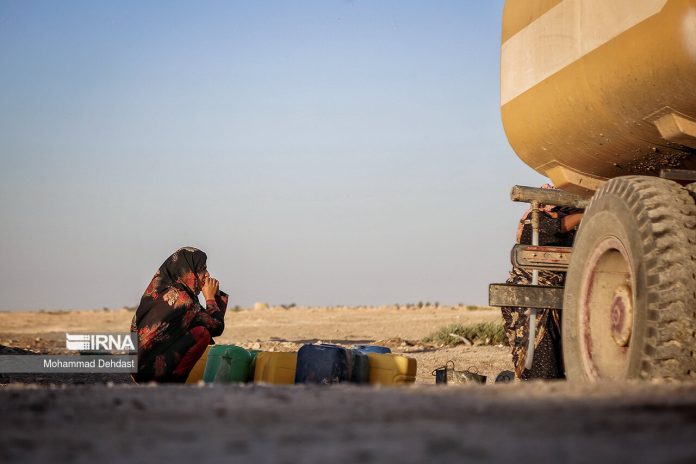
Ahmad Alirezabeigi was speaking about Turkey’s dam construction on Aras River and its ramifications for Iran.

Alirezabeigi added that Iran is not a member of the respective international convention regarding Aras, to force Turkey to stop what it is doing.

He said Turkey’s action will leave more than 83% of the Aras River discharge and this will have a huge impact on Iran’s northwest.

Alirezabeigi also said Iran has a contract with the Republic of Azerbaijan regarding the right to the Aras water, noting that in addition to Iran, the countries of the Caspian basin, including Azerbaijan, also have a share of the Aras basin, because the end of the river reaches the Caspian Sea, and the construction of Turkey’s dam will prevent the water from entering the Caspian.

Russia’s Putin twice as popular as US President Biden in ME and African states: Poll

Putin Biden

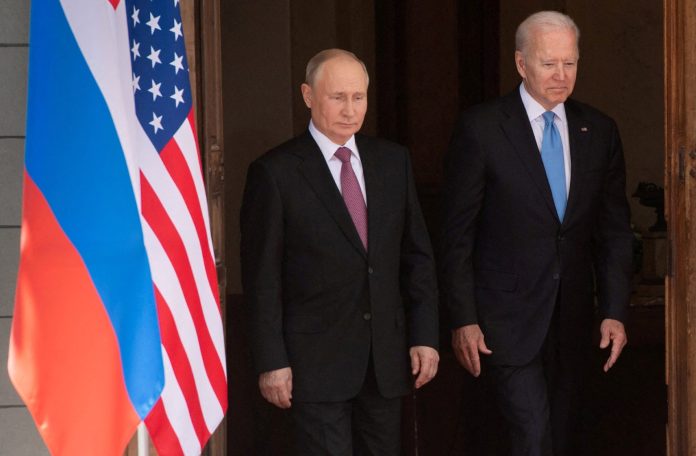
The poll was conducted by Al-Monitor in partnership with data analytics firm Premise across Egypt, Türkiye, Iraq and Tunisia between March 4 and March 22, 2024, and questioned 2,670 respondents in the four states about their views on power dynamics in the region.

When asked which of the three world leaders they viewed “most favorably,” some 44.4% chose Russian President Vladimir Putin, followed by Chinese President Xi Jinping with some 33.8%, while only 21.7% said they preferred US President Joe Biden.

Putin was seen more favorably across all four states, most of all in Egypt (51.6%). Biden was slightly more popular in Iraq (29.2%) of all states, but still polled third after Putin (35.5%) and Xi (35.3%).

Al-Monitor suggested that Washington’s popularity suffered due to its support of Israel’s war in Gaza, but noted that a multitude of other factors could be influencing opinions. The respondents were almost split on whether Washington (30%) or Moscow (28%) could “most successfully mediate political disagreements in the Middle East.” However, over 40% agreed that the US was still “best equipped to help resolve the Israel-Hamas war,” compared to Russia’s 27.9% and China’s 13.4%.

Almost half of respondents saw Russia (49.5%) and China (47.9%) playing “more important regional roles” than 10 years ago, while only 37.1% could say the same about the US. In another decade, Beijing (28.9%) would rival Washington (29%) as the “most influential” in the Middle East, they said.

Those polled said they would like their governments to “forge closer ties” with Beijing (43.2%) and Moscow (39.7%), while only 29.7% sought more cooperation with Washington. Almost two-thirds of participants believe Chinese economic investment has had a positive impact on their country, while 52.3% saw positives in economic cooperation with Russia. The US economic investment was seen as positive by 39.7%, while 29.8% reported negatives.

Iranian attack on Israel would likely be carried out by ‘regional proxies’: US

Israeli strike on Iranian consulate in Syria

Tehran is wary of a dramatic escalation in the fighting, the sources said, and does not want to give the United States or its allies an excuse to attack Iran directly.

Iran and its “proxy militia groups” also do not appear poised to attack US troops or other assets in the region for similar reasons, the sources added. The sources claimed, however, that Iran does not have perfect command and control over all of its proxy forces, so the possibility of an attack on US assets cannot be completely ruled out.

Iranian officials have repeatedly stressed that the resistance groups in West Asia are not directed by Tehran and do not take orders from Tehran.

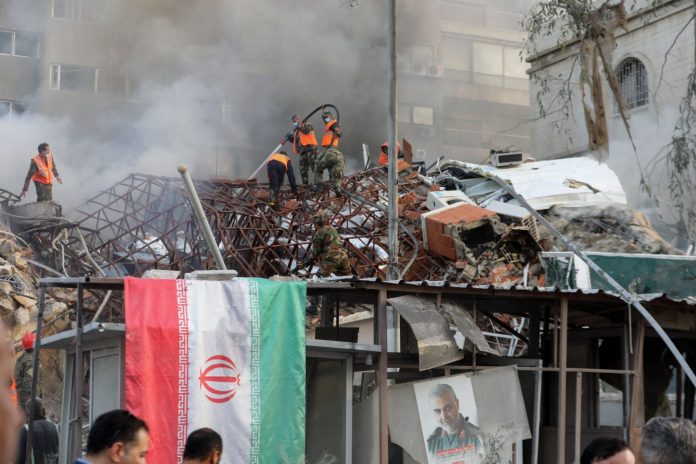
The US and its allies have been bracing for a possible attack against Israeli and US assets in the region in retaliation for an Israeli strike last week on Iran’s consulate in Damascus, which killed seven Iranian military officials.

The sources told CNN that US intelligence assesses that Iran has urged several of its “proxy militia groups” to simultaneously launch a large-scale attack against Israel, using drones and missiles, and that they could attack as soon as this week. There is some debate, however, about whether they will wait until after Ramadan ends to strike, stated one of the sources.

“The threat is very clear and credible,” one of the sources said, adding, “They have put the pieces in place to conduct the attack now. Just waiting for the right time.”

Last Monday, Israeli warplanes bombed the Iranian consulate in Damascus, located next to the embassy building in Damascus’s Mezzeh district.

The attack killed two senior Iranian military personnel who were on an advisory mission to Syria as well as five of their accompanying officers.

The Islamic Revolution Guards Corps announced Brigadier General Mohammad Reza Zahedi, a commander of the IRGC’s Quds Force, and his deputy General Mohammad Hadi Haji Rahimi were among the seven martyrs of the terrorist attack.

Leader of the Islamic Revolution Ayatollah Seyyed Ali Khamenei has vowed that Iran will “punish” Israel and make the evil regime “regret” its crime of assassinating the country’s military advisors in Syria.

Iran’s President Ebrahim Raisi has also stated Israel had resorted to indiscriminate assassinations after back-to-back failures in the face of the resistance, warning that the regime’s latest crime against Iranian military advisers in Syria “will not go unanswered”.

Date for Rafah invasion is set: Netanyahu

Benjamin Netanyahu

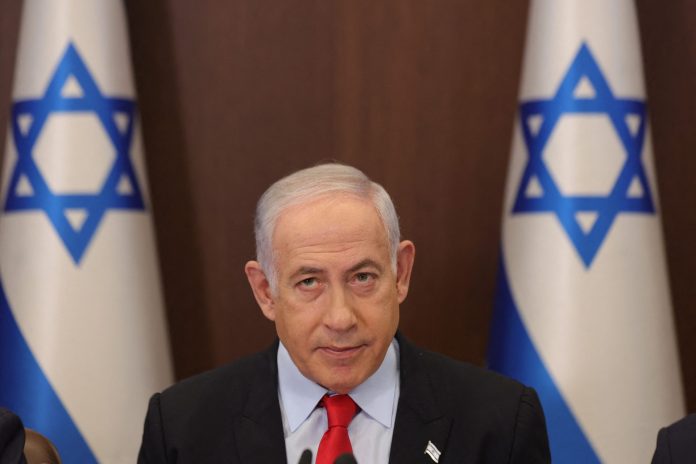
The prime minister also said that “entry into Rafah” was necessary for a “complete victory over Hamas”.

Netanyahu’s comments come after Israel announced it had withdrawn from Khan Younis in southern Gaza after months of fierce fighting that left much of the city in ruins.

Rafah, where about 1.5 million Palestinians are estimated to be sheltering, is located in the southernmost part of the besieged enclave.

Israel has waged a deadly military offensive on the Palestinian territory since an Oct. 7 cross-border attack by Hamas which killed nearly 1,200 people.

Over 33,200 Palestinians have since been killed and nearly 76,000 others injured amid mass destruction and shortages of necessities.

Senior Hamas spokesperson Sami Abu Zahry has told Al Jazeera that Netanyahu’s remarks that a Rafah attack is imminent “raises questions about the purpose of resuming negotiations”.

“The success of any negotiations depends on ending the aggression,” said Zahry, adding that the group’s “demands are clear: an end to aggression against our people”.

One-third of Americans believe Israel has gone too far in Gaza war: Survey

Gaza War

The new Chicago Council on Global Affairs-Ipsos survey released last week found that 32 percent of respondents said Israel has gone too far in Gaza and its military actions are not justified. This is slightly more than the 27 percent who said Israel’s actions are justified in defending its interests, according to the poll.

Overall, 40 percent said they did not know enough about the issue to give an opinion.

Views were largely split along party lines, with 51 of Democrats saying Israel has gone too far and just 11 percent of Republicans saying the same. Fifty-three percent of Republicans said Israel’s actions were justified, while 27 percent of Democrats said so.

The poll also found that 26 percent of Americans said Israel should reduce military aid to Israel until the country ends its war with Hamas, including 38 percent of Democrats and 10 percent of Republicans. Twenty-three percent of respondents — including 49 percent of Republicans — said the U.S. should let Israel pursue whatever policy it thinks is best without U.S. pressure.

Another 14 percent said the U.S. should exert diplomatic pressure on Israel without reducing military aid.

Nearly two-thirds of Americans also had negative views of Israeli Prime Minister Benjamin Netanyahu, with 63 percent saying they had an unfavorable view and 30 percent saying they had a favorable view.

The poll comes as President Joe Biden has amped up his criticism of Netanyahu in recent days, especially in the wake of an Israeli airstrike that killed seven international aid workers. He urged the prime minister last week to work toward a cease-fire deal that would release the remaining hostages in Gaza, suggesting that U.S. policy on the war will depend on Israel’s ability to better protect civilians and humanitarian workers.

Syria’s Assad urges reinforcing anti-Israel front following Iran mission raid

Seven Iranian military advisors were killed in Israel’s attack on Iran’s consulate in Damascus last Monday.

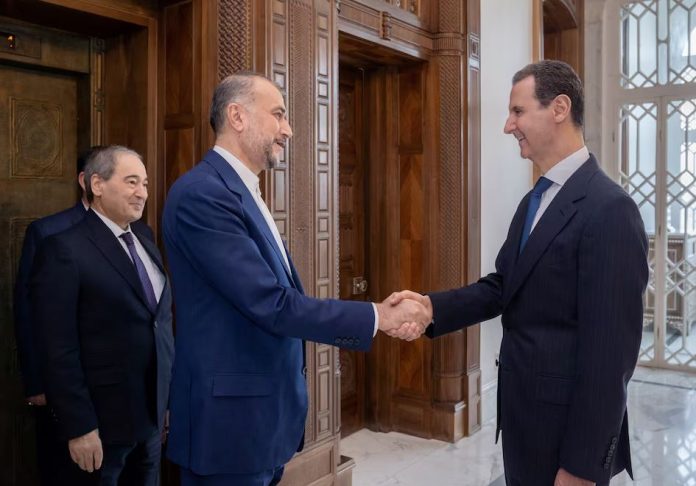
Assad, in a meeting with visiting Iranian Foreign Minister Hossein Amirabdollahian and his entourage, said economic and humanitarian support for the Palestinians is a human, Islamic, Arab and international duty.

He also noted that the uptick in the Israeli regime’s attacks on Syria is a sign of “insanity and extreme disarray within the Zionist regime”.

Pointing to the situation in Palestine, Assad said Israel is now facing the most unprecedented deep hatred on part of the world’s public opinion and governments, even among its friends and allies.

Iranian Foreign Minister Hossein Amirabdollahian, in turn, said Iran has conveyed its message to the US as a staunch supporter of the Zionist regime which is “directly responsible for the crimes and atrocities of Israel.”

Pointing to Israel’s missile attack on the Iranian mission in Damascus, Amirabdollahian said that Iran will definitely respond to the Zionist regime and will punish it.

Amirabdollahin then spoke about the situation in Gaza and the recent visits by the leaders of the Palestinian movements of Hamas and Islamic Jihad to Iran, saying the resistance front is prepared to continue standing up to the aggression by the Zionist regime.

The top Iranian diplomat however underlined that the humanitarian situation of Palestinians in Gaza and the West Bank requires the attention and immediate action of the international community due to “Israel’s brutal war crimes” and the continuation of the siege of Gaza.

Amirabdollahian also in a meeting with his Syrian counterpart Faisal Mekdad said the Zionist regime attack on Iran’s mission in Damascus proved that this regime does not adhere to any international standards and any human values.

Amirabdollahian added we made all the countries of the world aware of the Zionist regime’s crossing of all red lines and violations of laws, treaties and international laws.

Syrian Foreign Minister Faisal Mekdad for his part noted that this terrorist crime by Israel has all the hallmarks of a war crime and violation of all principles of international law.

Mekdad said the military aggression by Israel against the Iranian Embassy and Syrian infrastructure facilities is not separate from the events and “crimes of Israel” in Gaza.

He noted however that the Israeli regime’s crime will not go unanswered.

The two top diplomats then inaugurated the new Iranian consulate in the Syrian capital.

Russia says Ukrainian drone attack on nuclear plant ‘dangerous provocation’

Zaporozhye Nuclear Power

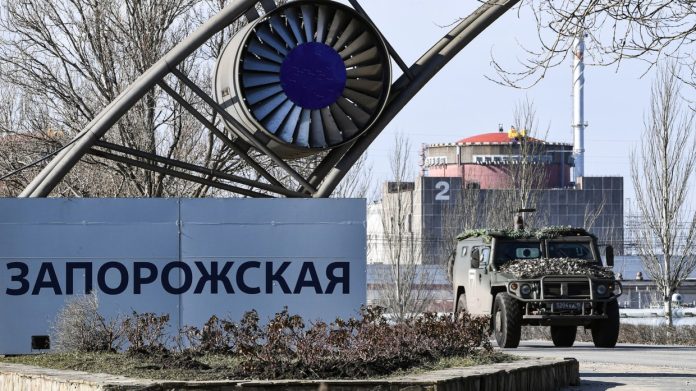
He was commenting on a strike carried out on Sunday by kamikaze drones on the nuclear power station in the city of Energodar in Zaporozhye Region. Multiple explosives-laden Ukrainian UAVs targeted what is Europe’s largest nuclear plant, hitting several parts of the complex.

“This is a very dangerous provocation. The [International Atomic Energy Agency] staff who are at the site had an opportunity to witness these attacks, so this is a very dangerous practice that has very bad, negative consequences in the future,” Peskov told reporters on Monday.

The attack occurred minutes after International Atomic Energy Agency (IAEA) personnel had inspected the facility, according to Russia’s nuclear energy agency Rosatom. One drone struck near the power plant’s canteen, leaving at least three employees injured and damaging a nearby truck. Another exploded in the vicinity of the cargo area. The third attacked the dome above Reactor Six, Rosatom reported.

The IAEA experts at the site confirmed the main reactor containment structure had suffered at least three direct hits.

Earlier on Sunday, IAEA chief Rafael Grossi condemned the strike warning that “such reckless attacks significantly increase the risk of a major nuclear accident”.

Grossi stated it was the first time the nuclear facility had been directly targeted since November 2022.

Rosatom took over the running of the nuclear power station after Zaporozhye Region was incorporated into Russia following a referendum in the autumn of 2022.

Nicaragua to ICJ: Germany ‘facilitating’ genocide in Gaza Strip

ICJ

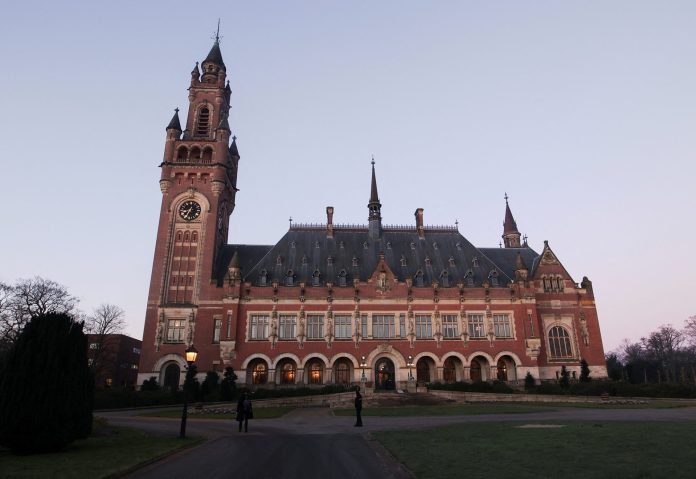
On Monday, the Nicaraguan delegation presented its case as part of a two-day hearing, accusing Germany of “facilitating the commission of genocide” and demanding the court impose emergency measures to halt German arms exports to Israel and reinstate funding for the UN Palestinian refugee agency, Unrwa.

In his opening comments to the court, Nicaraguan Ambassador to the Netherlands Carlos Jose Arguello Gomez said that, through its continued support of Israel, “Germany is failing to honour its own obligation to prevent genocide or to ensure respect of international humanitarian law.”

Nicaragua demanded the court issue five provisional measures, including that Germany “immediately suspend its aid to Israel, in particular its military assistance, including military equipment” and that it “reverse its decision to suspend the funding of UNRWA”.

The implementation of these measures was “increasingly more urgent and necessary” in light of the rapidly deteriorating humanitarian situation in the Strip, the delegation added.

Germany, whose lawyers will present the delegation’s defence on Tuesday, rejects the charges.

After the hearing, German legal representative Tania von Uslar-Gleichen dismissed Nicaragua’s presentation as “grossly biased”.

The Nicaraguan case argues that since the start of the war, Germany has been fully aware that Israel was violating international law in Gaza, and that, following the ICJ’s ruling on 26 January that found a “plausible risk” of genocide in Gaza, these violations were tantamount to genocide.

“There is no question that Germany was well aware of at least the serious risk of genocide being committed,” Gomez said.

Following the ICJ’s ruling, “The alarm was sounded and indications for genocide were flashing red.”

This, he added, obligated states to act to prevent genocide.

Despite this clarity, “Germany continues to this day to provide military assistance to Israel”, he continued.

Gomez added that while Germany had suspended its support for UNRWA “on the say so of Israel”, they had repeatedly ignored warnings from “the most important world authorities that genocide and other violations of international humanitarian law were being perpetrated by Israel in Palestine”.

Daniel Muller, a legal expert speaking on behalf of Nicaragua, cited statements by high ranking German officials acknowledging the “hellish” situation in Gaza, arguing that this “raises doubts about the respect of elementary rules of international law”.

From the start of the war, Gemany has justfied its unwavering support for Israel by invoking the regime’s right to self defence, with Federal Chancellor Olaf Scholz saying in parliament that, “Israel’s security is part of Germany’s raison d’état.”

“Surprisingly, Germany seems not to be able to differentiate between self-defence and genocide,” Gomez told the court on Monday.

As the civilian death toll in Gaza mounted, on 26 October, Scholz stated that he had “no doubt” that “the Israeli army will also respect the rules that arise from international law in everything it does”, a statement that directly contradicted that of the UN secretary general who had said two days earlier that “nothing can justify” the collective punishment of Palestinians.

Germany is the second largest arms exporter to Israel, approving $354m worth of weapons exports in 2023, a tenfold increase compared to the previous year.

“Germany cannot but be aware that the munitions, the military equipment, and the war weapons it is supplying” to Israel is facilitating its human rights violations in Gaza, Gomez added.

“It does not matter if an artillery shell is delivered straight from Germany to an Israeli tank shelling a hospital or university, or whether that artillery shell goes to replenish Israel’s stockpile for use at some later date,” he continued.

On Friday, the UN Human Rights Council called for a suspension of arms sales to Israel, marking the first time the body has taken a position since war broke out on 7 October.

Palestinian prisoner dies after nearly 4 decades in Israeli jails

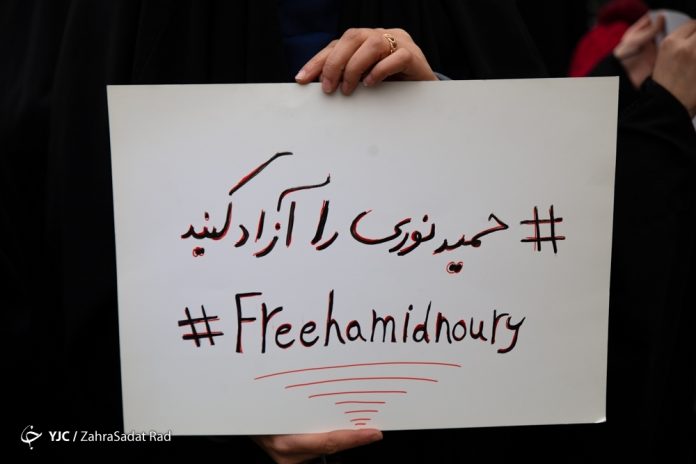
Walid Daqqa

“The leader and prisoner Walid Daqqa, suffering from cancer, was martyred at Assaf Harofeh Hospital (near Tel Aviv),” the Commission of Detainees and Ex-Detainees Affairs and the Palestinian Prisoners Society said in a joint statement.

Deqqa’s death was attributed to “the deliberate medical negligence policy pursued by the occupation prisons administration against sick prisoners”.

The statement added Deqqa hails from Baqa al-Gharbiyye, a town located in Israel on the border with the occupied West Bank, annd has been detained since 1986.

On Sunday, the newspaper Israel Today reported Daqqa’s death in the hospital due to a rare form of cancer.

It added that he has been imprisoned since 1986, on charges of kidnapping and killing an Israeli soldier in 1984, and he is one of the oldest Palestinian prisoners in Israeli jails.

Israel has detained at least 9,100 Palestinian prisoners, whose conditions have worsened since the war in the Gaza Strip began on Oct. 7 last year, according to Palestinian organizations concerned with prisoners.

Israel has waged a deadly military offensive on the Gaza Strip since a cross-border attack in early October by the Palestinian group, Hamas, killed less than 1,200 people.

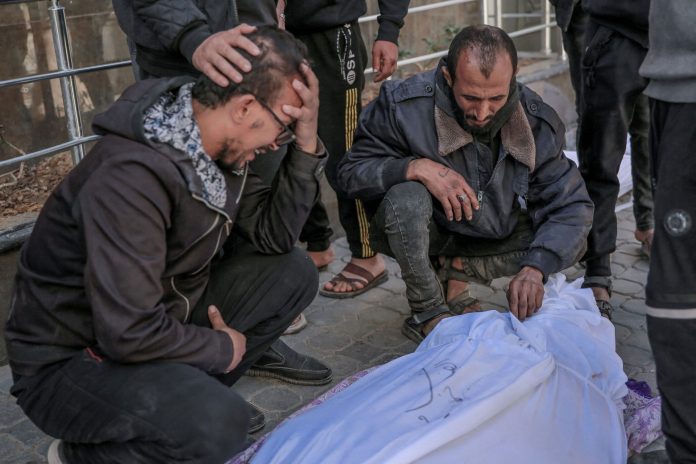
Nearly 33,200 Palestinians have since been killed and almost 75,900 injured amid mass destruction and shortages of necessities. Israel has also imposed a crippling blockade on the Gaza Strip, leaving its population, particularly residents of northern Gaza, on the verge of starvation.

The Israeli war has pushed 85% of Gaza’s population into internal displacement amid acute shortages of food, clean water, and medicine, while 60% of the enclave’s infrastructure has been damaged or destroyed, according to the UN.

Israel is accused of genocide at the International Court of Justice (ICJ), which last week asked it to do more to prevent famine in Gaza.