Saturday, December 27, 2025
Home Blog Page 96

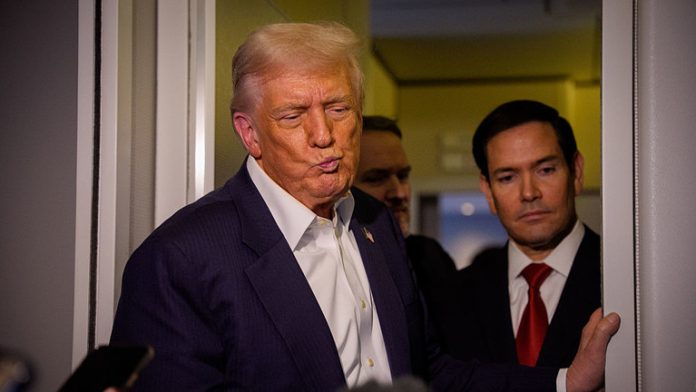
Kremlin says it does not have dates for summit between Putin and Trump

Kremlin

The comments followed a CNN report that a planned preparatory meeting between U.S. Secretary of State Marco Rubio and Russian Foreign Minister Sergei Lavrov had been put on hold.

The session, expected this week, was seen as a key step toward organizing a Trump-Putin summit. But the Kremlin denied that anything had been postponed.

“We cannot postpone something that has not been finalised. Neither President Trump nor President Putin have given exact dates. Preparation is needed, serious preparation,” Kremlin spokesman Dmitry Peskov said.

He added that Moscow currently had “no understanding” of when a meeting between the two presidents might take place.


Syria reconstruction costs put at $216bn: World Bank

Reconstruction is one of the most significant challenges facing Syria’s new authorities after the overthrow of longtime ruler Bashar al-Assad in December.

“Syria’s reconstruction costs are estimated at $216 billion after more than thirteen years of conflict,” the World Bank announced in its latest report, which it said assessed “infrastructure and building assets, covering the period from 2011 to 2024”.

The Syrian war, which erupted in 2011 with Assad’s brutal repression of anti-government protests, killed over half a million people and devastated the country’s infrastructure.

“The conflict has damaged nearly one-third of Syria’s pre-conflict gross capital stock, with direct physical damages to infrastructure, residential buildings, and non-residential buildings estimated at $108 billion,” the report added.

Among the categories assessed, infrastructure was the hardest hit, accounting for 48 percent of total damage, equivalent to $52 billion.

The report estimates costs of physical assets to range between $140 billion and $345 billion, “with a conservative best estimate” of $216 billion.

Aleppo province and the Damascus countryside, major rebel strongholds subjected to heavy bombardment during the early years of the war, bore the brunt of the most of the destruction.

“The challenges ahead are immense, but the World Bank stands ready to work alongside the Syrian people and the international community to support recovery and reconstruction,” stated Jean-Christophe Carret, World Bank Middle East division director.

The World Bank estimates reconstruction costs to be ten times greater than Syria’s projected 2024 GDP.

Since Assad’s fall, Syria’s new authorities have worked to attract investment for reconstruction.

They have signed agreements with several companies and governments, including Gulf countries.

Syrian Finance Minister Mohammed Barnieh said the report “provides a critical baseline of the massive scale of the destruction and of the reconstruction costs ahead”.

“Now, more than ever, it is imperative for the international community to mobilise support and partnership to help Syria restore essential infrastructure, revitalise communities, and lay the foundation for a more resilient future for its people,” he added.


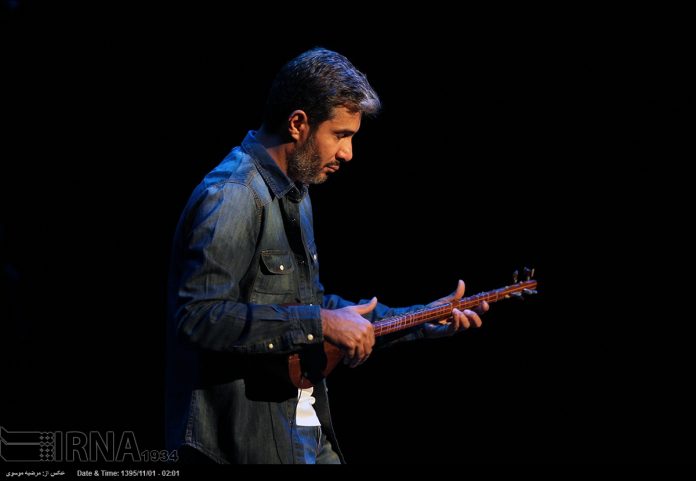
Iranian prominent actor, ex-football player detained in abduction and rape case

Judicial authorities confirmed that the case has entered the trial phase and that the suspect’s bail was converted into a detention order during a recent court session.

According to judicial sources, the case began when a woman in her early twenties lodged a formal complaint at Tehran’s Criminal Investigations Department, alleging that the actor had deceived her under the pretext of offering her a professional opportunity in the film industry, before forcibly taking her to a private residence where the assault reportedly occurred.

The investigation was subsequently divided between the Tehran Criminal Court, responsible for the kidnapping charge, and Branch 9 of the Criminal Court I, tasked with reviewing the assault allegations.

After multiple rounds of inquiry and expert evaluation, both the complainant and the accused appeared before the court in a closed session earlier this week. Following the session, the presiding judge ordered the defendant’s remand in custody.

The case continues to proceed under judicial review, and the accused has formally objected to the court’s decision. Authorities have not released the identity of the complainant.

Rare Qajar-era film reels unearthed at Iran’s Golestan palace

According to Afarin Emami, director of the Golestan Palace complex, the reels were identified during an ongoing project to catalog and preserve historical objects from the palace’s Album House collection. The films were found in boxes previously labeled as “raw film stock,” but close examination revealed that 31 of the reels contained actual recorded images.

The collection includes 28 reels of 35 mm film and 3 reels of 16 mm film. Specialists and custodians of the Album House made the discovery during archival review and preservation work.

Emami said that further technical study and expert analysis are required to determine the exact content and dating of the films, noting that they may extend the historical record of visual documentation from the late Qajar era, especially following the known footage from the reign of Mozaffar ad-Din Shah. “These films could provide invaluable insights into the Qajar period and may reshape our understanding of the earliest phase of Iranian cinematic history,” she added.

The Golestan Palace Album House currently holds over 61,000 historical artifacts, including early cameras and Qajar-era films, photo albums, paintings, glass negatives, and other related works.

It is recognized as the second most significant album collection in the world after the Windsor Album House in the United Kingdom.

Ukraine, Europe allies support peace negotiations based on current frontline

Trump is seeking to broker a peace deal to end the three-and-a-half-year war, triggered by Russia’s 2022 invasion. Last week, he called on Moscow and Kyiv to stop the fighting “where they are” after talks with both sides.

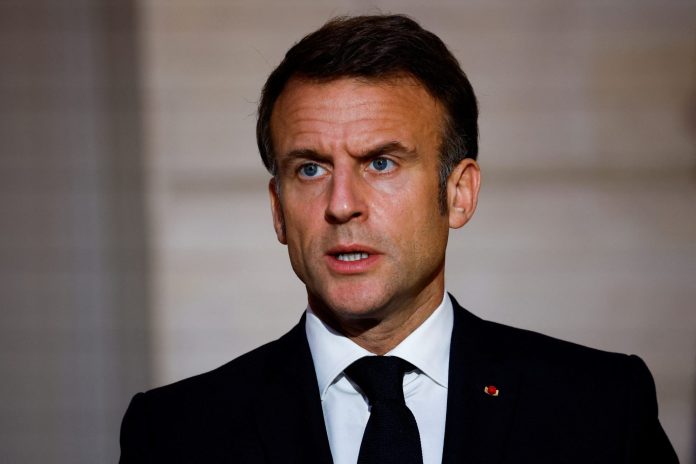
“We strongly support President Trump’s position that the fighting should stop immediately, and that the current line of contact should be the starting point of negotiations,” said a statement signed by Ukraine’s Volodymyr Zelensky, EU chiefs Antonio Costa and Ursula von der Leyen, France’s Emmanuel Macron, Germany’s Friedrich Merz, Britain’s Keir Starmer and Italy’s Giorgia Meloni.

“We remain committed to the principle that international borders must not be changed by force,” said the leaders, who also included those of Denmark, Finland, Norway and Poland.

EU leaders are set to close ranks in support of Ukraine at a Brussels summit on Thursday — followed a day later by a “coalition of the willing” meeting of European leaders in London to discuss the next steps to help Kyiv.

Trump has announced his intention to meet Russian President Vladimir Putin in Budapest in coming weeks, but it was not clear whether Zelensky — who was shut out from the previous meeting in August in Alaska — would attend.

“We are clear that Ukraine must be in the strongest possible position — before, during, and after any ceasefire,” the leaders on Tuesday noted.

“We must ramp up the pressure on Russia’s economy and its defence industry, until Putin is ready to make peace,” they added.

The European Union is considering a new 140-billion-euro ($163-billion) loan for Ukraine funded by frozen Russian central bank assets, which will be discussed at Thursday’s summit in Brussels.

Officials are hoping they will give a greenlight for a more detailed legal proposal to be drawn up.


Iran attends FATF plenary in Paris for first time in six years

France, Paris, Cityscape with french flag and Eiffel tower in background

The participation came at the official invitation of the global financial watchdog.

Hadi Khani, Deputy Minister of Economic Affairs and head of Iran’s Financial Intelligence Center, took part in the session to present updates on the country’s Action Plan, particularly regarding the recent approval of legislation to join the UN Convention against Transnational Organized Crime, known as the Palermo Convention.

During the meeting, the Iranian delegation outlined the legislative process and the government’s implementation efforts. Discussions also focused on scheduling follow-up sessions between Iran and FATF representatives to clarify outstanding issues and respond to member questions.

In addition to Iran, the plenary reviewed the progress of several countries on the FATF “grey list,” including Monaco, Bulgaria, Syria, Yemen, Algeria, Mozambique, Burkina Faso, Nigeria, South Africa, the Democratic Republic of Congo, South Sudan, Cameroon, Namibia, Angola, Gibraltar, Kenya, Myanmar, Vietnam, Nepal, Laos, and Venezuela.

The FATF plenary provides member and observer states an opportunity to assess each country’s efforts to strengthen anti–money laundering and counter-terrorism financing frameworks.

Deputy FM: IAEA seeks to inspect Iran’s undamaged nuclear sites

IAEA

Qaribabadi said on Monday that, under the Cairo understanding between Iran and the IAEA, such requests were previously answered within a week, but they now fall under the authority of the SNSC.

Referring to the Iranian Parliament’s resolution and the designation of the Supreme National Security Council as the decision-making body, he noted that any inspection request will be submitted to the Council and Iran will act according to its decision.

He added that during the implementation of the Cairo understanding, IAEA inspectors had visited several undamaged Iranian facilities, but such requests are no longer handled within that framework.

Iranian Foreign Minister Seyed Abbas Araqchi and IAEA Director General Rafael Grossi reached an understanding in Cairo on September 8 on a new cooperation mechanism following attacks on safeguarded nuclear facilities in Iran.

After the agreement was signed, Araqchi stated that the understanding would no longer be valid if any hostile act were committed against Iran or if the “Snapback” mechanism were triggered.

On October 4, following the move by the three European countries — the UK, France, and Germany — to activate the Snapback mechanism, Iran’s Foreign Minister declared that the Cairo agreement could no longer serve as a basis for cooperation with the IAEA.


IRGC commander warns of crushing response to any attack on Iran

Speaking in Tehran on Tuesday during a meeting with Iraqi National Security Adviser Qasim al‑Araji, Major General Pakpour said the Zionist‑American enemy had relied on its missile shield, including THAAD, but Iranian missiles were fired and struck their intended targets.

General Pakpour stressed that Iran’s armed forces are at full readiness and reiterated that any hostile act against the country would bring a devastating response.

The Islamic Republic has so far responded to aggression by the Zionist regime on three occasions in operations dubbed “True Promise”, the most recent of which occurred during the 12‑day conflict last June.

Iran govt. spokesperson: No special budget allocated for ‘hijab situation room’; enforcement must respect social realities

Iran Hijab

Speaking at a weekly press briefing on Tuesday, Mohajerani was responding to recent remarks by the head of Tehran’s Promotion of Virtue Headquarters, who said an operations room on hijab enforcement had been formed, involving 80,000 volunteers.

Mohajerani reiterated that cultural actions should take into account the broader social environment. “We must be cautious about unconventional behavior in society, but we also believe cultural norms should be strengthened through social understanding, not force,” she said.

Quoting President Massoud Pezeshkian, she added, “Hijab cannot be imposed by force, just as no one has managed to forcibly remove it from Iranian women. Such experiences have failed.”

Mohajerani also said the president is committed to fiscal discipline and confirmed that no dedicated funds have been assigned for hijab enforcement.
She urged against creating social polarization and stressed Iran’s long cultural tradition of modesty and dignity.

US opposes EU plan for frozen Russian assets: Bloomberg

Russian Central Bank

US officials reportedly conveyed the position to their European colleagues during the International Monetary Fund meeting in Washington last week. The US cited risks to market stability associated with the potential seizure of the Russian assets, one of the sources claimed.

The development constitutes a major setback for the EU, which has been trying to secure broader support within the G7 group for the potential action on the Russian assets, Bloomberg noted.

Western nations froze an estimated $300 billion in Russian assets after the escalation of the Ukraine conflict in February 2022 – some €200 billion ($213 billion) of which is held by the Brussels-based clearinghouse Euroclear. Kiev’s Western backers have already tapped into the revenues generated by the funds to bankroll Ukraine.

Recently, the EU has been in discussion of a plan to provide a so-called ‘reparations loan’ of up to €140 billion ($163 billion) to Kiev, while using frozen Russian assets as collateral to back the bloc-issued bonds. The move would effectively amount to their seizure, given that Ukraine would be obliged to repay the loan only once Russia compensates it for the damages inflicted during the conflict.

The proposal has been backed by Germany, France, and several eastern EU countries but faced strong resistance from Belgium. Prime Minister Bart De Wever has insisted that any liability for the proposed move must be shared among all the bloc members rather than Belgium only.

Supporters of the plan argue that the scheme falls short of a seizure and insist Russia could be ultimately forced to pay up as a part of a future peace settlement. Moscow, however, has squarely described any attempts to use its assets and proceedings generated from them as “theft,” threatening retaliation. Third-party skeptics, including IMF chief Christine Lagarde, have also warned that the move could undermine global trust in the EU’s financial system and heavily damage markets.