Friday, January 2, 2026
Home Blog Page 954

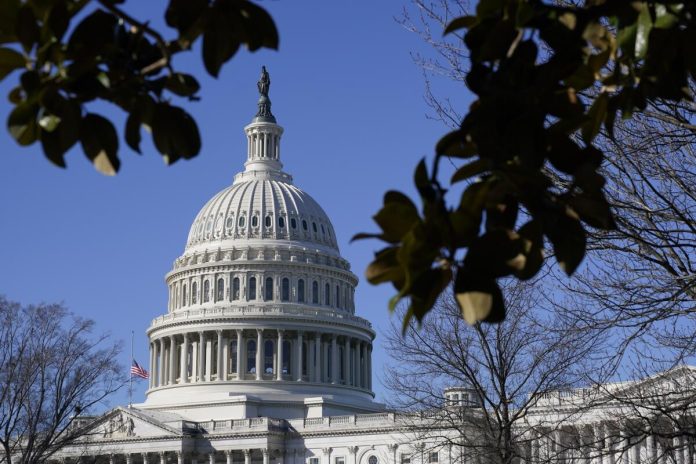
US House passes series of bills aimed at “squeezing Iran financially” after Israel attack

Three separate bills were brought to the floor Monday under suspension of the rules, a fast-track process that requires two-thirds support for passage, allowing for floor votes to be taken immediately.

The bills largely seek to impose financial penalties on Iran, those that support it and “its network of proxies”.

The bills voted for on Monday night are largely noncontroversial and enjoy support from a majority of Democrats.

They include a bill to terminate the tax-exempt status of nonprofit organizations found to be supporting terrorist groups; legislation aimed at disrupting the Chinese purchase of Iranian oil and petroleum products; and an effort to cut off the Iranian government from using the US financial system.

But even as Democrats support this package of bills, they are critical of Republicans for failing for weeks to bring to a vote the Senate-passed $95 billion national security supplemental, which includes aid for not only Israel but also Ukraine and Taiwan.

Rep. Brad Schneider (D-Ill.) expressed support for H.R. 6408 — a bill that would terminate the tax-exempt status of terrorist-supporting organizations, which he co-sponsored with Rep. David Kustoff (R-Tenn.).

But Schneider pleaded with Republicans to bring the national security supplemental legislation to the floor.

“I again want to thank my colleague, Rep. Kustoff, for his partnership and work on this legislation … and I urge all of my colleagues to not only support this legislation, but also, as we have said, to support the essential security funding that came from the Senate,” he said.

House Speaker Mike Johnson (R-La.) on Monday evening unveiled a plan to Republicans to move four separate bills to address aid for Ukraine, Israel, Taiwan and other national security priorities. It’s not yet clear how Democrats will respond to the proposals.

The White House earlier on Monday announced it opposed a stand-alone bill for aid for Israel.

Earlier on Monday, a bipartisan group of lawmakers called for Johnson to put to a vote on Monday night the Senate-passed national security supplemental.
Israel pledges response to Iran military operation

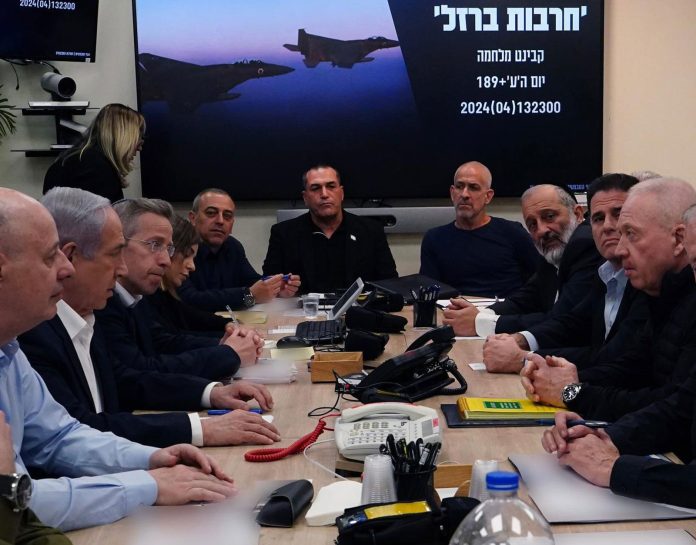
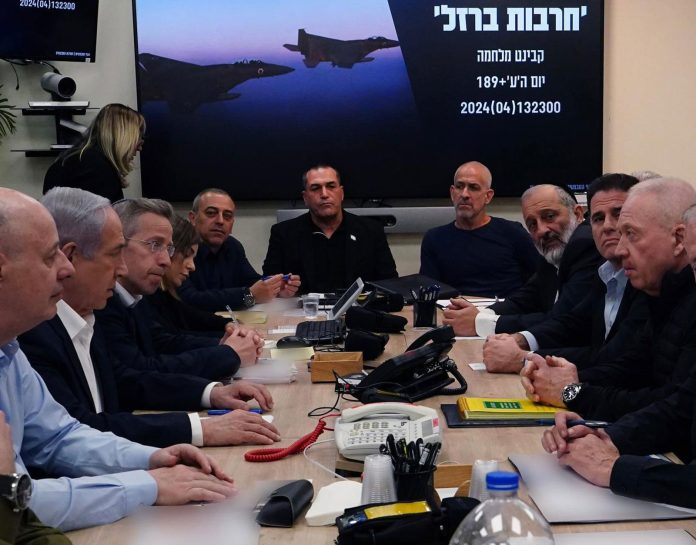
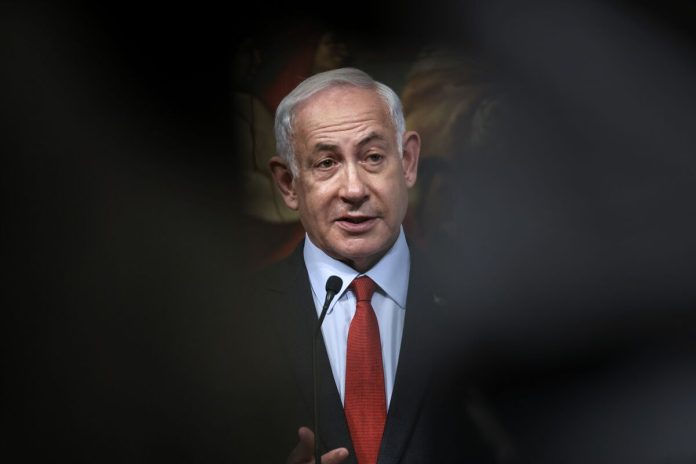
Prime Minister Benjamin Netanyahu summoned his war cabinet for the second time in less than 24 hours on Monday over Iran’s missile and drone attack.

Israel’s military Chief of Staff Herzi Halevi stated Tel Aviv would respond but did not provide details.

“This launch of so many missiles, cruise missiles, and drones into Israeli territory will be met with a response,” he said at the Nevatim Airbase in southern Israel.

Iran’s attack – launched in retaliation for an Israeli strike on its embassy compound in Damascus earlier this month – has increased fears of open warfare between Israel and Iran and heightened concerns that violence rooted in Israel’s war on Gaza is spreading further in the region.

“We’re on the edge of the cliff and we have to move away from it,” Josep Borrell, the European Union’s High Representative for Foreign Affairs and Security Policy, told Spanish radio station Onda Cero.

“We have to step on the brakes and reverse gear,” he added.

French President Emmanuel Macron, German Chancellor Olaf Scholz and United Kingdom Foreign Secretary David Cameron made similar appeals, echoing calls for restraint by Washington and United Nations Secretary-General Antonio Guterres.

“Neither the region nor the world can afford more war,” Guterres said late on Sunday, adding, “Now is the time to defuse and de-escalate.”

Russia has refrained from criticising its ally Iran in public over the strikes, but expressed concern about the risk of escalation on Monday and also called for restraint.

“Further escalation is in no one’s interests,” Kremlin spokesman Dmitry Peskov noted.

The attack came in response to an Israeli air strike on the Iranian consulate in Damascus on April 1, which killed seven members of the Islamic Revolutionary Guard Corps, including two generals.

Tehran’s retaliatory attack on Israel has heightened concerns that violence will spread further in the region.

Wary of the dangers, US President Joe Biden has told Netanyahu that Washington will not take part in any Israeli counteroffensive against Iran.

Since the start of Israel’s war on Gaza in October, clashes have erupted between Israel and Iran-aligned groups in Lebanon, Syria, Yemen and Iraq.

Israel says it is seeking to destroy the Palestinian group Hamas after it led an attack on Israel on October 7, killing at least 1,139 people, mostly civilians, and taking around 250 others captive.

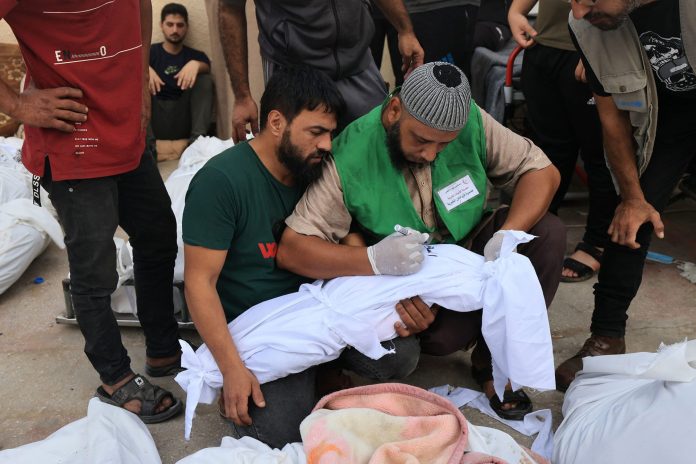
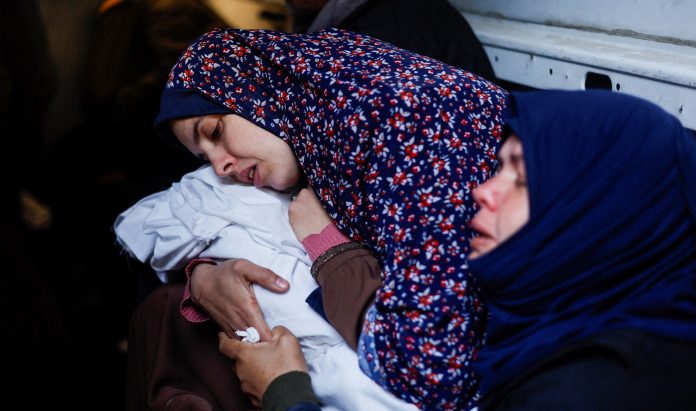
Nearly 34,000 people, mostly women and children, have been killed in the Israeli assault on Gaza, according to Palestinian authorities, and large parts of the territory have been reduced to rubble. Aid agencies have warned that parts of Gaza are facing a looming famine amid severe Israeli restrictions on supplies of food and humanitarian aid.

Netanyahu’s government ‘existential threat’ to Israel: Lapid

Benjamin Netanyahu

“If we don’t move this government, it will bring destruction upon us,” Lapid said on social media platform X.

Recent days saw attacks by illegal Israeli settlers on Palestinian towns in the West Bank following the death of a settler in the occupied territory.

At least two Palestinians were killed and several Palestinian homes and vehicles were torched in the settler violence.

Under Netanyahu’s rule, the “Jewish terrorist violence” became out of control, Lapid added, renewing his call for holding early elections in Israel.

Tensions have been running high across the West Bank since Israel launched a deadly military offensive that killed nearly 33,800 people in the Gaza Strip following an Oct. 7 Hamas attack.

At least 465 Palestinians have since been killed and 8,400 others injured by Israeli army fire in the occupied territory, according to the Palestinian Health Ministry.

Iran says surprised by UK support for Israeli crimes

Gaza War

In a phone conversation, Hossein Amirabdollahian and David Cameron discussed the latest regional developments.

Amirabdollahian referred to the recent Iran’s missile and drone attacks on some specific targets in Israel, describing it as Iran’s legitimate defense with the aim of punishing the Israeli regime.

The raids followed Israel’s attack on the Iranian consulate in Damascus that left seven Iranian military advisors dead.

The top Iranian diplomat said the crises in West Asia stem from the destructive role of the Israeli regime.

He further expressed surprise at the extent of support Britain gives to the crimes of the Zionist regime and its killing of children and innocent people in Gaza.

Amirabdollahian added it is surprising that while several thousand tons of bombs have been dropped on the oppressed people of Gaza in the past six months, Britain is worried about the response of the Islamic Republic of Iran to the brutal attack of the Israeli regime against the Iranian diplomatic mission in line with of the principle of legitimate defense under Article 51 of the United Nations Charter.

He also noted that Iran does not welcome an escalation in the region, but if the Israeli regime is looking for an act of adventurism, then Iran’s next response will be immediate, stronger and more extensive.

British Foreign Secretary David Cameron, for his part, expressed concern over rising tensions in the region following Iran’s response to the Israeli regime’s “acts of aggression.”

He then spoke about the situation in Gaza, saying Britain worked round the clock during the recent debate on a UN Security Council resolution in order to establish a ceasefire in Gaza.

Cameron went on to say that Britain is making an effort to get the two sides to exchange their prisoners as well.

Cameron also added that the Iranian military action against Israel was so worrying and increased regional tension.

He said at the same time, London will ask Tel Aviv to not make any move as it does not want a repetition of what happened in a much wider manner.

Iranian FM urges Germany to focus on Gaza peace

Gaza War

In the telephone conversation with his German counterpart, Iranian Foreign Minister Hossein Amirabdollahian outlined the powerful operation of the armed forces of the Islamic Republic of Iran against Israel, saying Iran carried out minimal and precise operations against the military centers of the Israeli regime, from which the Iranian embassy in Damascus had been attacked.

Seven Iranian military personnel were killed in the Israeli missile attack on April 1. In response, Iranian armed forces carried out missile and drone attacks against some specific targets in Israel.

Amirabdollahian condemned Germany’s support for the Zionist regime and added that if the Israeli regime wants to continue its adventurism, the counterpunch will be immediate and massive.

He underscored that the goal of the Islamic Republic was to warn the Israeli regime to understand the consequences of crossing Iran’s red lines.

The top Iranian diplomat said Iran hopes that instead of condemning Tehran’s legitimate actions, Germany’s efforts will focus on stopping the war in Gaza and establishing stable peace and security from the Mediterranean Sea to the Red Sea.

For her part, Annalena Baerbock Germany’s foreign minister stressed the necessity of holding as much dialog as possible in this dangerous time, saying the recent developments have caused an increase in severe turbulence in the region and show that the tensions are on the rise.

Ms. Baerbock said, “Therefore, we believe that our joint efforts should be focused on preventing the tensions from widening.”

She added that her country is trying everyday to end the war and pave the way for establishing lasting peace.

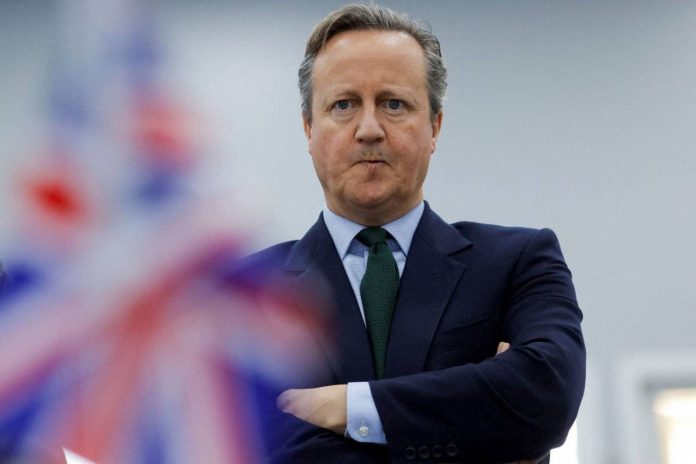
UK expresses hope there would be no “retaliatory response” to Iran’s attack against Israel

David Cameron

The Iranian strikes, which Israeli officials say involved around 300 drones and missiles of various types, came in response to the bombing of an Iranian consular compound in Syria earlier this month that left several senior Iranian military officers dead.

In an interview with Sky News on Monday, Cameron, who served as UK prime minister between 2010 and 2016 and was appointed foreign secretary last year, described the Iranian strike as a “double defeat”. He argued that the attack “was almost a total failure, and they’ve revealed to the world that they are the malign influence in the region”.

Pointing to the scale of the attack, Cameron remarked: “Of course if you’re sitting in Israel this morning you’re thinking quite rightly – ‘We have every right to respond to this’… But we are urging that they shouldn’t escalate.”

“I totally understand those in Israel who want to see more, but I think this is a time to think with head as well as heart and to be smart as well as tough,” he argued.

Cameron added that he hoped there would be no “retaliatory response”, and that the world would shift its focus back to Hamas and the hostages that had been captured by the Palestinian armed group after it attacked Israel last year.

Israeli officials claimed that the military shot down 99% of the incoming Iranian drones and missiles and that the attack did “only minor damage to the infrastructure at the Nevatim base”. Air force operations in the area were not affected, the officials added.

Iran, however, has insisted that the barrage was more successful than expected, claiming that “important military targets” had been destroyed, and that Nevatim air base was rendered inoperable. Tehran said that it had no intention of continuing the attacks but warned Israel of a harsh response if it were to retaliate.

Two Israeli officials familiar with the deliberations told CNN Israel’s war cabinet has been engaged in a heated debate about how and when to respond to Iran’s weekend strikes.

The war cabinet remains determined to respond to Iran’s attack, but as it convenes Monday afternoon, its members continue to debate the timing and scope of such a response, the officials said.

France calls for ‘isolation’ of Iran

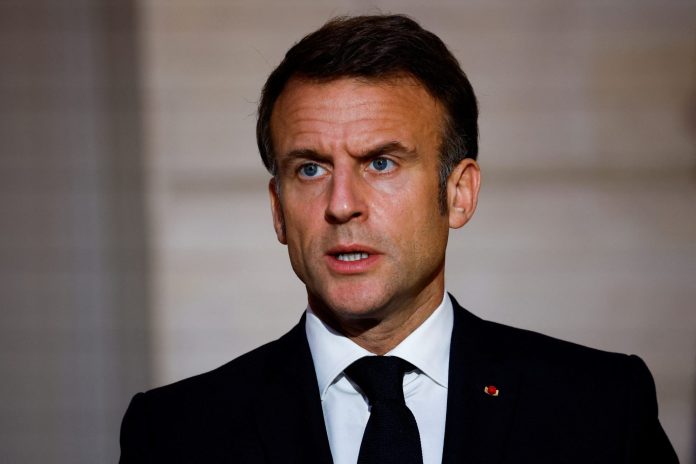
French President Emmanuel Macron

Tehran carried out a massive airstrike on the Israeli occupied-territory on Saturday and Sunday in response to the deadly bombing of the Iranian embassy in Damascus earlier this month.

In an interview to BFMTV and RMC radio, Macron condemned Iran’s response, calling it “disproportionate”.

“Instead of targeting Israeli interests outside Israel, [Tehran] went after Israel on its soil, and attacked from their own soil, which is a first,” he said, noting that the airstrikes had caused “a profound rupture” in already strained relations between the two Middle Eastern states, paving the way for further “dangerous reactions” on both sides.

Macron added the international community “will do everything to avoid escalation” in the conflict and urged Israel not to retaliate via military means. Instead, he stated the focus should be on “isolating“ Iran and called for more sanctions on Tehran, including “boosting pressure on its nuclear activities”, which he believes would help “find a path to peace in the region”.

Iran has justified the recent attack by citing its right of self-defense under Article 51 of the United Nations Charter. It also pledged not to take further action, unless Israel strikes again, but warned that a military response from the Zionist regime would prompt an even bigger escalation.

Iran has been the subject of various international sanctions for decades amid fears in the West that its nuclear enrichment program was aimed at producing a nuclear bomb. Tehran has repeatedly declared that its nuclear program remains purely peaceful as always and that the Islamic Republic had no intention of developing nuclear weapons as a matter of an Islamic and state principal.

Germany warns Iran against further attacks on Israel

German Chancellor Olaf Scholz

“We strongly condemn the Iranian attack and warn against any further escalation. Iran must not continue on this path,” Scholz told reporters during his visit to China.

“We will do everything we can to prevent further escalation and will therefore continue to pursue our current course. We can only warn everyone, especially Iran, against continuing this way,” he stressed.

Iranian Armed Forces launched hundreds of missiles and drones at the occupied territories in retaliation for the Israeli regime’s April 1 terrorist strike on the Islamic Republic’s consulate in Syria. Overnight on Saturday and early Sunday morning, more than 300 Iranian drones and missiles rained down on targets in the Israeli-occupied lands.

The large-scale operation came less than two weeks after Israeli warplanes bombed the consular annex of Iran’s embassy in the Syrian capital of Damascus, killing seven members of the Islamic Revolution Guards Corps (IRGC) who were on an advisory mission to the Arab country.

“Fortunately, the Israeli air defense forces were largely able to repel this attack, supported by the US and partners in the Arab world,” Scholz claimed.

“This is a good thing and something to be impressed by in terms of the efficiency of Israeli defense and air defense capabilities, as well as the cooperation with all partners,” he added.

Iran has justified the recent attack by citing its right of self-defense under Article 51 of the United Nations Charter. It also pledged not to take further action, unless Israel strikes again, but warned that a military response from the Zionist regime would prompt an even bigger escalation.

Iran says anti-Israel retaliatory attack ‘necessary, appropriate’

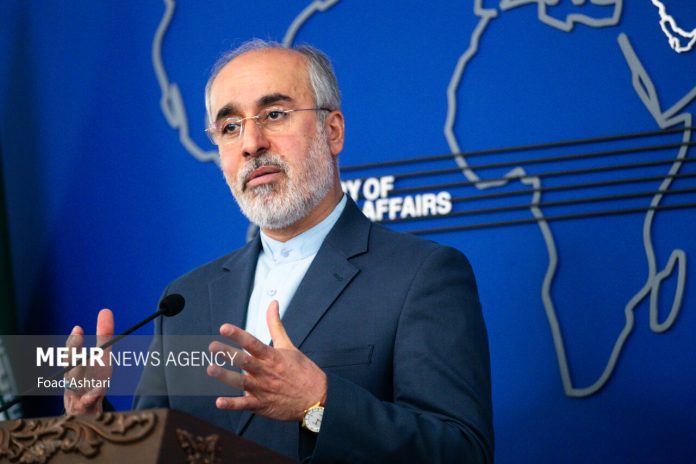
Nasser Kanaani

Kanaani made the remarks during a press briefing on Monday, a day after Iranian Armed Forces launched hundreds of missiles and drones at the occupied territories in retaliation for the Israeli regime’s April 1 terrorist strike on the Islamic Republic’s consulate in Syria.

“Iran’s action was necessary and proportionate and targeted military sites. Iran acted to defend its national security and interests given the lack of action by the UN Security Council and ensuing irresponsible behavior of the US, Britain and France,” he said.

Kanaani also stressed that the Islamic Republic does not seek an escalation of regional tensions, adding, however, that the country will act “more strongly” within the framework of the UN Charter to deter and punish an aggressor who crosses its red lines.

Overnight on Saturday and early Sunday morning, more than 300 Iranian drones and missiles rained down on targets in the Israeli-occupied lands.

The large-scale operation came less than two weeks after Israeli warplanes bombed the consular annex of Iran’s embassy in the Syrian capital of Damascus, killing seven members of the Islamic Revolution Guards Corps (IRGC) who were on an advisory mission to the Arab country.

Also in his remarks, the top diplomat stated that Iran, as “a power that creates security”, exercised its inherent right to defend itself under Article 51 of the UN Charter.

“Iran and its diplomatic apparatus and Armed Forces acted professionally… and delivered a legitimate response to the [Israeli] regime’s act of aggression. Iran acted logically and responsibly,” he added.

“We had issued necessary warnings before taking action …, acted powerfully and will continue to do so.”

Commenting on the Western countries‘ condemnation of the retaliatory operation, Kanaani said that they should take into account that the attack was legitimate and “appreciate Iran’s restraint concerning regional security and peace in recent months.”

“Instead of making accusations against Iran, they (the Western states) should ask themselves what they have done in the course of seven months of an open genocide and why they have not fulfilled their legal and moral responsibility towards Palestine,” he noted.

Israel waged a genocidal war on the Gaza Strip on October 7 after the Palestinian Hamas resistance group carried out a historic operation against the usurping entity in retaliation for the regime’s intensified atrocities against the Palestinian people.

So far, Israel has killed at least 33,800 Palestinians, mostly women and children, and injured 76,500 others.

Israel says weighing response to Iranian military operation

Israel War Cabinet

Tehran launched several waves of drones, cruise missiles and ballistic missiles at Israel over the weekend, in response to the bombing of the Iranian embassy in Damascus earlier this month. The strike on the consulate killed seven members of the Iranian military, including two high-ranking generals.

“Just because we were successful in intercepting, we should not underestimate what Iran did,” Lerner stated.

The Israeli government is “currently reviewing the options” after the “IDF has presented what it believes could be done”, ABC quoted the spokesman as saying. The response could entail a “strike or no strike” Lerner continued, adding that the government could make a decision as early as Monday.

Despite “emotions running high” among the Israeli leadership following the airstrikes, US President Joe Biden has urged Israeli Prime Minister Benjamin Netanyahu to show restraint in an effort to avoid further military escalation, according to a senior administration official.

Tehran has warned that a military response would prompt an even bigger escalation. Iran’s Supreme National Security Council (SNSC) has warned of a “much harsher response” against any further action by Israel in the aftermath of the Islamic Republic’s retaliatory operation into the occupied territories.