Monday, December 22, 2025
Home Blog Page 928

US House approves aid for Ukraine, Israel

U.S. HOUSE AND SENATE

The rare weekend votes were the culmination of months of fierce debate within the House GOP conference over how — or even if — Congress should step in with another round of military help for Ukraine, Israel and Taiwan while providing humanitarian aid for civilian victims in Gaza and other war-torn regions around the globe.

The debate had split House Republicans into warring factions, pitting Reagan-minded traditionalists — who support strong interventions overseas to counter the imperial designs of Russia and China — against a newer brand of “America First” conservative who fought to limit the foreign spending and focus instead on domestic problems, particularly the migrant crisis at the southern border.

In the end, Speaker Mike Johnson (R-La.) defied his conservative critics, pushing to the floor a series of four bills providing the overseas assistance but detaching those funds from a separate border security bill, which failed on the floor during Saturday’s votes. He framed the aid as a simple, but crucial, continuation of America’s responsibility to democratic allies under siege from despots.

“I think providing lethal aid to Ukraine right now is critically important,” Johnson said this week.

“I really do believe the intel and the briefings that we’ve gotten. I believe Xi and Vladimir Putin and Iran really are an axis of evil.”

“To put it bluntly, I would rather send bullets to Ukraine than American boys,” he added.

“My son is gonna begin in the Naval Academy this fall, this is a live-fire exercise for me as it is so many American families. This is not a game. It’s not a joke. We can’t play politics with this, we have to do the right thing.”

Rep. Mike McCaul (R-Texas) said Johnson had reached the decision to charge ahead by a method that’s become routine for the devoutly evangelical Speaker: he turned to prayer.

“I think he was torn between trying to save his job and doing the right thing,” added McCaul, the chairman of the Foreign Affairs Committee who has pushed for months for more Ukraine aid.

“We’ve told him what’s at stake here, and you want to be on the right side of history. And he’s a man of faith. He doesn’t wear it on his sleeve, but he, obviously, the night before he made a decision, reached out for guidance, and the next day he made the call.”

Passage of the foreign aid bills marked a moral victory for the inexperienced Speaker, who took the gavel less than six months ago. The package — passed with four separate votes — includes roughly $61 billion for Ukraine, $26 billion for Israel, $8 billion for allies in the Indo-Pacific, and a package of additional national security measures that features a potential ban on the uber-popular TikTok app.

But it’s come with political risks, provoking conservatives who were already furious with his penchant for reaching across the aisle to seal deals with President Joe Biden on major legislation opposed by the Speaker’s right flank, including bills to fund the federal government and extend the spying powers of Washington’s intelligence agencies.

Those mounting frustrations have spurred a pale — but not powerless — effort to remove Johnson from the top job, which has gained steam in recent days as the Speaker made steps toward sending aid overseas. Rep. Marjorie Taylor Greene (R-Ga.) filed a motion to vacate late last month, which Reps. Thomas Massie (R-Ky.) and Paul Gosar (R-Ariz.) endorsed this week.

Greene has not yet said when she plans to force a vote on her ouster resolution, and her path forward was muddied last week after former President Donald Trump endorsed Johnson’s leadership — dealing a blow to the Georgia Republican, who considers Trump a close ally.

Still, even some of Johnson’s allies are bracing for the possibility that Greene might pull the trigger.

“With a lot of this behind us, you know, we can move forward with some more normalcy, I hope,” stated Rep. Mike McCaul (R-Texas), chairman of the Foreign Relations Committee.

“Unless we have a motion to vacate, which is foreseeable.”

Johnson, for his part, has brushed off the threat — especially in the face of moving aid for Ukraine — underscoring the important role the U.S. has in supporting Kyiv’s leaders at a critical moment in their battle against Russia.

“My philosophy is you do the right thing and you let the chips fall where they may. If I operated out of fear over a motion to vacate, I would never be able to do my job,” Johnson said, adding, “I could make a selfish decision and do something that’s different, but I’m doing what I believe to be the right thing.”

Hardline conservatives, however, fundamentally disagreed with that assessment. And while they were frequently grouped together during the debate, they had different reasons for their opposition.

Some were spending hawks wary of piling billions of dollars more on the federal debt. Others were isolationists, in the mold of Trump, who want to focus U.S. resources more squarely on domestic problems.

Another factor driving the opposition was less visible: A number of conservatives, particularly those most closely allied with Trump, simply don’t trust Ukrainian President Volodymyr Zelensky and are reluctant to help him. Zelensky had refused Trump’s entreaties in 2019 to launch an investigation into Biden and his family’s business dealings in Ukraine — a request that led directly to Trump’s first impeachment at the hands of House Democrats later that same year.

Yet the single greatest issue fueling the conservative outcry related to the migrant crisis.

Johnson had initially demanded that any new foreign aid be accompanied by provisions to bolster security at the southern U.S. border. But he went on to reject a Senate-negotiated border deal that was linked to foreign aid, and later abandoned his border requirement altogether in favor of a strict focus on assistance for allies overseas — a move that left conservatives incredulous.

“How much sense does it make to secure other countries and not secure America,” asked a frustrated Rep. Ralph Norman (R-S.C.).

Johnson has been careful to hear out the concerns of his conservative critics, hosting meetings in his Capitol office, delaying his initial plans for voting on the foreign aid package this week, and tacking a border vote onto Saturday’s calendar.

In an effort to appease his right flank, Johnson also proposed a series of changes to the Senate-passed bill — he called them “innovations” — that featured a number of Republican national security and foreign policy priorities. That GOP wish-list includes new sanctions on Iran; a potential ban on TikTok; and several proposals to ease the financial burden on U.S. taxpayers by providing part of the Ukraine aid in the form of a loan, while empowering the president to seize Russian assets and use them to help pay the enormous cost of Ukrainian reconstruction.

He also split the foreign aid priorities into separate bills, giving lawmakers in both parties a chance to vote yes or no on each specific measure rather than as a full package.

In large part, Johnson’s strategy failed to bring along the conservative critics: more than half of the GOP conference voted against the Ukraine funding, leaving Democrats to carry the vote. And the four bills will now be packaged together and sent to the Senate, angering the hardliners even further.

But if Ukraine aid divided Republicans, sending assistance to Israel fractured Democrats, though to a lesser degree.

Saturday’s vote came just over six months after Hamas launched a brutal attack on Israel that sparked a war in the Middle East — a conflict that has splintered House Democrats, pitting staunchly pro-Israel Democrats against progressives who have sounded the alarm about the mounting deaths and growing humanitarian crisis in Gaza.

The Israel bill included nearly $9.2 billion in humanitarian aid for Gaza, Ukraine and other war zones in the world, a provision Democrats had demanded as a condition of their support. But the money was not enough to get some liberals on board, who opposed the Israel bill Saturday largely because it did not place conditions on aid for Jerusalem.

“I believe that we need to have conditions enforced on U.S. military assistance,” Rep. Alexandria Ocasio-Cortez told reporters.

“We have to ensure that human rights are protected and international law is adhered to. Those conditions are not presently in this bill.”

Saturday was the third time in six months that Johnson tried to move assistance for Israel through the House. The first attempt, in November, was successful but fell largely along party lines, with the chamber approving $14.3 billion for Israel while also proposing the same amount in cuts to the IRS — a provision that sparked staunch Democratic opposition. The Senate refused to take up the measure.

Then in February, the House torpedoed a standalone Israel aid bill, with many Democrats opting against the $17.6 billion bill as the Senate worked towards a full foreign aid package.

On Saturday, they finally secured the elusive aid. The package now goes to the Senate, which is expected to pass it in the middle of next week.


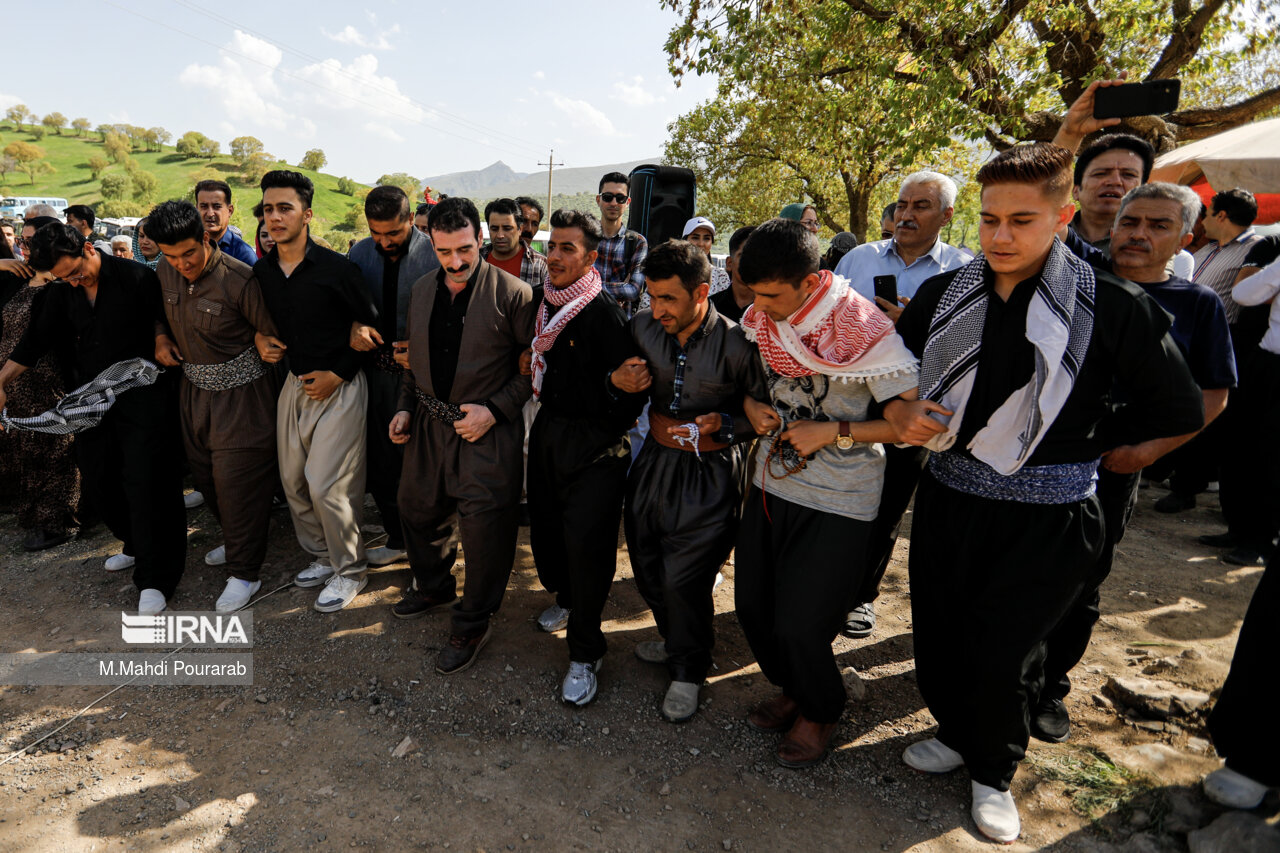
Tourist village in Iran’s Kurdistan hosts huge number of people for historical festival

Village in Iran's Kurdistan historical festival

In this mystic ritual, the daf players stand on the roofs of the terraced houses in the village of Palangan, playing their dafs singing a mystic song.

Palangan is called the “Staircase Heaven of Kurdistan.”

It’s a tourist resort on the outskirts of the city of Kamiaran.

The natural scenery of the village is very beautiful and Palangan itself is in a unique geographical location, which is now The natural scenery of the village is very beautiful and Palangan itself is in a unique geographical location, which is now headed for going global. for going global.

Iran says targeted with ‘children’s toys’

Hossein Amirabdollahian

The claims by some media outlets that explosions in the skies above the Iranian city of Isfahan, which hosts a major airbase, were a retaliatory strike by Israel are “not accurate”, Amirabdollahian said in an interview with NBC News on Saturday.

“What happened last night was not a strike,” he insisted, adding that the attack involved just two or three small UAVs, which “were more like toys that our children play with, not drones.”

The UAVs “took off from inside Iran, flew for a hundred meters and then they were struck by our air defense”, the minister added.

According to the Iranian foreign minister, Tehran is not planning any further actions against Israel.

“As long as there is no new adventurism by Israel against our interests, then we are not going to have any new reactions,” he explained.

However, if the Israeli authorities continue taking provocative steps, “our response will be immediate and to the maximum and will cause them to regret it”, the diplomat warned.

In early April, a strike on the Iranian consulate in Damascus, Syria, which Tehran blamed on Israel, left two generals and several other senior officers dead.

Tehran struck back last week by firing several hundred missiles and drones at military targets inside Israel.

Israel promised payback for the attack, while the US declared that it doesn’t want to see the conflict escalate. US President Joe Biden also reportedly urged Israeli Prime Minister Benjamin Netanyahu to show restraint in an effort to avoid a further military escalation.

The attack on Israeli territory was intended as “a warning”, Amirabdollahian said.

“We could have hit Haifa and Tel Aviv,” but didn’t do so because targeting civilians is a “red line” for Tehran, he added.

Iranian MP calls situation in flood-hit areas of Iran’s southeast as “catastrophic”

Flood in Iran

Moeinedin Saeedi, who represents the people of some of the provincial cities, said 10 people have already died in the floods in the southeastern province.

The lawmaker added that bridges have been destroyed and homes inundated in the flood-hit areas.

Saeedi noted that many people in the region are also without electricity, which has made matters worse.

The MP said the recent two floods have destroyed all the belongings of people in the south of Sistan and Baluchestan province.

He further referred to the presence of officials in the flood-stricken areas like the Iranian interior minister and the head of the Crisis Staff.

Saeedi thanked the governor of Sistan and Baluchestan province for coming to the area in the first moments after the floods hit, but noted that merely visiting the region will not have much of an effect.

Saeedi underlined that all the people in the region expect road construction equipment to be mobilized to repair the infrastructure.

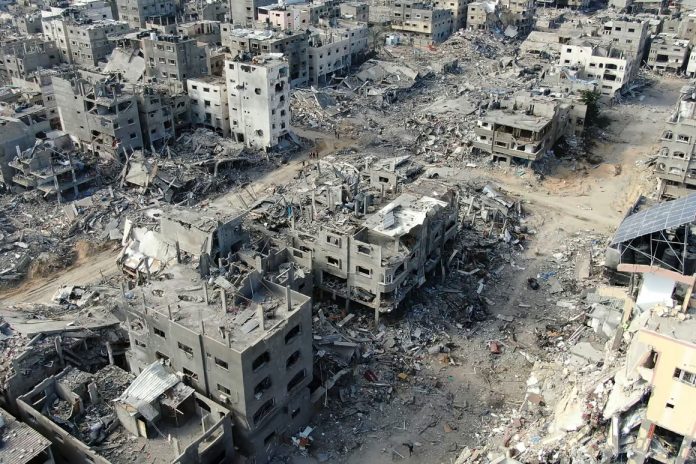
Over 14k kids killed in Israel’s war on Gaza Strip: UNICEF

Gaza War

“Reports are now that more than 14,000 girls and boys have been killed in Gaza. Perhaps we should say that slowly. Fourteen thousand. Perhaps we should do something,” James Elder said in a post on social media platform X (formerly known as Twitter).

He called for an immediate ceasefire in Gaza and warned against an expected invasion of the southern city of Rafah, where nearly more than half of Gaza’s population of 2.4 have sought shelter from Israeli strikes elsewhere in Gaza.

“Surely that ‘something’ is not a military offensive in Rafah. Ceasefire. Now,” Elder added.

Israel launched its brutal US-backed war on the Gaza Strip on October 7 after the Hamas resistance movement carried out its historic operation against the usurping entity in retaliation for the regime’s intensified atrocities against the Palestinian people.

Since the start of the offensive, the Tel Aviv regime has killed at least 34,000 Palestinians and injured nearly 76,800 others.

Russia says foiled massive Ukrainian drone attack

Russia Ukraine War

In a statement on Saturday, the ministry said the military had thwarted “attempts by the Kiev regime to carry out a series of terrorist acts” on Russian territory.

It claimed that Moscow’s forces had destroyed a total of 50 Ukrainian drones – 26 were shot down over Belgorod Region, ten over Bryansk Region, and eight over Kursk Region, officials added. All of the areas border Ukraine.

The ministry also reported the downing of several aircraft deeper into Russia, saying that two were intercepted over Tula Region. It added that individual drones were destroyed in Smolensk, Ryazan, Kaluga, and Moscow Regions.

Smolensk Region Governor Vasily Anokhin stated that Ukrainian drones attempted to bomb an undisclosed oil and energy facility. He noted that while they were downed, debris fell onto a storage unit of oil and lubricants, resulting in a fire. The exact data on casualties is being determined, the governor added.

Meanwhile, Belgorod Region Governor Vyacheslav Gladkov said Ukrainian drones dropped two explosive devices on border villages, setting fire to a private residential building.

Gladkov reported that two civilians were killed in the attack, including a woman with a broken femur and a man who was tending to her. He added that the son of the deceased woman managed to escape the burning house at the last moment.

Later, the governor stated that in the village of Novaya Tavolzhanka, a pregnant woman was seriously injured by Ukrainian shelling. The woman and her unborn child ended up dying in the hospital, the official said, adding that three other people were also wounded in the attack.

Bryansk Governor Aleksandr Bogomaz said drone debris resulted in a fire at an energy facility in the region, adding that emergency services were working at the scene.

Ukraine routinely targets Russian border regions with drone and artillery strikes, causing widespread devastation and numerous civilian deaths. Kiev also periodically launches attacks on facilities deeper into Russia.

In recent weeks, Ukraine’s focus has been on Russian oil processing facilities, prompting US Secretary of Defense Lloyd Austin to publicly warn that these actions “could have a knock-on effect in terms of the global energy situation”.

Kremlin spokesman Dmitry Peskov said Russia would prefer the US – Kiev’s main backer – to push Ukraine to completely abandon its “terrorist activities,” especially regarding strikes on critical infrastructure and residential buildings.

Report: Iran to receive first batch of Russian Su-35s

Sukhoi SU-35

The Washington Post had earlier reported that Russia will provide Iran with the modern fighter jets along with other defense equipment to repel any offensive by Israel or its ally the US.

The developments come as the region is holding its breath amid attacks and counterattacks by Tehran and Tel Aviv, which was triggered by an Israeli strike on the Iranian diplomatic site in Syria from the occupied Golan Heights earlier this month.

Last week, the Kuwaiti newspaper Al-Jarida quoted an informed source as saying, Iran has already received the Russian Sukhoi 35 fighter jets, but it has not yet received the necessary parts to launch them.

Iran had secured a deal with Russia last year to purchase advanced Sukhoi-35 fighter jet amongst other arms deals with Moscow.

One killed, several injured in blast at Iran-aligned group’s base in Iraq

Iraq Blast

The PMF said “the attack” late on Friday targeted the Kalsu military base, located some 50km (31 miles) south of the capital Baghdad in the province of Babil (Babylon).

Videos and images from the scene showed a huge explosion, which also set fire to trees in the surrounding areas, spreading the blaze. Footage from inside the base on Saturday morning showed a large crater and damage to infrastructure and vehicles.

In a statement, the PMF claimed “American aggression bombed the Kalso [Kalsu] military base”, which is located near the town of Iskandariya.

The Iraqi military announced on Saturday that there were no drones or fighter jets detected in the airspace of the Babil area before or during the blast. One PMF member was killed and eight injured in the blast, an army statement said.

The United States military denied reports that it was behind air strikes in Iraq.

The Iraqi government said it was investigating the incident. Iraq’s Prime Minister Mohammed Shia al-Sudani is currently in the US.

The bases also houses Iraqi federal police and Iraqi military forces.

The Islamic Resistance in Iraq, the umbrella group of Iraqi armed forces who are opposed to the US and Israel, added it launched a retaliatory strike in the early hours of Saturday. It released a video that showed a drone being launched at night and claimed it was aimed at a “vital target” in the Israeli port city of Eilat.

The group has launched dozens of attacks on US and Israeli interests across the region after the current conflict in Gaza started in October. But it largely halted its assaults since February after three US soldiers were killed in a drone strike on a base near Syria’s border with Jordan.

Palestinian armed group Hamas in a statement on Saturday “strongly condemned” what it called an attack on the base and stressed it “considers it a violation of Iraq’s sovereignty”.

Aerial attack caused no damage: Iran foreign minister

Isfahan

Amirabdollahian addressed a meeting of the ambassadors of the Organization of Islamic Cooperation (OIC) member states in New York on Friday.

He outlined Iran’s views regarding the Palestinian issue and the crimes committed by the Zionist regime, as well as Iran’s legitimate defense against the Israeli attacks.

The minister underlined that Iran’s recent retaliatory operation against the Israeli military targets was carried out in line with the principle of legitimate defense and international law.

He noted that although Iran was able to carry out this operation in a wider radius, it targeted only the military positions of the Zionist regime from which the April 1 attack on Iran’s embassy in Damascus had been launched.

The diplomat underscored that Iran could achieve its goals through a minimum response.

Iran managed to show its decisive determination and hit the bases used to attack the Iranian embassy and send its message to the Zionist regime, he added.

He warned that if the Israeli regime makes another wrong move and takes action against Iran’s interests, Tehran’s next response will be immediate, maximal and decisive, and this message has been clearly conveyed to the US and other sides.

Amirabdollahian pointed to the downing of a number of micro aerial vehicles by Iran’s air defense systems in Isfahan.

He said the Zionist regime’s supporters were desperately trying to make a victory out of their defeat by overestimating the issue while the downed objects caused no casualties or material damages.

He stated that the root cause of the current crisis must be taken into account, which is warmongering, genocide and war crimes committed by the Israeli regime against Gaza and the West Bank.

If the Israeli war against Gaza stops, peace will be restored to the entire region, and all countries, including Iran will benefit from it, he noted.

The foreign minister stressed that the security of the region is of great importance for Iran, saying the Zionist regime is massacring defenseless Palestinian children and women in Gaza with the support of its allies, including the US.

After the Iranian minister’s speech, the ambassadors of the OIC members expressed their views about Palestine and Iran’s legitimate response to the Zionist regime’s acts of aggression.

UN says 270k tons of solid waste have accumulated across Gaza Strip amid war

Gaza War

“Some 270,000 tons of solid waste have accumulated across the Gaza Strip; that is according to the Union of Gaza Strip Municipalities. This is creating an environmental and public health catastrophe,” Spokesman Stephane Dujarric said at a news conference.

The accumulation of solid waste, exacerbated by “the destruction of waste management facilities and medical waste disposal centers, has severely hampered the collection and disposal efforts by municipalities”, Dujarric added.

He also underscored the grave risks confronting humanitarian workers amidst the destruction of roads and the presence of unexploded ordnance.

“In Gaza, the ongoing hostilities, the destruction of roads, and the prevalence of unexploded ordnance continue to pose significant risks for humanitarian workers,” underlined Dujarric.

Dujarric emphasized the obstacles hindering the movement of aid supplies into Gaza, citing fuel supply constraints, delays, and insecurity at checkpoints by Israel along the coastal road.

“These challenges are preventing aid supplies from physically moving inside Gaza,” Dujarric lamented.

Noting the severe damage inflicted upon the aid transportation infrastructure, with most trucks used for delivering aid being damaged or destroyed since the outset of the conflict, Dujarric said, “Since the beginning of the war, most trucks used for transporting aid have been damaged or destroyed.”

Dujarric further announced the arrival of 15 trucks purchased by the UN to bolster aid delivery in Gaza.

“Over the past two days, 15 trucks purchased by the UN to increase aid delivery were transferred to Gaza,” he disclosed, highlighting the concerted efforts to address the pressing humanitarian needs.