Monday, December 22, 2025
Home Blog Page 927

Hundreds of Gazans contract respiratory illnesses: Report

Gaza War

“Israeli occupation continues to prevent the entry of cooking gas and various types of fuel into the Gaza Strip for the seventh month, especially for Gaza City and the northern governorates, which threatens to exacerbate the humanitarian and health crisis amid the ongoing aggression,” head of the Gaza Media Office Salama Marouf said.

He added: “Palestinians in Gaza rely on primitive alternative means by igniting fires from wood, charcoal, and building rubble leftovers, resulting in hundreds being affected by respiratory diseases due to the use of plastic and chemical materials to ignite fires, emitting toxic gases.”

“Hundreds of new cases have been recorded, afflicted with various respiratory diseases, due to relying on igniting fires using the mentioned methods for long hours daily over the past months,” Marouf also stated.

He warned that this “forebodes the increasing severity of this crisis and the citizens’ susceptibility to lung cancer and respiratory diseases due to the toxic gases emitted from these means.”

He called on the international community to “pressure the (Israeli) occupation to allow the entry of cooking gas.”

Since the beginning of the Israeli war on the strip, Israel has been preventing the entry of cooking gas into northern Gaza areas, while allowing limited quantities into southern Gaza areas.

Flouting the International Court of Justice’s provisional ruling, Israel continues its onslaught on the Gaza Strip where at least 34,000 Palestinians have been killed, mostly women and children, and 76,900 injured since Oct. 7, according to Palestinian health authorities.

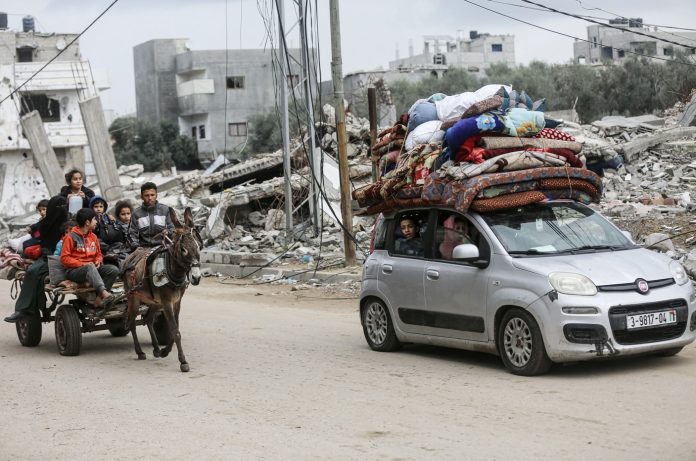
The Israeli war has pushed 85% of Gaza’s population into internal displacement amid acute shortages of food, clean water, and medicine, while 60% of the enclave’s infrastructure has been damaged or destroyed, according to the UN.

Hostilities have continued unabated, however, and aid deliveries remain woefully insufficient to address the humanitarian catastrophe.
Every 10 minutes, a Gaza child killed amid war: UNRWA

Gaza War

“A deplorable number of children have also been injured amid intense and often indiscriminate attacks,” it wrote on X.

“An immediate cease-fire is the last hope remaining.”

Flouting the International Court of Justice’s provisional ruling, Israel continues its onslaught on Gaza where at least 34,400 Palestinians have been killed, mostly women and children, and 76,900 injured since Oct. 7, according to Palestinian health authorities.

The Israeli onslaught has pushed 85% of Gaza’s population into internal displacement amid acute shortages of food, clean water and medicine, while 60% of the enclave’s infrastructure has been damaged or destroyed, according to the UN.

Hostilities have continued unabated and aid deliveries remain woefully insufficient to address the humanitarian catastrophe.
Iran Leader lauds armed forces for displaying might following operation against Israel

Ayatollah Khamenei

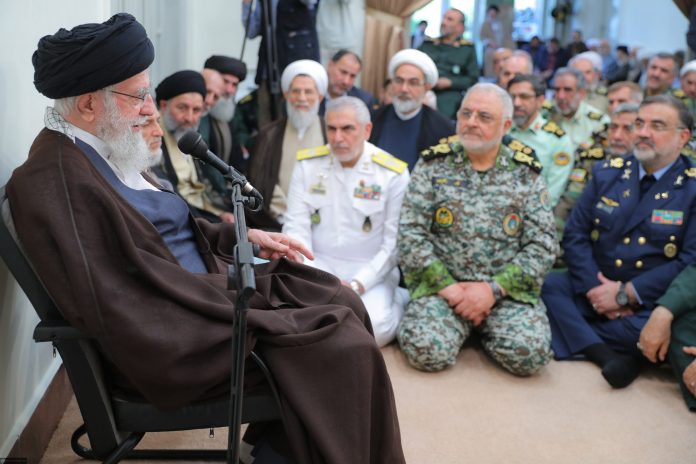
In a meeting with a group of ranking commanders of the Iranian armed forces on Sunday, the Leader said, “The armed forces showed a good image of their abilities and authority, as well as a praiseworthy image of the Iranian nation, and proved the emergence of the determination of the Iranian nation in the international arena.”

The comments came days after an extensive drone and missile operation staged by the Iranian armed forces on Israeli military and intelligence bases in occupied territories, in retaliation for an Israeli attack on Iran’s diplomatic site in Syria earlier this month.

Ayatollah Khamenei hailed the armed forces, saying, “The main issue is the emergence of the power of the determination by the Iranian nation and the armed forces in the international arena and proving it.”

The Leader stated, “In every event, costs and gains are involved, and the important thing is to prudently reduce costs and maximize gains. This is precisely what armed forces have achieved in the recent developments.”

Israeli PM says potential US sanctions on IDF ‘absurd’ despite rights violations against Palestinians

The Netzah Yehuda Battalion

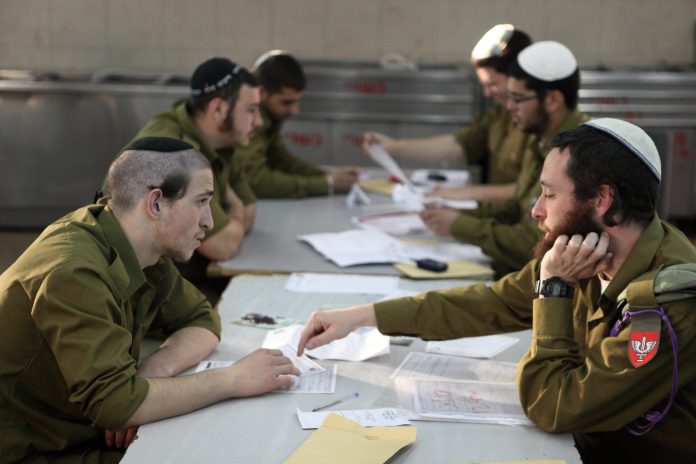
The Netzah Yehuda Battalion is a special Israel Defense Forces (IDF) unit composed primarily of ultra-Orthodox Jews. US Secretary of State Antony Blinken is expected to announce sanctions on the unit for alleged human abuses committed in the West Bank, US news site Axios wrote on Saturday, citing three anonymous US sources.

Netanyahu condemned the idea of sanctioning the IDF in a post on Saturday, adding that he has been in touch with US officials to work against the potential decision.

At a time when the IDF is “fighting terrorist monsters”, this intention is “the height of absurdity and a moral low,” he wrote, adding his government will act “by all means against these moves”.

The secretary of state was questioned on Israeli human rights violations in a press conference in Italy on Friday.

“You’ll see results very soon. I’ve made determinations; you can expect to see them in the days ahead,” Blinken told journalists. He added that the US applies the Leahy Law “across the board”, and that it’s been gathering facts of the matter and analyzing them.

The Leahy Law – named after its principal sponsor, Senator Patrick Leahy – prohibits the Departments of State and Defense from extending military assistance to foreign armies and law enforcement units that are proven to have flagrantly violated human rights. Should the sanctions go through, the unit will be banned from receiving any kind of US training or material assistance.

According to one of Axios’ sources, the determination was based on incidents that occurred prior to the October 7 Hamas attack on southern Israel. One of the cases which brought attention to the unit was the 2022 death of 78-year-old Omar Assad, who was detained by Netzah Yehuda soldiers at a checkpoint in the West Bank, zip-tied, gagged, and left in a parking lot in the winter. An autopsy by three Palestinian physicians, noting injuries on his arms and legs, gave the cause of death as cardiac arrest from psychological stress resulting from physical violence, Israeli daily Haaretz reported at the time.

According to the newspaper, the unit was redeployed to the Golan Heights in Syria in January last year after a “relatively large number of incidents” in which soldiers were arrested for beating Palestinians.

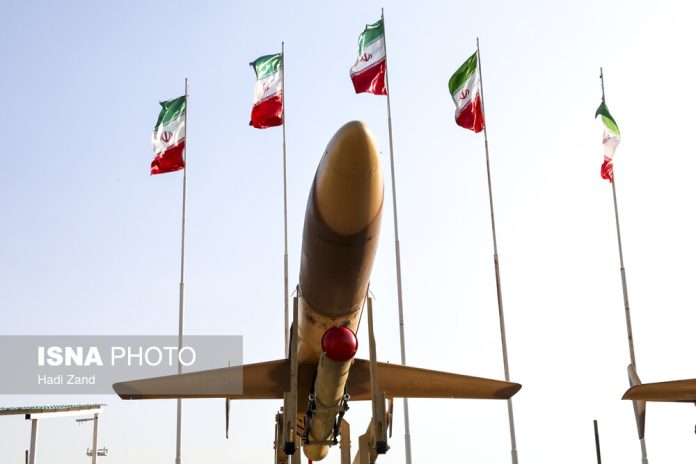
Iran displays home-made drone at Iraq defense expo

Iran Drone

The UAV, manufactured by Iran’s Islamic Revolution Guards Corps (IRGC)’s Ground Force, is capable of carrying a multispectral surveillance payload and up to four precision-guided munitions.

The Iranian defense and military products stood out in this year’s exhibition, especially since Iran unveiled the Mohajer-6 combat drone for the first time, which attracted the attention of most of the foreign participants in the event.

Iran’s electronic industries have also taken part in the electronic warfare section.

Anti-UAV systems, border guard systems, and thermal cameras are also among the defense equipment Iran has put on display at the event.

The 12th International Security and Defense Exhibition in Iraq kicked off on Saturday in Baghdad and will last for four days.

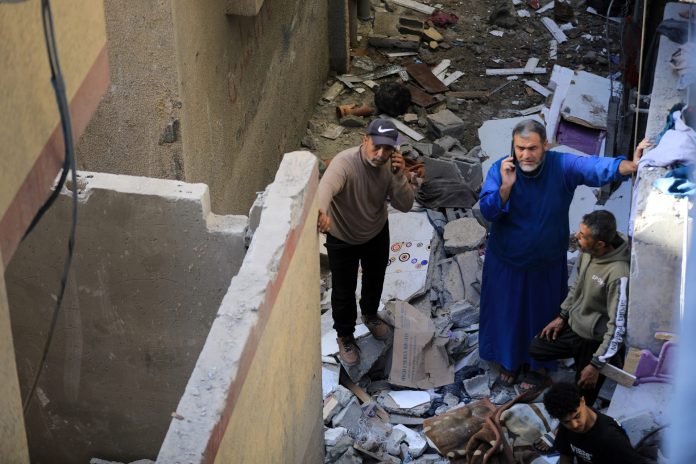
Israel kills 10, mostly children, in Gaza’s Rafah

Gaza War

Funerals were held on Saturday for those killed in the deadly strike on Rafah’s western Tal as-Sultan neighbourhood the night before, according to Gaza’s civil defence.

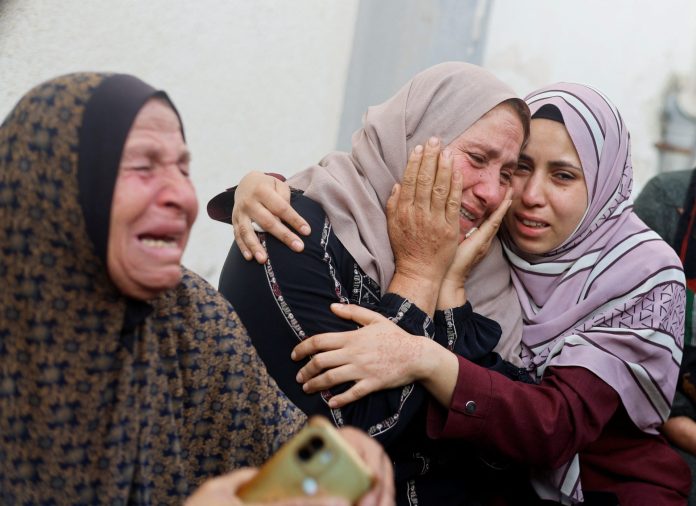
At al-Najjar Hospital, the site of the area’s main morgue, relatives sobbed and hugged white-shrouded children’s bodies.

“Hamza my beloved. Your hair looks so pretty,” a mourning grandmother said.

The fatalities included Abdel-Fattah Sobhi Radwan, his wife Najlaa Ahmed Aweidah and their three children, according to his brother-in-law Ahmed Barhoum. Barhoum lost his wife, Rawan Radwan, and their five-year-old daughter, Alaa.

“This is a world devoid of all human values and morals,” Barhoum told The Associated Press, crying as he gently rocked Alaa’s body.

“They bombed a house full of displaced people, women and children. The only martyrs were women and children.”

The scene of bodies being transferred from al-Najjar Hospital to their final burial was heartbreaking, Al Jazeera’s Hani Mahmoud stated, reporting from Rafah.

“The majority were children, wrapped in white sheets soaked in blood … We spoke to a doctor from the hospital [where the children were brought] who described them as having devastating wounds, soaked in blood,” he added.

“Their burns were so bad that even if they made it to the hospital alive, they would have quickly lost their lives because there’s no way such injuries could be treated right away given the current situation.”

Al Jazeera’s reporters said the Israeli military continued its assault on the city on Saturday.

“There has been no let-up in the fighting,” stated correspondent Tareq Abu Azzoum.

Israel has been promising a major invasion into Rafah, which hosts more than half of Gaza’s population of about 2.3 million and is the only area in the territory to have been spared Israel’s ground forces so far.

According to two Gaza war monitors, the Institute for the Study of War (ISW) and the Critical Threats Project (CTP), United States and Israeli officials held a high-level “virtual meeting” on Thursday to discuss a Rafah incursion.

The US-based think-tanks said Israel shared with the US its plan to move some 1.4 million Palestinian civilians out of Rafah ahead of its promised ground invasion; however, the plan did not include “concepts for access to food, water and other civil services” according to reports.

Al Jazeera’s Abu Azzoum added Rafah has been witnessing a surge of Israeli military strikes in the past couple of weeks and these attacks could be seen as a sign that further military incursion could be carried out, specifically in light of Israel’s mobilisation of its troops near the border with Rafah.

“Right now, we are in central Rafah, and we can clearly see in the sky above the Kuwaiti Hospital, at least four Israeli military surveillance drones, hovering at a very low altitude.”

“Different areas have been attacked in Rafah … One of the latest strikes targeted an empty house on the western side of that very densely populated area.”

Additionally, there were Israeli strikes on other areas of the Gaza Strip on Saturday, including the Jabalia, Nuseirat, Maghazi and Bureij refugee camps, the correspondent continued.

More than 34,000 people have been killed and over 76,900 wounded in Israel’s war on Gaza since October 7.

Iran oil exports hit 6-year high amid US sanctions: Report

Iran Oil Tanker

Tehran sold an average of 1.56 million barrels a day during the first three months of the year, almost all of it to China and its highest level since the third quarter of 2018, according to data company Vortexa.

Iran’s success in exporting its crude underscores the difficulties facing the US and the EU as they seek to build up pressure on Tehran.

“The Iranians have mastered the art of sanctions circumvention,” said Fernando Ferreira, head of the geopolitical risk service at the Rapidan Energy Group in the U.S.

In Tehran, Tasnim News Agency reported on Wednesday that the country’s oil industry had found ways to get around sanctions.

Iran’s Oil Minister Javad Oji stated last month that oil exports had generated more than $35 billion in the preceding year. On another occasion, he said that while Iran’s enemies wanted to stop its exports, “today, we can export oil anywhere we want, and with minimal discounts”.

Earlier this month, The U.S. Energy Information Administration (EIA) said that Iran produced 3.25 million barrels per day (bpd) of oil in March 2024, 20,000 bpd more than the previous month.

According to the EIA report, Iran’s oil production in February stood at 3.23 million bpd.

Iran has produced an average of 3.2 million barrels of oil per day in the first quarter of this year, based on the report.

Iran’s oil production in the first quarter of this year has increased by 50,000 bpd compared to the fourth quarter of the previous year and by 630,000 barrels per day compared to the first quarter of 2023.

Iran produced 2.6 million bpd of oil in the first quarter of the previous year and 3.18 million bpd in the fourth quarter of the mentioned year.

With an increase of 630,000 barrels in oil production over the past year, Iran had the highest production rise among OPEC members, according to EIA.

Gabon, Nigeria, and Venezuela have been the only OPEC members to increase production over the past year. The production of Gabon increased by 10,000 bpd, Nigeria by 40,000 bpd, and Venezuela by 90,000 bpd.

OPEC oil production in the first quarter of last year was 27.380 million bpd, which has decreased by 720,000 barrels to 26.660 million in the first quarter of 2024.

Based on the EIA report, Iran maintained its position as the organization’s third oil producer in March.

Washington to pay for confiscating Moscow’s assets: Kremlin

Kremlin

“America will have to pay for this, if it is indeed so,” the Russian official said, referring to the potential confiscation.

Moscow set no time limits for responding to Washington’s actions, he stated, adding that Russia will tailor its response to “serve our interests in the best possible way.”

The US would hurt itself if it proceeds with such a plan, the Kremlin spokesman warned. Confiscating Russian assets undermine the principle of “inviolability of private… and state property”, he said.

Such a move would prompt many investors to withdraw their money from the US and cause “irreparable damage to the US image”, Peskov believes.

The spokesman did not elaborate on what specific measures Moscow could take in response to the seizure of its assets.

Earlier on Saturday, the US House of Representatives passed the Rebuilding Economic Prosperity and Opportunity (REPO) for Ukrainians Act, which essentially opened the way for the US government to liquidate frozen Russian assets and transfer the funds obtained to Ukraine.

The bill was adopted as part of a legislative package that also included authorizing $61 billion in additional spending on aid to Kiev. The emergency spending bill had been stalled in Congress since last fall as lawmakers were concerned that Washington lacked a strategy for victory or a peace settlement in the Ukraine conflict.

The EU and other G7 nations have blocked an estimated $300 billion in assets belonging to the Russian central bank since the start of the Ukraine conflict in 2022. Of that amount, €196.6 billion ($211 billion) is being held by the Belgium-based clearinghouse Euroclear. Since last year, those funds accumulated nearly €4.4 billion in interest.

The US, which holds only $6 billion out of the $300 billion in frozen Russian assets, had long been pushing its allies to seize the money outright. However, this approach has faced opposition from the European Central Bank (ECB) and criticism from the IMF and caused a rift among the G7 and EU political leadership.

Earlier in April, ECB President Christine Lagarde warned that seizing the assets would essentially amount to “a violation of the legal international order.”

Russia has repeatedly stressed that any actions taken against its assets would amount to “theft.” The Russian agency RIA Novosti also estimated in January that Moscow could respond to such an action by seizing assets belonging to the EU, G7, Australia, and Switzerland, all of which have investments in the Russian economy. The total volume of such holdings amounted to $288 billion at the end of 2022, according to RIA.

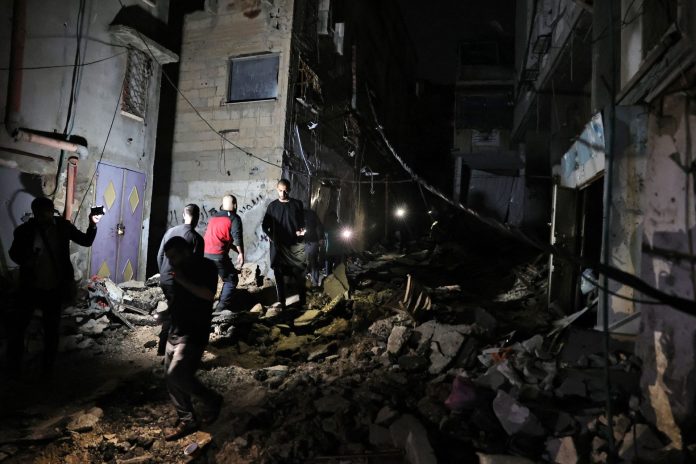
Israeli soldiers kill several Palestinians during refugee camp siege in West Bank

West Bank

The ministry said in a press statement sent to Xinhua that the bodies of the 14 Palestinian killed were transferred to Tulkarm Hospital from the Nour Shams Palestinian refugee camp east of the city.

The statement didn’t provide further details.

Palestinian security sources said that Israeli forces, accompanied by military bulldozers, entered the camp on Thursday, imposing a stringent siege and demolishing main streets, infrastructure, residential homes, and shops.

The sources added that the ongoing military operation, coinciding with power outages, water cuts, and the disruption of communication and internet networks in the camp, was the most severe in years.

Sniper units were deployed on the roofs of high-rise buildings while other forces detonated several houses with guided missiles.

Local sources and eyewitnesses reported clashes between the army and Palestinian gunmen, along with the sound of explosions caused by homemade explosive devices.

The Al-Quds Brigades, the armed wing of the Islamic Jihad Movement, and the Al-Aqsa Martyrs Brigades, the armed wing of the Palestinian National Liberation Movement (Fatah), announced in separate statements that their elements had engaged in fierce clashes with Israeli troops in the camp.

The Israeli public radio reported that the army, internal security agency Shin Bet, and the Israeli police killed a number of Palestinian militants in clashes during a wide-scale military operation in the refugee camp.

According to the radio, among those killed were Mohammed Jaber, also known as Abu Shuja, the commander of the Tulkarm Battalion of the Islamic Jihad Movement, and another activist named Ahmed Al-Aarif.

The radio cited a military spokesman claiming that during the ongoing operation, eight wanted persons were arrested, explosive devices and tunnels were seized, and workshops involved in manufacturing explosive devices within the camp were dismantled.

The West Bank has been witnessing escalating tension marked by armed confrontations between Israeli troops and Palestinians in cities, villages, and camps since the start of the Israel-Hamas conflict in the Gaza Strip on Oct. 7 last year.

Earlier in the day, a Palestinian ambulance driver was killed by Israeli gunfire in the city of Nablus in the northern West Bank.

Israel has killed more than 460 Palestinians with airstrikes and gunfire in various parts of the West Bank and east of Jerusalem since the outbreak of the conflict, according to the Palestinian Ministry of Health.

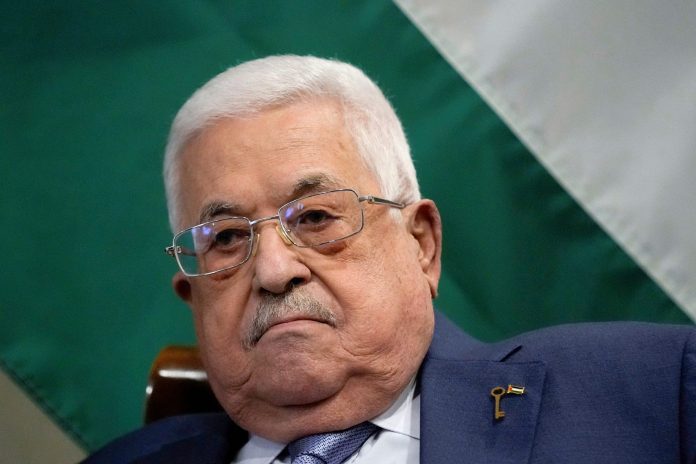
Palestine President Abbas says he will “reevaluate” U.S. relations after UN veto

Mahmoud Abbas

The practical implications of Abbas’ statement are unclear, but it is the harshest criticism of U.S. policy he has expressed since President Joe Biden assumed office.

The U.S. on Thursday voted no and vetoed a UN Security Council resolution to accept Palestine as a full member of the UN.

Ahead of the vote, the Biden administration pressed Abbas and his advisers to not move forward with their bid, but the Palestinian president rejected those requests, Axios reported.

Abbas told the official Palestinian news agency WAFA on Saturday that “the hostile positions” taken by the current Biden administration “have generated unprecedented anger among the Palestinian people and the region’s populations, potentially pushing the region towards further instability, chaos, and terrorism”.

He added Palestinian leadership will reconsider its bilateral relations with the U.S. to ensure the protection of Palestinian interests and rights.

“Palestine stands on the threshold of a new and challenging phase, with multiple options ahead…we are going to develop a new strategy to protect Palestinian national decisions independently and follow a Palestinian agenda rather than an American vision or regional agendas.”