Wednesday, April 8, 2026
Home Blog Page 9

Iran labels Canadian Navy a terror group after Ottawa’s IRGC move

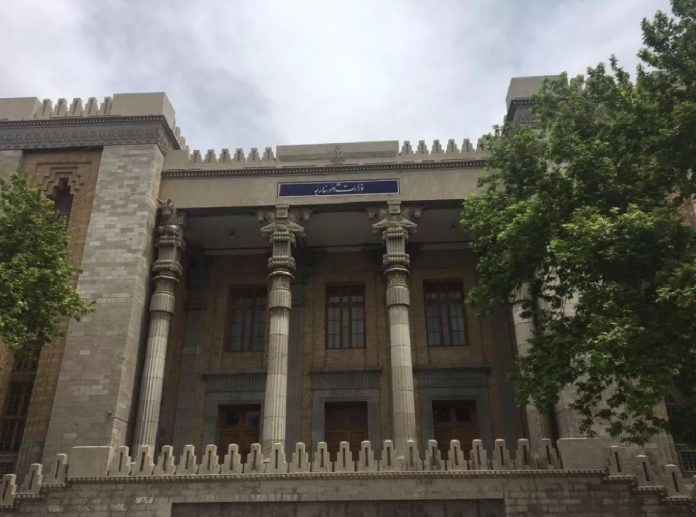
The Iranian Foreign Ministry

In an official statement, Iran’s Ministry of Foreign Affairs rejected Canada’s action as unlawful, arguing that branding a component of Iran’s official armed forces violates legal norms. The ministry said the decision taken by the Canadian government on June 19, 2024, prompted Tehran to formally designate the Royal Canadian Navy as a terrorist entity.

The statement emphasized that Canada’s classification of the IRGC—an integral and official branch of Iran’s military—runs counter to fundamental principles of international law.

As a result, Iran said it has taken retaliatory measures under the principle of reciprocity by identifying Canada’s naval force as a terrorist organization.

The foreign ministry also referred to Article 7 of a 2019 Iranian law concerning reciprocal responses to the United States’ designation of the IRGC as a terrorist group. Under this legislation, the statement noted, any country that supports or follows Washington’s move to blacklist the IRGC is subject to countermeasures by the Islamic Republic of Iran.

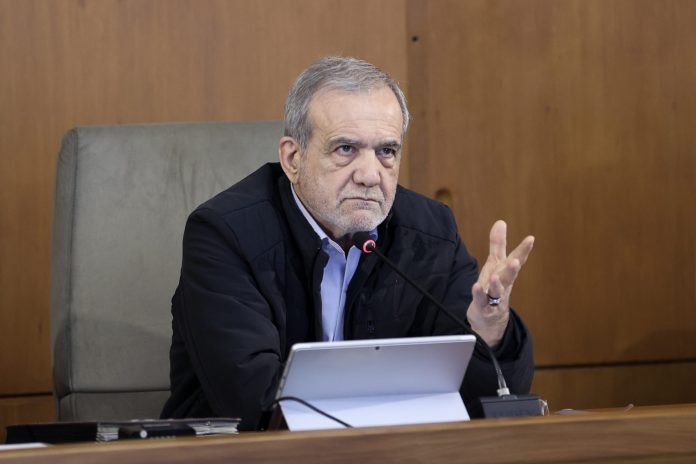
Iran’s President Pezeshkian signals readiness to revise new year budget after parliamentary pushback

Masoud Pezeshkian

In an official letter addressed to Parliament Speaker Mohammad Baqer Qalibaf, the president acknowledged lawmakers’ concerns, particularly regarding people’s livelihoods, salaries and benefits for employees, workers and retirees, taxation, and welfare support.

President Pezeshkian said the government agrees with many of the proposals raised during deliberations and is prepared to implement reforms while observing inflationary considerations and the overall budget ceiling.

According to the letter, the government is open to five main areas of reform, including increasing salaries and benefits for government employees and retirees; applying an effective tax rate aimed at improving the business environment; revising tax exemption thresholds for individuals and legal entities with an emphasis on protecting low-income wage earners; adjusting the value-added tax rate so that additional revenues are directed toward funding subsidized goods (electronic vouchers) for vulnerable groups; and expanding subsidies to strengthen household livelihoods.

President Pezeshkian also noted that, in response to parliamentary requests, the Planning and Budget Organization and the Ministry of Oil will submit detailed reports on oil revenues and expenditures, as well as the budget’s compliance with the country’s development plan.

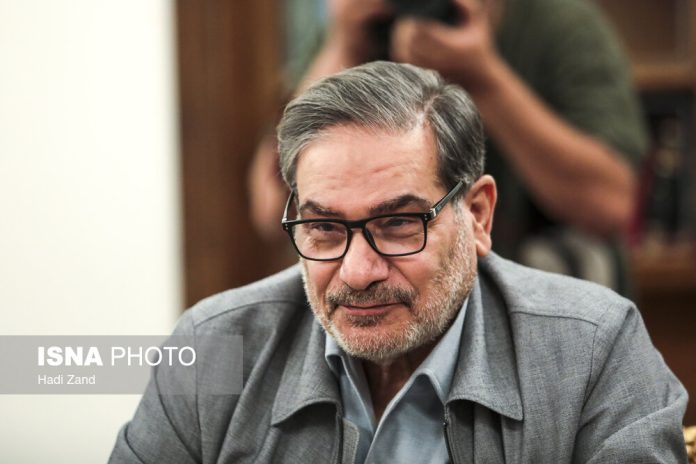
Ayatollah Khamenei’s aide vows ‘harsh response’ to any aggression

Ali Shamkhani

Admiral Ali Shamkhani stated in a social media post on Monday that, under Iran’s defense doctrine, responses to threats are planned before those threats materialize.

He stressed that the country’s missile and defense capabilities are not containable or permission-based.

Shamkhani then warned that any aggression against Iran will face an immediate harsh response beyond its planners’ imagination.

His remarks came after US President Donald Trump said that he would support an attack by Israel on Iran if Tehran continued its ballistic missile and nuclear programs.

Trump was speaking to reporters ahead of his meeting with Israel’s prime minister, Benjamin Netanyahu.


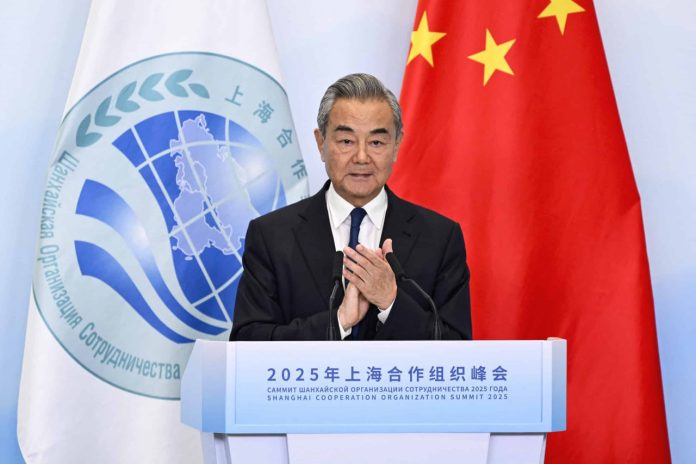
China must ‘forcefully counter’ US weapons sales To Taiwan: FM

“In response to the continuous provocations by pro-independence forces in Taiwan and the large-scale US arms sales to Taiwan, we must of course, resolutely oppose and forcefully counter them,” foreign minister Wang Yi said in a speech in Beijing.

Wang’s comments came just over an hour after China’s military said it conducted “long-range live fire drills in the waters to the north of the Taiwan Island”.

China claims Taiwan as part of its sovereign territory and has refused to rule out using military action to seize the island democracy.

Speaking at an annual international relations symposium in Beijing, Wang added that any attempt to obstruct China’s unification with Taiwan “will inevitably end in failure”.


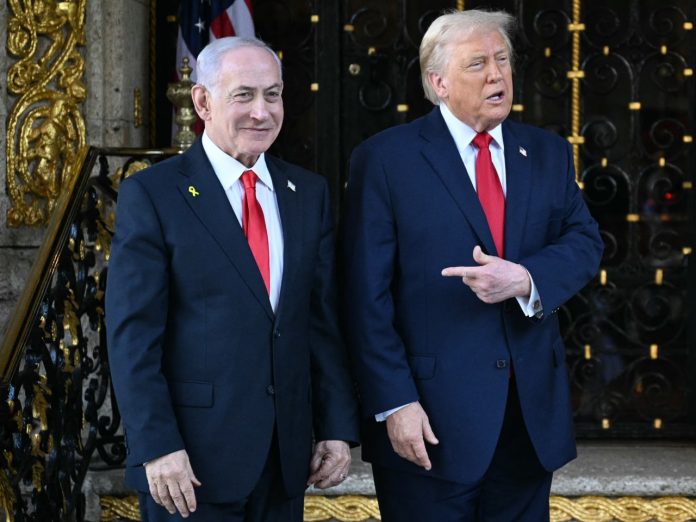
Trump threatens Hamas, warns Iran of more attacks after talks with Netanyahu

Trump issued the threats on Monday, after holding talks with Israeli Prime Minister Benjamin Netanyahu at his Mar-a-Lago resort in Florida.

Their discussions focused on advancing the ceasefire deal Trump brokered in Gaza, as well as addressing Israeli concerns over Iran, and over Hezbollah in Lebanon.

Trump stated that Israel has been doing its part in the Gaza ceasefire, despite launching near-daily strikes that have killed at least 400 people, and warned Hamas to live up to its side of the agreement.

“We talked about Hamas and we talked about disarmament, and they’re going to be given a very short period of time to disarm, and we’ll see how that works out,” he added.

“If they don’t disarm, as they agreed to do – they agreed to it – and then there’ll be hell to pay for them. And we don’t want that.”

There was no immediate comment from Hamas.

The first phase of the ceasefire, which went into effect on October 10, calls for the exchange of Israeli captives held by Hamas for Palestinian detainees and prisoners held by Israel, as well as an increase in aid and a partial Israeli withdrawal in Gaza.

Hamas is yet to return the body of one Israeli captive, while Israel, in addition to continued deadly attacks, has restricted the entry of aid and delayed the opening of the Rafah crossing between Gaza and Egypt.

But Trump heaped the blame solely on Hamas for the delay in moving towards the second phase of the truce. The armed group has previously announced it will not give up its weapons as long as Israeli occupation of Palestinian territory continues, but was willing to set them aside and offered a long truce of seven to 10 years.

Trump went on to suggest that Iran may be working to restore its nuclear programme after the US air strikes in June damaged three Iranian nuclear facilities.

“Now I hear that Iran is trying to build up again, and if they are, we’re going to have to knock them down,” Trump told reporters.

“We’ll knock them down. We’ll knock the hell out of them. But, hopefully, that’s not happening.”

If Iran was trying to build up its nuclear programme again, “we’re going to have no choice but very quickly to eradicate that buildup”, he stated. The consequences of such a move could be “more powerful than the last time”.

“We know exactly where they’re going, what they’re doing, and I hope they’re not doing it, because we don’t want to waste fuel on a B-2,” Trump added, referring to the bomber used in the earlier strike.

“It’s a 37-hour trip both ​ways. I don’t want to waste a lot of fuel.”

The US president declined to offer evidence to support his allegations against Iran. But he added that the US and Israel have been “extremely victorious” against their enemies, and that if the US “didn’t beat Iran, you wouldn’t have had peace in the Middle East”.

When asked whether the US would back an Israeli attack on Iran’s missile programme, Trump stressed, “If they will continue with the missiles, yes. The nuclear? Fast. OK? One will be: Yes, absolutely. The other is: We’ll do it immediately.”

There was no immediate comment from Iran.

Tehran has denied seeking to build a nuclear weapon and ruled out negotiating over its missile programme, which is at the core of its defence strategy.

During the conflict in June, sometimes referred to as the 12-day war, Iran fired hundreds of missiles in response to Israeli attacks that killed the country’s top generals, several nuclear scientists and hundreds of civilians.

On Monday, Trump said Iran should “make a deal” with the US.

“If they want to make a deal, that’s much smarter,” Trump continued, adding, “You know, they could have made a deal the last time, before we went through a big attack on them, and they decided not to make the deal. They wish they made that deal.”

While the US has brokered three ceasefires involving its longtime ally – between Israel and Hamas, Israel and Iran, and Israel and Lebanon – Netanyahu is wary of Israel’s ​foes rebuilding their forces after they were considerably weakened in multiple wars.

Overall, Trump’s comments suggest he remains firmly in Netanyahu’s camp, even as some aides have privately questioned the Israeli leader’s commitment to ‌the Gaza ceasefire. Trump’s comments also suggest that he is willing to risk additional hostilities related to Gaza and Iran, even as the US president has taken credit for resolving Israel’s wars in both places.

The sabre-rattling on Monday also came weeks after the Trump administration released a National Security Strategy that called for the US to shift its foreign policy resources away from the Middle East and instead focus on the Western Hemisphere.

But advocates of the strategy warn that another episode of attacking Iran may escalate into a longer, broader war.

In June, Iran responded to the US strikes with a missile attack against a US airbase in Qatar, which did not result in any US casualties. Trump announced a ceasefire to end the war shortly after the Iranian response.

UN Security Council member states condemn Israel’s recognition of Somaliland

The United States was the only member of the 15-member body not to condemn Israel’s formal recognition of the breakaway region of Somalia at the emergency meeting in New York City on Monday, although it said its own position on Somaliland had not changed.

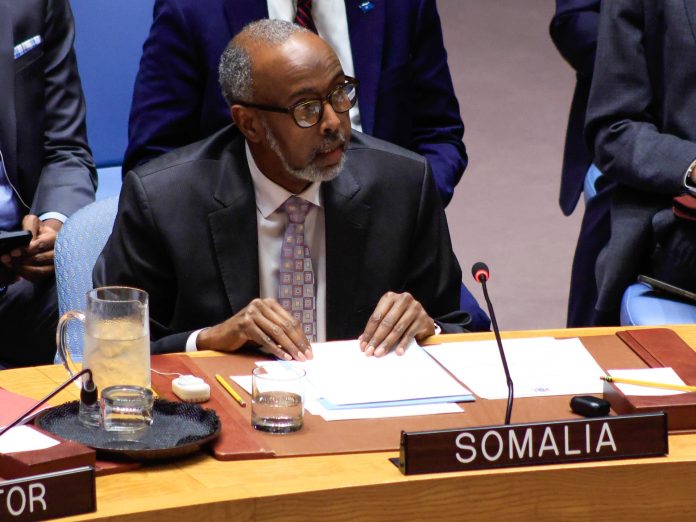
Addressing the UNSC, Somalia’s UN ambassador, Abu Bakr Dahir Osman, implored members to firmly reject Israel’s “act of aggression”, which he said not only threatened to fragment Somalia but also to destabilise the wider Horn of Africa and the Red Sea regions.

In particular, Osman stated that Somalia was concerned the move could be aimed at advancing Israel’s plans to forcibly “relocate the Palestinian population from Gaza to the northwestern region of Somalia”.

“This utter disdain for law and morality must be stopped now,” he added.

The emergency meeting was called after Israel last week recognised the self-declared Republic of Somaliland as an independent and sovereign state.

Tammy Bruce, the US deputy representative to the UN, told the council that “Israel has the same right to establish diplomatic relations as any other sovereign state”.

However, Bruce added, the US had “no announcement to make regarding US recognition of Somaliland, and there has been no change in American policy”.

Israel’s deputy ambassador to the UN, Jonathan Miller, told the council that Israel’s decision was “not a hostile step toward Somalia, nor does it preclude future dialogue between the parties”.

“Recognition is not an act of defiance. It is an opportunity,” Miller claimed.

Many other countries expressed concerns about Israel’s recognition of Somaliland, including the implications for Palestinians, in statements presented to the UNSC.

Speaking on behalf of the 22-member Arab League, its UN envoy, Maged Abdelfattah Abdelaziz, said the group rejected “any measures arising from this illegitimate recognition aimed at facilitating forced displacement of the Palestinian people, or exploiting northern Somali ports to establish military bases”.

Pakistan’s deputy UN ambassador, Muhammad Usman Iqbal Jadoon, said at the meeting that Israel’s “unlawful recognition of [the] Somaliland region of Somalia is deeply troubling”, considering it was made “against the backdrop of Israel’s previous references to Somaliland of the Federal Republic of Somalia as a destination for the deportation of Palestinian people, especially from Gaza”.

China and the United Kingdom were among the permanent UNSC members to reject the move, with China’s UN envoy, Sun Lei, saying his country “opposes any act to split” Somalia’s territory.

“No country should aid and abet separatist forces in other countries to further their own geopolitical interests,” Sun Lei stated.

Some non-members of the UNSC also requested to speak, including South Africa, whose UN envoy, Mathu Joyini, said that her country “reaffirmed” Somalia’s “sovereignty and territorial integrity” in line with international law, the UN Charter and the constitutive act of the African Union.

In addition to defending Israel’s decision, US envoy Bruce compared the move to recognise Somaliland with Palestine, which has been recognised by more than 150 of the UN’s member states.

“Several countries, including members of this council, have unilaterally recognised a non-existent Palestinian state, yet no emergency meeting has been convened,” Bruce said, criticising what she described as the UNSC’s “double standards”.

However, Slovenia’s UN ambassador, Samuel Zbogar, rejected the comparison, saying, “Palestine is not part of any state. It is illegally occupied territory… Palestine is also an observer state in this organisation [the UN].”

“Somaliland, on the other hand, is a part of a UN member state, and recognising it goes against… the UN Charter,” Zbogar added.

The self-declared Republic of Somaliland broke away from Somalia in 1991, after a civil war under military leader Siad Barre.

Tehran protests fizzle out as dollar drops 10,000 tomans after central bank shake-up

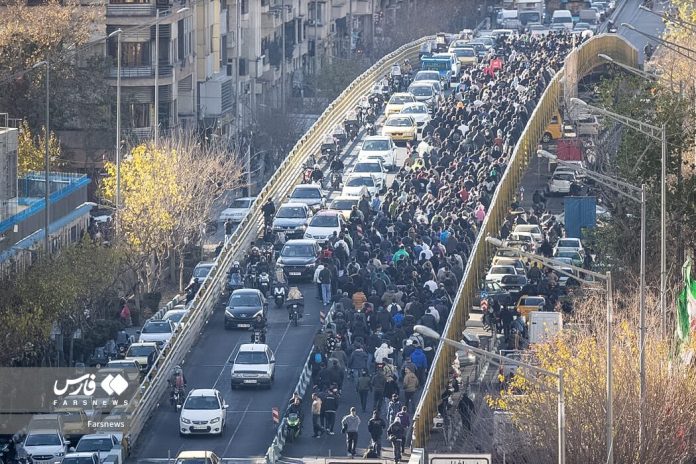
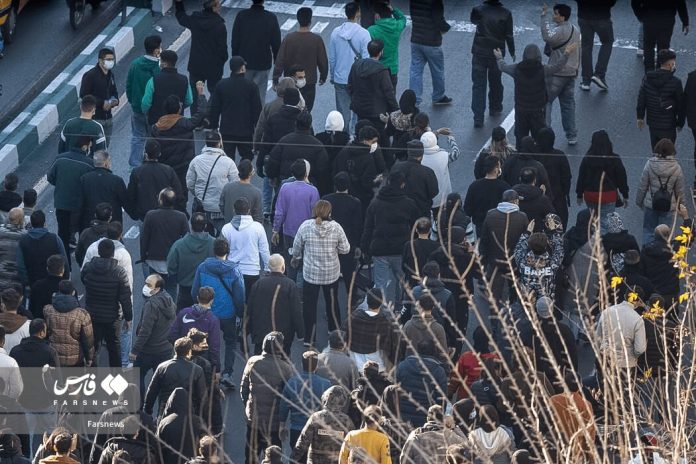
Field observations by a Tasnim News Agency correspondent in Enghelab and Jomhuri Streets and nearby shopping centers show that businesses and malls are operating normally, with no visible signs of the protests reported earlier on Monday.

Contrary to claims circulated by anonymous online channels, the vast majority of shops in the area have remained open and active.

The easing of tensions coincided with a swift and positive reaction in financial markets following the resignation of Mohammad Reza Farzin as head of the Central Bank of Iran and his replacement by former economy minister Nasser Hemmati.

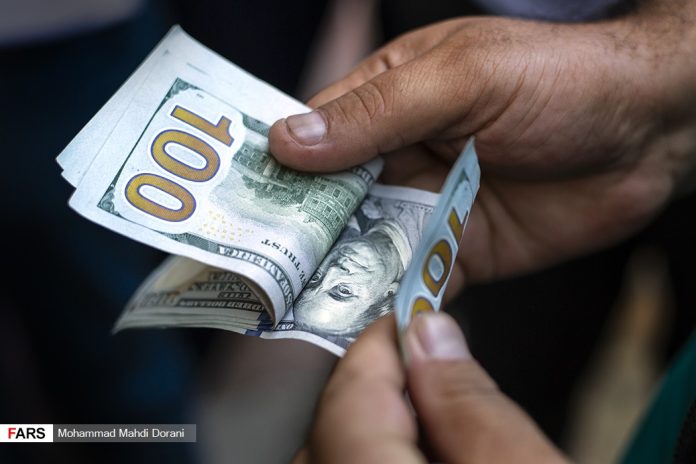
Within hours of the leadership change, the U.S. dollar fell by around 10,000 tomans, while gold coin prices dropped by nearly 20 million tomans.

Market sources say the downward trend is continuing, with selling pressure increasing in both currency and gold markets.

US slashes UN humanitarian aid to $2bn: report

The reduced commitment, released on Monday, is a sharp contrast to the assistance of up to $17bn the US has provided as the UN’s leading funder in recent years, about $8 -$ 10bn of which were voluntary contributions, US officials say.

It comes as critics have levelled sharp criticism against the US’s dramatic aid reductions under Trump, leading to deaths and hunger as millions around the world lose shelter, sustenance and other essential aid.

The $2bn will create a pool of funds that can be directed at specific countries or crises, with 17 countries – including Bangladesh, the Democratic Republic of the Congo, Haiti, Syria and Ukraine – initially targeted.

Afghanistan is not included on the list, nor is Palestine, which officials say will be covered by money included in Trump’s yet-to-be-completed Gaza plan.

Earlier this month, the UN launched a 2026 appeal for $23bn – half the amount it needs – as the extent of Western funding losses became clear.

The UN had previously warned in June it would be forced to enact substantial programme reductions amid “the deepest funding cuts ever” to the international aid sector.

Trump has effectively dismantled the US’s primary platform for foreign aid, the US Agency for International Development (USAID), as his administration has called upon UN agencies to “adapt, shrink or die” in response to its approach.

Other Western countries, including Germany, have also slashed funding.

The fallout across the Middle East, South Asia and Africa has been swift.

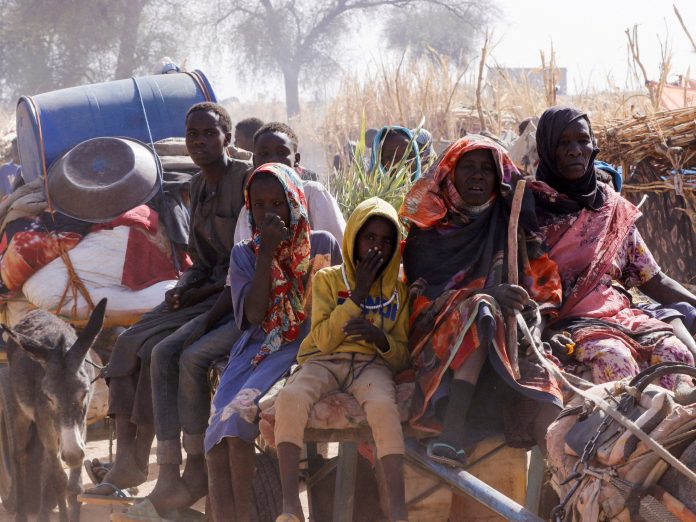
In July, the UN High Commissioner for Refugees (UNHCR) said more than 11 million refugees would lose access to aid. At the time, the agency had received just 23 percent of its $10.6bn budget, and expected an overall budget of only $3.5bn by the end of the year to meet the needs of 122 million people.

Basic services for Rohingya refugees living in Bangladesh were at risk of collapsing, UNHCR said, while education for more than 230,000 Rohingya children was expected to be suspended.

The same month, the UN predicted a surge in HIV/AIDS deaths by 2029 due to the funding withdrawals, while the French charity Doctors Without Borders said more than 650 children had died from malnutrition in Nigeria as a direct result of international aid cuts.

Speaking on condition of anonymity, a senior US official told The Associated Press news agency that the $2bn is part of a broader plan that will see the UN humanitarian agency (OCHA) “control the spigot” of funds.

Trump’s administration wants to see “more consolidated leadership authority” among UN agencies, the official added.

OCHA chief Tom Fletcher has previously criticised international “apathy” to ballooning humanitarian needs and said his agency was “under attack”.

But Fletcher appeared to praise the $2bn deal, telling the AP the US is “demonstrating that it is a humanitarian superpower”.


Iranian Interior Ministry official warns of hostile propaganda amid economic woes

Dollar

Aliakbar Pourjamshidian, Deputy Minister of Interior for Security Affairs, urged the public and business community not to be influenced by hostile propaganda.

Pourjamshidian added that recent currency fluctuations are largely driven by market psychology rather than real shortages.

“All responsible institutions, including the government, are seriously working to resolve the problems and volatility seen in the currency market”, Pourjamshidian said, responding to criticism over sharp exchange rate fluctuations.

He warned that hostile actors are seeking to exploit the situation. Pourjamshidian called on the public to remain vigilant and not fall victim to enemy inducements, noting that government officials and parliament are fully committed to stabilizing the market.

Addressing protests by some shopkeepers and traders over currency volatility, Pourjamshidian urged market players to show patience and cooperation.

“Psychological warfare should not be allowed to disrupt the market,” he said.

The Interior Ministry official underlined that there is no shortage of goods or supplies in the country, assuring that market activity should continue calmly and that the public has no reason for concern.

Tehran Bazaar businessmen hold protests over economic conditions, soaring currency rates

According to IRNA in areas such as Sabzeh Meydan and Istanbul Crossroads, the businessmen shouted chants to criticize some government officials.
In some sections, business activity dropped to a minimum, with many shops refraining from transactions to avoid potential losses.

These protests come amid widespread criticism of Iran’s Central Bank’s Governor Mohammad Reza Farzin, whom many hold responsible for the currency surge.

The deputy of the President Masoud Pezeshkian’s office has said that Farzin has tendered his resignation, which the president is likely to accept.