Saturday, December 20, 2025
Home Blog Page 10

UN General Assembly adopts resolution asking Israel to allow aid into Gaza Strip

Gaza War

The vote on Friday followed October’s advisory opinion from the International Court of Justice (ICJ), which outlined Israel’s responsibilities under both the UN Charter and humanitarian law.

Israel has only allowed into Gaza a fraction of the humanitarian aid deliveries agreed to as part of the United States-brokered ceasefire that came into effect in October.

The UN resolution, tabled by Norway alongside more than a dozen other states, secured support from 139 countries.

Only 12 voted against, including Israel and the US, while 19 abstained.

Introducing the draft, Norway’s Permanent Representative Merete Fjeld Brattested warned that “2024 was among the most violent years in three decades, 2025 has followed suit,” adding that the situation in the occupied Palestinian territory remained “a particular point in mind”.

“Civilians are paying the highest price. Respect for humanitarian principles is eroding. The most fundamental tenets of humanitarian law are under pressure,” she said, emphasising that the ICJ’s advisory proceedings were crucial for clarifying state obligations.

Brattested noted that member states had sought legal clarity “on fundamental issues pertaining to the provision of life-saving humanitarian assistance to the civilian population in Palestine”.

She pointed to recent attacks that underscored the urgency of the Court’s findings, including UN chief Antonio Guterres’s condemnation of Israel’s “unauthorised entry” into UNRWA’s Sheikh Jarrah compound.

“As stated by the secretary-general, this is in clear violation of Israel’s obligations to respect the inviolability of United Nations premises,” she continued.

Speaking before the vote, US envoy Jeff Bartos rejected the resolution, claiming it “exemplifies how even following President [Donald] Trump’s landmark peace agreement and the historic passage of Security Council resolution 2803, the General Assembly continues its decades-long pattern of unfairly targeting Israel.”

Philippe Lazzarini, the commissioner-general of the UN Agency for Palestinian refugees, UNRWA, meanwhile, welcomed the outcome, saying it offered “a strong endorsement” of the ICJ’s finding that allegations of Hamas infiltration inside the agency “are not substantiated”, nor are claims that UNRWA lacks neutrality.

“This vote is an important sign of support for UNRWA from the overwhelming majority of the international community,” he added.

Palestinian National Council Speaker Rouhi Fattouh also praised the adoption, stating the wide margin reflected “a firm international position supporting UNRWA and renewing recognition of its legal mandate and its key role in protecting Palestinian refugees”.

He warned of “a dangerous escalation and increase in the level of occupation crimes and ethnic cleansing, and a worsening of the humanitarian situation inside the occupied Palestinian territory.”

Covid-19 vaccines linked to heart damage: Report

The paper, authored by Stanford University researchers and published in the Science Translational Medicine journal, examined why some patients developed myocarditis or pericarditis after receiving mRNA jabs such as those produced by Pfizer and Moderna.

Researchers found that immune cells can, in some cases, recognize the foreign RNA delivered by the vaccines and mount a strong response. In rare instances, this response has led to the release of large amounts of cytokines – immune-signaling proteins that can damage heart cells.

Vaccine-associated myocarditis has occurred in about one in 140,000 people after a first dose and around one in 32,000 after a second dose, according to figures cited by The Telegraph, with incidence peaking among males aged 30 or younger.

Symptoms have included chest pain, shortness of breath, fever and palpitations, typically appearing within days of vaccination. Most patients have recovered quickly, although hospitalization and deaths have been reported in rare cases.

The findings come as the US Food and Drug Administration reportedly intends to place a “black box” warning, the agency’s most serious safety label, on Covid-19 vaccines, according to CNN. The warning would alert consumers to risks such as myocarditis and pericarditis, although the plan has not been finalized.

Covid-19 vaccines were developed and authorized rapidly after the World Health Organization declared a coronavirus pandemic in March 2020 and were later mandated in many countries. The rollout proved controversial, with critics claiming the jabs were poorly tested and that side effects posed greater risks than the virus itself.

However, scientists and regulators have maintained that Covid-19 infection carries a greater overall risk of serious illness and long-term complications than vaccination, and have stressed that the benefits of immunization outweigh the short-term risks of rare heart-related side effects.


Turkish-owned vessels damaged in Russian attack on Ukrainian ports

Friday’s attacks by Russian forces targeted Chornomorsk and Odesa ports in Ukraine’s southwestern Odesa region on the Black Sea. A Ukrainian navy spokesperson told the Reuters news agency that three Turkish-owned vessels were damaged in total, but did not provide additional details.

Posting video footage on social media of firefighters tackling a blaze on board what he described as a “civilian vessel” in Chornomorsk, Ukrainian President Volodymyr Zelensky said the Russian attacks “had no … military purpose whatsoever”.

“This proves once again that Russians not only fail to take the current opportunity for diplomacy seriously enough, but also continue the war precisely to destroy normal life in Ukraine,” Zelensky stated.

“It is crucial that … the world maintains the proper moral compass: who is dragging out this war and who is working to end it with peace, who is using ballistic missiles against civilian life, and who is striking the targets that influence the functioning of Russia’s war machine,” he added.

Zelensky did not name the vessel, but it was identified as the Panama-flagged and Turkish-owned Cenk T by Reuters, which matched cranes and buildings to satellite imagery of Chornomorsk port.

The ship’s owners, Cenk Shipping, confirmed it was attacked at about 4pm local time (14:00 GMT). There were no casualties among the crew, and damage to the ship was limited, it added.

An employee of a private company was also injured in a separate attack on Odesa port, where a cargo loader was also damaged, Ukraine’s Deputy Prime Minister Oleksii Kuleba confirmed.

He added that Russia had used drones and ballistic missiles in the port strikes, which were “aimed at civilian logistics and commercial shipping”.

Ukraine’s three large Black Sea ports in the Odesa region are a key economic artery for Kyiv.

Late on Friday, Turkiye’s Ministry of Foreign Affairs confirmed the vessel had been attacked in Chornomorsk port. It added that there were no reports of injured Turkish citizens.

The ministry said in a statement that the attack “validates our previously stated concerns regarding the spread of the ongoing war in the region to the Black Sea, and its impact on maritime security and freedom of navigation”.

“We reiterate the need for an arrangement whereby, in order to prevent escalation in the Black Sea, attacks targeting navigational safety as well as the parties’ energy and port infrastructure are suspended,” it added.

Hours earlier, in talks with Russian President Vladimir Putin in Turkmenistan’s capital of Ashgabat, Turkish President Recep Tayyip Erdogan called for calm in the Black Sea and suggested that a limited ceasefire for energy facilities and ports could be beneficial for regional security.

Turkiye, which has the longest Black Sea coastline at approximately 1,329km (826 miles), has grown increasingly alarmed at the escalating attacks in its back yard and has offered to mediate between Kyiv and Moscow.

The attacks come just days after Putin promised retaliation and threatened to cut “Ukraine off from the sea” for Kyiv’s maritime drone attacks on Moscow’s “shadow fleet” – unmarked tankers thought to be used to circumvent oil sanctions – in the Black Sea.

Kyiv says the tankers are Moscow’s main source of funding for its almost four-year-old war. It has also tried to squeeze Russian revenues by expanding attacks to the Caspian Sea, where it struck a major oil rig this week.


European states step up opposition to seizing Russian funds: Politico

The European Commission hopes to pressure individual member states into approving the plan ahead of the European Council meeting on December 18-19.

However, some members, including Belgium, which holds the bulk of Russia’s frozen assets, have warned that seizing them could undermine trust in the EU’s financial system, trigger capital flight, and expose member states to legal risks.

According to Politico, the four countries announced that they “invite the Commission and the Council to continue exploring and discussing alternative options in line with EU and international law, with predictable parameters, presenting significantly fewer risks, to address Ukraine’s financial needs, based on an EU loan facility or bridge solutions.”

On Friday, the EU invoked its rarely used emergency powers to circumvent potential vetoes from Hungary and Slovakia and made the asset freeze indefinite.

Although Italy, Belgium, Bulgaria, and Malta supported the measure, they reportedly stressed that the “vote does not pre-empt in any circumstances the decision on the possible use of Russian immobilized assets, which needs to be taken at leaders’ level.”

Hungarian Prime Minister Viktor Orban called Friday’s vote unlawful and accused the commission of “systematically raping European law.”

Slovak Prime Minister Robert Fico also condemned the move, arguing that “providing tens of billions of euros for military spending is prolonging the war” between Ukraine and Russia.

Russia has stressed that seizing the assets would be tantamount to theft and vowed to retaliate. On Friday, the Russian central bank initiated legal proceedings against Belgian clearinghouse Euroclear, which holds the bulk of Russia’s foreign assets in Europe.

Iran named world’s best Greco-Roman wrestling team for 2025

In a joint post with the Instagram account of Iran’s Wrestling Federation, UWW highlighted the team’s outstanding achievements over the past year, confirming Iran’s top position in Greco-Roman wrestling.

Iran’s national team secured the world title in September at the 2025 World Championships held in Croatia.
The team claimed a total of eight medals across ten weight categories: four gold, two silver and two bronze.

The victory marked Iran’s second world championship in Greco-Roman wrestling history and its first in 11 years, achieved with “dominant performance,” according to the world federation.

Iran’s wrestling federation celebrated the announcement, noting that the recognition reflects the country’s long-standing tradition and strength in Greco-Roman wrestling.

Iran president meets Putin, says Tehran determined to implement strategic agreement with Russia

The meeting was held on Friday on the sidelines of the International Conference on Peace and Trust in Turkmenistan.

President Pezeshkian welcomed the “very good and expanding” level of bilateral relations and thanked Moscow for its support of Iran in international forums.

He emphasized that Tehran is “fully committed” to operationalizing the agreement signed between the two countries.

“We are determined to implement and activate the agreement, and we expect the Russian side to accelerate and finalize the process,” he said, noting ongoing cooperation in power plant projects, transport corridors and transit routes.

He added that Iran will complete its preparations for the corridor project by the end of the year.

Highlighting the significance of the North-South and East-West corridors, President Pezeshkian said Moscow’s direct support could speed up implementation.

He also pointed to productive agricultural cooperation and called for expanding joint work within organizations such as the Shanghai Cooperation Organization (SCO) and BRICS to counter unilateralism.

President Putin, for his pwrt, described the strategic agreement as a “turning point” and said bilateral trade had grown 13 percent last year and 8 percent in the first nine months of this year.

He confirmed ongoing discussions on gas and electricity cooperation and reiterated Russia’s continued support for Iran at the United Nations.

British banks oppose EU push to steal frozen Russian funds: FT

Kiev’s Western backers froze about $300 billion in Russian central bank assets after the conflict escalated in 2022. UK banks hold around £8 billion ($10.7 billion). A sharp dispute has emerged between European nations pushing to use the frozen funds as collateral for a ‘reparations loan’ for Kiev and those firmly opposed, citing legal and financial risks. Moscow has condemned any attempt to use its assets as “theft.”

According to the FT, senior UK bankers have also objected to the plan, warning that using the assets to guarantee loans to Ukraine would leave them vulnerable to legal retaliation from Moscow.

“We’re concerned about the legality… the government is setting a new precedent because they have never seized assets in this type of way,” one senior banker said.

“Russia will sue for them.”

“The legal risk is that if Ukraine doesn’t pay back, you need to repossess an asset that the government says is yours but Russia says isn’t,” a banking adviser added.

“The expectation is that this is not a loan but a gift, and banks know they will need to repossess the underlying collateral.”

The bankers warned it would be “a near certain default event” and fear they will be “left out to dry when Russia sues.” UK officials declined to say whether the government would offer them any indemnity.

The UK’s plans for the assets are coordinated with the EU, which holds most of the funds. On Friday, the bloc is due to vote on a move to indefinitely immobilize the share of the assets in its jurisdiction under an emergency legal mechanism that would keep the funds frozen until Russia pays post-conflict reparations to Ukraine.

Analysts say the emergency clause would override objections from countries opposed to using the assets for the ‘reparations loan,’ which EU states are set to vote on next week. Belgium, which holds most of the funds, has fiercely opposed the move. France, Luxembourg, Germany, Italy, Hungary, and Slovakia have also objected to seizing the assets.

Moscow has denounced Western efforts to tap its sovereign assets as illegal. Foreign Minister Sergey Lavrov said this week that Russia will retaliate against any expropriation and has already prepared a response. He added that “robbing” Russia has become the last remaining option for Ukraine’s increasingly desperate European backers to sustain Kiev in the conflict.

Iranian president in meeting with Turkmen leader: World needs trust, peace more than ever

President Pezeshkian, who arrived in Turkmenistan on Thursday, thanked Berdimuhamedov for the official invitation to attend the International Conference on Peace and Trust.

He described the initiative as a timely response to global challenges and praised Turkmenistan’s leadership in promoting dialogue.

“The world today needs the formation of trust, peace and convergence among nations more than ever,” President Pezeshkian said.

“Your initiative reflects a deep understanding of current realities. We must expand our communication and cooperation, because the international community genuinely needs the outlook you are advancing,” he added.

He noted the complexity of current global conditions and stressed the importance of regular consultations between neighboring states.

Describing bilateral ties as positive, he highlighted strong cooperation in trade, cultural exchanges and humanitarian fields, and said Turkmenistan hopes to further expand these relations.

Iran’s FM to Lebanese Counterpart: Tehran Seeks “New Chapter” in Bilateral Ties

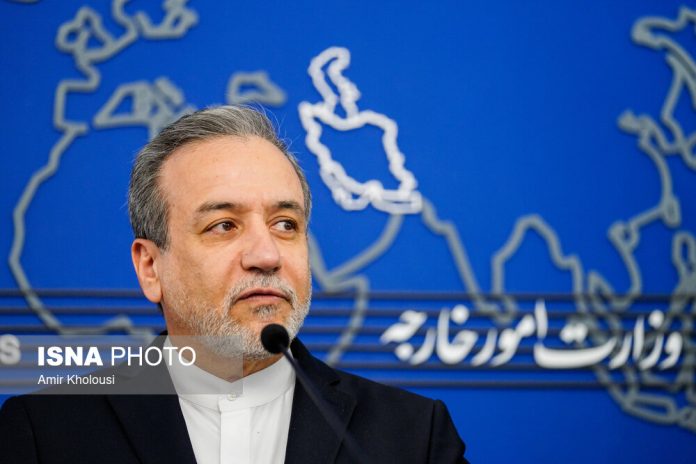
In a post on X, Araqchi wrote: “I appreciate Mr. Youssef Rajji’s kind invitation. At the same time, his decision not to accept Iran’s reciprocal invitation—despite the warm hospitality he extended to me during my last visit to Lebanon—comes as a surprise.”

Araqchi added: “It is clear that foreign ministers of countries that share brotherly relations and maintain full diplomatic ties do not need a ‘neutral venue’ for meetings.”

He continued, “Given Israel’s occupation of Lebanese territory and its blatant violation of the ‘ceasefire,’ I fully understand why my esteemed Lebanese colleague is not currently prepared to travel to Tehran. Therefore, I gladly accept his invitation to visit Beirut.”

Iran’s foreign minister emphasized that Tehran also seeks a “new chapter” in bilateral ties—one based on the very principles highlighted by Minister Rajji.

According to Lebanese media, Lebanon’s foreign minister had earlier sent a letter to Araqchi apologizing for being unable to accept the invitation to visit Tehran under the current circumstances.

Youssef Rajji clarified that his refusal to travel does not signal a rejection of dialogue; rather, the conditions are simply not suitable at this time.

In his letter, he expressed full readiness for a new phase of constructive relations between Lebanon and Iran based on mutual respect.

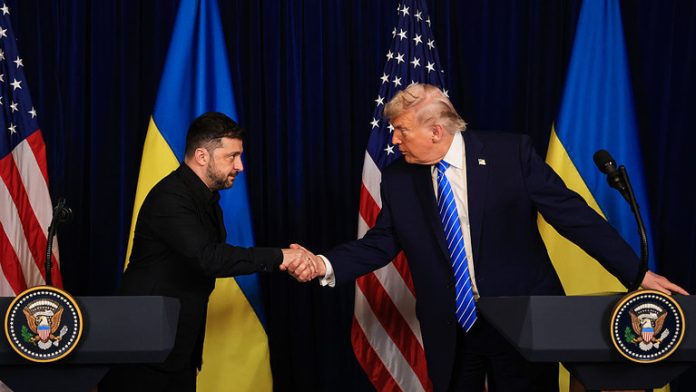
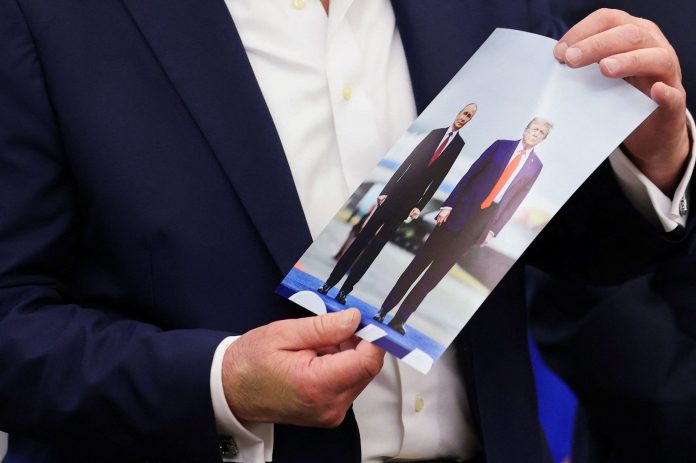
Trump claims everyone in Ukraine except Zelensky ‘loved’ US peace plan

Trump previously said the Ukrainian leader was “losing” ground to Russia and urged him to hold elections, since his five-year presidential term expired in May 2024.

Speaking to reporters at the White House on Thursday, Trump stated that he had thought the US was “very close” to brokering a deal between Russia and Ukraine.

“In fact, other than President Zelensky, his people loved the concept of the deal,” Trump noted, adding, “It’s a deal that would have stopped the killing of thousands of people every month.”

Trump suggested that there is still no agreement on territory.

“A little bit complicated because you’re cutting up land in a certain way. It’s not the easiest thing to settle,” he stressed.

He declined to clarify if he was seeking “a Korea-like ceasefire.”

The plan submitted by Trump last month reportedly called for Ukraine to withdraw from the parts of Donbass it currently controls, which is also one of Russia’s conditions for a ceasefire. Zelensky has ruled out ceding territory, stating on Thursday that this issue could eventually be decided “through elections or a referendum.”

Russia has announced that for a comprehensive resolution and stable peace, Ukraine must recognize its new borders. President Vladimir Putin stated during a trip to India last week that Moscow will liberate Donbass by force if Ukraine refuses to withdraw.

Putin has stressed that he does not recognize Zelensky as a legitimate head of state and argued that his status could complicate the signing of a peace deal.

Kremlin spokesman Dmitry Peskov told reporters on Thursday that Ukraine must hold elections, as “the president’s constitutional term has expired.”