Saturday, December 20, 2025
Home Blog Page 11

Ukraine says referendum on territorial concessions necessary

Speaking to reporters on Thursday, Zelensky suggested that the territorial dispute with Russia over Donbass – widely considered to be the most serious stumbling block on the way to peace – should be put to a vote.

“The Russians want the whole of Donbass – we don’t accept that. I believe that the Ukrainian people will answer this question. Whether in the form of elections or a referendum, the Ukrainian people must have a say.”

His remarks came as US President Donald Trump urged Zelensky, whose presidential term expired last year, to hold elections. While Zelensky did not reject the request outright, he insisted that an election can only take place if the West provides Kiev with strong security guarantees.

According to Zelensky, the ongoing talks with US officials over a peace deal included proposals to designate parts of Donbass as a “free economic zone,” adding that Moscow prefers the phrase “demilitarized zone.”

“The Americans are searching for an appropriate format,” the Ukrainian leader continued.

Trump has expressed frustration over the slow progress towards a deal, suggesting that Zelensky is standing in the way.

“I thought we were very close with Ukraine to having a deal. In fact, other than President Zelensky, his people loved the concept of the deal,” he stated, while acknowledging that reaching an agreement is “a little bit complicated because you’re cutting up land in a certain way.”

The initial US roadmap to peace leaked to the media last month reportedly called for Ukraine to relinquish the parts of Donbass it still controls, freeze the front lines in Russia’s Kherson and Zaporozhye Regions, stay out of NATO, and limit the size of its armed forces, in return for security guarantees.

Moscow maintains that a sustainable peace can only be reached if Ukraine withdraws completely from the new Russian territories, and commits to neutrality, demilitarization, and denazification.

US secretly planning five-nation club including Russia to sideline G7: Report

The idea was reportedly outlined in a longer unpublished draft of the US National Security Strategy released by the administration of President Donald Trump last week. According to the Defense One news portal, that version circulated before the White House published the unclassified document and reportedly proposed a new group, dubbed the ‘Core 5’, as a forum for dialogue among major powers outside the G7 framework.

Under the reported plan, the five-nation format would hold regular summits, similar to the G7, each focused on a specific theme, with Middle East security – and the normalization of relations between Israel and Saudi Arabia in particular – said to be first on the agenda.

The unpublished version reportedly lays out plans to downgrade Washington’s role in Europe’s defense, push NATO toward a tougher “burden-sharing” model and focus instead on bilateral ties with EU governments seen as closer to the US outlook, such as Austria, Hungary, Italy and Poland.

According to Politico, White House spokesperson Anna Kelly insisted that “no alternative, private, or classified version exists” beyond the official 33-page plan.

The Kremlin has announced it has seen no official statements from Washington on the reported plan, adding that such claims should be treated with skepticism.

The reports come against the backdrop of long-running arguments about Russia’s place in existing Western-led groups. In 1998, the G7 (the US, the UK, France, Germany, Italy, Canada and Japan) was expanded to include Russia, but Moscow’s membership was suspended in 2014 after Crimea’s reunification with Russia. Trump has repeatedly said that removing Russia from the group was a “big mistake” and that had Moscow remained at the table the escalation of the Ukraine conflict in 2022 might have been prevented.

President Vladimir Putin stated in an interview with India Today this month that Russia has no plans to rejoin the G7, noting the group’s significance continues to dwindle.

Tehran slams Washington over rising restrictions on Iranian UN diplomats

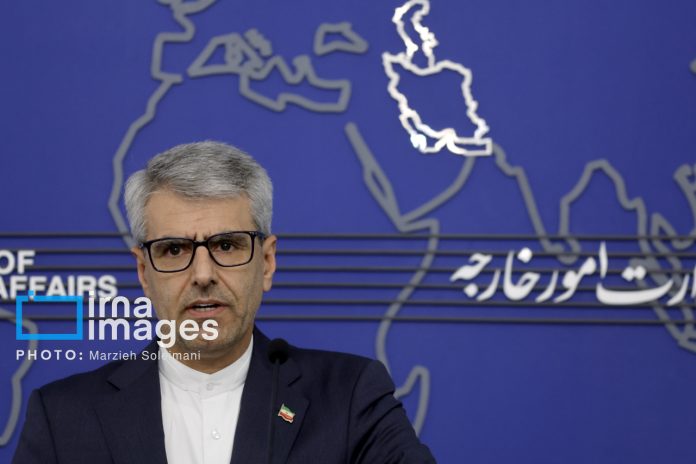
Iranian Foreign Ministry

In a statement, the Iranian Foreign Ministry said the imposition of sweeping restrictions on the residence of Iranian diplomats and on their movements; the tightening of restrictions on their banking accounts; and the imposition of constraints upon daily purchases, constitute pressures and harassments devised and implemented with the objective of obstructing the normal and lawful discharge of duties by Iranian diplomats.

It said the decision of the United States Department of State to bar three staff members of the Permanent Mission of the Islamic Republic of Iran in New York from continuing their functions constitutes the apex of lawlessness and the breach of host-country obligations by the United States.

“This decision—adopted on the basis of spurious reasoning and unfounded allegations—not only represents yet another manifest indication of the hostility and animus of US political decision-makers toward the Iranian people, but also constitutes a flagrant breach of the purposes and principles of the Charter of the United Nations and an infringement upon the sovereign rights of the Islamic Republic of Iran.”

The Ministry of Foreign Affairs of the Islamic Republic of Iran emphasized that such conduct is wrongful and unlawful, amounts to an explicit and egregious violation of the obligations of the United States under the Headquarters Agreement, and entails the international responsibility of the United States.

The Ministry of Foreign Affairs, recalling the responsibilities of the Secretary-General as the signatory of the Headquarters Agreement on behalf of the Member States, called upon him to intervene in order to forestall the continuation of unlawful conduct and the infringement of the Islamic Republic of Iran’s legal rights.

Iran, Kazakhstan expand ties with multi-sector deals

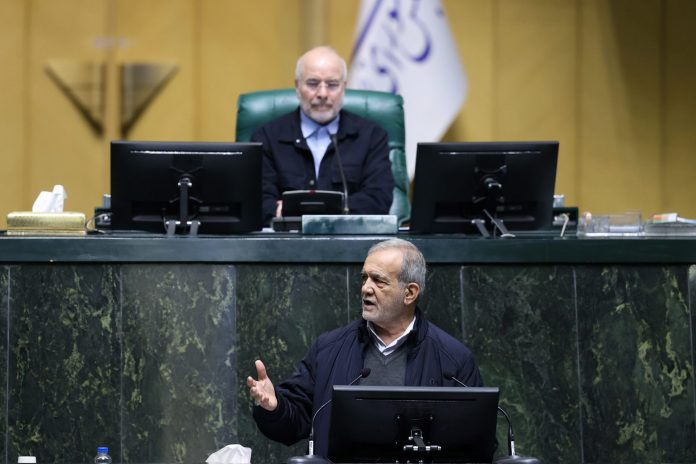
The agreements were concluded in Astana in the presence of Pezeshkian and Kazakh President Kassym-Jomart Tokayev.

The documents span transportation, transit and logistics, cultural exchanges, legal cooperation, healthcare and medical collaboration, as well as diplomatic and media engagement.

Following the ceremony, officials from both sides exchanged eight finalized documents, underscoring the start of practical implementation.

Separately, the two governments signed a joint declaration outlining shared priorities for future cooperation.

On Thursday morning, Tokayev formally welcomed Pezeshkian at the Presidential Palace in Astana, where the national anthems were played before the leaders introduced their high-level delegations.

The two presidents then held bilateral talks, followed by a joint meeting of senior officials from both countries.

As part of his regional tour, Pezeshkian will depart Kazakhstan for Turkmenistan, where he is set to attend the World Peace and Trust Forum in Ashgabat at the invitation of President Serdar Berdimuhamedov.

US House passes $800mn aid package for Ukraine through 2027

Russia Ukraine War Weapons Arms

The 2026 National Defense Authorization Act (NDAA) was approved 312-122 on Wednesday and will now advance to the Senate, where it is expected to receive bipartisan support, according to The Hill.

Some legislators objected to directing more taxpayers’ money to help Ukraine fight Russia. “I thought we were getting out of Ukraine. I don’t know why we still need to spend money there,” Thomas Massie, a Republican from Kentucky, stated.

On Wednesday, US President Donald Trump slammed what he described as a “massive corruption situation” in Kiev, referring to the recently uncovered $100 million kickback scheme in the country’s energy sector, which heavily relies on Western aid.

Prosecutors named Ukrainian President Volodymyr Zelensky’s longtime associate and former business partner Timur Mindich as the ringleader. Mindich fled the country to evade arrest after apparently being tipped off.

The scandal led to the resignation of two government ministers, and further anti-corruption raids prompted Zelensky to fire chief of staff Andrey Yermak last month.

Ukraine’s military procurement system has also been shaken by several graft and embezzlement scandals, one of which led to the resignation of Defense Minister Aleksey Reznikov in 2023.

The bill was approved as Trump has been pressuring Ukraine to sign a peace deal with Russia, with some reports suggesting that he hopes to reach an agreement by Christmas.

Russia considers Western military cooperation with Ukraine one of the root causes of the conflict and has listed ending foreign weapons deliveries as a condition for a ceasefire. President Vladimir Putin has argued that otherwise, Ukraine would use the pause in the fighting to rearm and regroup, as he says happened when Ukraine refused to implement the 2014-2015 Minsk agreements.

Iran showcases advanced plasma therapy systems

The devices were launched in the presence of Mohammad Eslami, vice president and head of the Atomic Energy Organization of Iran (AEOI), senior officials from the Vice Presidency for Science and Technology, the Ministry of Health, and Mahdieh Bakhtiari, CEO of the knowledge-based Plasma Technology Company.

Among the systems presented was a small-scale production line for plasma-activated media that enables the synthesis of plasma-based drugs and facilitates clinical studies.

One notable achievement highlighted was the successful impact of plasma-synthesized drugs on patients suffering from granulomatous mastitis.

Another device unveiled was the new generation of AI-based plasma jets for wound treatment, which personalizes therapy protocols for individual patients and allows broader and easier use in clinics.

Officials said the new plasma therapy systems will significantly reduce treatment costs.

The two-day congress is being held on Dec. 11-12 at the hospital’s Heart Hotel.

“What matters to us is that the cycle of creativity and innovation is established in a sustainable process and that the transformation of science and knowledge into technology continues without interruption,” Eslami stated, speaking at the event.

“We must build capacity and move forward strongly with God’s help. A society that cannot create technology will be labelled backward,” he added, emphasizing Iran’s independence.

“We have lived with dignity and were never under the domination of superpowers. We did not obey them, and their main problem is our refusal to hand over our interests to them,” he added.

Referring to hostile actions against Iran’s nuclear industry, he stated: “By the grace of God, despite industrial sabotage, assassinations, explosions, countless political, legal and psychological obstructions, fabricated cases full of slander, infiltration and bribery, and finally the military attack by two of them (the United States and the Zionist regime), they must understand that we are here and we will not back down.”

“We will continue our path of progress more determinedly than before, with God’s special grace and the efforts of our colleagues,” he concluded.


Iran’s leader says the country advancing despite many challenges

“The shortages and problems across the country are many, but the nation, day by day, with perseverance, sincerity, goodness, and pursuit of justice, creates honor and strength for Islam and Iran, and by God’s grace, the country is moving, striving, and advancing,” he said Thursday.

Speaking to thousands of devotees of the Prophet of Islam’s Household on the occasion of the birth anniversary of Fatima al-Zahra (SA) in Tehran Thursday, Ayatollah Khamenei touched on a broad media and propaganda campaign after the June aggression by Israel and the US met Iran’s crushing response, forcing the adversaries into a ceasefire.

“Today, beyond the military clashes we have witnessed, we are in the center of a propaganda and media war with a broad enemy front,” he stated, adding, “The enemy has realized that this property, land, and spiritual homeland cannot be subdued and occupied through military pressure.”

He criticized those raising fears of renewed war, saying “Some repeatedly raise the possibility of another military confrontation, and some deliberately inflate this to keep people uncertain and anxious, but God willing, they will not succeed.”

Ayatollah Khamenei said the enemy’s “line, danger, and goal” is to erase the effects, goals, and concepts of the Islamic Revolution. The US, the Leader said, is “at the center of this wide and active front,” with some European countries surrounding it and domestic mercenaries and traitors residing in Europe seeking personal gain on the periphery.

He underscored the importance of understanding the enemy’s strategy, saying that resisting Western media campaigns is “difficult but entirely possible.”

“Like the military front, in this propaganda and media confrontation, our formation must be aligned with the enemy’s plan and goals and focus on the points he targets, namely Islamic, Shia, and revolutionary teachings.”

Highlighting Iranian resilience, Ayatollah Khamenei underlined: “The people of Iran, through national resistance, have thwarted ongoing efforts by the enemy to change the religious, historical, and cultural identity of the nation.”

He emphasized that proper defensive and offensive arrangements are needed to counter propaganda attacks targeting “minds, hearts, and beliefs,” and stressed that “Iran, despite existing problems and shortages across the country, continues on a forward-moving path.”

Ayatollah Khamenei defined national resistance as “endurance and steadfastness in the face of various pressures from dominators,” whether military — as seen during the Sacred Defense of the 1980s when Iranians fought an Iraqi invasion and in recent months among the youth — or economic, media, cultural, or political.

He cited provocations and propaganda by Western media actors and political-military leaders as instances of the enemy’s propaganda pressure, noting that the pressures often aim at “territorial expansion — like what the U.S. does in Latin America — control of underground resources, changing lifestyles, and, most importantly, identity transformation.”

Ayatollah Khamenei also reflected on a century of foreign attempts to undermine Iran’s identity.

“For over a hundred years, global oppressors have tried to change the religious, historical, and cultural identity of the Iranian nation, but the Islamic Revolution made all those efforts futile. In recent decades, the people, through steadfastness and resilience, have foiled extensive pressures by enemies,” he said.

He highlighted the regional impact of Iranian resistance, saying the concept and language of resistance have expanded from Iran to regional countries and beyond.

“Some things the enemy did to Iran and the Iranian nation, if done to any other country, that nation and country would have been finished,” he added.

Ayatollah Khamenei called for vigilance and persistence, emphasizing that Iran’s continued “movement, effort, and progress” depends on steadfastness against both military and media pressures and on protecting the nation’s religious, historical, and cultural identity.

Ayatollah Khamenei called for vigilance and persistence, emphasizing that Iran’s continued “movement, effort, and progress” depends on steadfastness against both military and media pressures and on protecting the nation’s religious, historical, and cultural identity.

Iceland becomes fifth state to boycott Eurovision 2026 over Israel participation

The board of the national broadcaster, RÚV, voted on Wednesday not to participate, meaning Iceland will join Spain, Slovenia, the Netherlands and Ireland in neither participating in nor broadcasting the event, which is scheduled to take place in Vienna.

Last week the contest’s organising body, the European Broadcasting Union, declined to expel Israel over its conduct of the war against the Gaza Strip.

RÚV announced in a statement that “given the public debate in this country … it is clear that neither joy nor peace will prevail regarding the participation of RÚV in Eurovision. It is therefore the conclusion of RÚV to notify the EBU today that RÚV will not take part in Eurovision next year.”

RÚV added that it had raised concerns numerous times with the EBU, which it felt had not been addressed.

The war in Gaza has caused ructions at Eurovision, spurring protests outside venues and forcing organisers to clamp down on political flag-waving.

The EBU held a general assembly last week, where members met to discuss concerns about Israel’s participation. Members voted to adopt tougher contest voting rules in response to allegations that Israel manipulated the vote in favour of their contestants, but took no action to exclude any broadcaster from the competition.

The walkouts cast a cloud over the future of what’s meant to be a feelgood cultural party, dealing a blow to fans, broadcasters and the contest’s finances.

Before the board meeting, RÚV’s vice-chair, Diljá Ámundadóttir Zöega, gave a hint of things to come.

“Today is International Human Rights Day and I think the outcome will be in that spirit,“ she stated.

Earlier on Wednesday, Poland confirmed it would be participating in the contest. Germany and Austria have also confirmed they will be taking part, arguing that Eurovision was conceived as an apolitical song contest to unite Europe.

RTÉ, the Irish broadcaster, announced that participation was “unconscionable given the appalling loss of lives in Gaza and the humanitarian crisis there” while RTVE in Spain noted participating would engender “distrust” in the organisation given the depth of feeling over Gaza.

Spain’s culture minister, Ernest Urtasun, backed the boycott.

He stressed, “You can’t whitewash Israel given the genocide in Gaza. Culture should be on the side of peace and justice.”


Repatriation of undocumented Afghans aligns with international law: Iran’s envoy

Afghan Refugee in Iran

Amir Saeed Iravani made the remarks during a speech he delivered at a UN Security Council session on Afghanistan held on Wednesday, emphasizing that the repatriation of undocumented Afghan refugees has been conducted in accordance with international legal obligations.

He noted that the Islamic Republic has long shouldered the weight of sheltering millions of Afghan refugees despite being under significant unilateral sanctions.

“Iran has borne a disproportionate burden for decades by hosting millions of Afghan refugees while itself being subjected to severe unilateral sanctions. This responsibility has imposed immense economic and security pressures, with annual costs reaching nearly ten billion dollars, in the absence of adequate international support,” Iravani stated.

The Iranian envoy added that it was unfortunate that the international community had not lived up to even the most basic commitments to help Afghan refugees in Iran, stressing that the sharp drop – over 60 percent – in funding planned for 2026 showed this clearly and amounted to a serious violation of the principle that countries must share responsibility.
“Iran has repeatedly and unequivocally stated, including from this very podium, that it cannot and will not continue to shoulder alone the disproportionate burden of hosting more than six million Afghan nationals without genuine international solidarity, equitable burden-sharing, and tangible financial support,” Iravani stressed.

He further emphasized that “The return of undocumented Afghan nationals has been conducted in full conformity with international law and humanitarian principles, with strict respect for human dignity.

In concluding remarks, Iravani added that the United Nations Assistance Mission in Afghanistan (UNAMA) remained essential in tackling Afghanistan’s complex problems and that Iran supported its mandate and stood ready to work closely with the UN, regional partners, and other stakeholders to help advance the country’s stability and future.

Iran began deporting Afghan refugees in late June following the 12-day Israeli war of aggression against the country.

 

Iran condemns US seizure of Venezuelan tanker as “Caribbean Piracy”

In a statement issued on Thursday, the embassy described the move as a “flagrant breach” of international law, including the fundamental principle of freedom of navigation.

“The illegal action by the US government to seize a Venezuelan tanker in the Caribbean Sea without any legitimate justification represents a clear violation of international regulations,” the embassy said, adding that “Caribbean piracy” is the most fitting description for Washington’s conduct.

The statement also accused the US of attempting to advance its political objectives through coercive measures, infringement of national sovereignty, and destabilizing behavior.

Expressing solidarity with Venezuela, the embassy reaffirmed Iran’s support for the country’s sovereignty and “legitimate rights.”

Bloomberg had earlier reported that US forces detained a sanctioned tanker carrying Venezuelan oil near the country’s shores. The incident comes as US President Donald Trump has intensified his rhetoric against Venezuelan President Nicolás Maduro and has not ruled out a ground assault.

Venezuela’s Foreign Ministry also condemned the seizure, calling it “international piracy” and part of a broader US strategy aimed at seizing the country’s energy resources.