Thursday, December 25, 2025
Home Blog Page 899

IAEA head says Iran open to ‘serious dialogue’

Rafael Grossi

Grossi told the Financial Times that Tehran and the watchdog, which have endured fraught relations for months, could be entering a “different phase” after he held talks in Iran.

Tehran appears willing to discuss “concrete” issues, he added.

The apparent shift in tone was prompted by an invitation from Iran’s nuclear chief Mohammad Eslami for Grossi to attend talks in Tehran. The call came in mid-April at a time of heightened tensions between Iran, Israel and the US.

“I see in them a recognition that it is better to have some engagement than to continue on a completely divergent course, leading to more escalation and perhaps even more danger, including war,” Grossi continued.

“It’s very important because we reconnected after many months of talking past each other.”

He added that Washington and Tehran also continued to keep open a “bilateral channel”.

The IAEA chief stated Iran had not altered the scale or pace of its nuclear activity since Palestinian group Hamas October attack against Israel.

He added that there was “no evidence to suggest that Iran has moved, or is moving, or is planning to move, to a weapons programme”.

Grossi claimed Tehran now has sufficient fissile material to produce about three nuclear bombs within a matter of weeks, if it chose to do so. Iran insists its programme is for civilian purposes only.

He noted technical talks between the IAEA and Iranian officials had continued since his return from Tehran.

Half a million Palestinians in Gaza forced to flee: UN

Gaza War

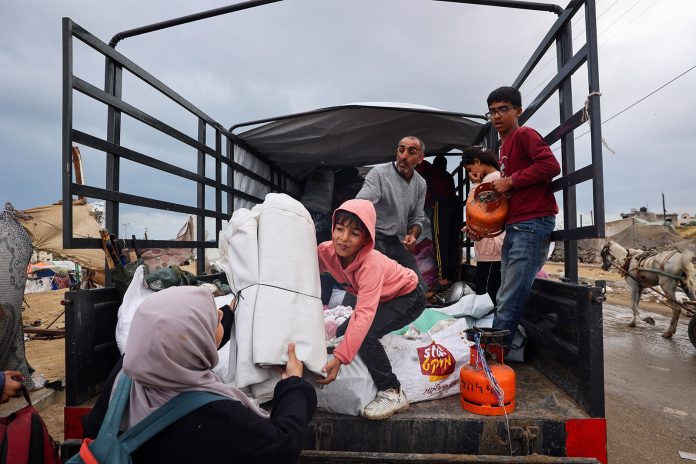
At least 450,000 Palestinians have been driven out of Rafah in Gaza’s south over the past week, the UN agency for Palestinian refugees (UNRWA) said.

UNRWA added that families continue to flee Rafah in search of safety, fleeing wherever they can – including to rubble and sand dunes.

The report warned families displaced from Rafah are arriving at sites that lack shelter, latrines and water points.

The UN report said all parties must respect international humanitarian law and civilians’ essential needs “including food, shelter, water and health – must be met, wherever they are in Gaza and whether they move or stay”.

It is impossible to improve the situation at displacement sites if supplies can’t enter Gaza, it added.

In northern Gaza, Israeli evacuation orders have displaced at least 100,000 people so far, UN deputy spokesperson Farhan Haq told reporters.

Aid workers are also struggling to distribute dwindling supplies to Palestinians facing catastrophic levels of hunger in makeshift tent camps.

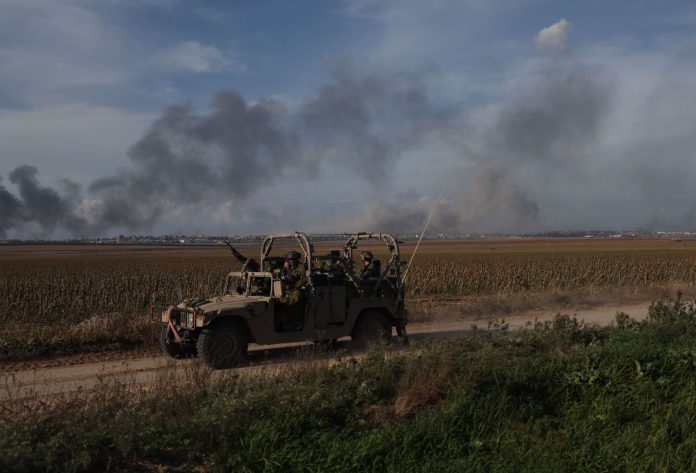
The Israeli army launched a ground attack last week in Rafah, where more than 1.5 million displaced Palestinians have sheltered. It also captured the Palestinian side of the Rafah crossing, a vital route for humanitarian aid and the territory’s only gateway to the outside world that bypasses Israel.

Israel has pounded the Gaza Strip following Palestinian resistance group Hamas’ cross-border attack on Oct. 7, 2023, which killed about 1,200 people.

Nearly 35,200 Palestinians, most of them women and children, have since been killed, and over 79,000 others injured, according to Palestinian health authorities.

More than seven months into the Israeli war, vast swathes of Gaza lay in ruins amid a crippling blockade of food, clean water and medicine.

Israel stands accused of genocide at the International Court of Justice (ICJ). An interim ruling in January said it is “plausible” that Tel Aviv is committing genocide in Gaza, ordering it to stop such acts and take measures to guarantee that humanitarian assistance is provided to civilians in Gaza.

US promises Ukraine military assistance to make ‘real difference’ on battlefield

Blinken and Zelensky

Blinken arrived in Kyiv on a surprise diplomatic visit on Tuesday to underline the support of the US. He is the first of Joe Biden administration official to visit Kyiv after the passage of the Ukraine funding, which Ukraine and its allies hope could be a turning point in the war.

The Secretary of State said on Tuesday the long-awaited Washington’s military assistance has started arriving in Kyiv, after months of delays caused by political haggling in the US Congress.

The $61 billion package includes about $23 billion to replenish US arms, stockpiles and facilities and nearly $14 billion to help Ukraine buy advanced weapons systems and other defense equipment. More than $11 billion will fund current US military operations in the wider region.

As he met Ukraine’s President Volodymyr Zelensky on Tuesday, Blinken underscored that “the assistance was now on the way”.

“Some of it already arrived, and more of it will be arriving, and that’s going to make a real difference against the Russian aggression on the battlefield,” he added.

“We are determined, along with many partners of Ukraine, to make sure you succeed on the battlefield.”

“A strong, successful, thriving, free Ukraine is the best possible rebuke to [Russia’s President Vladimir] Putin,” he continued, adding that Washington is “determined that over time, Ukraine stands strongly on its own feet: militarily, economically, democratically”.

Blinken’s visit comes as Russia continues its new push into northeastern Ukraine after making several major advances there over the past week, marking Moscow’s most significant gains since Kyiv’s forces recaptured Kharkiv in late summer 2022.

More than 7,000 people have been evacuated from the Kharkiv region, the head of the region’s military administration, Oleh Syniehubov, stated on Tuesday.

The majority of the evacuations took place in the Chuhuiv and Kharkiv districts, with volunteers assisting efforts.

The Sumy region, which borders the Kharkiv region, has also ordered a “voluntary evacuation” for several towns where attacks have increased, according to the region’s military administration.

The Institute for the Study of War in Washington reported last month that Russian missile and drone strikes against Ukraine have become much more effective in recent months, even though there was no dramatic increase in their size or frequency.

“Instead, Russian forces are exploiting the degradation of Ukraine’s air defense umbrella caused by continued delays in Western security assistance and appear to be leveraging tactical adaptations stemming from several months of Russian efforts to test Ukrainian air defenses,” the Washington-based group said in a report.

Zelensky lauded the “crucial” US aid, stressing the country’s biggest deficit – air defence. He told Blinken that Ukraine needed two air defence batteries for the northeastern city of Kharkiv, being pummelled by Russian air raids.

“Civilians, warriors, everybody – they are under Russian missiles.”

In an address on Monday evening, Zelensky has sought to reassure Ukrainians that Russia’s operations in the northern Kharkiv border area will not lead to defensive gaps elsewhere along the frontline.

“We understand how the enemy is acting, and we see the plan to draw our forces back,” the president added.

Kiev’s military intelligence chief has warned Ukraine’s precarious battlefield position is set to worsen in the near future. Kirill Budanov described the situation as “on the edge” as Russia continues to make territorial gains.

The Russian operation has long been expected in Ukraine, but according to some military officials, Kiev failed to prepare defenses on its side of the border, possibly due to graft.

The Ukrainian leadership has blamed a shortage of Western military assistance and the months-long delay in the appropriation of over $61 billion of Ukraine-related spending by the US Congress for a string of frontline setbacks since last year.

Moscow perceives the Ukraine conflict as a US-initiated proxy war against Russia, in which Ukrainian soldiers serve as “cannon fodder”. The Defense Ministry has estimated Kiev’s military casualties at over 111,000 this year alone, as of early May.


Warning issued as storm hits Iran’s Semnan province

Dust storm Iran

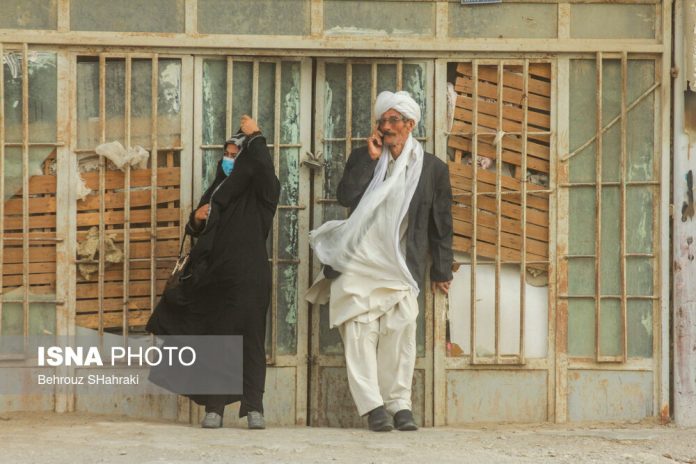
The meteorological event, characterized by fierce winds, saw the highest recorded speed, reaching a staggering 126 kilometers per hour in Garmsar, located in the western region of Semnan province.

Throughout the province, other areas experienced strong winds clocking in at 108 km/h, adding to the intensity of the storm’s impact.

In response to the hazardous weather conditions, authorities have issued a yellow weather warning for Semnan province, cautioning residents and travelers to remain vigilant and take necessary precautions.

The warning is set to persist until the end of the week, highlighting the prolonged nature of the atmospheric disturbance.

Official: Iranian aid reaches Gaza amid Israeli regime’s blockade

Gaza War

Saeed Ohaddi, the special assistant to the head of the Iranian Red Crescent, revealed: “So far, 10,000 tons of food, medicine, and biological products, along with approximately 190 billion tomans in cash aid, have been sent to the Gaza Strip from the people of Iran to support the oppressed Palestinians.”

Despite the challenges posed by the Israeli regime’s blockade, Ohaddi emphasized that the aid was successfully transferred to Gaza through meticulously planned routes with the assistance of cooperating nations.

The aid delivery comes at a critical time as the region continues to grapple with humanitarian crises exacerbated by the Israeli regime’s relentless aggression.

Notably, since October last year, over 35,000 Palestinians have tragically lost their lives due to the Israeli regime’s seemingly unending war.

Moreover, famine is rampant in Gaza, with children and women bearing the brunt of its devastating effects.

The scarcity of food and resources has led to a dire situation, further compounded by the blockade imposed by the Israeli regime since 2007.

Iran’s Knowledge-Based Push in Petroleum Production

The newly established production lines within this technological complex are geared towards the extraction and refinement of paraffin, vaseline, and futsaville from oil cuttings, employing cutting-edge methodologies.

One of the key innovations driving this process is the utilization of a nanostructured catalyst, a breakthrough technology that not only enhances efficiency but also mitigates environmental impact.

Unlike conventional methods, this nanostructured catalyst offers a sustainable approach to hydrocarbon production, devoid of the drawbacks associated with current methodologies.

The commencement of this production line marks a testament to the collaborative efforts of knowledge-based individuals, underscoring the pivotal role of innovation in driving progress within the petroleum industry.

Iran’s Hidden Gem: Bisheh, a Paradise Nestled in the Heart of Zagros, western Iran

Image processed by CodeCarvings Piczard ### FREE Community Edition ### on 2017-07-16 10:28:40Z | http://piczard.com | http://codecarvings.com

Bisheh captivates visitors with its breathtaking scenery, offering a haven for nature enthusiasts and adventure seekers alike.

From lush greenery to cascading waterfalls, the village is a playground for outdoor enthusiasts, inviting exploration of its pristine natural wonders.

As travelers seek authentic experiences off the beaten path, Bisheh emerges as a destination of choice, offering a glimpse into the soul of Iran’s natural and cultural heritage.

Whether seeking adventure, history, or simply serenity amidst nature, Bisheh promises an unforgettable journey into the heart of Zagros Moimtaoims.

Achaemenid artifacts returned to Iran to be unveiled during cultural heritage week

Iran Achaemenid tablet

The cultural heritage week kicked off on Tuesday, May 14.

The highly anticipated event will showcase not only the historic significance of these artifacts but also highlight the collaborative efforts that made their return possible.

The Achaemenid tablets, along with a collection of lesser-seen historical artifacts from the National Museum of Iran, were welcomed back to their homeland with great reverence.

Their return marks a triumph in the preservation of Iran’s cultural legacy and serves as a testament to the enduring ties between nations.

The efforts leading to the repatriation of these invaluable relics were spearheaded by the Permanent Mission of the Islamic Republic of Iran to the United Nations.

Through diligent negotiations and diplomatic channels, the artifacts found their way back to Iranian soil, where they rightfully belong.

Israel amassed enough troops to launch incursion into Gaza’s Rafah: US

Israeli Army

Two senior administration officials told CNN they are unsure whether Israel has made a final decision to carry out such a move in direct defiance of President Joe Biden.

According to CNN, one of the officials warned that Israel has not come anywhere close to making adequate preparations including building infrastructure related to food, hygiene and shelter ahead of potentially evacuating more than one million Palestinians in Rafah.

The White House has been expressing concern over an invasion of Rafah, where more than 1 million civilians from other parts of Gaza have been sheltering since last October’s attack by the Palestinian group Hamas on Israel.

Recently, Biden stated in an interview with CNN that he would not supply offensive weapons that Israel could use to launch an all-out assault on Rafah.

Reacting to Biden’s threat to withhold weapons, Israeli Prime Minister Benjamin Netanyahu stressed Tel Aviv would “stand alone” if it had to.

“If Israel has to stand alone, we will stand alone,” Netanyahu said in a statement, adding, “If we need to, we will fight with our fingernails. But we have much more than fingernails.”

Nearly 35,100 Palestinians have been killed and over 78,800 others injured in a brutal Israeli onslaught on the Gaza Strip since an Oct. 7 cross-border attack by Hamas that killed nearly 1,200 people.

The group demands an end to Israel’s ongoing military offensive on the Gaza Strip in return for any hostage swap with Tel Aviv.

More than seven months into the Israeli war, vast swathes of Gaza lay in ruins amid a crippling blockade of food, clean water and medicine.

Vast majority of US campus pro-Palestine demonstrations peaceful, police bias towards Israel: Study

Protest US Universities

The study also found that while police were most likely to break up a protest when counter protesters also showed up, unopposed peaceful pro-Palestine protests were five and a half times more likely to be forcibly dispersed than unopposed pro-Israel protests.
The ACLED defined violence as something that goes beyond “pushing or shoving” and property damage as “breaking a window or worse”.

This was the second study the ACLED released on violence at campus protests, the previous review published on May 2 found that 99% of campus protests were peaceful.

Among the protests that included violence or property damage, roughly half of them only became violent after police was called to remove previously peaceful protesters. It also found far more incidents – 70 in total – where police used violence, including chemical agents and baton beatings, against protesters.

The most significant instance of violence, according to the study, was when a group of pro-Israeli protesters attacked an encampment at the University of California, Los Angeles, where a pro-Israeli group showed up after dark using pepper spray and fireworks. In that case, the police stood by for hours, and then forcibly broke up the encampment the following day.

The study found only two incidents of what it considered serious property damage perpetrated by pro-Palestinian campus protests. One event took place at Portland State, where protesters occupied a library and damaged some computers and furniture. The second unfolded at Columbia, where protesters broke some windows while occupying Hamilton Hall.

According to reports, nearly 3,000 demonstrators have been arrested nationwide at campus protests.

Some protesters are complaining they have faced death threats and harassment after being added to a website that lists people who allegedly participated in antisemitic or anti-Israel protests.

The site, Canary Mission, includes a searchable database of students, professors, professionals and organizations it claims are antisemitic and lists people for alleged actions including joining a protest, participating in chants and posting on social media. It also includes a section called “Ex-Canary”, which lists anonymous quotes allegedly from individuals who were previously on the Canary list, condemning their previous comments and actions.

The site encourages people listed on the site to contact them to find out how to have their name removed.

“Individuals who believe that they should be removed from the Canary Mission website are encouraged to be in touch with us and may become an Ex-Canary,” the site’s About Us page reads.