Thursday, December 25, 2025
Home Blog Page 898

Israel orders Al Jazeera closure in West Bank: Report

Al Jazeera

Quoting unnamed sources in the Israeli military, Israel’s Army Radio reported that the army was working to implement Gallant’s order against the Qatari broadcaster.

According to the Times of Israel, it is not clear whether the order would apply to areas of the West Bank where Israeli settlers live, or if it would extend to Palestinian areas, where Al Jazeera is widely watched.

It is also not clear if the order would mean the closure of Al Jazeera’s offices in Ramallah as well as a block on the network being watched across the West Bank.

An Israeli army spokesperson told the Times of Israel: “The IDF [Israel Defence Forces] is working to implement the defence minister’s order.”

But the military did not confirm what the order was, and Gallant’s office has not released an official statement. Al Jazeera has not responded officially either.

The reported move against the broadcaster is just the latest in a long campaign against it.

On 5 May, the Israeli government voted to shut down Al Jazeera’s operations in Israel. The broadcaster is one of the last remaining international media networks reporting from war-ravaged Gaza.

Al Jazeera previously broadcast live from Jerusalem, Tel Aviv and just outside Gaza in northern Israel daily. It has since been forced to produce all its coverage from Ramallah.

At the time of its closure in Israel, Shlomo Karhi, the Israeli communications minister, said in a statement that the government signed orders to immediately close Al Jazeera’s offices in Israel, confiscate broadcast equipment, cut the channel off from cable and satellite companies and block its websites.

Following a cabinet vote on the closure, Israeli Prime Minister Benjamin Netanyahu claimed Al Jazeera reporters had “harmed Israel’s security and incited against soldiers”, and referred to the outlet as a “Hamas mouthpiece”.

Neither Netanyahu nor the Ministry of Communications provided examples of Al Jazeera content that they claimed posed a threat.

Al Jazeera decried the decision and stressed the accusation that it threatened Israeli security was a “dangerous and ridiculous lie” and was part of Israel’s “ongoing suppression of the free press”.
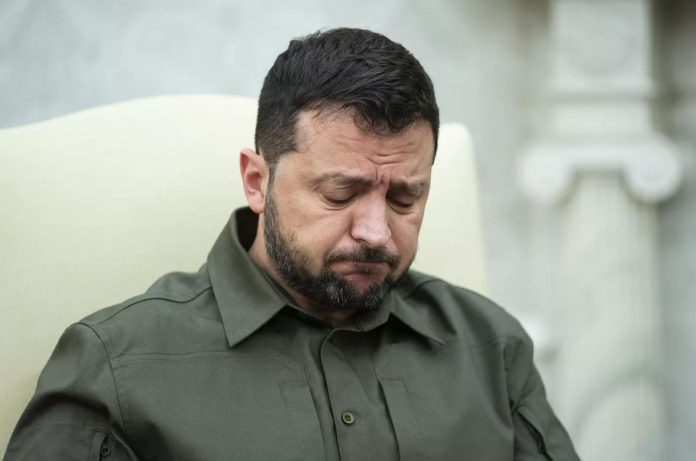
Zelensky cancels visit to Spain, Portugal due to difficult condition in Ukraine

Zelensky

The statement was made on Wednesday by Sergey Nikiforov, who wrote on his Facebook page that the Ukrainian leader “has instructed that all international events involving him scheduled for the coming days be postponed and new dates coordinated”. He thanked Kiev’s backers for their understanding.

Zelensky was due to travel to Spain on Friday and meet with King Felipe. Later, he was expected to visit Portugal, where he was set to sign a bilateral security cooperation agreement with Lisbon.

While Nikiforov did not state the reason for the postponement of Zelensky’s travel, the move comes as the Russian Defense Ministry reported an advance in Ukraine’s Kharkov Region. On Wednesday, it claimed Moscow’s troops had captured the villages of Glubokoye and Lukyantsy, which are close to the Ukraine-Russia border.

Ukrainian Defense Minister Rustem Umerov admitted that Kiev was facing an “extremely difficult” situation as its troops were struggling to hold ground and were outgunned by the Russian forces. Against this backdrop, he urged Ukraine’s backers to ramp up ammunition deliveries.

Ukrainian officials have long warned that they were not ready to repel a major Russian attack, complaining about delays with Western arms shipments. In April, the head of Kiev’s military intelligence, Kirill Budanov, warned that Ukraine would face serious difficulties in mid-May and early June.

Kharkov Region has frequently been used by Ukrainian forces to stage artillery and drone attacks on Russian border areas, many of which targeted residential buildings, resulting in dozens of civilian casualties. In March, Russian President Putin suggested that Moscow could “at some point” be forced to “create a certain cordon sanitaire” in Kiev-controlled territories to prevent further attacks.

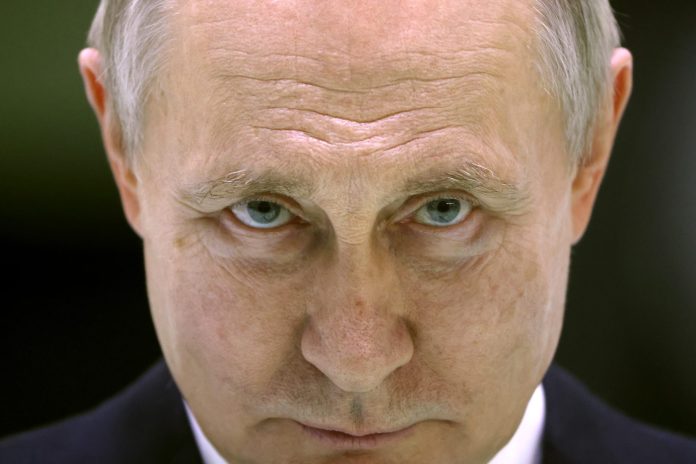
Putin says Russia wants comprehensive, sustainable settlement of Ukraine conflict

Vladimir Putin

The president made the remarks in an interview with Xinhua News Agency ahead of a state visit to China.

Putin said that Russia is open to a dialogue on Ukraine, but the negotiations should take into account the interests of all countries involved in the conflict.

“We want a comprehensive, sustainable and fair settlement of this conflict by peaceful means. And we are open to a dialogue on Ukraine, but it should be a negotiation that takes into account the interests of all countries involved in this conflict, including our interests,” the president added.

Any peace settlement must also involve a substantive discussion on global stability and reliable security guarantees for Russia’s opponents and for Russia itself, he continued.

Russia has never refused to negotiate on Ukraine, Putin stressed.

“However, instead of signing a peace agreement, the Ukrainian side unexpectedly announced the termination of negotiations. As Ukrainian officials later said, this was because their Western allies urged them to continue fighting and work together to strategically defeat Russia. We have never refused to negotiate.”

Ukraine and its Western allies are not ready to engage in open and honest dialogue with Russia to end the conflict, Putin highlighted.

“Unfortunately, neither Ukraine nor its Western patrons support these initiatives,” Putin said, adding, “They are not ready to engage in an equal, honest and open dialogue based on mutual respect and consideration of each other’s interests.”

Ukraine and its Western allies are reluctant to discuss the underlying causes, the very origins of the global crisis, the president continued.

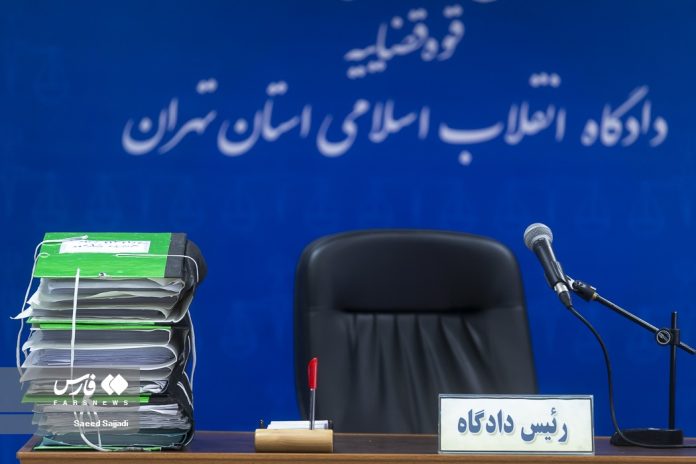
Families of victims of terrorist attack in southeastern Iran file lawsuit against US

Iran Court

The suicide blast by the so-called Jaish al-Adl separatist group targeted a bus transporting Islamic Revolution Guards Corps (IRGC) members on February 13, 2019 that left 27 military personnel dead and 13 others injured, one of the deadliest terrorist attacks in Iran in years.

The families say that the terrorist attack in the province of Sistan and Baluchestan
was perpetrated under the full support of the US and was a gross violation of human rights and international regulations.

The families of the martyrs of this terrorist incident are pursuing the judicial case in a court in Tehran.

The Pakistan-based separatist group, that seeks to cede Sistan and Baluchestan province, has a history of bloody terrorist attacks in Iran’s eastern border region.

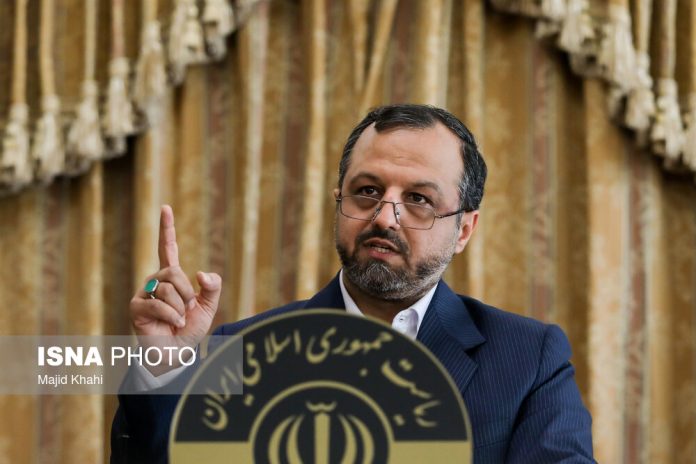
Minister: Iranian knowledge-based companies’ exports surpassed $2.5bn dollars last year

Ehsan Khandouzi

Ehsan Khandouzi told a cabinet meeting on Wednesday that the export of knowledge-based products is a sign of gradual departure of the country’s economy from selling raw materials to complex products.

On Monday, the Iranian Customs reported that the exports by knowledge-based companies amounted to 3.6 million tons of goods worth over 2.5 million dollars, with China topping the list of purchasers.

During the said period, the companies imported over 1.15 million tons of goods worth over 5.1 million dollars, according to the report.

About 85 percent of the imported goods of knowledge-based companies were destined to five countries of China, the United Arab Emirates (UAE), Turkey, Germany and India.

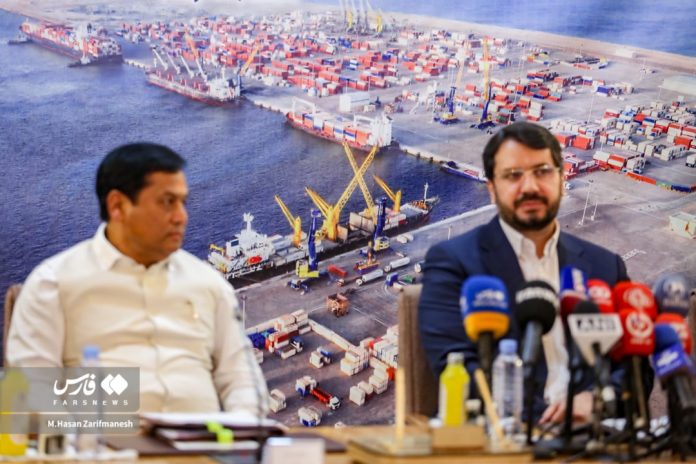
India downplays US sanction threat over Iran’s port contract

Hours after India and Iran inked a 10-year deal to develop and operate the strategic Iranian port of Chabahar, the US warned any entity considering business deals with Iran of potential sanctions.

“Any entity, anyone considering business deals with Iran, they need to be aware of the potential risk they are opening themselves up to, potential risk of sanctions,” the US State Department Principal deputy spokesperson, Vedant Patel, said at a press briefing on Monday.

In reaction to the US threat, Jaishankar stated on Tuesday that people should not take a “narrow view” of the initiative, noting that the US has been appreciative of the larger relevance of the port and is well aware of the significance of the agreement.

“I did see some of the remarks that were made, but I think it’s a question of communicating, convincing, and getting people to understand that this is actually for everyone’s benefit. I don’t think people should take a narrow view of it,” Jaishankar said while speaking at a book launch in Kolkata, India.

“They (US) have not done so in the past. So, if you look at the US’s own attitude towards the port in Chabahar, the US has been appreciative of the fact that Chabahar has a larger relevance …we will work at it,” he added.

He emphasized India’s longstanding involvement in the project, but said a long-term agreement could not previously be concluded due to a number of issues. He said that successful resolution of issues led to the signing of a beneficial long-term pact for the region.

“We have had a long association with the Chabahar Port, but we could never sign a long-term agreement. The reason was …there were various problems … the joint-venture partner changes, the condition changed.”

“Finally, we were able to sort this out and we were able to get the long-term agreement done. The long-term agreement is necessary, because without it you cannot really improve the port operation. And the port operation we believe will benefit the entire region,” he continued.

Back in 2016, India agreed to finance the development of the Iranian port but the process was stalled two years later due to the US sanctions reimposed after Washington’s unilateral withdrawal from the 2015 nuclear deal with Iran.

The agreement for the Long-Term Bilateral Contract regarding the operation of Chabahar Port, Iran’s sole ocean port, was officially executed on Monday between Indian Ports Global Limited (IPGL) from India and the Ports and Maritime Organization (PMO) of Iran.

For India, the Chabahar Port is considered a significant transit port for trade with landlocked Afghanistan and Central Asian countries.

The Indian government has made significant investments in the port’s infrastructure and has actively participated in enhancing its facilities to establish it as a feasible transit route for Indian goods destined for Afghanistan and Central Asia.

Iran conducts first non-invasive treatment of skin cancer with radioactive Rhenium particles

Professor Majid Assadi, the head of the Persian Gulf Nuclear Medicine Research Center of Bushehr University of Medical Sciences told reporters on Wednesday that the new method of treatment has a 95 percent rate of success for patients with non-melanoma skin cancer.

He said the treatment process got underway last year with the cooperation of dermatologists at the Bushehr Nuclear Medicine Research Center for patients with basal cell carcinoma, using radiopharmaceuticals provided by the Pars Isotope Company.

Professor Assadi said the new method can be helpful for patients that cannot undergo invasive surgery, including those who have tumors in the face, or older patients who have underlying medical conditions.

Professor Assadi explained, “The treatment known as Rhenium-SCT is often a one-session process in which doctors apply a pasty substance to the skin lesion from a few minutes to up to three hours, and then it is removed.”

“The person will receive no radiation after that and this short period is enough for the cancer cells to disappear,” he noted.

Poll shows almost 70% of British public want end to Gaza war

Gaza War

Researchers found 69 percent of respondents wanted a ceasefire and an end to Israel’s military campaign, while just 13 percent wanted it to continue.

The figures represent a 10 percent increase in those wanting an end to the conflict compared to November, 2023 – a month after the war started. Meanwhile, support for the war has come down from 20 percent during the same period.

British people were also significantly more likely to sympathise with the Palestinian side compared to the Israelis.

Polls showed 29 percent of those asked felt more sympathy with the Palestinians than Israelis on 8 May, the day the survey was carried out, while 16 percent sympathise more with the Israelis.

Close to a third of respondents said they didn’t know who they sympathised with more, at 31 percent, and another 23 percent said they sympathise equally with both sides.

Sympathy for Palestinians was lowest immediately after the Hamas-led attacks on 7 October, with just 15 percent sympathising more with the Palestinians on 9 October.

The number sympathising with Israelis also peaked around that period at 21 percent.

As the UK government refuses to pause or end arms sales to Israel, YouGov researchers also found that a majority of people in the country want a ban on the sale of weapons to Israel.

A total of 56 percent either strongly support or somewhat support a ban, with 36 percent saying strongly.

Just 20 percent oppose a ban, with 11 percent saying they felt strongly.

The figures reveal a big disparity between sentiment amongst the British public and the leaders of the UK’s ruling parties.

Both the UK opposition Labour party and the ruling Conservatives backed Israel’s war on Gaza, although Labour has since called for a humanitarian ceasefire.

Labour has also called for a pause on arms sales to Israel while the Conservative British Foreign Secretary David Cameron has argued that doing so is “not wise”.

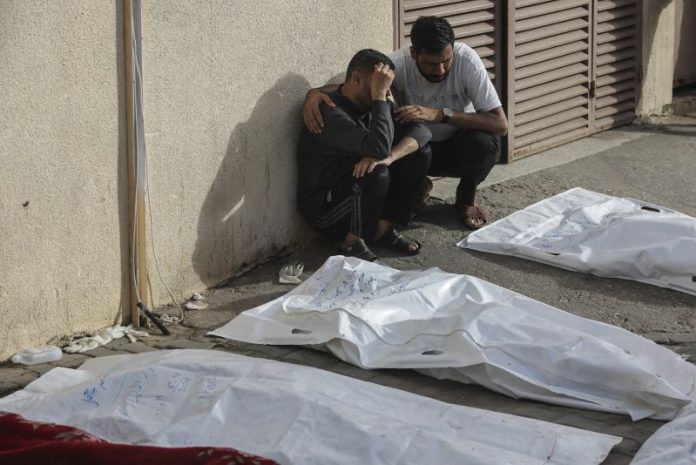
Israel has killed at least 35,000 Palestinians since the start of the war on 7 October, when Hamas-led fighters attacked southern Israel, killing around 1,200 people and taking around 250 hostage.

Around 133 Israelis and other nationals remain in captivity in Gaza but the number of those still living is believed to be significantly lower as Hamas says dozens have been killed in Israeli bombardment.

Ukraine urges Washington to lift ban on using US-made weapons to attack Russian territory

Russia Ukraine War

The US’s ban on using its arms to attack Russian territory has reportedly deterred Kiev from attacking Moscow’s positions, but Ukraine is allegedly seeking to hit Russian military supply depots across the border, Politico reported.

A group of Ukrainian lawmakers is reportedly meeting with US Congress officials this week in an attempt to influence Washington in removing its restrictions.

The US has been supplying arms to Ukraine on the condition that they must not be used against targets located inside what Washington acknowledges as Russian territory. The restriction is intended to demonstrate the supposedly defensive nature of the arms supplies.

The Ukrainian MPs claim that the policy has facilitated a Russian offensive, which Moscow launched last Friday in Kharkov Region.

Two undisclosed US officials confirmed to Politico that the position of Joe Biden’s office had not changed.

“The assistance is for the defense and not for offensive operations in Russian territory,” one of the officials told Politico.

Last week, the Russian Defense Ministry said that Russia’s northern grouping of forces had taken control over the villages of Gatyshche, Krasnoe, Morokhovets, Oleenykovoe, Borysovka, Ogurtsovo, Pletenevka, Pilna and Strilechya in the Kharkov region.

Iran condemns Australian sanctions on senior officials

The Iranian Foreign Ministry

Australia’s sanctions against Iran came on Tuesday a month after Tehran launched missile and drone attacks on the Israeli regime to punish it for an airstrike that killed Iranian generals in a diplomatic mission in Syria

Iran’s Foreign Ministry spokesman Nasser Kanaani slammed the silence of Australia and its allies in the face of Israel’s violations of international law and its recent attack on the Iranian embassy premises in Syria.

Kanaani said this silence proves the double-standard approach adopted by Australia and its allies to developments in West Asia.

He added that Australia and its partners remained silent “regarding the aggressive action and violation of international laws and human rights by the Zionist regime in attacking the diplomatic headquarters of the Islamic Republic of Iran.”

The spokesman stated such an approach only encourages Israelis to further violate the rules of international law and commit more war crimes.

“The double-standard approach of Australia and its partners in the selective selection of international norms, not only does not help to reduce instability in the region, but by keeping silent against the Zionist regime’s attack on diplomatic places, its provision of weapons in the brutal killing of the defenseless people of Gaza, the Israeli regime is violating international rules encourage more war crimes and lead the region to instability.”

“The main cause of tension and insecurity in the region is the occupation (Palestinian lands) and the criminal approach of the Zionist regime in killing the Palestinian people and the relentless support of the evil coalition, including Australia, to this regime,” he continued.

Kanaani added that Iran reserves the right to take reciprocal action in response to Canberra’s latest sanctions.

Tehran has stressed that its mid-April military operation against Israel was a legitimate response to the Israeli regime’s attack on Iran’s consulate in Syria’s Damascus on April 1.