Friday, December 26, 2025
Home Blog Page 86

Iran approves national plan to confront climate change

Iran Water Crisis

The initiative, approved by the cabinet, focuses on three main pillars, including promoting a green economy, developing low-carbon industries, and strengthening climate adaptation and resilience.

According to Shina Ansari, Vice President and the head of the Department of Environment, the plan was prepared under Iran’s Seventh Development Plan with cooperation from ministries of energy, oil, and agriculture.

The program seeks to reduce vulnerability in critical sectors, cut greenhouse gas emissions, and enhance international environmental cooperation.

Ahmad Taheri, head of the National Center for Air and Climate Change, said the plan defines strategies for the next five years, requiring government agencies to submit detailed operational programs, budgets, and timelines.

Iran, a predominantly arid country, has seen average temperatures rise by about two degrees Celsius since the 1960s, with rainfall decreasing by 20 percent over the past two decades.

Officials warn that without rapid action, the nation will face intensified droughts, water shortages, and social disruptions linked to climate migration.

ICE arrests British journalist after criticism of Israel on US tour

A statement from Cair said it was “a blatant affront to free speech” to detain Hamdi for criticizing Israel’s ongoing military campaign in Gaza while he engaged on a speaking tour in the US.

A Donald Trump administration official added in a separate statement that Hamdi is facing deportation.

“Our attorneys and partners are working to address this injustice,” Cair’s statement read.

The statement also called on US Immigration and Customs Enforcement (ICE) “to immediately account for and release Mr Hamdi”, noting his only “‘crime’ is criticizing a foreign government” that Cair accused of having “committed genocide”.

The press secretary for the Department of Homeland Security, Tricia McLaughlin, wrote of Hamdi in a social media post: “This individual’s visa was revoked, and he is in ICE custody pending removal”.

McLaughlin’s post also added: “Those who support terrorism and undermine American national security will not be allowed to work or visit this country.”

During his tour, Hamdi spoke on Saturday at the annual gala for Cair’s chapter in Sacramento. He was expected to speak on Sunday at the gala for the Florida chapter of Cair.

McLaughlin’s post about Hamdi’s detention was shared by Trump administration ally Laura Loomer, who took credit for his being taken into custody.

Loomer, who has called herself a “white advocate” and a “proud Islamophobe”, has often peddled conspiracy theories such as endorsing claims that the September 11 terrorist attacks in 2001 were an “inside job”.

In 2018, she infamously chained herself to Twitter’s headquarters in New York City in protest of her account being banned. Billionaire businessman Elon Musk reinstated her account after he bought the social media platform in 2022.

“As a direct result of … my relentless pressure on the [state department] and Department of Homeland Security, US officials have now moved to take action against Hamdi’s visa status, and his continued presence in this country,” Loomer posted on social media.

Hamdi is the latest of numerous immigrants who have been arrested and deported by ICE over pro-Palestinian views. Earlier in October, journalist Mario Guevara was deported to El Salvador after having been detailed while live streaming the massive, anti-Trump No Kings protest in June.

On 30 September, a federal judge appointed during Ronald Reagan’s presidency ruled the administration’s policy to detain and deport foreign scholars over pro-Palestinian views violates the US constitution and was designed to “intentionally” chill free speech rights.

The ruling is bound to be appealed, possibly all the way to the US supreme court, which is dominated by a conservative supermajority made possible by three Trump appointments. The state department, meanwhile, has said it will continue revoking visas under the policy.

Israel continues to bar journalists from Gaza

Journalist Gaza

In a response sent to Israel’s Supreme Court, the government said it would reexamine its policy regarding the entry of journalists into Gaza within a month and submit an update on the matter by Nov. 23, Haaretz reported.

The move follows petitions filed with the court against a government ban on the entry of journalists into the Palestinian territory.

The government’s response to the court shows that journalists would continue to be banned from entering Gaza except inside the so-called “yellow line” until the policy is updated

The “yellow line” is an imaginary line separating areas currently occupied by the Israeli army in Gaza from those where it had pulled out.

Last Thursday, the Foreign Press Association in Israel expressed disappointment over a Supreme Court ruling that allowed the government to continue preventing journalists from entering Gaza.

At least 238 Palestinian journalists have been killed and dozens injured in Israeli attacks in Gaza since October 2023.

Palestinian and international human rights and media organizations warn that the Israeli ban on the entry of journalists and attacks on reporters aim to hide atrocities taking place inside Gaza.

Israel has killed more than 68,000 people and injured over 170,000 others in two years of attacks in Gaza since October 2023.

The first phase of a ceasefire agreement took effect in Gaza on Oct. 10 under US President Donald Trump’s 20-point plan.

Phase one includes the release of Israeli hostages in exchange for Palestinian prisoners. The plan also envisages the rebuilding of Gaza and the establishment of a new governing mechanism without Hamas.

Russia missile testing not ‘appropriate’: US

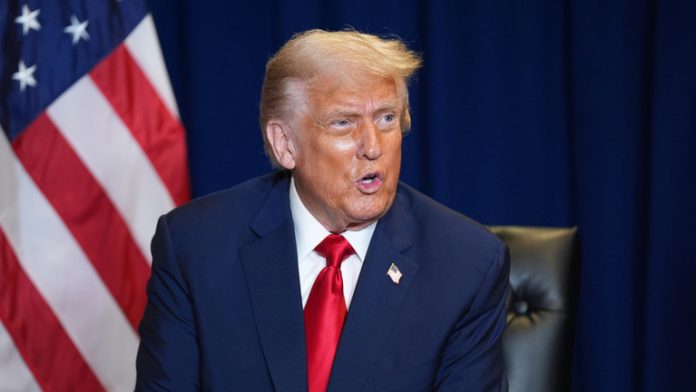
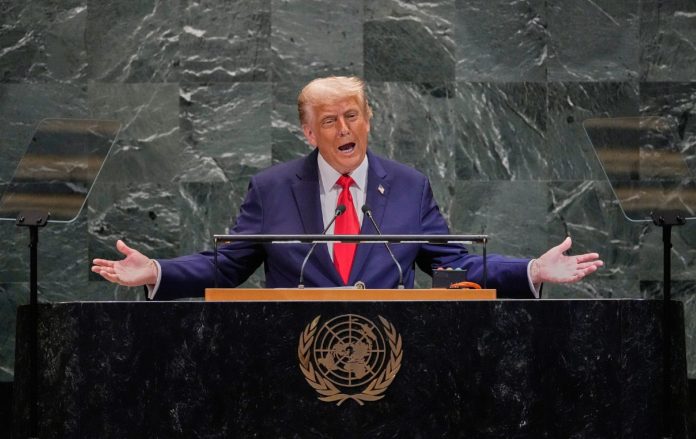
“He ought to get the war (in Ukraine) ended. A war that should have taken one week is now soon in its fourth year. That’s what he ought to do instead of testing missiles,” Trump told journalists aboard Air Force One on Monday.

Russia’s new unlimited-range nuclear-powered missile, the Burevestnik, can evade missile defenses, Chief of the General Staff Valery Gerasimov has said. He made the remarks on Sunday during Putin’s visit to a Russian Army command post.

Putin held a meeting with Gerasimov and other senior military commanders, during which he was briefed on the situation along the line of contact with the Ukrainian Army and on the Russian Army’s offensive training exercises, including the country’s strategic nuclear forces. According to Gerasimov, the Burevestnik test took place on October 21.

The missile completed a multi-hour flight that covered 14,000km, though he stressed that this is not the range limit for the Burevestnik.

“The technical characteristics of the Burevestnik missile make it capable of striking highly protected targets at any distance with guaranteed accuracy,” Gerasimov stated.

“During the test flight, the missile successfully performed all designated vertical and horizontal maneuvers, demonstrating its strong ability to evade anti-missile and air defense systems.”

The Burevestnik is a nuclear-powered, unlimited-range strategic cruise missile designed to destroy high-value targets, including fortified bunkers. It is undetectable by conventional radar and can only be tracked by specialized spacecraft during the launch and acceleration phases.

Putin first revealed the missile’s development in 2018, describing it as a one-of-a-kind weapon that does not follow a ballistic trajectory, rendering existing missile defense systems ineffective. He noted that its unlimited range allows it to maneuver indefinitely. Speaking to Gerasimov, the president reiterated that the Burevestnik is a “unique product that no one else in the world has,” while stressing that “much work” remains before it can be placed on combat alert.

“We will need to more thoroughly define what class of weapon this new system belongs to, determine possible methods of use, and begin preparing the infrastructure for its deployment within our armed forces,” Putin noted. He added that all key testing objectives for the missile have now been achieved.

Israel allows Red Cross, Egyptian teams into Gaza to search for captive bodies

“Israel will maintain overall security control over the Gaza Strip, signaling that the Israeli army will continue to oversee security operations even after the current phase of fighting,” added the spokesperson.

The “yellow line” is an imaginary line separating areas currently occupied by the Israeli army in Gaza from those where it had pulled out.

Under the ceasefire deal that took effect on Oct. 10, Israel has released 20 living hostages and the bodies of 16 others. The remains of 12 captives remain in the enclave.

On Saturday, Hamas chief Khalil al-Hayya stated that his group will enter more areas in the Gaza Strip to search for the remains of Israeli hostages.

Phase one of the ceasefire deal includes the release of Israeli hostages in exchange for Palestinian prisoners. The plan also envisages rebuilding Gaza and establishing a new governing mechanism without Hamas.

The Israeli genocidal war has killed over 68,000 people and injured more than 170,000 others since October 2023, according to the Gaza Health Ministry.

Israeli military dumps waste, debris from border settlements into Gaza: Report

The daily Haaretz reported that Israeli trucks belonging to a private company have been transporting waste and debris to border areas under army control inside Gaza.

The trucks were seen advancing 200–300 meters inside Gaza, where they “unload their cargo along roadsides rather than at designated disposal sites,” before returning empty to Israel through the Israeli-controlled Kisufim border crossing in central Gaza, the paper said.

“Field commanders have issued instructions allowing trucks belonging to private companies to enter the Gaza Strip and dump their loads wherever they see fit,” Haaretz added, citing security officers.

According to the newspaper, the Israeli army denied knowledge of the matter.

On Thursday, the Gaza Government Media Office declared the enclave an “environmental and structural disaster zone” following two years of genocidal war waged by Israel, which destroyed about 90% of civilian infrastructure, amounting to roughly 70 million tons of debris.

According to the UN, rebuilding Gaza is estimated to cost around $70 billion.

The first phase of a ceasefire agreement took effect in Gaza on Oct. 10 under US President Donald Trump’s 20-point plan.

Phase one includes the release of Israeli hostages in exchange for Palestinian prisoners. The plan also envisages the rebuilding of Gaza and the establishment of a new governing mechanism without Hamas.

The Israeli army has killed over 68,000 people and injured more than 170,000 others in a brutal war in Gaza since October 2023, according to the Health Ministry.


Russia says major Ukrainian drone attack on Moscow repelled

In a series of posts late Sunday to early Monday, the official said the large-scale raid involved at least 37 drones, adding that emergency services were working at the sites where debris fell. He provided no data on casualties or damage on the ground.

According to the SHOT Telegram channel, explosions were heard across the Ramensky District, Podolsk, Klimovsk, Domodedovo, Kolomna, and Troitsk — all suburban towns located to the south and southeast of Moscow. There were no reports of injuries or damage on the ground, the outlet said.

The Russian authorities imposed temporary flight restrictions at Domodedovo and Zhukovsky airports, both around 40km south and southeast of Moscow, respectively.

On Saturday, Moscow also came under a drone attack, although it only involved seven drones.

Ukraine has routinely launched long-range drone raids deep into Russia, targeting energy sites, critical infrastructure, and residential areas. Moscow has denounced the attacks as “acts of terrorism.”


Bazargan: Iran’s northwestern border city emerging as a tourism destination

Historically known as one of Iran’s most important gateways linking Europe and Asia, Bazargan’s strategic location has made it a focal point of cross-border commerce for decades.

Now, local authorities are highlighting the city’s potential beyond trade, introducing it as a scenic and culturally rich travel spot in the country’s borderlands.

Bazargan features a cold, mountainous climate and unspoiled natural beauty. Alongside its economic significance, the city offers a number of historical and environmental attractions that reflect the region’s deep heritage.

Prominent sites include Pournak Historical Bathhouse, Qapan Castle, Baghcheh Jugh Palace Museum, St. Mary Church of Maku, the Black Church (Qareh Kelisa), Boralan Wetland, Qaleh Jugh Waterfall, and Baroon Dam.

More in pictures:

Interior ministry: 280,000 foreign pupils have left Iran; 320,000 enrolled for new school year

Afghan Women School

Nader Yar-Ahmadi, head of the Bureau for Foreign Nationals and Immigrants Affairs at the Interior Ministry, made the announcement.

He said coordination with the Ministry of Education is underway to ensure that undocumented Afghan children who have not yet left Iran are able to continue their studies temporarily. “President Pezeshkian has ordered that no student be deprived of education,” Yar-Ahmadi noted.

He emphasized that a temporary arrangement is in place for children from undocumented families awaiting repatriation.

He added that the ministry will directly contact families whose children are eligible for this temporary enrollment, assuring that there is no need for them to apply in person.

The National Police, he said, is coordinating with the Afghan Embassy to expedite the issuance of passports for those families, prioritizing households with school-age children.

Yar-Ahmadi also underlined that while Iran supports the education of all children within its borders, the goal is to eventually reduce the number of undocumented foreign residents to about three percent of the total population, in line with international standards. He stressed that Afghan students should be educated about their homeland “to help rebuild their country upon returning.”

US readies new sanctions as Russia stalls on Ukraine peace negotiations: Report

Putin and Trump

The sanctions could reportedly be imposed if Russian President Vladimir Putin shows no interest in meaningful negotiations and continues to delay ending Russia’s war in Ukraine.

Trump announced his administration’s first sanctions against Moscow since taking office on Wednesday, targeting Russia’s two largest oil companies, Rosneft and Lukoil, and their subsidiaries.

The measures freeze all U.S.-based assets of those companies and pave the way for secondary sanctions against foreign institutions that handle transactions with those on the blacklist.

Some of the additional sanctions prepared by the U.S. are directed against Russia’s banking sector and the infrastructure used to supply oil to the market, according to the Reuters sources.

Ukrainian officials also reportedly proposed new sanctions to Washington last week. Among the specific proposals were measures to cut off all Russian banks from the U.S. dollar system.

Two sources told Reuters that U.S. officials have informed Europe that they support the EU’s plan to use Russian frozen assets to buy American weapons for Kyiv, as requested by Ukraine.

Washington has reportedly held preliminary discussions on the use of Russian assets located in the U.S.

The EU froze about $300 billion of Russia’s central bank’s foreign reserves in February 2022 as part of its third sanctions package, prohibiting all transactions related to their management.

Belgium, where the majority of frozen funds is parked, put the brakes on swift progress on the use of frozen Russian assets, warning that its demands related to legal worries would first need to be met.

The move signals a tougher U.S. stance after Putin’s negotiating position led to the cancellation of a planned Trump-Putin summit in Budapest, with Trump saying he did not want “a wasted meeting.”

Kremlin spokesperson Dmitry Peskov earlier reiterated that Russia’s stance on ending hostilities along the current front lines, which Washington and Ukraine support, “has not changed.”

Following Trump’s sanctions, India’s biggest refineries are expected to reduce purchases from Rosneft and Lukoil to virtually zero, Bloomberg reported, citing unnamed executives at Indian oil companies.

Chinese state-owned oil companies have also suspended purchases of seaborne Russian crude following the sanctions, amid fears of potential secondary sanctions, according to Reuters.