Friday, December 26, 2025
Home Blog Page 85

Powerful earthquake hits Turkey, causing buildings to collapse

The magnitude 6.1 quake was centered in the town of Sindirgi in Balikesir province, according to the Disaster and Emergency Management agency, AFAD. It struck at 22:48 local time (1948 GMT) at a depth of 5.99 kilometers (3.72 miles.)

The quake, which was followed by several aftershocks, was felt in Istanbul, and the nearby provinces of Bursa, Manisa and Izmir.

At least three unoccupied buildings and a two-story shop collapsed in Sindirgi, Interior Minister Ali Yerlikaya said. The structures had already been damaged in a previous earthquake.

A total of 22 people were injured due to panic-related falls, which can occur because of the physical and psychological impact of earthquakes, according to Balikesir’s governor, Ismail Ustaoglu.

“So far, we have not identified any loss of life, but we are continuing our assessment,” Sindirgi’s district administrator Dogukan Koyuncu told the state-run Anadolu Agency.

Many people remained outdoors too afraid to return to their homes, Haberturk television reported. As rain began to fall, Ustaoglu added mosques, schools and sports halls were being kept open to shelter people reluctant to go back.

Sindirgi also was struck in August by a magnitude 6.1 earthquake, which killed one person and injured dozens of other people. Since then, the region around Balikesir had been hit by smaller shocks.

Turkey sits on top of major fault lines, and earthquakes are frequent.

In 2023, a magnitude 7.8 earthquake killed more than 53,000 people in Turkey and destroyed or damaged hundreds of thousands of buildings in 11 southern and southeastern provinces. Another 6,000 people were killed in the northern parts of neighboring Syria.

Iran establishes itself as a missile superpower through advanced precision and hypersonic technology

Iran Missile

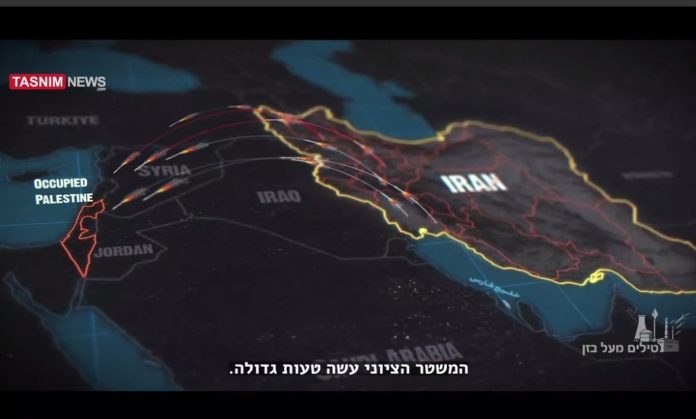
Iran’s missile program — long regarded as a principal instrument of strategic deterrence — has in recent years undergone pivotal technological leaps that have turned the country into a missile superpower.

The introduction of guided reentry warheads (MaRVs) into near-space has produced a dramatic improvement in the accuracy of Iran’s missiles.

After separating from the main booster and re-entering the atmosphere, these warheads locate and strike their targets.

MaRV technology (Maneuverable Re-entry Vehicle) represents Iran’s most important step toward becoming a precision missile power.

Iranian MaRV-equipped missiles have achieved accuracies below 10 meters.

The adoption of composite (solid) propellants has allowed missiles to remain concealed in storage or on mobile launchers for years and be fired within minutes.

A sharp reduction in operational readiness time, greater survivability, and easier maintenance are among the benefits of using composite solid fuel in Iran’s missiles.

Hypersonic capability is another feature of Iran’s Fattah-1 missiles. Nearly all ballistic missiles travel at hypersonic speeds (faster than Mach 5) during part of their flight.

The unveiling of Fattah-1 brought Iran into the exclusive club of countries possessing maneuverable hypersonic weapons.

Fattah-2 is another type of Iranian missile that uses HGV (hypersonic glide vehicle) technology.

Rather than following a purely ballistic descent, this weapon behaves like a very fast paper airplane.

The booster launches it to the edge of space; the warhead separates and then glides for hundreds of kilometers above the atmosphere. This glide capability lets it change course and strike from unexpected angles.

The Hormoz anti-radar ballistic missile acts like a hunter descending from space; instead of pursuing a conventional target, it homes in on enemy radar emissions and attacks the signal source itself (the radar). The Hormoz-1 is a short-range ballistic missile optimized for SEAD (suppression of enemy air defenses) missions.

In a conflict scenario, Iran could begin its first wave of attacks with anti-radar ballistic missiles to blind the enemy’s air-defense sensors. That forces enemy radar operators into a deadly dilemma: keep their radar on to detect threats and be targeted, or switch it off and allow subsequent waves of missiles and drones to reach their targets unimpeded.

Hamas hands over remains of captive to Israel

The Israeli military announced on Monday that the Red Cross had taken custody of the coffin and was in the process of transporting it to the army’s troops in Gaza.

Under the terms of a United States-brokered ceasefire that took effect on October 10, Hamas has undertaken to return the bodies of all the 28 deceased captives. The remains of 16 had been handed over as of Monday.

The 20 surviving captives were freed on October 13 as part of the truce.

The release of the latest body comes as the families of some of the captives called on the Israeli government to pause the ceasefire if Hamas fails to locate and hand over the bodies.

“Hamas knows exactly where every one of the deceased hostages is held,” the Hostages and Missing Families Forum said.

“The families urge the government of Israel, the United States administration and the mediators not to advance to the next phase of the agreement until Hamas fulfils all of its obligations and returns every hostage to Israel,” the association added.

The statement echoed the Israeli government’s claim that Hamas knows where the remains are.

On Saturday, Hamas negotiator Khalil al-Hayya stated there were “challenges” in locating the captives’ bodies because “the occupation has altered the terrain of Gaza”.

He suggested that some of those who had buried the bodies had been killed during the war, while others had forgotten the burial locations.

The day after al-Hayya’s comments, Israel permitted an Egyptian technical team to enter Gaza to help with the task of finding the bodies. The search involves the use of excavator machines and trucks.

Despite the ceasefire, an Israeli drone attack close to the southern Gaza city of Khan Younis killed at least two people on Monday, according to Nasser Hospital.

In total, eight Palestinians have been killed and another 13 injured in Israeli attacks across the enclave over the last 48 hours, Gaza’s Ministry of Health said on Monday.

At least 68,527 people have died and 170,395 have been injured since Israel’s war on Gaza began in October 2023, it added.

Speaking on board Air Force One on Monday, US Secretary of State Marco Rubio suggested that Israel had not violated the truce through its strike against a member of the Palestinian Islamic Jihad group on Saturday.

“We don’t view that as a violation of the ceasefire,” he said, accusing the target of planning an attack on Israeli troops.”They have the right if there’s an imminent threat to Israel, and all the mediators agree with that.”

In the more than two weeks since the truce began, about 473,000 people have returned to northern Gaza, where they face widespread destruction of property and critical shortages of basic necessities like food and water, according to the United Nations.

Younis al-Khatib, the head of the Palestine Red Crescent Society, has warned that Gaza’s population still faces the same desperate humanitarian emergency as it did before the truce.

“Rebuilding human beings is more difficult than rebuilding destroyed homes,” he added during meetings with Norway’s prime minister and foreign minister in Oslo, noting that residents would need mental health care for years to come.

The World Health Organization also warned that the number of Palestinians in Gaza who need mental health support had risen from about 485,000 to more than one million after two years of Israel’s war.

Almost all the children in the enclave need such help, according to the UN children’s agency, UNICEF, which has announced that Gaza has been “the most dangerous place in the world to be a child” over the last two years.


President Pezeshkian says Iran, Oman enduring allies through regional challenges

President Pezeshkian highlighted that the interactions between the two nations have always been founded on brotherhood, mutual respect, and goodwill, making them steadfast allies through regional ups and downs.

The president praised Oman’s constructive role in regional affairs, particularly its mediation efforts and hosting negotiations between Tehran and Washington.

He commended Oman’s clear stance in support of the oppressed people of Gaza and its condemnation of the Israeli regime’s atrocities, recognizing this humanitarian position as highly valuable.

Pezeshkian also underscored the importance of unity among Muslims nations, urging that adherence to religious teachings could transform the Islamic community into a powerful entity that safeguards the interests and security of Muslim nations.

Expressing hope that today’s visit would further strengthen ties between Tehran and Muscat, the president stated that Iran is ready to expand cooperation with Oman across various fields, including scientific, economic, cultural, social, and political domains.

Minister Al-Busaidi, expressing his satisfaction with the visit, described Iran-Oman relations as unique and historically significant, free from any doubts.

He appreciated President Pezeshkian’s commitment to enhancing relations with Islamic countries, particularly Oman, and reiterated Muscat’s dedication to deepening and elevating bilateral ties.

The minister noted that President Pezeshkian’s visit to Muscat five months ago, along with the valuable agreements that emerged from it, signifies a clear path for cooperation between the two countries.


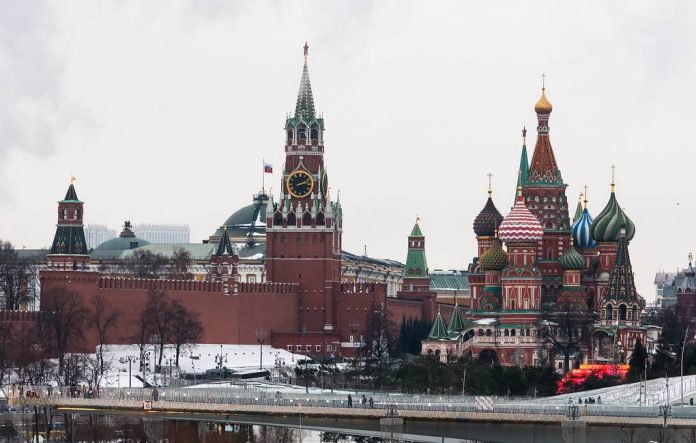
EU member states could borrow money to finance Ukraine: Politico

According to the report, several leaders discussed this alternative at last week’s EU summit after Belgium refused to back a €140 billion ($160 billion) Ukraine loan secured by the frozen Russian assets.

Although the details of the new plan remain unclear, joint debt typically refers to shared borrowing through jointly issued bonds by multiple nations, where all participants share responsibility for repayment.

Sources stated that the European Commission will outline the borrowing plan in an upcoming paper alongside a revised “reparations loan” proposal, and will include a third option – to halt Ukraine funding. They suggested the idea could be a “scarecrow” tactic to push EU nations already burdened by debt to vote for using the Russian assets.

Western nations froze $300 billion in Russian sovereign assets in 2022 and have sought to use the interest the funds have generated to finance Kiev’s war effort.

The G7 previously supported using the immobilized funds to secure $50 billion in loans, but EU leaders last week failed to agree on a similar “reparations loan,” largely due to Belgian opposition.

Prime Minister Bart De Wever warned that Belgium, which holds most of the frozen assets, could face disproportionate retaliation from Russia, and demanded a solid legal basis for the move and shared responsibility.

Sources told Politico that despite legal concerns, Brussels views using frozen Russian assets as the “most preferred” option to keep funding Kiev. A final decision is expected at the European Commission summit in December.

Moscow has denounced the asset freeze and attempts to redirect Russian funds as “theft,” vowing retaliation and warning that the move will erode trust in the Western financial system. The Kremlin has also said Western aid to Kiev only prolongs the conflict without changing the outcome.

Chinese ambassador to Tehran urges diplomatic path on Iran nuclear issue

Cong Peiwu

Zhong stressed that resolving the Iranian nuclear issue through diplomacy remains the only viable option.

“The Chinese side insists that the issue of Iran must be settled diplomatically….we oppose sanctions and pressure”, the Chinese ambassador said.

Zhong added that insisting on activating the snapback mechanism is unconstructive and only delays a diplomatic solution to Iran’s nuclear issue.

He called on the US and the European troika to show goodwill, return the nuclear issue to a diplomatic track, and avoid further escalation of tensions.

“China maintains an equal position and seeks a constructive solution based on the interests and logic of all parties”.

Zhong maintained that Beijing is willing to maintain communication with the Iranian side. Referring to Iran–China relations, Zhong underscored that China consistently opposes unilateral sanctions.

The Chinese ambassador said normal cooperation between all countries and Iran is fair and reasonable.

“If China’s legitimate interests related to Iran are harmed due to sanctions, we will undoubtedly take necessary measures”, he said.

Red gold harvest season in Iran

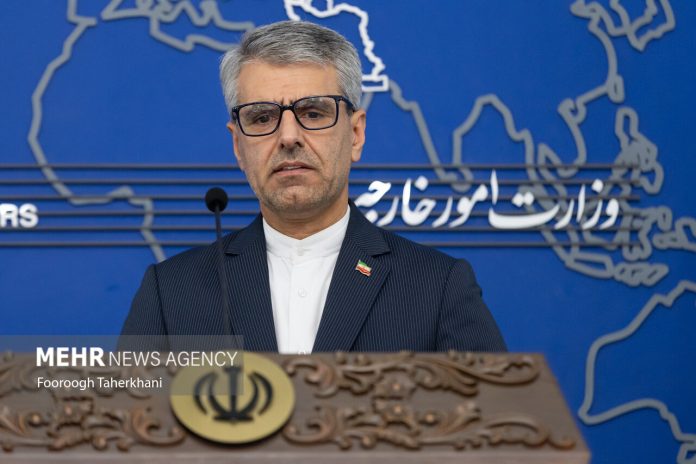
Iranian deputy FM: Iran believes in diplomacy, but not in imposed talks

Iran US Flags

“We have always believed in diplomacy, but diplomacy that is free from coercion”, Takhte Ravanchi said.

“Under such circumstances, no one seeks war or welcomes it…everyone prefers dialogue to resolve differences, provided that both sides understand the situation and do not feel entitled to impose their views.”

Touching on the origins of past conflicts, Takhte Ravanchi noted that it is neither scientifically nor historically accurate to claim a single definitive cause for war.

He further revealed that the Trump administration had once sent a letter to Tehran proposing negotiations and warning that failure to reach an agreement could lead to war.

“We accepted indirect talks”, he explained, “but they insisted on direct negotiations, which we declined for specific reasons”.

Takhte Ravanchi reiterated that Iran favors diplomacy based on equality and mutual respect.

He also underlined that wars often erupt when one side fails to achieve its illegitimate objectives through persuasion or threats.

Iran’s Financial Intelligence Center defends FATF engagement, calls CFT and Palermo accession unavoidable

FATF

The center said in a statement that the new element added to the FATF communiqué stems from UN requests linked to the snapback mechanism and activation of FATF’s capacity for sanctions enforcement.

The statement described the approval of the CFT and Palermo conventions as “an unavoidable necessity”, noting that years of delay have increased the cost of managing Iran’s case with FATF, most recently visible in the reimposition of UN sanctions.

According to the center, Iran’s participation in the latest FATF session itself reflects the body’s acknowledgment of Tehran’s progress, particularly its approval of the Palermo Convention.

It added that Iran had provided legal justification for its reservations, emphasizing that domestic laws are stronger in several areas. It reiterated that exiting the FATF blacklist is a gradual process, citing countries like Turkey and the UAE that spent years leaving the grey list despite earlier compliance.

The statement warned that continued delay and internal politicization could be exploited by adversaries through the UN mechanism to increase FATF pressure on Iran.

The Financial Intelligence Center further urged all relevant agencies to cooperate toward normalizing Iran’s status with FATF, describing the issue as a “national priority” vital to protecting the economy and easing external pressures.

Iranian newspapers criticize parliament speaker remarks targeting former officials

Mohammad Bagher Ghalibaf

The controversy erupted after Parliament Speaker Mohammad Bagher Ghalibaf accused the two of harming Iran’s developing strategic relations with China and Russia.

His comments were followed by heated statements from lawmakers Amirhossein Sabeti and Hamid Rasaei, who used harsh language and even suggested imprisonment for one of the former officials.

The daily Ettelaat condemned the tone of the debate, likening it to a modern form of “capitulation,” where foreign powers can insult Iranian officials while domestic critics are silenced.

“Why should defending a foreign government take precedence over respect for a former Iranian official?” the paper wrote.

Conservative daily Qods also criticized Ghalibaf’s remarks, questioning the relevance of such attacks amid the country’s many governance challenges.

The editorial warned that revisiting past political disputes only fuels division and undermines national unity.

It urged politicians to focus on solving real issues rather than reviving old rivalries that “neither untie a single knot nor address the nation’s pressing problems.”