Friday, December 26, 2025
Home Blog Page 746

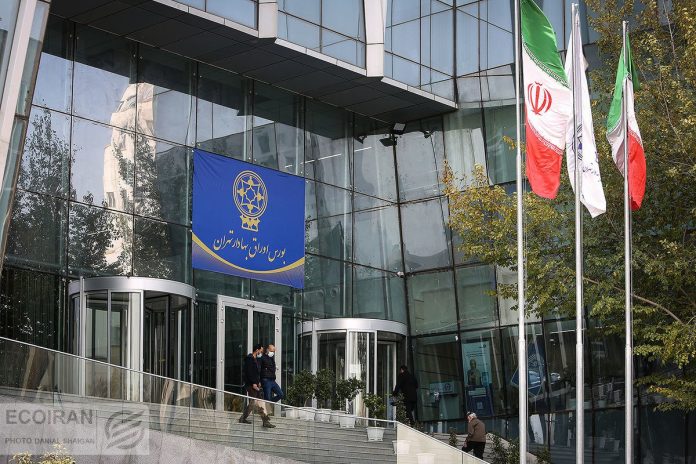
Head of Securities and Exchange Organization of Iran steps down amid loan row, red market

Iran Bourse

Eshghi said he tendered his resignation in his first meeting with the newly-appointed Minister of Economy Abdolnaser Hemmati, which was approved by the minister.

He, however, dismissed reports of friction and a heated debate during the meeting.

Iran’s stock market has been the least profitable among investment markets during Eshghi’s stint.

The decision also comes days after a letter was disclosed about details of grating ‘low-interest loans’ to five stock exchange officials, including Eshghi.

On Thursday, Hemmati announced he has launched an ‘urgent expert review’ of the report.

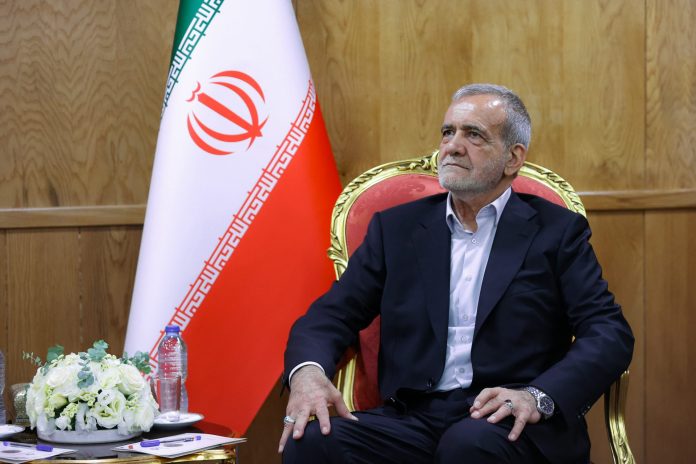
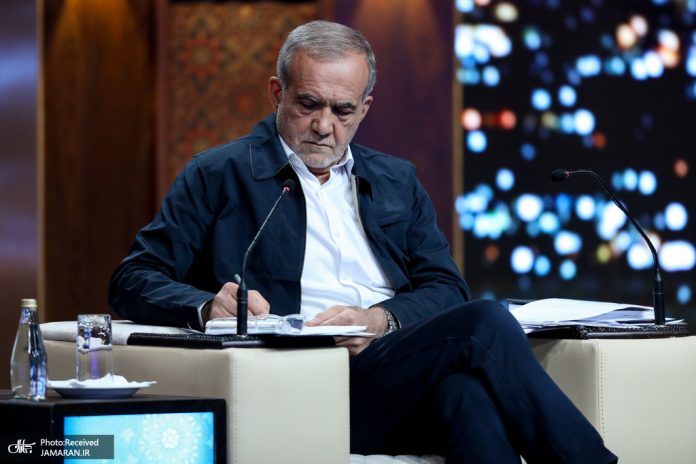
Iran’s envoy says Pezeshkian to meet Putin in Russia’s Kazan

Masoud Pezeshkian

“I believe he will participate in the BRICS summit in Kazan. We are currently preparing for this visit so that it will be useful and successful for our bilateral relations,” Jalali said.

“As far as bilateral relations are concerned, a meeting with the Russian leader Vladimir Putin is planned, as well as bilateral meetings with other leaders and with the Iranian community, and a speech at the summit,” he added.

Russia assumed the BRICS presidency on January 1, 2024, and it will continue until the end of the year with more than 200 events on a wide range of topics. The main event of the presidency will be the BRICS Summit in Kazan in October 2024.

Iran joined the BRICS on January 1, 2024.

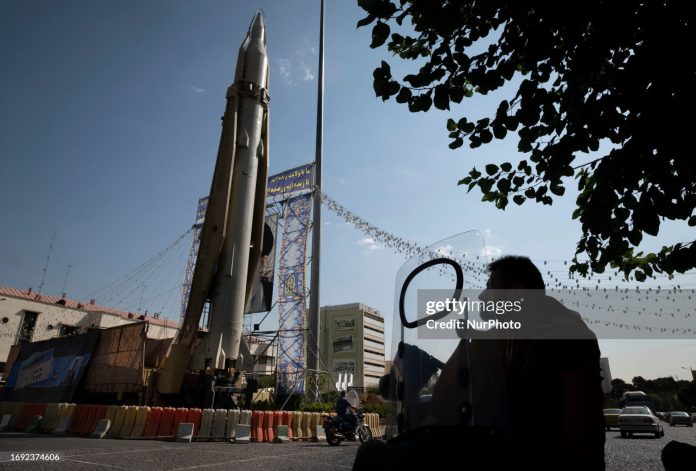
Iran’s UN mission refutes allegations of delivering ballistic missiles to Russia

Iran Drone Missile

“Iran’s position vis-à-vis the Ukraine conflict remains unchanged,” the mission said on Friday.

“Iran considers the provision of military assistance to the parties engaged in the conflict—which leads to increased human casualties, destruction of infrastructure, and a distancing from ceasefire negotiations—to be inhumane,” it added.

“Thus, not only does Iran abstain from engaging in such actions itself, but it also calls upon other countries to cease the supply of weapons to the sides involved in the conflict,” the mission noted.

Tehran has repeatedly dismissed Western allegations of its involvement in the Russia-Ukraine war. Iran has called for a ceasefire, blaming the lingering conflict on Western arms supplies to Kiev.

Russia has repeatedly warned against the flow of Western weapons to Ukraine, saying it prolongs the conflict.

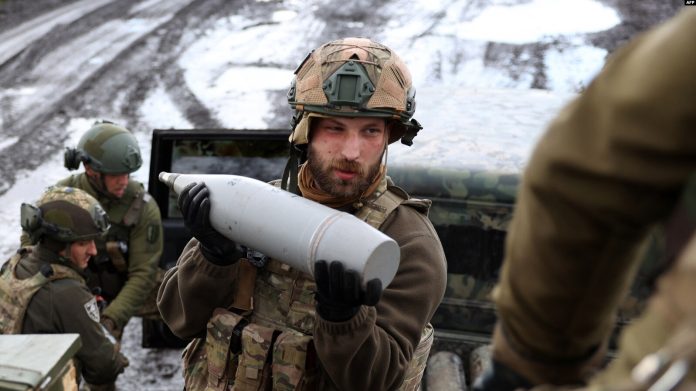
Ukraine ups pressure for more air defense systems, long-range strike capabilities

Russia Ukraine War

Zelensky, in opening remarks at a Ukraine Defense Contact Group meeting at Germany’s Ramstein Air Base, said his troops are “operating with minimal of weaponry”.

“We need more weapons to drive Russian forces off our land, and especially in the Donetsk region,” he continued.

“It’s important that every support package that is announced is promptly put forward on the battlefield without delay.”

The Ukrainian leader thanked allies for contributing weapons and defensive systems but said the number of air defense systems that have not been delivered yet is “significant”.

“The world has enough air defense systems to ensure that Russian terror does not have results,” he said, adding, “And I urge you to be more active in this war with us on air defense.”

Ukraine has been hit by several large Russian missile attacks in the past few weeks, including a strike in the city of Poltava this week that killed 55 people.

Zelensky also pushed for long-range strike capabilities Friday, part of a frequent request he has made in recent days to get the US and Western allies to allow his forces to use their weapons to hit key military targets deep into Russian territory. The current US policy only allows Ukraine to strike into Russia if it is over the border.

“We need to have these long-range capabilities, not only on occupied territory of Ukraine but also on the Russian territory,” Zelensky continued, adding, “So that Russia is motivated to seek peace.”

Ukraine has pushed harder for the US to lift the deep strike policy after Ukrainian troops pushed into Russia’s Kursk region on Aug. 6, which did not provoke any escalation in the war, but the Pentagon and the White House have not budged.

White House national security spokesperson John Kirby told reporters Thursday that “there’s been no change in our policy with respect to long-range missile capabilities and where and what and how Ukraine can use those capabilities”.

Kirby added that they were “having a conversation with our Ukrainian counterparts about what they need, what’s going on, on the battlefield, and what support they require to continue to have success on the battlefield”.

Defense Secretary Lloyd Austin, who opened the Ramstein Air Base meeting Friday, acknowledged Ukraine’s request for more weapons and capabilities.

“We hear your urgency and we share it,” he said, adding, “Today, we’ll push even harder to step up our support for Ukraine.”

The US announced a new $250 million package for Ukraine on Friday, which includes air defense munitions, artillery shells, armored vehicles and patrol boats.

Ukraine is under immense pressure from Russian forces across the 600-mile front line, and especially in the Donetsk region, where Moscow is seeking to cement its control of the eastern province. Russia has been bearing down on Pokrovsk, a critical railroad juncture town that could cut off supply lines for Ukraine if it falls.

Ukrainian troops made a big gamble when they moved into Kursk, the first time a foreign nation has invaded Russia since World War II. While they have taken some 500 square miles of land and hundreds of prisoners, Russia has continued to push forward in the Donetsk region, casting doubt on the success of the key objective to divert Russian troops from the front lines.

The Kursk offensive has also taken up crucial Ukrainian manpower and resources.

Zelensky has said the Kursk offensive is a key part of his victory plan, which he plans to present to President Joe Biden during a visit to the US later this month. He added Friday that Ukraine prevented a larger Russian attack into the Sumy region by invading Kursk.

The Ukrainian president also claimed Russia has suffered roughly 6,000 casualties in the Kursk offensive.

“Thanks to our actions, there is currently no threat that Russia will launch a new offensive operation on our territory,” he added.

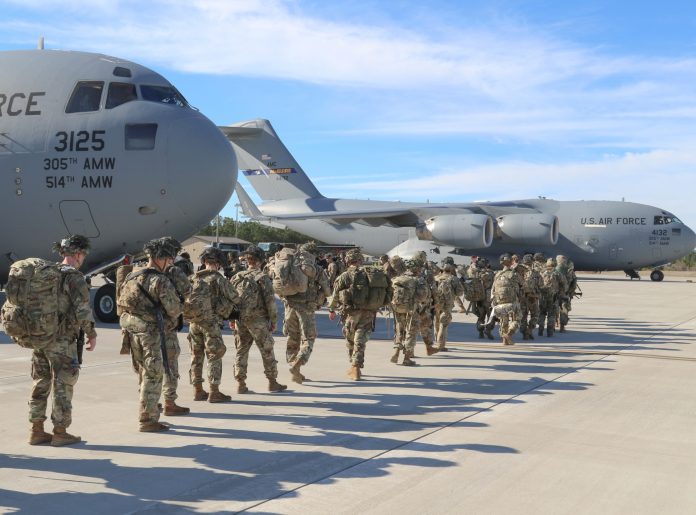
Washington and Baghdad agree on plan to withdraw US troops: Report

US Forces

According to Reuters, the agreement still needs “a final go-ahead” from leaders in Baghdad and Washington, but is seen as a done deal, with one US official telling the news agency that “it’s now just a question of when to announce it”.

The deal would see hundreds of US soldiers pulled out of Iraq in September 2025 and the last remaining US troops in the country departing by the end of 2026.

Critics of the US’s “forever wars” are likely to welcome an agreement, but it could raise concerns among US policymakers and allies in the region who are focused on Iran’s influence.

Formal talks on the status of the roughly 2,500 US troops in Iraq began in January but were delayed amid tensions over Israel’s war on Gaza.

Iranian-backed fighters have launched at least 70 attacks on US forces in Iraq since 7 October. In early January, the US launched a drone strike in Baghdad that killed Mushtaq Taleb al-Saidi, a senior commander in the Popular Mobilisation Units.

US strikes in Iraq have been condemned by Iraqi Prime Minister Mohammed Shia al-Sudani, who has upped his calls for a withdrawal of US troops in recent months.

Expelling US forces from Iraq is a long-term goal of Iran.

The plan agreed by Iraq and the US says that all US-led coalition forces will leave Ain al-Asad airbase in western Anbar province and significantly reduce their presence in Baghdad by September 2025.

US and coalition soldiers will stay in Erbil, in the Kurdish semi-autonomous region, for just one more year. The withdrawal of US troops from this region could make the US military presence in northeastern Syria unsustainable.

The US’s legal justification for being in Syria, home to roughly 900 US troops, is also based on Washington’s agreement with Baghdad.

If US troops withdraw, they will do so at a time when other regional powers have exerted military strength over Iraq’s weak central government.

On Monday Turkey launched air strikes against armed Kurdish groups in northern Iraq. In August Ankara and Baghdad agreed that a Turkish base in northern Iraq would be transferred to the Iraqi Armed Forces, and a Turkey-Iraq joint training and cooperation centre would operate there.

The roughly 150,000 members of the Popular Mobilisation Units were allocated an additional $700m dollars in Iraq’s three-year budget released in 2023.

The reported deadline for US troop withdrawals falls after the US 2024 presidential elections. In a previous case, the Joe Biden administration followed through on former President Donald Trump’s deal to withdraw troops from Afghanistan.

US troops entered Iraq with the 2003 invasion that toppled Saddam Hussein.

Troop numbers peaked at 168,000 during the so-called surge, but by 2011 American soldiers were fully withdrawn by President Barack Obama. Within three years, the Islamic State emerged in Syria and Iraq and in 2014 Obama redeployed troops.

Iranian daily to President Pezeshkian: Do not put too much confidence in Russia

Massoud Pezeshkian

In an editorial on Saturday, Johmouri-e Eslami wrote, “After the deception on the JCPOA (the Iran nuclear deal), dragging Iran into (the war in) Ukraine, and accompanying the sheikhs in the south of the Persian Gulf in denying Iran’s ownership of the three islands of Abu Musa and the Greater and Lesser Tunbs, now Russia has a plan for Zangezur,” referring to a corridor that gives Azerbaijan unimpeded access to its enclave Nakhchivan at the cost of cutting off Iran’s direct access to Armenia.

Johmouri-e Eslami warned the new Iranian administration that Russia’s plan to open the corridor is meant to weaken Iran’s strategic position in the region.

“Considering that the Russian statesmen from the Tsarist era to the Soviet Union and to the current Russia have always shown that they do not care about the interests of their neighbors, including Iran, to achieve their own goals, the Islamic Republic of Iran’s officials should… be aware of the harsh reality that Russians cannot be trusted,” the daily warned.

It advised the Pezeshkian administration to “firmly stand against Russia’s greed to create the Zangzur Corridor and not allow the slightest change in the northwestern borders.”

“Russia’s violations in recent years and their failure to fulfill their promises regarding the Islamic Republic of Iran showed that we have to return to the policy of ‘Neither the East Nor the West’ and avoid excessive trust in Russia to blunt Russia’s dagger,” the newspaper concluded.

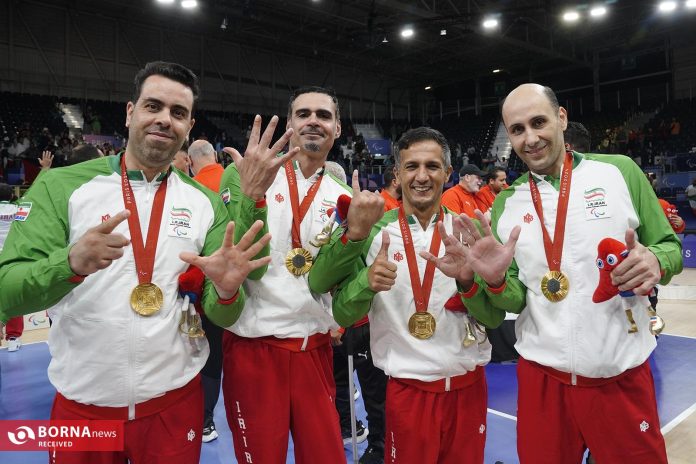
Iran sitting volleyball team crowned at 2024 Paralympics

Iran sitting volleyball team

The match was held on Friday in Paris.

Earlier, the Iranian sitting volleyball team scored three victories over Ukraine, Brazil and Germany in Pool B.

They then defeated Egypt 3-1 to book their place in the final.

Egypt also won the bronze medal after defeating Germany 3-2.

Iran had won seven out of 12 sitting volleyball gold medals since 1976 including the Seoul 1988, Barcelona 1992, Atlanta 1996, Sydney 2000, Beijing 2008, Rio 2016 and Tokyo 2020.

Meanwhile, Iranian athlete Rouhollah Rostami bagged a gold medal in men’s 80kg para powerlifting, earning the fourth gold and 20th medal for Iran in the competitions

He also broke the world and paralympic records by lifting a 242kg.

Iran’s sixth Paralympics medal was won by Yasin Khosravi in the men’s shot put-F57. Khosravi came first with 15.96 meters and also broke the Paralympics record.

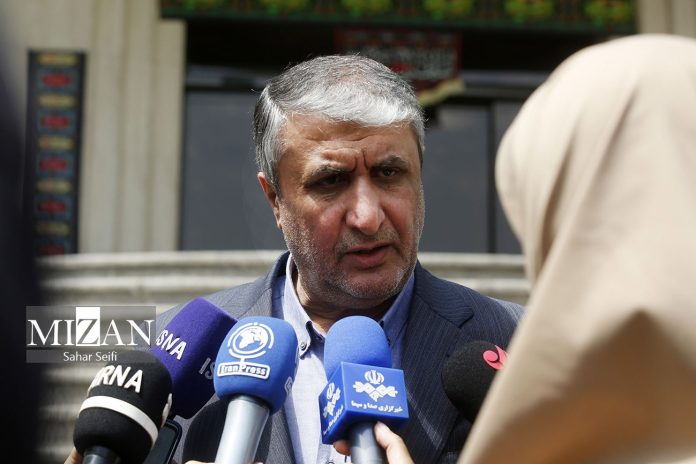
Iran’s atomic chief: Tehran has no hidden nuclear program

Mohammad Eslami

Mohammad Eslami noted that the International Atomic Energy Agency, IAEA, itself has confirmed that there is no diversion in Iran’s atomic program toward non-peaceful purposes.

Eslami added that Iran’s foreign adversaries opened a nuclear dossier for the country over 20 gears ago and their claims that Tehran has a hidden nuclear program are merely aimed at pressuring the IAEA.

The director of the Iranian atomic body then spoke about the 2015 nuclear deal between Iran and the P5+1 group of countries including the US as well as about Washington’s withdrawal from the agreement and is reinstatement of sanctions against Tehran.

Eslami slammed the anti-Iran sanctions as an “economic war”, saying despite the sanctions and pressures as well as the US claims that the Islamic Republic will not see the 40th anniversary of the Islamic Revolution, the nation is very strong.

Eslami underlined that a country that went back on its commitments under the nuclear deal cannot set conditions and must be held to account, in an apparent reference to the US.

In other remarks, the director of the Atomic Energy Organization of Iran criticized the EU trio consisting of Britain, France and Germany, for failing to live up to their commitments under the nuclear deal.

Israeli soldiers withdraw from Jenin, step up raids in other West Bank areas

Israel Palestine West Bank

The Palestinian news agency Wafa has confirmed that Israeli forces had pulled out of the city following a 10-day siege, but residents feared soldiers would return after temporarily moving to surrounding military checkpoints.

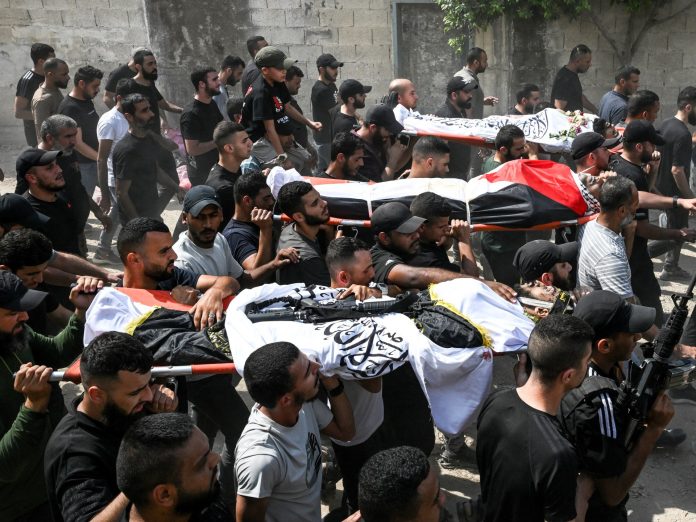
At least 21 Palestinians, including children and the elderly, have been killed in Jenin over the last few days, the Palestinian Ministry of Health announced in a statement on Friday, and at least 130 more were injured.

The Israeli military launched the offensive in the north of the West Bank on August 28 targeting Jenin and Tulkarem among other areas in its largest assault on the occupied territory since the second Intifada in the early 2000s.

“Palestinians in Jenin are finally able to come out of their homes and see and assess the level of damage, while those who had to leave [the city] are finally coming back,” said journalist Leila Warah, reporting from Ramallah.

She added that the Israeli military was still present in other areas of the West Bank, with attacks in the Nablus and Balata refugee camps and raids in areas of Bethlehem, Hebron and Ramallah.

Jenin residents used the lull in violence to rummage through the rubble of destroyed buildings and take stock of the damage.

Wafa reported that military checkpoints surrounding Jenin remained active, heightening fears of future incursions.

In advance of the reported withdrawal, five Palestinians were “severely beaten” on Thursday night by Israeli forces at the al-Jalama military checkpoint north of Jenin, according to Wafa.

Aziz Taleb, a 48-year-old father of seven, found out his family home of 20 years in Jenin had been raided.

“Thank God [the children] left the day before. They went to stay with our neighbours,” Taleb told the AFP news agency as he surveyed the damage.

Imra Itisadeh, a 60-year-old Jenin resident, stated: “At first, we didn’t want to leave. Later, [the Israeli army] pressured us, and we had to leave our homes. I left with my husband [on foot].”

In a statement on Facebook, the Palestinian Ministry of Foreign Affairs accused Israel of transferring to the West Bank its brutal destruction and devastation the Gaza Strip has been witnessing for 11 months.

It added the raids conducted in Jenin as well as Tulkarem were “a clear targeting of Palestinian civilians and the foundations of their national and human existence on their homeland”.

The Mayor of the occupied West Bank City of Jenin, Nidal Obeidi, stated on Friday that the Israeli incursion has affected large swaths of Jenin’s infrastructure, adding that the reconstruction of it will take months.

Obeidi described the raid as an “earthquake”, adding that Israeli bulldozers destroyed more than 20km (12.5 miles) of the city’s road network.

Obeidi said clearing the rubble left in the wake would take only days, but that repairs to the water and sewage networks damaged or destroyed would take months, noting that the city was completely cut off from water during the raid by the Israeli company that supplies it.

US-Turkish activist killed by Israeli soldiers in West Bank

Aysenur Ezgi Eygi

Aysenur Ezgi Eygi, 26, died of her wounds after participating in a demonstration against illegal Israeli settlement expansion in the town of Beita, south of Nablus, the Palestinian Wafa agency reported.

An activist who was with Eygi at the time told Middle East Eye that she and other volunteers from the International Solidarity Movement had been attending the weekly demonstration at Beita.

The activist added they retreated from soldiers, who had shot tear gas into the crowd. Then two rounds of live ammunition were fired at the group, the activist said, one of which struck Eygi in the head.

“When she was shot, she was standing there doing absolutely nothing with one other woman – it was a deliberate shot because they shot from a very, very, very far distance,” stated the activist, who did not want to be identified.

“It was a deliberate shot to the head.”

The Israeli army confirmed the incident, saying it had “responded with fire toward a main instigator of violent activity who hurled rocks at the forces and posed a threat to them”.

US State Department spokesperson Matthew Miller offered condolences to her family and said they were “urgently gathering more information” on the incident, adding they had “no higher priority than the safety and security of American citizens”.

“We are aware of the tragic death of an American citizen, Aysenur Eygi, today in the West Bank,” Miller said in a statement given to Middle East Eye.

“We offer our deepest condolences to her family and loved ones. We are urgently gathering more information about the circumstances of her death, and will have more to say as we learn more. We have no higher priority than the safety and security of American citizens.”

Footage seen by MEE showed Eygi’s bloodied head being bandaged, and another video of her being taken to an ambulance in an olive grove.

Fouad Nafaa, head of the Rafidia hospital in nearby Nablus, told Reuters that the activist arrived in a very critical condition with a serious head wound.

“We tried to perform a resuscitation operation on her, but unfortunately, she died,” he added.

The Turkish foreign ministry described Eygi’s death as a “murder committed by the Netanyahu government”.

“Israel is trying to intimidate everyone who comes to the aid of the Palestinians and fights peacefully against genocide,” said the ministry, who said Eygi was a Turkish citizen.

“This policy of violence will not yield results.”

Israeli forces launched a major operation in the West Bank on 28 August. The offensive, which has resulted in at least 39 Palestinian deaths so far, involved soldiers supported by armoured vehicles and bulldozers targeting cities and towns across the occupied territory.

Wafa reported Eygi had been involved in a campaign to protect farmers from Israeli settler violence, which has soared since the 7 October Hamas-led attack on Israel and ensuing war on Gaza.

She is the third member of the International Solidarity Movement, which was founded in 2001 to support Palestinians in the occupied territories through nonviolent protest, to have been killed by Israel.

Rachel Corrie was crushed by a bulldozer in Rafah in the Gaza Strip on 16 March 2003, while Tom Hurndall was shot dead in Gaza in January 2004.

Oncu Keceli, a Turkish foreign ministry spokesperson, told MEE they would be following up on Eygi’s case from a “legal and consular perspective” and were looking to see her killers brought to justice.

“Her family will decide where her body will be transferred and where she will be buried,” he continued, adding, “If it is decided that the burial will be carried out in Turkey, consular services will be provided by our country.”