Saturday, December 27, 2025
Home Blog Page 735

Iranian man who saved 150 pilgrims in Iraq hotel fire succumbs to injuries

Jalal Asadi

Jalal Assadi, who hailed from the northeastern Iranian city of Bojnourd, was in Iraq to voluntarily serve the pilgrims of the third Shia Imam and a grandson of the Prophet, Imam Hussein.

On August 10, he noticed the flames raging from the hotel next to his Mowkeb – a station serving the pilgrims –and rushed inside along four other Iraqi men to save those who were trapped inside the hotel but the sacrificial move came at a cost.

Assadi got severely burned and was hospitalized for weeks, but he passed away.

Another Iraqi man also died in the incident and three others were injured.

Senior Saudi royal calls on US to cut financial and military support to Israel

Gaza War

Speaking during an event at Chatham House in London on Friday, Prince Turki – who led Saudi Arabia’s intelligence for over two decades – called on Washington to deny Israel financial and military support.

“A lot of financial help goes to Israel from the United States,” the 79-year-old, whose father King Faisal ruled the kingdom between 1964 and 1975, told reporters and foreign policy analysts in the British capital.

He stated that “Israeli lobbyists” enjoyed tax-free status in the US because they were considered to be “philanthropic or humanitarian”, rather than as representing the interests of Israel. He urged for such tax exemptions on pro-Israel groups to be withdrawn by the Americans in light of the ongoing conflict.

“Denial of weapons and intelligence and other support – military and security – will also put pressure on Israel,” he added.

“There are many tools that are available to the United States, not simply harsh talk, which seems to have gotten us nowhere. But is America ready to do that?”

“I’m not too optimistic,” he stressed, answering his own question.

On Britain, Prince Turki said the country had “a special responsibility for what is happening in Palestine” due to its role in the “ill-begotten Balfour Declaration in 1917”.

He welcomed the new UK government’s decision to restrict the sale of some weapons to Israel, but added he would “like to see more done by the United Kingdom”.

“I think [it] should recognise the state of Palestine. It’s long overdue.”

On prospective Saudi normalisation of ties with Israel, he reiterated the kingdom’s position that normalisation would come when a Palestinian state was established.

Asked what such a state would look like, he stated it referred to 1967 borders, inclusive of occupied East Jerusalem, the West Bank and Gaza.

He added that though he was not privy to official discussions, the chances of normalisation at present were slim due to Israel’s stance on Palestinian statehood.

“The whole [Israeli] government is saying no Palestinian state. So how can there be normalisation between us and them with those positions in place?”

Prince Turki repeated on several occasions that he was speaking in a personal capacity, and did not have a role in the Saudi government.

Riyadh had appeared to be making progress in forming ties with Israel during US-led discussions last year, which were later derailed by the outbreak of war on 7 October.

Prince Turki dismissed speculation that Hamas may have carried out its surprise attack on southern Israel – which killed around 1,200 people (mostly civilians) – in order to torpedo Saudi-Israel normalisation.

For Hamas to have done what it did, it would have required to prepare for it,” he said, adding, “At least a couple of years to gather the human and material resources to launch a campaign like that.”

“Those couple of years preceded the talks between us and the Americans about the establishment of a Palestinian state and normalisation with Israel.”

He said that while it may not have been the aim of Hamas, impacting the Saudi discussions would have been “an added benefit” in the Palestinian group’s eyes.

Prince Turki added that he did not think that “Egypt or Qatar or any other country” could force Hamas to put down its weapons, and that only people in Gaza could do that.

“I think the people in Gaza not only have a right to do that, but they will eventually have to do it,” he continued.

But he added that Palestinians’ ability to “influence Hamas” were curtailed by the fact that “Israel is given a free license by the world” to continue its war.

Since 7 October, Israeli forces have killed over 41,000 Palestinians in Gaza, most of whom are women and children.

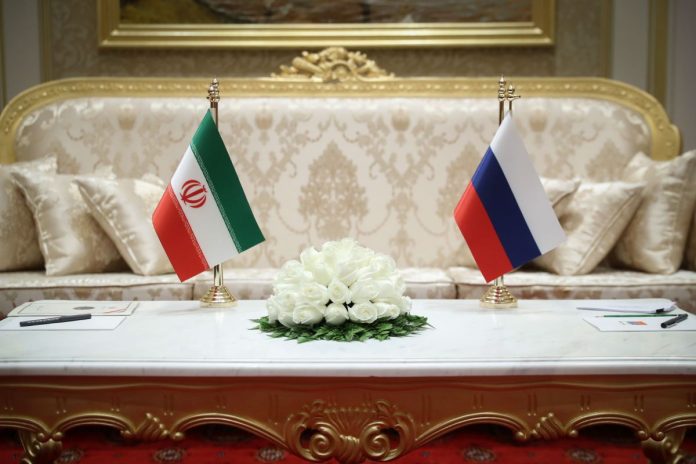
Ex-Iranian diplomat: No strategic alignment between Iran, Russia

Iran and Russia Flags

Kourosh Ahmadi told Entekhab news website, “There is no strategic alignment between Iran and Russia, and on the contrary, there is strategic competition.”

The remarks came days after Russia backed the reopening of a controversial corridor in Armenia that links the two territories of Azerbaijan at the cost of impeding Iran’s direct access to Armenia and onwards to Europe.

Ahmadi said after Russia reached a dead-end in its war in Ukraine, it developed a huge appetite to establish its presence in Armenia’s Syunik province and start a partnership with Turkey to turn into an energy hub.

The former diplomat, however, warned the equation would sideline Iran and Europe.

He added, “Considering the lack of meaningful relations between Iran and the West and Iran’s exclusion from diplomatic equations in the South Caucasus, it is unlikely that there will be a possibility for coordination between Tehran and the West in this matter.”

Ahmadi also deplored that, in broader context, Iran’s problem is not confined to the Zangezur corridor, as the country has been left out and bypassed in other transit corridors in the region during the past two decades “although Iran’s territory is one of the most economic and shortest routes for land corridors, oil and gas pipelines, and air routes.”

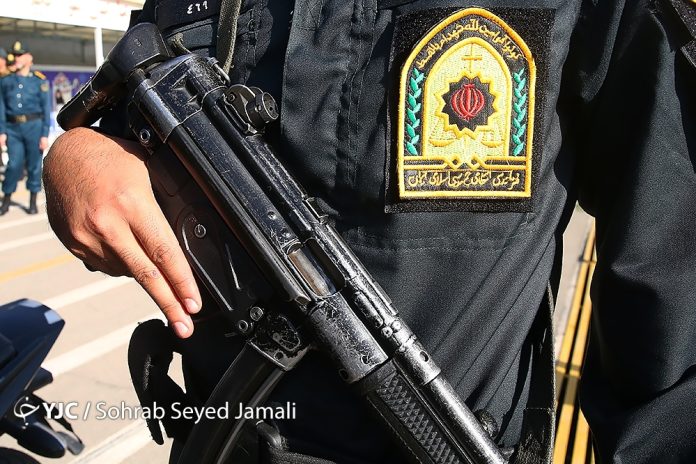
Iran vows harsh punishment for perpetrators of terror attack in southeast

Iran Police

Three Iranian border guards, including one officer and two conscript soldiers, were killed after several terrorists opened fire on them as they were refueling at a gas station in the city of Mirjaveh on Thursday.

In a statement later in the day, the so-called Jaish al-Adl terrorist group claimed responsibility for the attack.

In a message of condolences on Friday, Nasirzadeh said the “tragic martyrdom of a group of zealous and brave Iranian forces”, who were defending the country in the border area of ​​Mirjaveh, once again caused “deep grief and saddened the nation”.

“The criminal hand of hegemonic powers and Zionism has once again emerged from the sleeve of cowardly Takfiri groups and treacherous terrorist elements,” he added.

Extending condolences to the families of the victims, Nasirzadeh emphasized that Iran “will deal severely with the perpetrators and those responsible without any leniency or compromise”.

Jaish al-Adl, a notorious terrorist group headquartered in Pakistan, has been involved in numerous terror attacks against Iran.

One of the latest attacks occurred in April when at least five police officers were killed in an assault by the terror group in the province.

Football fan dies of heart attack during match in Iran stadium

Football fan dies of heart attack during match in Iran stadium

The 70-year-old man was reportedly using a heart pacemaker, but it failed due to overexcitement in the match.

He was given CPR and efforts were made to resuscitate him, but to no avail.

Some witnesses also blame the ambulance for arriving too late at the scene.

An investigation was launched into the tragic incident and organizers of both teams have been banned from holding any match until the results are out.

Iran new research satellite launched, successfully put into orbit

Iran satellite

The 60-kg satellite was placed into a 550 km orbit to test hardware and software systems to prove orbital maneuver technology in height and phase.

The evaluation of cold gas propulsion subsystem in space systems and the performance of navigation and situation control subsystems are among the secondary missions of Chamran 1.

The satellite has been designed and manufactured in collaboration between domestic experts, knowledge-based companies, and the Iranian Ministry of Science and Technology’s Aerospace Research Institute (ARI).

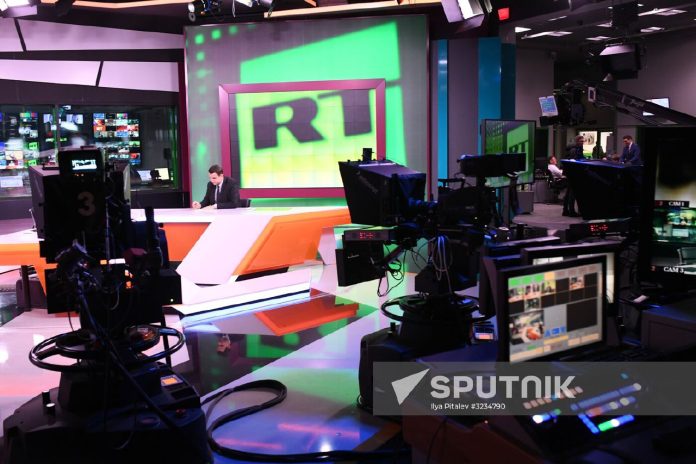
US claims Russia’s RT conducting intelligence activities overseas

RT

The United States last week filed money-laundering charges against two employees of RT and imposed sanctions on Editor-in-Chief Margarita Simonyan over what officials said was a scheme to hire an American company to produce online content to influence the 2024 U.S. election.

Blinken told reporters at the State Department that Russian media entities were “functioning like a de facto arm of Russia’s intelligence apparatus”. RT had moved beyond being a media outlet to possess cyber capabilities and conduct covert information and influence operations overseas as well, he added, citing new information, much of which he said came from RT employees.

“Today, we’re announcing that these Kremlin-backed media outlets are not only playing this covert influence role to undermine democracy in the United States, but also to meddle in the sovereign affairs of countries around the world,” Blinken continued.

The war in Ukraine has sunk U.S.-Russian relations to new lows since President Vladimir Putin launched a full-scale invasion in 2022 and the Joe Biden administration responded by arming Kyiv and rallying a broad international sanctions campaign against Moscow.

RT has mocked the U.S. actions. Simonyan has stated Washington is trying to prevent the broadcaster from operating as a journalistic organization and has vowed to get around sanctions to continue that work.

The U.S., Britain and Canada would cooperate on a diplomatic campaign to inform other countries of the Russian efforts, including by sharing evidence.

“Each government, of course, is going to decide how it responds to this threat, but we urge every ally, every partner, to start by treating RTs activities as they do other intelligence activities by Russia within their border,” Blinken said.

The Biden administration on Friday was imposing sanctions on three Russian entity and two individuals linked to RT and to what it calls a “malign influence campaign” in Moldova, according to a State Department fact sheet.

Moldova, which borders Ukraine, has become a key location for the tussle between Moscow and the West. The U.S. and allies in June accused Russia of carrying out a plot to sway the outcome of presidential elections in the country next month.

Blinken said RT will almost certainly coordinate with Russian intelligence services to try to manipulate the poll.

The department also identified news outlets secretly run by RT: website African Stream and Berlin-based English language platform Red.

RT also hired a Paris-based journalist to run influence projects targeting French speakers, it said, without identifying the journalist.
Russia was also conducting operations aimed at destabilizing the government of Argentina and escalating tensions with Argentina’s neighbors, it announced.

“We expect that the Russian government will leverage RT, its affiliates, and its overall covert playbook in pursuit of these malign efforts,” the fact sheet added.

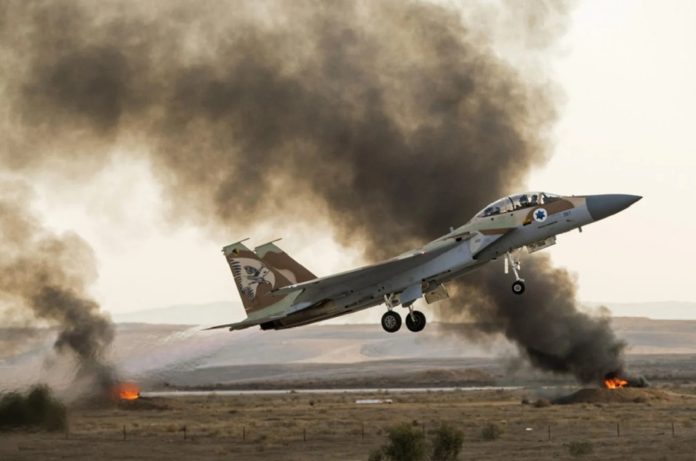
UK MPs say London has ‘no legal justification’ to continue licensing parts for Israeli F-35s

Israeli Fighter Jet

In a letter sent to the foreign, business and defence secretaries, the MPs also said the UK has the autonomy to remove Israel from the list of approved recipients for the F-35.

“The government has admitted it cannot licence the direct transfer of F-35 components to Israel because of the clear risk of serious international humanitarian law violations,” they write.

“But it has not suspended licences to export UK-made F-35 components to Israel as an end user via third-party countries including the United States. There are serious questions that we demand answers to about the legality and practical necessity of such an exemption.”

Last week, the UK announced the suspension of 30 licences for the export of arms to Israel over concerns that the weapons could be used in violation of international humanitarian law in Gaza.

Among licences for arms suspended were components for F-16s, the type of fighter jet which Israel used to bomb a compound housing British doctors working for UK and US organisations in southern Gaza in January.

But UK-made F-35 parts, which make up 15 percent of every fighter jet, were not on the list, raising major concerns from arms campaigners and human rights groups, including one which described it as “a workhorse of Israel’s brutal bombing campaign”.

Making the announcement about the partial ban last week, Foreign Secretary David Lammy told parliament that suspending the components “would undermine the global F-35 supply chain that is vital for security of the UK, our allies and NATO”.

An international consortium of 20 countries, including the UK, the US and Israel, work together to manufacture and deliver F-35 fighter jets to one another.

Lammy suggested in his comments that it would be difficult to “distinguish, across those multiple supply chains that involve many nations, the particular bits of armory” supplied by partners.

But the MPs underlined that the global F-35 programme’s “electronic stockpile management system allows for the tracking and monitoring of parts”.

They also raised particular concerns over the government’s use of a provision in the Strategic Export Licensing Criteria – the government’s guidelines to determine whether to issue export licences for certain goods – to justify the decision.

The MPs added the provision “has never been formally relied on and when it is envisaged that parliament will have a role in overseeing the use of this provision”.

“We ask that you immediately provide a fuller and proper explanation to parliament about how this exemption is practically necessary and most importantly – regardless of practicalities – how it is consistent with the UK’s international obligations.”

Experts say the extent of Israel’s use of the F-35 in its war on Gaza is unclear because it is extremely difficult to establish what type of aircraft is used in attacks.

However, last week Danish news outlet Information revealed that the Israeli military used an F-35 stealth fighter in a 13 July attack on a designated safe zone in Gaza which killed at least 90 people.

The MP’s concerns also come a week after two groups challenging UK arms exports to Israel in the High Court threatened further legal action over the government’s decision to exempt the F-35 components from its partial suspension list.

In a 3 September hearing, lawyers representing the UK-based Global Legal Action Network (Glan) and Palestinian human rights group Al-Haq suggested they would apply for an interim relief suspension if they were not satisfied by the government’s reasoning behind the exemption after they analyse internal government documents that will be disclosed to them in the coming weeks.

If the groups were granted that order, it would force the UK government to fully suspend arms exports to Israel pending further assessments.

NATO risks ‘war’ over Ukraine long-range missiles: Putin

Russia Ukraine War

Putin’s vow to follow such a move with “appropriate decisions” was his latest, perhaps most drastic attempt to draw red lines over NATO members’ backing for Kyiv, and it came on the eve of a meeting in Washington where the issue is expected to be high on the agenda.

British Prime Minister Keir Starmer held talks with President Joe Biden at the White House on Friday afternoon, as London clashed with Moscow over the expulsion of six diplomats accused of spying — accusations the UK dismissed as “baseless”.

Before beginning the talks, Biden said the US is “committed” to standing with the UK to help support Ukraine against Russia.

“I’ve often said there’s no issue of global consequence where the United States and UK can’t work together,” Biden continued, adding, “It’s clear that Putin will not prevail in this war. The people of Ukraine will prevail.”

Asked about Putin’s comments on a potential direct war with Russia, Biden told reporters, “I don’t think much about Vladimir Putin.”

A White House readout of the meeting said that the two leaders “reaffirmed their unwavering support for Ukraine as it continues to defend against Russia’s aggression”, and that they shared “deep concern about Iran and North Korea’s provision of lethal weapons to Russia”.

The US and its allies have appeared increasingly open to letting Ukraine use long-range Western missiles to strike deep inside Russia, the culmination of a monthslong push by Kyiv that has sparked the Kremlin’s fury.

“We are not talking about allowing or not allowing the Ukrainian regime to strike Russia with these weapons,” Putin said Thursday in comments to propagandist Pavel Zarubin.

“We are talking about deciding whether NATO countries are directly involved in the military conflict or not.”

“This will mean that NATO countries, the US and European countries are at war with Russia,” Putin continued, adding, “And if this is so, then, bearing in mind the change in the very essence of this conflict, we will make appropriate decisions based on the threats that will be created for us.”

Putin noted that the Ukrainian army does not have the ability to program long-range missiles or the satellite data necessary for their targeting, relying on NATO military personnel for those tasks.

Putin’s comments were echoed by the speaker of Russia’s State Duma, Vyacheslav Volodin, in a Telegram post Friday.

“NATO became a participant in military operations in Ukraine,” Volodin wrote, adding, “They are waging war on our country.”

Kremlin spokesman Dmitry Peskov also told reporters Friday that Putin’s message was “extremely clear, unambiguous and does not allow for any double readings”.

“We have no doubt that it has reached its intended recipients,” Peskov noted.

Putin has repeatedly warned the West not to cross Moscow’s so-called red lines, which he warned could trigger nuclear conflict, but they have been repeatedly crossed without such a response from the Kremlin.

Ukrainian forces launched the first invasion of Russian territory since World War II last month, only to be met with a relatively muted response.

After more than a month, the Kremlin announced Thursday it had begun a major counteroffensive to retake some of the land seized in the Kursk border region, while its forces press on with an offensive in Ukraine’s east that threatens the key strategic hub city of Pokrovsk.

As things stand, Kyiv only has permission to use Western-supplied long-range weapons such as American ATACMS and British Storm Shadows to strike Russian territory along its border, and only in response to attacks from these areas.

It’s been pleading for that policy to change so it can strike military assets deeper inside Russia that are used to launch attacks on Ukrainian cities.

But Washington and its allies have been reluctant to allow that, fearing a major escalation.

That appears to have shifted in recent weeks.

Secretary of State Antony Blinken was in Kyiv on Wednesday with his British counterpart, and Biden indicated earlier this week that the US was “working out” the issue.

Members of the bipartisan Congressional Ukraine Caucus signed a letter earlier this week urging Biden to lift restrictions on Kyiv’s use of long-range weapons, saying they are “inconsistent” with what America would ever accept for its own operations or restrictions that the US places on its other allies, such as Israel.

Ahead of his meeting with Biden, the British leader’s office told NBC News that Starmer told reporters the UK does not seek any conflict with Russia. But he noted: “Russia started this conflict. Russia illegally invaded Ukraine. Russia could end this conflict straight away.”

As he arrived in Washington, Russia’s FSB internal security service announced it had revoked the accreditation of six British diplomats in Moscow whose actions it said had signs of “reconnaissance and subversive work”.

Britain dismissed the accusations as “completely baseless”.

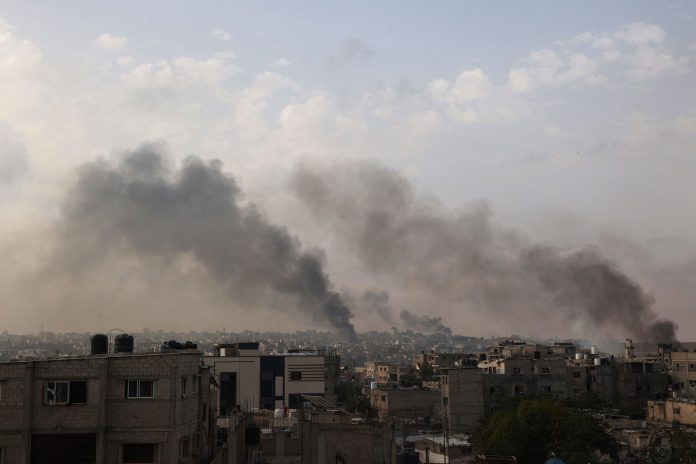
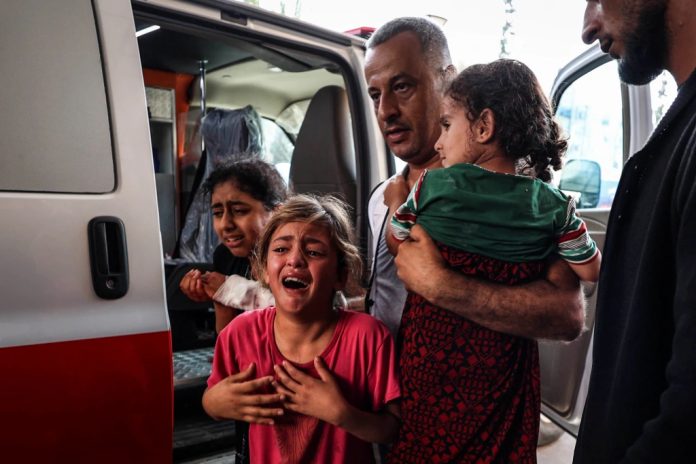
25% of Gaza wounded have ‘life-changing injuries’: WHO

Gaza War

“At least one in four of the injured in Gaza since October 2023 are estimated to have life-changing injuries that require rehabilitation services now and for years to come,” WHO Director-General Tedros Adhanom Ghebreyesus wrote on social media platform X, formerly Twitter, on Friday.

His remarks came in line with an earlier statement by the UN agency.

On Thursday, the WHO announced at least 25% of all those wounded since the war erupted in October, or at least 22,500 people as of July 23, had suffered “life-changing injuries”, many requiring amputations and other “huge” rehabilitation needed for years to come.

The figure is “more like 24,000″ by Thursday, according to Rik Peeperkorn, the WHO’s representative for the Palestinian territories.

Referring to the ongoing strikes, the WHO chief said “it is critical to ensure access to all essential health services, including rehabilitation to prevent illness and death”.

The WHO also reiterated its call for a ceasefire in Gaza, “which is critical for rebuilding the health system to cope with escalating needs”.

Israel unleashed its war on Gaza on October 7 after the Palestinian Hamas resistance group carried out Operation Al-Aqsa Storm against the occupied territories in retaliation for its intensified atrocities against the Palestinian people.

The Tel Aviv regime has also imposed a “complete siege” on the territory, cutting off fuel, electricity, food and water to the more than two million Palestinians living there.

Since the start of the aggression, the Tel Aviv regime has killed more than 41,100 Palestinians and injured over 95,100 others, with most of the victims being women and children.