Thursday, December 25, 2025
Home Blog Page 73

Chinese FM reaffirms Iran’s nuclear rights under NPT

China's Foreign Minister Wang Yi

Wang made the remarks in a phone conversation with his Iranian counterpart, Seyed Abbas Araghchi on Wednesday.

The Chinese foreign minister referred to the strategic nature of Tehran–Beijing relations and underscored the importance of maintaining close coordination and regular consultations between the two sides at the UN and other multilateral forums.

Wang also commended Iran’s peaceful nuclear approach.

Araghchi for his part appreciated China’s responsible and principled stance on the EU troika’s activation of the so-called “snapback mechanism” against Tehran and also thanked Beijing for describing the move at the UN Security Council as illegal.

The top Iranian diplomat underlined that “the constructive cooperation of China, Iran, and Russia in countering the unilateralism of the US and some Western countries at the UN has been of great importance and was supported by 121 member states of the Non-Aligned Movement.

Araghchi further spoke about the continued destabilizing actions of the Zionist regime in West Asia, saying the international community must stand against Tel Aviv’s warmongering and hegemonic policies and prevent further escalation of tensions in the region.

Araghchi and Wang further pointed to the constructive meeting between the presidents of Iran and China last September and the upcoming session of the High-Level Cooperation Mechanism, reaffirming the determination of both countries’ leaders to advance the Comprehensive Strategic Partnership.
The two top diplomats voiced hope that the agreements reached would soon be implemented through practical mechanisms.

Both foreign ministers agreed to maintain close diplomatic contacts and pursue joint efforts to deepen bilateral cooperation in the coming year, which marks the 55th anniversary of the establishment of diplomatic relations between Iran and China.

Iran’s envoy urges urgent UN action over Trump’s ‘alarming’ nuclear testing remarks

In a letter addressed to UN Secretary-General António Guterres and Security Council President Michael Imran Kanu, Iran’s Ambassador Amir Saeid Iravani detailed recent public statements by the US President regarding testing nuclear weapons.

“Upon instructions from my government, I am writing to draw your attention and that of the members of the Security Council to extremely alarming statements by the president of the United States of America, which pose a serious threat to international peace and security and represent a flagrant violation of the United States’ obligations under international law,” the letter said.

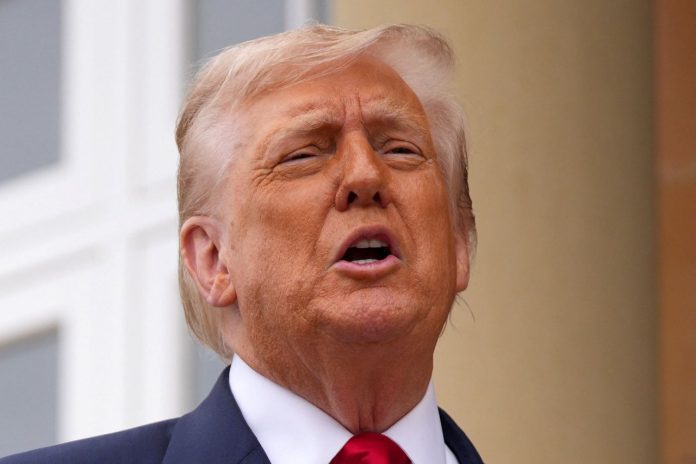
Iravani noted that on October 29, 2025, the US President publicly stated on social media that he had directed the Department of War to “start testing our Nuclear Weapons on an equal basis” with other nuclear powers, declaring that “the process will begin immediately.”

The ambassador added that in a later interview with CBS’s 60 Minutes on October 31, 2025, the US president claimed the country’s nuclear arsenal was sufficient “to destroy the world 150 times over.”

“These reckless statements and nuclear rhetoric, made by the head of a nuclear-weapon state, constitute an explicit threat to use nuclear weapons and a clear declaration of intent to resume nuclear testing,” he continued.

The letter underlined that such rhetoric represents a “flagrant violation” of US obligations under Article VI of the Treaty on the Non-Proliferation of Nuclear Weapons (NPT) and undermines the spirit of the Comprehensive Nuclear-Test-Ban Treaty (CTBT).

Iravani also denounced the US for a campaign of “falsehoods and disinformation” aimed at misrepresenting Iran’s peaceful nuclear program.

The letter further referenced a US “act of aggression” on June 24, 2025—an aerial bombardment of Iranian nuclear facilities—as a breach of international law and the UN Charter.

The letter requested that the secretary-general invoke Article 99 of the UN Charter to bring the matter before the Security Council and assess its implications “for the global nuclear disarmament and non-proliferation regime.”

It also urged the international body to act in fulfillment of its mandate to maintain “international peace and security.”

On Thursday, Iranian Foreign Minister Abbas Araghchi issued a warning in response to Washington’s announcement to resume nuclear weapons testing, calling it a regressive and irresponsible move.

“Make no mistake: The US is the World’s Most Dangerous Proliferation Risk,” Araghchi stated, arguing that the resumption of nuclear tests poses a serious threat to international peace and security.

The top diplomat also condemned the US for its longstanding criticism of Iran’s peaceful nuclear program while simultaneously resuming its own atomic weapons tests, actions he claims violate international law.

Saudi Arabia’s request to purchase F-35s clears key Pentagon hurdle: Reuters

A sale would mark a significant policy shift, potentially altering the military balance in the Middle East and testing Washington’s definition of maintaining Israel’s “qualitative military edge.”

Saudi Arabia made a direct appeal earlier this year to President Trump and has long been interested in Lockheed Martin’s fighter, one of the people and a U.S. official said. The Pentagon is now weighing a potential sale of 48 of the advanced aircraft, the U.S. official and the person familiar with the talks told Reuters. The size of the request and its status have not been previously reported.

The U.S. official and a second U.S. official, who acknowledged the weapons deal was moving through the system, said no final decision has been made and several more steps are needed before the ultimate nod, including further approvals at the Cabinet level, sign-off from Trump and notification of Congress.

The Pentagon’s policy department worked on the potential transaction for months, and the case has now progressed to the secretary level within the Defense Department, according to one of the officials, who spoke on condition of anonymity.

The Pentagon, White House and State Department did not immediately respond to requests for comment. A Lockheed Martin spokesperson said military sales are government-to-government transactions and the matter is best addressed by Washington.

Washington weighs weapons sales to the Middle East in a way that ensures Israel maintains a “qualitative military edge”. This guarantees that Israel gets more advanced U.S. weapons than regional Arab states.

The F-35, built with stealth technology that allows it to evade enemy detection, is considered the world’s most advanced fighter jet. Israel has operated the aircraft for nearly a decade, building multiple squadrons.

Saudi Arabia, the largest customer for U.S. arms, has sought the fighter for years as it looks to modernize its air force and counter regional threats, particularly from Iran. The kingdom’s renewed push for what would constitute two squadrons comes as the Trump administration has signaled openness to deepening defense cooperation with Riyadh. The Saudi Air Force flies a mix of fighter aircraft including Boeing F-15s, European Tornados and Typhoons.

The F-35 issue has also been intertwined with broader diplomatic efforts. The Joe Biden administration previously explored providing F-35s to Saudi Arabia as part of a comprehensive deal that would have included Riyadh normalizing relations with Israel, though those efforts ultimately stalled.

Trump has made arms sales to Saudi Arabia a priority since returning to office. In May, the United States agreed to sell the kingdom an arms package worth nearly $142 billion, which the White House called “the largest defense cooperation agreement” Washington has ever done.

Congressional scrutiny could also pose challenges to any F-35 sale. Lawmakers previously questioned arms deals with Riyadh following the 2018 murder of Saudi journalist Jamal Khashoggi, and some members of Congress remain wary of deepening military cooperation with the kingdom.

The potential sale also comes as Saudi Arabia pursues ambitious economic and military modernization plans under MbS Vision 2030 agenda. The kingdom has sought to diversify its defense partnerships in recent years while maintaining its decades-long security relationship with Washington.


Envoy: Macron holds video call with two French nationals released from detention in Iran

French President Emmanuel Macron

Cécile Kohler and Jacques Paris had been detained in Iran since 2022 on charges linked to national security.

Pierre Cochard, the French ambassador to Iran, told RTL radio that Macron’s conversation on Wednesday with the pair was “emotional and meaningful.”

France’s Foreign Minister Jean-Noël Barrot also stated that the physical and psychological condition of the two individuals was “satisfactory,” adding that they appeared relieved following their release. However, he noted that Kohler and Paris are not yet permitted to leave Iran.

“We must allow diplomatic efforts to continue so that they can return home,” Barrot said.

On Tuesday, Iran’s Foreign Ministry spokesperson Esmail Baqaei confirmed that the two were released on bail by judicial order and will remain under supervision pending further legal procedures.

Iranian Foreign Minister Seyed Abbas Araghchi said the two had been convicted on espionage-related charges, but were granted conditional release as part of “Islamic clemency.”

He also noted that Iranian national, Mahdiyeh Esfandiari, had been released in France and is currently at Iran’s embassy in Paris.

Hamas transfers remains of another Israeli captive under Gaza ceasefire agreement

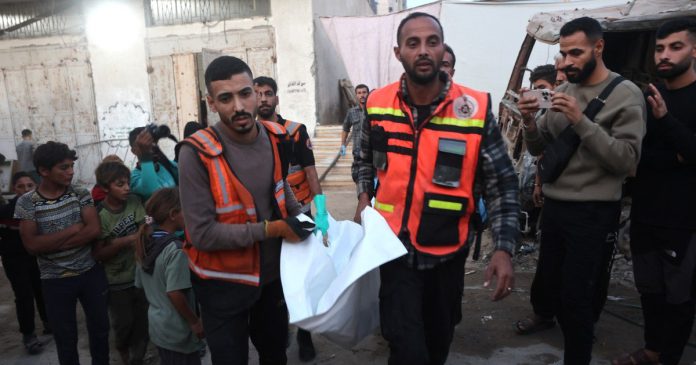
A statement by the Israeli military said a coffin of a deceased hostage had been transferred to the ICRC and was on the way to Israeli troops in Gaza.

Later, the Israeli Prime Ministry confirmed that the body of Israeli soldier Staff Sgt. Itay Chen was returned and his identification had been completed.

“The Government of Israel shares in the deep sorrow of the Chen family and all the families of the fallen hostages,” it added in a statement.

Hamas earlier announced that it would transfer the body after it had recovered it from the rubble east of Gaza City’s Shejaiya neighborhood within the designated “yellow line.”

The “yellow line” is the first withdrawal line outlined in the initial phase of the ceasefire agreement between Israel and Hamas, which took effect on Oct. 10. It separates areas still under Israeli military control in the east from those where Palestinians are permitted to move in the west.

Hamas has released 20 Israeli captives alive and returned the remains of 21 out of 28 deceased captives, most of them Israelis, under the ceasefire deal, according to the group.

Israel, however, previously claimed that one of the bodies received did not match any of its missing captives.

Israel has tied the start of negotiations for the second phase of the ceasefire to the handover of all the hostage remains. Hamas says the process requires time due to the massive destruction from Israel’s two-year offensive in Gaza.

Phase one of the deal includes the release of Israeli hostages in exchange for nearly 2,000 Palestinian prisoners. The plan also envisages the rebuilding of Gaza and the establishment of a new governing mechanism without Hamas.

Israel has killed close to 69,000 people, mostly women and children, and injured over 170,000 others in attacks in Gaza since October 2023.


Crimes against children in conflict zones surge in 2024: Save the Children

In a report released on Tuesday, the charity said 520 million children in 2024 were exposed to war, marking a record high for the third consecutive year.

Save the Children verified 41,763 grave violations against children last year, a 30 percent increase from 2023.

This means an average of 78 children endured grave violations – such as being killed or maimed, abducted, recruited or sexually abused – each day, the report added.

Growing up in militarised areas also often means dropping out of school, being forced to leave home, and being subjected to physical and mental trauma, it noted.

“This disproportionate rise in grave violations reveals that beyond exposure to conflict, there is also a deep erosion of the international norms and protections designed to shield children from harm,” said Inger Ashing, Save the Children’s CEO.

“This report also reveals another troubling reality: The current unilateral focus on combating violence through military, state and private security solutions is failing to adequately protect children from the gravest forms of harm,” Ashing added.

In 2024, there were 61 state-based conflicts, meaning that at least one of the warring parties was a state government.

Less than 2 percent of global security funds went towards peacebuilding and peacekeeping in 2024, mirroring a long-term trend in declining peace spending.

By contrast, military spending hit a record high as it soared by more than 9 percent to total $2.7 trillion, according to the Stockholm International Peace Research Institute.

Africa has the highest number and ratio of children living in conflict zones – 218 million – surpassing the Middle East for the first time since 2007.

However, the highest number of grave violations recorded against children took place in occupied Palestinian territory while one in three children killed or maimed in war were Palestinian.

Overall, more than half of the violations against children took place in Palestinian territory, the Democratic Republic of the Congo, Nigeria and Somalia.


Iran’s Foreign Minister: Potential Tehran-Washington dialogue restricted to nuclear matters only

Iran US Flags

In remarks to journalists on Wednesday during a cabinet meeting break, Araqchi noted that the U.S. has consistently attempted to include Iran’s missile program and its regional role in negotiations, but Iran’s stance on these issues remains unequivocal.

He emphasized that any such talks would adhere strictly to the nuclear framework.

On the status of certain Iranian nationals overseas, Araqchi reported that Ms. Esfandiari, an Iranian citizen held in France, has been freed and is now at the Iranian Embassy.

He further indicated that the legal proceedings in her case are expected to wrap up shortly.

Former Iran volleyball national team player Saber Kazemi passes away at 26

Kazemi died early Wednesday after several days of hospitalization in the intensive care unit, where doctors had confirmed brain death following a sudden medical complication.

Born on December 24, 1998, Kazemi emerged from Iran’s youth volleyball ranks and rapidly rose to prominence.

Known for his powerful left-handed attacks and impressive vertical reach, he became one of the standout players of the new generation.

His breakthrough came in 2021, when he was named the Best Opposite Spiker at the Asian Volleyball Championship, solidifying his position as one of Iran’s brightest rising stars.

Kazemi had recently joined Qatar’s Al Rayyan Club for the upcoming season. However, on October 16, he suffered a severe brain condition while recovering in a swimming pool and was rushed to a hospital in Doha.
He was later transferred to Tehran for further medical care, but efforts to save him were unsuccessful.

The Ministry of Sports, the National Olympic Committee, and numerous athletes and coaches have extended condolences to his family and the volleyball community, mourning the loss of a talented, humble, and well-respected player.

Official figures show Israel’s war expenses reached $76.3bn in 2 years

Israel Army

Israel’s public broadcaster KAN, citing finance ministry data, reported that the war expenses have so far totaled 250 billion shekels ($76.3 billion).

According to senior ministry officials, the defense establishment misused reserve service days, leading to “the waste of billions of shekels” in payments to reservists during service periods.

Israel’s far-right Finance Minister Bezalel Smotrich told a press conference on Tuesday that it was “necessary to increase the defense budget to enable growth in Israel’s economy in the coming years,” without elaborating further.

No details were provided on where the expenses were made, though the total is believed to include costs from Israel’s military campaigns in Gaza, Lebanon, and Iran since October 2023.

The Gaza war came to a halt under the first phase of a ceasefire deal that took effect on Oct. 10, under US President Donald Trump’s 20-point plan.

Phase one includes the release of Israeli hostages in exchange for Palestinian prisoners. The plan also envisages the rebuilding of Gaza and the establishment of a new governing mechanism without Hamas.

Since October 2023, the Israeli genocidal war has killed nearly 69,000 people and injured more than 170,300, according to the Gaza Health Ministry.


Iran reports sharp decline in water reserves as dam levels reach critical point

Iran Water Crisis

According to the latest figures from the Ministry of Energy, only 1.35 billion cubic meters of water entered the country’s dam reservoirs between October 1 and November 3, marking a 39% decrease compared to the same period last year, when inflow totaled 2.19 billion cubic meters.

During the same period, water release from dams for drinking, agriculture, industry, and environmental needs reached 2.79 billion cubic meters, representing a 26% decline compared to last year.

Current total water stored in the reservoirs stands at 17.21 billion cubic meters. This means just 33% of national dam capacity is filled, while 67% remains empty.

Last year on the same date, the storage level was reported at 22.92 billion cubic meters, indicating a year-on-year decrease of 25%.

The situation reflects the impact of ongoing drought conditions, as Iran enters its sixth consecutive dry autumn.

Experts warn that 28 provinces are currently facing critical rainfall shortages, with several major dams nearing “dead storage” levels.

Authorities emphasize that widespread water conservation and careful consumption management are essential until more substantial seasonal rainfall occurs.