Friday, December 26, 2025
Home Blog Page 729

Pager blasts in Lebanon instance of ‘mass killing’: Iran

Lebanon Pager Attack

Kanaani emphasized: “Today’s terrorist operation in Lebanon was carried out as a continuation of the Zionist regime’s combined operations and their mercenary agents. It contravenes all moral and human principles, international law, especially international humanitarian law, and warrants international criminal prosecution, trial, and punishment.”

The spokesperson added: “This combined terrorist act, which is, in fact, a form of mass killing, once again clearly proves that the Zionist regime, in addition to committing war crimes and genocide against the Palestinian people, has placed regional and international peace and security in serious jeopardy. Accordingly, confronting the regime’s terrorist actions and the threats arising from it is an evident necessity, and the international community must act promptly to combat the impunity of the Zionist criminal officials.”

Kanaani, while expressing sympathy and solidarity with the government, people, and resistance of Lebanon and the families of the martyrs and wounded of this terrorist operation, prayed for the swift recovery of all the injured in this incident, including our country’s ambassador in Lebanon.

He emphasized that the Islamic Republic of Iran is ready to provide any necessary assistance to the government and people of Lebanon.

Earlier, Iranian Foreign Minister Abbas Araghchi blamed Israel for the deadly pager detonations in Lebanon, calling it “Israeli terrorism”, in a phone call with Lebanese Foreign Minister Abdallah Bou Habib.

Araghchi posted to X offering condolences to the families of the victims and the injured, pledging to provide necessary medical assistance.
President Pezeshkian vows Tehran-Moscow relations will continue to expand

Pezeshkian Shuigo

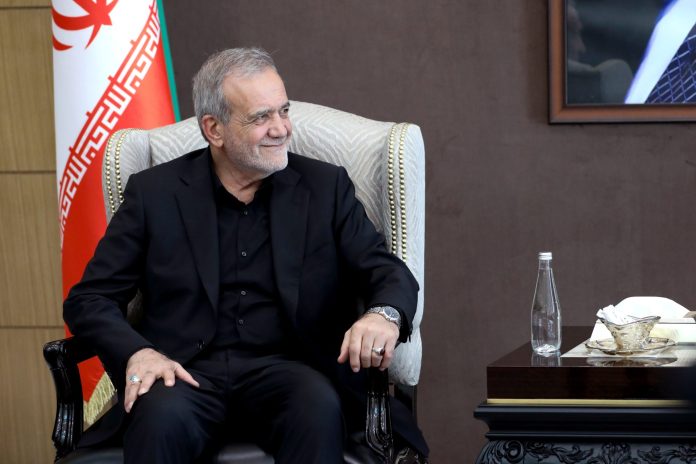
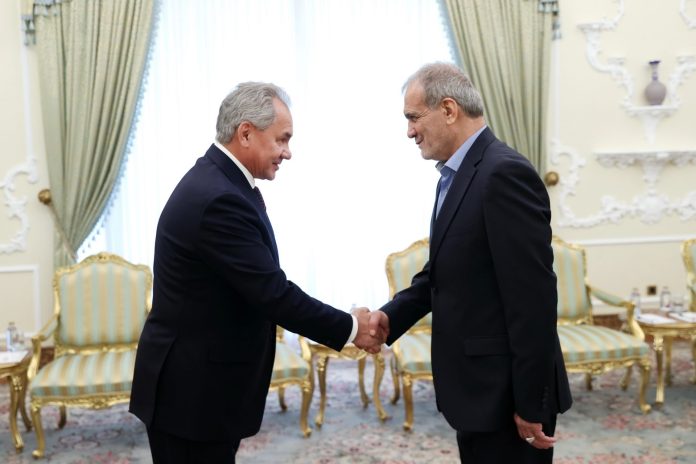
Pezeshkian made the remarks in a meeting with Shoigu in the capital Tehran on Tuesday afternoon, emphasizing the history of constructive relations between the two sides.

The president said boosting cooperation between Tehran and Moscow will undermine the effectiveness of sanctions and the unjust actions against both countries.

“The fourteenth government will seriously pursue the ongoing cooperation and efforts aimed at enhancing the level of relations between the two countries,” he added.

Referring to Shoigu’s comments about the preparations for a meeting between presidents of the two countries on the sidelines of the BRICS summit in Kazan, Pezeshkian expressed hope that such a meeting would lead to fruitful discussions and agreements on bilateral, regional, and international cooperation between Iran and Russia, including within the frameworks of BRICS, Shanghai, and the Eurasian Economic Union.

Shoigu, for his part, emphasized that Russian President Vladimir Putin had asked him to convey to the senior Iranian officials that Russia’s position on cooperation with Iran on regional issues has not changed.

“Mr. Putin is eagerly looking forward to meeting with you on the sidelines of the BRICS summit in Kazan, Russia,” Shoigu told Pezeshkian.

Earlier in the day, Shoigu also met with Secretary of Iran’s Supreme National Security Council (SNSC) Ali Akbar Ahmadian and reviewed the agreements reached between the two countries, reiterating support for Iran’s policy regarding corridors and transportation routes with the Republic of Azerbaijan.

Shoigu arrived in Tehran based on Putin’s order to follow up on the agreements made during the visit of Ahmadian to St. Petersburg.

11,000 students in Gaza, West Bank killed by Israel since start of war: Education ministry

Gaza War

More than 17,224 students have also been wounded in the regime’s genocidal war on the Palestinian territory, according to the ministry figures.

In the West Bank, 113 students were killed and 548 injured. About 429 students have also been kidnapped by the regime’s troop in the occupied city.

The Education Ministry released the figure more than a week after the school year officially began, while all schools in the besieged territory shut.

Israel’s military forces have so far destroyed 123 schools and universities in Gaza, according to the Gaza government media office.

The United Nations Relief and Works Agency for Palestine Refugees in the Near East (UNRWA), which runs around half of Gaza’s schools, warned earlier that “the longer the children stay out of school the more difficult it is for them to catch up on their lost learning and the more prone they are to becoming a lost generation.”

When the regime launched its savage offensive on Gaza almost one year ago, UNRWA transformed its schools into emergency shelters for families forced to flee their homes.

The vast majority of the Gaza’s 2.4 million people have been displaced at least once by Israel’s genocidal war.

Lebanon says at least 9 killed, 2,800 wounded by exploding pagers

Lebanon Pager Attack

Firass Abiad said more than 200 people are in critical condition after the communication devices exploded on Tuesday, and more than 150 hospitals are treating the victims, with injuries mostly reported to the face, hands and stomach.

Lebanon’s Hezbollah blamed Israel for the spree of pager blasts, stressing it will get “its fair punishment”.

Hezbollah urged people to be “cautious of rumours and false, misleading information being circulated by certain parties”, which it said “serve the psychological warfare of the Zionist enemy”.

“This comes especially in light of the enemy’s threatening rhetoric about changing the situation in the north,” it added.

“We affirm that the resistance, at all its levels and various units, is at the highest level of readiness to defend Lebanon and its steadfast people,” the group noted.

A Hezbollah official, who spoke on condition of anonymity, told The Associated Press the new brand of handheld pagers used by the group first heated up, then exploded.

A source close to the group, requesting anonymity to discuss sensitive matters, told AFP news agency the blasts were an “Israeli breach” of its communication system. He didn’t elaborate.

A senior Hezbollah source also told Reuters the leader of Hezbollah, Sayyed Hassan Nasrallah, was not harmed in the pager blasts.

There has been no immediate comment from the Israeli military on Tuesday’s attacks although some reports suggest that the regime officials have been advised to remain tight-lipped about it.

Israel has been regularly exchanging fire with Hezbollah since last October, shortly after the regime launched its genocidal war on Gaza.

Iranian daily defends presence of Afghan nationals in Iran amid growing calls for expulsion

Afghan Refugee in Iran

In an article, Kayhan argued that foreign adversaries are deliberately fueling anti-Afghan sentiment in an effort to undermine the powerful Fatemiyoun brigade, which has been a key player in regional resistance efforts.

Fatemiyoun brigade consists of Shia Afghans and partcif the Resistance Front.

According to the article, the enemies aim to create discord between the Shia communities of Iran and Afghanistan, which could result in the separation of the Fatemiyoun brigade from the Resistance Front.

The newspaper warned that such a division would significantly weaken the Resistance during these critical times when unity is essential.

At the same time, the debate over the presence of Afghan nationals in Iran, particularly those residing illegally, has intensified. Many within the public and political circles are calling for stricter immigration controls and the deportation of illegal immigrants.

The Iranian Ministry of Interior recently announced that it would take concrete steps to address the issue, confirming that illegal Afghan immigrants will be sent back to Afghanistan. The ministry emphasized the importance of upholding the country’s laws while maintaining humanitarian principles.

Unofficial sources put the number of Afghan migrants in Iran at 10 million.

Iran ministry of health announces return of expelled students after presidential directive

Masoud Pezeshkian

Habibi stated that rulings against protesting students from 2022 and 2023 have been suspended.

This decision aligns with the Supreme Leader’s approach of maximum inclusion, the President’s focus on national unity, and aims to inspire hope and motivation among students as the new academic year begins, said the official.

After the university protests, disciplinary rulings were issued by committees. However, following the easing of tensions, the Supreme Leader emphasized treating students with Islamic leniency.

President Masoud Pezeshkian also instructed a review of these rulings to ensure students’ return to academic life, addressing grievances regarding the lack of appeals or defense opportunities.

Under new guidelines, university presidents can request reviews of even final rulings, and the Health Minister has the authority to suspend or reduce penalties.

All rulings, including expulsions and suspensions, are reportedly under review, and affected students will resume their studies in the upcoming term.

Habibi expressed hope for leniency and forgiveness in the re-evaluation process.

Hundreds wounded after pagers explode in Lebanon

Lebanon Pager Attack

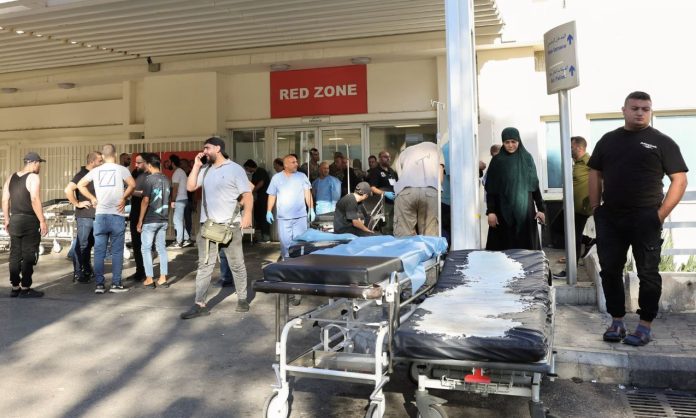
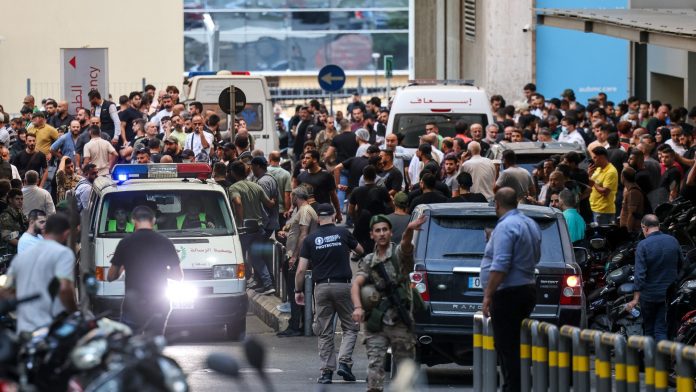
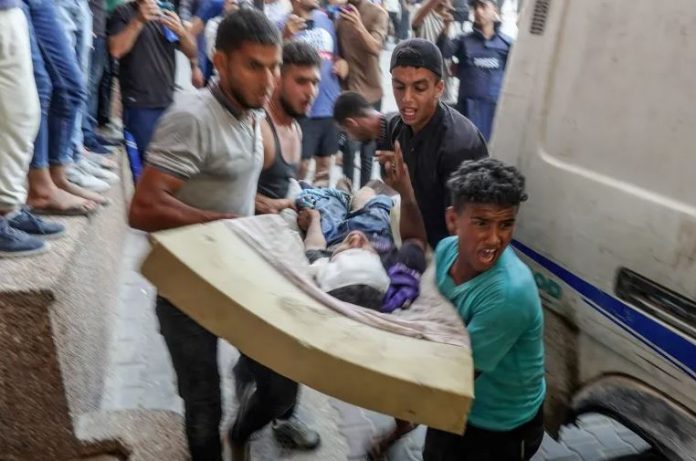
Hundreds of people have been wounded in Lebanon after pagers used by the group exploded, Health Minister Firass Abiad has confirmed.

Mojtaba Amani, Iranian ambassador to Lebanon, was wounded by a pager explosion.

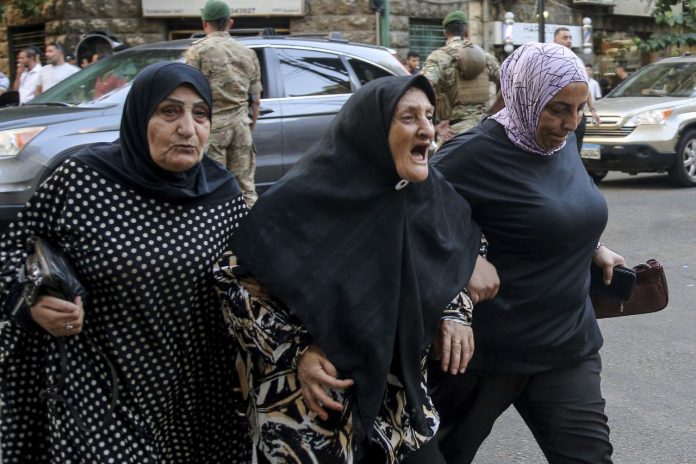
Footage shared on social media from Beirut’s southern suburbs, known as Dahiyeh, showed severely wounded and bloodied men being attended to by passers by.

Footage from shops also show pager devices exploding in the pockets and bags of men, as nearby shoppers flee from the scene.

The affected pagers were from a new shipment that Hezbollah had received in recent days, according to sources familiar with the matter cited by the Wall Street Journal.

A Hezbollah official told the WSJ that hundreds of fighters had such devices, and speculated that malware may have caused the pagers to heat up and explode. Some people felt the pagers heat up and threw them away before they detonated, the official added.

A Hezbollah official told Reuters the detonations were the “biggest security breach” since war with Israel broke out a year ago.

Footage from a hospital in Beirut showed chaotic scenes, with severely wounded people laying on the floor and on hospital beds.

Hezbollah urged people to be “cautious of rumours and false, misleading information being circulated by certain parties”, which it said “serve the psychological warfare of the Zionist enemy”.

“This comes especially in light of the enemy’s threatening rhetoric about changing the situation in the north,” it added.

“We affirm that the resistance, at all levels and across all its units, is fully prepared to defend Lebanon and its resilient people.”

Israel says foiled Hezbollah plot to kill former defence official

Israel says foiled Hezbollah plot to kill former defence official

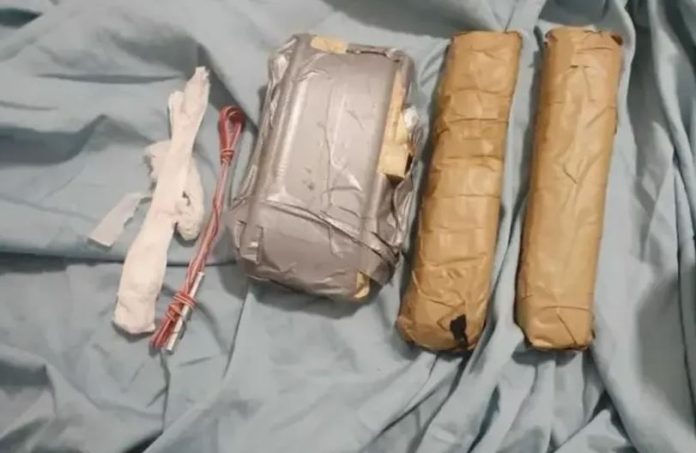
The Shin Bet agency said it had seized an explosive device attached to a remote detonation system, using a mobile phone and a camera, that Hezbollah had planned to operate from Lebanon.

Shin Bet added the attempted attack was similar to a Hezbollah plot foiled in Tel Aviv a year ago, without giving further details.

The Shin Bet did not provide evidence linking the device to Hezbollah.

In recent days Israeli officials have warned of a wider military operation to halt Hezbollah rocket attacks and allow tens of thousands of Israelis to return to their homes in the north.

Tensions have spiked along Lebanon’s border with Israel amid cross-border attacks between Hezbollah and Israeli soldiers as Tel Aviv pressed ahead with an offensive against the Gaza Strip, which has killed more than 41,000 people since last October following a Hamas attack.

Israel’s full-scale war in southern Lebanon is closer now than ever before amid escalating cross-border clashes with Hezbollah, an Israeli newspaper said on Tuesday.

The Jerusalem Post said that if the offensive did not take place in 4-6 weeks, it may be impossible to launch a large-scale offensive until spring 2025.

“Right now is the closest Israel has been to a full war with Hezbollah since October 7,” the daily added in an analysis.

The media outlet argued that it is now favorable to start a military operation in Lebanon before winter, which is “far more fierce” in mountainous Lebanon and difficult to manage than in Gaza.

“If more than 4-6 weeks pass without an operation, it may be impossible – or much harder – to carry out such an operation until spring 2025,” the paper said, citing sources.

“This would mean condemning the northern residents to another 6 months outside of their homes, something becoming increasingly untenable domestically in Israel,” it added.

Sayyed Hassan Nasrallah has stressed that Hezbollah is undaunted by the prospect of conflict with Israel. The secretary-general of the movement pledged formidable retaliation in case of a potential invasion of Lebanon by the Zionist regime.

Two Israeli wars waged against Lebanon in 2000 and 2006 were met with strong resistance from Hezbollah, resulting in the retreat of the regime in both conflicts.

Israel blocking 83 percent of food aid from reaching Gaza: Aid groups

Gaza Humanitarian Aid

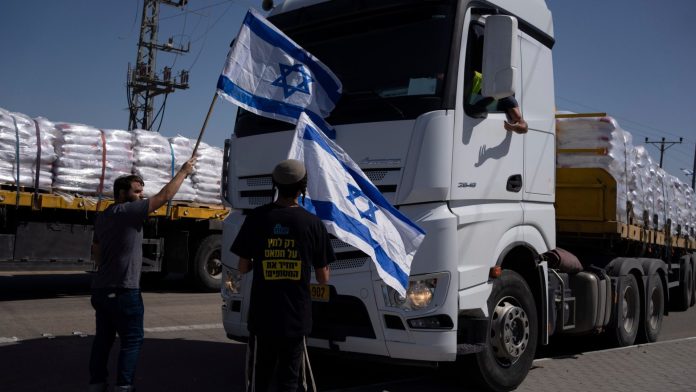
The amount of aid being blocked by Israel has increased substantially from 2023, when just 34 percent of food aid was being blocked, the organisations announced in the statement.

Amjad Al Shawa, the director of the Palestinian NGOs Network (PNGO) said in the statement that 100 percent of Gaza’s population is now dependent on aid and the shortages mean people are starving.

“We are overwhelmed [with] these needs and [these] urgent requirements”, Al Shawa added.

The aid organisations that released the statement included Save the Children, ActionAid, Christian Aid and Islamic Relief.

Israel has continued its military onslaught against the besieged enclave following an attack on October 7 last year by Hamas, despite a United Nations Security Council resolution calling for an immediate ceasefire.

The offensive has resulted in more than 41,200 Palestinian deaths, mostly women and children, and over 95,400 injuries, according to local health authorities.

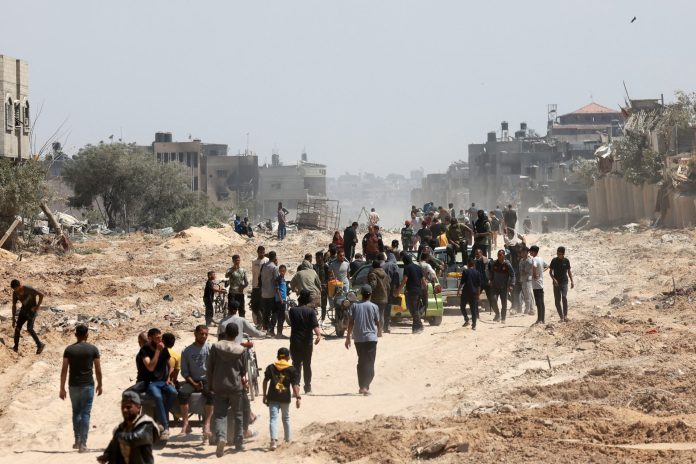
The military campaign has turned much of the enclave of 2.3 million people into ruins, leaving most civilians homeless, at risk of famine and prone to disease.

Israel also faces accusations of genocide for its actions in the enclave at the International Court of Justice (ICJ).

After 11 months of Israel’s near-total blockade on humanitarian aid, top United Nations experts have warned that Israel is engaged in a “targeted starvation campaign” in the besieged enclave.

Dozens of children have died of malnutrition since the war began in October, according to the Palestinian health ministry. Israeli attacks have also killed hundreds of aid workers in Gaza.

The World Food Program (WFP) has sounded the alarm that 2.2 million Palestinians in the besieged Gaza Strip are still in “urgent” need of food aid after 11 months of war.

According to stats released by the WFP, 96 percent of the population of Gaza is facing acute food insecurity, with 2.15 million people at crisis levels of hunger or worse, as the Israeli regime is using famine as a weapon of war.

Furthermore, the WFP says almost half a million people in Gaza are in “catastrophic conditions”.

Israeli evacuation orders covering more than 85% of Gaza: UN

Gaza War

“As of 16 September, more than 55 evacuation orders remain in effect, covering more than 85% of Gaza. The latest evacuation order was issued in northern Gaza on Saturday,” Spokesman Stephane Dujarric said during a news conference on Monday, citing Office for the Coordination of Humanitarian Affairs (OCHA).

Stating that “repeated displacements are also separating families”, Dujarric added it is also “eroding social protection systems, particularly for women and children.”

With Israeli-issued evacuation orders hindering the delivery of aid across Gaza, Dujarric said: “Between 1 and 15 September of the 94 planned humanitarian missions coordinated with the Israeli authorities for northern Gaza, only 37 – or 39%– were facilitated.”

“In southern Gaza, just over 50% of the 243 coordinated humanitarian movements were facilitated,” he continued, adding that OCHA is unable to access northern Gaza for 28 days.

He further stated that “aid convoys are being fired at or otherwise exposed to life-risking conditions, stopped and delayed for hours in combat zones”.

Asked about whether the UN perceives Israel’s ongoing evacuation orders as forced displacement, Dujarric said: “We see it as giving people very little options in order to just stay alive and survive.”

“People need to be protected, whether they move or whether they stay there,” he noted, adding that there “needs to be humanitarian aid” reaching to those in need.

“What we’re seeing is that no place is safe in Gaza.”

Responding to Anadolu’s question on the Ministry of Health in Gaza’s recently published document detailing every Palestinian killed since Oct. 7, Dujarric said “women and children have been bearing the brunt of it.”

He reiterated the call for an immediate cease-fire in Gaza.

The recently published document includes the names, ages, genders, and identifications of Palestinians killed between Oct. 7 and Aug. 31, highlighting that 60% of the victims are women, children, and the elderly, with the first 14 pages listing those under one year old.

Despite a UN Security Council resolution calling for an immediate cease-fire, Israel has continued its brutal offensive on the Gaza Strip following an attack by Palestinian group Hamas last Oct. 7.

More than 41,000 people, mostly women and children, have since been killed and over 95,000 injured, according to local health authorities.

The Israeli onslaught has displaced almost the entire population of the territory amid an ongoing blockade that has led to severe shortages of food, clean water, and medicine.

Israel also faces accusations of genocide for its actions in Gaza at the International Court of Justice.