Sunday, December 28, 2025
Home Blog Page 720

Pres. Pezeshkian: Iran to decide timing, manner of response to Haniyeh’s assassination

Masoud Pezeshkian

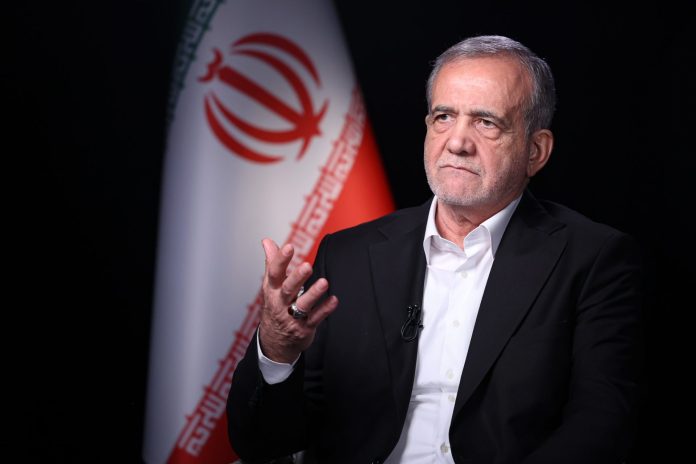
In an interview with Al Jazeera Arabic, President Pezeshkian further emphasized that Israel, with the backing of the United States, seeks to plunge the region into chaos by resorting to war in an attempt to free itself from the trap it has fallen into.

President Pezeshkian called for unity among Islamic nations, stressing the need for internal cooperation to manage the country.

He noted that the unity and cohesion of Islamic countries will disrupt the Zionist regime’s plots.

“The enemy is attempting to undermine the strategy of unity and solidarity,” he warned, underscoring the importance of collective resistance against such efforts.

Ismail Haniyeh, the political leader of the Palestinian resistance movement, Hamas, was assassinated by Israel in an attack on his residence in Tehran on July 31, 2024. He was in Tehran to attend the inauguration ceremony of President Pezeshkian.

Iran deplores US-UAE statement on 3 Persian Gulf islands

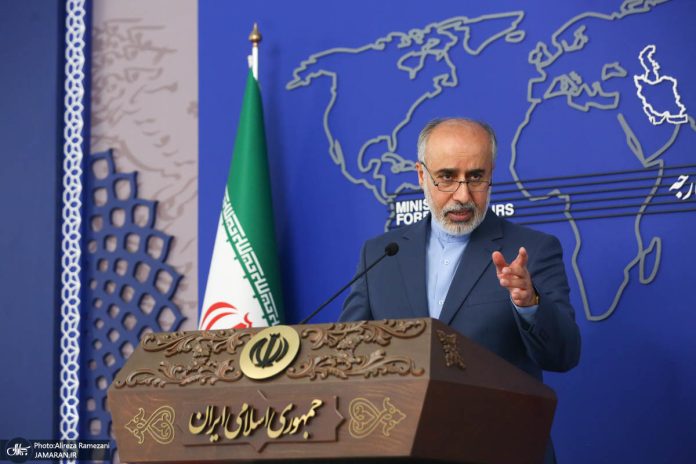
Nasser Kanaani

“The three islands of Abu Musa, Greater Tunb, and Lesser Tunb are inseparable parts of Iran’s territory and any remarks by third parties regarding them are fundamentally invalid and unacceptable,” Kanaani said in a statement on Wednesday.

He added that the repeated baseless claims by the UAE about the three Iranian islands and the issuance of political statements in collaboration with other parties lack legitimacy and do not undermine Iran’s legal status or sovereignty over the islands.

Following a meeting at the White House on Monday, US President Joe Biden and UAE President Sheikh Mohamed bin Zayed Al Nahyan issued a joint statement on the strategic partnership between their countries, which included a paragraph repeating the UAE’s claim to the Iranian islands.

The three Persian Gulf islands have historically been part of Iran, proof of which can be found in historical, legal, and geographical documents in Iran and other countries.

Israel ‘spreading terror’: Lebanon’s PM tells UN Security Council

Lebanon Israel UN

An urgent meeting of the security council was called on Wednesday by France, with the French foreign minister taking the opportunity to unveil efforts with the United States to reach a temporary pause in fighting between Israel and Hezbollah.

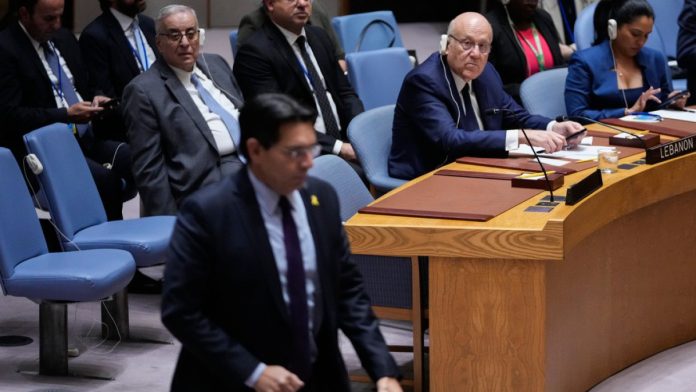
“Israel is violating our sovereignty by sending their warplanes and drones to our skies,” Mikati told the emergency meeting at UN headquarters in New York.

De-escalation is urgently needed, Mikati said, as Israel’s aerial bombardment, attacks on electronic devices and threatened ground invasion have spread “terror and fear among the Lebanese citizens in full view of the world”.

“I hope to come back to my country armed with your explicit stance calling for the cessation of this aggression and for the respect of the sovereignty and safety of my country,” Mikati told the 15 members of the UN’s most powerful body.

France’s Foreign Minister Jean-Noel Barrot said his country had been working to address Lebanon’s concerns.

“In recent days, we’ve worked with our American partners on a temporary ceasefire platform of 21 days to allow for negotiations,” Barrot added.

Deputy US ambassador to the UN, Robert Wood, said Washington hoped the ceasefire proposal would “lead to calm and enable discussions to a diplomatic solution”.

“Nobody wants to see a repeat of the full-blown war that occurred in 2006,” Woods added, while also directing blame for Israel’s attack on Lebanon to Hezbollah’s “build up of weapons, many of which are supplied by Iran”.

Israel’s intensification of attacks on Lebanon comes as the 12-month anniversary of Hamas’s attacks on Israel on October 8 nears, and Israel’s ensuing war on Gaza approaches the one-year mark with no end in sight.

Against this backdrop of Israel’s war on Gaza and attacks on Lebanon, Israeli Prime Minister Benjamin Netanyahu is expected to arrive in New York on Thursday to make a case at the UN for his far-right government’s military operations.

UN Secretary-General Antonio Guterres also addressed the emergency UNSC meeting on the burgeoning conflict in Lebanon after days of deadly Israeli attacks.

Lebanon cannot become another Gaza, said the UN chief.

“I implore the Council to work in lockstep to help put out this fire. The parties must immediately return to a cessation of hostilities … Civilians must be protected. Civilian infrastructure must not be targeted. The safety and security of all UN assets must be ensured. International law must be respected,” added Guterres.

“To all sides, let’s say in one clear voice: Stop the killing and destruction, tone down the rhetoric and threats, and step back from the brink.”

Guterres stated an all-out war must be avoided “at all costs”.

Russia could use nuclear weapons: Putin

Putin

The decision to change Russia’s official nuclear doctrine is the Kremlin’s answer to deliberations in the United States and Britain about whether or not to give Ukraine permission to fire conventional Western missiles into Russia.

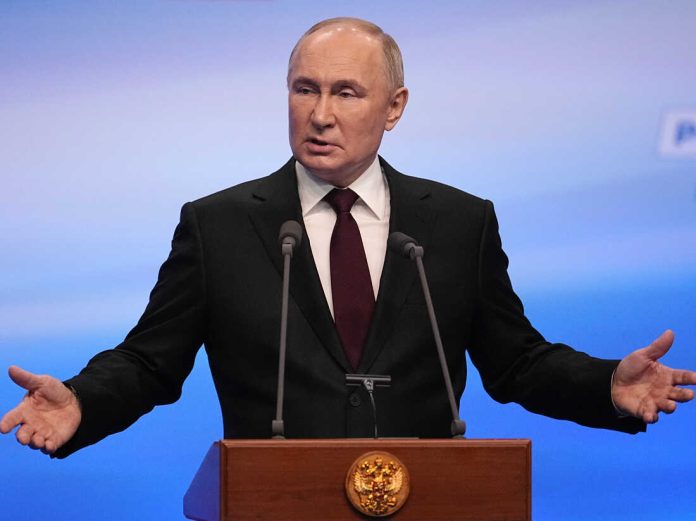
Putin, opening a meeting of Russia’s Security Council, said that the changes were in response to a swiftly changing global landscape which had thrown up new threats and risks for Russia.

The 71-year-old Kremlin chief, the primary decision-maker on Russia’s vast nuclear arsenal, stated he wanted to underscore one key change in particular.

“It is proposed that aggression against Russia by any non-nuclear state, but with the participation or support of a nuclear state, be considered as their joint attack on the Russian Federation,” Putin added.

“The conditions for Russia’s transition to the use of nuclear weapons are also clearly fixed,” Putin said, adding that Moscow would consider such a move if it detected the start of a massive launch of missiles, aircraft or drones against it.

Russia reserved the right to also use nuclear weapons if it or ally Belarus were the subject of aggression, including by conventional weapons, Putin said.

Putin added the clarifications were carefully calibrated and commensurate with the modern military threats facing Russia – confirmation that the nuclear doctrine was changing.

Russia’s current published nuclear doctrine, set out in a 2020 decree by Putin, says Russia may use nuclear weapons in case of a nuclear attack by an enemy or a conventional attack that threatens the existence of the state.

The innovations outlined by Putin include a widening of the threats under which Russia would consider a nuclear strike, the inclusion of ally Belarus under the nuclear umbrella and the idea that a rival nuclear power supporting a conventional strike on Russia would also be considered to be attacking it.

The United States in 2022 was so concerned about the possible use of tactical nuclear weapons by Russia that it warned Putin over the consequences of using such weapons, according to Central Intelligence Agency Director Bill Burns.

The 2-1/2-year-old Ukraine war has triggered the gravest confrontation between Russia and the West since the 1962 Cuban Missile Crisis – considered to be the closest the two Cold War superpowers came to intentional nuclear war.

Ukrainian President Volodymyr Zelensky has been urging Kyiv’s allies for months to let Ukraine fire Western missiles, including long-range U.S. ATACMS and British Storm Shadows, deep into Russia to limit Moscow’s ability to launch attacks.

With Ukraine losing key towns to gradually advancing Russian forces in the country’s east, the war is entering what Russian officials say is the most dangerous phase to date.

Zelensky has urged the West to cross and disregard Russia’s so-called “red lines”, and some Western allies have urged the United States to do just that, though Putin’s Russia, which controls just under one-fifth of Ukrainian territory, has warned that the West and Ukraine are risking a global war.

“Russia no longer has any instruments to intimidate the world apart from nuclear blackmail,” Andriy Yermak, Zelensky’s chief of staff, stated in response to Putin’s remarks.

“These instruments will not work,” he added.

Putin, who casts the West as a decadent aggressor, and U.S. President Joe Biden, who casts Russia as a corrupt autocracy and Putin as a killer, have both warned that a direct Russia-NATO confrontation could escalate into World War Three. Republican presidential candidate Donald Trump has also warned of the risk of nuclear war.

Russia is the world’s largest nuclear power. Together, Russia and the U.S. control 88% of the world’s nuclear warheads.

In his remarks to Russia’s Security Council, a type of modern-day politburo of Putin’s most powerful officials including influential hawks, Putin said that work on amendments on changing the doctrine had been going on for the past year.

“The nuclear triad remains the most important guarantee of ensuring the security of our state and citizens, an instrument for maintaining strategic parity and balance of power in the world,” Putin continued.

Russia, he added, would consider using nuclear weapons “upon receiving reliable information about the massive launch of aerospace attack vehicles and their crossing of our state border, meaning strategic or tactical aircraft, cruise missiles, drones, hypersonic and other aircraft”.

10 Democrats vote to censure Biden, Blinken, Pentagon chief over Afghanistan withdrawal

US Forces Afghanistan

Among those censured in the bill were President Biden, Vice President Kamala Harris, Secretary of State Antony Blinken and Secretary of Defense Lloyd Austin. The vote on the legislation was mostly split along party lines, but 10 Democrats voted with Republicans for the bill’s passage in a 219-194 vote. Eight Democrats reported not voting.

The 10 Democrats who bucked their party, per a roll call from the House clerk are:

Rep. Yadira Caraveo (Colo.), Rep. Henry Cuellar (Texas), Rep. Don Davis (N.C.), Rep. Jared Golden (Maine), Rep. Vicente Gonzalez (Texas), Rep. Jeff Jackson (N.C.), Rep. Greg Landsman (Ohio), Rep. Susie Lee (Nev.), Rep. Mary Peltola (Alaska) and Rep. Marie Gluesenkamp Perez (D-Wash.).

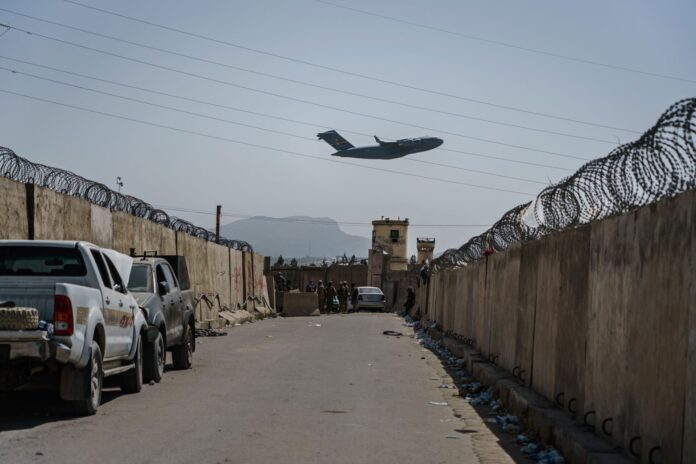
The chaotic withdrawal from the country saw Kabul fall back into the hands of Taliban as many Afghans, including top officials, fleeing the country for safety.

Last month, a GOP report analyzing the U.S. withdrawal from Afghanistan painted a picture of Biden determined to leave the country but fumbling preparations.

Biden and the White House have repeatedly said they have no regrets for the exit plan, in which 13 service members were killed at an airport trying to help people leave the country.

Israel puts army on alert for possible ground invasion of Lebanon as US warns all-out war possible in ME

Israeli Army

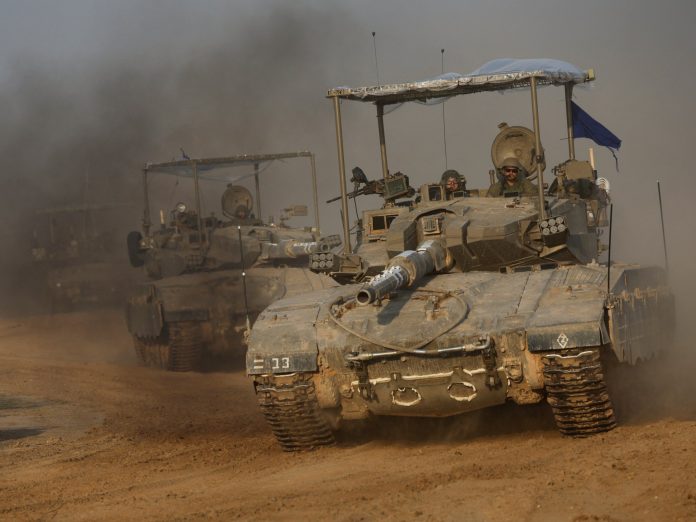
Israel’s General Herzi Halevi told soldiers that Israel’s air strikes on Lebanon were being conducted “to prepare the ground for your possible entry” into Lebanon.

“We are preparing the process of a manoeuvre, which means your military boots, your manoeuvring boots, will enter enemy territory, enter villages that Hizbollah has prepared as large military outposts,” according to a statement from the military.

Halevi’s remarks came as Israel called up two reserve brigades to serve in the north, saying their activation would “enable the continuation of combat” against Hezbollah.

Hezbollah and Israel are embroiled in the most intense exchange of fire since their full-scale war in 2006.

But Pentagon spokesperson Sabrina Singh has said no Israeli ground incursion into Lebanon appears imminent, but referred reporters to Israel for questions about its operations and plans.

“It doesn’t look like something is imminent,” deputy Pentagon press secretary Sabrina Singh told journalists.

“We certainly don’t want to see any action taken that could lead to further escalation in the region. We want to see a diplomatic resolution and a solution to prevent an all-out war.”

The US military is not providing intelligence support to Israel for its operations in Lebanon, Singh added.

It came as part of the Israeli regime’s escalation against Lebanon, which has been targeting the country since October 7, when the regime launched a genocidal war on the Gaza Strip.

As part of the escalation, Israel has carried out extensive airstrikes against southern and eastern Lebanon, killing at least 600 people, including children and women, and wounding 2,000 others.

Hezbollah has been responding to the aggression with numerous operations against the occupied Palestinian territories.

On Wednesday Hezbollah fired a ballistic missile at Tel Aviv for the first time. Hezbollah said its Qader 1 ballistic missile targeted the headquarters of Israel’s Mossad intelligence agency on the outskirts of Tel Aviv.

The escalation is a major challenge to the Biden administration.

Biden has warned a full-scale conflict is possible in the Middle East, but there is also the potential of a settlement in Israel’s war on Gaza and Lebanon.

“An all-out war is possible, but I think there’s also the opportunity – we’re still in play – to have a settlement that can fundamentally change the whole region,” Biden said in an appearance on US broadcaster ABC’s The View.

US Secretary of State Antony Blinken said the risk to the Middle East is “acute” and Washington and its allies are trying to avoid an all-out conflict between Israel and Hezbollah.

“With regard to Lebanon, we’ve been working tirelessly with partners to avoid a full-blown war and to move to a diplomatic process that would allow Israelis and Lebanese alike to go back to their homes,” Blinken stated at the start of a meeting of the Gulf Cooperation Council in New York City.

“Risk of escalation in the region is acute. The best answer is diplomacy, and our coordinated efforts are vital to preventing further escalation.”

Gaza ceasefire sole way for regional peace: Iran

Gaza War

The Iranian diplomat made the remarks in New York on Thursday, addressing an emergency meeting of the UN Security Council on the situation in the region, which was held with a focus on Lebanon.

The meeting came amid the regime’s ongoing genocidal war on the besieged enclave and escalated deadly attacks against Lebanon.

What follows is the full text of his statement:

Thank you, Madam President, for convening this urgent meeting to address the ongoing Israeli aggression against Lebanon. We welcome the presence of H.E. Prime Minister Najib Azmi Mikati and express the full solidarity and support of the Iranian people for Lebanon in its heroic defense against the aggression and atrocity of the terrorist entity of Israel.

Madam President,

Distinguished delegates,

The situation in the region is extremely explosive, and if left unchecked, an all-out unprecedented catastrophe would be inevitable. In continuation of its brutality in occupied Palestine, the apartheid-occupying regime of Israel is now waging an unjust war of aggression against Lebanon and targeting innocent people across the border and deep inside the territory.

This aggression, which has claimed the precious lives and limbs of thousands of innocent people, including women and children, is not just a tragic consequence of an imposed war; it is, rather, a calculated tactic by Israel to terrorize an entire population and force them out of their homeland.

Furthermore, the deliberate and indiscriminate targeting of civilians in Lebanon by detonating pagers, walkie-talkies, and other electronic devices used by rank-and-file citizens across the country, must sound the alarm for the entire international community since this is the most outrageous manifestation of the weaponization of ordinary communication devices.

This new version of terrorism must be condemned unequivocally by all. Otherwise, it would establish a very dangerous precedent that could be easily replicated by other terrorist groups and entities besides Israel. It is a shame that the Security Council was not allowed by the United States to issue a simple press statement in condemnation of this ‘mass terror’ operation, as it has prevented the same Council from doing any meaningful act to stop the genocide in Gaza.

Madam President,

The Zionist regime’s aggression against Lebanon could not be isolated from the overall situation in the region. For this terrorist regime, international humanitarian law and the principle of human dignity mean nothing.

From the long decade of occupation of Palestinian territories, its ongoing genocidal war against people in Gaza, to its unprovoked aggression against Syria and Lebanon, and its terrorist attack on Iran’s diplomatic mission and assassination of the political leader of Hamas in Tehran all underscore Israel’s real character as a genuine terrorist entity that has no value for peace and human right.

The Israeli regime has no intention of pursuing peace or agreeing to a ceasefire. Its real objective is to drag the entire region into a full-scale war. Unfortunately, the US and United Kingdom’s unwavering support to Israel has given a cart blanche to them for all sorts of sinister behavior.

The ongoing aggression against Lebanon is fueled by the failure of the international community, and in particular, by the UN Security Council, to hold Israel accountable for war crimes and genocide in Gaza.

The United States’ failure to rein in the regime, coupled with the ongoing supply of military equipment and political backing, has emboldened Israel to commit these heinous acts with impunity.

Madam President,

Members of the Council,

We all need to work together to disallow the normalization of evil and atrocity. The UNSC should be urged by all States to live up to its responsibility under the UN Charter. The criminal and corrupt leadership of the Zionist regime must understand that their actions will not go unanswered.

Madam President,

The region stands on the brink of a broader conflict due to the regime’s aggression and heinous crimes against nations of the region. Now more than ever, Israel has become a serious threat to international peace and security.

This regime does not deserve membership in the UN. Its representative to the United Nations shamelessly shreds the UN Charter before the eyes of the international community.

The only way to prevent further escalation is clear: Israel must immediately cease its war on Gaza, and its attacks on Lebanon must stop.

Let me be clear Madam President: without the ceasefire in Gaza, there would be no guarantee of peace in the region.

The international community cannot afford to remain silent. We call on this Council to respond with urgency and determination. The UN Security Council, which bears the legal responsibility for maintaining international peace and security, must shoulder its responsibility and respond decisively to Israel’s aggressive and terrorist actions in Lebanon.

If this doesn’t happen, the region risks being dragged into a full-scale conflict. The Israeli regime’s supporters and enablers, especially the United States and United Kingdom, have a legal and moral responsibility to act before it’s absolutely late.

The atrocity crimes and genocide committed by the occupying apartheid regime must not go unpunished as impunity has been emboldening the regime to persist in its patterns of war crimes, crimes against humanity, and genocide.

The world is watching, and history will judge this Council by the actions it takes or fails to take today.

Thank you.

Iran not seeking war: Pezeshkian

Masoud Pezeshkian

Pezeshkian made the comment on Wednesday in a meeting with American thinkers, which was held on the sidelines of the 79th UN General Assembly session in New York.

He said that the Israeli regime attempted to drag Iran into “confrontation and conflict” by assassinating Hamas political leader Ismail Haniyeh in Tehran in July, who was an official guest of the Islamic Republic.

“The Islamic Republic of Iran showed restraint to prevent the escalation of tension and conflict”, President Pezeshkian stated, adding that the Israeli regime however has intensified its brutality and criminality, which he said have reached their peak.

“The Zionist regime, by spreading the conflict to Lebanon, is again trying to drag Iran into the conflict in the region. we are exercising restraint against this plot. But considering the severity and extent of the Zionists’ crimes, public sentiment has been seriously hurt both in Iran and the region, and the situation may get out of control somehow”, Pezeshkian warned.

He said that Iran continues to support Palestinians, because the country believes that it should support the oppressed against the oppressor.

Pezeshkian touched upon the Russia-Ukraine war, blaming NATO’s expansion eastward for the outbreak of the conflict. The Iranian president however added that his country does not recognize any conflict and maintains that war benefits no one.

“We do not help Russia or any other country or give them weapons to fight”, he added, in reference to Western countries’ allegations of Iranian missile and drone supplies to Russia.

Pezeshkian defended Iran’s growing ties with Russia and China, saying that the Islamic Republic, to meet its needs, has expanded relations with the countries that are ready to cooperate with it based on mutual respect and interest.

The Iranian president noted that his country also welcomes interaction with the West, if possible.

“But we will definitely not forget the friends who cooperated with us in difficult times.”

He said that Iran also welcomes dialog to remove mistrust, but stressed that the country will not bow to pressure and will do whatever needed so that no one dares to attack its soil.

“If the Western sides live up to their commitments towards Iran and trust is built, we can hold talks and reach understanding on other issues”, he added.

Ukraine president warns of Russia threat at UN

Ukraine Zelensky

His comments came as President Vladimir Putin on Wednesday escalated his nuclear rhetoric, telling a group of senior officials that Russia would consider using nuclear weapons if it was attacked by any state with conventional weapons.

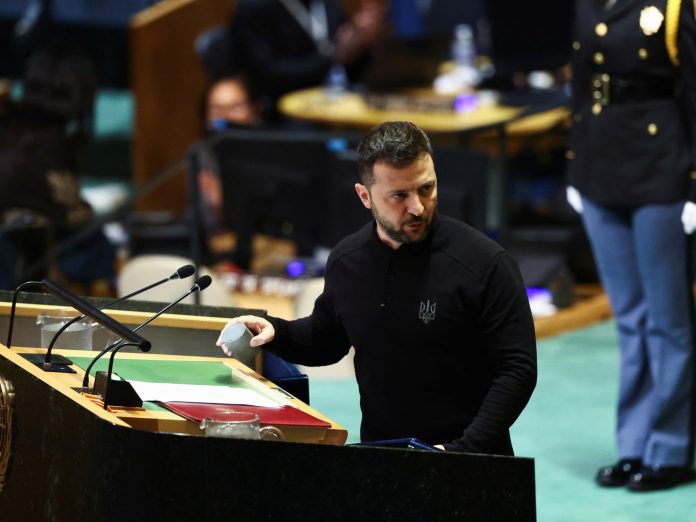
In a speech to the UN General Assembly on Wednesday, the Ukrainian leader stated he had received information that Russia was gathering intelligence on Ukrainian nuclear power plants in preparation for a potential strike.

“Any missile or drone strike, any critical incident in the energy system could lead to a nuclear disaster … a day like that must never come,” Zelensky said in an address in the general assembly hall.

“And Moscow needs to understand this, and this depends in part on your determination to put pressure on the aggressor.”

He added: “These are nuclear power plants, they must be safe.”

Zelensky also said that the war in Ukraine could threaten the region with instability and the potential for a nuclear catastrophe if Russia went forward with the attacks.

“If, God forbid, Russia causes a nuclear disaster at one of our nuclear power plants, the radiation will not respect state borders,” he said, comparing the consequences to the Chernobyl nuclear accident of 1986. “And unfortunately, various nations could feel that devastating effects.”

Zelensky last month accused Russian forces of starting a fire on the site of the giant Zaporizhzhia nuclear plant, with its six Soviet-built reactors, making it Europe’s largest.

Russia captured the nuclear plant soon after its invasion of Ukraine in February 2022, and the plant has come under repeated attacks that both sides have accused each other of carrying out.

The International Atomic Energy Agency (IAEA) has repeatedly voiced concerns over the safety of the Zaporizhzhia nuclear plant, calling for “maximum restraint from all sides”.

As Zelensky was speaking in New York, Putin addressed Russia’s powerful security council on Wednesday, making his strongest warning yet to the west against allowing Ukraine to launch deep strikes into Russian territory using long-range western missiles.

Putin stated Russia would consider using nuclear weapons if Moscow gets “reliable information about start of mass cross-border attack by air from strategic and tactical aviation, cruise missiles, drones and hypersonic weapons”.

The Russian leader added that proposals had been made to change Russia’s nuclear doctrine, and said he would like to underscore one of the proposed key changes.

“It is proposed that aggression against Russia by any non-nuclear state, but with the participation or support of a nuclear state, be considered as their joint attack on the Russian Federation,” Putin stressed, in a thinly veiled threat to the west as foreign leaders continue to mull whether to allow Ukraine to use their long-range weapons.

Putin frequently invoked Moscow’s nuclear arsenal, the world’s biggest, in the early days of its invasion of Ukraine, repeatedly pledging to use all means necessary to defend Russia. He later seemed to moderate his rhetoric, but officials close to the Russian president have recently warned NATO countries they risk provoking nuclear war if they were to give the green light for Ukraine to use long-range weapons.

Earlier this month, Putin said the west would be directly fighting with Russia if it gave such permission to Ukraine – and that Russia would be forced to make “appropriate decisions”, without spelling out what those measures could be.

Zelensky is expected to travel to Washington to present his “victory plan” to Joe Biden at the White House on Thursday. The plan is a roadmap for Ukraine to end the war on its own terms, and is understood to include significant requests from the US and its allies for additional arms and economic and political support for Ukraine in the long term.

The Ukrainian president is expected to meet with Kamala Harris, who is running neck and neck with Donald Trump in the US presidential election. The Republican nominee is not expected to meet with Zelensky during the trip, and has threatened to severely cut aid to Ukraine if elected. In campaign rallies this week, Trump reiterated that he would “get out of Ukraine” if elected president.

In his speech, Zelensky stated Ukraine’s peace plan must be supported by world leaders, and that alternative initiatives to hold talks with Putin would simply aid the Russian president. Zelensky in particular targeted a joint proposal by China and Brazil, who have proposed a six-point peace plan for the Ukraine war without Kyiv’s backing.

“If someone in the world seeks alternatives … it likely means they themselves want to do a part of what Putin is doing … the question arises: what is the true interest?” Zelensky continued, adding, “Everyone must understand. You will not boost your power at Ukraine’s expense.”

In his speech, Zelensky also criticised the UN security council, saying it was “impossible to truly and fairly resolve matters of war and peace, because too much depends in the security council on the veto power”.

Russia is one of five permanent members of the security council and it exercises a veto power over any decisions taken by the body.

Without revealing additional details about the plan, which has been kept largely secret, Zelensky indicated it would not be adopted directly through the UN.

“When the aggressor exercises veto power, the UN is powerless to stop the war,” Zelensky said, adding, “But the peace formula … there is no veto power in it. That’s why it’s the best opportunity for peace.”

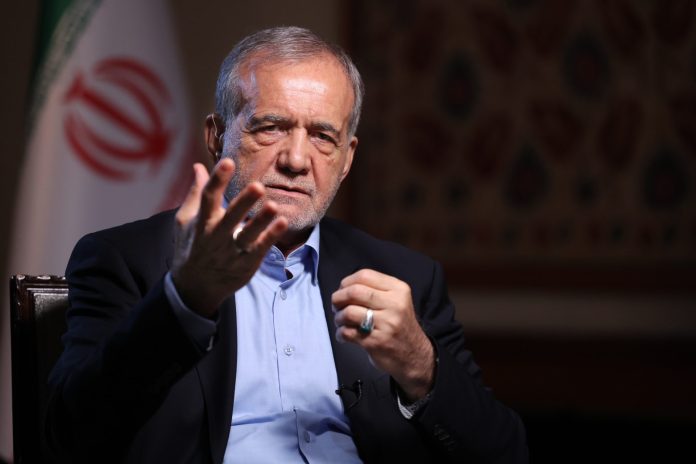
Iran, Pakistan agree to settle dispute over gas pipeline project

Pezeshkian Shehbaz Sharif

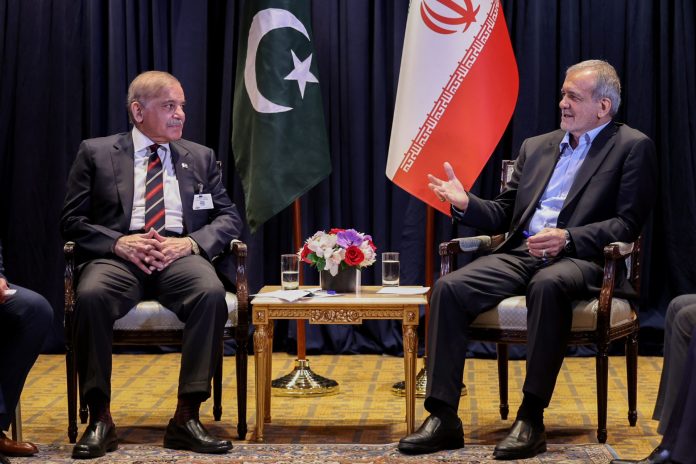
In a meeting on the sidelines of the UN General Assembly in New York on Wednesday, Iranian President Masoud Pezeshkian and Pakistani Prime Minister Shehbaz Sharif agreed on the formation of a joint task force to weigh plans for the promotion of economic and trade cooperation between the two neighbors and resolve the problems in the implementation of the gas pipeline project.

The Iranian president also proposed the idea of establishment of a widespread road and rail network connecting regional countries, saying the project requires an inclusive plan encompassing a whole range of security, political, economic and transportation considerations.

Pezeshkian noted that the project will accelerate the progress of regional countries, bring the nations closer together, and serve the interests of all countries.