Sunday, December 21, 2025
Home Blog Page 7

Iranian spokesperson: US bombed negotiation table

Iran US Flags

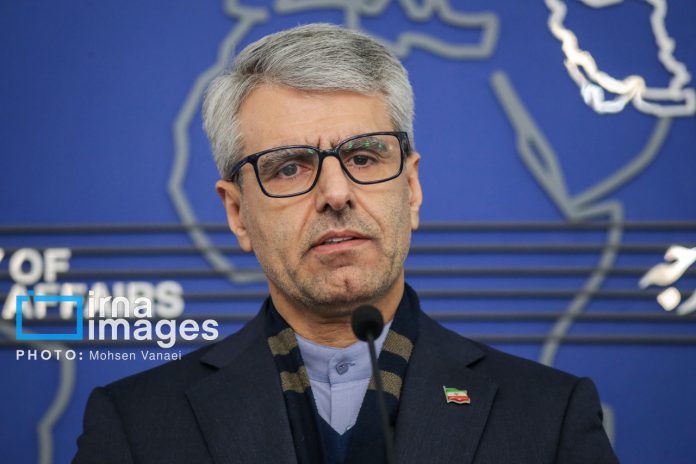
If Iran were not seeking dialogue, it would not have initiated the negotiation path before the 12-day war, Mohajerani stated in response to a question regarding negotiations with the US.

Saying Iran has not sent any message to the other party, she added the Iranian nation seeks dialogue and will cooperate on the condition that the dialogue is honorable and without dictation.

Iran will negotiate on an equal footing and under conditions that preserve the dignity of the Iranian people, she continued.

Earlier on December 2, 2025, Foreign Minister Abbas Araghchi emphasized that if the American side shows its readiness for a fair and balanced agreement based on mutual interests, Iran will definitely consider the issue.

Araghchi reiterated that the door to negotiations and mediations is always open and this possibility exists at any time, provided that the rules are followed.

He said that the first principle of diplomacy and negotiation is that two parties come to the negotiating table with the real intention of a fair and equal exchange, adding that but if the goal of one of the parties is to impose its demands, such negotiations will not take place and will be fruitless.

He pointed out that the main cause of the problem in Iran-US relations, which is preventing the start of negotiations at the moment, is the US approach based on imposing its demands and excessive demands, saying that unfortunately, Iran has seen this behavior many times in its interactions with the US.


Iran says 1.6 million undocumented Afghans have returned home

Afghan Refugee Iran

Nader Yarahmadi, head of Iran’s Bureau for Aliens and Foreign Immigrants Affairs, said that after the removals, approximately 4.5 million Afghan nationals remain in Iran. This figure includes a floating population of around 400,000 to 500,000 people who enter or leave the country irregularly.

He acknowledged that some Afghans who were deported have later re-entered Iran illegally.

According to Yarahmadi, irregular crossings, mainly through Iran’s eastern borders, rose after September, despite being relatively limited earlier in the year.

He said that while illegal migration cannot be fully eliminated, authorities are working to reduce it to a level that does not create security or social challenges.

He noted that between 2,500 and 3,000 undocumented Afghans are leaving Iran each day, describing this year’s returns as unprecedented. Yarahmadi emphasized that government services are prioritized for legally residing foreign nationals.

He also said Iran currently hosts about 60,000 foreign students, including nearly 20,000 Afghan nationals.

Iran Judiciary: Verdict on Israeli spy to be issued soon

Iran Court

Asghar Jahangir said the defendant was a dual national who obtained Swedish citizenship in 2020 and had been residing in Sweden.

According to Jahangir, the suspect was recruited by the Israeli regime’s intelligence services in 2023 and, after undergoing training in six European countries, had most recently traveled to the occupied territories (Israel) two weeks before entering Iran.

He added that the suspect entered Iran one month before the outbreak of the recent 12-day war and was staying in a villa on the outskirts of Karaj, the capital of Alborz Province.

Jahangir said the suspect was carrying electronic espionage equipment, which was identified by judicial authorities, and was arrested during the 12-day war.

The judiciary spokesperson said the case demonstrates that Iran’s judicial system acts swiftly and decisively wherever reports of espionage are received.

Jahangir emphasized that pursuing espionage cases has been on the judiciary’s agenda since the very beginning of the 12-day war, and that prosecutors across the country have been instructed—under an order from the head of the judiciary—to handle such cases promptly.

Ayatollah Khamenei’s aide: Iran opposes Trump’s corridor plan for Caucasus

Ali-Akbar Velayati

Ali Akbar Velayati made the remarks during a meeting with Armenia’s Ambassador to Iran Grigor Hakobyan in Tehran on Monday.

He said the so-called Trump Route for International Peace and Prosperity (TRIPP) is no different from the Zangezur Corridor.

The route connects Azerbaijan to its Nakhchivan exclave through Armenian territory along its entire border with Iran. On a 99-year land lease, the US will operate the 43-kilometer route, which will include railways, communication networks, and pipelines for oil and gas.

Velayati stated that past experience shows the United States often enters sensitive regions under the guise of economic projects, only to gradually expand its presence into military and security spheres.

“Allowing the US any foothold near Iran’s borders under any schemes carries clear security implications,” he warned.

The senior Iranian official also noted that Iran stood against the Zangezur Corridor plan from its very beginning and rejected any alteration of borders or developments undermining the country’s security.

“When the Zangezur Corridor was proposed, the Islamic Republic of Iran firmly declared its opposition and prevented the implementation of the plan without the support of Russia, which was heavily engaged in the Ukraine war.”

“This was because the corridor could have paved the way for NATO’s presence in northern Iran, posing a serious threat to the security of northern Iran and southern Russia. The Trump route is essentially the same project, only with a different name, and is now being pursued in the form of American companies entering Armenia,” he added.

The creation of Trump’s transit corridor was agreed as part of the US-brokered peace agreement that Azerbaijan and Armenia signed at the White House on August 8, 2025.

The two South Caucasus states had been locked in conflict for nearly four decades as they fought for control of the Karabakh region, recaptured militarily by Baku in 2023.

At that time, Iran welcomed the end of the conflict between Armenia and Azerbaijan as a step towards regional stability, while simultaneously expressing concern over the negative consequences of foreign meddling in the Caucasus region.

Additionally, in his remarks, Velayati expressed Iran’s keenness to expand its historical and deep-rooted relations with Armenia.

Hakobyan, for his part, described Tehran-Yerevan cooperation as highly significant and strategic, noting that the development of ties with Iran is among the main priorities of his country’s foreign policy.

Meanwhile, both sides underscored the need for strengthening bilateral relations and keeping up consultations on regional issues.


European NATO countries push plan to send troops to Ukraine

Following talks in Berlin on Monday with US President Donald Trump’s peace envoys Steve Witkoff and Jared Kushner, as well as a Ukrainian delegation, the leaders of Germany, Denmark, Finland, France, Italy, Lithuania, the Netherlands, Norway, Poland, Sweden and the UK, along with officials from Brussels, issued a joint statement proposing “robust security guarantees” for Kiev.

“This would include commitments to… a European-led ‘Multinational Force Ukraine’ made up of contributions from willing nations within the framework of the Coalition of the Willing and supported by the US. It will assist in the regeneration of Ukraine’s forces, in securing Ukraine’s skies, and in supporting safer seas, including through operating inside Ukraine,” the document states.

The UK and France have long pushed the idea of sending European troops to Ukraine once a ceasefire is agreed, although it remains unclear which nations are actually ready to contribute forces.

Polish Prime Minister Donald Tusk immediately rejected the plan, saying his country needs all its troops at home to “defend the eastern flank of NATO.” Italy has also consistently rejected sending Italian forces to Ukraine.

Moscow has rejected the idea of NATO forces in Ukraine under any pretext, and has insisted that Kiev would use any pause in fighting to rearm and regroup. Russia continues to push for a permanent peace that addresses the conflict’s root causes.

Another provision in the European plan calls for a “US-led ceasefire monitoring and verification mechanism.” The signatories also seek a “legally binding commitment, subject to national procedures,” to support Kiev with “armed force, intelligence and logistical assistance, economic and diplomatic actions.”

The Trump administration has not confirmed the extent of its support for the European plan. Recent media reports suggest the US leader is prepared to offer Kiev NATO-style, Congressionally-approved security guarantees if it agrees to territorial concessions to Russia.

Ukraine’s President Volodymyr Zelensky, however, reiterated on Monday that Kiev will not recognize Donbass as Russian “neither de jure nor de facto.”

Other European proposals include “significant support to Ukraine to build its armed forces,” backing Ukraine’s accession to the European Union, and efforts to “invest in the future prosperity of Ukraine” by using frozen Russian sovereign assets. Moscow has warned that any attempt to seize its funds would amount to theft, and has initiated legal proceedings against Euroclear.


Newspaper chides Taliban for shunning Tehran meeting, calls on Iran for policy shift

The conference, attended by representatives from Pakistan, Tajikistan, Uzbekistan, Turkmenistan, China, and Russia, was held under the title “Efforts to Reduce Tensions.”

According to the newspaper, the choice of title itself highlights that Taliban-controlled Afghanistan remains a major source of regional instability.

Citing UN reports, the newspaper noted that Afghanistan under Taliban rule has been described as a hub for terrorism, with more than 20 extremist groups operating in the country with Taliban support, posing risks to regional security.

The Taliban’s decision to boycott the Tehran meeting follows a similar refusal last year, which the paper interprets as a sign that the group neither values Iran’s diplomatic outreach nor acknowledges its own destabilizing role.
The editorial argued that the Taliban views tension as central to its political identity and pointed to its alleged support for the Pakistani Taliban as evidence.

The newspaper warned Iranian policymakers against further concessions to the Taliban, stressing that such engagement risks undermining Iran’s standing among the Afghan people.

Iran reports spread of Influenza A virus with fatal cases

COVID in Iran

Minoo Mohraz, a professor of infectious and tropical diseases at Tehran University of Medical Sciences, said the virus currently spreading in Iran is a new Influenza A strain that first emerged in countries experiencing earlier winters, including Australia.

She noted that the virus appears to be more aggressive than previous influenza strains, with faster transmission and greater severity.

According to Mohraz, the outbreak has now spread extensively across Iran and is expected to continue expanding globally until a strain-specific vaccine becomes available next year.

While exact fatality figures have not yet been officially released, she confirmed that deaths linked to the virus have been reported from multiple regions.

Mohraz emphasized that preventing further spread requires measures similar to those used during the COVID-19 pandemic.

She said school closures are not a sustainable solution, but urged parents to keep symptomatic children at home and advised infected adults to avoid attending work.

She also stressed the importance of wearing masks, frequent handwashing, physical distancing, and proper cough etiquette.

Mohraz added that while a dedicated vaccine is not yet available, existing influenza vaccines may offer partial protection, and antiviral medications are currently accessible without shortages.

ICC refutes Israel’s appeal that sought to invalidate Netanyahu arrest warrant

Benjamin Netanyahu Yoav Gallant

The decision is a significant development in the Palestine investigation, which led to arrest warrants for Israel’s Prime Minister Benjamin Netanyahu and his former defence minister Yoav Gallant in November last year.

Israel has filed numerous appeals to try to invalidate the warrants, including an attempt to disqualify the court’s chief prosecutor Karim Khan for alleged lack of impartiality and a challenge to the court’s jurisdiction in Palestine.

The ICC’s investigation into war crimes committed in occupied Palestine was initiated in 2021, based on a referral by the state of Palestine in 2018.

But since November 2023, seven other referrals have been filed by South Africa, Bangladesh, Comoros, Bolivia, Djibouti, Chile and Mexico.

In its appeal, Israel argued that the prosecutor should have notified it of a new investigation after the new referrals by the seven states, in line with Article 18 (1) of the Rome Statute which requires the prosecutor to formally notify any state concerned when an investigation is opened.

This notice explains what the investigation will cover and gives the state a chance to argue that it is already investigating the same matters itself, a principle designed to stop duplication.

The prosecutor did this in 2021, but Israel did not respond to the notice. Instead, it argued that the court had no legal authority over the situation at all.

After the prosecutor later applied for, and obtained, arrest warrants for Netanyahu and Gallant, Israel changed its position.

It claimed that events after the 7 October 2023 Hamas-led attacks on Israel amounted to a completely new situation, meaning the court should have issued a fresh notification before moving ahead.

The ICC’s appeals judges have rejected that argument. They ruled that the investigation into post-7 October events is covered by the original 2021 notice, so no new notification was required.

Had Israel succeeded, the arrest warrants would have been invalid. The prosecutor would have had to start the notification process all over again before continuing the investigation, even though Israel could, both then and now, challenge the case by arguing that it is conducting its own investigations into Netanyahu and Gallant, in accordance with the principle of complementarity.

“As noted in the decision, Israel had every right to invoke the principle of complementarity once the office of the prosecutor opened the Palestine investigation. It did not do so, choosing instead to reiterate its meritless claim that the ICC has no jurisdiction over Israelis,” said Kevin Jon Heller, a professor of international law at the University of Copenhagen.

“Israel only cares about Art. 18(1) now because the Prosecutor did what Israel was sure he wouldn’t: actually seek arrest warrants for high-ranking government officials,” Heller wrote on X.

“Kudos to the Appeals Chamber for seeing through Israel’s baseless arguments and dismissing the appeal.”

“Kudos also to the Appeals Chamber for being brave enough to follow the law and reject Israel’s appeal. We can only hope that doing so will not lead to another round of US sanctions,” added Heller, who also serves as special advisor on war crimes to the ICC prosecutor.

The ICC’s investigation into alleged Israeli war crimes has prompted US sanctions on the court’s chief prosecutor, his two deputy prosecutors, and judges who issued the warrants in November.


Ukrainians’ trust in NATO collapses: Survey

The poll was conducted by the Kiev International Institute of Sociology (KIIS) between November 26 and December 13. The pollster sampled opinions of nearly 550 Ukrainian citizens, representing various social and age groups, publishing the results on Monday.

The survey indicated a sharp decline of Ukrainians’ trust in NATO – only 34% of respondents said they were confident about the bloc, compared to 43% last December.

The public trust in the bloc’s leader, the US, experienced an even steeper drop, standing at only 21% against 41% last year.

The decline in Ukrainians’ trust comes against the backdrop of the mediation efforts of the US administration to end the hostilities between Kiev and Moscow. The US has ruled out admitting Ukraine into NATO or sending American troops to the country.

NATO aspirations have long been a key talking point of pro-Western Ukrainian politicians, with Kiev formally applying to join the bloc in 2022. Russia, however, regards eastward expansion of the US-led bloc as one of the key causes of the Ukraine conflict and has repeatedly demanded Kiev formally become a neutral state instead.

Ukrainians’ trust in the EU remained unchanged, hovering at around the 49% mark, with only 23% of respondents signaling their wariness of Brussels. The bloc, save for a handful of its members, has displayed a strong pro-war stance, repeatedly proclaiming its readiness to continue propping up Kiev.

The poll suggested the Ukrainians remain overwhelmingly ready to “withstand” the conflict with Russia for as long as necessary, with some 62% responding affirmatively to this question. The survey also indicated the Ukrainians’ confidence in President Volodymyr Zelensky remaining relatively high, standing at around 61%.

While Zelensky’s presidential term expired early last year, and he refused to hold elections under the pretext of martial law, Ukrainians appear to be unwilling to cast their ballots altogether, the poll indicated. Only 9% of respondents said the presidential elections must be held as soon as possible, while others argued that they should only happen when the conflict with Russia is over.


US, Ukraine agree on ’90 percent’ of peace terms, punt on territory: Senior American officials

The comments came after 2 1/2 days of intensive discussions between President Donald Trump’s special envoy for peace missions, Steve Witkoff; the president’s son-in-law Jared Kushner; Ukrainian President Volodymyr Zelensky and top European officials in Berlin.

Zelensky, in a post on the social platform X, described the negotiations as a “first draft” but emphasized “the military part looks quite solid.” The Ukrainian president said the two sides “worked very well together” but cautioned against “destructive” elements to be removed.

“This matters, because dignity matters,” he added.

A meeting in Miami is scheduled for the weekend to include “working groups, military people, looking at maps,” a senior official told reporters in a phone briefing. It’s unclear when another meeting with Russia might take place.

“We believe that we probably solve for, I don’t know, it could be 90 percent, literally 90 percent of the issues between Ukraine and Russia,” the senior official said on the call.

“But there’s some more things that have to be worked out.”

Witkoff and Kushner last met with Russian President Vladimir Putin in Moscow on Dec. 2 for about five hours. Putin complained in an interview with India Today that the meeting was too long and that he grew “weary.” He ultimately rejected parts of the 20-point proposal.

The two U.S. officials said that 20-point plan served as the basis for discussions in Berlin. It had not been released or leaked, unlike a 28-point plan that largely favored Russia’s demands.

The officials added consensus was reached on security guarantees “like” NATO’s Article 5 mutual defense pact, but they would not detail what type of U.S. commitments that would entail. The Senate is required to ratify any treaties between the U.S. and another country.

“It would have to go before the Senate, and President Trump is willing to do that,” the second senior U.S. official continued.

The official added Ukrainians and Europeans were surprised the administration believes it can get Russia to sign off on Article 5-like security guarantees for Ukraine, given Moscow’s opposition to Ukraine joining NATO.

The official described the security guarantees as the “platinum standard” but would not provide details, other than saying no U.S. troops would be deployed in Ukraine. They also said the Ukrainians and Europeans were surprised by Trump’s commitments given the administration’s turn away from Europe.

European leaders issued a joint statement Monday offering details that include Ukraine having a peacetime army at 800,000 people and a European “multinational force” — supported by the U.S. — that will operate in Ukraine to help regenerate the country’s armed forces and provide air and sea defense.

The U.S. will also lead a ceasefire monitoring and verification mechanism to provide early warning and a deconfliction mechanism.

In case of an armed attack, guarantees will include a legally binding commitment to take measures that “may include armed force, intelligence and logistical assistance, economic and diplomatic actions.”

The issues of territorial control are likely to be left for bilateral negotiations between Ukraine and Russia, the officials said, even as the White House is proposing “thought-provoking” ideas on how to halt fighting in contested areas.

Russia has called for Ukraine to retreat from areas of control in the Donbas region in eastern Ukraine that Russian forces have failed to achieve militarily, while also asking for international recognition of territory it has seized since 2014.

And while Zelensky on Sunday rejected a U.S.-idea for an “economic free zone” in territory Russia has failed to acquire by military force, the U.S. official said a lot of time was spent “trying to define” what such a zone would be and how it would operate.

“And then ultimately, if we can get that defined, then it will really be up to the parties to work out the final issues of sovereignty and to see if there’s a deal that can be done between them,” the official said.

On the Zaporizhzhia power plant, which is controlled by Russia and located along the front lines in eastern Ukraine, the officials said there’s progress toward an agreement on 50/50 sharing of the power from the plant, but no resolution yet on who will operate the plant.

“There’s still a little bit of a gap between the Russians and the Ukrainians on how that should go, but at the end of the day, they both want it to be repaired and functioning in a good way, and providing energy,” the official said. “And it seems like we’re close to them agreeing to essentially a 50/50 split of the power, which would be, I think, a good outcome there.”

The White House is working on ways to bring Russia back into the global economy so it has “incentives not to go back to war in the future,” the official said, adding, “Hopefully they get focused on a different project in the future, which is really, economy and being part of the global world, which is possible.”

The Wall Street Journal reported that the administration is developing plans to use roughly $200 billion of frozen Russian assets for projects in Ukraine, using the Zaporizhzhia power plant to help power a massive new data center, but also restarting Russian energy flows to Western Europe and the rest of the world and opportunities for U.S. companies to invest with Russia in strategic sectors such as rare earth extraction and drilling in the Arctic.

The U.S. officials said on the call that a key part of discussions with Ukrainians and Europeans was protecting Ukraine’s economy so it can fund its military to the size that would deter future Russian aggression.

Russia has launched a lawsuit against Euroclear, the Belgium-based financial institution holding the majority of the country’s frozen assets, as the European Union moved last week to indefinitely freeze the funds as it debates how to seize them to benefit Ukraine.

The U.S. officials added that the negotiators addressed “extensively” Russia’s frozen funds “how to try and find a way to use them for reconstruction in a way that hopefully can work through an agreement,” but did not provide further details.