Thursday, January 1, 2026
Home Blog Page 666

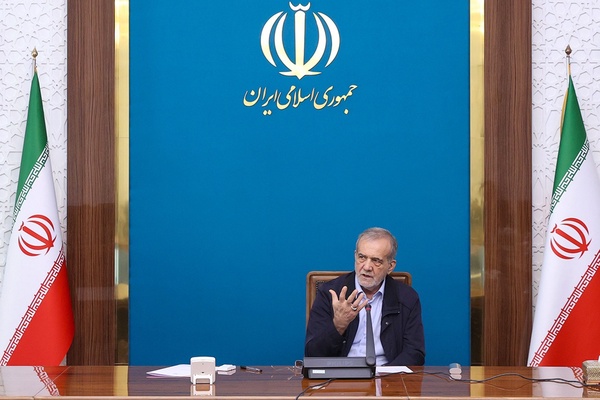
Iran’s president says no matter who has won the US  vote 

In a meeting with members of his campaign team, President Massoud Pezeshkian stated that the country and the Islamic system of Iran rely on internal strength, with a proud and honorable nation. For Iran, it makes no difference who wins the US election.

He clarified that the Islamic Republic of Iran will not have a narrow or limited view when it comes to developing relations with other countries. President Pezeshkian reiterated that Iran’s foreign policy prioritizes good neighborly relations, with an emphasis on strengthening ties with Islamic and neighboring countries.

He also stressed the importance of unity and solidarity among Islamic countries, saying that if all the nations of the Islamic world were united as brothers, the Israeli regime would not dare to oppress the Palestinian and Lebanese people so mercilessly. During his first term, Donald Trump implemented the so-called “maximum pressure” policy, imposing extensive sanctions on Iran that, according to many experts and US officials, failed. The primary goal was to reduce Iran’s oil exports to zero.

Trump also unilaterally withdrew the US from the JCPOA (Iran nuclear deal) in 2018 in an attempt to halt Iran’s nuclear development, but this approach also ultimately failed.

Iraq’s FM denies reports Iran planning attack on Israel from Iraqi territory

In an interview with Kurdish network Zagros, Hussein said, “American media outlets are claiming that Iran might attack Israel from within Iraq, but we have investigated these reports with Iran and other parties and found no evidence to support such claims.”

“Iraq’s current social, political, economic, and security conditions do not permit the country to engage in a new war,” Hussein stated, adding, “Prime Minister (Mohammed Shia’ al-Sudani) maintains constant communication with Iraqi commanders, who have assured that they will not undertake any actions leading to war.”

Emphasizing that the region is already under immense pressure, the Iraqi foreign minister highlighted Iraq’s opposition to using its airspace without Baghdad’s permission.

Tehran says, during its recent aggression against Iran, Israel used Iraqi airspace provided by the US, without Baghdad’s permission.

He warned that any security tensions could destabilize oil prices and significantly impact local and international markets.

Also addressing the withdrawal of US-led foreign forces from Iraq, Hussein mentioned that the Daesh terrorist group has become weaker, with the group now relying more on sleeper cells.

He expressed confidence that Iraq’s armed forces and Kurdish Peshmerga will manage the situation on their own.

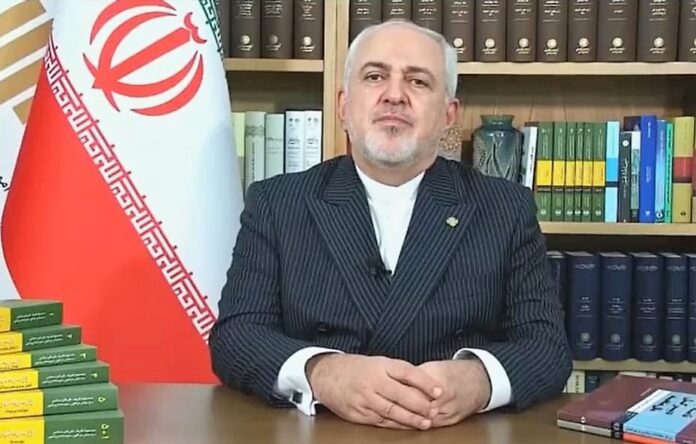
Iran’s Zarif hopes Trump to terminate conflicts as promised during campaign 

Mohammad Javad Zarif, who was Iran’s foreign minister when Trump unilaterally walked out of the Joint Comprehensive Plan of Action nuclear accord with Iran in 2018, posted a tweet on Thursday in reaction to Trump’s reelection.

He wrote, “The American people, including most Muslims, have spoken loud and clear in rejecting a shameful year of US complicity in Israel’s genocide in Gaza and carnage in Lebanon.”

More than 43,000 people have been killed and at least 100,000 injured during the Israeli onslaught against Gaza.

“Let us hope that the incoming administration of @realDonaldTrump and @JDVance will stand against war as pledged, and will heed the clear lesson given by the American electorate to end wars and prevent new ones,” he further stated.

The former Iranian foreign minister also noted, “Iran, having shown its resolve and ability to stand up to any aggression, will not be swayed by threats, but will be cognizant of respect.”

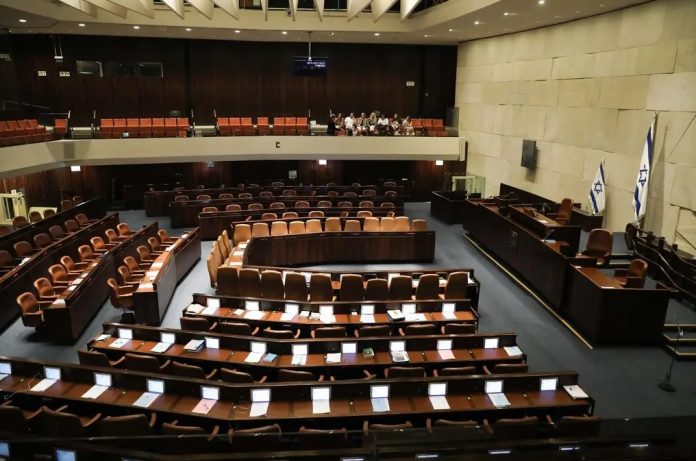
Israeli Parliament passes law to deport families of Palestinians involved in attacks against settlers

Israeli Knesset

The bill was approved in the second and third readings by 61-41 votes, making it an effective law.

The legislation is widely seen to be targeting Arab citizens of Israel and Palestinian residents of the occupied East Jerusalem.

The law did not specify where families or relatives would be deported. Yet, Israeli media says that Gaza will be a destination for those being deported.

The new law gives power to the interior minister to decide which relative will be expelled if the ministry provides evidence that a family member had prior knowledge of an attack, or if a family member voices support for an attack against Israelis.

A Knesset statement said that under the law, the deportation period for a person who holds Israeli citizenship may range between 7-15 years, and between 10-20 years for a person who holds a legal residence permit.

There was no immediate Palestinian comment on the controversial law.

On Tuesday, the Israeli Knesset passed a similar law allowing the sacking of Arab teachers who show support for attacks against Israelis.

Tension has escalated across the Palestinian territories over Israel’s brutal offensive on the Gaza Strip, which has killed nearly 43,400 people, mostly women and children, since a Hamas attack last year.

Israel faces a genocide case at the International Court of Justice for its actions in the blockaded enclave.

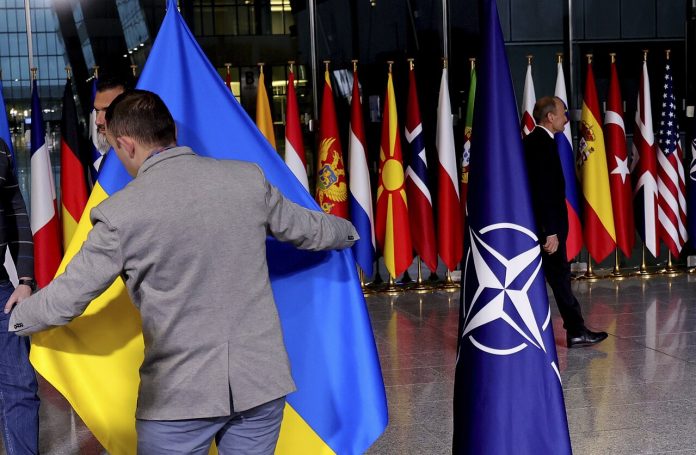
Trump’s team seeks postponing Ukraine’s NATO membership for at least 2 decades: Report

NATO Ukraine

Trump, who won the presidential vote, has repeatedly said that he would end the war within “24 hours” and get the US “out” of Ukraine.

Earlier media reports and statements from Trump’s inner circle indicated this would entail freezing the war on the current front lines and creating a demilitarized zone in the east, a claim also supported by the WSJ’s sources.

Russia currently occupies roughly 20% of Ukrainian territory in the south and the east and continues steadily pushing back Ukrainian defenders, albeit at the cost of heavy losses.

It remains unclear who would police the 800-mile (1,300 kilometers) long demilitarized zone, but an undisclosed Trump’s aide told the WSJ that Washington would demand European allies to send in their troops.

This proposal is only one of the ideas circling around in Trump’s team, and the president-elect has a tendency to make major policy decisions on the spot, the sources added.

Two of Trump’s advisors, retired General Keith Kellogg and Fred Fleitz, proposed in June to cease military aid to Ukraine unless it agrees to hold peace negotiations with Russia.

At the same time, Kellogg said the plan would entail additional warnings to Russia that the US would increase its military support to Ukraine if it refused the terms of the ceasefire.

Fleitz said Trump reacted positively to the plan but added, “I’m not claiming he agreed with it or agreed with every word of it.” The plan also involved taking Ukraine’s NATO accession off the table for “an extended period in exchange for a comprehensive and verifiable peace deal with security guarantees”.

Ukraine submitted a request for NATO membership in 2022 but has not received an invitation, receiving a cold response from US President Joe Biden, German Chancellor Olaf Scholz, and others.

Both Kyiv and Moscow announced it would not be possible to end the war within 24 hours, as Trump claims. Ukraine has been adamant about not recognizing Russian occupation of its territories but has acknowledged some may have to be liberated by diplomatic means.

In turn, Russia currently holds the upper hand on the battlefield, outnumbering and outgunning Ukrainian troops, likely having little incentive to seek a settlement.

Ex-Iranian MP: Trump’s election similar to Taliban return to power

In an interview with Entekhab news outlet, Heshamatollah Falahatpisheh noted that Trump’s re-emergence could bring not only old ambitions but new strategies to pursue familiar objectives.

He said Tump is expected to open with a diplomatic door to Iran, signaling apparent readiness for dialogue.

The former Iranian lawmaker added: “However, this gesture would likely coincide with an intensified maximum pressure policy aimed at further isolating Tehran economically and politically.”

Falahatpisheh emphasized that under Trump, Iran’s regional and global maneuverability could face significant limitations, as the divide between Republicans and Democrats on foreign policy has grown more pronounced, especially since the 2015 nuclear deal.

He warned that influential anti-Iran factions within the U.S. Congress, bolstered by figures like former Secretary of State Mike Pompeo, could drive forward a twelve-point agenda designed to impose new constraints on Iran’s activities and alliances.

Falahatpisheh urged Iran’s leadership to prevent foreign powers, particularly China and Russia, from using Iran-U.S. tensions to advance their own interests.

He highlighted past collaboration between Trump and these nations to restrict Iran’s oil exports. Moreover, he advised Iranian policymakers to capitalize on potential rifts between the U.S. and Europe, warning the current Iranian administration against repeating mistakes that previously squandered valuable diplomatic opportunities.

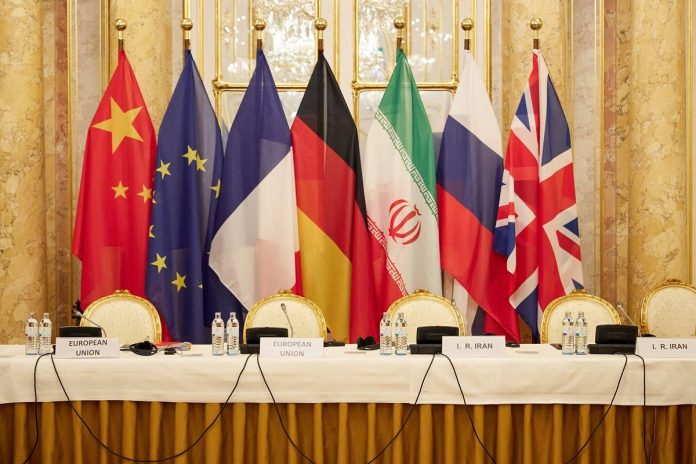
Iranian analyst deplores failure to restore JCPOA following Trump re-election

Nuclear Negotiations in Vienna

Akbar Montajabi, chief editor of Sazendagi newspaper, took to X social media platform on Thursday to react to re-election of Trump who torpedoed the hard-fought-for nuclear accord in 2018, unleashing draconian economic sanctions and hardships on Iran.

“From January 2021 when Trump left office until today that he’s returned, we had 4 years to revive the JCPOA,” he tweeted.

He said the late Iranian president Ebrahim Raisi had three years but was reluctant to resuscitate the deal.

Montajabi noted that former Iranian president Hassan Rouhani and incumbent President Massoud Pezeshkian each had one year, but the former did not succeed in restoring the deal due to the opposition by hardliners like Saeed Jalili, a member of the Expediency Council, and the latter did not get a chance.

“Now Trump is back with the same grudge as before,” he warned.

Biden rushing to deliver billions in remaining aid to Ukraine ahead of Trump’s inauguration

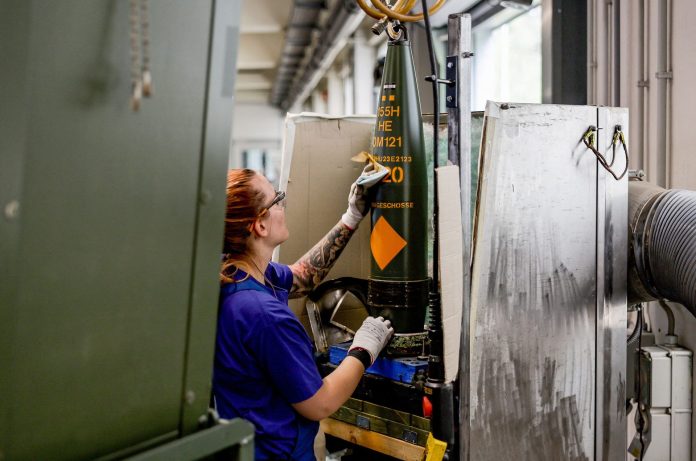
Weapons Arms Russia Ukraine War

Two administration officials told Politico that the White House plans to expedite the weapons delivery amid concerns that a future Trump administration would halt weapons shipments before they reach Kyiv.

Trump has repeatedly stressed that he would end the war within “24 hours” and get the US “out” of Ukraine — a plan that may involve ceding Ukrainian territory and creating autonomous regions in the east, according to reporting in October.

In June, two top advisors to Trump proposed a plan that would cease military aid to Ukraine unless it agrees to hold peace negotiations with Russia, Reuters reported, citing the advisors, retired General Keith Kellogg and Fred Fleit.

Politico reported that of the $61 billion aid package passed by congress in April, only $4.3 billion remains to pull existing weapons stocks, while a further $2.1 billion in funding remains to put weapons on contract with US defense companies.

Despite the president’s ability to deliver existing weapons stocks through presidential drawdown authority, White House officials are concerned that the delivery of the large amount of weaponry may take months to reach Ukraine — well past Trump’s inauguration into office.

Despite the concerns around the weapons timely delivery, the Pentagon will remain “on track to continue to provide the authorized assistance to support Ukraine”, Pentagon spokesperson Lt. Col. Charlie Dietz told Politico.

“We expect to have further assistance in the coming weeks.”

Mont recently, President Biden announced the latest $425 million in new security assistance for Ukraine during a phone call with President Volodymyr Zelensky.

Following Trump’s presidential election victory, Zelensky has move to mend previous tensions stemming from Trump’s first impeachment trial involving Zelensky in 2019. Zelensky congratulated Trump on his election victory in a phone call on Wednesday.

Prime Minister Denys Shmyhal has stated that Ukraine is cautiously optimistic about continued US support under Trump and expects “clear and quick steps” from the new leadership.

“Donald Trump is a strong leader, there is no doubt about that,” Shmyhal said at the Kyiv International Economic Forum.

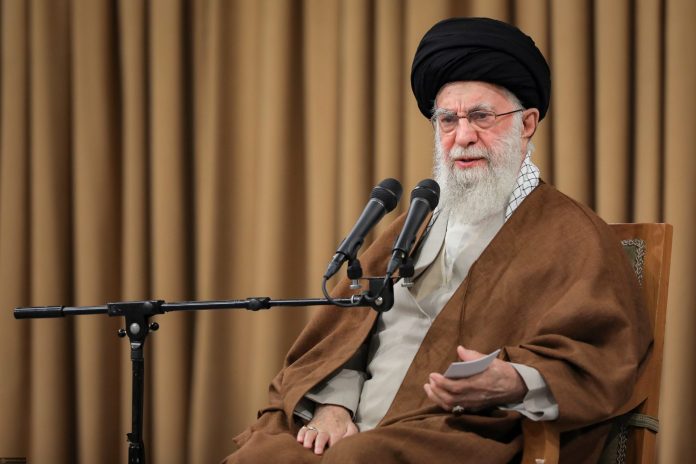
Ayatollah Khamenei: Resistance will definitely emerge victorious

In a meeting with members of the Assembly of Experts on Thursday, Ayatollah Khamenei commemorated Hezbollah’s martyred leader Sayyed Hassan Nasrallah and the movement’s senior official Seyyed Hashem Safieddine, as well as Hamas leaders Ismail Haniyeh and Yahya Sinwar, and Iran’s IRGC commander General Abbas Nilforoushan.

The Leader said Nasrallah’s martyrdom in an Israeli strike in September boosted the Lebanese resistance movement’s strength, adding he left behind a lasting legacy which is Hezbollah.

Ayatollah Khamenei highlighted that during the past 40 years, the Lebanese resistance movement has forced Zionist regime to retreat on various occasions, hailing it as a strong and undefeatable party.

He also noted that Palestinian resistance has managed to achieve victory against Israel nine times since 2009.

The Leader also stated that the Israeli regime, despite the significant aid it receives from its Western allies and despite committing horrible massacres, has failed to uproot the Palestinian resistance movement Hamas.

Iran’s envoy calls on UN General Assembly to suspend Israel’s membership

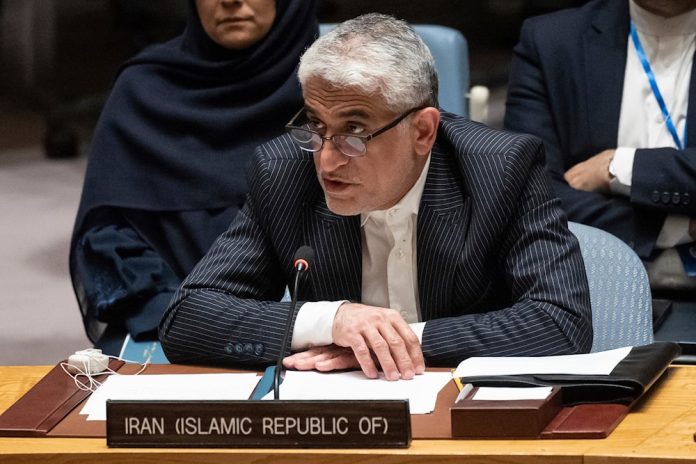
Amir Saeed Iravani

Amir Saeid Iravani made the remarks on Thursday before a UN meeting held to hear a briefing on the United Nations Relief and Works Agency for Palestine Refugees (UNRWA).

“Iran calls on the international community to take serious action in response to Israel’s actions and to suspend Israel’s membership in the United Nations General Assembly due to its blatant violations of the UN Charter and international law,” he stated.

Iravani cited the example of the regime’s informing the UN on Monday of its banning the operations of UNRWA, a move that terminated the body’s decades-long crucial relief practices across the Palestinian territories and put millions of lives at risk.

He denounced the move as an attempt to deprive Palestinians of essential services such as education, healthcare, and humanitarian aid.

“Support for UNRWA and the protection of the rights and security of Palestinian refugees must be a priority for the international community,” the envoy added, asserting that Iran remained committed to supporting the humanitarian agency.

The ambassador also pointed to the regime’s October 2023-present war of genocide in the Gaza Strip, where it has killed nearly 43,400 Palestinians, mostly women and children, and other war crimes and crimes against humanity against Palestinians.

The regime’s actions “represent not only gross violations of human rights, but also deliberate use of hunger as a weapon, further exacerbating the humanitarian crisis and creating an unbearable situation for the Palestinian people”, he said.

These measures “poses a direct threat to international peace and security and [the regime] must be held accountable for its actions”, Iravani added.