Wednesday, December 24, 2025
Home Blog Page 625

Israel intensifies attacks on Lebanon but claims ceasefire agreement ‘close’

Lebanon War

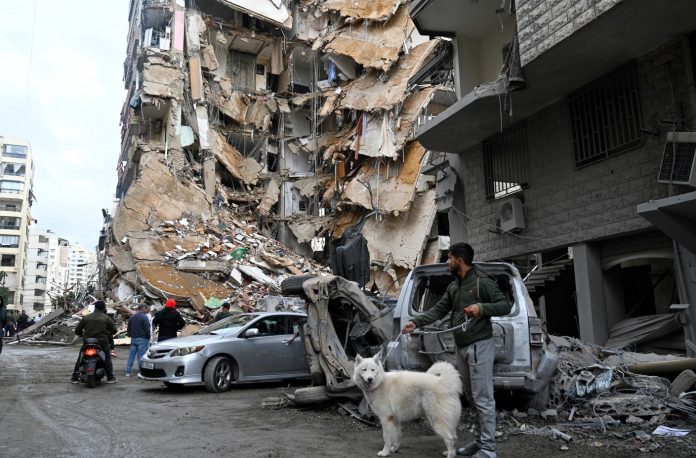
Israeli attacks hit commercial and residential buildings in Beirut on Monday as well as in the port city of Tyre, where several people were killed – adding to the more than 3,700 people in Lebanon who have been killed by Israeli attacks in this two-month war.

Israeli officials say they targeted areas known as Hezbollah strongholds. They issued evacuation orders for Beirut’s southern suburbs, and attacks landed across the city, including metres from a Lebanese police base and the city’s largest public park.

Israeli attacks across Lebanon in recent days were “more powerful, more destructive, more frequent and happening more often without warning – leaving people no time to get out of the way of Israeli missiles and drones, according to reports.

The barrages came as the Israeli ambassador to the United States said a ceasefire deal to end fighting between Israel and Lebanese group Hezbollah could be reached “within days”.

Ambassador Mike Herzog told Israeli Army Radio on Monday that there remain “points to finalise” and any deal requires agreement from the government. But he stated, “We are close to a deal”.

Israeli officials said Prime Minister Benjamin Netanyahu’s security cabinet was set to convene on Tuesday to discuss a proposed ceasefire.

Israel’s ambassador to the United Nations, Danny Danon, said Israel would maintain an ability to strike southern Lebanon under any agreement. Lebanon has previously objected to wording that would grant Israel such a right.

The US has pushed for a deal to end over a year of hostilities between Iran-backed Hezbollah and Israel, which erupted in parallel with Israel’s war against Hamas in Gaza and has drastically escalated over the last two months.

In Beirut, Elias Bou Saab, Lebanon’s deputy parliament speaker, told the Reuters news agency there were “no serious obstacles” left to start implementing a US-proposed ceasefire with Israel, “unless Netanyahu changes his mind”.

He added the proposal would entail an Israeli military withdrawal from south Lebanon and regular Lebanese soldiers deploying in the border region, long a Hezbollah stronghold, within 60 days.

A sticking point on who would monitor compliance with the ceasefire had been resolved in the last 24 hours with an agreement to set up a five-country committee that includes France and is chaired by the US, he continued.

But Bou Saab also accused Israel of ramping up its bombardment in order to pressure Lebanon to make concessions in indirect ceasefire negotiations with Hezbollah because “we are close to the hour that is decisive regarding reaching a ceasefire”.

After previous hopes for a ceasefire were dashed, US officials cautioned that negotiations were not yet complete and noted that there could be last-minute hitches that either delay or destroy an agreement.

“We have made significant progress with getting towards a resolution,” US National Security Council spokesman John Kirby told reporters.

“But we are not done yet. Nothing is final until everything is final.”

The French presidency reported “significant progress” in talks on a ceasefire and urged Israel and Hezbollah to “seize this opportunity”.

But hostilities continue to intensify despite the reported diplomatic progress. Over the weekend, Israel carried out powerful attacks, one of which killed dozens of people in central Beirut, while Hezbollah unleashed one of its biggest rocket salvos yet on Sunday, firing hundreds of missiles into Israel.

Lebanon’s Health Ministry reported Israeli attacks since October 2023 have killed 3,768 people in Lebanon and forced more than one million people from their homes.

Hezbollah strikes have killed 45 civilians in northern Israel and the Israeli-occupied Golan Heights. At least 73 Israeli soldiers have been killed in northern Israel, the Golan Heights and in combat in southern Lebanon, according to Israeli authorities.

The UN Office for the Coordination of Humanitarian Affairs (OCHA) has announced that Lebanon is going through its deadliest period in decades.

“The UN aid coordination office, OCHA, warned that Lebanon is facing its deadliest period in decades, with an unprecedented humanitarian crisis affecting more than a million people,” the agency pointed out.

“On average, 250 people have been killed every week this month, bringing the death toll to more than 3,700 since the escalation of hostilities in October 2023,” OCHA added.
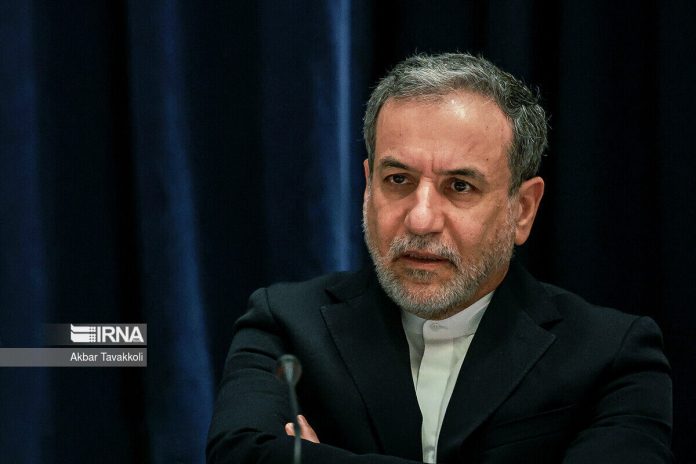
Iran FM urges intl. community to prevent normalization of Israeli genocide, crimes 

Abbas Araghchi

Araghchi made the remarks on Monday in a virtual extraordinary meeting of the top diplomats of the Group of Friends of the United Nations Charter to discuss the humanitarian situation in occupied Palestine.

He warned about the further erosion of the credibility of the UN due to its continued inaction and passivity in the face of the genocide and widespread aggressions by the Zionist regime.

Araghchi described the 14-month-long genocide in Gaza as a continuation of the 80-year-old “colonial extermination” plan.

He asserted that stopping the genocide in Gaza and ending Israeli aggression against Lebanon requires a global coalition to hold accountable and prosecute the leaders of this regime, as well as to sanction its military, financial, and political supporters, especially the United States.

Araghchi characterized the arrest warrant issued by the International Criminal Court against Israeli Prime Minister Netanyahu and the regime’s former war minister Gallant as a necessary but belated step towards justice.

He called for serious action from the international community to enforce these warrants.

He also highlighted how the Israeli regime and its supporters misuse the concept of “anti-Semitism” to silence any criticism against Israel.

The foreign minister reminded that all states have a legal obligation under international law to assist the legitimate struggle of the Palestinian people against occupation and apartheid for their right to self-determination.

He stated that citing “self-defense” by the occupying regime for attacking Palestinians and killing women and children while destroying Gaza’s infrastructure is completely unacceptable, and that the regime has no right to claim such an entitlement against a people under occupation.

Araghchi reiterated the shared responsibility of the international community to stop genocide and killings of innocents in Palestine and Lebanon, emphasizing that safeguarding the UN Charter and its lofty principles requires effective collective action to end crimes and killings and to prosecute and punish leaders of the Israeli regime.

Iranian govt. Spokeswoman announces consensus on ending Internet filtering 

Mobile Internet Iran

Ms. Mohajerani added, however, that the specifics of how to implement this lifting remain unresolved.

Mohajerani emphasized that filtering has imposed significant psychological, social, and economic costs on society without achieving its intended goals.

She noted that while filtering may sometimes be necessary to address crises, it cannot serve as a permanent solution.

The government spokeswoman said President Pezeshkian is committed to fulfilling his electoral promise to lift filtering, and the matter is currently under review by the relevant task force, with hopes of reaching a fair decision for the public soon.

Official: Iran gas exports to Iraq stopped at one point

Iraq Gas

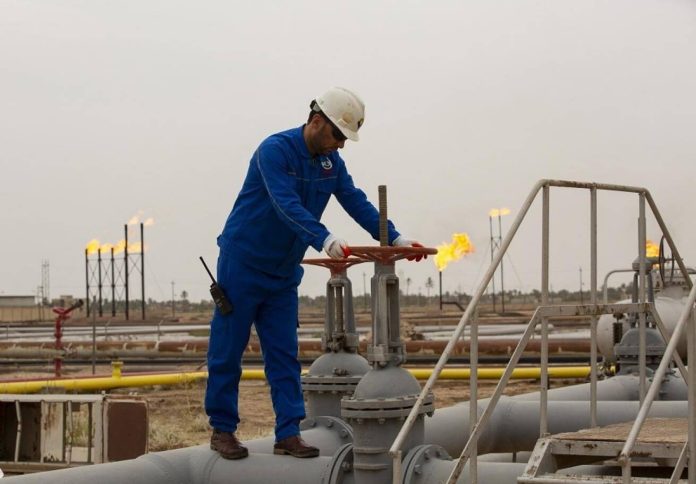
Talking to Mehr News Agency, Tavakoli noted that gas exports are operational at two points: Shalamcheh and Naft Shahr, with one point experiencing a 15-day halt due to Iraq’s request.

The Iraqi Ministry of Electricity announced that this interruption in Iranian gas supply would last for 15 days, resulting in a loss of 5.5 megawatts of electricity from the national grid.

The ministry added that gas supplies to Baghdad, central Iraq, and the Middle Euphrates provinces have been cut off, but coordination with the Ministry of Oil is underway to compensate for the lost gas in local power plants.

Israel attack that killed 3 Lebanon journalists ‘apparent war crime’: HRW

Lebanon War

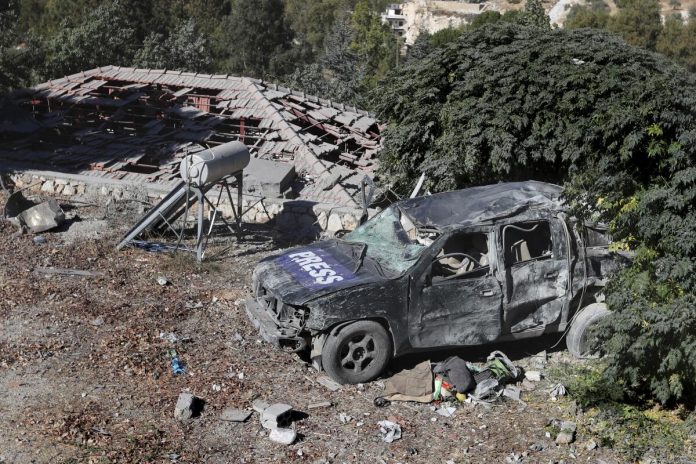
The October 25 strike hit a tourism complex in the Druze-majority south Lebanon town of Hasbaya where more than a dozen journalists working for Lebanese and Arab media outlets were sleeping.

The Israeli army has claimed it targeted Hezbollah fighters and that the strike was “under review”.

HRW said the strike, relatively far from the Israel-Hezbollah war’s main flashpoints, “was most likely a deliberate attack on civilians and an apparent war crime”.

“Information Human Rights Watch reviewed indicates that the Israeli military knew or should have known that journalists were staying in the area and in the targeted building,” the watchdog announced in a statement.

HRW “found no evidence of fighting, military forces, or military activity in the immediate area at the time of the attack”, it added.

The strike killed cameraman Ghassan Najjar and broadcast engineer Mohammad Reda from Beirut-based broadcaster Al-Mayadeen and video journalist Wissam Qassem from Al-Manar television.

HRW said the bomb dropped by Israeli forces was equipped with a United States-produced Joint Direct Attack Munition (JDAM) guidance kit.

The JDAM is “affixed to air-dropped bombs and allows them to be guided to a target by using satellite coordinates”, the statement read.

It noted remnants from the site were consistent with a JDAM kit “assembled and sold by the US company Boeing”.

One remnant “bore a numerical code identifying it as having been manufactured by Woodard, a US company that makes components for guidance systems on munitions”, it added.

The watchdog said it contacted Boeing and Woodard but received no response.

In October last year, Reuters journalist Issam Abdallah was killed by Israeli shellfire while he was covering southern Lebanon, and six other journalists were wounded, including AFP’s Dylan Collins and Christina Assi, who had to have her right leg amputated.

In November last year, Israeli bombardment killed Al-Mayadeen correspondent Farah Omar and cameraman Rabih Maamari, the channel said.

Lebanese rights groups have said five more journalists and photographers working for local media have been killed in Israeli strikes on the country’s south and Beirut’s southern suburbs.

Netanyahu stalled hostage swap deal with Hamas to satisfy Israeli far-right ministers: Report

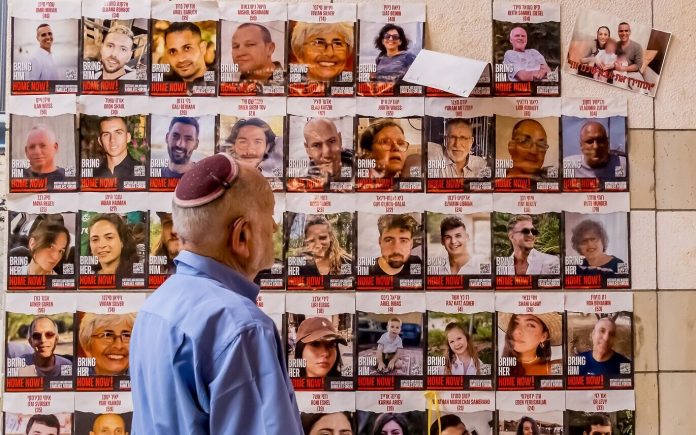
Israel Hostages

According to the report, Hamas was willing to release several Israeli hostages without demanding a full cease-fire in return. The report suggested that Hamas’s willingness at the time was an attempt to link the first and second phases of a US cease-fire proposal which included humanitarian aid.

The report did not provide further details, however, although Hamas has repeatedly stressed that it would only release the Israeli captives if the deal resulted in a complete cessation of Israel’s onslaught on the Gaza Strip.

At the time, the US proposal included three phases: the first involved an immediate cease-fire; the release of women, the elderly and the wounded Israeli hostages; and a prisoner exchange as well as the withdrawal of Israeli forces from populated areas of Gaza. It also included increasing humanitarian aid, rebuilding basic services and facilitating the return of civilians to their homes across Gaza.

The second phase required the release of all remaining hostages and the complete withdrawal of Israeli troops from the besieged enclave, aiming to end the crisis definitively.

The third phase involved the reconstruction of Gaza over several years and the return of Israeli soldiers’ remains.

KAN reported that Netanyahu rejected the proposal, particularly opposing the Israeli withdrawal from Gaza, with areas like the Philadelphi Corridor and Netzarim axis becoming obstacles to the cease-fire process.

An unnamed Israeli source quoted by the broadcaster said that Netanyahu’s refusal to accept the deal was to satisfy Ben-Gvir and Smotrich, who had threatened to leave the government if the deal was signed.

Mediation efforts led by the US, Egypt and Qatar have so far failed to achieve a Gaza cease-fire and prisoner swap deal, but Washington maintains that Israel’s killing of Hamas leader Yahya Sinwar on Oct. 16 may lead to a breakthrough in the talks.

Hamas, however, says the conflict will only end when Israel stops its military campaign in the blockaded enclave, which has killed nearly 44,000 people since October 2023.

The second year of genocide in Gaza has drawn growing international condemnation, with figures and institutions labeling the attacks and blocking of aid deliveries as a deliberate attempt to destroy a population.

On Thursday, the International Criminal Court (ICC) issued arrest warrants for Netanyahu and his former Defense Minister Yoav Gallant for war crimes and crimes against humanity in Gaza.

Israel also faces a genocide case at the International Court of Justice over its brutal war on Gaza.

Former Israeli DM to visit US despite ICC arrest warrant

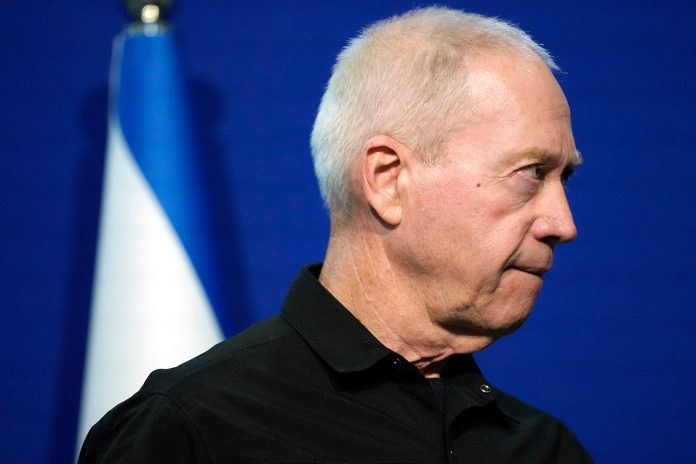
Israel’s Defence Minister Yoav Gallant

Israel’s Army Radio reported that Gallant will hold talks with US security officials during his visit. No date was given for the planned visit.

On Thursday, the ICC issued arrest warrants for Gallant and Prime Minister Benjamin Netanyahu for war crimes and crimes against humanity in Gaza.

According to ICC regulations, it does not conduct trials in absentia, where the defendants must be physically present in order for the case to begin.

As the Hague-based court has no police to enforce its warrants, it depends on its member states to implement its orders.

The White House announced Thursday that it rejects the ICC arrest warrants for Netanyahu and Gallant.

The warrants came as Israel’s genocidal offensive in Gaza recently entered its second year, having already killed over 44,200 Palestinians, most of them women and children.

The Israeli onslaught has displaced almost the entire population of the territory amid an ongoing and deliberate blockade that has led to severe shortages of food, clean water, and medicine, pushing the population to the brink of starvation.

Iranian court closes 2021 case of rapper Tumaj Salehi

Toomaj Salehi

Mostafa Nili, Salehi’s lawyer, shared the update on Monday with Shargh Network, confirming that the court issued a dismissal of prosecution for the remaining charges related to the 2021 unrest and deadly protests.

Nili explained, “As previously announced, the Supreme Court referred Mr. Tumaj Salehi’s case back to Branch 5 of the Revolutionary Court in Isfahan after overturning the initial verdict.”

“Consequently, the branch declared the case fully closed and issued a dismissal of prosecution,” he said.

As for Salehi’s latest case, Nili stated, “Regarding the case of propaganda activities against the government, which was formed during Mr. Salehi’s brief period of freedom last year and resulted in a one-year prison sentence, there is currently a dispute over the start date of his imprisonment and the time he has already served.”

“However, we hope that given the time Mr. Salehi has already served without any leave, his prison term will be concluded soon,” he added.

Tumaj, a rapper known for his outspoken views and criticism of the Iranian government, has faced multiple legal challenges. His 2021 case was linked to his participation in nationwide  protests and deadly riots, where he was charged with inciting unrest and propaganda against the state.

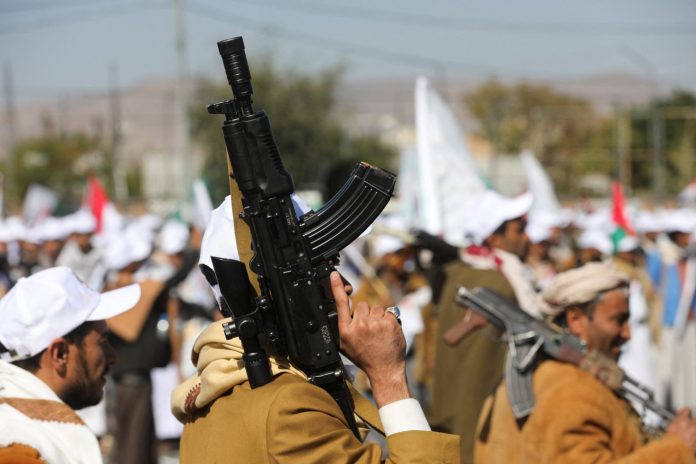
Russia recruits Yemeni mercenaries for Ukraine war: Report

Yemen Houthi

The recruits told the FT they had been promised lucrative jobs, “high salaries”, and even Russian citizenship. However, after arriving in Russia with the help of a Houthi-linked company, they were “forcibly inducted into the Russian army and sent to the front lines in Ukraine”, according to the report.

The FT described the operation as a “shadowy trafficking operation”, stressing the deepening ties between the Kremlin and Yemen’s Iran-backed Houthi militants.

Since the start of its full-scale invasion, Moscow has relied on various methods to enlist migrants and foreign nationals to offset its heavy battlefield losses while avoiding full-scale mobilization.

Reports indicate that Russia has recruited individuals from Nepal, Somalia, India, Cuba, and other nations.

North Korea has also sent an estimated 10,000 troops to Russia, many of whom are stationed in the western Kursk Oblast and engaged in combat. But President Vladimir Putin has sidestepped claims that North Korea has sent soldiers to Russia, insisting that it was up to Moscow how to run its mutual defence clause with Pyongyang.

In October, the Wall Street Journal (WSJ) claimed that Yemen’s Houthi militants have been using Russian satellite data to target ships in the Red Sea with drones and missiles. The targeting information was reportedly provided through the Islamic Revolutionary Guard Corps, enabling the Houthis to expand their strikes.

This collaboration demonstrates how far Putin is willing to go to destabilize the Western political and economic order, the WSJ reported. Analysts suggest that Moscow aims to foment unrest from the Middle East to Asia to distract the United States.

According to the FT, US Special Envoy for Yemen Tim Lenderking confirmed that Russia is “actively pursuing contacts” with the Houthis, including discussions involving weapons transfers. While Lenderking declined to elaborate, he noted that Russian personnel in Sana’a are facilitating this dialogue.

“The kinds of weapons being discussed are very alarming and would enable the Houthis to better target ships in the Red Sea and potentially beyond,” Lenderking told the FT.

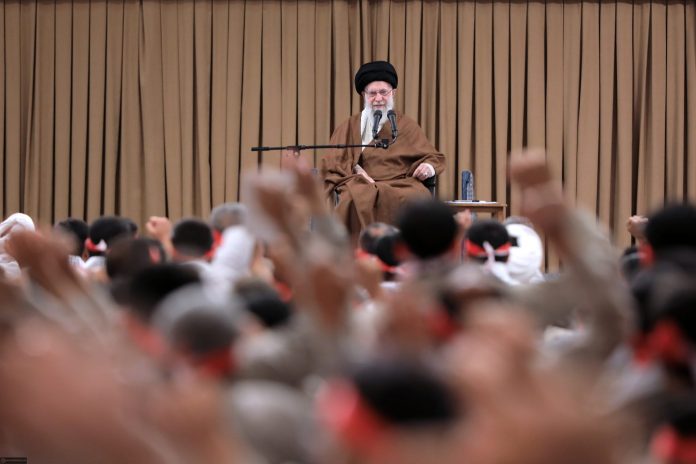
Iran’s Leader says arrest warrant for Israeli PM not enough, death sentence should be issued

Ayatollah Khamenei

Addressing a group of Basij forces from across Iran on Monday, Ayatollah Khamenei said what the Zionists did in Gaza and Lebanon, is not a victory but war crimes for which the death sentences for the criminal heads of the Zionist regime should be issued.

The Supreme Leader also said Iranian Basij forces are confident that one day they will annihilate the Zionist regime.

He pointed out the Basij believe that if they are martyred in the path of God, they will attain the highest spiritual positions in the divine realm. Therefore, they do not feel a sense of deadlock, as the path before them is open.

Ayatollah Khamenei pointed out that the Basij mindset was established years before the 1979 Islamic Revolution in Iran by Imam Khomeini, the founder of the Islamic Republic.

The Leader also praised the Basij as a unique phenomenon and a cultural, social, and military network.

Ayatollah Khamenei reiterated that the Basij is an authentic and enduring phenomenon that has emerged from Iran’s national culture and history.

He added this phenomenon is not ephemeral; it is stable and lasting because it is deeply rooted in the identity, history, and essence of the Iranian people. It represents a form of cultural networking.