Wednesday, December 24, 2025
Home Blog Page 624

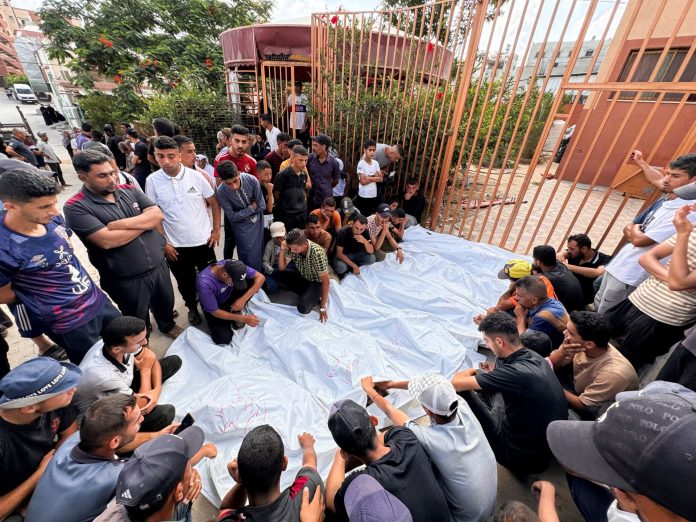
Ministry: Israeli ‘massacres’ wiped out 1,410 Palestinian families in Gaza since October 2023

Gaza War

In new data published on Tuesday, the ministry added that an additional 3,463 families lost all members except one, while 2,287 families were massacres but had more than one survivor.

According to the ministry, the data is accurate as of 1 November 2024.

Israel has launched a genocidal war on the Gaza Strip following a Hamas attack last year, killing more than 44,200 people, most of them women and children, and injuring over 104,600.

The second year of genocide in Gaza has drawn growing international condemnation, with figures and institutions labeling the attacks and blocking of aid deliveries as a deliberate attempt to destroy a population.

On Thursday, the International Criminal Court (ICC) issued arrest warrants for Israeli Prime Minister Benjamin Netanyahu and his former Defense Minister Yoav Gallant for war crimes and crimes against humanity in Gaza.

Israel also faces a genocide case at the International Court of Justice over its brutal war on Gaza.

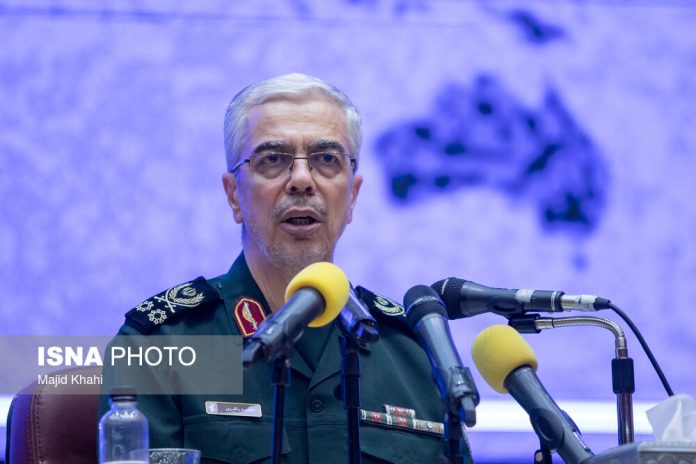
Military chief warns Iran’s response to Israeli attack will exceed its imagination

Mohammad Bagheri

Emphasizing that Iran will not tolerate any violation of its territory, Major General Bagheri stated that the military response to Israel’s actions has already been planned and would be far more significant than Israel anticipates.

He described the recent Israeli aggression, which resulted in the martyrdom of four members of Iran’s air defense forces, as a crossing of the Islamic Republic’s red lines.

He reaffirmed that Iran’s armed forces, guided by ethical values, religious teachings, and international law, would respond decisively and appropriately, with careful planning, at the right time, ensuring a devastating and distinct reply to the aggressors.

Speaking to senior commanders at the General Staff, Bagheri highlighted the significance of two previous operations, “True Promise 1 and 2”, emphasizing that, just as these operations differed in their tactics, execution, and weaponry, Iran’s response to Israel’s recent aggression would also surpass Israeli expectations.

He stated that Iran’s military doctrine has long been based on a powerful, deterrent, and timely response to any threats, and that, as the Supreme Leader has instructed, military commanders and political officials will neither hesitate nor rush in determining the form and timing of this response.

The Iranian general pointed out that the Israeli regime will pay a heavy price for its violation of Iran’s sacred soil.

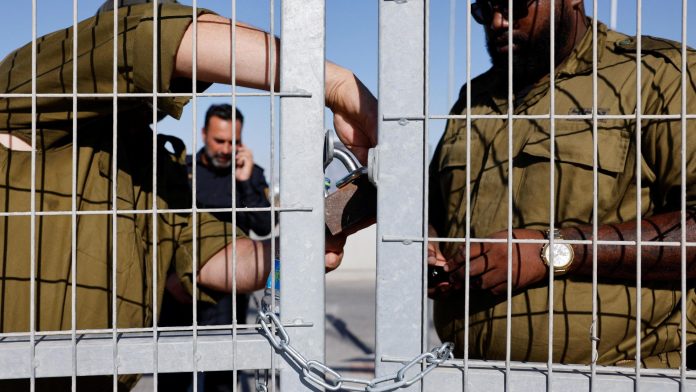
Report: Palestinian prisoners in Israeli jails suffer from scabies outbreak amid dire conditions

Israeli Jail Prison

The findings contained in the report, which cited prison officials, were the result of a petition filed by human rights organisations.

Israel’s Supreme Court is set to discuss the conditions under which Palestinian prisoners are being held amidst accusations that prison administrators are not doing enough to prevent the spread of disease, provide adequate healthcare and deal with overcrowding.

Palestinians held by Israel say that their treatment is deliberate rather than the result of neglect.

One prisoner quoted by the newspaper said: “When we asked for treatment, they told us that we are terrorists and must die.”

Those in Israeli prisons include children like Iyad Idais, who is 15 and is suffering from scabies, as well as ulcers and boils covering his body.

Scabies is caused by mites, which burrow under the skin and lay eggs, which causes rashes, irritation and further complications in those suffering from the illness.

Iyad’s father, Ashraf, told Middle East Eye that his son was arrested last March and released on 14 October.

“He was very thin and covered in bloody, festering blisters. We didn’t recognise him at first, but then we realised that he had returned from the dead,” Ashraf added.

Iyad was held in the children’s section of Megiddo Prison, where in June he became infected with scabies, which he believes was the result of overcrowding and poor sanitation.

The teenager told his family that irritation from scabies infection was so severe that some prisoners were breaking tiles to relieve themselves by scratching.

Even a month after his release, Iyad continues to suffer from the effects of his illness, which has resulted in further psychological trauma.

“My son was cheerful and loved life, but now I see him depressed and isolated and doesn’t want to talk,” his father stated.

According to Haaretz, several meetings with lawyers for prisoners in Nafha and Remon prisons were postponed due to the outbreak of scabies, and many court sessions were postponed.

The Israeli Prisons Administration announced in response to the petition that there are currently a total of 1,704 prisoners infected with scabies.

Rights group Physicians for Human Rights said that prisoners are deprived of washing machines in detention, and that they were not given enough clothes.

Ameena Altaweel, a researcher at the Palestine Center for Prisoner Studies, told MEE that Palestinian human rights institutions have persistently raised the alarm about disease in prisons.

Altaweel said overcrowding was the main reason for the spread of disease, as well as Israeli measures she argues were deliberately employed to inflict suffering, such as not isolating prisoners once infection is detected and not providing treatment.

“There are many prisoners in one room who are forced to sleep on the floor due to overcrowding,” Altaweel continued.

“The infected isolate themselves in the same room in an attempt to contain the disease, but it spreads anyway due to the lack of space,” she added.

Gaza authorities warn of spread of diseases among displaced civilians amid Israeli attacks

Gaza War

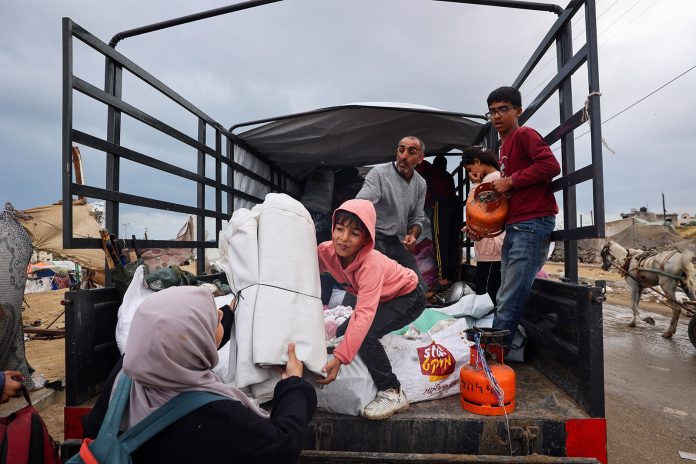
In a statement, the Gaza City Municipality said that the mass exodus of civilians from northern Gaza to the city “has added more pressure on water, sanitation and waste collection services”.

“This has exacerbated the health and environmental crisis that the city is witnessing,” it added.

Tens of thousands of Palestinian civilians have been forced to flee their homes in northern Gaza to the city due to Israel’s ongoing ground offensive in the area.

“The forced displacement has caused unprecedented levels of waste accumulation and a significant increase in demand for water, making the situation extremely difficult,” the municipality said.

It appealed to the international community to urgently intervene to help address the basic needs of displaced civilians in Gaza City “to avoid further deterioration in public health”.

Since Oct. 5, Israel has launched a large-scale ground operation in northern Gaza to allegedly prevent Palestinian resistance group Hamas from regrouping. Palestinians, however, accuse Israel of seeking to occupy the area and forcibly displace its residents.

Since then, no humanitarian aid, including food, medicine, and fuel, was allowed into the area, leaving most of the population there – estimated currently to be 80,000 – on the verge of imminent famine.

More than 2,300 people have since been killed, according to Palestinian health authorities.

The onslaught was the latest episode in a brutal Israeli war on the Gaza Strip that has killed over 44,200 people, mostly women and children, since Oct. 7 last year.

On Thursday, the International Criminal Court (ICC) issued arrest warrants for Israeli Prime Minister Benjamin Netanyahu and his former Defense Minister Yoav Gallant for war crimes and crimes against humanity in Gaza.

Israel also faces a genocide case at the International Court of Justice over its brutal war on Gaza.

Iran says to launch new set of centrifuges amidst constructive engagement

Iran nuclear program

Fatemeh Mohajerani stated in a press conference on Tuesday, “The development of new centrifuges is a natural step, as Iran is committed to the peaceful use of nuclear energy and the protection of its people’s rights.”

Although widely believed to be the case, she did not mention any relevance between the decision to step up nuclear activities and a recent anti-Iran resolution issued by the IAEA’s Board of Governors.

Asked about the possibility of bilateral negotiations with the US to iron out differences, Mohajerani said, “The government will consider any proposal that aligns with Iran’s interests.”

However, she stressed that dialogue requires respect and trust-building, which must be demonstrated through actions, not just words, and criticized Western countries, particularly the US, for their repeated breaches of trust.

Meanwhile, Mohajerani highlighted the government’s efforts to repatriate undocumented Afghan immigrants, saying 751,000 individuals have been returned to their home country since mid-March 2023, with 320,000 of them repatriated during the current administration.

five killed, dozens injured as supporters of Ex-Pakistani PM clash with security forces

Pakistan Violence

Authorities have enforced a security lockdown in the capital for the last three days after Khan called for supporters of his Pakistan Tehreek-e-Insaf (PTI) party to march on parliament for a sit-in demonstration to demand his release.

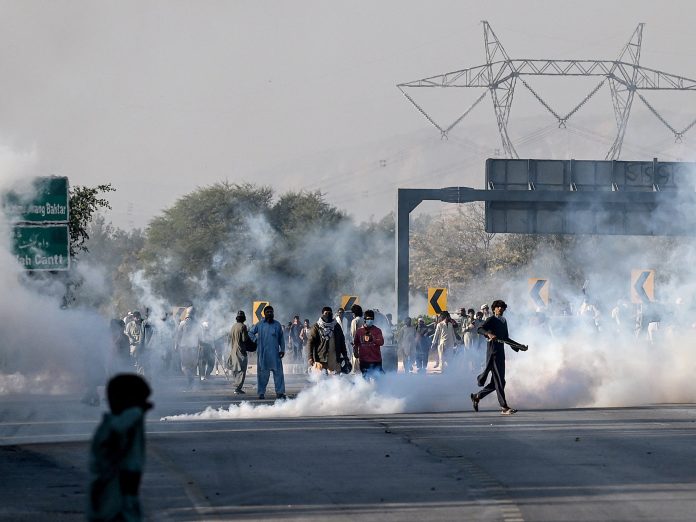
By Tuesday morning, it was reported that thousands of Khan’s supporters had broken through the barriers and entered Islamabad, where they were marching toward the “red zone”, an area in the centre of the capital where the parliament and other diplomatic buildings are located. The area resembled a fortress of barriers, shipping containers and police personnel in riot gear.

The protesters were led by Khan’s wife Bushra Bibi, who was recently released from prison, and Khan’s key aide, Ali Amin Gandapur, who is the chief minister of PTI stronghold of Khyber Pakhtunkhwa province.

Interior minister Mohsin Naqvi had earlier warned that Khan’s supporters would not be allowed to reach the parliament and said the government will be forced to use “extreme” steps if they attempted to, which could include imposing a curfew or deploying army troops.

“We will not let them cross our red lines,” he stated.

Naqvi added the government had offered PTI a field outside Islamabad to hold their protest and that the offer had been taken to Khan in his jail cell, but they were still waiting a response.

PTI’s main demand for the protest is for Khan to be released, alleging that the former prime minister is being held as a political prisoner and that the hundreds of charges against him are trumped up by his political opponents.

Voted out of power by parliament in 2022 after he fell out with Pakistan’s powerful military, Khan faces charges ranging from corruption to instigation of violence, all of which he and his party deny.

The government, led by prime minister Shehbaz Sharif, used a heavy handed response in a bid to prevent Khan’s supporters reaching the capital. Highways into Islamabad were blocked with shipping containers and thousands of police and paramilitary lined the streets, firing rubber bullets and teargas at the protesters. Public transport into the city was also shut down to keep Khan’s supporters away.

One police officer was shot and killed in the clashes while at least 119 others were injured, and 22 police vehicles were torched in clashes just outside Islamabad and elsewhere in the Punjab province, provincial police chief Usman Anwar said. Two officers were in critical condition, he added.

Another four Rangers paramilitary officers were killed on the outskirts of Islamabad, reportedly when they were run over by a car driven by PTI protesters.

Scores of PTI supporters were also injured and Khan’s party accused the government of using excessive violence.

“They are even firing live bullets,” one of Khan’s aides, Shaukat Yousafzai, told Geo News.

Provincial information minister Uzma Bukhari said about 80 of Khan’s supporters had been arrested but PTI claimed that about 5,000 had been picked up by police as they marched to Islamabad from across the country.

Gatherings in Islamabad have been banned, while all schools in the capital and the adjacent city of Rawalpindi were to remain closed on Monday and Tuesday, the authorities announced.

The protest march, which Khan has described as the “final call”, is one of many his party had held to seek his release since he was jailed in August last year. The party’s most recent protest in Islamabad, early in October, turned violent.

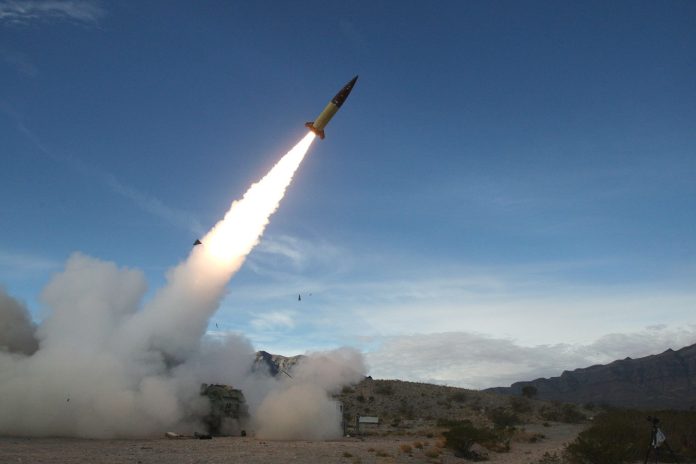
US officially confirms greenlight for strikes deep inside Russia by Ukraine

US Missile

Numerous international officials have spoken about the change in stance over the past week. While US President Joe Biden and his administration remained silent, Kiev fired a volley of ATACMS projectiles at Russia’s Bryansk Region last Monday.

“They are able to use ATACMS to defend themselves in an immediate-need basis,” National Security Council spokesman John Kirby told reporters at a White House briefing on Monday.

“We did change the guidance and gave them guidance that they can use them to strike these particular types of targets,” Kirby said, referring to the Ukrainian attacks “in and around Kursk”.

The US and its allies have provided increasingly powerful weapons systems to Kiev since 2022, while maintaining that it does not make them a party to the Russia-Ukraine conflict.

In September, Russian President Vladimir Putin stated that Ukraine’s use of long-range weapons would change the character of the hostilities and make NATO a direct participant. He explained that weapons such as the ATACMS or the UK-supplied Storm Shadow cannot be deployed by Kiev’s forces without the participation of NATO military personnel.

Moscow’s response came last Thursday, when a brand-new hypersonic ballistic missile, the Oreshnik, was used against the Yuzhmash military-industrial complex in Dnepropetrovsk. Putin called it a “combat test” of the new weapon and said such tests would continue depending on circumstances.

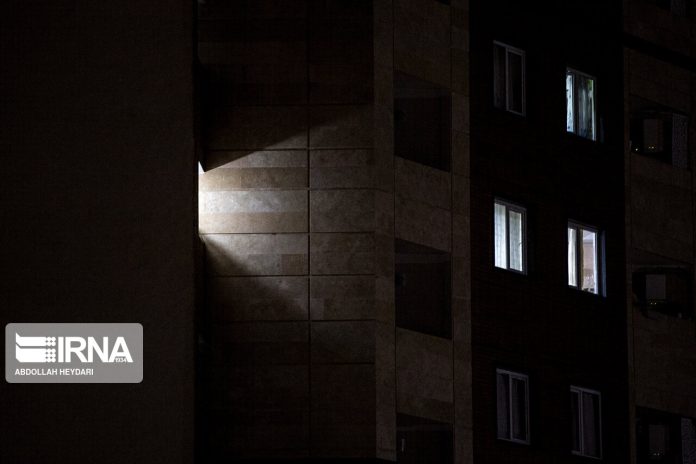
Iran’s energy minister assures no blackouts amid supply boost

Iran blackouts

During a parliamentary session on Tuesday, Aliabadi highlighted the significant differences between electricity production and consumption in Iran compared to global standards.

“Since 1979, while global electricity consumption has increased 3.4 times, in Iran, it has surged by 23 times,” he noted and explained, “This year’s peak electricity demand saw a substantial increase of 8.7%, adding 6,500 megawatts, highlighting the mismatch between demand and the growth in power plant capacity.”

Aliabadi reported to the parliament that in his 90-day tenure, his ministry has taken crucial steps to address this imbalance, completing key projects including comprehensive maintenance of over 40,000 megawatts of power plants and bringing incomplete power plants online.

Additionally, 15 new renewable energy plants have been operational since September, with plans to add another 3,000 megawatts before next year’s peak demand.

Aliabadi also said 1.5 million smart meters have been installed to manage consumption better and identify and curb unauthorized electricity use, particularly by cryptocurrency miners.

He also praised the cooperation with the oil ministry, which has increased gas supplies to power plants, helping alleviate fuel shortages that threatened electricity production.

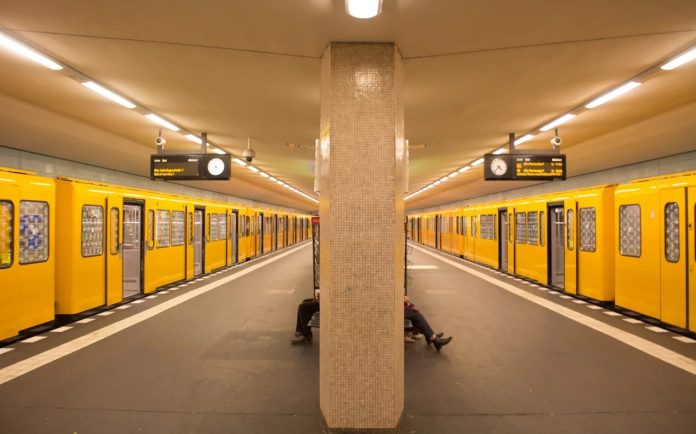
Germany plans to turn public buildings into bomb shelters amid fears of war with Russia

German Bomb Shelter

The Federal Office for Civil Protection is looking at public buildings that could be converted into bunkers and plans to develop an app to help the public find shelters, Bild newspaper reported.

The German public would also be encouraged to set up shelters at home, such as in basements. Germany has been scaling back its public bunker network since 2007, when the authorities decided they were no longer necessary.

But Russia’s invasion of Ukraine, Moscow’s hybrid war campaign on Europe and Vladimir Putin’s threats to attack countries giving armed support to Kyiv have forced a rethink.

There are currently only 579 public shelters in Germany – which has a population of 84.4 million – and they only have enough space for around half a million people.

Ralph Tiesler, the head of the Federal Office for Civil Protection, has warned that it could take an entire generation to build a new bunker network, creating a need for quicker solutions.

Officials have responded by starting to create a list of metro stations, offices and public buildings that could be used as shelters in an emergency.

A civil protection app, which provides a live map of the closest available shelters across Germany, is also being developed, along with a public information campaign on how citizens can protect themselves.

The opposition Christian Democrats (CDU) party has criticised Germany’s preparedness for Russian air attacks and called for the new bunkers to be installed as soon as possible.

“Even though we hope that this situation doesn’t arise, we must be prepared to protect the public in the event of an emergency,” stated Andrea Lindholz, a CDU MP.

“We need to significantly increase the capacity in Germany.”

She cited the example of neighbouring Poland, where all new buildings will require access to shelters from 2026.

According to the news website Notes From Poland, a study last year found the country only has room for 300,000 people in its official bomb shelters. But Poland has already identified “temporary shelters”, such as metro stations and tunnels, which can protect the entire population.

The British research society Subterranea Britannica says there are 276 bunkers across the United Kingdom, which are designed to protect the public in the event of a nuclear attack.

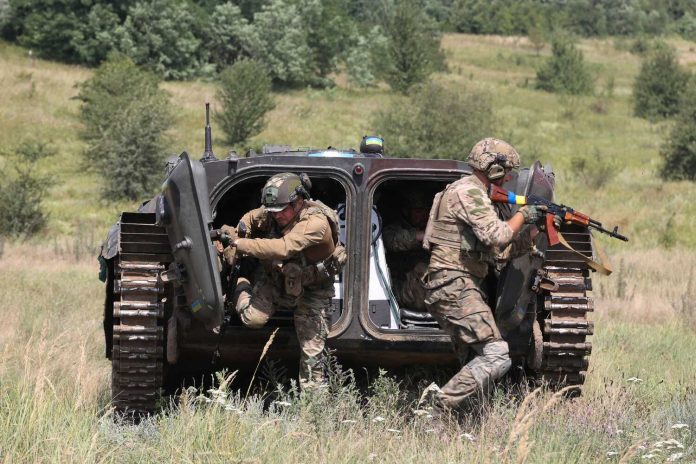
Russia says ‘hotheads’ talking about sending EU forces to Ukraine

Russia Ukraine War

Le Monde newspaper reported on Monday, citing military sources, that debates have been revived about sending Western soldiers to the country – which could come in the form of private defense contractors or regular army troops.

A Le Monde source said that “discussions are underway between the UK and France regarding defense cooperation, particularly with the aim of creating a core of allies in Europe, focused on Ukraine and broader European security”.

The French daily reported that fears US President-elect Donald Trump could pull support once he is back in the White House have led to renewed conversations.

Speaking to reporters the same day, Peskov stated the reports should be viewed with some skepticism.

“We don’t know whether these reports are true, and what exactly they are really talking about,” he continued, adding that “such ideas have previously been voiced by various European capitals.”

“There have also been various counter-arguments. There is no consensus among Europeans on this issue, but there are some hotheads,” he remarked.

The idea that the West should not rule out sending troops to Ukraine has been floated by French President Emmanuel Macron on several occasions this year. He also suggested that this could only happen if the Ukrainian frontline completely collapsed and Kiev made such a request, while framing his statements as part of a “strategic ambiguity” approach needed to keep Russia at bay.

Many of France’s NATO allies, however, disagreed. German Chancellor Olaf Scholz vehemently opposed sending troops to Ukraine and insisted that Berlin would not become a party to the conflict. Then UK Foreign Secretary David Cameron also ruled out the possibility, saying he did not want to provide Moscow with a new “target”. Hungarian Prime Minister Viktor Orban was even more adamant, calling the idea “unthinkable” and warning of World War III.

In May, Peskov referred to Macron’s statements as “very dangerous”, while Russian President Vladimir Putin warned that the deployment of Western forces in Ukraine could result in a “serious conflict in Europe and a global conflict”.

The report that the West was considering sending troops to Ukraine also came after Kiev received a green light from several of its backers to use foreign-made long-range weapons for strikes deep into Russia. Moscow responded by firing a new Oreshnik medium-range hypersonic missile at a Ukrainian defense industrial facility in Dnepropetrovsk.