Thursday, December 25, 2025
Home Blog Page 613

UK says should help put Ukraine ‘in strongest possible position’ for peace negotiations

Russia Ukraine War

Starmer’s remarks come as Europe prepares to step up military support for Ukraine ahead of US President-elect Donald Trump’s inauguration in January. Trump is expected to push Kyiv into negotiations with Moscow.

“So we must continue to back Ukraine and do what it takes to support their self-defense for as long as it takes,” Starmer said at the annual Lord Mayor’s Banquet in London.

“To put Ukraine in the strongest possible position for negotiations so that they can secure a just and lasting peace on their terms that guarantees their security, independence, and right to choose their future.”

Starmer added that support for Ukraine was in the best interest of not only the UK, but all of Europe, arguing that unchecked Russian aggression posed to great a threat to international security.

“The further Russian troops advance, the closer the threat becomes,” he continued.

“The more land they control, the more they control grain prices and energy sources, and the more confident (Russian President Vladimir) Putin becomes.”

With Trump’s return to Washington imminent, both the UK and France are reportedly exploring options to support Ukraine in potential peace talks with Russia. A senior NATO official said on Dec. 2 that one scenario could include deploying UK and French troops to monitor a ceasefire along the contact line.

Starmer backed up his rhetoric on support for Ukraine with shipments of Storm Shadow cruise missiles this fall, Bloomberg reported in late November.

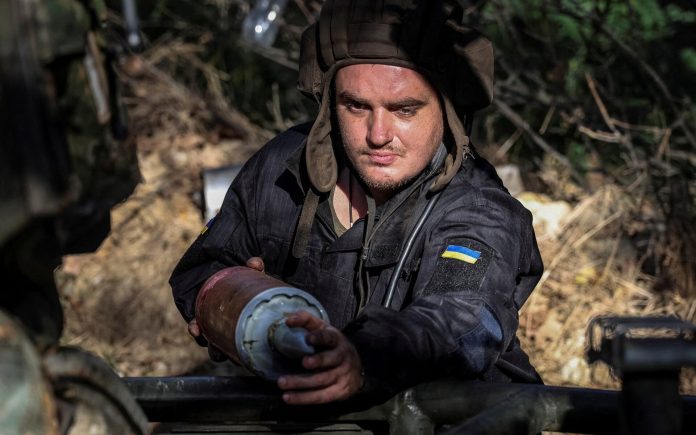
Ukrainian forces recently used the Storm Shadow missiles to strike Russian targets in the western Bryansk region, one day after deploying US-made ATACMS in similar operations.
US, Germany oppose Ukrainian NATO membership: Report

NATO

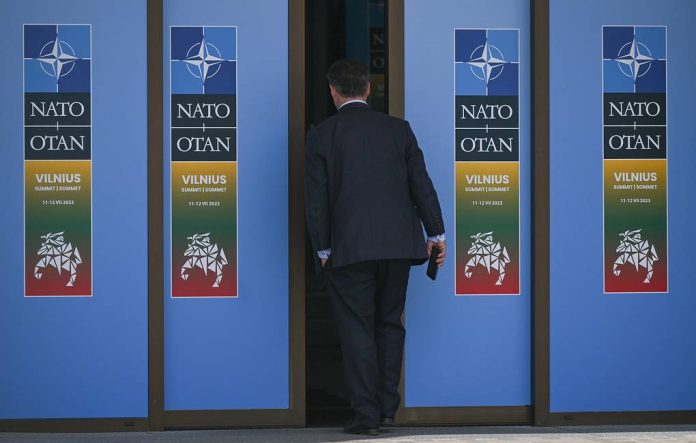
The Ukrainian leader renewed his call on Sunday ahead of a NATO foreign ministers’ meeting in Brussels this week. At a meeting in Kiev with new EU foreign policy chief Kaja Kallas and the new president of the European Council, Antonio Costa, Zelensky insisted an invitation was a “necessary thing for the country’s survival.”

However, according to a diplomat cited by the French daily, the issue is not currently on the table in Brussels. The unnamed official said there were objections from Germany, Hungary, and the US, and that Ukrainian NATO membership “is an option that makes many allies very uneasy.” Other countries, including France and the UK, have been supportive of Kiev’s push to join.

The report pointed out that outgoing US President Joe Biden has refused to authorize an invitation. US President-elect Donald Trump, who has never supported the idea, has pledged to resolve the Ukraine conflict within 24 hours after he returns to the White House.

Trump’s new special envoy to Russia and Ukraine, retired General Keith Kellogg, suggested in a report issued earlier this year that in order to convince Moscow to join peace talks, Biden and other NATO leaders “should offer to put off NATO membership for Ukraine for an extended period in exchange for a comprehensive and verifiable peace deal with security guarantees.”

Ukraine applied to join NATO in September 2022. While some member-states have expressed support, the bloc has repeatedly warned that Ukraine cannot become a member until the conflict with Russia is resolved.

Russian President Vladimir Putin has long cited NATO’s eastward expansion as one of the causes of the Ukraine conflict. Moscow has repeatedly insisted that the country drop its plans to join NATO, commit to neutral status, and cede claims to all five former Ukrainian regions that chose to join Russia before the holding of any peace talks.

Zelensky has insisted in the past that only the “complete withdrawal” of Russian forces from those territories and the restoration of the country’s 1991 borders could serve as a precondition for peace negotiations.

On Monday, however, he told Kyodo News that Kiev could agree to a ceasefire with Moscow if accession to NATO is guaranteed, and maintained this would put the country in “a strong position” in case of future conflict with Moscow.

Iran’s official says nuclear power from Bushehr plant equivalent to 13mn barrels of crude oil in 2023

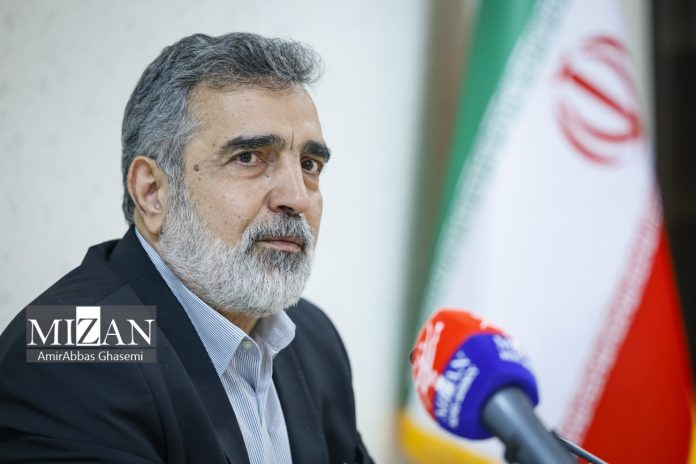
Behrouz Kamalvandi

The spokesperson and deputy for international, legal, and parliamentary affairs of the Atomic Energy Organization of Iran stated that as a result of the Bushehr plant’s production, approximately 7 million tons of various environmental pollutants are prevented from being released annually.

He made these remarks during a meeting with a group of Iranian university professors and various scientific centers in ImTehran.

Kamalvandi elaborated on Iran’s nuclear achievements, stating that the Islamic Republic has been able to produce high-quality heavy water, valued at $1,200 per liter, relying on domestic science and knowledge.

Additionally, he mentioned the successful production of deuterium derivatives, with each milligram valued in the global markets at thousands of dollars.

Kamalvandi also noted that all radiopharmaceuticals produced globally are manufactured with high quality inside Iran, positioning the country among the top producers of certain types of these drugs.

The deputy for international, legal, and parliamentary affairs of the Atomic Energy Organization of Iran reiterated that based on the fatwa (religious decree) of the Supreme Leader and other religious authorities, Iran is not seeking nuclear weapons. However, he stated that the West aims to create noise and controversy, raising minor issues such as alleged sites in line with political objectives.

Kamalvandi emphasized that the International Atomic Energy Agency (IAEA) pursues political interests and agendas in its audits of Iran’s nuclear materials.

At the end of the meeting, the attending university professors and representatives from various scientific centers visited some of Iran’s nuclear research facilities in Tehran.

Iranian ex-envoy: Turkey, Europe backing insurgency in Syria

Syria War

Mohammad Irani, Iran’s former ambassador to several countries, including Jordan, Lebanon and Kuwait, made the remarks in an interview with Jamaran News website published on Wednesday.

He said that the armed militants who are against Syrian President Bashar al-Assad, “exploited the inattentiveness of Damascus and its allies.”

The former envoy, however, added the militants had received the green light from Turkey for their offensive actions, further arguing that Turkey is actively working to weaken the Axis of Resistance in coordination with the United States and Israel.

He also noted that Russia was caught off guard by the new aggression in Syria.

The former envoy added Europe is also welcoming the empowerment of terrorists in Syria at the expense of weakening Russia.

Irani emphasized that Iran should actively engage with Saudi Arabia, Egypt, and the UAE to address the Syrian issue comprehensively.

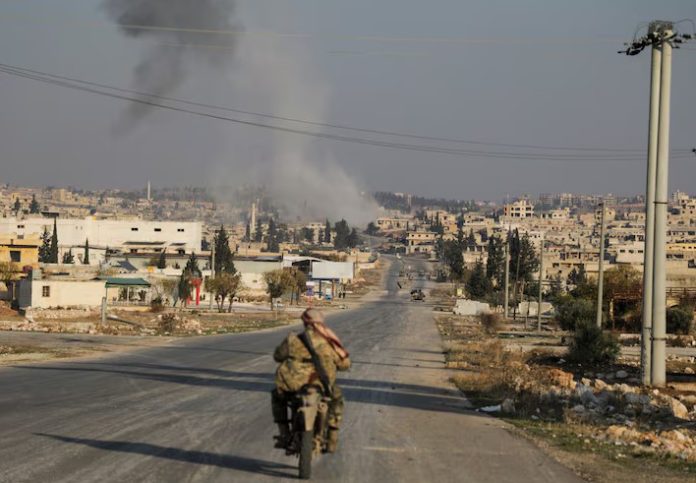
The Syrian army has been fighting with the militants in northern areas of the country, including Aleppo, since last Wednesday.

Syrian allies have declared full support for Damascus to preserve the country’s sovereignty.

NATO head wants less talk of peace process in Ukraine, more military equipment

Russia Ukraine War Weapons Arms

“I would argue, let’s not have all these discussions step by step on what a peace process might look like,” Rutte said at the first full gathering of the group since President-elect Donald Trump’s win.

“Make sure that Ukraine has what it needs to get to a position of strength when those peace talks start, when the Ukrainian government has decided they are ready to do so,” he added.

Trump has long said that he would seek an immediate ceasefire in Ukraine upon returning to the White House.

The contours of a deal remain murky, but Trump’s pick for special envoy to Ukraine and Russia, retired Lt. Gen. Keith Kellogg, has offered fairly detailed proposals for a truce. Controversially, Kellogg has said that further U.S. aid to Ukraine should be conditional on Ukraine’s willingness to participate in peace talks.

Ukrainian leader Volodymyr Zelensky stoked speculation about a peace deal with his recent comments outlining some basic demands and concessions for a ceasefire, mainly that Russia can effectively control areas it currently occupies, in exchange for NATO protections being extended to the rest of Ukraine.

Rutte, a Dutch politician who just entered his second month as the head of NATO, stated he will continue to advocate for efforts that increase Ukraine’s stockpile.

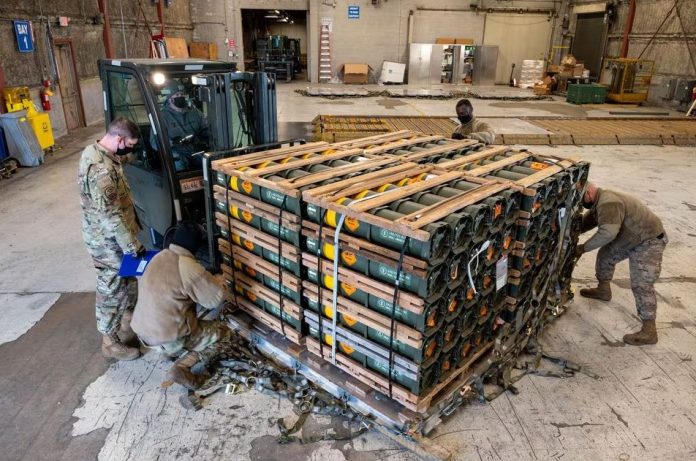
“And that is what we will very much focus on the next two days, how to get more military aid into Ukraine, more missile defense into Ukraine, better coordination of everything we are doing, making sure that the command in Wiesbaden will be up and running as soon as possible, that the pledge is implemented, that is what we need to do.”

Rutte pledged to ensure the sovereign nation’s stability on the battlefield as they head into a “crucial winter” that promises to spur more Russian attacks.

“Putin is not interested in peace. He is pressing on, trying to take more territory, because he thinks he can break Ukraine’s resolve and ours,” Rutte mentioned, adding, “But he is wrong. Ukraine has a right to defend itself, and we have a duty to help them. So we need to continue our steadfast support.”

Rutte previously dealt with Trump as the Dutch prime minister during Trump’s first term. The president-elect and his foreign policy team met with Rutte in late November to discuss a “range of issues” facing the alliance.

Zelensky in his Friday interview with Sky News said Ukraine needs to come under the NATO “umbrella” to end the “hot phase” of the war.

“We need to do it fast. And then on the [occupied] territory of Ukraine, Ukraine can get them back in a diplomatic way,” he added.

Kellogg, Trump’s envoy to the war, has been critical of the arms and money sent abroad to fuel Ukraine’s front lines and has instead proposed a “formal U.S. policy” to end the war rather than funding a “stalemate”.

“It means working in alliances and with partners to promote regional security while requiring alliance members and allies to carry their full weight in defending security in the region,” Kellogg wrote in an America First Policy Institute report.

Iran envoy condemns US-Israel coordinated attempts to destabilize Syria

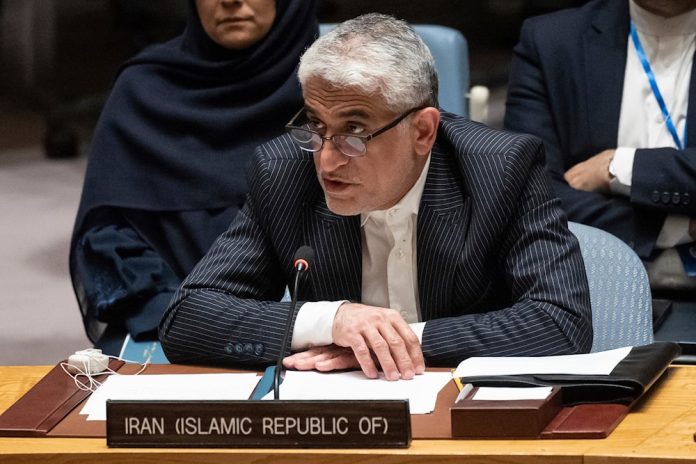
Amir Saeed Iravani

In remarks during a UN Security Council meeting on “The Situation in the Middle East: (Syria)” on Tuesday night, Iravani stated that insecurity and the spread of terrorism and extremism in Syria will not be confined to the borders of this country.

Expressing deep concern of the Islamic Republic of Iran regarding the escalation of the situation in Syria, he added that recent developments, especially the coordinated terrorist operations of Hay’at Tahrir al-Sham, a branch of al-Qaeda also known as Jabhat al-Nusra, pose serious threats against the sovereignty and stability of Syria.

Iravani stated that during these terrorist attacks in Aleppo in Northern Syria, the building of the Iranian consulate was deliberately targeted by terrorist groups, which is a blatant violation of international law.

According to Iravani, the responsibility for this blatant aggression and violation of laws lies with the countries that have armed and supported these terrorist groups and have exacerbated their ongoing violations against international norms.

He added that the scale and complexity of Hay’at Tahrir al-Sham’s operations, including the use of advanced weapons and drones, indicate foreign support for this group, especially from the US, which has turned terrorism into a tool in its foreign policy to advance its political goals.

The Iranian representative further stated that countries responsible for escalating this conflict must be held accountable for their actions and the devastating consequences imposed on the people of Syria.

In another part of his remarks, he warned that this terrorist attack directly undermines the agreements reached in the Astana Process aimed at a political resolution of the Syrian crisis.

Iravani referred to Israeli airstrikes against civilians and infrastructure in Syria in October and November, adding that this indicates a coordinated effort to further destabilize Syria.

He emphasized that Israel’s relentless attacks on border crossings between Syria and Lebanon have disrupted the delivery of vital aid to the region and forced hundreds of thousands to flee.

The Iranian representative noted that these developments serve as a warning for the entire region regarding the resurgence of terrorism and extremism, and their consequences will inevitably threaten a broader area beyond that.

Iravani also emphasized that the Islamic Republic of Iran remains steadfast in supporting the Syrian government and its people in their just and determined fight against terrorism.

Gaza war causes ‘pandemic of disabilities, highest number of child amputees’: UN

Gaza War

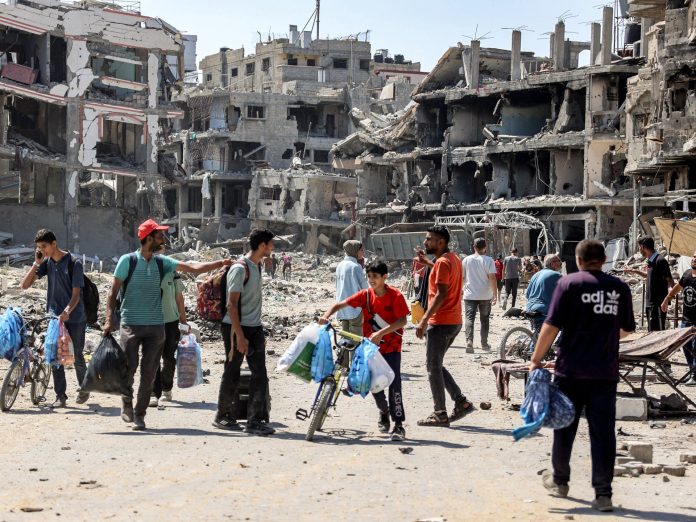
“Before the war, one in five families surveyed had at least one person with disabilities. Nearly half of them included a child with disabilities,” UNRWA Commissioner-General Philippe Lazzarini said in a statement.

“During this war, people needing special care have suffered in silence. Their stories are rarely told.”

The Israeli war, Lazzarini noted, has also caused “an epidemic of traumatic injuries” with no rehabilitation services available.

“Now, Gaza has the highest number of child amputees per capita in the world – many losing limbs and undergoing surgeries without even anesthesia,” he added.

The World Health Organization estimates that “one in four people injured during the war sustained life-changing injuries and will need rehabilitation services, including care for amputations and spinal cords injuries”, the UNRWA chief stated.

Since launching its genocidal war on Gaza following a Hamas attack in October last year, Israel has killed over 44,500 Palestinians – most of them women and children – and injured more than 105,000, according to official figures.

The second year of the genocide in Gaza has drawn widespread international condemnation, with starvation tactics and blocking humanitarian aid deliveries denounced as deliberate attempts to destroy an entire population.

Last month, the International Criminal Court (ICC) issued arrest warrants for Israeli Prime Minister Benjamin Netanyahu and former Defense Minister Yoav Gallant, accusing them of war crimes and crimes against humanity in Gaza.

Israel also faces a genocide case at the International Court of Justice (ICJ) for its actions in Gaza, which have drawn mounting international condemnation.

Iran’s military chief sees surge of terrorism in Syria as part of US-Israeli scheme

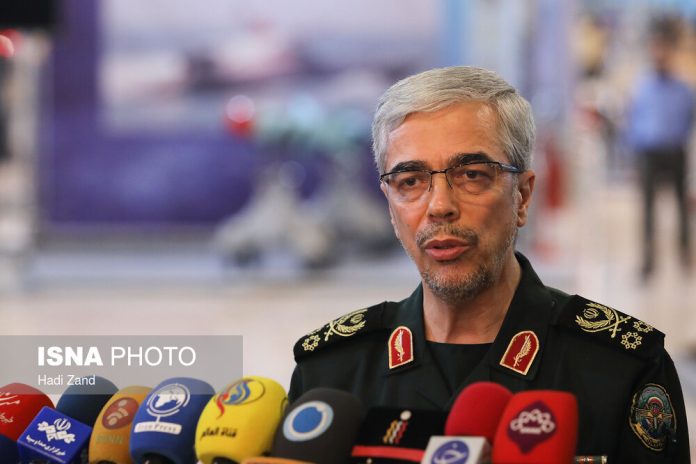
Major General Mohammad Bagheri

Major General Mohammad Baqeri made the remarks in separate phone calls with Russian Defense Minister Andrei Belousov, his Iraqi counterpart Major General Yahya Rasool, as well as his Syrian counterpart General Abdul Karim Mahmoud Ibrahim on Tuesday.

They discussed the latest developments in Syria and the resurgence of terrorism in the Arab country.

General Baqeri said the offensive launched by foreign-sponsored Takfiri terrorists in Syria is the first step of a dangerous scenario for the region, stating that the coincidence of this invasion with the fragile ceasefire in Lebanon indicates a coordinated American-Zionist conspiracy to weaken Syria, its allies, and the Axis of Resistance.

During these talks, the high-ranking officials agreed on firm support for the legitimate Syrian government and decided to take the necessary steps to support the Syrian army in its counteroffensive.

They also called on Syria’s neighboring countries to take the necessary steps to prevent any support for Takfiri terrorist groups.

Foreign-backed terrorists led by the Hay’at Tahrir al-Shams (HTS) Takfiri group launched a large-scale attack in Aleppo and Idlib provinces in the northwest of Syria on November 27, seizing several areas.

Since then, the Syrian government forces have been engaged in fierce clashes with the terrorists to regain ground.

Terror outfits are seeking to hinder the Syrian government’s efforts aimed at consolidating security and stability in the country, which is also under the Israeli regime’s regular aggression.

Israel has been the principal supporter of terrorist groups that oppose the democratically-elected government of President Assad since the foreign-backed militancy erupted in Syria in March 2011.

Russia, alongside Iran, has assisted Syrian forces in battles across the conflict-plagued country, mainly by providing aerial support for ground operations.

US carried out air attack in eastern Syria: Pentagon

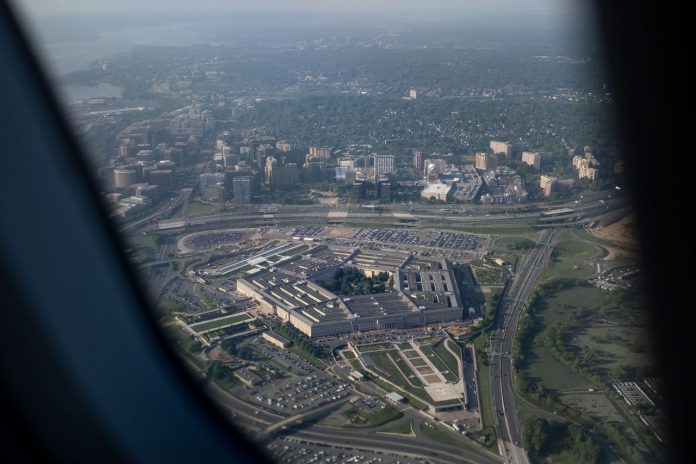
Pentagon

Pentagon spokesman Major General Pat Ryder told reporters that earlier on Tuesday the US military struck weapons systems, including three mobile rocket launchers and a T-64 tank after projectiles were launched toward US troops at Military Support Site (MSS) Euphrates.

“These self defense actions successfully eliminated imminent threats to US personnel and were not linked to any broader activities in northwest Syria by other groups,” Ryder stated.

He added that the military was looking into who launched the attacks against US troops, but said that Iran-backed forces have carried out attacks in the past from the area. Ryder added that Syrian military forces were also in the region.

According to the Pentagon, Washington has 900 troops in Syria and a deep alliance with the SDF, one of the major parties to the conflict.

The Syrian government has repeatedly called on the United Nations Security Council to put an end to aggressions being carried out by the US-led coalition purportedly fighting the Daesh Takfiri terrorist group, saying the aerial assaults are targeting civilian and critical infrastructure in the Arab country.

Damascus has also denounced the continued looting of Syria’s natural resources, crude oil and agricultural products, stating that all foreign occupation forces, including American troops, must pull out of the war-ravaged country immediately and unconditionally.

US puts sanctions on fleet involved in Iran’s oil exports

Iran Oil

The US Department of Treasury said in a statement on Tuesday that it had targeted 35 entities and vessels that transported Iranian petroleum to foreign markets.

The Treasury, which had announced similar sanctions on October 11, added the new sanctions are a response to Iran’s missile attack on Israel in early October and the country’s recent decision to increase its nuclear enrichment capacity.

Iran carried out attacks on Israel on October 1 in response to the regime’s assassination of a senior Palestinian resistance leader in Tehran and its genocidal wars in the Gaza Strip.

Tehran also announced last month that it would expand its nuclear enrichment activity after the United Nations atomic watchdog’s board of governors adopted a resolution against the country.

The new US sanctions targeting Iran’s oil export capacities come amid increasing Iranian oil sales to Asian markets and despite an already-existing regime of US sanctions that impose heavy penalties on buyers of Iranian oil.

Figures published by international tanker tracking services show that Iran has been selling an average of more than 1.5 million barrels per day of oil in the past months.

That has provided the country with the funds it needs to expand its economic infrastructure, including projects it has launched to develop its vast petroleum sector.

The US Treasury claimed in its Tuesday statement that Iran was funneling revenues from its petroleum trade toward the development of its nuclear, ballistic missile, and unmanned aerial vehicle programs.