Thursday, December 25, 2025
Home Blog Page 614

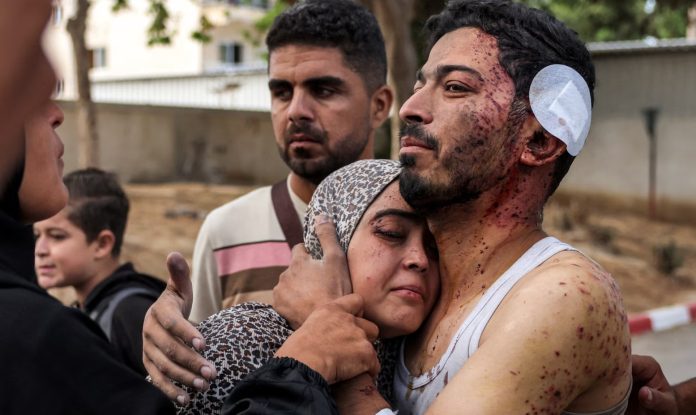
Over 3,700 Palestinians dead or missing in two months of Israeli offensive in northern Gaza: Media office

Gaza War

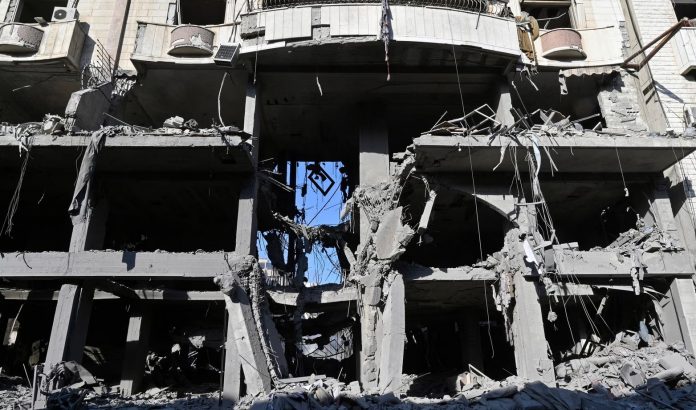
In a statement, the office accused Israeli soldiers of conducting an intensive and multifaceted assault by land, sea, and air targeting northern Gaza. Areas affected include Jabalia Camp, Jabalia Town, Beit Hanoun, Beit Lahia, and surrounding regions.

The statement detailed that of the more than 3,700 reported dead or missing, 2,400 bodies have been buried. Additionally, 10,000 others have been injured, and significant numbers detained.

The ongoing military operations have obstructed the work of civil defense teams and destroyed critical infrastructure, including health facilities, water systems, and roads, exacerbating the humanitarian crisis, the office added.

“North Gaza is a disaster zone in every sense of the word,” the office noted.

The office cited witnesses as reporting that between 500 and 650 bodies have remained in the streets for two months due to Israeli restrictions preventing medical and rescue teams from accessing the areas.

The statement added that stray animals have scavenged the remains, leaving unidentifiable bones scattered in the streets.

The office condemned the “deliberate and systematic targeting of civilians, residential neighborhoods, and shelters”, accusing Israel of committing crimes against humanity under international law.

The statement further said that Israeli forces, with backing from the US, the UK, Germany, and France, continue a “planned campaign of killing, destruction, and forced displacement”.

It noted that the Israeli military has blocked more than 8,000 aid and supply trucks from entering northern Gaza, worsening the dire situation.

The office called on the international community and global organizations to condemn the attacks and fulfill their responsibilities to provide humanitarian, medical, and relief aid to Gaza.

It also held Israel and its allies accountable for the ethnic cleansing and genocide of the Palestinian people, particularly in northern Gaza.

Since early October, Israel has launched a large-scale ground operation in northern Gaza to allegedly prevent Palestinian resistance group Hamas from regrouping.

Palestinians, however, accuse Israel of seeking to occupy the area and forcibly displace its residents.

Since then, no humanitarian aid, including food, medicine, and fuel, has been allowed into the area, leaving most of the population there – currently estimated at 80,000 – on the verge of famine.

Israel has launched a genocidal war on the Gaza Strip following a Hamas attack last October, killing more than 44,400 people, most of them women and children, and injuring over 105,000.

The second year of the genocide in Gaza has drawn growing international condemnation, with officials and institutions labeling the attacks and blocking of aid deliveries as a deliberate attempt to destroy a population.

The International Criminal Court has issued arrest warrants for Israeli Prime Minister Benjamin Netanyahu and former Defense Minister Yoav Gallant for war crimes and crimes against humanity in Gaza.

Israel also faces a genocide case at the International Court of Justice for its deadly war on Gaza.

UN says Israel demolished more than 1,500 West Bank facilities in 2024

West Bank

The UN data, published on 29 November, indicated that 3,637 Palestinians have been displaced as a result of an ongoing Israeli demolition campaign.

The destroyed infrastructure included inhabited residences (700), agricultural infrastructure (398), and livelihood-related assets (205), such as shops and businesses.

According to OCHA’s findings, the most targeted areas in the West Bank were located near the city of Tulkarm, which has faced a greater number of Israeli raids and demolitions over the past year, as well as other West Bank cities.

The Tulkarm refugee camp is at the top of the list of areas with demolished infrastructure (171), with the Nur Shams refugee camp next (118).

The Jenin refugee camp, which has been the focus of an ongoing Israeli military campaign, was also frequently targeted (83), according to the data.

According to the figures, 40,557 Palestinians have been impacted by these demolitions since the start of the year.

Israel has long wielded housing demolitions as a means to displace the occupied West Bank’s Palestinian population.

Since the 7 October Hamas-led attack and Israel’s subsequent war on Gaza, however, the practice has been turbocharged, with Israeli bulldozers tearing down people’s homes on a near-daily basis.

Overseeing the drive is Bezalel Smotrich, Israel’s far-right finance minister, who also wields power over authorities in the West Bank – and is a settler himself.

Israel has long used home demolitions as a form of collective punishment, targeting the houses of Palestinians “suspected of carrying out attacks” on Israelis.

Demolitions are often ordered on the grounds that buildings are constructed without permits, but these are all but impossible for most Palestinians to obtain.

Since October, Palestinians across the West Bank and East Jerusalem are waking up to find bulldozers flanked by soldiers preparing to tear down their homes, with no idea that the demolition was imminent.

In January, a group of UN experts called for action to stop Israel’s “systematic and deliberate” demolition of Palestinian structures.

“Direct attacks on the Palestinian people’s homes, schools, livelihoods and water sources are nothing but Israel’s attempts to curtail the Palestinians’ right to self-determination and to threaten their very existence,” the experts said.

ICC president says threats, sanctions put war crimes tribunal in jeopardy

ICC

Addressing ICC members in The Hague at an annual conference on Monday, ICC President Tomoko Akane stated that the court faced “coercive measures, threats, pressure and acts of sabotage” without naming the United States and Russia.

The court has been facing rebukes from the two countries after issuing arrest warrants for Israeli and Russian officials over wars in Gaza and Ukraine.

“The court is being threatened with draconian economic sanctions by another permanent member of the Security Council as if it was a terrorist organisation,” Akane said in her address.

US politicians have been threatening to impose sanctions on ICC officials after the tribunal issued arrest warrants against Israeli Prime Minister Benjamin Netanyahu and his former Defence Minister Yoav Gallant over suspected war crimes in Gaza.

Last month, US Senator Lindsey Graham, whose Republican Party will be in control of both houses of Congress and the White House starting in January, called the ICC a “dangerous joke” and threatened penalties against the court and any country that cooperates with it.

“To any ally – Canada, Britain, Germany, France – if you try to help the ICC, we’re going to sanction you,” Graham said on Fox News.

In June, the Republican-controlled US House of Representatives passed a bill to sanction the court in response to ICC Prosecutor Karim Khan’s request for the arrest warrants against Israeli officials.

The measure has so far not been considered by the Senate, which at this point is controlled by Democrats.

After the ICC issued arrest warrants for Netanyahu, Gallant and a Hamas leader last month, US Senator Tom Cotton suggested using military force against The Hague-based tribunal.

The US and Israel are not members of the ICC, and they have rejected the court’s investigations of alleged abuses in Gaza and the occupied West Bank.

However, the court has ruled that it has jurisdiction in those areas because the State of Palestine is a signatory to the Rome Statute, which established the tribunal.

“The court has been subjected to attacks seeking to undermine its legitimacy and ability to administer justice and realise international law and fundamental rights – coercive measures, threats, pressure and acts of sabotage,” Akane noted.

She called the efforts “appalling”.

Last week, the court decried the “recent issuance of arrest warrants aimed at threatening the liberty and integrity of two judges”. Russia had issued an arrest warrant for ICC Judge Haykel Ben Mahfoudh in November.

Moscow also previously indicted Khan and other court officials after the ICC issued arrest warrants for President Vladimir Putin and Russian military leaders last year over alleged war crimes committed during Russia’s invasion of Ukraine.

Akane warned on Monday that the fall of the court through these threats would “imply the fall of the rule of law in the international community”.

“Victims would no longer be able to obtain justice. For many of them, a world without the ICC is inconceivable,” the ICC president said.

“We firmly reject any attempt to influence the independence and the impartiality of the court,” she added.

The ICC was established in 2002 to prosecute war crimes, crimes against humanity, genocide and the crime of aggression when member states are unwilling or unable to do so themselves.

Its warrant against the Israeli leaders marked the first time the court issued an order for a staunchly close Western ally.

Iran FM urges intl. community’s effective reaction to resurgence of terror groups in Syria

Abbas Araghchi

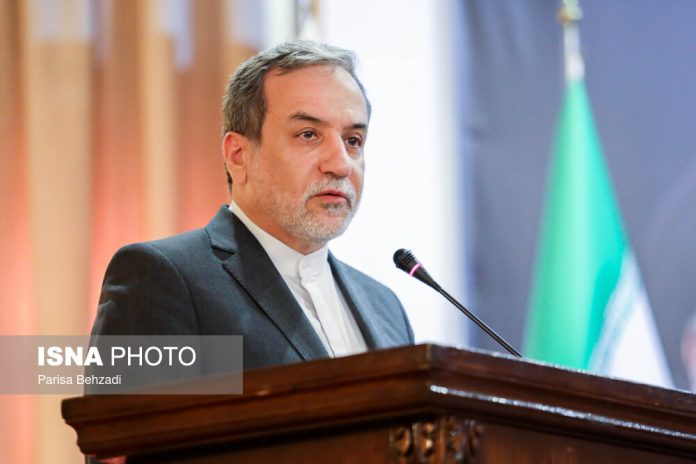
Iran’s northeastern city of Mashhad is hosting the 28th meeting of the Economic Cooperation Organization (ECO) Council of Ministers.

Addressing the event on Tuesday, Araqchi said the world has been witnessing the Israeli regime’s brutal and unbridled atrocities against the people of Gaza for more than a year, while the crimes afflicted the Lebanese people later.

He also condemned the activities of Takfiri terrorist groups in Syria that have flared up in recent days following a ceasefire in Lebanon, saying the terrorists have regrouped with the support provided by the US and the Zionist regime.

Araqchi also stressed the need for “vigilance and coordination” of the regional countries and also for “immediate and effective” reaction by the international community in the face of a resurgence of terrorism in Syria.

Terrorist groups in Syria claim that they are pushing towards the northern city of Hama after taking control of nearby Aleppo in a lightning offensive that started last week.

The attempted southern advance comes on the fifth day of the surprise terrorist offensive as Syrian and Russian forces have launched counterattacks, reportedly pounding opposition-controlled Idlib province and Aleppo with air attacks since Saturday.

Government forces under the control of Syrian President Bashar al-Assad have also been fortifying the northern province of Hama. The Syrian army overnight pushed back opposition fighters in its northern countryside.

Iran says war in Syria in nobody’s favor

Iranian Foreign Minister Seyyed Abbas Araghchi

In a post on his X account on Monday night, Araqchi said he has held “important talks” with Syrian President Bashar al-Assad in Damascus and “straightforward constructive discussion” with Turkish Foreign Minister Hakan Fidan in Ankara.

“My trip from Damascus to Ankara was among rare direct flights,” he added.

“All agreed: NO ONE benefits from another war in Syria. Conflict carries 100%-guaranteed spillover of terrorism to the whole neighborhood,” Araqchi warned.

“As always, Iran stands with Syrian people, Government and Army in their fight against terrorism -and ready to assist and support regional de-escalation through dialogue and diplomacy,” the Iranian foreign minister noted.

Syria has been gripped by foreign-sponsored militancy since March 2011. Damascus has slammed Western states and their regional allies for aiding terrorist groups to wreak havoc in the Arab country.

On November 27, terror outfits, led by the Hay’at Tahrir al-Shams (HTS), launched their largest attack in Syria in years, taking control of parts of Aleppo, and advancing southward on the city of Hama.

However, Syria’s armed forces continue to fight foreign-backed terrorist groups in the northwestern part of the country, inflicting heavy losses on them.

Syria’s state television reported that nearly 1300 terrorists have been killed by the government forces near the cities of Aleppo, Idlib, and Hama as a result of joint military operations by Syrian and Russian forces.

NATO highly unlikely to issue membership invite to Ukraine at upcoming meeting: Report

NATO Ukraine

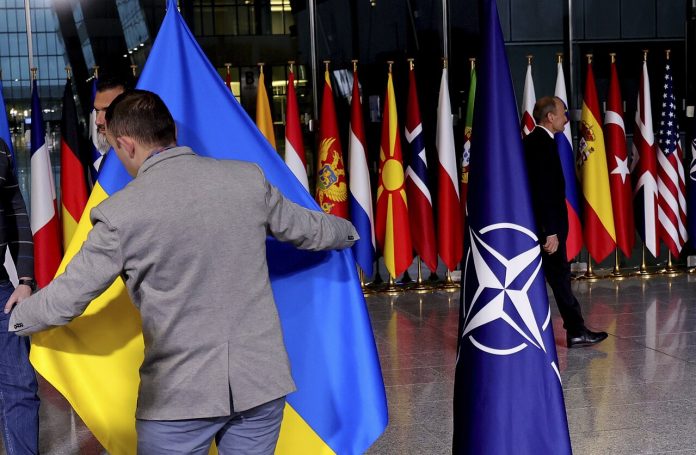
In a letter to his NATO counterparts ahead of the meeting, Ukrainian Foreign Minister Andrii Sybiha said an invitation would remove one of Russia’s main arguments for waging its war – namely, preventing Ukraine from joining the alliance.

But there is no sign of the required consensus among NATO’s 32 members for such a decision at the foreign ministers’ meeting in Brussels, said diplomats, speaking on condition of anonymity.

“It will take weeks and months to get consensus,” a senior NATO diplomat said on Monday, adding, “I don’t see that happening tomorrow, I would be very surprised.”

A senior U.S. official said the meeting would focus on surging support for Ukraine so it was in the strongest possible position next year, “going into possible negotiations”.

“The best way to do that is to surge money, munitions and mobilisation,” added the official, speaking on condition of anonymity.

U.S. Secretary of State Antony Blinken on Monday announced a new weapons package for Ukraine worth $725 million.

Ukraine sees NATO membership as the best guarantee of its future security. Under NATO’s Article 5 mutual defence pact, members agree to treat an attack on one as an attack on all and come to each other’s aid.

Ukrainian President Volodymyr Zelensky suggested on Friday in a Sky News interview that putting territory currently controlled by his government “under the NATO umbrella” would stop the “hot phase” of the war.

His comments came as Ukraine faces a tough winter on the battlefield, with Moscow’s troops advancing in the east and Russian airstrikes targeting the country’s hobbled energy grid.

While NATO has declared Ukraine will join its ranks and that the country’s path to NATO is “irreversible”, it has not issued an invitation or set out a timeline for membership.

Any such decision would depend above all on NATO’s predominant power, the United States, so will soon be a matter for Trump, when he returns as U.S. president next month.

President Joe Biden administration officials are aware that any major move on Ukraine should ideally have the backing of the incoming government to ensure it has a lasting impact.

Ukraine was among the topics of a discussion in recent weeks between U.S. National Security Adviser Jake Sullivan and his successor Mike Waltz but the level of alignment, if any, between the outgoing and incoming administrations remains unclear.

Trump has criticised the scale of U.S. aid for Kyiv and said he will end the war in a day. But he has not set out a detailed plan of how he will tackle the conflict.

Some NATO members, such as Hungary, have openly voiced opposition to Ukraine joining the alliance. But some others have also signalled they do not think the time is right, such as the current U.S. and German governments, according to diplomats.

Russia responds to Trump’s BRICS threat

Kremlin

Peskov’s remarks come after Trump’s statement over the weekend on Truth Social, in which he warned that countries attempting to abandon the dollar in favor of an alternative would face severe economic consequences.

“The dollar is starting to lose its attractiveness as a reserve currency for many nations,” Peskov said, adding that the erosion of its dominance is a “process gaining strength.”

This shift, Peskov noted, is not limited to BRICS nations but is a broader movement worldwide. The use of national currencies in trade is becoming increasingly common, as more states seek alternatives to the dollar, particularly in light of Western sanctions and the weaponization of financial systems. BRICS previously comprised Brazil, Russia, India, China, and South Africa, and was expanded in January to include Egypt, Iran, Ethiopia, and the United Arab Emirates.

Russia has supported the development of the BRICS Bridge platform, designed to facilitate settlements in national currencies, including via digital channels. Foreign Minister Sergey Lavrov has emphasized that such initiatives aim to shield countries from the economic influence of the US and EU.

Peskov also referred to statements by Russian President Vladimir Putin during the BRICS summit in Kazan in October, where he pointed out that while Russia hasn’t “rejected” the dollar, it has had to find alternative financial systems to circumvent Western control over global financial infrastructure.

Israel kills 11 people in Lebanon, Hezbollah retaliates

Lebanon War

The truce agreement was pushed to the brink on Monday as Israel’s air strikes killed two people, and Hezbollah launched an attack against an Israeli military position in retaliation. Israel, then, responded with a series of air raids that killed at least nine people, according to the Lebanese Health Ministry.

Hezbollah said on Monday that it carried out a “preliminary defensive response” to the “repeated violations” of the ceasefire by attacking an Israeli military base in the hills of Kfar Chouba, a disputed area that Lebanon claims as its own.

Hezbollah said Israeli breaches of the truce that went into effect on Wednesday include deadly air raids across Lebanon, shooting at civilians in the south, and flying drones and jets in Lebanese airspace, including over the capital, Beirut.

The group said it launched its “warning” strike because “appeals by the relevant authorities to stop these violations did not succeed”.

But the Hezbollah move did not appear to deter further Israeli assaults. Israel carried out multiple air strikes as a promised a “harsh” response to the Hezbollah attack.

The Lebanese Health Ministry said the raids killed five people in Haris and four in Talloussah in south Lebanon.

The renewed violence highlights the fragility of the ceasefire, which ended a devastating war that killed nearly 4,000 people in Lebanon and saw Hezbollah fire rockets daily at Israel.

Earlier on Monday, Lebanon’s State Security agency said an Israeli rocket killed officer Mahdi Khreis in the southern district of Nabatieh, calling the incident a “blatant violation” of the ceasefire and a dangerous escalation.

Israeli bombardment in neighbouring Marjayoun killed another person, Lebanon’s Health Ministry said. A drone attack in the northeast of the country also injured a Lebanese soldier.

Although the ceasefire calls on all parties to hold their fire, Israel has been conducting near-daily assaults against Lebanon.

Lebanese media outlets have also reported that the Israeli military is using the truce to advance into new neighbourhoods in towns that it had entered during the war.

After months of low-level hostilities, Israel launched an all-out war on Lebanon on September 23 with the stated aim of defeating Hezbollah.

The Lebanese group had been targeting Israeli military bases in northern Israel for months in an effort that it said was aimed at pressuring Israel to end its war on Gaza.

Israel assassinated top Hezbollah military and political leaders early in the war, including the group’s chief Hassan Nasrallah.

It also levelled thousands of buildings and homes across Lebanon with its focus on southern and eastern Lebanon and the Beirut suburbs of Dahiyeh – areas where Hezbollah is popular.

Still, Hezbollah continued to fire rockets at northern and central Israel. The group also said it inflicted heavy losses on invading Israeli troops that crossed into Lebanese territory.

The truce, which was brokered by the United States and France, stipulates that the Israeli military must withdraw from Lebanon within 60 days and Hezbollah must move away from the border with Israel to the north of the Litani River.

During those two months, the Lebanese army would deploy to southern Lebanon to be the only armed force there.

Although Israel said its recent air strikes are meant to “enforce” the truce, the agreement prohibits attacks by all sides.

Iran dismisses European claims of ‘nuclear weapons’ ambitions

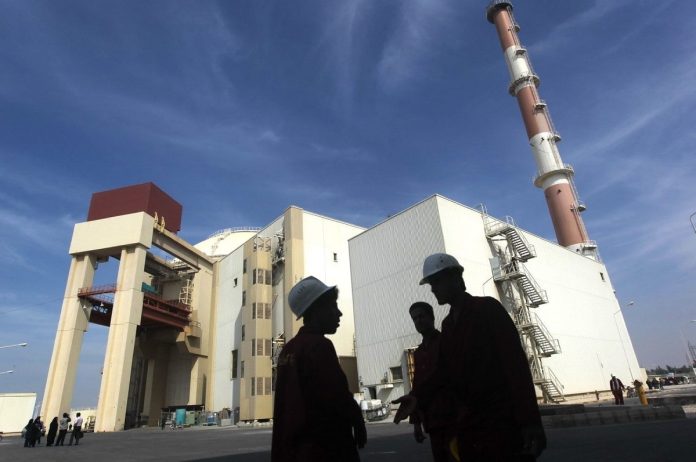
Iran's Bushehr nuclear plant

In a letter to the UN secretary general and the Security Council, Iran reiterated that nuclear weapons have no place in its defense doctrine.

The response follows a joint letter from ambassadors of the European troika, which accused Iran of failing to adhere to its commitments under the Joint Comprehensive Plan of Action (JCPOA) nuclear accord and UNSC violating Resolution 2231.

Iran said the accusations were baseless and politically motivated, ignoring the root causes of the current crisis surrounding its nuclear program.

The mission stated that Iran’s actions are in line with legitimate rights under Sections 26 and 36 of the JCPOA, following the unilateral US withdrawal from the nuclear agreement.

The letter also highlighted that the three countries have violated their commitments by imposing new sanctions, including against Iran’s shipping lines and aviation sector.

Reiterating its transparent cooperation with the International Atomic Energy Agency (IAEA), the letter dismissed recent accusations of Iran’s non-compliance with safeguard obligations and condemned the resolution against it at the recent IAEA Board of Governors meeting as contrary to the facts.

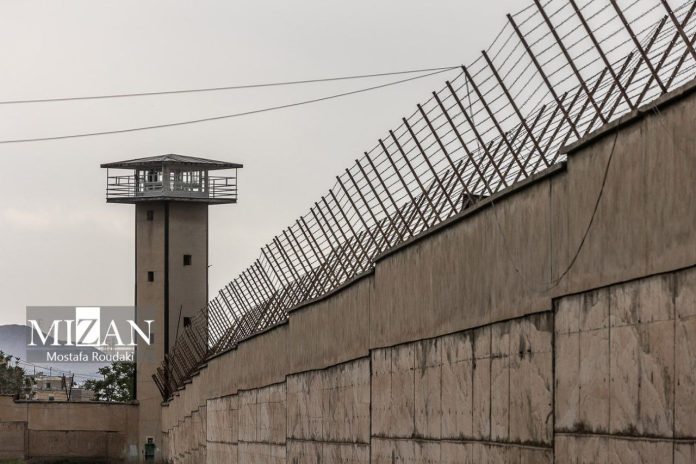
Official: Afghan nationals make up majority of 8,000 foreign prisoners in Iran, ready for repatriation

Iran Prison

Askar Jalalian, in an interview with ISNA news agency, detailed the transfer process, saying a list of 500 prisoners has been prepared and sent to Afghan authorities for identity verification, which will be followed by their transfer upon confirmation.

He stated the crimes committed by Afghan prisoners primarily include drug trafficking, smuggling prohibited goods, theft, and murder, with drug trafficking being the most prevalent offense.

Jalalian further mentioned that, as the head of the Committee for the Transfer of Convicts at the Ministry of Justice, he recently met with Afghan officials.

The transfer of Afghan prisoners is based on a 2006 agreement between Iran and Afghanistan and will continue next year.

The goal is to complete two to three phases of prisoner transfers by the end of the current Iranian year on March 20.