Wednesday, January 14, 2026
Home Blog Page 592

Gaza population drops by 6% amid Israel’s war: Report

Gaza War

Ola Awad, head of the Palestinian Central Bureau of Statistics (PCBS), said the territory’s population drpped to 2.1 million, down by 160,000 people since 2023.

Awad stated nearly 45,500 people have been killed in Israeli attacks and 100,000 others fled the enclave since Oct. 7, 2023.

She added the victims included 17,581 children and 12,048 women, while nearly 107,000 have been injured and around 11,000 others missing.

The PCBS estimated the Palestinian population at around 15 million, including 5.5 living in Gaza and the West Bank, 1.8 million inside Israel and the rest in diaspora worldwide.

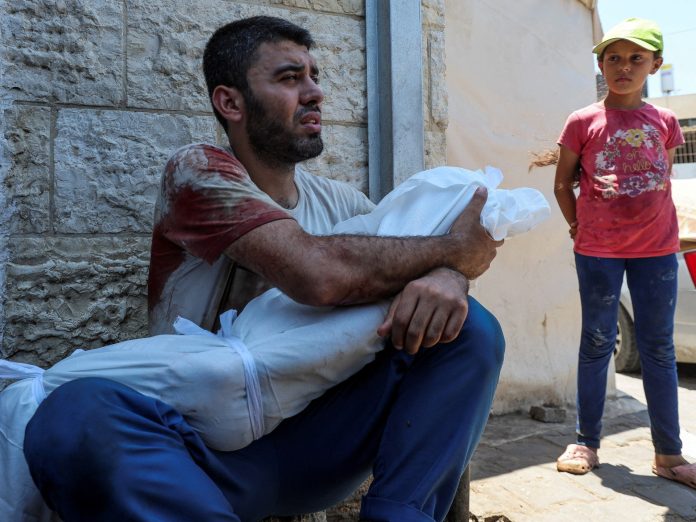
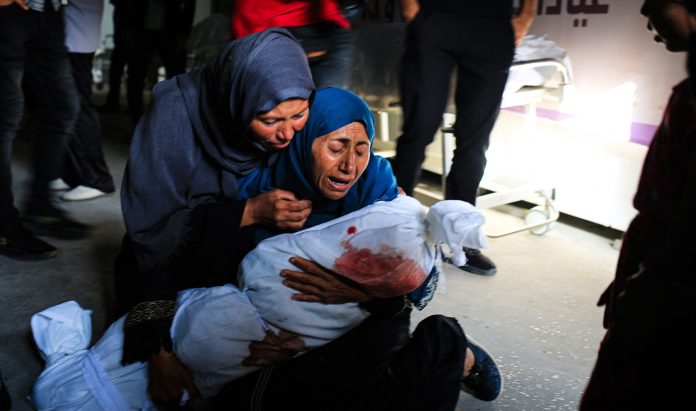
Palestinian media reports also revealed that over 180 children born during Israel’s war on Gaza have been killed amid relentless Israeli bombardment.

Tragically, the total number of infants who lost their lives before reaching their first birthday has now exceeded 800, according to the report.

These harrowing figures stress the catastrophic impact of Israel’s military campaign on Gaza’s most vulnerable, with children bearing the brunt of the violence.

The Israeli army has continued a genocidal war on Gaza since a Hamas attack on Oct. 7, 2023 despite a United Nations Security Council resolution calling for an immediate cease-fire.

In November, the International Criminal Court issued arrest warrants for Israeli Prime Minister Benjamin Netanyahu and his former Defense Minister Yoav Gallant for war crimes and crimes against humanity in Gaza.

Israel also faces a genocide case at the International Court of Justice for its war on the enclave.

The Palestinian Central Bureau of Statistics has also warned that Gaza’s economy has completely collapsed, while the West Bank faces a severe economic downturn in 2024 due to Israel’s relentless assault.

Awad told Wafa that Gaza’s GDP has contracted by a staggering 82 percent, a result of total economic paralysis and skyrocketing unemployment, which has now reached 80 percent.

Meanwhile, the West Bank’s economy has shrunk by over 19 percent, with unemployment soaring to 35 percent.
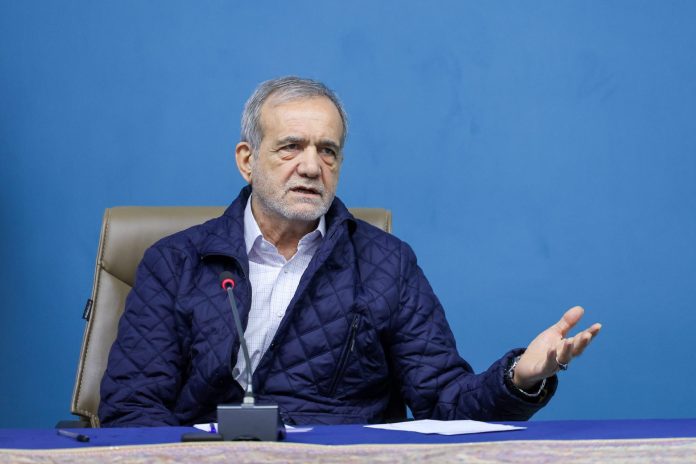

Pres. Pezeshkian stresses collaboration with private sector, FATF review to address economic challenges

He announced plans for the Expediency Council to revisit the FATF bill, aiming to ease economic activities and create a more conducive environment for businesses.

In a meeting with members of the Iranian Chamber of Commerce, the President encouraged business leaders to accompany government delegations during international trips to expand economic ties and unlock new markets.

He reiterated that the presence of private sector representatives is essential to achieve significant economic outcomes.

Highlighting the administration’s commitment to addressing energy imbalances, Pezeshkian noted that daily and weekly sessions are held with academics and private sector leaders to devise solutions.

He acknowledged the inherited challenges but assured the public of the government’s resolve to prevent recurring issues in the future.

The President also addressed the fight against fuel smuggling, emphasizing the government’s determination to curb this issue.

He praised the public’s patience during recent power outages, considering it a key factor in navigating the country’s challenges.

Pezeshkian lauded the cooperation of the judiciary and legislature in tackling economic obstacles, expressing hope for collective progress through unity and determination.

Also in response to the concerns of some members of the Chamber of Commerce about removing obstacles for economic activists, the President announced the decision to reconsider the FATF bill in the Expediency Council.

According to officials, currently, Iran has met 39 out of 41 requirements of the Financial Action Task Force (FATF), with ongoing deliberations over the final sticking points, namely Palermo and CFT conditions.

Iran Judiciary rejects reports actress Taraneh Alidoosti under ‘travel ban’

Taraneh Alidoosti

Dismissing reports circulating on social media, Jahangir clarified during a press conference on Tuesday there is no punishment known in Iran’s legal system as ‘travel ban.’

He further asserted that there is no restriction on Alidoosti’s national ID card, citing the National Registry Organization’s confirmation on the issue.

An Iranian filmmaker claimed on December 27 on social media that Alidoosti was barred from traveling domestically and internationally.

Two days later, Alidoosti’s lawyer, Zahra Minooie, said no official body had accepted responsibility for the travel restriction and mentioned that Alidoosti’s name has been listed as restricted from transactions in all notary offices since 2022.

Alidoosti, a prominent critic of mandatory hijab laws, was arrested in November 2022 for supporting the nationwide protests that later turned deadly, but released a month later on bail.

UN denounces Israeli military operations targeting Gaza hospitals

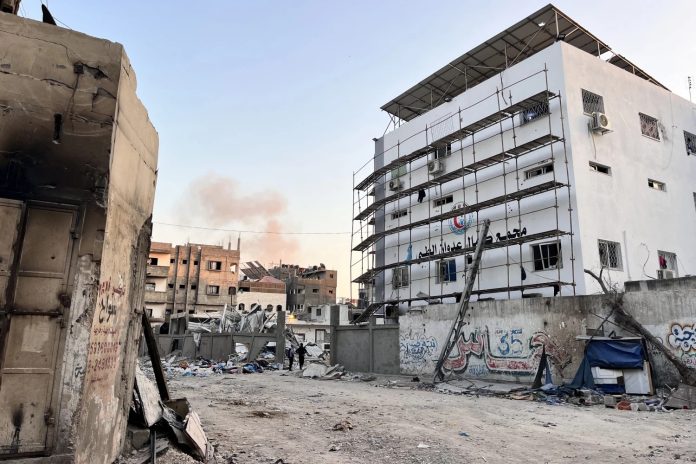
Kamal Adwan hospital

“We’ve been very clear in the fact that we condemn any action that targets civilians and civilian infrastructure, and hospitals. We’ve called repeatedly for them to be respected as this is a safe space area where people go to seek medical assistance,” Florencia Soto Nino, the UN chief’s associate spokesperson, told reporters during a news conference.

Asked about Israel detaining of the director of the Kamal Adwan Hospital Dr. Hussam Abu Safiya in Gaza, Nino said: “Anyone that is innocent civilian who is trying to help others should not be detained.”

“I think we have been talking about this for a long time there is no safe space in Gaza,” she continued, adding that the UN is ready to work with anyone who would support its work to ensure safety of civilians including the director.

Citing UN’s Office for the Coordination of Humanitarian Affairs (OCHA), Nino stated that “10 patients were evacuated from the (Kamal Adwan) hospital, four of whom were arrested by Israeli forces at the checkpoint leaving the area.”

“Seven patients, along with 15 caregivers and health workers, remain at the facility, which is severely damaged and has no ability now to provide medical care. The team reported also that the hospital has no water, electricity or sanitation.”

Stressing that Israel’s restrictions on aid continues, she stated that such impediments “continue to paralyze the humanitarian operation at times when families urgently need food, shelter, clothing, especially as the winter is hitting them hard.”

“OCHA has warned that the very means of people’s survival are being dismantled. This includes an onslaught on healthcare, emergency services and humanitarian access, alongside relentless attacks that kill and maim civilians by the hour,” she added.

The World Health Organisation (WHO) Director-General Tedros Adhanom Ghebreyesus has also warned that Gaza’s health sector is under increasing threat amid ongoing Israeli attacks and raids on hospitals.

Ghebreyesus described hospitals in the enclave as “battlegrounds” in a post on X.

The hospital was stormed by Israeli troops on Friday, following nearly three months of a suffocating blockade and constant air strikes on its departments and the area surrounding them.

All remaining medical staff, patients, and their relatives were taken out of the hospital at gunpoint, forced to strip down to their underwear and transferred to an unknown location.

The Palestinian health ministry announced dozens of doctors were taken to detention centres for interrogation, including the director of the hospital.

The UN High Commissioner for Human Rights has revealed that at least 136 Israeli air strikes targeted 27 hospitals and 12 other medical facilities in Gaza, sparking fears of grave violations of international law.

The UN stated that this relentless assault on healthcare infrastructure appears to follow a disturbing pattern, raising alarm over potential war crimes.

“Intentionally directing attacks against hospitals and civilians is a war crime,” the organisation warned.

Israel has killed more than 45,500 people in Gaza since Oct. 7, 2023 and reduced the enclave to rubble.

In November, the International Criminal Court issued arrest warrants for Israeli Prime Minister Benjamin Netanyahu and his former Defense Minister Yoav Gallant for war crimes and crimes against humanity in Gaza.

Israel also faces a genocide case at the International Court of Justice for its war on the enclave.

Syrian rebels give foreign mercenaries key roles in military: Reuters

Syria War

Two Syrian sources told Reuters that out of a total of almost 50 military roles announced by the defense ministry of the Hayat Tahrir al-Sham (HTS) administration, at least six had gone to foreign nationals.

Pundits believe that the move to assign official roles, including high-ranking ones, to several militants could alarm some foreign governments and Syrian citizens fearful about the intentions of the new rulers in Syria.

Thousands of foreigners joined militant groups in Syria when the crisis began in 2011.

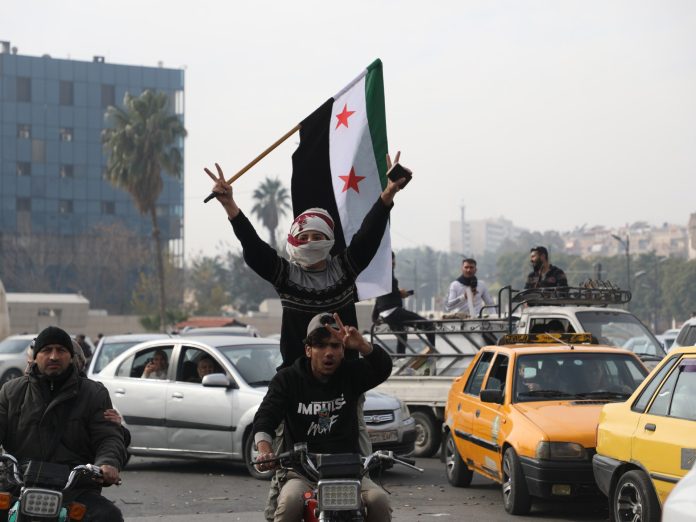
On December 8, militants, led by the HTS, took control of Damascus and declared an end to President Bashar al-Assad’s rule in a surprise offensive that was launched from their stronghold in northwestern Syria, reaching the capital in less than two weeks.

The HTS administration has repeatedly claimed they would respect the rights of all sects and religions in Syria.

The situation, however, remains very fluid and fragile, with a potential risk of further clashes as sectarian sentiments continue to boil over, amid the ongoing political instability and pressures on minority groups.

Revival of global identity in Iranian cinema with Int’l Fajr Film Festival

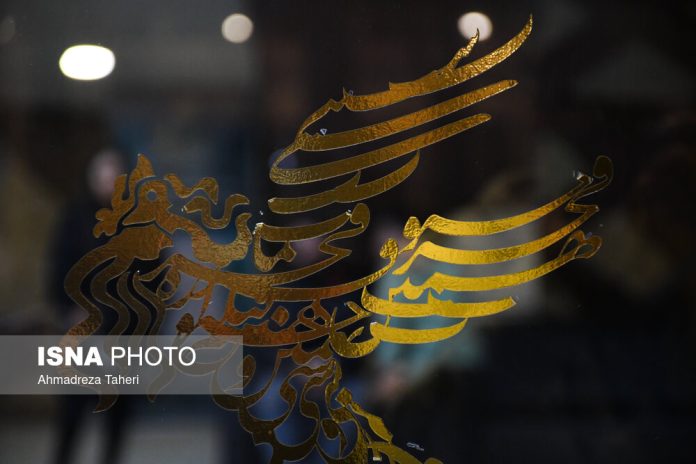
Fajr Film Festival

By 2014, the volume of international film productions had grown significantly, prompting the festival organizers to hold a separate event.

In 2021, after seven years of development and fine-tuning, the International Fajr Film Festival was recognized by the International Federation of Film Producers Associations (FIAPF) as a Class A global festival, joining the ranks of the world’s top 15 competitive film festivals.

The festival is now scheduled to take place in May, strategically positioned between the Cannes and Beijing international film festivals.

Cinema expert Amirhossein Alamolhoda believes that the renewed separation of the national and international sections of the Fajr Film Festival is a commendable move that will significantly enhance the international segment’s identity.

He emphasized the importance of committing to the festival’s global identity to achieve credibility on the international stage.

Alamolhoda highlighted the crucial role of foreign policy and international activities in achieving a globally influential festival, stressing that a country lacking public screenings of foreign films cannot host a festival of international repute.

The presence of distinguished international guests, such as Hollywood director Oliver Stone in 2018 and filmmaker Paul Schrader in 2019, elevated the festival’s prestige and facilitated connections between Iranian filmmakers and regional distributors, Shargh added.

The success, credited to festival secretary Reza Mirkarimi, stands in contrast to the period when the national and international segments were merged, attracting less renowned guests.

As the festival’s organizers work towards improving and solidifying these changes, the separation of the national and international sections is seen as a promising start to a new chapter in Iranian cinema.

In November 2024, following extensive deliberations, it was decided that the national and international sections of the Fajr Film Festival would be held separately, less than three months before the event.

Experts stress tackling FATF issues can lead to economic prosperity in Iran

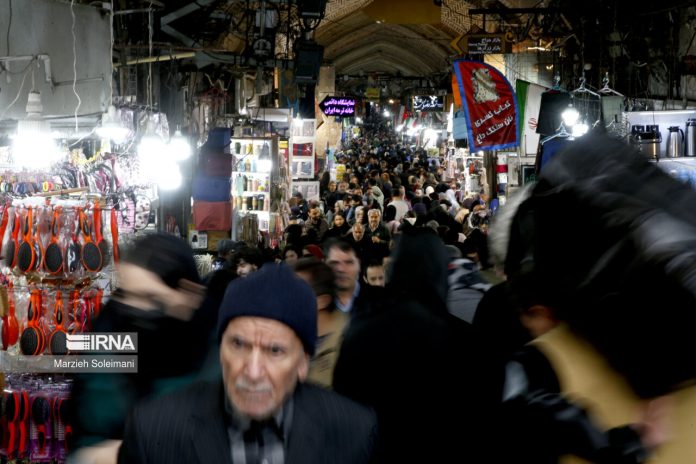
Tehran Grand bazaar

The article emphasizes that while expert opinions are crucial for specialized matters, the practical experiences of the general public should also be considered in addressing everyday issues and governance.

The newspaper suggests that the government should streamline its operations, reduce exorbitant salaries, eliminate unnecessary cultural budgets, prevent fuel smuggling and focus on solving the FATF issue.

Meanwhile, economist Hadi Haghshenas, in an interview with Etemad newspaper, stressed the importance of Iran joining the FATF to facilitate international trade and economic relations.

He noted that even countries allied with Iran have recommended joining the FATF to avoid high costs and economic isolation.

Haghshenas pointed out that the lack of FATF membership has significantly increased the costs of Iran’s economic activities, impacting the public’s financial well-being.

He said Iran needs to join the FATF and similar conventions by passing the remaining two bills in the Expediency Council.

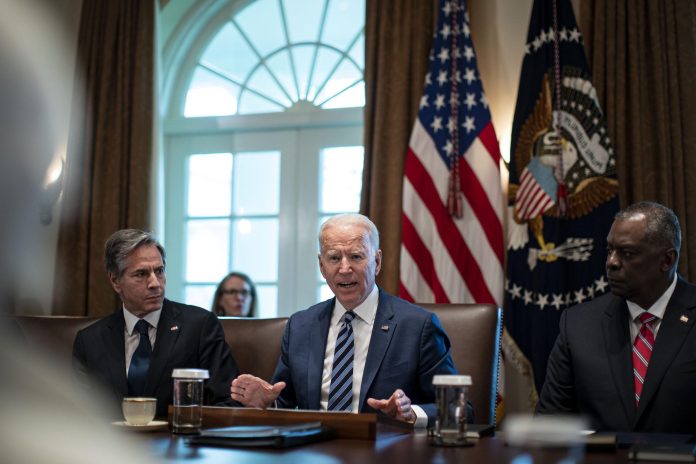
US announces $2.5 billion security assistance package for Ukraine

Biden Blinken Austin

The package includes a $1.25 billion “drawdown package” of military equipment for Ukraine and $1.22 billion under the Ukraine Security Assistance Initiative (USAI), a Pentagon-led program that procures arms for Ukraine through contracts with US defense companies.

According to a White House statement, the resources will provide both immediate and long-term military support, including air defense systems, artillery, and other critical weaponry.

“As I committed earlier this year, the Department of Defense has now allocated all remaining USAI funds appropriated by Congress in the supplemental that I signed in April, and my Administration is fully utilizing the funding appropriated by Congress to support the drawdown of US equipment for Ukraine,” Biden said in the statement.

“I’ve directed my Administration to continue surging as much assistance to Ukraine as quickly as possible — including drawing down older US equipment for Ukraine, rapidly delivering it to the battlefield, and then revitalizing the US defense industrial base to modernize and replenish our stockpiles with new weapons,” he added.

The announcement comes just weeks before Donald Trump takes office next month.

Trump’s support for Ukraine hangs in the air as analysts and politicians try to gauge his plans to bring peace to Ukraine, as he promised to end the war within “24 hours” after reelection without revealing details.

Under the Biden administration, the US provided more than $60 billion in military aid to Ukraine.

According to the statement, the US Department of Defense “is in the process of delivering hundreds of thousands of artillery rounds, thousands of rockets, and hundreds of armored vehicles which will strengthen Ukraine’s hand as it heads into the winter”.

“At my direction, the United States will continue to work relentlessly to strengthen Ukraine’s position in this war over the remainder of my time in office,” Biden stated.

Treasury Secretary Janet Yellen has also said the United States made a $3.4 billion payment in direct budget support to Ukraine.

The payment is the final portion of funds allocated under the bipartisan Ukraine Security Supplemental Appropriations Act 2024, Yellen’s statement read.

“Economic assistance from the United States and our allies is crucial for Ukraine’s ability to defend its sovereignty and achieve a just peace by maintaining the critical government services that underpin its brave fight,” the statement added.

“Our direct budget support continues to be conditioned on reforms related to strengthening law enforcement, improving transparency and efficiency of government institutions, and bolstering anti-corruption rules and procedures.”

Earlier in December, the US announced the disbursement of $20 billion for Ukraine as part of the G7’s $50 billion loan covered by frozen Russian assets’ proceeds.

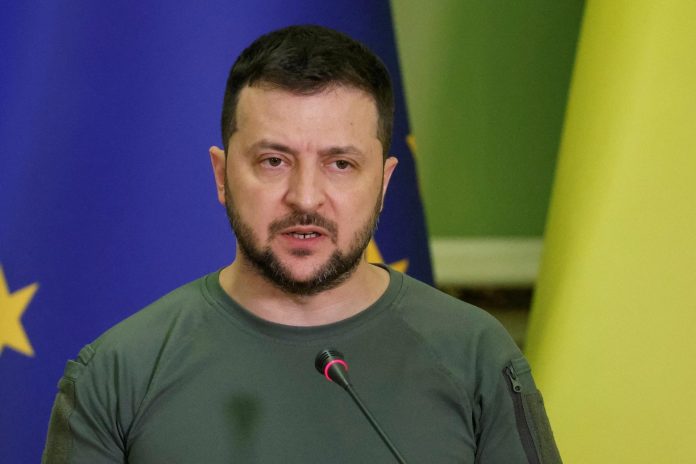
Ukraine can help restore stability, security in Syria after years of ‘Russian interference’: Zelensky

Volodymyr Zelensky

“It would be the right step to restore our diplomatic relations and economic cooperation with Syria,” he said.

“And I really hope that post-Assad Syria will respect international law – something Assad couldn’t and didn’t want to do.”

Zelesnky also expressed gratitude to Foreign Minister Andrii Sybiha, who raised the Ukrainian flag over the Honorary Consulate in Damascus.

“I would also like to thank Ukraine’s Foreign Affairs Ministry team and the Ministry of Agrarian Policy and Food for organizing our delegation’s visit to Damascus – to the new Syria,” Zelensky added.

“I look forward to receiving reports from the ministers on the negotiations and the initial results. This demonstrates Ukraine’s leadership and agility in foreign policy – qualities that can deliver the positive outcomes we need.”

Ukraine has acted swiftly to rebuild relations with Syria following the overthrow of former Syrian President Bashar al-Assad’s government.

Sybiha’s visit marked the first official Ukrainian delegation to Syria in years, signaling an effort to restore diplomatic ties severed in 2022 after Assad aligned with Russia following its full-scale invasion of Ukraine.

During his visit, Sybiha highlighted Ukraine’s readiness to reestablish diplomatic relations, trade, and educational exchanges with Syria, provided the new leadership adheres to international law and respects territorial integrity.

Israel should face ‘consequences’ for undermining international law: UN experts

Gaza War

“As we have repeatedly reminded Israel, international humanitarian law comprises a set of universal and binding rules to protect civilian objects and persons who are not, or are no longer, directly participating in hostilities and limits permissible means and methods of warfare,” the experts said in a statement.

“Rather than abide by these rules, Israel has openly defied international law time and again, inflicting maximum suffering on civilians in the occupied Palestinian territory and beyond,” they added.

Citing Israel’s international law violations, the experts stated Tel Aviv committed “crimes against humanity including murder, torture, sexual violence, and repeated forced displacement amounting to forcible transfer, war crimes encompassing indiscriminate attacks on civilians and civilian objects, including objects indispensable to the survival of the civilian population and educational institutions and cultural heritage, the use of starvation as a weapon of war, the targeting of healthcare workers and health facilities, attacks on humanitarian workers, arbitrary restrictions on access to humanitarian aid, and attacks on journalists, collective punishment and perfidy”.

“Political and judicial actors must consider the totality of such acts against the entire civilian population under Israeli occupation, who are protected persons and do not constitute military objectives under international law,” they continued.

“Acts aimed at their destruction in whole or in part are genocidal.”

Israel “grievously” violated its obligations as an occupying power, the experts said, regarding the situation in northern Gaza.

“Indiscriminate attacks, including on shelters for displaced persons and the Kamal Adwan Hospital and its vicinity, and the intensification of siege conditions on northern Gaza for the last three months run contrary to Israel’s legal duty to ensure the protection of the civilian population,” they added.

“We are disturbed that this siege, coupled with expanding evacuation orders, appears intended to permanently displace the local population as a precursor to Gaza’s annexation in further violation of international law.”

Although Israel’s presence in the occupied Palestinian territory was labeled “unlawful” by the International Court of Justice and International Criminal Court issued arrest warrants for Israel’s Prime Minister Benjamin Netanyahu and former defense minister, the experts said: “Nonetheless, Israel continues to face no real consequences, largely due to protection offered by its allies, who have gone so far as to join Israel in delegitimizing international institutions and besmirching Special Procedures mandate-holders.”

The experts reiterated the urgency of allowing independent and thorough investigations of serious violations of international law.

“Israel’s continued impunity sends a dangerous message suggesting that parties to other conflicts around the world need not comply with their obligations under international humanitarian law,” they noted, adding, “We cannot afford to lose the force of the multilateral system. Israel and its leaders must be held accountable.”