Saturday, December 27, 2025
Home Blog Page 583

Tehran’s air quality in red zone, elementary schools closed

Air Pollution

The Tehran Governor’s Office announced on Monday night that elementary schools, preschools, and kindergartens will be closed on Tuesday and Wednesday.

Forecasts from the Tehran Meteorological Department predict that air pollution will persist in high-traffic urban areas and central as well as southern parts of the province for the next five days.

Local dust, pollutant accumulation, reduced air quality, and occasional visibility reduction are expected.

Several other cities and provinces, including Mashhad, Isfahan, and Alborz, have also moved their schools online for Tuesday.

The Ministry of Health advises the public, especially vulnerable groups, to wear masks.

The Head of the Air Health and Climate Change Group at the Ministry stressed the importance of drinking sufficient water to maintain children’s health, warning some pollutants can even cross the placenta, posing risks to the fetus.

With the air expected to remain stagnant through the week, Friday is anticipated to bring rain, which may help alleviate the pollution in Tehran.

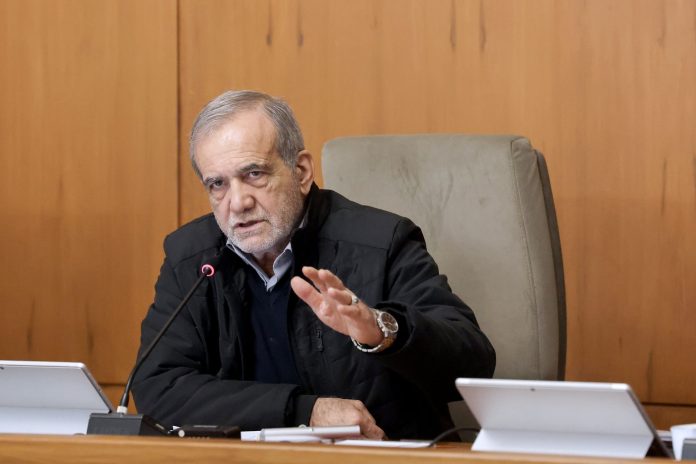
Advisor to Iran’s leader: Undermining President Pezeshkian is what enemies desire

Masoud Pezeshkian

He emphasized that enemies are always trying to reduce public trust in the system by creating discord and division, which negatively impacts the people’s morale.

Mokhber, who is a member of the Expediency Council, stressed that unity and solidarity between the people and officials are key to countering upcoming challenges, adding that everyone should assist the government in overcoming problems and achieving set goals.

Mokhber pointed out the necessity for vigilance among the people and officials against psychological operations and enemy movements, highlighting the importance of forming a united front.

The advisor to Iran’s Leader urged all media and political parties and groups to support the current administration by maintaining cohesion and collaboration.

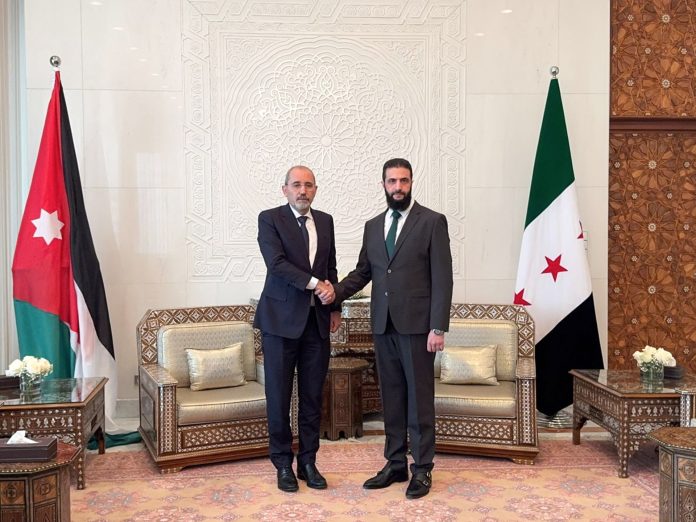
Jordan FM says Amman to stand by “Syrian brothers” after meeting with de facto ruler

“We stand by our Syrian brothers as they start the rebuilding process,” Safadi told Al Jazeera on Monday.

“We want a stable, secure, safe Syria that guarantees the rights of its people through a transitional process consistent with the aspirations of Syrian people,” Safadi added.

Mohammed al-Khulaifi, minister of state at Qatar’s Ministry of Foreign Affairs, also arrived in the Syrian capital, days after Doha opened its embassy in Damascus after 13 years.

Qatar’s Foreign Ministry spokesperson Majed al-Ansari said al-Khulaifi will hold a series of meetings with Syrian officials “to embody Qatar’s firm position in providing all the support to the Syrian people”.

Monday’s high-profile diplomatic visit came a day after Turkiye’s foreign minister promised help with the political transition and rebuilding the war-torn country after meeting the new administration.

Hakan Fidan and al-Sharaa on Sunday stressed the need for unity and stability in Syria, as they called for the lifting of all international sanctions against the war-ravaged country.

Turkiye backed the Syrian opposition fighters led by al-Sharaa’s Hayat Tahrir al-Sham (HTS), which spearheaded the offensive that toppled Bashar al-Assad’s 54-year rule.

Safadi also pointed out that the security and stability of Syria are key to Jordan and the region.

“We share a 375km [230-mile] border with Syria. We want that border to be stable, free from terrorist organisations, free from drugs and weapon smuggling,” he told Al Jazeera.

In recent years, Jordan has tightened border controls in a crackdown on drug and weapon smuggling along its border with Syria. One of the main drugs smuggled is the amphetamine-like stimulant Captagon, for which there is huge demand in the oil-rich Persian Gulf.

“We are working out the challenges and discussed the security of our common border with Mr Sharaa today,” Safadi continued.

The Jordanian foreign minister also condemned Israel’s attacks on Syria in recent days and said, “It’s an encroachment of Syria’s sovereignty.”

“Israel should withdraw from Syrian territory respecting the 1974 agreement,” he added.

Jordan also hosted a summit earlier this month where top Arab, Turkish, EU and US diplomats and called for an inclusive and peaceful transition after more than a decade of war.

Jordan also hosted hundreds of thousands of Syrian refugees, some of whom have returned home after al-Assad’s fall. Jordan claims it hosts some 1.3 million refugees but the United Nations says 680,000 Syrian refugees were registered with it.

Al-Sharaa has hosted Arab, as well as Western diplomats, as he aims for formal diplomatic recognition.

Regional powerhouse Saudi Arabia is expected to send a delegation soon, according to Syria’s ambassador in Riyadh.

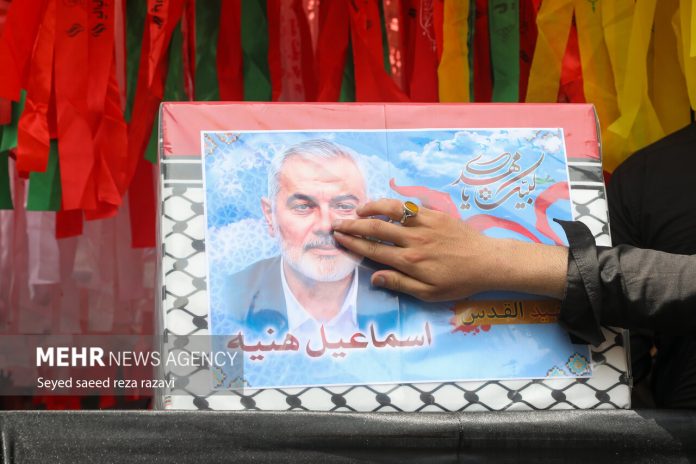
Israel acknowledges it assassinated Hamas chief in Tehran

Speaking on Monday evening at an event honouring Defence Ministry personnel, Katz said Israel had “dealt a severe blow to the axis of evil, and we will also deal a severe blow to the Houthi terrorist organisation in Yemen, which remains the last to stand”.

“When the Houthi terrorist organisation is firing missiles at Israel, I want to convey a clear message to them at the beginning of my remarks: We have defeated Hamas, we have defeated Hezbollah, we have blinded Iran’s defence systems and damaged the production systems, we have toppled the [Bashar al-]Assad regime in Syria,” Katz stated.

Israel will “damage [Houthi] strategic infrastructure, and we will behead their leaders – just as we did to Haniyeh, Sinwar and Nasrallah in Tehran, Gaza and Lebanon – we will do it in [Yemen’s] Hodeidah and Sanaa”, Katz added, referencing the subsequent killings of Hamas’s Gaza chief Yahya Sinwar and Hezbollah leader Seyyed Hassan Nasrallah.

The Houthis have carried out numerous missile attacks on Israel in recent months, including a strike on Tel Aviv on Saturday using what the Houthis described as a hypersonic ballistic missile.

More than a dozen people were lightly injured when the missile evaded Israeli defence systems and struck a public park in Jaffa.

Haniyeh was assassinated on July 31 while visiting Tehran to attend the inauguration of Iranian President Masoud Pezeshkian.

According to Iranian state media reports at the time, the Hamas leader and his bodyguard were killed when an “airborne guided projectile” hit a special residence for military veterans, in which he was staying, in northern Tehran at about 2am local time.

Iranian and Palestinian officials blamed the assassination on Israel, but Israeli officials had until now neither confirmed nor denied its involvement.

Haniyeh’s killing sparked anger across Palestine and stoked fears of a wider regional conflict as Iran’s Supreme Leader Ayatollah Ali Khamenei promised “harsh punishment” in retaliation.

In October, Iran launched a barrage of missiles at several Israeli cities in what it said was retaliation for the killings of the leaders of its allies, Hamas and Hezbollah.

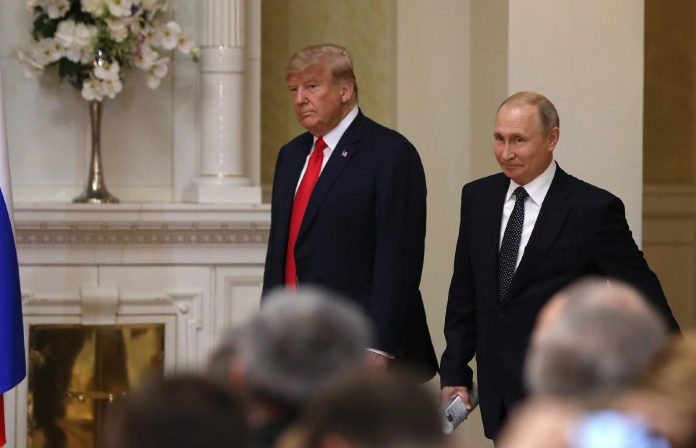
Trump says Putin wants to meet him

Trump Putin

Trump delivered the remarks to conservative activisits at a rally in Phoenix, Arizona, where he celebrated his victory in the Nov. 5 presidential election.

“President Putin said that he wants to meet with me as soon as possible,” Trump claimed.

“So we have to wait for this. But we need to end that horrible, horrible war.”

Trump emphasized the heavy military losses incurred in the war and repeated his claims that Russia would not have launched the full-scale invasion if he had been president in 2022.

“Millions of soldiers have died,” he said, adding, “We’ve got to stop it, it’s ridiculous. That war would have never happened if I was president.”

Earlier this week, Putin said that he was prepared to meet with Trump at “any time” to discuss ending the war in Ukraine.

Trump will take office on Jan 20, 2025. His return to the White House is expected to mark a significant shift in US policy on Ukraine, with a focus on pressuring Kyiv to make a deal with Moscow.

President Volodymyr Zelensky met with Trump on Dec. 7 in Paris, along with French President Emmanuel Macron, in the leaders’ first in-person meeting since the election. Zelensky reported that he praised Trump during the meeting, telling him he was the only one Putin feared.

Following the meeting with Zelensky, Trump said the Ukrainian president appeared ready “to make a deal and stop the madness” and that Putin should do the same after incurring staggering losses in Ukraine.

Trump has nominated retired general Keith Kellogg as his special Ukrainian peace envoy, tasked with leading negotiations between Kyiv and Moscow. Kellogg is expected to visit Ukraine before Trump’s inauguration.

Kellogg previously co-authored a peace plan that would freeze the front line in Ukraine, take NATO’s accession off the table for an extended period, and partially lift sanctions imposed on Russia. The plan would also cut off military aid to Ukraine unless Kyiv agreed to enter negotiations.

The Financial Times reported on Dec. 20 that despite these proposals, Trump intends to continue sending US weapons to Ukraine when he becomes president.

Israel tells Syria its soldiers to remain in occupied territory: Report

Israeli Army

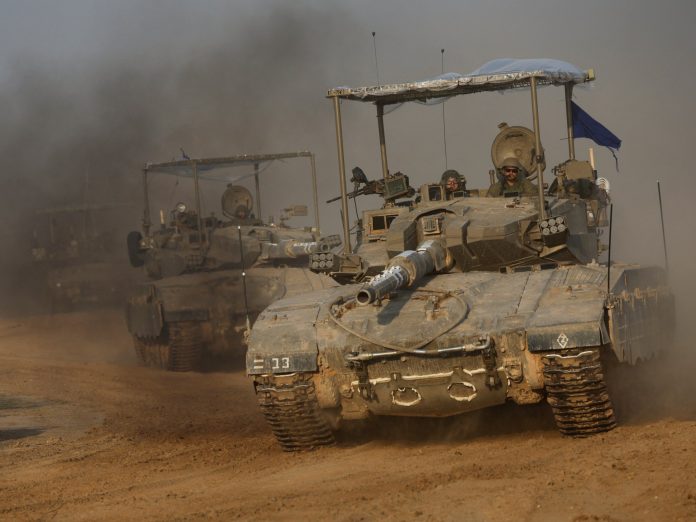
Israeli officials conveyed the message to Syria’s new leadership that their forces will not pull out from the usurped regions, according to the Israeli daily newspaper Yedioth Ahronoth.

“We will not accept any attempt by the militants to reach southern Syria. Once it appears that a responsible party is in office in Syria, we will consider transferring the buffer zone to it. But as long as there is not such a thing, we will continue to worry about our own security,” read the message.

This comes while the leader of Hayat Tahrir al-Sham (HTS) militant group and Syria’s de facto ruler, Abu Mohammad al-Julani, asserted about a week ago that his group “will not engage” in a conflict with Tel Aviv.

Israeli military forces captured the buffer zone in the Golan Heights hours after armed groups took control of the Syrian capital of Damascus on December 8, which was led to the ouster of President Bashar al-Assad’s government.

The Israeli army occupied the Syrian Golan Heights during the 1967 Six-Day War. Israel refused to withdraw its forces or return the territory amid demands by the UN Security Council Resolution 242.

The Tel Aviv regime set up about 30 illegal settlements in the occupied Golan over the past decades, accommodating more than 25,000 settlers.

The buffer zone in the Israeli-occupied Golan region was created by the United Nations after the 1973 Arab-Israeli War. A UN force of about 1,100 troops – the United Nations Disengagement Observer Force (UNDOF) – had patrolled the area since then.

Earlier, Julani stated Syria’s new administration would abide by the terms of the 1974 Disengagement of Forces Agreement with Israel even after the fall of Assad’s government, calling on the international community to ensure that Israel would uphold it.

Israeli troops have now occupied the summit of Jabal al-Shaykh which provides an observation point for areas in Syria and Lebanon. It rises to 9,232 feet (2,814 meters) and is the highest point on the east coast of the Mediterranean Sea.

They have advanced beyond the so-called buffer zone toward Damascus, while the regime’s warplanes have conducted hundreds of aerial assaults on Syria.

Since the downfall of Assad, Israel has wiped out Syrian naval vessels, sea-to-sea missiles, helicopters and planes, including the entire fleet of MiG-29 jets, and stockpiles of ammunition in attacks on at least five air bases.

Advisor to Iran leader: Tehran ready for talks, but won’t give in to pressure over nuclear issue

Kamal Kharazi

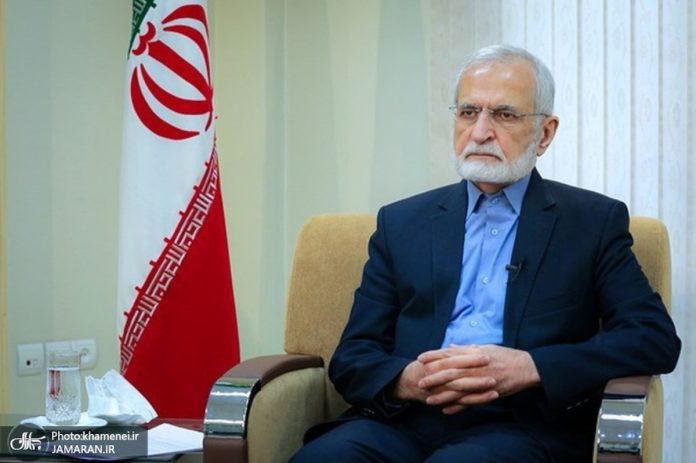
In a recent interview with Al Mayadeen, Kharrazi stated that Iran is ready for dialogue but will stand firm against external pressures.

He emphasized that Tehran would respond to any actions taken against it with reciprocal measures, highlighting that Iran’s future steps will depend on the policies of the new U.S. administration.

US President-elect Donald Trump has reportedly expressed interest in negotiating with Iran over its nuclear program. Trump’s administration previously withdrew from the Iran nuclear deal known as the Joint Comprehensive Plan of Action, JCPOA, in 2018, leading to increased sanctions and heightened tensions between Iran and the US.

The prospect of renewed negotiations under a potential second Trump administration raises questions about whether Tehran and Washington can find common ground on nuclear issues and regional security concerns.

The Iranian government has maintained that it seeks to develop its nuclear technology for peaceful purposes, while the US and its allies reject this, claiming Tehran seeks nuclear weapons.

President Pezeshkian says Tehran committed to complete North-South transit corridor

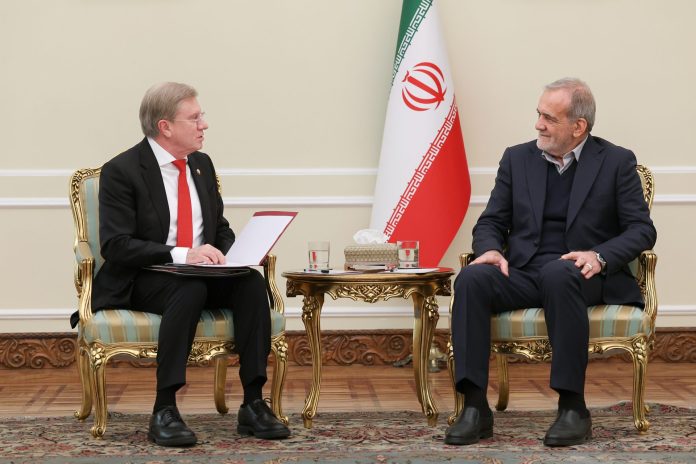
Pezeshkian was speaking during a meeting with Russian Deputy Prime Minister Vitaly Saviev in Tehran on Monday.

He described the Rasht-Astara railway project between Iran and Azerbaijan Republic, as a “top priority” for the Islamic Republic of Iran and reiterated the country’s dedication to fulfilling its obligations under the agreement. The project is a key part of the North-South transit route.

Pezeshkian said that the Iranian government is determined to see this project through, with the Minister of Roads responsible for oversight thereof.

Saviev conveyed greetings from senior Russian officials to Pezeshkian and extended an invitation for the Iranian president to visit Russia.

The Russian official further highlighted his country’s readiness to provide credit lines and collaborate with Azerbaijan on modernizing the North-South corridor.

Saviev spoke about the increasing volume of goods transported between Iran and Russia, saying an initial target has been set to transfer 15 million tons of cargo through the Rasht-Astara railway.

Both sides underscored the importance of expediting this vital project to enhance trade relations, which is seen as crucial for connecting South Asia with Northern Europe through rail links.

Art event brings diplomats, artists and ordinary citizens together inside Iranian Foreign Ministry

Iranian Foreign Ministry

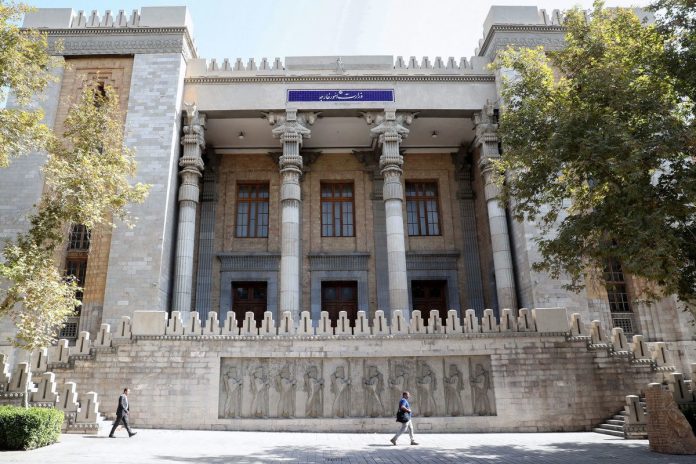
This initiative aims to enhance interaction among artists, diplomats, and the general public in an urban setting.

Organized by the Iranian Contemporary Visual Arts Development Institute, the University of Art, and the Municipality of District 12 o the capital, in collaboration with the Malek Museum and the Foreign Ministry of the Islamic Republic of Iran, the event has fostered a unique atmosphere for participatory art.

From December 19 to 23, 2024, attendees mingled with diplomats and foreign ambassadors, creating a vibrant community experience.

Iranian Foreign Minister Abbas Araghchi visited the event on its last day, highlighting its significance in bridging cultural and diplomatic ties through art.

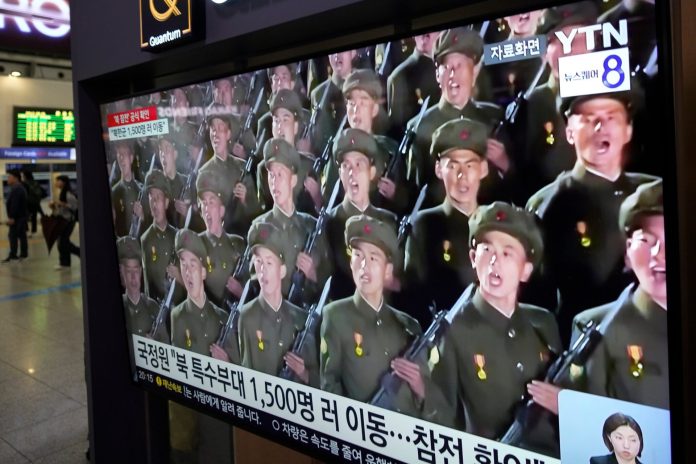
North Korea preparing to ship more forces, drones to Russia: S. Korea

North Korean Soldiers

Thousands of North Korean personnel are already stationed in Russia. In recent days, North Korean soldiers have begun engaging in assault operations alongside Russian forces in Kursk Oblast.

South Korea’s Joint Chiefs of Staff (JCS) believe that Pyongyang is now planning to send additional military support, the Yonhap news agency reported.

“A comprehensive assessment of multiple intelligence shows that North Korea is preparing to rotate or increase the deployment of troops (in Russia), while currently supplying 240 millimeter rocket launchers and 170 millimeter self-propelled artillery,” the JCS announced.

“There are also some signs of (the North) moving to manufacture and supply suicide drones, first unveiled during Kim Jong Un’s on-site inspection in November.”

By deepening military cooperation with Moscow, Pyongyang hopes to gain practical battlefield experience and the ability to modernize its weapons systems, the JCS added.

North Korea has emerged as Russia’s leading ally in the full-scale war against Ukraine, providing not only ballistic missiles and artillery ammunition but also soldiers. The two nations signed a defense treaty in June, requiring either state to render military aid to the other in the event of an attack.

After reporting initial but limited clashes with North Korean troops in the fall, Ukraine in December announced that Russia had begun using North Korean units in ground assaults.

South Korean officials have reported that at least 100 North Korean soldiers have been killed while fighting for Russia against Ukraine. According to lawmaker Lee Sung-kwon, North Korean troops are suffering high casualty rates in part due to their inexperience with drone warfare.

President Volodymyr Zelensky stated that Russia is attempting to hide information about North Korean casualties.