Saturday, January 17, 2026
Home Blog Page 547

IRIB Chief: Iranian State TV Reporter Captured by Zionists in Gaza

Peyman Jebelli, speaking to reporters about the situation of the detained IRIB reporter in Gaza, stated that based on the follow-ups conducted, this reporter has been captured by the Zionist regime and is still imprisoned within the occupied territories, and is not in Gaza now.

Jebelli added that the family of this reporter initially did not wish for the matter to be publicized.

He also pointed to the launch of the Press TV network in Turkish, stating that the opening of this network is a response to the widespread interest of the Muslim people of Turkey in the programs of Iran’s overseas broadcasting networks, especially the English-language Press TV and the Azerbaijani-language networks.

He added that recently Press TV issued a call for collaboration from Turkey, which received a very positive and widespread reception, and in response to this interest, efforts were made to initiate new activities in Turkish.

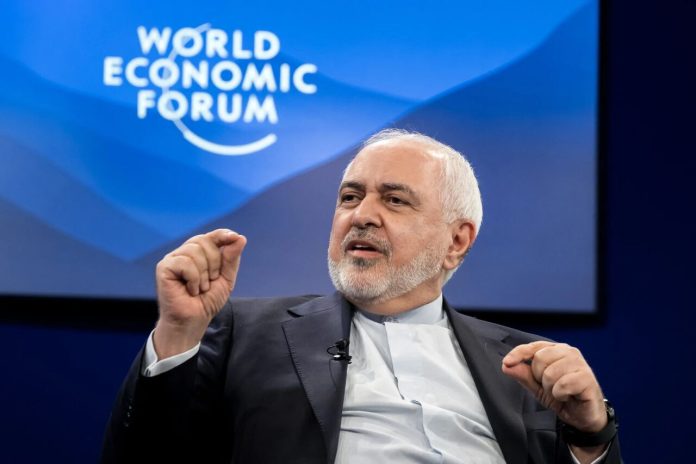
Dozens of Iranian MPs file complaint against VP Zarif over Davos comments

Seraj stated that Zarif’s participation in the summit was “illegal” and that his comments during the speech and interview with CNN host Fareed Zakaria “insulted the revolution forces.”

The complaint, cites four articles of the Islamic Penal Code and demands swift action.

Zarif suggested in the interview that if principlist politician Saeed Jalili had been elected president instead of Masoud Pezeshkian last July, a major war might have been underway in the region.

According to Seraj, Zarif claimed that if President Pezeshkian had not won the election, he would not be able to walk freely in Tehran today, which Seraj considers an insult to the revolution forces.

He added, “Discussing internal matters abroad and portraying the revolution forces as violent only pleases the enemies.”

The letter accuses Zarif of undermining the position of the Islamic Republic and its revolution forces, and calls for legal action based on the cited articles of the Islamic Penal Code.

The MPs argue that Zarif’s actions have damaged the international reputation of the Islamic Republic and demand a decisive and urgent response.

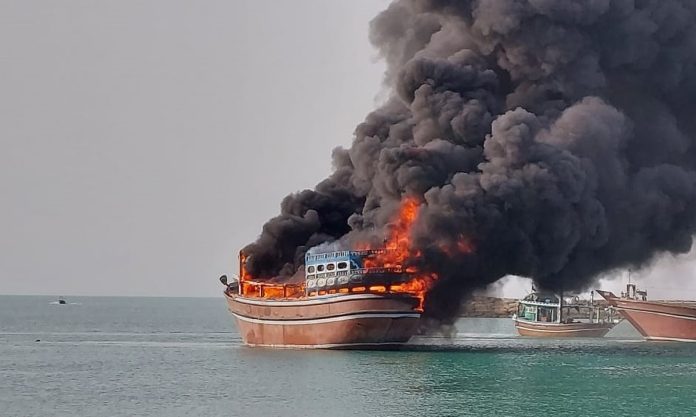
Crew members from a burning cargo dhow in southern Iran rescued

The exact time of the fire is unknown, but the cargo dhow, which was traveling from Dubai, the United Arab Emirates, to Abadan, in southern Iran, caught fire 50 miles off the coast of Bushehr.

The captain and sailors didn’t even have time to launch the lifeboat and had to jump into the water, using a piece of the refrigerator to stay afloat.

Several crew members who jumped into the water suffered burns to their hands, feet, and neck.

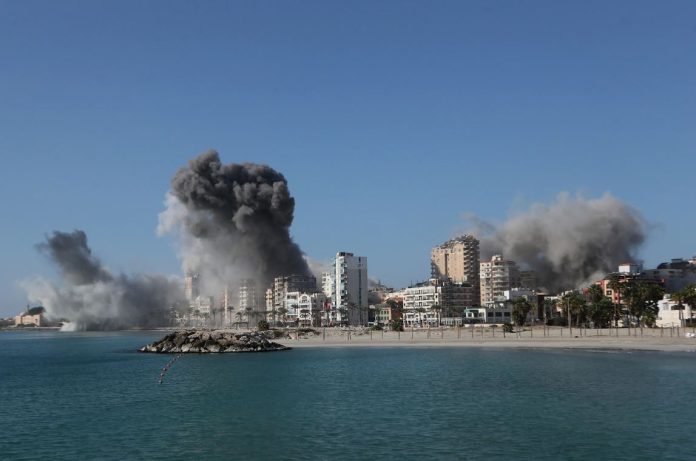
Lebanon says 24 killed, over 130 injured by Israeli fire as withdrawal deadline extended

Lebanon War

A ministry statement added that six women were among the victims, while 134 other people were injured, including 14 women and 12 children.

Tension escalated as the Israeli army remained in the Lebanese territory after a 60-day deadline for its withdrawal from southern Lebanon passed on Sunday under a ceasefire agreement.

The White House announced on Sunday that Israel and Lebanon have agreed to an extension of the deadline for the Israeli withdrawal until Feb. 18.

A fragile cease-fire has been in place since Nov. 27, ending a period of mutual shelling between Israel and the Hezbollah group that began on Oct. 8, 2023, and escalated into a full-scale conflict on Sept. 23 last year.

Lebanese authorities have reported at least 660 Israeli breaches of the ceasefire deal ever since.

Under the ceasefire terms, Israel was required to withdraw its forces south of the Blue Line – a de facto border – in phases, while the Lebanese army was to deploy in southern Lebanon within 60 days.

Data from the Lebanese Health Ministry indicates that since Israel’s onslaught against Lebanon began on Oct. 8, 2023, at least 4,080 people have been killed, including women, children and health workers, while 16,753 have been injured.

UK, Germany reject Trump’s proposal of relocating Gazans in neighboring countries

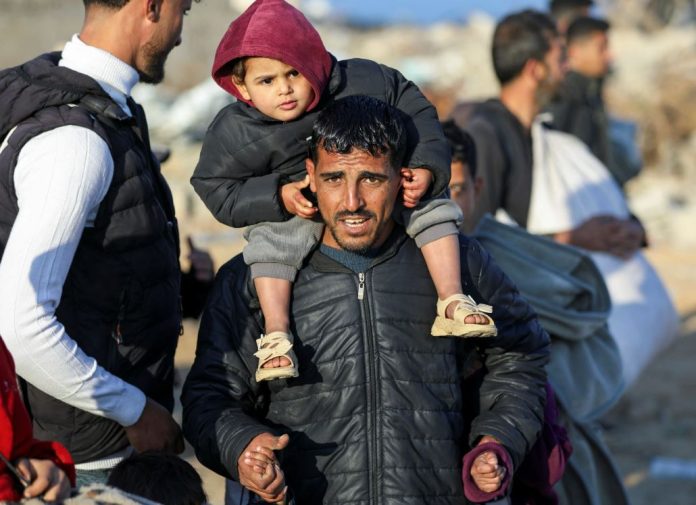
The UK on Monday rebuffed US President Donald Trump’s controversial proposal to relocate Palestinians from Gaza to neighboring countries.

Trump made his controversial proposal on Saturday, suggesting it was time to “clean out” the besieged Gaza Strip and relocate Palestinians to Jordan and Egypt.

“Palestinian civilians should be able to return to and rebuild their homes and their lives,”British Prime Minister Keir Starmer’s spokesperson said in a lobby briefing, dismissing Trump’s stance.

“As the foreign secretary said, for the people of Gaza, so many of whom have lost their lives, homes or loved ones, the last 14 months of conflict have been a living nightmare. That’s why the UK is continually pressed for a resolution to the conflict in Gaza,” she added.

Israel’s genocidal war on the territory since October 2023 has resulted in more than 47,000 Palestinian deaths and left the blockaded enclave devastated.

Germany has also rejected Trump’s proposal to move Palestinians from Gaza to nearby countries.

Speaking at a press briefing in Berlin, Foreign Ministry spokesman Christian Wagner said that Germany maintains its commitment to the international consensus regarding Gaza’s status.

“There is a common position shared by the EU, our Arab partners and the United Nations, which is very clear: The Palestinian population cannot be expelled from Gaza, and Gaza must not be permanently occupied or resettled by Israel,” he stated.

Wagner added that the G7 group of the world’s leading economies, which includes the US, has so far consistently supported this position in multiple joint statements.

“Expulsions from Gaza, and establishing new settlements here is not possible. This is also something that we made very clear during the G7 Foreign Ministers’ Meeting in Tokyo in 2023. In this respect, I think our position is more than clear.”

EU FMs agree to prolong sanctions on Russia

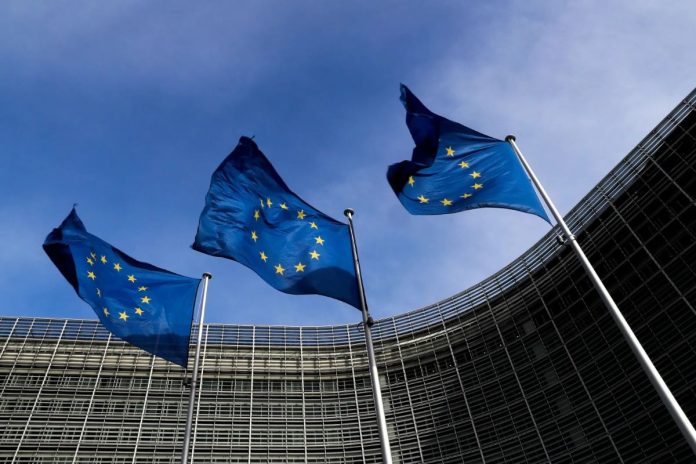
The European Union

EU foreign policy chief Kaja Kallas announced the extension on Monday, claiming that the move will “continue to deprive Moscow of revenues to finance its war.”

The EU has imposed 15 rounds of economic penalties on Russia since the Ukraine conflict escalated in February 2022, freezing Moscow’s sovereign assets and severing almost all trade and energy links between the bloc and Russia. These sanctions must be renewed every six months with the unanimous consent of all 27 EU member states.

Last week, Hungarian Prime Minister Viktor Orban threatened to “pull the handbrake” on this renewal if Kiev does not restart a transit deal with Russian energy firm Gazprom to allow Russian gas to flow into the EU via Ukraine. Hungary relies on Russia for around three-quarters of its natural gas imports, a small percentage of which flowed through the trans-Ukraine pipeline.

Budapest dropped the threat after receiving “the guarantees it has requested concerning the energy security of our country,” Hungarian Foreign Minister Peter Szijjarto wrote in a post on X.

In a statement seen by Reuters, the European Commission said it would “continue discussions with Ukraine on the supply to Europe through the gas pipeline system in Ukraine.”

“The Commission is ready to associate Hungary in the process along with Slovakia,” it added.

Slovak Prime Minister Robert Fico announced earlier this month that he would veto any future EU aid to Kiev over the gas cutoff, warning that he could also halt the supply of electricity to Ukraine and cut humanitarian aid deliveries. Slovakia depends on Russian gas to meet about 60% of its demand.

Orban and Fico have repeatedly argued that Ukraine cannot defeat Russia on the battlefield, and that Western military aid to Kiev will only prolong the bloodshed. Both leaders have also insisted that the EU’s sanctions hurt European economies more than they hurt Russia’s, and Orban has repeatedly threatened to block the implementation of these sanctions in exchange for significant carve-outs from Brussels, including a partial exemption from the EU’s bloc-wide oil embargo and a guarantee that its nuclear sector won’t be affected by future sanctions.

Saudi Arabia opens property investments in two holy cities to foreigners

Hajj

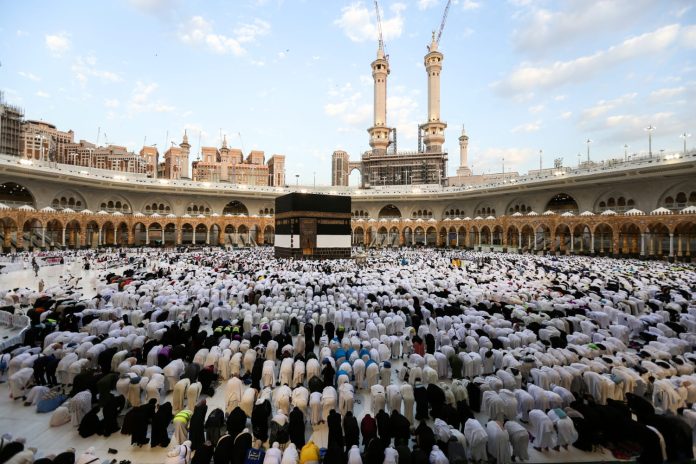
According to a statement from the Capital Market Authority, from Monday foreigners will be allowed to purchase shares and convertible debt instruments in firms owning private or public real estate in the holy cities.

This is despite a continuing ban on non-Muslims directly owning property in the cities, which are coveted by many who see them as reliable, stable locations for investment.

Despite a vast global and domestic investment campaign, Saudi Arabia is still dependent on oil revenue to fund its ongoing economic makeover.

The International Monetary Fund has estimated that Saudi Arabia needs oil prices at $96 per barrel to balance its budget, roughly $20 more than where prices currently stand.

The kingdom has also reoriented its spending from overseas into its domestic market.

One indicator of this was that in 2024, the UAE’s Mubadala surpassed Saudi Arabia’s Public Investment Fund (PIF) as the world’s most active sovereign wealth fund.

The PIF’s spending dropping by 37 percent to $19.9bn in 2024 from $31.6bn the previous year, according to a report by the research consultancy firm, Global SWF.

Although Saudi Arabia has seen little direct foreign investment in its projects, international investors have shown a healthy appetite for Saudi debt.

According to Bloomberg, “investor bids for the $12bn bond exceeded $30bn”, and Saudi Arabia sold $17bn of international bonds in 2024, making it second only to Romania amongst emerging markets.

Iran repatriates over half a million undocumented Afghan nationals

Afghan Refugees

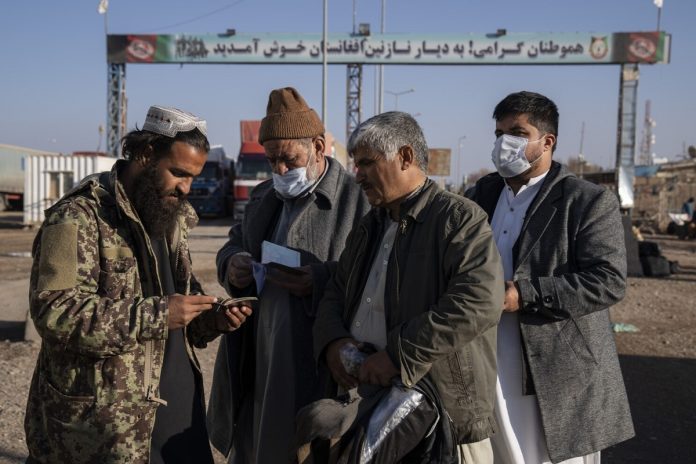
Head of the security affairs of the governor’s office of Khorasan Razavi Province Amir Shamaghdari said the number of border trespassers from Afghanistan has decreased substantially this year.

Shamaghdari however added that there has been an increase in legal entries through the official Dowqarun border, with a high demand for visas from the Afghan side.

He noted that the employment of undocumented foreigners is prohibited in Iran and that the current priority is to identify, organize, and resolve the status of these individuals rather than their immediate deportation.

Shamaghdari noted that the use of advanced technologies for monitoring foreign nationals from entry to settlement and employment is also being implemented.

Unofficial sources say there are ten million Afghan refugees in Iran fleeing conflict and other issues in their country over the decades.

Despite repeated requests for assistance from the UN, Iran has not received substantial support in managing this influx.

US hasn’t won a war in 40 years:  J.D. Vance

US Army

In an interview with CBS News on Sunday, Vance defended the confirmation of Pete Hegseth as the new secretary of defense, which narrowly passed the Senate with a 50-50 tie broken by the vice president himself. Hegseth has faced criticism over his controversial public comments about Islam, limited leadership experience, and accusations of sexual assault, which he has denied.

Vance described Hegseth as a “disruptor” and said he was the right person to usher in long-overdue change.

“We fought many wars over the last 40 years, but haven’t won a war about as long as I’ve been alive,” Vance said.

“They’ve got us a military with a major recruitment crisis, a procurement price crisis that’s totally dysfunctional, where we buy airplanes for billions and billions of dollars, terrible cost overruns, the delivery dates are always delayed. So we need a big change,” he continued.

The US has “gotten into way too many wars that we don’t have a plan for winning,” Vance said, adding that “we have to really, top to bottom, change the way that we fund the procurement of weapons.”

Hegseth “is the guy to lead the job,” he insisted, adding that the new secretary, who served in Iraq and Afghanistan, is the one who sees “not through the perspective of the generals or the bureaucrats, [but] through the perspective of the men and women that we send off to fight.”

US President Donald Trump has vowed to end the current conflicts, having already credited himself with brokering the recent ceasefire between Israel and Hamas, while vowing to prioritize domestic issues. Shortly after his inauguration, he ordered additional troops to the US-Mexico border to stave off the migration crisis.

In November, the Pentagon failed its seventh consecutive audit, having been unable to fully account for its $824 billion budget. It has not passed a single audit since 2018, when it became a legal requirement to do so. However, officials have pointed to visible progress, promising to achieve a clean audit by 2028.

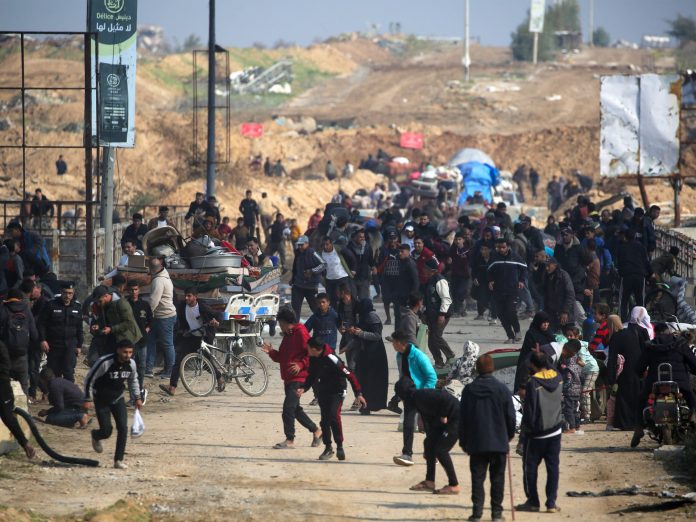
Ukraine predicts collapse, if peace negotiations fail to begin by summer

Russia Ukraine War

“If there are no substantial negotiations before the summer, then further very dangerous processes threatening the very existence of Ukraine may be triggered,” the Ukrainska Pravda newspaper has quoted Budanov as saying, citing its source among participants in a closed-door meeting in the Verkhovna Rada.

The daily’s source also said that Budanov dropped this remark “with a cold smile” on his face, which “made everyone look at each other and fall silent.”

In early January, US President Donald Trump admitted that the settlement of the conflict in Ukraine might take more than 24 hours, contrary to what he stated during the election campaign. He expressed his wish to hold talks with Russian President Vladimir Putin on the Ukrainian crisis much earlier than six months after his inauguration. Keith Kellogg, the special envoy for Ukraine in the Trump administration, said that he would like to meet a 100-day deadline.

Putin earlier mentioned conditions for resolving the conflict, which included the withdrawal of Ukrainian armed forces from Donbass and Novorossiya, Kiev’s pledge not to join NATO, the lifting of all Western sanctions on Moscow and Ukraine’s non-aligned and nuclear-free status.

Russia has consistently stated its readiness for peace talks and has accused Kiev of avoiding seeking a diplomatic resolution to the ongoing conflict.

Earlier this week, Putin told Russian journalist Pavel Zarubin that any negotiations between Moscow and Kiev would be “illegitimate” as long as the ban stays in place. Any results of such talks could easily be made null and void, the Russian president warned, adding that, although some preliminary contacts could be made right now, any “serious” steps are not possible until the situation changes.

Putin also called on Kiev’s Western backers to exert pressure on Ukraine and make it lift the prohibition on talks. The Russian president said he believed Kiev was in no rush to lift the ban since it was satisfied with the current situation that allowed it to receive “hundreds of billions [of dollars] from its sponsors” that it can “chomp down on.”