Saturday, January 17, 2026
Home Blog Page 545

Veteran journalist criticizes Iranian FM’s visit to Kabul

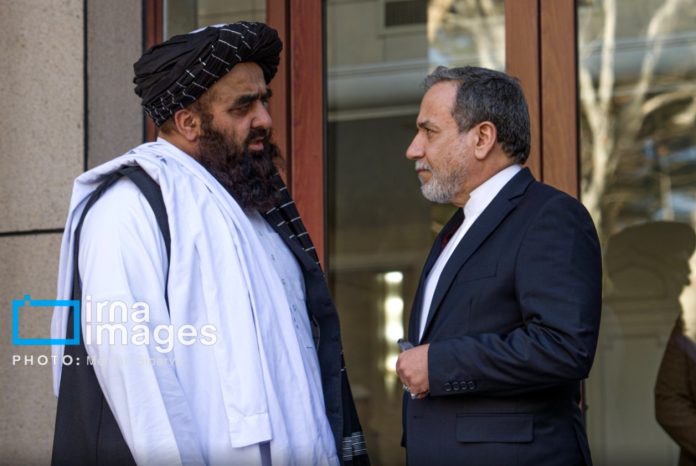
In an editorial for Jomhouri-e Eslami newspaper, Masih Mohajeri highlighted that upon arrival at Kabul airport, Araghchi was greeted by low-ranking officials instead of the acting Afghan foreign minister.

Mohajeri also noted that during meetings with Kabul officials, the Iranian flag was notably absent.

Araghchi’s post-visit statements focused on issues such as Iran’s water rights, border security, the presence of illegal Afghan immigrants in Iran, and trade with Afghanistan.

However, Mohajeri pointed out that the Taliban leaders merely promised to address these issues without offering concrete solutions.

Mohajeri emphasized that the Taliban government lacks legitimacy, is not recognized by any state, and violates human rights. He argued that trusting such a group contradicts rational, legal, and international norms.

The journalist stressed that Iran’s national interests should not be tied to the Taliban, but rather to the Afghan people who oppose the Taliban.

The daily concluded, “Such outcomes could have been achieved by sending a mid-level Foreign Ministry official to Kabul, negotiating through the head of Iran’s embassy in Kabul, or even with a few messages back and forth.”

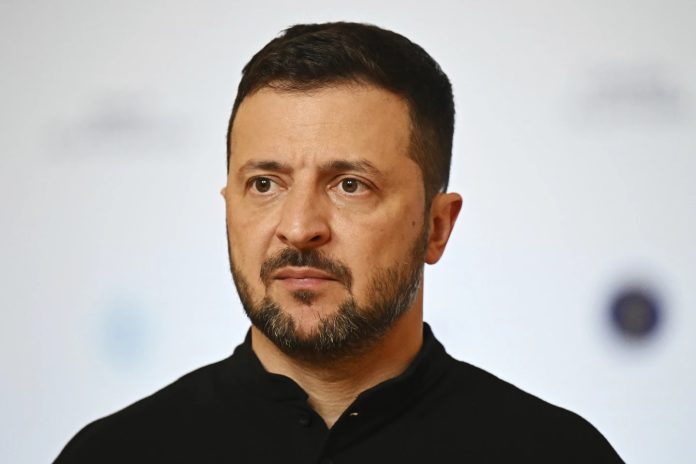
Putin says Zelensky lacks legitimacy to ink any agreement

Zelensky

Negotiating with the de-facto Ukrainian leadership will not have any legal meaning, given that Kiev explicitly banned itself from engaging in talks with Moscow, according to Putin.

In 2022, Zelensky, whose presidential term officially ended in May 2024, issued a decree prohibiting negotiations with Russia, and President Vladimir Putin specifically, a measure that remains in effect. Last week, Zelensky claimed the ban applies to all Ukrainian officials except himself, although the original decree did not specify a list of entities barred from talking to Russia, stating only that such negotiations were “impossible.”

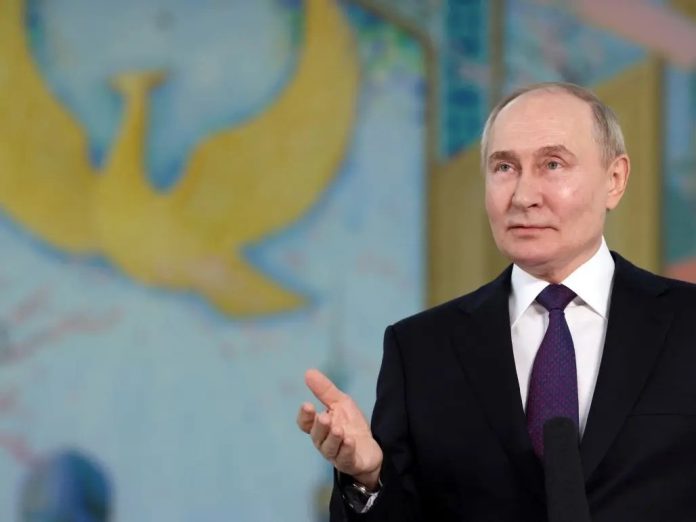
“If we start negotiations now, they will be illegitimate… Because when the current head of the regime, that’s the only way to call [Zelensky] today, signed this decree, he was a somewhat legitimate president. But now he can’t cancel it, because he is illegitimate. That’s the trick, the catch, the trap,” Putin explained.

However, the Ukrainian leadership could find a way out of this situation and circumvent the ban, Putin said, suggesting that the country’s parliament could do that.

“According to Ukraine’s constitution, the president of Ukraine, even under martial law, cannot extend his term. Only the representative branch can have its term extended, that’s the Ukrainian parliament, while the president only has a five-year term, that’s it,” he added.

Asked whether Moscow would actually talk to Zelensky if he expresses the desire to do so, Putin stated that the Ukrainian leader lacks any authority to actually strike any sort of deal with Russia.

“It’s possible to negotiate with anyone. However, due to his illegitimacy, [Zelensky] has no right to sign anything. If he wishes to participate in talks, I will deploy people who will conduct such negotiations,” Putin continued.

He stressed that signing any deal would be a “very serious question” and the agreement must “guarantee the security of both Ukraine and Russia” for a “serious” period of time.

Any potential peace agreement must be flawless from the legal standpoint, Putin emphasized, adding that the authority and legitimacy of Kiev’s negotiating team would be subjected to intense scrutiny and assessed by a whole team of legal experts.

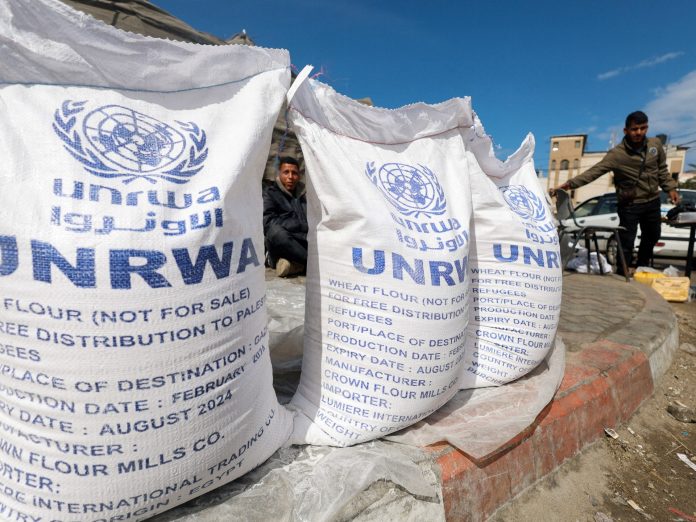
UNRWA head warns Israel’s banning of aid operations will undermine Gaza ceasefire

UNRWA

Lazzarini told the UN Security Council on Tuesday that the ban would “heighten instability and deepen despair in the occupied Palestinian territory at a critical moment”.

“The relentless assault on UNRWA is harming the lives and future of Palestinians across the occupied Palestinian territory,” he said.

“It is eroding their trust in the international community, jeopardising any prospect for peace and security.”

An Israeli law, which was adopted in October and goes into effect on Thursday, bans UNRWA’s operations in Israel. The law says this would include occupied East Jerusalem, though it is recognised internationally as Palestinian land.

Israel annexed the area in a move widely condemned by the international community.

“UNRWA must cease its operations and evacuate all premises it operates in Jerusalem, including the properties located in Maalot Dafna and Kafr Aqab,” Israel’s UN ambassador Danny Danon told the Security Council.

“Israel will terminate all collaboration, communication and contact with Unrwa or anyone acting on its behalf,” he added.

The UN agency provides aid, health and education services to millions in the Palestinian territories, as well as the millions of Palestinians living in refugee camps in the neighbouring countries of Syria, Lebanon and Jordan.

UNRWA has also for decades run schools and medical clinics in occupied East Jerusalem, which Israel seized from Jordan in the 1967 War.

US President Donald Trump, meanwhile, has supported Israel’s decision to close UNRWA’s offices.

“It is Israel’s sovereign decision to close UNRWA’s offices in Jerusalem on January 30. The United States supports the implementation of this decision,” US deputy ambassador to the UN Dorothy Shea told the Security Council on Tuesday.

“Unrwa exaggerating the effects of the laws and suggesting that they will force the entire humanitarian response to halt is irresponsible and dangerous,” Shea stated.

Trump’s support of Israel’s attacks on UNRWA is not new. Under the previous Trump administration, Washington cut funding to the UN agency, saying it was a “flawed operation”.

However, while aid agencies have expressed worries that Trump’s pause on all foreign aid – except aid to Israel and Egypt – will impact UNRWA’s ability to operate, the agency has already been operating without US funding for the past year.

In 2024, the Joe Biden administration cut funding to UNRWA, and US legislation codified those funding cuts, which are set to last until March 2025.

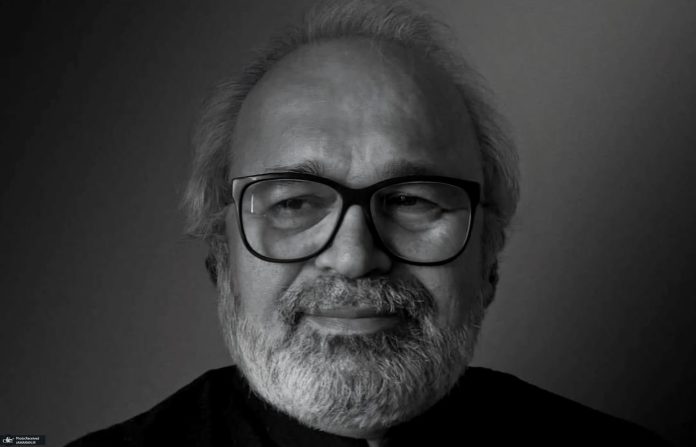
Renowned Iranian writer Ebrahim Nabavi laid to rest in Tehran

Nabavi, born on November 13, 1958, in the northern city of Astara, was a celebrated satirist and journalist who tragically took his own life on January 15, at the age of 64 in the US.

A memorial service will be announced in due course.

Nabavi was a prominent figure in the Iranian press during the 1990s, known for his satirical columns in newspapers such as Jame’e, Tous, Neshat, and Asr-e Azadegan.

He continued to write satire even when his previous publications were shut down, transitioning his column titles from “The Fifth Column” to “The Fourth Column” and finally to “No Column.”

Throughout his career, Nabavi authored approximately 35 books on satire. He also co-authored books with cartoonist Nikahang Kowsar and wrote three short stories.

Nabavi’s work and influence on Iranian satire and journalism are widely recognized.

The two daughters of Nabawi wrote in a statement: “Today, our father’s body returned to his homeland and was laid to rest in the soil from which his heart was never separated.”

Nabavi left Iran in the 2000s after being arrested and tried twice.
He lived for some time in Belgium and then in Canada and the United States.

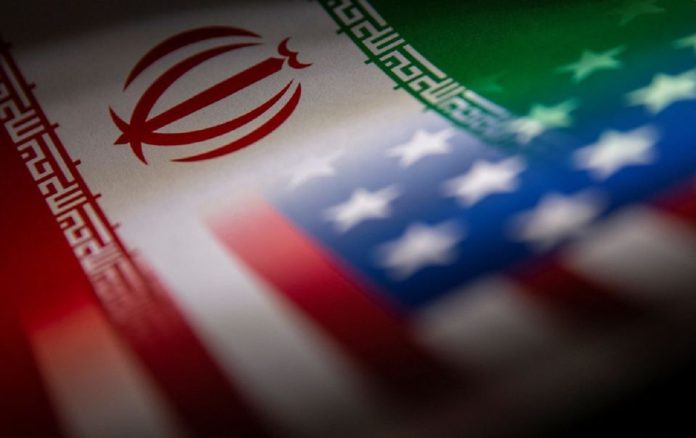
Iranian deputy parl’t speaker: No hostility with the US, Iran ready for fair talks

Iran US Flags

In an interview woth Iran’s state television, Haji Babaei likened the situation to a sports match, stating, “Fairness means recognizing that we are equal citizens. Just as your soccer player and ours are equal, they should compete fairly. But the other side insists that our player must lose if necessary.”

He further clarified that Iran is willing to engage in talks with any country except the Israeli regime, underscoring that Iran’s stance is rooted in self-defense and the pursuit of equitable relations.

Haji Babaei’s remarks come amid growing signs of willingness on both sides to tackle differences on several issues, including Iran’s nuclear deal, which the US unilaterally withdrew in 2018.

Elon Musk, a close aide to US President Donald Trump, has recently hinted at a possible Tehran-Washington agreement with a post on X reading, “I think Iran is one of the best countries for investment. I will probably visit this country in the future.”

Israeli military kills more Palestinians during West Bank raids

The attacks are part of an escalating campaign in the Palestinian territory, which has killed dozens of Palestinians since the start of the year.

According to the news outlet Arab48, dozens of homes across the West Bank have been raided and many Palestinians were detained in the process, including children.

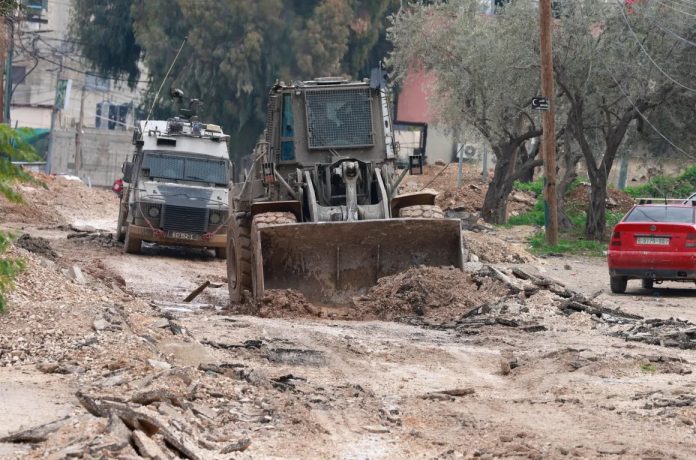
Military operations in Jenin and Tulkarm have displaced Palestinians as Israeli soldiers demolish homes, buildings, businesses and infrastructure.

Refugee camps in the two cities, where Palestinians forced out of other areas have sought shelter, have also been targeted by the Israeli army.

According to local reports, two Palestinians have been killed during the past 24 hours in the occupied West Bank city of Tulkarm, with at least four others left wounded in the Nur Shams camp, east of the city.

The two men killed were identified as the commander of the Qassam Brigades in Tulkarm camp, Ihab Abu Attiya, 23, and another man, Ramez al-Dumairi, 24.

Journalists and reporters attempting to cover the events have also been attacked with sound bombs and shells, leaving the Palestinian journalist Nagham al-Zayet wounded by shrapnel.

According to witnesses, Israeli bulldozers have caused extensive damage to Tulkarm’s infrastructure, uprooting trees and damaging roads, including one leading to the Martyr Thabet Thabet Government Hospital.

The medical facility has been under Israeli siege, disrupting the work of ambulance drivers, as well as medics inside the building.

Meanwhile in Jenin, Israeli military operations have continued for the eighth consecutive day, resulting in the killing of 16, and the wounding of many more.

At least 100 homes have been destroyed in the ongoing Israeli assault, leaving many families displaced, Wafa has reported.

A local journalist said that Israeli troops continued to arrive in the Palestinian city, bringing with them bulldozers.

Israeli attacks on the occupied West Bank are going to deepen suffering and violence against Palestinians, a group of UN special rapporteurs and independent experts warned on Monday.

“We are dismayed by the escalation of deadly violence sweeping through Jenin and the rest of the occupied West Bank,” the experts stated, adding, “Israel’s repression seems to have no end in sight.”

“The Israeli government must instruct its military and security forces to immediately cease any use of excessive force and exercise restraint and withdraw its troops from the occupied West Bank, as ordered by the International Court of Justice (ICJ) in July 2024.”

Five-year-old among two killed in Israeli attacks in Gaza amid truce

Gaza War

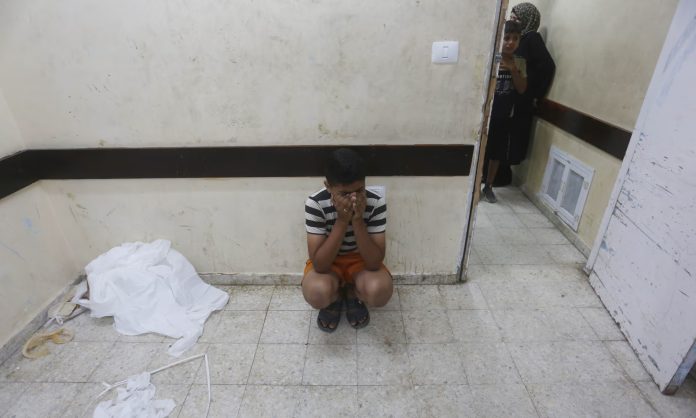
Five-year-old Nadia Mohammed al-Amoudi was killed and three people were wounded after the Israeli army shelled a horse cart late on Monday in al-Jisr, west of the Nuseirat refugee camp, the Wafa news agency reported.

Separately, Wafa also reported that a Palestinian man was killed and several people wounded after Israeli forces bombed a bulldozer as it was attempting to remove a vehicle stuck in Nuseirat.

These mark the latest incidents of displaced Palestinians being attacked as they try to return to their homes in the war-torn coastal enclave amid an ongoing three-stage ceasefire agreement signed between Hamas and Israel, which went into effect on January 19.

The Israeli army said in a statement an aircraft “fired to repel suspicious vehicles” in central Gaza that were moving north in an area that is “not approved for passage according to the agreement”. The statement added that Israeli forces also fired on a Palestinian man in north Gaza who “posed a threat to them”.

Since the ceasefire began on January 19, several violations by the Israeli army have been reported in Gaza.

Last week, heavy fire from Israeli tanks around the Karem Abu Salem crossing, known as Kerem Shalom to Israelis, east of Gaza’s southern city of Rafah, was also reported.

In addition, Israeli gunfire also wounded a fisherman near the coast and an Israeli drone wounded another civilian inside Gaza.

The attacks come as Palestinians continued to make their way back to northern Gaza after Israeli forces opened the Netzarim Corridor on Monday following a two-day delay.

Gaza’s Government Media Office announced “more than 300,000 displaced” have crossed from southern Gaza into the north.

“Welcome to Gaza,” read a newly erected banner hanging above a dirt road in front of a collapsed building in Gaza City.

Palestinians returning to northern Gaza came face to face with the extent of destruction wrought by more than a year of war. Gaza’s Government Media Office said 135,000 tents and caravans are needed in Gaza City and the north to shelter returning families.

Russian diplomats make first visit to Syria since al-Assad’s overthrow

Al-Assad, a close ally of Moscow, sought refuge in Russia in December, following a lightning offensive by opposition groups led by Hayat Tahrir al-Sham (HTS).

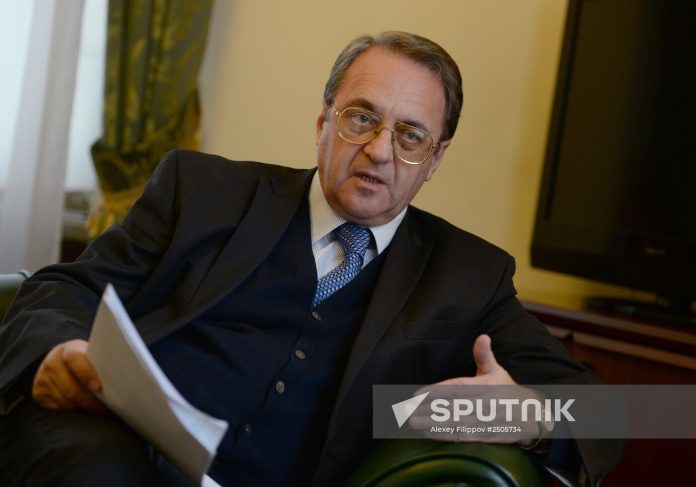
The delegation includes Russian Deputy Foreign Minister Mikhail Bogdanov and Alexander Lavrentyev, the Russian president’s special envoy for Syria, the Russian state news agency RIA Novosti reported on Tuesday.

The delegation is expected to meet with Syria’s de facto leader, Ahmad al-Sharaa, as well as the foreign minister.

The visit comes as Moscow seeks to secure the fate of two military bases in Syria, following Russian President Vladimir Putin’s denial that Moscow had suffered a strategic “defeat” in the Middle East after al-Assad’s fall.

Russia is now focused on securing the future of its naval base in Tartous and its airbase at Khmeimim—both on Syria’s Mediterranean coast and Moscow’s only military outposts outside the former Soviet Union—with the new Syrian leaders.

Russia’s military intervention in support of al-Assad played a pivotal role in reversing the course of Syria’s more-than-13-year war. Moscow was one of al-Assad’s key backers, intervening in the war in 2015 in his favour.

Although Syria’s new de facto government has not severed ties with Moscow or demanded the complete withdrawal of Russian military forces from their bases, Al Watan reported earlier this month that a contract with a Russian company to manage the port in Tartous had been cancelled.

Following al-Assad’s fall, Russia repositioned its troops and assets from across Syria to its main base near Latakia. There has been no indication that Moscow is preparing to evacuate the Khmeimim base or the naval facility in Tartous.

The cancellation of the contract to modernise the Tartous commercial port has not affected the Russian naval facility, which operates under a separate lease agreement.

The Russian delegation’s visit comes amid a flurry of diplomatic activity by the new rulers, aimed at building ties and easing sanctions.

European Union foreign ministers on Monday agreed to begin easing sanctions on Syria starting with key sectors, such as energy.

Russia says special services take all measures to ensure Putin’s safety

Vladimir Putin

Commenting on Carlson’s statement that the former US administration allegedly planned an assassination attempt on the Russian leader, the spokesman said: “The Russian special services are constantly taking all the necessary measures to ensure public safety, and, of course, the safety of those who are under state protection.

“This concerns first and foremost the head of the state,” he added.

According to Carlson, the Biden administration considered assassinating Putin.

The US journalist stated that, in general, the US authorities intended to engage in a suicidal confrontation with Moscow. In particular, former US Secretary of State Antony Blinken was “pushing so hard for a real war” between the US and Russia in his last two months in office.

US officials have never publicly acknowledged plans to assassinate Putin, or any other Russian or Soviet leaders. However, Newsweek reported in September 2022 that US defense officials had discussed a “decapitation strike” if Russia used nuclear weapons in Ukraine. Moscow has repeatedly denied that such an option has ever been on the table, arguing that there are no targets in the neighboring country for such a weapon.

Half of Ukrainians back compromise to end war with Russia: Survey

Russia Ukraine War

According to a report by Ukrainskaya Pravda on Monday, the latest survey, conducted in December 2024, reflects shifting public sentiment in Ukraine, with increasing support for a diplomatic solution after years of conflict and the depleting situation on the battlefield.

According to the poll, 50.6% of respondents support negotiations involving international leaders to secure guarantees for ending the conflict. This marks a significant increase from 36.1% in February 2024.

The percentage of Ukrainians who back continuing the fight until Ukraine regains its 1991 borders, has significantly dropped from 33.5% in February 2024 to 14.7% in December 2024.

The survey also indicated that support for suspending hostilities and freezing the conflict along the current front lines has more than doubled over the year, from 8.2% to 19.5%.

According to the Socis poll, the percentage of Ukrainians advocating the restoration of borders as of February 2022 has remained relatively stable, fluctuating between 8.6% and 13.2% throughout the year.

The Ukrainskaya Pravda report emphasized that “one of the greatest challenges in the negotiation process” will be securing the support of both the Ukrainian public and the military for the decisions of the country’s leadership.

The outlet also cited an unnamed “influential” member of Volodymyr Zelensky’s team, who stated that one major priority is securing “some kind of agreement on guarantees with the US, which would be ratified by Congress.” Another key task, according to the official, is resisting Russian demands for Ukraine’s neutrality.

Zelensky stated earlier that at least 200,000 “European peacekeepers” would be needed to uphold a ceasefire.

Moscow has dismissed the idea of Western peacekeepers in Ukraine, which has come to the fore in recent weeks following US President Donald Trump’s pledge to pursue a swift resolution to the conflict. Since his inauguration last week, Trump has called on Moscow to strike a deal with Kiev or face new sanctions, but maintained that he is “not looking to hurt Russia.” Trump has reportedly given his new Ukraine envoy, Keith Kellogg, 100 days to finalize a settlement. According to the Kremlin, however, it has so far received no specific proposals from Washington.

Negotiations between Russia and Ukraine broke down in the spring of 2022, with both sides accusing each other of making unrealistic demands. Russian President Vladimir Putin has said Ukraine must become a neutral country and renounce claims to new Russian regions for any peace talks to succeed.

Moscow has since repeatedly voiced readiness to resume talks, firmly rejecting the idea of a temporary freeze to the conflict, which it says would only help Ukraine to rearm.

Kiev must give up its ambitions to join NATO, demilitarize, denazify, and abandon plans to obtain nuclear weapons, Moscow has insisted.