Saturday, December 27, 2025
Home Blog Page 536

Ministry of Energy says Saudi Arabia seeking to enrich and sell uranium

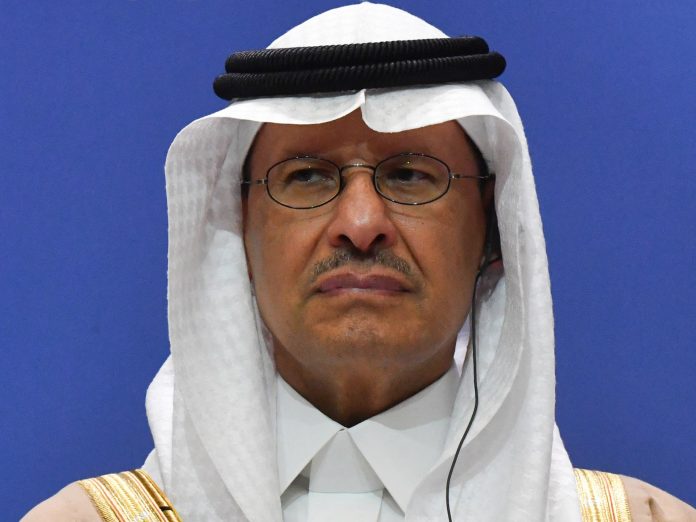
Energy Minister Prince Abdulaziz bin Salman Al Saud told a conference in Dhahran on Monday that the move is part of a strategy to monetise all minerals, according to Reuters news agency.

“We will enrich it and we will sell it and we will do a ‘yellowcake’,” he said, referring to a powdered concentrate used to prepare uranium fuel for nuclear reactors. It requires safe handling although it poses few radiation risks.

Saudi Arabia is developing a fledgling nuclear programme and has plans to expand it to include uranium enrichment – a sensitive issue due to its potential link to nuclear weapons. Riyadh insists it aims to use nuclear power to diversify its energy mix.

However, it is unclear where Saudi nuclear ambitions might end.

In 2018, Crown Prince Mohammed bin Salman stated the kingdom would develop nuclear weapons if regional rival Iran did so. Two years later, the kingdom’s minister of state for foreign affairs reiterated that call.

The kingdom announced last year it planned to scrap oversight of its nuclear facilities by the United Nations atomic watchdog and switch to regular safeguards by the end of 2024.

Riyadh has yet to fire up its first nuclear reactor, which allows its programme to still be monitored under the Small Quantities Protocol (SQP), an agreement with the International Atomic Energy Agency that exempts less advanced states from many reporting obligations and inspections.

Fellow Persian Gulf state the United Arab Emirates (UAE) is home to the Arab world’s first multi-unit operating nuclear energy plant. The UAE has pledged not to enrich uranium itself and not to reprocess spent fuel.

Tehran has repeatedly declared that its nuclear program remains purely peaceful as always and that the Islamic Republic had no intention of developing nuclear weapons as a matter of an Islamic and state principal.

Leader of the Islamic Revolution Ayatollah Seyyed Ali Khamenei issued an official fatwa (religious decree) clearly establishing that any form of acquisition, development, and use of nuclear weapons violate Islamic principles and are therefore forbidden.

In 2015, Iran proved the peaceful nature of its nuclear program to the world by signing the Joint Comprehensive Plan of Action (JCPOA) with six world powers.

However, Washington’s unilateral withdrawal from the agreement in 2018 and its subsequent re-imposition of sanctions against Tehran left the future of the deal in limbo.

Winter delights in Iran’s Sorkhrud: Whooper swans bring joy

The presence of the birds has invigorated the region and enhanced birdwatching activities.

Every year, from mid-September to mid-winter, various bird species migrate from colder regions around the Caspian Sea to Mazandaran’s wetlands in search of warmer habitats and food.

According to the Mazandaran Department of Wildlife, over 70 species of migratory birds visit the province’s wetlands. This year’s arrivals include geese, flamingos, sandpipers, cormorants, and herons. The water levels in these wetlands are crucial for creating a suitable environment for these birds.

Mazandaran is home to the internationally recognized Miankaleh Wetland, as well as local wetlands like Fereidoonkenar and Kiassar, with over 800 ponds spanning 17,000 hectares.

Korous Rabiei, head of the Mazandaran Wildlife Department, reported that approximately 700 whooper swans have arrived at Sorkhrud Wetland, with more expected.

He emphasized that the presence of all three swan species in a 25-hectare wetland is unique to Sorkhrud.

The wildlife department continues to ensure the safety and well-being of the swans by providing food and monitoring for potential diseases.

Official: Iran reconsidering FATF accession to smooth international relations

FATF

In an interview with Etemad Online, Elias Hazrati highlighted that the government is striving to manage issues effectively, adding that the current administration of President Massoud Pezeshkian operates with “transparency and honesty,” ensuring that nothing remains hidden from the public.

Hazrati pointed out the government’s commitment to transparency in major projects, such as the discussions around internet filtering and car imports, which involved extensive debates among supporters and opponents.

He also addressed the country’s energy imbalance, noting that $6 billion from next year’s budget has been allocated for gasoline imports, despite Iran being one of the world’s largest oil and gas producers.

The shortage of 20,000 megawatts of electricity, expected to rise to 25,000 megawatts next year, leading to frequent blackouts, is another critical issue that needs urgent resolution, he raised the alarm.

Hazrati stressed that resolving the country’s problems cannot be achieved through conflict.

President Pezeshkian has recognized the deep polarization within society and has focused on national unity, avoiding alignment with any single faction, he noted.

The Iranian president’s message at the 79th UN General Assembly Session in September last year was one of peace, reconciliation, and engagement, despite ongoing external threats, Hazrati pointed out.

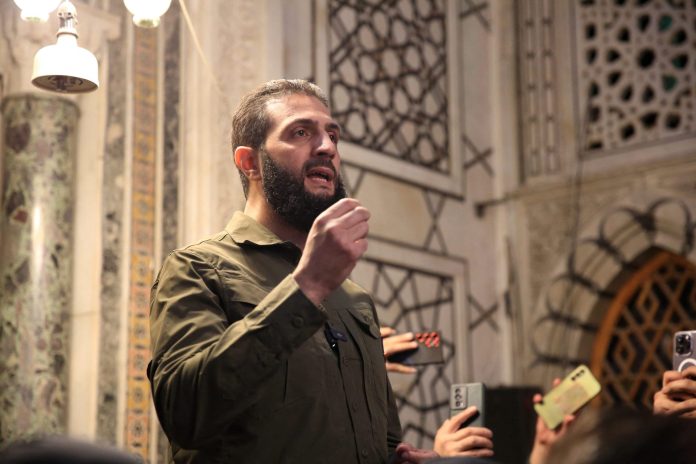
De-facto leader says new Syria will be defined by forgiveness and amnesty

Abu Mohammed al-Jolani

In a 15-minute interview with filmmaker Joe Hattab, Sharaa said that the revolution was now over, and that the focus would be on building state institutions.

“A revolutionary mindset cannot build a country,” he stated, adding, “The revolution is characterised by agitation and reactionary behaviour, which may work for overthrowing a regime, but is not suitable for building one.”

“That’s why I say today that, for us, the revolution is over.”

Sharaa’s Hayat Tahrir al-Sham (HTS) group led the surprise rebel offensive in December that toppled President Bashar al-Assad’s government in a matter of days.

He said that while the Syrian revolution would be cherished and celebrated, a different mentality was needed for the country’s new phase.

As part of that approach, he reiterated several times that there would be forgiveness and amnesty – except for perpetrators of mass, systematic crimes.

“Damascus has returned to the international stage. We have repositioned a country that once disturbed the entire world.”

“Today we have restored the foundations of this civilisation and returned it to its strategic, political, economic and social standing. So you cannot waste this great opportunity just to take revenge,” he added.

Sharaa said that the rebels had announced an amnesty following their victory to avoid bloodshed and repeating the mistakes of the past. Following major battles, he noted, the right to revenge is often “relinquished”, except in certain cases.

The cases he singled out in the Syrian context were officials in the notorious Sednaya prison, heads of security branches who tortured people, and those who massacred and dropped bombs on civilians.

“Justice must be sought through the judiciary and the law,” he stated, pointing out that everyone’s rights would be guaranteed, including both victims and offenders.

“If matters are left to revenge, the law of the jungle will prevail.”

Sharaa said that decades under the rule of the Assad dynasty had led people to distrust each other, and work would now be done to help people live together in harmony.

“People used to live in suspicion and fear of one another,” he continued, adding, “Now people can trust each other again.”

“Anyone can express their opinion freely, as long as they don’t break the law, damage public property or disrupt social life.”

He stressed that in areas that had been considered strongholds for Assad’s forces, people did not flee following the rebel offensive. Rather, he said, more people moved to those areas.

“No one fled from those areas. Not a single Muslim, Christian, Kurd, Alawite or Druze,” he said.

“The battle was marked by mercy and reunited families, so how could people not be happy?”

Sharaa vowed to protect everyone’s rights “even if it costs me my life”.

Elsewhere during the interview, the de-facto leader added that he believed that within two years, only around one to 1.5 million Syrian refugees around the world would remain outside of Syria.

He noted that under the previous government, Syria’s passport had become one of the weakest in the world, despite being one of the most expensive.

“God willing, the Syrian passport will have significance in a few years,” he said, adding, “What pained me the most was seeing people scramble for passports and how badly they were treated at airports.

“Syrians felt inferior to other nationalities because a citizen’s strength comes from their country’s strength.”

Now, he stated, Syrians felt pride and respect from others around the world.

He added that wars fought by oppressed people had rarely succeeded over the past century, but Syria had written “a new chapter in history”.

“We fought a war of the oppressed with no resources, and yet we managed to get our rights back, because rightfulness is far stronger than falsehood.”

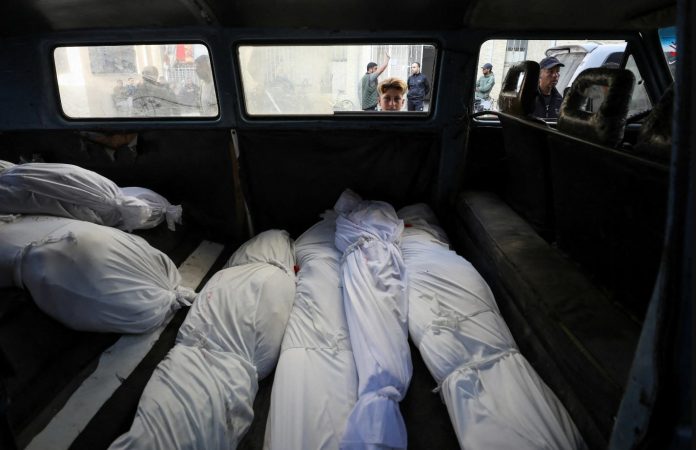
US says Gaza truce agreement ‘possible’ within days as Israel ramps up attacks

Gaza War

On Monday, outgoing US President Joe Biden said a ceasefire was within reach after more than a year of carnage.

“In the war between Israel and Hamas, we’re on the brink of a proposal that I laid out in detail months ago finally coming to fruition,” Biden said in a foreign policy address.

“I have learned in many years of public service, to never, never, never ever give up,” he added.

“We’re pressing hard to close this.”

White House National Security Adviser Jake Sullivan also said during a news conference earlier in the day that a deal may be possible within days.

But, he added, such an agreement is not guaranteed.

“We are close to a deal, and it can get done this week. I’m not making a promise or a prediction, but it is there for the taking, and we are able to work to make it happen,” Sullivan said.

He also confirmed that Biden had recently spoken with Israeli Prime Minister Benjamin Netanyahu and Qatari Emir Sheikh Tamim bin Hamad Al Thani about the negotiations.

The outgoing US president will also soon speak to Egyptian President Abdel Fattah el-Sisi.

“We are now at a pivotal point in the negotiations for a hostage deal and ceasefire in Gaza,” Sullivan said.

Ceasefire talks mediated by the US along with Qatar and Egypt are ongoing at advanced stages in Doha, where top Israeli negotiators like the heads of the Mossad and Shin Bet intelligence agencies are expected to stay for another day.

Hamas also said the talks have made some progress over some of the contentious issues that have been discussed many times over 15 months of a war that has killed more than 46,500 Palestinians in Gaza.

“The negotiation over some core issues made progress, and we are working to conclude what remains soon,” an official with the Palestinian group told the Reuters news agency on condition of anonymity.

Officials said a final draft of the agreement, which includes an exchange of captives in Gaza for Palestinian prisoners held by Israel, was presented to all sides after the latest discussions in the Qatari capital yielded results.

Netanyahu and Biden held a phone call on Sunday, discussing the latest developments, with Biden again saying the time for an agreement is now.

US President-elect Donald Trump and his top officials have repeatedly threatened that there will be “hell to pay” if the captives are not released or there is no agreement by the time Trump takes office on January 20.

“It’s very clear that President Trump threatening Hamas and making it clear that there is going to be hell to pay is part of the reason why we’ve made progress on getting some hostages out,” Vice President-elect JD Vance stated.

Trump has also stated in a phone interview with the US-based Newsmax network that a Gaza ceasefire deal is very close and could be realised by the end of this week.

“We are very close to getting it done,” Trump said on a segment with the network’s Rob Schmitt Tonight show, when asked about the continuing negotiations.

“They have to do get it done, and if they don’t get it done, it’s going to be a lot of trouble out there, like they have never seen it before.”

“I understand there’s been a handshake and they’re getting it finished, maybe by the end of the week,” Trump added.

Netanyahu is also facing internal pressure from far-right members of his governing coalition, who have been threatening to leave if a deal is reached – even though Netanyahu has stressed that Israel will hold military control over Gaza regardless of any deal.

The Israeli military has been launching relentless waves of heavy air attacks and artillery shelling across the Gaza Strip as talks of a potential agreement have heated up.

The humanitarian situation remains dire in Gaza as the Israeli military continues to block most aid from getting in and starving the population, roughly half of which is made up of children.

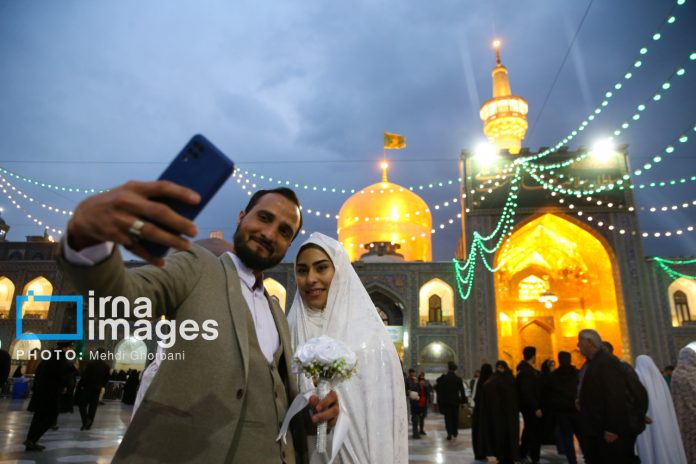
Iran celebrates Father’s Day and Men’s Day with reverence, joy

This day is observed on the 13th of Rajab in the Islamic calendar, which fells on January 14 this year.

Father’s Day and Men’s Day in Iran are deeply rooted in Islamic teachings and cultural traditions. They serve as a tribute to fathers and men, acknowledging their sacrifices and pivotal roles as pillars of family life and society.

On this day, families come together to spend quality time with their fathers, grandfathers, and male relatives, expressing gratitude and love for their paternal bonds.

Imam Ali, known for his courage, profound knowledge, and commitment to justice, is revered as a symbol of paternal and masculine love and wisdom.

The day is marked by various ceremonies, including religious gatherings, family feasts, and cultural events that highlight the importance of fatherhood and manhood in Iranian society.

Children often present gifts and heartfelt messages to their fathers, expressing their appreciation and respect.

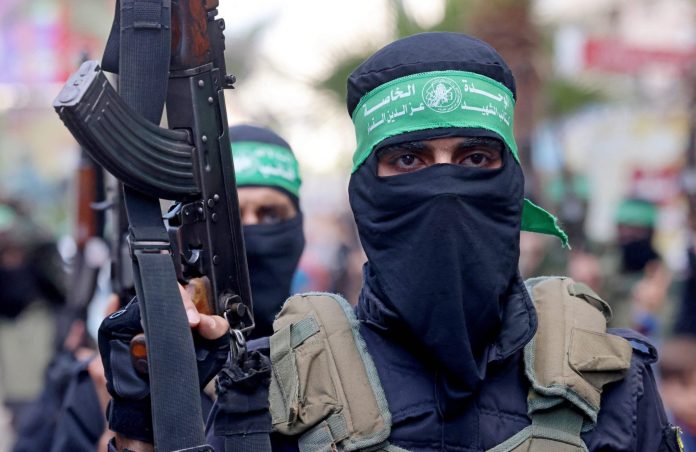
Hamas is being commanded by Yahya Sinwar’s brother: WSJ

Hamas

Reporting on Monday, the daily claimed that the group’s new commander-in-chief was “Mohammed Sinwar,” who has taken the helms since the regime’s assassination of his elder brother, Yahya, who used to daunt Tel Aviv with his commandership prowess.

The paper claimed that Mohammed had earned the nickname “shadow” owing to his evasive nature and successful efforts to further empower the movement, despite the regime’s ongoing bloodthirsty war of genocide against the Gaza Strip.

Under Mohammed’s commandership, Hamas has reportedly enlisted thousands more fighters, who were targeting the invading Israeli forces and the occupied Palestinian territories through incessant triumphant operations.

At least 840 Israeli troops have been killed due to the group’s successful defense of the Palestinian territory throughout the war, including 10, who were eliminated over the past week.

Under its new leadership, Hamas’ fighters were now turning unexploded Israeli ordnance into improvised explosive devices (IEDs), the WSJ added.

With its new battleground tactics, the paper said, the group was forcing the Israeli military into a war of attrition that had exhausted the latter’s troops, while stopping short of realizing any of Tel Aviv’s objectives, including release of the regime’s captives, who were being held in the coastal sliver.

The assertion echoed remarks by Israeli officials and the regime’s own allies pertaining to Hamas’ invincibility.

In an interview with the Israeli regime’s Channel 13 last June, Israeli military spokesman Daniel Hagari said, “Hamas is an idea, Hamas is a party. It’s rooted in the hearts of the people — whoever thinks we can eliminate Hamas is wrong.”

Anyone promising this was “throwing sand in the face of the Israeli public,” he had added.

Hagari had further emphasized that it would be “impossible” to return all the regime’s captives through the offensive, underlining the need for a “scenario,” where the captives would be returned in another manner.

ICJ judge Nawaf Salam designated Lebanon’s PM

On Monday, the office of newly minted President Joseph Aoun asked Salam to form a government, after the judge was endorsed by a large majority of lawmakers during consultations with Aoun.

Aoun’s election and Salam’s designation mark the end of a more than two-year long stalemate with a presidential vacuum and a cabinet operating in a day-to-day caretaker capacity.

The consultations over the country’s next prime minister were triggered by Aoun’s election in parliament on Thursday, following a robust push from Saudi Arabia.

Salam is widely viewed as a reformist. He is a Sunni Muslim – the only sect allowed the position of prime minister – and was a candidate for the premiership twice before in recent years.

The judge rose to international prominence last year after he was elected head of the ICJ, presiding over South Africa’s case accusing Israel of genocide and other tribunals.

Some media outlets likened Salam’s designation to a “tsunami.” He put himself forward as a candidate on Sunday morning, according to local media reports. Prior to that, incumbent caretaker Prime Minister Najib Mikati was widely viewed as the most likely contender for the post.

Salam’s designation is a blow to Hezbollah and its allies Amal, known as the Shia duo, who are believed to have supported Mikati. Speaking to reporters, Hezbollah parliamentary bloc leader Mohammad Raad said the move to designate Salam sowed “division” in the country, and added he hoped the cabinet would respect the country’s confessional power-sharing “pact.”

Unofficially, Lebanon’s major sects – Muslims from Sunni and Shia sects as well as Christians – must all be represented in cabinet.

No Shia lawmakers endorsed the prime minister designate, putting Nawaf on a potential collision course as he tries to form a government in the next few weeks.

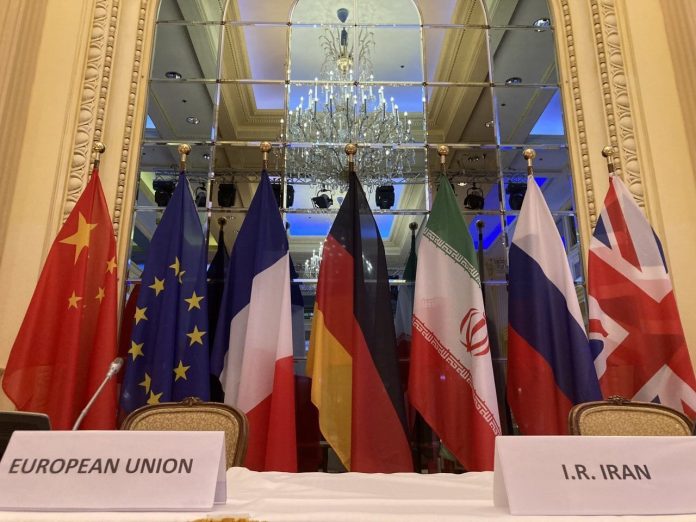
Iranian deputy FM describes Geneva talks with E3 as “constructive, frank” 

Nuclear Talks in Vienna

In a message on X, Gharibabadi said the third round of talks between Iranian and the European troika’s diplomats were held on Monday in Geneva.

He noted that while delving into some details, we discussed and examined ideas in the two areas of sanctions relief and nuclear issues, which are essential for reaching an agreement.

Gharibabadi added that the two sides agreed that negotiations must continue and that a conducive atmosphere must be created and maintained by all parties to achieve an agreement.

The two sides also held talks over the worrying situation in the Middle East.

Majid Takhte Ravanchi Iran’s Deputy Foreign Minister for Political Affairs also attended the talks with political directors from the European troika – Britain, Germany, and France.

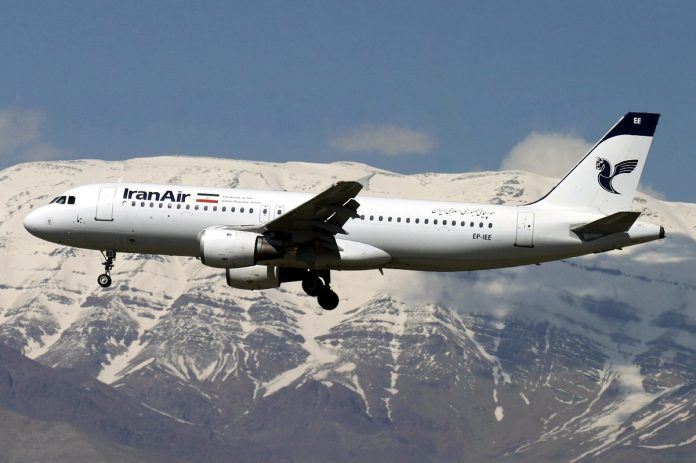
Iranian flights to Europe to resume after hiatus 

Iran Air

The first flight will be from Paris to Tehran, operated by Iran Airtour, with ticket sales expected to begin shortly.

Hossein Pourfarzaneh, head of Iran’s Civil Aviation Organization, confirmed this development during a press conference on Monday.

Pourfarzaneh noted that in addition to Iran Airtour, Qeshm Air will also initiate flights to two unspecified European destinations, which will be announced once finalized.

This announcement marks a significant step in restoring international air travel connections for Iran, which had faced disruptions due to the impact of sanctions against the country.

It also comes as Iran and the European troika consisting of Britain, Germany and France are engaged in talks over the removal of sanctions on Tehran and some other issues including the regional developments.