Friday, December 26, 2025
Home Blog Page 525

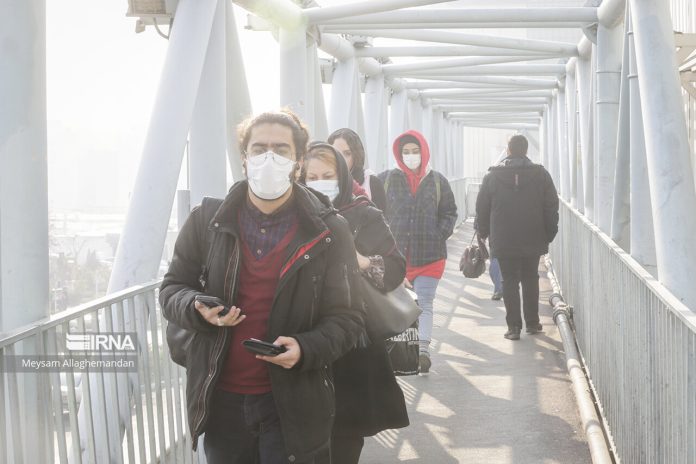
Iranian health minister: 15 percent of under-5 child mortality blamed on air pollution

Air Pollution

Zafarghandi made the comment at the National Conference of Clean Air attended by a number of other Iranian government officials.

He added that 8.1 million people die each year worldwide due to air pollution, making it the second leading cause of deadly disease burden, with hypertension being the first.

The minister noted that 700,000 children under five die annually due to air pollution in the world. Zafarghandi said during the last Persian year the average air quality in Iran was polluted for 247 days with Tehran lacking clean air for 353 days.

According to the minister, statistics show that 12.56% of natural deaths in that period were attributed to air pollution.
Zafarghandi cited to the installation of solar panels as a potential solution to the problem of air pollution. He said Iran has about 250 sunny days per year which can be of great assistance.

Iran warns European troika of retaliatory response to snapback mechanism

Esmael baghaei

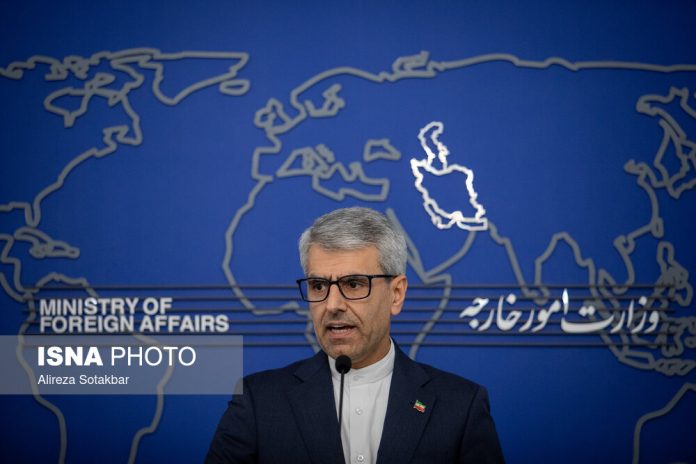
Speaking at a press conference on Monday, Baqaei warned that Iran will show a retaliatory response if the three European parties to the Joint Comprehensive Plan of Action intend to put pressure on Tehran by initiating the dispute mechanism of the JCPOA.

Should the snapback mechanism be triggered against Iran, there will basically be no reason or justification for Iran to stay in the deal, he added.

The spokesman also ruled out the possibility of negotiations over Iran’s missile program in the talks with the EU3, stressing that negotiations about Iran’s defense and military capabilities are out of the question.

Baqaei stated that the recent talks between Iran and the European troika have been confined to the nuclear issue.

He noted that Iran has seriously castigated the European parties for supporting the Israeli regime.

“We have explicitly expressed those issues. We have talked about Syria and Ukraine as well.”


Over 90% of homes destroyed or damaged in Gaza: UN

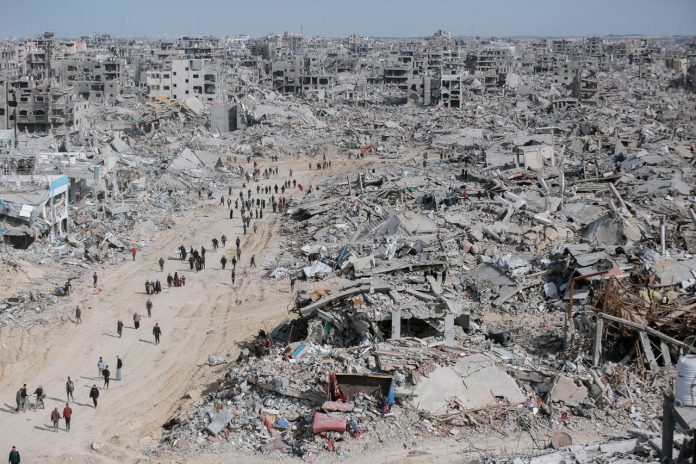
Some 436,000 housing units — 92% of Gaza’s homes — have been affected, with 160,000 destroyed and 276,000 severely or partially damaged, OCHA said.

Additionally, more than 1.8 million people are in urgent need of emergency shelter and essential household items.

The UN announced on its website that approximately 90% of the population across Gaza have been displaced, many of whom have been forced to move repeatedly, “some 10 times or more.”

“Much of Gaza is rubble, while Israeli airstrikes and military operations have damaged or destroyed around 60 per cent of buildings, including homes, schools and hospitals,” according to the UN.

“The relentless bombing campaign has pushed healthcare to the brink, the solid waste system has collapsed, causing serious environmental and health risks, and the water system has been drastically cut,” it added.

The Gaza ceasefire agreement took effect at 11:15 a.m. local time (0915GMT) on Sunday after a few hours’ delay.

Nearly 47,000 people have been killed, mostly women and children, and over 110,700 others injured in Israel’s genocidal war on Gaza since Oct. 7, 2023, according to local health authorities.

The Israeli war has left more than 11,000 people missing, with widespread destruction and a humanitarian crisis that has claimed the lives of many elderly people and children in one of the worst global humanitarian disasters ever.

In November, the International Criminal Court issued arrest warrants for Israeli Prime Minister Benjamin Netanyahu and his former Defense Minister Yoav Gallant for war crimes and crimes against humanity in Gaza.

Israel also faces a genocide case at the International Court of Justice for its war on the enclave.

Tehran’s development faces challenges: President Pezeshkian

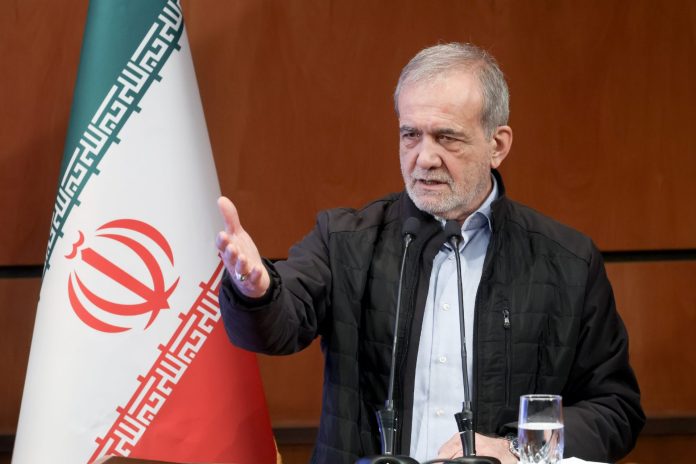
Addressing a conference marking Clean Air Day, President Pezeshkian pointed out that while other countries hold emergency meetings for minor land subsidence, Tehran faces subsidence of up to one meter without adequate response.

He criticized the construction of high-rise buildings in narrow streets, which exacerbates the city’s resource and capacity mismatch.

The president stressed the need to halt the creation of imbalances and to reform development policies.

He noted that the first step in addressing these issues is to prevent further imbalances.

He also criticized the lack of implementation of the Clean Air Act, attributing it to the mismatch between resources and consumption.

During the conference, President Pezeshkian emphasized that the alphabet of development is the balance between resources and consumption, which has not been maintained in the development programs pursued by the government, parliament, and judiciary.

He also highlighted the need for honest governance and the importance of public satisfaction in ensuring national power and defeating enemy conspiracies.

President Pezeshkian says ‘Gaza people demonstrate resilience against terrorism’

In a meeting on Monday with members of the Islamic Development Coordination Council, President Pezeshkian referred to the newly established ceasefire between Israel and Hamas, which ended over 15 months of intense Israeli aggression, and congratulated the people of Gaza and Palestine on their victory.

He commended their strength and honor in resisting the Zionist regime.

President Pezeshkian also reflected on the 46th anniversary of the victory of the Islamic Revolution in Iran, noting the ongoing challenges faced by the country, including the assassination of its officials and elites by enemies aim to create obstacles.

“Our enemies think they can defeat us, but if the people stand with us, no power can defeat us,” he added.

The president also emphasized the need for all Iranians to feel a sense of ownership of their country, advocating for merit-based responsibilities regardless of ethnicity, gender, or religion.

He highlighted the government’s efforts to reform the education system, aiming to foster societal improvement and educational justice.

Syrian defence minister rejects Kurdish-led SDF’s proposal for own military bloc

Syria Kurds

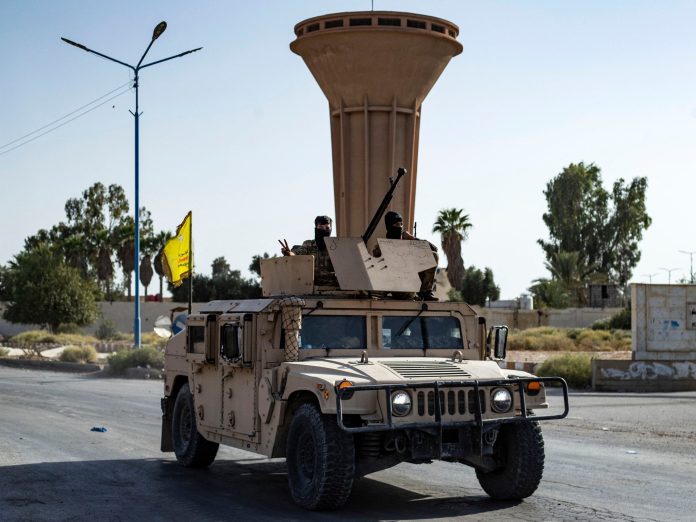
Speaking to the Reuters news agency in Damascus, Abu Qasra said on Sunday that the Kurdish-led Syrian Democratic Forces (SDF) was procrastinating in its handling of the complex issue.

The SDF, which has carved out a semi-autonomous zone through 14 years of war, has been in talks with the new administration in Damascus led by former rebels who toppled President Bashar al-Assad on December 8.

SDF commander Mazloum Abdi (also known as Mazloum Kobani) has said one of their central demands is a decentralised administration, saying in an interview with Saudi Arabia’s Asharq News channel last week that the SDF was open to integrating with the Ministry of Defence but as “a military bloc”, and without dissolving.

Abu Qasra rejected that proposal on Sunday.

“We say that they would enter the Defence Ministry within the hierarchy of the Defence Ministry and be distributed in a military way – we have no issue there,” said Abu Qasra, who was appointed defence minister on December 21.

“But for them to remain a military bloc within the Defence Ministry, such a bloc within a big institution is not right.”

One of the minister’s priorities since taking office has been integrating Syria’s myriad anti-al-Assad factions into a unified command structure.

However, doing so with the SDF has proved challenging. The United States considers the group a key ally against ISIL (ISIS), but neighbouring Turkiye regards it as a national security threat linked to the outlawed Kurdistan Workers’ Party (PKK).

Abu Qasra stated he had met the SDF leaders but accused them of “procrastinating” in talks over their integration, and added incorporating them in the Defence Ministry like other former rebel factions was “a right of the Syrian state”.

He was appointed to the transitional government about two weeks after Hayat Tahrir al-Sham, the rebel group to which he belongs, led the offensive that overthrew al-Assad.

The minister noted he hoped to finish the integration process, including appointing some senior military figures, by March 1, when the transitional government’s time in power is set to end.

Asked how he responded to criticism that a transitional council should not make such appointments or carry out such sweeping changes to the military infrastructure, he said “security issues” had prompted the new state to prioritise the matter.

“We are in a race against time and every day makes a difference,” he added.

The new administration was also criticised over its decision to give some foreigners, including Egyptians and Jordanians, ranks in the new military.

Abu Qasra acknowledged the decision had created a firestorm but said he was not aware of any requests to extradite any of the foreign fighters.

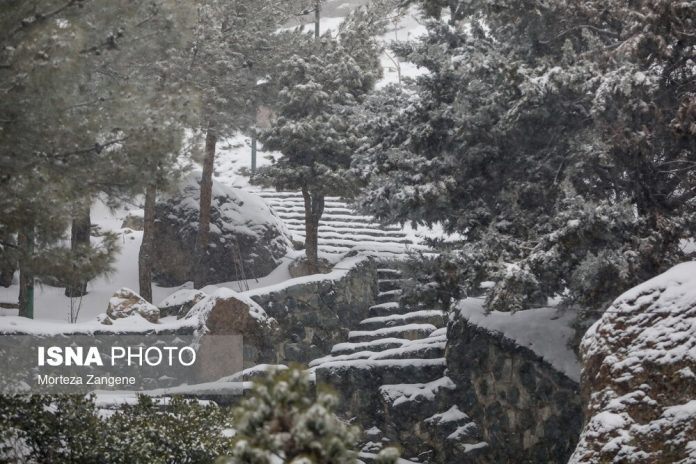
Persistent snow, rain in Tehran to continue until Tuesday, temperature to drop to freezing

Watch scenes of snow-covered Tehran in the following pictures.

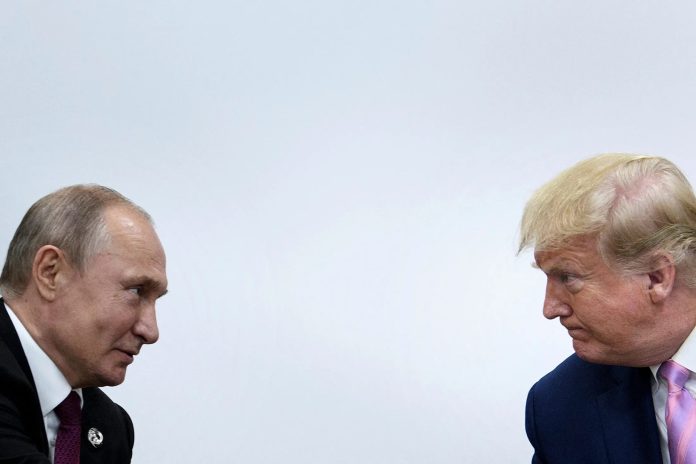
Trump team preparing phone call with Putin: CNN

Putin Trump

According to people familiar with the matter interviewed by the network, the primary aim of the call would be to discuss a face-to-face meeting in the coming months to explore ways to resolve the Ukraine conflict.

Officials within Trump’s national security team reportedly began planning for the call several weeks ago, CNN reported, adding that it remains unclear whether a date for the conversation has been finalized. The network noted that the phone call would be a significant shift from President Joe Biden’s approach, who has not spoken directly with Putin for nearly three years.

Earlier this month, Trump confirmed his intention to speak with Putin, stating that the Russian leader “wants to meet, and we are setting it up.” The president-elect, who has been critical of US aid to Kiev, has repeatedly vowed to swiftly end the Ukraine conflict.

Kremlin spokesperson Dmitry Peskov has said that Putin is open to negotiations with the US president without any preconditions. However, he stressed that there have been no substantial preparations for talks, while suggesting waiting until Trump is sworn in.

Commenting on the potential Ukraine talks, Putin foreign policy aide Yury Ushakov suggested that the incoming US president would be the one to initiate a dialogue.

“We are calmly waiting for Trump’s team to take over. After that, let’s see what happens,” he said.

In recent weeks, US media outlets have reported that Trump’s team is mulling a peace plan for Ukraine which could include a ceasefire along the current front lines and the creation of an 1,300-km (800-mile) demilitarized zone patrolled by European troops. Additionally, Ukraine would agree to delay its aspirations for NATO membership for at least 20 years.

Russian Foreign Minister Sergey Lavrov has criticized parts of the reported plan, saying Moscow “is of course not satisfied” with the proposals to postpone Ukraine’s NATO ambitions and deploy a Western peacekeeping contingent to Ukraine.

Moscow has also rejected a freezing of the conflict, insisting that it must achieve all of the goals of its military operation, including permanent Ukrainian neutrality, demilitarization, and denazification. Russia has also signaled that it would immediately declare a ceasefire once Kiev begins withdrawing from Russian territory, including the regions of Donetsk, Lugansk, Kherson, and Zaporozhye.

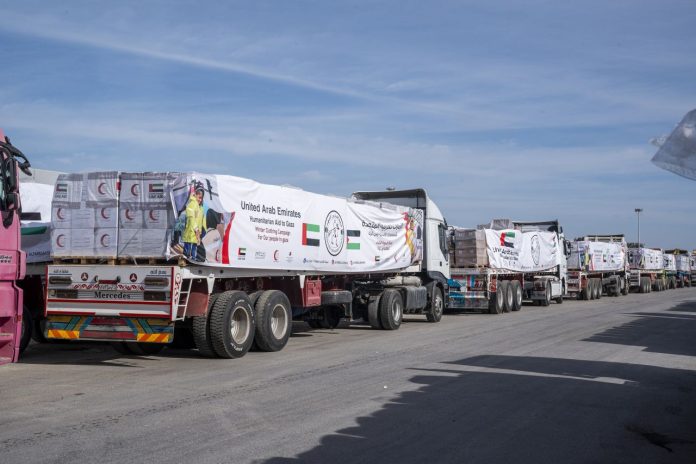
UN relief chief cautions “no time to lose”, as hundreds of aid trucks enter Gaza

“At least 630 trucks with humanitarian aid entered Gaza on Sunday, with at least 300 of them going to the north. There is no time to lose,” Tom Fletcher said in a statement Sunday.

“After 15 months of relentless war, the humanitarian needs are staggering. We recognize the logistical challenges facing those delivering this aid, including mountains of rubble and unexploded remnants of war. The safety of all civilians, including aid workers, remains our top priority.”

The ceasefire agreement allows for a dramatic uptick in humanitarian relief to enter Gaza. However, the UN has warned the increased aid allotment would be “only a start” in addressing the catastrophic humanitarian crisis in the enclave, where Israeli strikes have laid waste to large swathes of territory and human rights groups have described “unspeakable” living conditions.

Fletcher called on countries “with influence over the parties to ensure that this lifesaving aid reaches those who need it most.”

“This is a moment of tremendous hope – fragile, yet vital – as we continue to navigate the complexities of the days and weeks ahead,” Fletcher added.

The Gaza ceasefire agreement took effect at 11:15 a.m. local time (0915GMT) on Sunday after a few hours’ delay.

Nearly 47,000 people have been killed, mostly women and children, and over 110,700 others injured in Israel’s genocidal war on Gaza since Oct. 7, 2023, according to local health authorities.

The Israeli war has left more than 11,000 people missing, with widespread destruction and a humanitarian crisis that has claimed the lives of many elderly people and children in one of the worst global humanitarian disasters ever.

In November, the International Criminal Court issued arrest warrants for Israeli Prime Minister Benjamin Netanyahu and his former Defense Minister Yoav Gallant for war crimes and crimes against humanity in Gaza.

Israel also faces a genocide case at the International Court of Justice for its war on the enclave.

Cindy McCain, the head of  UN World Food Programme (WFP), has stated that while this is a “critical first step”, the needs in Gaza are “immense”.

“This is a critical first step, but the needs in Gaza are immense; two million people have been in urgent need of food and other basics for far too long,” she said in a statement.

“After 15 months of war, we need all border crossings to stay open and function efficiently, effectively and reliably. And we need humanitarian teams to be able to move freely and safely across Gaza to reach those in need,” the statement read.

The statement added that WFP has “enough food pre-positioned along the borders, and on its way to Gaza, to feed over a million people for three months”.

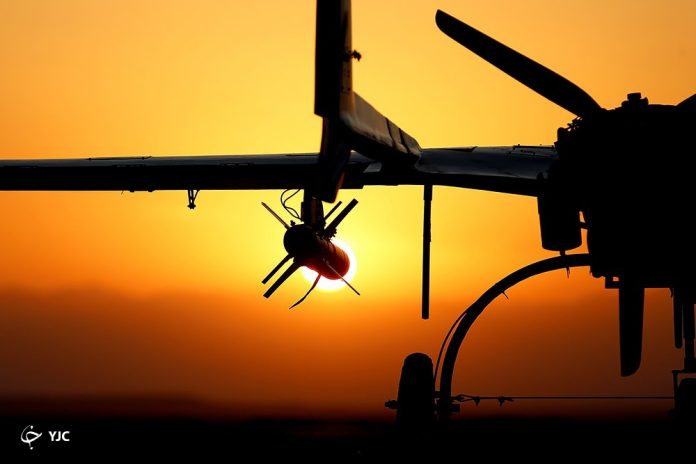
Iranian Army Ground Forces stage ‘successful’ missile, drone strike drill

Iran Drone

Their mission was to capture and detain the leaders of hypothetical terrorist forces.

During this phase, after gathering intelligence and identifying the locations of cross-border terrorist forces threatening Iran’s security and territorial integrity, the 65th NOHED Brigade’s special units carried out specialized operations.

According to reports, after collecting and analyzing information, various stealth and reconnaissance drones attacked the terrorist groups’ headquarters.

Following the destruction of the bases using Fajr-5 missiles with a range of over 110 kilometers and Mohajer-6 drones equipped with Qaem bombs, the brigade’s rapid reaction special units, supported by heavy fire from Army Aviation helicopters and armored and artillery units, conducted a heliborne operation to arrest the terrorist elements.