Friday, December 26, 2025
Home Blog Page 524

Iran’s military chief says Tehran ready for joint production of arms, equipment with Islamabad

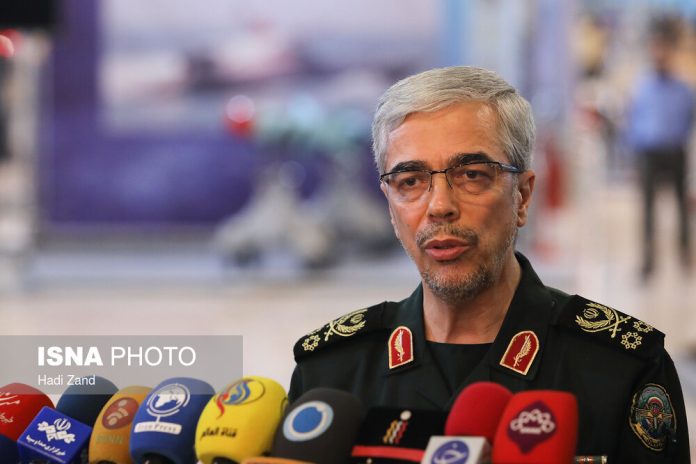
Major General Mohammad Bagheri

In a meeting with Chief of Army Staff of Pakistan Asim Munir, held in Islamabad on Monday, Major General Mohammad Hossein Baqeri said Iran is ready to cooperate with Pakistan in the joint production of defense equipment.

The Iranian general also stressed the need for coordination and exchange of intelligence between the two neighbors in the fight against terrorist groups along the common border.

Hailing Pakistan’s determination to battle against the notorious Jaish al-Adl (known in Iran as Jaish al-Dhulm) terrorist group, General Baqeri stressed the need for coordinated cross-border patrol operations and joint exercises.

The top commander also expressed Iran’s readiness for joint naval war games with Pakistan.

He noted that close convergence among the major actors of the Islamic world, such as Iran, Pakistan, Turkey and Saudi Arabia, will serve the interests of the regional nations.

The Iranian general also stressed the need for efforts to ensure peace and stability in neighboring Afghanistan.

Major General Baqeri also held a separate meeting with Pakistani President Asif Ali Zardari on Monday.

Heading a military delegation, the Iranian general traveled to Islamabad at the official invitation of the chief of Army Staff of Pakistan.

Trump signs orders to withdraw US from WHO, Paris Agreement

WHO

The U.S. has historically been the largest funder of the Geneva-based organization, which is a branch of the United Nations responsible for combating global public health emergencies.

Public health experts fear the move will weaken the organization as well as global health security.

Trump has previously tried to remove the U.S. from the organization, issuing a notice of withdrawal in 2020. He criticized the organization for its handling of the COVID-19 pandemic, calling it very “China centric” and threatened to withhold U.S. funding even while his administration was scrutinized for downplaying the virus’s threat early in the pandemic.

Former President Joe Biden quickly rejoined the organization when he entered the White House in 2021, before the end of the one-year waiting period of withdrawal had completed. He also restored U.S. funding to the organization.

In his Monday executive order, Trump again criticizes the WHO for its “mishandling” of the COVID-19 pandemic for “unfairly” asking for “onerous” payments from the U.S.

About a fifth of the WHO’s budget in 2023 — or roughly $1.28 billion — came from the United States.

Those funds went toward identifying and responding to health emergencies and stopping disease threats from spreading across borders, according to the WHO’s website.

The U.S. withdrawal from the WHO would mean the country’s health agencies would lose access to the organization’s resources, such as global data releases.

“The US withdrawing from the WHO will severely constrain the ability of the US to have situational awareness of infectious disease emergencies occurring all over the world all the time (including now),” stated Amesh Adalja, a senior scholar at the Johns Hopkins Center for Health Security who specializes in emerging infectious diseases and pandemic preparedness.

“The very real reforms that need to occur at the WHO such as putting pressure on China regarding information on the early days of COVID-19 and allowing Taiwan to be part of the organization are less likely to occur without the US as a member.”

Trump has also signed an executive order officially beginning the withdrawal of the U.S. from the Paris Climate Agreement.

The newly inaugurated president signed the order at an inauguration event at Washington’s Capital One arena, following up on a memo earlier in the day confirming it would be among his first executive actions. Trump withdrew the U.S. from the agreement in his first term as well, finalizing the process in 2020 only for former President Biden to reenter the agreement in his first year in office.

The multiyear process, when complete, will make the U.S. one of only a handful of countries that are not party to the agreement, along with Iran, Libya and Yemen. The nonbinding agreement includes a commitment among members to reduce greenhouse gas emissions, the primary cause of climate change, to avert warming beyond 1.5 degrees Celsius above the preindustrial average.

Withdrawal from the agreement was anticipated to be among Trump’s first actions in office, which are expected to focus in large part on energy and environmental policy. Trump has vowed to undo a number of Biden climate moves, including restrictions on offshore drilling along the East and West coasts. The new president has also said he will take action to block new approvals for offshore wind projects and undo a Biden administration freeze on new exports of liquefied natural gas.

Trump’s initial actions are largely the inverse of Biden’s first days as president, which saw him reenter the Paris agreement, block the approval of the Keystone XL Pipeline and announce a temporary pause on new oil and gas leases on public lands.

Trump revokes sanctions against violent Israeli settlers in West Bank

Israeli Settlers

It was among 78 executive orders rescinded by Trump not long after he stepped into the Oval Office.

Executive order 14115 titled “Imposing Certain Sanctions on Persons Undermining Peace, Security and Stability in the West Bank” targeted illegal Israeli settlers who committed “high levels of extremist settler violence, forced displacement of people and villages, and property destruction.”

The order, signed by Biden on Feb. 1, 2024, said that illegal Israeli settler violence “undermines the foreign policy objectives of the United States, including the viability of a two-state solution and ensuring Israelis and Palestinians can attain equal measures of security, prosperity and freedom.”

The United Nations Office for the Coordination of Humanitarian Affairs (OCHA) has recently reported that 2024 saw the highest number of Israeli settler attacks in the occupied West Bank and East Jerusalem since the agency began keeping records nearly two decades ago.

The OCHA has reported the “highest number” of illegal Israeli settler-linked incidents in the occupied West Bank and East Jerusalem.

The report covers incidents “since the office began keeping records almost two decades ago,” it said in a statement.

OCHA noted that “around 1,400 such incidents – including physical assaults, arson attacks, raids on Palestinian communities and the destruction of fruit trees – have resulted in Palestinian casualties, damage to property, or both.”

“This is nearly four incidents per day,” said OCHA.

It also added that 12% of internally displaced Palestinians in the occupied West Bank “have cited settler violence and access restrictions as the main reasons that forced them out of their homes or communities.”

“This year has also marked the second highest number of Palestinian fatalities in the West Bank since OCHA’s records began, following 2023, which was the highest,” said OCHA.

The statement further reported that more than 480 Palestinians, including children, were killed in the occupied West Bank and East Jerusalem.

“OCHA notes that most of them were killed by Israeli forces,” it said.

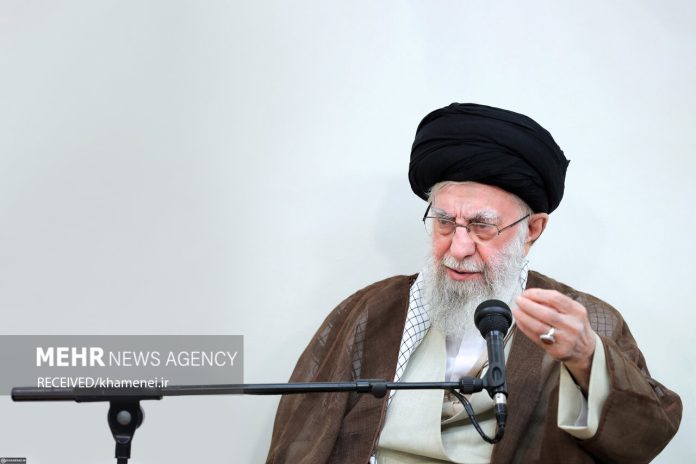
Iran’s Leader’s message: “Hamas is Alive and Will Remain Alive” Amid Gaza Ceasefire

Ayatollah Khamenei

The tweet by Ayatollah Seyyed Ali Khamenei reads, “The people of Gaza stand firm like a mountain, and the resistance front, despite the martyrdom of prominent figures like Yahya Sinwar, will not stop even the slightest. Hamas is alive and will remain alive.”

The message comes after the recent ceasefire between Hamas and Israel, which took effect on Sunday.

The ceasefire, brokered by the US, Qatar, and Egypt, has brought a temporary halt to 15 months of Israeli aggression.

As part of the agreement, three Israeli hostages were released by Hamas, and Israel freed 90 Palestinian prisoners.

Aid and commercial supplies have started flowing smoothly into Gaza, providing much-needed relief to the region.

IMF says Iran’s economy will continue to grow in 2025

imf

IMF forecasts cited in a Monday report by the Tasnim news agency showed that Iran’s economy would expand by 3.1% in 2025, lower than a regional average growth rate of 3.9%.

IMF expected that Iran’s gross domestic product (GDP) would increase by $29 billion to $463 billion next year.

It said Iran’s non-oil sector of the economy would also expand by 2.3% in 2025.

The IMF estimated that Iran’s oil production will average 3.1 million barrels per day (bpd) next year while its natural gas production would amount to the equivalent of 5.2 million bpd, making the country the second-largest hydrocarbon producer in the region after Saudi Arabia.

Iran’s oil exports would reach an average of 1.6 million bpd while gas exports would reach the equivalent of 0.4 million bpd in 2025, the global lender said.

The inflation rate will continue to fall in Iran next year to reach 29.5%, the lowest in four years but still higher than all other economies in the West Asia region, IMF forecasts indicated.

It expected that Iran will continue to maintain a positive balance of current accounts in 2025 at $13.9 billion, higher than many economies in the region.

The IMF data showed that Iran’s accessible foreign assets will reach $33.8 billion next year despite a continued regime of US sanctions that restrict the country’s access to banking services.

Iran would maintain a foreign debt-to-GDP ratio of 1.8% in 2025, the lowest in the entire region, the figures showed.

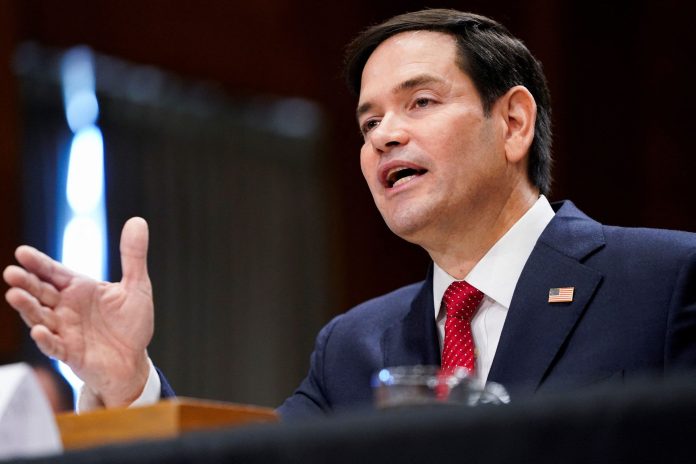
US Senate confirms Iran hawk Marco Rubio as secretary of state

The Senate backed Rubio by a vote of 99-0, days after the long-term member of the Senate foreign relations and intelligence committees sailed through his friendly confirmation hearing.

Rubio became the first of Trump’s cabinet nominees to be confirmed by the Senate, just hours after the president was sworn in for a second White House term.

Additional votes on Trump nominees were expected this week.

Rubio, 53, is a harsh critic of China. The son of immigrants from Cuba, he has also pushed for tough measures against the Communist-ruled island and its allies, especially the government of Venezuelan President Nicolas Maduro.

During his confirmation hearing, he warned that the US must change course to avoid becoming more reliant on China, and promised a robust foreign policy focused on American interests.

Rubio also stated it should be US policy that the war in Ukraine must end. He said reaching an agreement to stop the fighting would involve concessions from both Moscow and Kyiv, and he suggested that Ukraine would have to give up its goal of regaining all the territory Russia has taken in the last decade.

Rubio is the first person of Hispanic origin to serve as the nation’s top diplomat.

Trump began announcing his selections for cabinet positions almost as soon as he won his second term as president on Nov. 5. His supporters had clamored for the Senate to confirm all of his picks as quickly as possible but some faced tough questioning about their experience and qualifications even from members of his own Republican party.

Americans believe US spends too much on Ukraine: Survey

US Weapons

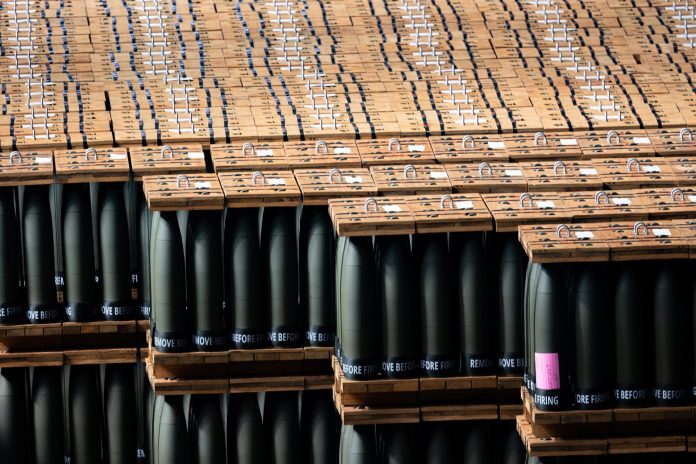
According to the findings, 51% of respondents say the country is “spending too much” on Kiev, while 28% believe the current amount is appropriate. Only 17% say the country should boost spending on Ukraine.

Similarly, 53% of those surveyed say US aid to Israel is excessive, with 30% considering it adequate. The survey, conducted from January 2 to 10, involved 2,128 people nationwide.

Public sentiment reflected in the survey suggests that most Americans want Washington to prioritize domestic issues over foreign aid. Among the respondents, 60% say the US “should pay less attention to problems overseas and concentrate on problems here at home,” while only 38% believe the country should continue to be active in global affairs. The poll also indicates that 60% believe the US government is “almost always wasteful and inefficient,” while 72% say it is “working to benefit itself” and its own agenda, not the people.

Congress has appropriated a total of over $175 billion on assistance for Kiev since the conflict with Russia escalated in February 2022, of which $65.9 billion has been direct military assistance, according to the latest data from the Pentagon.

Moscow has warned that Western aid to Ukraine only serves to prolong the conflict without changing the outcome. It has announced it is willing to find a diplomatic solution to the conflict, but maintained that any settlement must begin with Kiev ceasing military operations and acknowledging the reality that it will not regain control of former Ukrainian regions that voted to join Russia. Moscow has also insisted upon Ukrainian neutrality, demilitarization, and denazification.

Released Palestinian prisoners show signs of neglect: Hamas

“The pictures of the three female prisoners being handed over to the enemy showed them in full physical and psychological health, while our male and female prisoners showed signs of neglect and exhaustion,” the statement read.

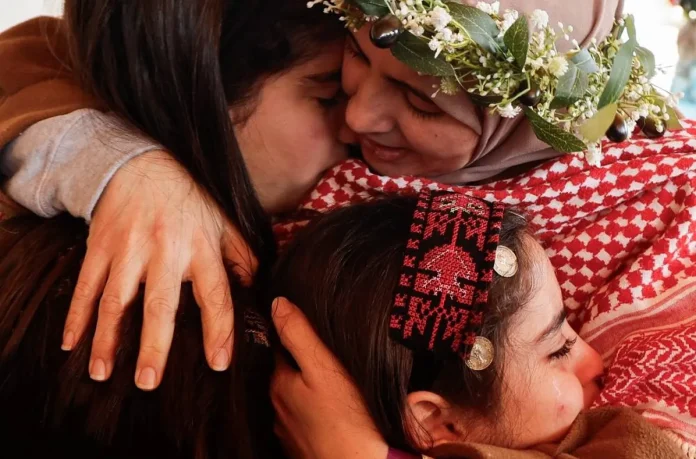
Ninety Palestinians have been freed from Israeli prisons and were greeted by large crowds of jubilant relatives, friends and supporters as they returned home to the occupied West Bank in the first prisoner exchange of the ceasefire between Tel Aviv and Hamas following the release of three Israeli captives in the besieged Gaza Strip.

On Monday, Red Cross buses carrying the 90 Palestinian prisoners arrived in Ramallah in the occupied West Bank, where they were greeted by crowds of thousands despite warnings from Israeli forces that celebrations would not be allowed.

The freed Palestinians included 69 women and 21 teenage boys – some as young as 12 – from the occupied West Bank and Jerusalem.

Hours earlier, three Israeli women captives in their mid-20s to early 30s were released in Gaza.

In the first phase of the deal, Hamas is expected to return a total of 33 Israeli captives over the next 42 days – with the next release due on Saturday.

More than 47,000 Palestinians have been killed since the war began on October 7, and nearly 90 percent of Gaza’s population has been forcibly displaced by Israeli evacuation orders and attacks.

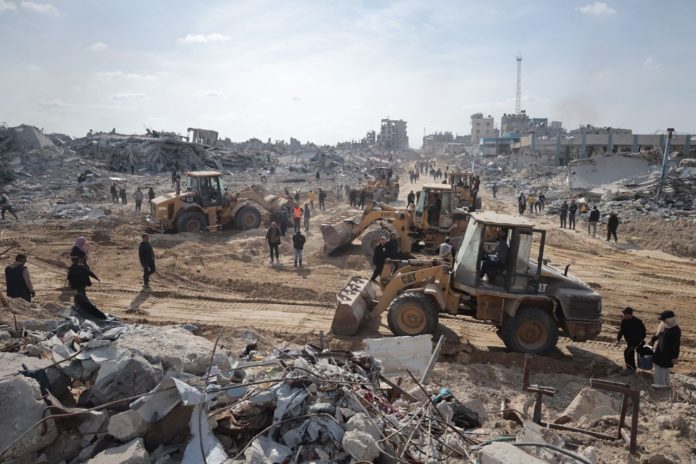
Gaza’s first responders searching rubble for 10k missing bodies

The rescuers said these casualties have not yet been included in the official death toll of Israel’s war on Gaza.

Over the course of the 15-month war, 99 of its rescuers were killed in Israeli attacks, with 319 others injured, including dozens left with permanent disabilities, the agency reported. It also said 27 members have been detained by Israeli forces, and their fate remains unknown.

The civil defence teams have rescued more than 97,000 injured Palestinians since 7 October 2023. The agency also stated that around 2,840 bodies were “evaporated without a trace” by Israeli weapons that generated extreme temperatures of up to 9,000 degrees Celsius (16,000 Fahrenheit).

More than 47,000 Palestinians have been killed, mostly women and children, and over 111,7000 others injured in Israel’s genocidal war on Gaza, according to local health authorities.

In November, the International Criminal Court (ICC) issued arrest warrants for Israeli Prime Minister Benjamin Netanyahu and his former Defense Minister Yoav Gallant for war crimes and crimes against humanity in Gaza.

Israel also faces a genocide case at the International Court of Justice for its war on the enclave.

Yemen’s Houthis says to target only Israel-linked vessels after Gaza ceasefire

Yemen Houthis

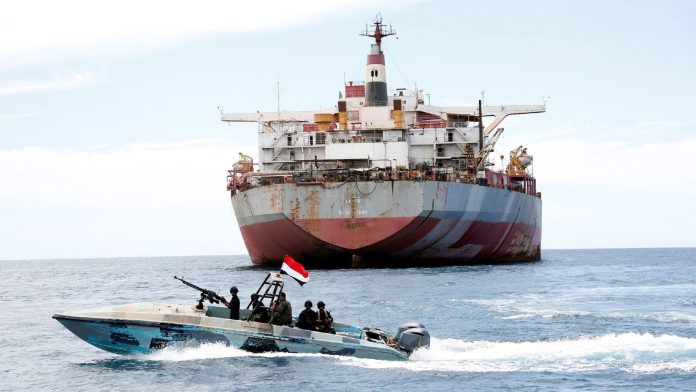
The HOCC, which liaises between Houthi rebels and commercial shipping operators, also said in an email that if the US, UK or Israel resumed strikes on Yemen, then attacks on vessels affiliated with these countries would resume.

Since November 2023, the Houthis have launched nearly 100 attacks on ships in the Red Sea, actions they say are in solidarity with Palestinians suffering under Israel’s war on Gaza, which has killed more than 46,900 people and wounded over 110,000 Palestinians.

The Houthis have stressed they will stop their attacks if Israel’s war on Gaza stops.

Despite attacks by the United States, Britain and Israel on Yemeni territory, the Houthi military operations have continued unabated.