Monday, January 19, 2026
Home Blog Page 522

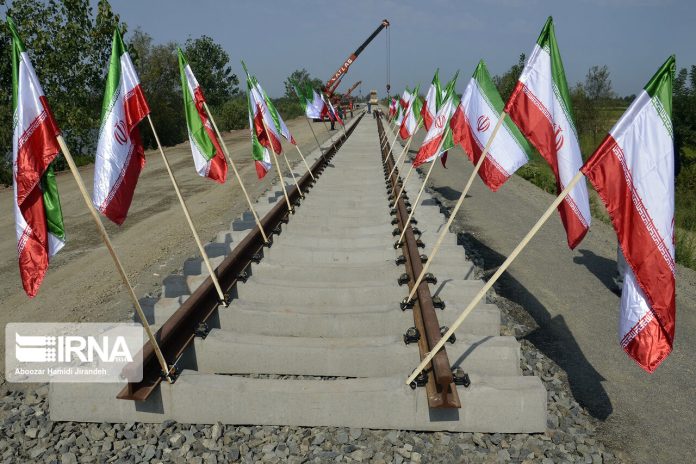
First Indian rail transit shipment arrives in Afghanistan via Iranian territory 

Iranian transit routes

That’s according to CEO of the Afghanistan Rail Development Consortium Mostafa Rezaei.

He said the shipment consists of six containers of almonds and oilseeds. After crossing the Shamtigh rail border in the northeastern Iranian city of Khaf, the shipment reached the Roozanak station in Herat, Afghanistan.

Rezaei said the cargo was initially transported from India by ship to Bandar Abbas, southern Iran, and then transferred via Iran’s rail network to Afghanistan.

He noted that since the operational launch of the Khaf-Herat rail corridor earlier this year, the consortium has facilitated the transit of over 30,000 tons of export and transit cargo between Iran and Afghanistan by rail.

He underlined that following the launching of this rail corridor, trade balance between the two countries has improved with enhanced security, and transportation costs for traders and producers have been reduced.

Iran president says Tehran not to back down from any threat

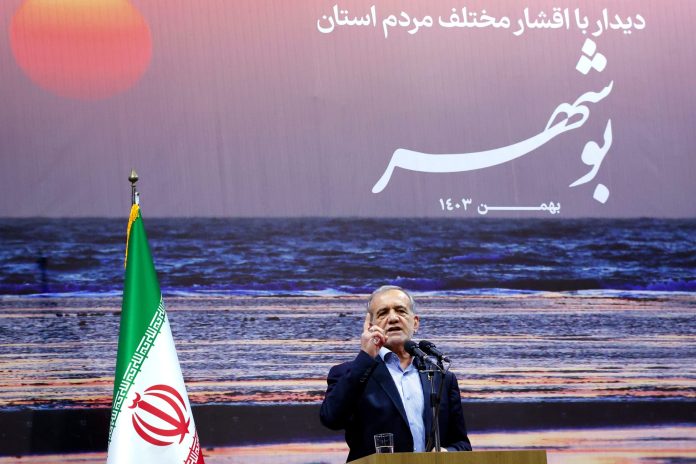
Speaking to the people of Bushehr in Southern Iran on Wednesday afternoon, President Pezeshkian said If the Americans are truly seeking negotiations, why don’t they halt their hostile policies? Those who now pay lip service to dialogue have imposed the harshest sanctions against the Iranian people and blocked all avenues for engagement.

President Pezeshkian highlighted the martyrdom of thousands of Iranian officials and civilians since the 1979 Islamic Revolution, asserting that these individuals were killed by the Americans, yet the US President accuses Iran of terrorism. Those who are themselves the primary perpetrators of terror in the region are pointing fingers at others.

Addressing Western support for the Zionist regime, he stated before the eyes of the world, that Israel has massacred over 50,000 women, children, elderly, and youth in Gaza, razing their homes to the ground. It has committed similar atrocities in Lebanon and Syria. Yet the same nations backing this regime seek to deny Iran the right to defensive capabilities. They should know that the Iranian people will never surrender to such pressures.

In closing, Pezeshkian emphasized If we all join hands and rely on our domestic capacities, we will elevate this nation to the peaks of dignity and pride.

Iran showcases unmanned Submersible, suicide UAV

Published footage of the unmanned submersible shows the device emerging from beneath the surface and then launching a suicide drone toward its target.

Also during the ceremony, the “Hadid 110” suicide drone, equipped with a jet engine, was also unveiled.

The “Hadid 110” suicide drone has stealth capabilities and is radar-evading.

Deputy youth minister: 205 licensed matchmaking centers operating in Iran to increase marriage rate

Ali Reza Rahimi explained that the initiative is rooted in parliamentary legislation, aimed at facilitating marriage among young people, adding a specialized task force has been formed to evaluate the effectiveness of the centers and websites in increasing marriage rates.

The deputy minister stressed the importance of preventing misuse on these platforms, noting that rigorous monitoring is in place to address any issues. He also highlighted the global prevalence of matchmaking services, stating that such platforms provide a valuable opportunity for young people seeking marriage.

He suggested leveraging domestic social media networks to enhance the effectiveness of these services.

In a separate discussion, Rahimi touched on the concerning rise in teenage suicide, describing it as a serious issue requiring immediate attention.

A dedicated task force, led by government officials, is working to address the root causes, including social and psychological factors.

US says won’t send soldiers to Ukraine

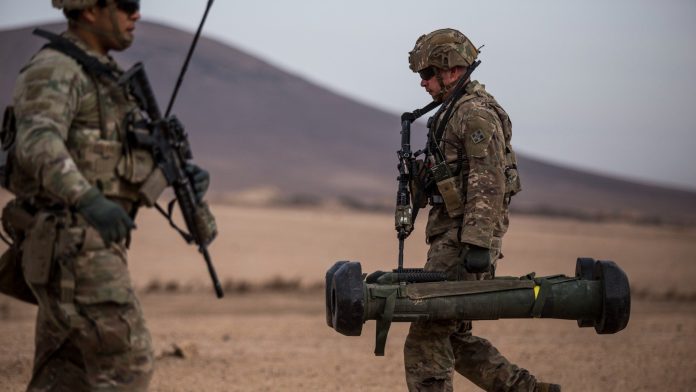
US Forces

Hegseth’s remarks come amid ongoing discussions among Western countries about the possible deployment of peacekeeping forces if a ceasefire is negotiated.

“We are not sending U.S. troops to Ukraine,” Hegseth told reporters in Stuttgart, Germany, during his visit to U.S. European Command and U.S. Africa Command headquarters.

Hegseth added that Washington currently has no plans to reduce the U.S. contingent abroad but will review its deployment by President Donald Trump’s strategic vision.

The U.S. Defense Secretary also expressed hope for a swift peace agreement in Ukraine, which Trump has pledged to conclude.

“With hopefully a rapid peace deal in Ukraine, which the President (Donald Trump) is committed to delivering, we can then review force posture and encourage as you’re going to see at the Ukraine contact group and the NATO ministerial, we’re going to have straight talk with our friends,” Hegseth added.

Hegseth is expected to attend the Ukraine Defense Contact Group (UDCG), also known as the Ramstein summit, as part of a tour of Germany, Belgium, and Poland, according to a Pentagon statement.

At the summit, the defense secretary aims to “reiterate President Trump’s commitment for a diplomatic end to the war in Ukraine as quickly as possible,” the statement read.

However, this time, Hegseth is not likely to announce new military aid supplies, which was a regular occurrence during the Joe Biden administration, according to the Washington Post (WP).

The Pentagon chief will not hold separate meetings with his Ukrainian counterparts but will rather be a “listener” at the Ramstein and at the meeting of NATO defense ministers on Feb. 13, an unnamed U.S. official told WP on condition of anonymity.

The transition of power in Washington and expected changes in U.S. policy on Ukraine cast doubt on the future of the Ramstein summit. In February, for the first time since the establishment of the Ramstein format, the meeting was convened by the U.K., not the U.S.

Ayatollah Khamenei says Iranians sent ‘message of unity’ to world on Revolution anniversary

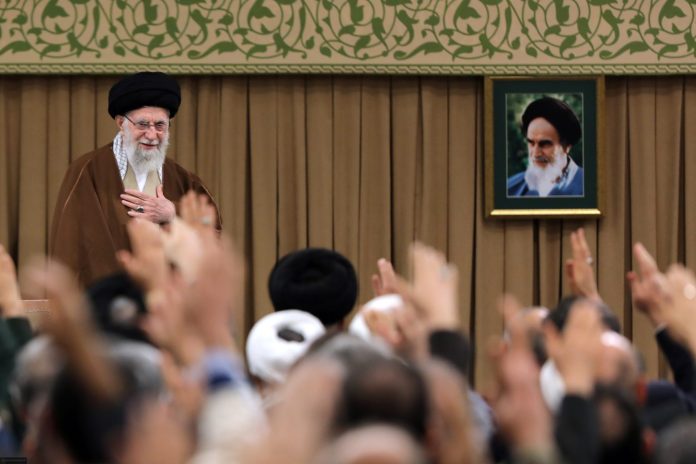
Ayatollah Khamenei made the remarks in Tehran on Wednesday, addressing a gathering of Defense Ministry officials, defense industry elites, the ministry’s experts and staff, and families of the martyrs hailing from the country’s defense industry.

The Leader described the day marking the Revolution’s victory as one of the most significant national events, showcasing the unity and strength of the Iranian people despite relentless external pressures.

Ayatollah Khamenei emphasized that the celebrations on this year’s anniversary were not just a commemoration, but a powerful act of resistance and national unity.

“This was a message of unity from the Iranian people. Despite the constant, idiotic threats against us, the people of Iran showed the world their identity, their strength, and their unwavering resolve.”

“This year’s February 22nd was one of the most outstanding celebrations of the Revolution,” the Leader stated.

“It was a popular uprising, a grand national movement. People took to the streets, raised their voices, and shared their views across the media, all over the country. This was a true popular uprising, a major national movement.”

Ayatollah Khamenei noted that, “Despite ongoing media bombardments, psychological warfare, and unfounded threats from adversaries against the historic development, the Iranian people stood strong in their commitment to the values of the Revolution with their indication of strong support for the event during this year’s marches and jubilations.”

Ayatollah Khamenei also made special reference to the presence of young people in the celebrations, their vibrant energy, which was visible across the country’s various cities, not just in Tehran and major urban centers, but in remote towns and villages.

Even in cities where the weather was harsh and conditions unfavorable, millions of Iranians participated, demonstrating their collective will, the Leader remarked.

According to observers, Ayatollah Khamenei’s comments reflect the broader sentiment in Iran, where the Revolution’s anniversary has become a symbol of resistance against foreign interference and a reaffirmation of Iran’s sovereignty.

The anniversary also serves as a reminder of the enduring influence of the Revolution, despite the ongoing political and economic challenges posed by the country’s adversaries, they note.

Ayatollah Khamenei added, “The issue of defending the nation, defending security, is not a small matter. Today, Iran’s defensive power is renowned and well-known. Iran’s friends take pride in this defensive power, and Iran’s enemies fear it. This is very important for a nation, for a country.”

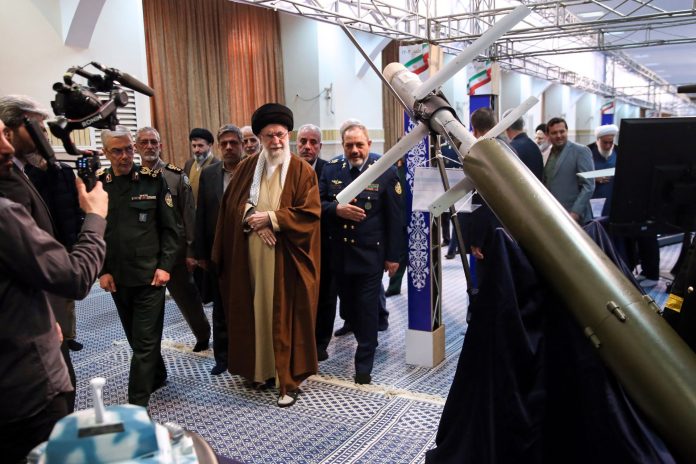
Also on Wednesday, the Leader visited the Eqtedar (Strength) 1403 Exhibition, which showcased the latest achievements and capabilities of Iran’s defense industry.

The event displayed advanced equipment and new technologies used in areas such as air defense, ballistic and cruise missiles, smart munitions, space, drones, aviation, vessels, and energy.

Biden ‘least liked’ living American president: Poll

Joe Biden

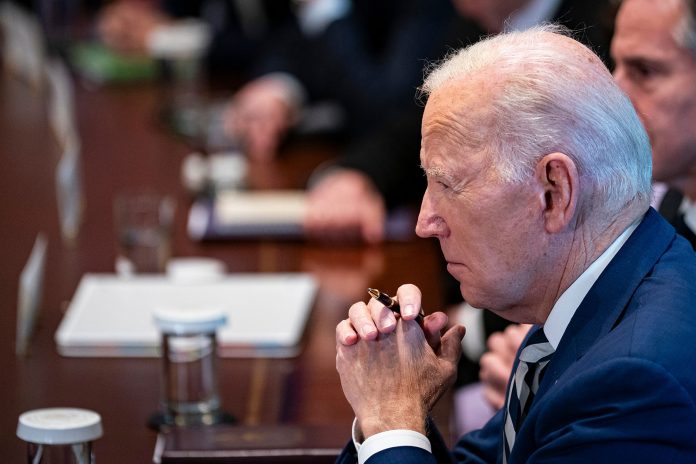
In a Gallup poll of the five living presidents — Biden, Trump, Bill Clinton, George W Bush, and Barack Obama — Obama comes out on top with 59 percent having a favorable view of the 44th president.

Bush scored second place with a favorable rating of 52 percent, Clinton and Trump are tied at 48 percent, and Biden comes in last with 39 percent of respondents saying they have a favorable view of the 46th president.

Bush and Clinton had the highest percentage of respondents saying they had no opinion of them — 14 and 12 percent respectively.

The survey was conducted between January 21 and 27, just after Trump’s inauguration for his second term as president, where all four former presidents were present. All five also attended the funeral for President Jimmy Carter, who died at the age of 100, becoming the longest-living president.

Gallup noted that Trump and Biden’s ratings are “essentially unchanged” since the 2024 election.

Trump’s ratings are about equally favorable and unfavorable, but they still rank among his best since Gallup began measuring opinions of the 45th and 47th president in 1999.

“He has had only one net-positive rating to date – 50% favorable and 38% unfavorable – in 2005, when he was featured in the reality television show The Apprentice and before he entered Republican politics,” Gallup noted in its analysis.

During his first presidential campaign in 2015 and 2016, only an average of 33 percent of American adults had a favourable view of Trump. Forty-two percent had a favorable view of him following his 2016 election win over former Secretary of State Hillary Clinton. After his first inauguration, this number rose to 46 percent.

Trump’s first term saw his favorability rating remain mostly above 40 percent, dipping to 36 percent shortly before the end of his first term as Covid-19 infections rose and his supporters ransacked the U.S. Capitol on January 6, 2021. His ratings rose once more to about 40 percent in July 2023 following his indictment in the federal classified documents case.

Biden now has a 39 percent favorable rating with 57 percent unfavorable rating, with Gallup calling it “barely better than his worst evaluation since he became a well-known political figure.”

In June last year, Biden had a 37 percent favorable rating and a 61 percent unfavorable rating amid concerns about his age and positions on issues as he took on Trump in the initial stages of the 2024 election. At the time, polls had him behind Trump.

Following his debate debacle on June 27, concerns about his age grew.

Biden notched his best rating in January 2017 when 61 percent of respondents had a favorable view of him at the end of his vice presidency. Right after being inaugurated as president in January 2021, he had a 59 percent favorable rating.

Poll shows most Europeans see US under Trump as more a necessary partner than ally

Donald Trump

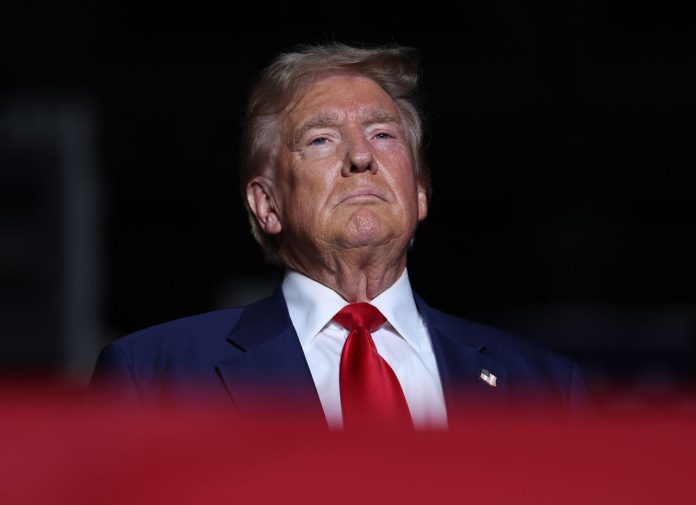
The polling, of 11 EU member states plus Ukraine, Switzerland and the UK, found most people now regarded the US as merely a “necessary partner” – even in countries such as Poland and Denmark that barely 18 months ago had considered the US an ally.

An average of 50% of Europeans across the member states surveyed viewed the US this way, the study revealed, with an average of only 21% seeing it as an ally, leading the report’s authors to urge a more “realistic, transactional” EU approach.

The figures “speak to a collapse of trust in Washington’s foreign policy agenda” and heralded “the potential death knell of the transatlantic alliance” said Arturo Varvelli, co-author of the report, by the European Council on Foreign Relations (ECFR).

“This finding alone should really sharpen minds about the need for Europe to embrace greater pragmatism and autonomy in its global dealings, as a means of protecting its citizens and its values in the coming period,” Varvelli added.

Those seeing the US as a “necessary partner” rather than an ally were most numerous in Ukraine (67%-27%), Spain (57%-14%) and Estonia (55%-28%). But even in the UK, which boasts of a “special relationship” with the US, the ratio was 44% to 37%.

But while Europeans were essentially aligned on their view of US foreign policy, there were significant differences on other issues, suggesting scope for Trump’s “America First” administration to play member states off against each other.

While on average EU citizens thought Trump’s return as US president was a “bad thing” for Americans, for their own country and for world peace, Hungarians, Bulgarians and Romanians were considerably more positive than Danes and Germans.

Far-right supporters across Europe proved Trump’s biggest fans, with fewer than one-fifth of voters for Fidesz in Hungary, Law and Justice (PiS) and Konfederacja in Poland and Brothers of Italy believing his re-election was a “bad thing” on all three counts.

Respondents who voted for Alternative für Deutschland (AfD) in Germany and the National Rally (RN) in France stood out, nonetheless, in having a plurality (37% and 35%, respectively) who believed Trump’s return to power was a bad thing for their own countries.

There was disagreement, too, over Ukraine. Majorities or pluralities in all countries, including 55% in Denmark, 49% in the UK and 44% in Poland, said a “compromise settlement” was the likeliest outcome of Russia’s war on Ukraine.

Some, however, including Estonia, Denmark, the UK and Portugal, felt considerably more strongly than others that continuing support for Kyiv, rather than pushing for peace, must nonetheless remain the EU’s priority.

And views on what should happen after the war varied widely: 47% of French and 50% of Italians said they struggled to see Ukraine as European, and in Bulgaria and Hungary, many saw Russia as an EU ally or necessary partner, not a rival or adversary.

The EU’s engagement with China was another topic of divergence. Half or more of respondents in southern and south-eastern Europe, including Spain, Italy, Bulgaria, Hungary and Romania, said they saw Beijing as a “necessary partner” or ally.

However, in countries in northern and western Europe, roughly similar percentages – 55% in Germany, 52% in Denmark, and 45% in the UK and France – held the opposing view, seeing China instead as a rival or adversary.

The report’s authors argued there was no reason to believe Trump had changed his opinion of the EU from his first term in office, during which he called the bloc a “foe” for the US and referred to Brussels as being “like a hellhole”.

With the new president opposed to Europe’s green transition, alleged “wokeism” and social media regulation, the bloc must expect “strategic, economic and political challenges” and understand that US and European interests were diverging, they said.

European leaders will need to work across the bloc’s faultlines, entertain new forms of flexible cooperation among member states and, above all, resist establishing privileged bilateral relations with Trump at the expense of other European allies.

“The Atlantic community is no longer underpinned by shared values,” stated the ECFR’s Jana Puglierin.

“In a world of Trump 2.0, transactionality reigns. For EU leaders, this will require a positional shift away from the Washington-led status quo.”

Paweł Zerka, another co-author, noted the “Trumpisation of Europe” was evident in rising support for far-right parties, a growing readiness to adopt a transactional approach and acceptance of the need for peace negotiations in Ukraine.

But there were still “opportunities for the EU to learn pragmatism in foreign policy; for its leaders to clarify the stakes to their voters; and for pro-European parties to differentiate themselves from the Trumpian far right”, he continued.

Govt. spokeswoman says Iran has active plan to counter US maximum pressure campaign

Fatemeh Mohajerani

Fatemeh Mohajerani said that it was anticipated the Trump administration would employ maximum pressure tactics against Iran, though this strategy would ultimately prove ineffective.

Regarding the government’s stance on negotiations with the US, she said negotiation is a strategy Iran has always pursued. Iran is open to dialogue, but talks require specific conditions. Tehran will not yield to coercion. You cannot pursue a maximum pressure policy while smiling.

Referring to the experience of the Iran nuclear deal negotiations (JCPOA), the spokesperson added the reason we reject negotiations with the opposing side is that they do not understand the language of dialogue. Iran is well-versed in diplomatic discourse and has consistently used it as a tool of diplomacy, as the world witnessed during the JCPOA. However, the other party abandoned the agreement.

When asked about Iran’s plans to update its contingency strategies against the US, Mohajerani responded Iran’s predefined scenarios must be updated according to current circumstances. This process is being prioritized by the government and relevant institutions.

UN estimates more than $53B for Gaza Strip’s recovery, reconstruction

Gaza

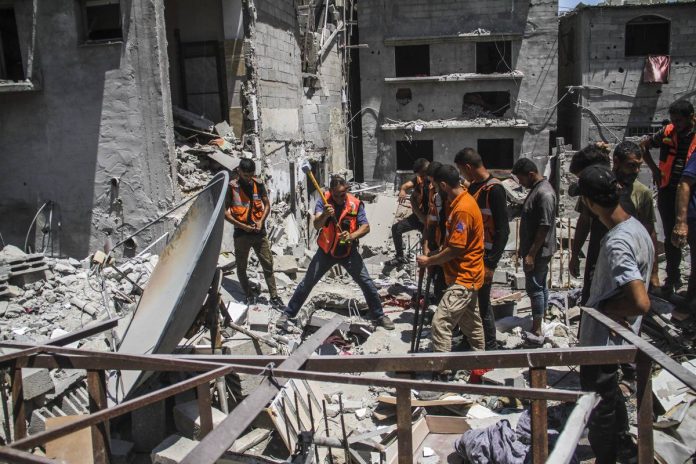
“The report estimates the recovery and reconstruction needs in the short, medium and long term across the Gaza Strip at $53.142 billion. Of these, the near-term needs in the first three years are estimated to be around $20.568 billion,” said the report by UN Secretary-General Antonio Guterres.

Highlighting the dire economic and humanitarian toll of the conflict, the report noted that Gaza’s economy is projected to shrink 83% in 2024, with unemployment reaching 80%.

“In the Occupied Palestinian Territory, poverty is projected to have risen to 74.3% in 2024, up from 38.8% at the end of 2023,” added the report.

Guterres stressed that addressing immediate humanitarian needs is crucial. “In the immediate and short term, the scale of the humanitarian crisis will require a continued focus on delivering life-saving humanitarian assistance.”

Recalling the UN’s $6.6 billion humanitarian flash appeal on Dec. 11, 2024, the report said $3.6 billion from the appeal is allocated to address the most critical needs of 2.1 million Palestinians in Gaza.

“These short-term needs are focused on addressing acute humanitarian needs through the delivery of emergency supplies and the provision of critical services, including protection, until local services and markets are restored,” it added.

The report emphasized two key priorities remaining — ensuring stronger civilian protection and securing safe and unhindered access to aid.

“With a large majority of residential buildings damaged or destroyed, some 1.13 million people are in makeshift shelters or tents that do not provide adequate protection,” it noted, warning that health care services remain critically insufficient.

The report recalled the deaths of at least eight children in Gaza due to hypothermia in December and early January.

Guterres urged stronger international support to strengthen the Palestinian Authority’s institutions and prepare it to reassume full governance in Gaza.

“Political, institutional and economic reforms will also be needed, but they must be achievable and properly financed,” he stressed.

The UN chief also stressed that Gaza must remain an integral part of a Palestinian state, with no reductions in its territory and full political, economic and administrative unity with the occupied West Bank.