Monday, January 19, 2026
Home Blog Page 521

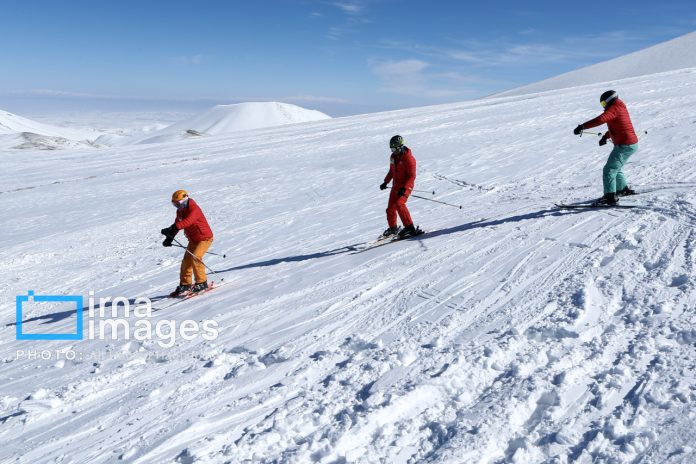
Sahand ski resort: A premier winter sports destination in Iran

As one of Iran’s 13 internationally recognized ski resorts, Sahand has hosted both national and international competitions.

With its stunning natural scenery and excellent amenities, it stands as one of Iran’s top destinations for skiing and winter tourism.

More in pictures:

Gaza’s Kamal Adwan Hospital boss tortured in Israeli jail: Lawyer

The 51-year-old Hussam Abu Safia was detained in Gaza by the Israeli army in December and taken to Sde Teiman military detention camp in Israel’s Negev Desert, before being transferred to Ofer Prison, located near Ramallah.

He was “arrested by force, handcuffed and forced to take off his clothes after being taken from the hospital to one of the army camps”, said Samir al-Mana’ama, a lawyer with the Al Mezan Center for Human Rights who visited him in Ofer Prison on Tuesday.

Al-Mana’ama stated that Abu Safia suffers from “an enlarged heart muscle and from high blood pressure” and was beaten up and refused treatment for the heart condition.

Transferred to Ofter Prison on 9 January, he was held in solitary confinement for 25 days and interrogated nonstop by the Israeli army, Israeli intelligence and police, the lawyer added.

“Despite denying all the charges against him, he was beaten with an electric stick by the Israeli army so as to extract a confession from him,” added the lawyer.

There was “no legal justification” for Abu Safia’s arrest, the lawyer said, adding that “any accusation needs evidence and as long as there is no evidence, there is no real complete accusation against Doctor Hussam.”

A lack of medical care combined with the appalling conditions in “very cold prison cells” had “severely affected” the doctor’s health, he said, adding that he was “facing a lot of sufferings in his confinement and detention”.

In a separate statement issued by the lawyer, he said that Abu Safia had been given no access to legal counsel during his 47 days in arbitrary detention.

Abu Safia, who had documented the cruel impact of Israel’s offensive on Kamal Adwan Hospital, was arrested after refusing multiple military threats to leave the hospital during a devastating blockade on the northern Gaza Strip.

The doctor was reportedly sighted back in December by two released prisoners at Sde Teiman, a controversial facility known for its extreme abuse of detainees.

US sanctions hindering Syria’s recovery: Iran’s Envoy

Syria War

In an address to a meeting of the UN Security Council on the situation in the Middle East, held in New York on February 12, Saeed Iravani said the US sanctions disproportionately harm the most vulnerable population, violate the fundamental rights of the Syrian people, and obstruct the country’s recovery.

What follows is the full text of his statement:

In the Name of God, the Most Compassionate, the Most Merciful

Mr. President,

I extend my heartfelt congratulations to China on assuming the presidency of the Security Council this month. I also warmly congratulate Algeria for its successful leadership and its Presidency’s conclusion in January.

We appreciate Mr. Pedersen, the Special Envoy, and Ms. Joyce Msuya, the Assistant Secretary-General, for their briefings and their support for the UN’s constructive engagement with the Syrian caretaker authorities to improve the situation in Syria.

Mr. President,

Given the current situation in Syria, I wish to make the following points:

1) Syria continues to face significant humanitarian and economic challenges. Addressing these issues requires prioritizing the reconstruction of critical infrastructure and the restoration of essential services, particularly early recovery projects that are vital to the country’s rebuilding efforts. However, these efforts are severely hindered by the unjust and unlawful extraterritorial sanctions imposed by the US and the EU. Temporary relief from these illegal measures or limited humanitarian exemptions is not a sustainable solution. These measures must be fully lifted, as they disproportionately harm the most vulnerable population, violate the fundamental rights of the Syrian people, and obstruct the country’s recovery. Equally important, removing these illegal measures is essential to creating the conditions necessary for the safe, dignified, and voluntary return of all Syrian refugees and displaced persons.

2) The resurgence of terrorism in Syria poses an escalating and urgent threat. The presence of foreign terrorist fighters (FTFs) with conflicting agendas has exacerbated instability, jeopardizing both regional and global security. As the Under-Secretary-General of the United Nations Office of Counter-Terrorism warned in this Chamber, “the risk that stockpiles of advanced weapons could fall into the hands of terrorists” remains a serious concern. An estimated 42,500 individuals, some with alleged links to Daesh, remain in detention camps in northeastern Syria. A structured, accountable process for repatriation is essential to restoring stability in Syria and the broader region. FTFs must be returned to their countries of origin, held accountable through legal proceedings, and prevented from posing further threats. Iran remains firmly committed to combating terrorism and is prepared to cooperate with legitimate international partners to address this critical challenge.

3) The rights of all communities must be fully respected in accordance with international law and all forms of political pressure and harassment aimed at displacing minorities in Syria, particularly Alawites and Shiites, must cease immediately. Likewise, safeguarding Syria’s religious sites is crucial to preserving the country’s identity and unity. In this context, all communities must have unrestricted access to their religious places and be able to practice their rituals freely, without fear of persecution, intimidation, or arrest.

4) Israel remains a serious threat to Syria, repeatedly violating Syria’s sovereignty and territorial integrity. Defying all Security Council resolutions, this regime refuses to withdraw from the occupied Golan Heights. With US support, Israel has expanded its occupation and systematically dismantled Syria’s military and research infrastructure. The Security Council must take decisive action to stop these violations and compel Israel to withdraw from all occupied Syrian territories.

5) Iran once again reaffirms its unwavering commitment to Syria’s sovereignty, independence, unity, and territorial integrity. The future of Syria must be determined solely by its people, free from any external interference or imposition. Iran supports the formation of an inclusive government through free elections and comprehensive national dialogue, ensuring fair representation for all Syrians. Resolution 2254 (2015) provides a clear framework, with constitutional reform as a key priority. Furthermore, Iran underscores Syria’s rightful and deserved place in the international community, emphasizing its commitment to international and bilateral obligations while safeguarding its sovereignty.

6) We categorically and unequivocally reject the baseless allegations made by the representative of the United States against my country. These accusations are not only unfounded but appear to be crafted solely to distort the truth and reality on the ground and mislead the international community. Regrettably, such claims are neither surprising nor unexpected; they are only the product of directives from Washington, which finds it necessary to accuse Iran at every Security Council meeting. However, the facts speak for themselves. For many years, under the pretext of counterterrorism, the United States has repeatedly violated Syria’s sovereignty and territorial integrity and provided safe havens for terrorist groups and the occupying regime of Israel to further its geopolitical ambitions.

7) In conclusion, Mr. President, Iran remains dedicated to playing a constructive role, working in coordination with the United Nations, regional partners, and the Syrian government, which represents the will of the Syrian people, to achieve lasting peace and stability in Syria and the broader region. In this context, we fully support the efforts of UN Special Envoy Geir Pedersen and stress that the United Nations must play a central role in this process.

Israel murdered majority of record number of journalists slain in 2024: Report

Announcing its findings on Wednesday, the CPJ said at least 124 journalists were killed in 18 countries last year, in what was the deadliest year for media workers since the committee began keeping records more than three decades ago.

The previous deadliest year for media workers was 2007, when 113 journalists were killed, with almost half of those due to the Iraq war, the press freedom group added.

“Today is the most dangerous time to be a journalist in CPJ’s history,” the committee’s chief Jodie Ginsberg said in the statement.

“The war in Gaza is unprecedented in its impact on journalists and demonstrates a major deterioration in global norms on protecting journalists in conflict zones, but it is far from the only place journalists are in danger,” she stated.

At least 85 journalists died throughout 2024 at the hands of the Israeli military during Israel’s war on Gaza, the CPJ said, with 82 of those who were killed being Palestinians.

The advocacy group also accused Israel of attempting to stifle investigations into the killings, shift blame onto journalists for their own deaths, and ignoring its duty to hold its own military personnel accountable for the killings of so many media workers.

The CPJ named Sudan and Pakistan as the joint second most deadly countries for media workers last year, with six journalists killed in each.

It also said at least 24 journalists were deliberately killed because of their work, in what it described as an “alarming rise in the number of targeted killings”.

The CPJ said 10 journalists were “murdered” by the Israeli military in Gaza and Lebanon, while the 14 other journalists were assassinated in Haiti, Mexico, Pakistan, Myanmar, Mozambique, India, Iraq, and Sudan.

The group added that freelance journalists accounted for 43 deaths – more than 35 percent of last year’s total – with 31 of those cases being Palestinians reporting from Gaza.

“International media continue to be barred from reporting from the Occupied Palestinian Territory, except for rare and escorted trips arranged by the Israeli military,” the CPJ noted, highlighting the essential work of freelancers in the besieged enclave.

“CPJ has repeatedly advocated for Israel and Egypt to open access, and reiterates that call as part of the ongoing ceasefire,” it added.

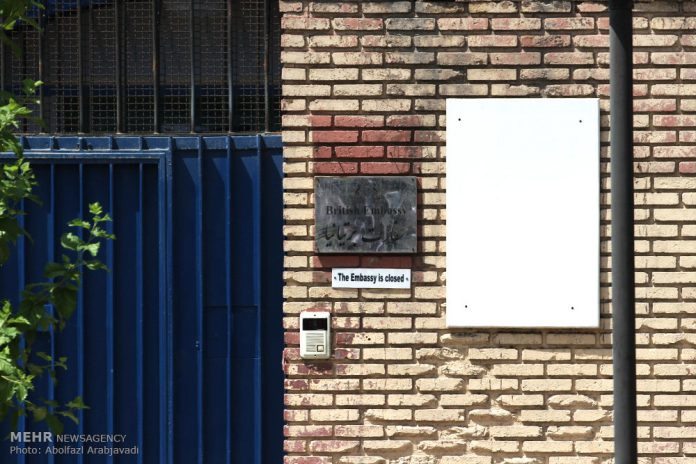
British ambassador visits detained UK nationals in Iran

UK Embassy Iran

The meeting, which took place at the local prosecutor’s office, was conducted in accordance with diplomatic protocols and international consular rights.

The Kerman Justice Department confirmed the visit in a statement but did not disclose specific details about the charges or the legal status of the detainees.

It added that further information regarding the case would be released through official channels at a later date.

The British Foreign Office has yet to issue a formal statement regarding the meeting or the detainees’ status.

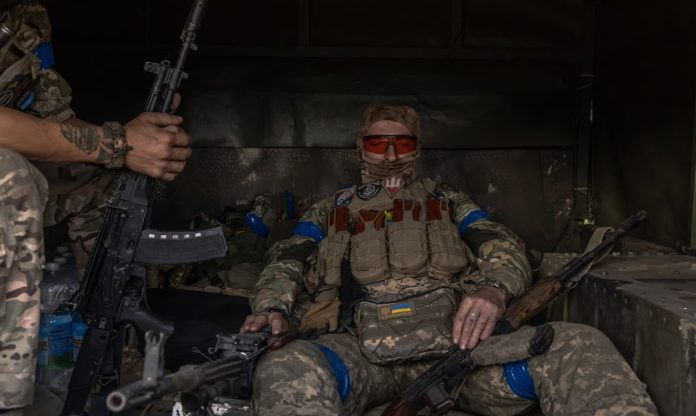
‘Restoring Ukraine’s pre-2014 borders is unrealistic objective’: US

Russia Ukraine War

Russia invaded Ukraine’s eastern Donbas region and annexed Crimea in 2014 following the EuroMaidan Revolution that ousted pro-Russian President Viktor Yanukovych.

During a speech at the Ramstein summit, Hegseth said that the US also wants to see Ukraine as “sovereign and prosperous,” but that “we must start by recognizing that returning to Ukraine’s pre-2014 borders is an unrealistic objective.”

“Chasing this illusionary goal will only prolong the war and cause more suffering,” he added.

Hegseth also stated the US does not believe that Ukraine’s accession to NATO is a “realistic outcome” of negotiations. The Pentagon chief added that any security guarantees provided to Ukraine must also be “backed by capable European and non-European troops.”

“To be clear, as part of any security guarantee, there will not be US troops deployed to Ukraine,” he continued.

Ukraine officially applied to join NATO in September 2022 following Russia’s full-scale invasion. While NATO members pledged at the 2024 Washington Summit that Ukraine’s path to membership is “irreversible,” they have yet to extend a formal invitation.

Russian officials, as well as Western intellectuals with a track record of anti-Ukraine narratives have repeatedly cited Ukraine’s potential NATO membership as a justification for the invasion.

President Volodymyr Zelensky has acknowledged opposition from several NATO members, including the US, Germany, Hungary, and Slovakia, but expressed hope that Trump could sway support for Kyiv’s entry.

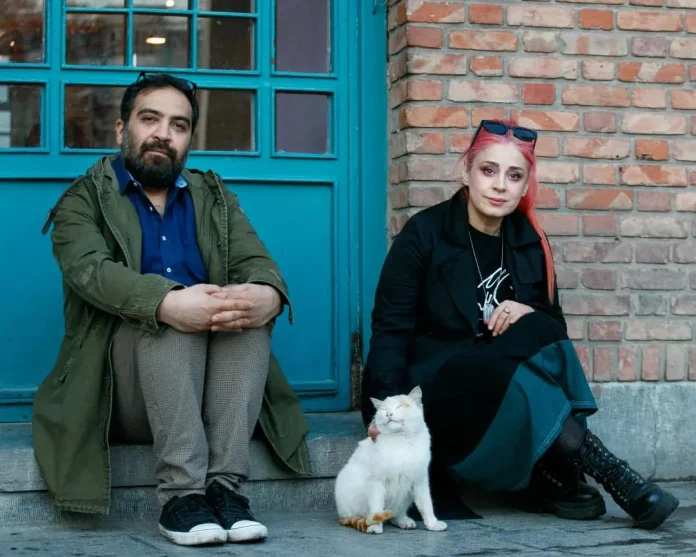
Iranian filmmakers summoned to court over award-winning film

The filmmakers face charges including “propaganda against the government,” “producing and distributing immoral content,” “violating public decency,” and “screening the film without a permit,” according to an official judicial summons.

The film, which premiered at the 2023 Berlin International Film Festival, has garnered global praise for its poignant storytelling and its portrayal of women without the mandatory hijab, a violation of Iran’s laws.

My Favorite Cake has been screened in numerous countries, resonating with audiences and critics alike.

However, since its production, Moghaddam and Sanaeeha have faced significant legal and personal challenges, including travel bans and other restrictions imposed by Iranian authorities.

The summon orders them to appear at Court in Tehran on March 1.

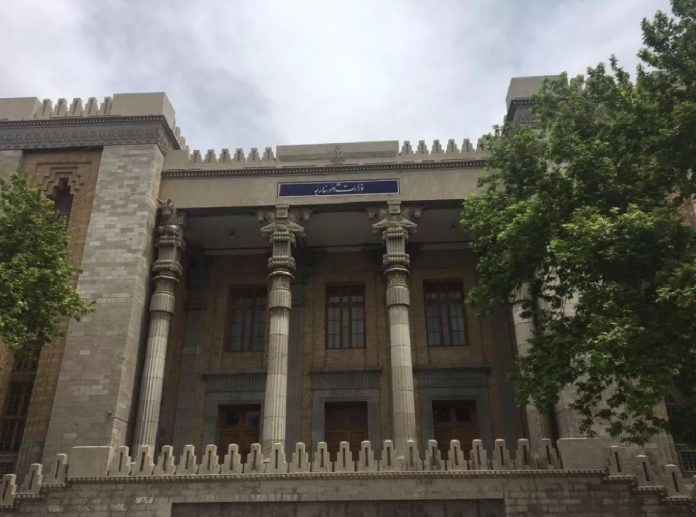
Iran calls out US hypocrisy

The Iranian Foreign Ministry

The ministry released the fact sheet, which included a whole host of US violations concerning Iran, such as reinstatement of its so-called “maximum pressure” policy towards the Islamic Republic, on Wednesday.

The US initiated the policy under Donald Trump’s former tenure as president and relaunched it under his current incumbency, with the American chief executive signing a new “Presidential National Security Memorandum” on February 4, through which he ordered intensification of economic and political pressure against the Islamic Republic.

The ministry described the policy as an extension of Washington’s long-standing adversarial attitude towards Tehran.

It, meanwhile, asserted that “maximum pressure” was never truly halted after Trump’s former term wound down, as the previous US administration of Joe Biden not only retained the country’s sanctions against Iran, but also imposed hundreds more.

The ministry reiterated the Islamic Republic’s commitment to resisting such coercive measures, emphasizing that no nation should be subjected to illegal and unjust economic pressure.

The US was deploying the policy, while simultaneously calling for negotiations with Iran on the nuclear issue, the ministry said, noting that such attitude contradicted Washington’s rhetoric.

Iran underlines that it has always supported diplomacy and engaged in negotiations in good faith. However, it reminds at the same time that pressure and intimidation tactics have never yielded results as far as dealing with the Islamic Republic is concerned.

Iranian authorities, meantime, warn that such contradictory approach only deepens distrust and undermines any possibility of meaningful diplomatic engagement.

The fact sheet further highlighted the United States track record regarding the Joint Comprehensive Plan of Action (JCPOA), an agreement backed by the United Nations Security Council (UNSC), which was signed between Iran and world countries, including the US, in 2015.

The former Trump administration withdrew from the deal in 2018 in a unilateral and illegal move, despite its endorsement by the UNSC. It then returned the sanctions that the accord had lifted, and ramped up even more economic pressure on the Islamic Republic.

Washington’s departure came despite Iran’s full compliance with the agreement as confirmed by the International Atomic Energy Agency (IAEA), the document highlighted.

“Over the past four years, despite intensive negotiations to revive the JCPOA, Washington, while expressing a desire to return to the agreement, has never been willing to fulfill its JCPOA commitments or lift sanctions against the Iranian nation, and under various pretexts, it prevented, on different occasions, the negotiations from reaching a final conclusion,” it added.

The document also recalled the long history of other aggressive American actions against Iran, dating back to the CIA-orchestrated 1953 coup.

It listed numerous examples, including Washington’s military support and other instances of backing for former Iraqi dictator Saddam Hussein during his 1980-88 imposed war on Iran, freezing of Iranian assets, and military provocations.

It also reminded the US’s ordering the assassination of Lieutenant General Qassem Soleimani, Iran’s former top anti-terror commander and a strongly revered national and regional personality, in early 2020, and its facilitating the targeting of Iranian nuclear scientists by the Israeli regime — which has so far assassinated at least seven of the scientists.

Additionally, the fact sheet challenged US allegations that Iran supported “terrorism,” asserting that the Islamic Republic was, in fact, the primary victim of terrorism in the region.

It pointed to the sacrifices that had been made by Iranian servicemen in the fight against the Daesh Takfiri terrorist group in the region and other similar outfits.

Meanwhile, the ministry reiterated Iran’s condemnation of the US’s fueling regional instability by backing groups like Daesh, al-Qaeda, and al-Nusra Front, currently Hay’at Tahrir al-Sham, to serve its geopolitical interests.

Furthermore, the statement argued that Washington would try to brand Iran’s continued support for regional resistance movements, which fight against deadly Israeli occupation and aggression, as fostering “terrorism” as a pretext to shield the Israeli regime from accountability for its atrocities against the regional peoples, including members of the resistance factions.

“Labeling Iran’s support for resistance groups and Muslim nations in the region – who are fighting for the liberation of their land and human dignity against an occupying regime – as “support for terrorism” does not change the reality,” it underscored.

“Blaming the Islamic Republic of Iran, is a futile US attempt to protect the Zionist regime from accountability and to evade from US responsibility for full-fledged and absolute support for the crimes of this regime,” it added, pointing to Washington’s all-out political, military, and intelligence support for Tel Aviv’s military aggression.

The ministry also condemned Washington’s claims of championing human rights, highlighting its full support for Israeli atrocities in the Gaza Strip and the devastation that had been caused by economic sanctions on the Iranian people.

It reminded that during the COVID-19 pandemic, the US even intensified its sanctions, worsening humanitarian conditions in Iran, and asserted that the American policies directly targeted the Iranian people, contradicting Washington’s self-proclaimed concern for human rights.

Amid the American attitude, Iran’s leadership, guided by the principles of “dignity, wisdom, and expediency,” would refuse to negotiate under pressure, the document underscored.

Leader of the Islamic Revolution Ayatollah Seyyed Ali Khamenei has reiterated that engaging in talks under coercion was irrational and would undermine Iran’s sovereignty.

Tehran, however, remains open to diplomacy that safeguards its national interests.

While committed to diplomatic solutions, Iran warns that any aggression against its national security would be met with a decisive response, the ministry stressed, pledging to continue pursuing the Islamic Republic’s interests from a position of strength, and ensuring that the country’s sovereignty and regional stability remained non-negotiable.

The ministry finally reaffirmed that Iran has never pursued acquiring nuclear weapons, citing a binding religious decree (fatwa) against such prospect that had been issued by the Leader.

It called on the US, the only country to have ever deployed nuclear weapons, to refrain from using the nuclear issue as an excuse for confrontation.

Putin, Trump agree on Ukraine negotiations

Putin and Trump

The talk lasted for about an hour and a half, during which the two leaders discussed a broad range of issues, primarily the Ukraine conflict, Kremlin spokesman Dmitry Peskov has stated.

The phone call turned out to be “lengthy and highly productive,” Trump said in a post on his Truth social media platform.

“We discussed Ukraine, the Middle East, Energy, Artificial Intelligence, the power of the Dollar, and various other subjects,” the US president wrote.

The two leaders have agreed they “want to stop the millions of deaths taking place in the War with Russia/Ukraine,” Trump added, announcing an “immediate” start of negotiations to resolve the Ukraine conflict.

Wednesday’s call represents the first official top-level contact between Moscow and Washington since Trump took office in January. While phone conversations between Trump and Putin have been rumored for weeks, none have been officially confirmed, with both sides stating only they had been maintaining contact through various unspecified government channels.

The official Kremlin readout of the Putin-Trump phone conversation emphasized the need to eliminate the “root causes” of the Ukraine conflict in order to reach a “sustainable settlement.”

The leaders discussed issues related to the prisoner exchange between Russia and the United States. The US President assured the President of Russia of the American side’s commitment to fulfill all the agreements reached.

The leaders also discussed a possible Ukraine settlement. Trump spoke in favour of stopping the hostilities as soon as possible and solving the crisis peacefully. In turn, Putin pointed out it was necessary to eliminate the root causes of the conflict and agreed with Donald Trump in that a sustainable settlement could only be reached via peaceful negotiations.

Additionally, the President of Russia expressed support for one of the US President’s key arguments, which was that it was time for both countries to work together.

The issues of Middle East settlement, Iran’s nuclear programme, and bilateral economic relations between Russia and the United States were also brought up during the conversation.
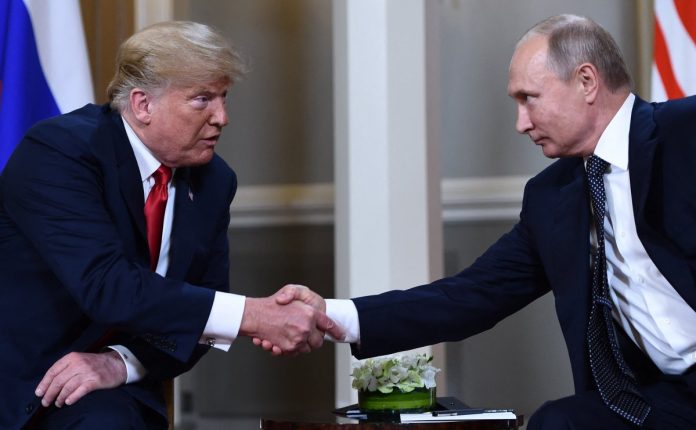
The President of Russia invited the US President to visit Moscow and expressed willingness to receive visiting officials from the United States to discuss topics of mutual interest, including a possible Ukraine settlement.

Putin and Trump agreed to maintain personal contact in the future, involving in particular in-person meetings.

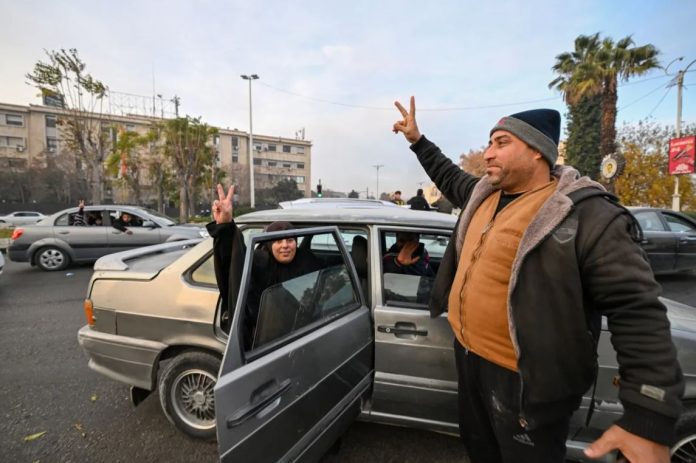
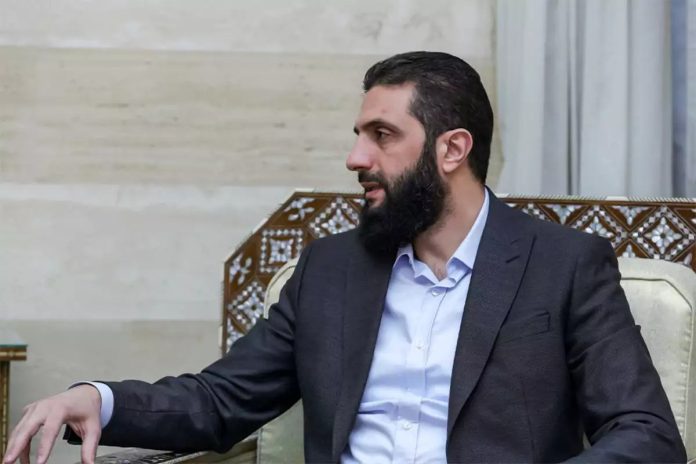
Syria’s new president, Russia’s leader make first contact since al-Assad’s fall

Abu Mohammed al-Jolani

Rebels led by al-Sharaa’s Hayat Tahrir al-Sham group ousted Moscow’s close ally in December after a lightning offensive, and questions have remained over the fate of Russia’s two military bases in the war-torn country.

During the phone call on Wednesday, al-Sharaa emphasised “the strong strategic ties between the two countries and Syria’s openness to all parties” in a way that serves “the interests of the Syrian people and strengthens Syria’s stability and security”, a statement by the Syrian presidency said.

It also said Putin extended “an official invitation to Foreign Minister Asaad al-Shaibani to visit Russia”.

“The Russian side emphasised its principled position in support of the unity, sovereignty and territorial integrity of the Syrian state,” the Kremlin said in a statement.

Moscow helped keep al-Assad in power when it intervened militarily in Syria’s war in 2015, launching devastating air strikes on rebel-held areas.

When rebels swept into Damascus in December, Russia granted the former president asylum, angering many Syrians, including the country’s new rulers.

Russia is seeking to secure its naval base in Tartus and its airbase at Khmeimim – both on Syria’s Mediterranean coast and Moscow’s only military bases outside the former Soviet Union – with the new Syrian authorities.

Last month, there were reports that Syria had demanded the return of al-Assad in exchange for allowing Moscow to maintain its military bases.

The bases have proven vital to Russia’s international ambitions, serving as a launchpad for operations in support of al-Assad as well as staging grounds for Moscow to project influence across the Mediterranean region and Africa.