Monday, January 19, 2026
Home Blog Page 517

Israeli shelling kills 2 Palestinian police officers in Gaza despite ceasefire

Gaza War

In a statement, The Gaza Interior Ministry announced the casualties, noting that the officers were deployed to secure the entry of humanitarian aid in the Al-Shawka area, east of Rafah, when they were targeted.

The ministry strongly condemned the attack and called on “mediators and the international community to pressure the (Israeli) occupation to halt its targeting of the police force, which is a civilian body responsible for maintaining public security and organizing daily affairs.”

The Palestinian police officers were deployed to secure the entry of humanitarian aid into the besieged enclave as part of the ceasefire agreement between Hamas and Israel.

Palestinian officials have complained that Israel is failing to abide by the part of the agreement to let in more humanitarian aid.

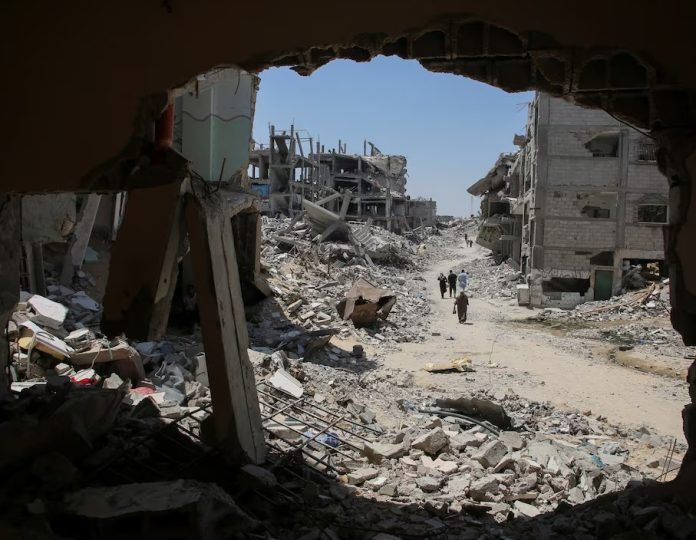
A ceasefire agreement took effect in Gaza on Jan. 19, halting Israel’s genocidal war, which has killed more than 48,200 Palestinians, most of them women and children, and left the enclave in ruins.

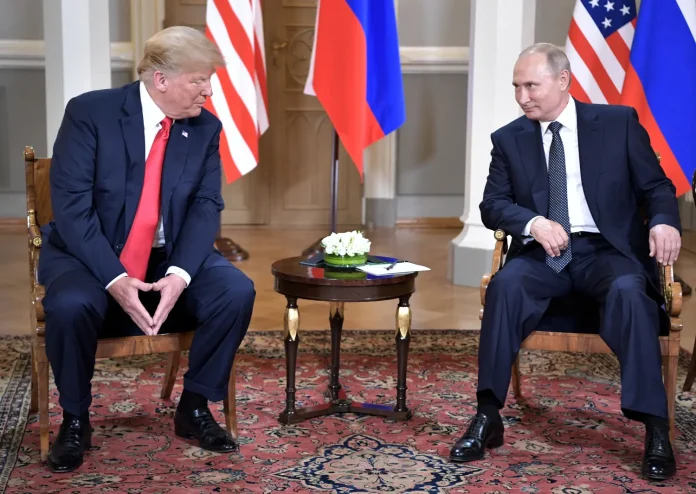
Putin-Trump summit expected in February: Bloomberg

The reports come just days after Trump and Putin held a phone conversation, which marked the first known direct interaction between the US and Russian heads of state since the escalation of the Ukraine conflict in February 2022. The two presidents agreed to continue dialogue and arrange in-person meetings in a third country as well as state visits going forward.

Speaking to the press hours after his phone call with Putin on Wednesday, President Trump stated that he and his Russian counterpart would “probably” meet in Saudi Arabia.

In its article on Saturday, Bloomberg, citing anonymous sources, alleged that the US delegation is likely to be comprised of national security advisers who are presumably tasked with securing a date for the top-level meeting before the Muslim holy month of Ramadan, which starts this year on February 28.

At around the same time, Politico carried a similar report, claiming that National Security Adviser Mike Waltz, Secretary of State Marco Rubio, and Steve Witkoff, President Trump’s Middle East envoy, will be heading to Saudi Arabia in the coming days. However, the publication noted that Trump’s special envoy for Ukraine-Russia talks, Keith Kellogg, will not be in attendance.

Politico quoted Congressman Michael McCaul as confirming the makeup of the US team. According to the media outlet, “there are no plans for representatives from other major European powers to join the talks,” with Bloomberg also reporting that officials from America’s European NATO allies have not been notified.

As for Ukrainians, Bloomberg alleged that while Kiev’s emissaries “are expected” to be present in Saudi Arabia, “they also don’t appear to be fully in the loop on the preparations.”

Fox News reporter Nana Sajaia, citing an unnamed senior Ukrainian official, claimed in a post on X on Saturday that the “Ukrainian side was ‘neither invited to, nor informed about’ coming US-Russia talks in Saudi Arabia.”

On Thursday, Kremlin spokesman Dmitry Peskov confirmed that the Russian and US leaders had agreed to first meet in a third country, with official state visits likely to follow.

The official added that while “Saudi Arabia indeed cropped up” in the conversation, “no decision has been made as to where [the meeting] will take place.”

Riyadh in turn stated on Friday that it “welcomes holding the summit in its territory.”

On Saturday, Rubio spoke with Russian Foreign Minister Sergey Lavrov on Saturday. According to Moscow, the two diplomats agreed to maintain regular contact in an effort to eventually lift unilateral sanctions that have hindered “mutually beneficial” economic cooperation.

According to a statement from the Russian Foreign Ministry, Lavrov and Rubio reaffirmed their commitment to restoring a “mutually respectful dialogue” and addressing “longstanding issues in Russian-American relations.”

“Their goal is to remove unilateral barriers inherited from the previous US administration that have hindered mutually beneficial trade, economic, and investment cooperation,” the ministry stated. The diplomats also discussed ways to resolve the tit-for-tat diplomatic expulsions and consulate closures of recent years.

A brief readout from the US State Department noted that Rubio reiterated Trump’s dedication to resolving the conflict in Ukraine. The statement added that the two officials explored potential cooperation on “a number of other bilateral issues.”

Moscow said Lavrov and Rubio agreed to maintain regular contact, including coordinating preparations for a meeting between Putin and Trump.

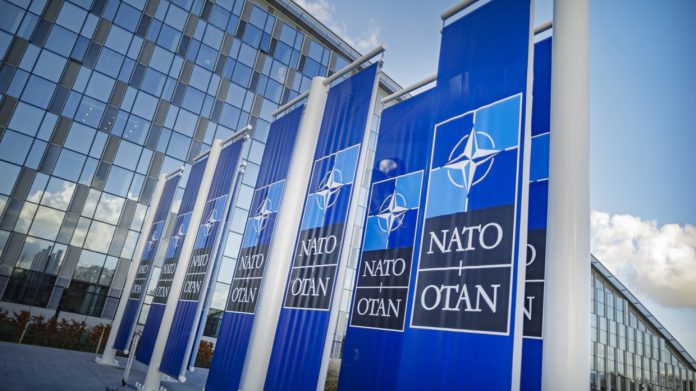
NATO chief urges Europe to ‘stop complaining’

NATO

Speaking at the Munich Security Conference (MSC) on Saturday, Rutte emphasized the need for actionable ideas, including on the Russia-Ukraine conflict and the bloc’s effort to ramp up its defense spending.

“Get into the debate, not by complaining… but by coming up with concrete ideas,” he stated.

Rutte also urged the bloc’s members to ramp up their military spending, pointing out that despite previous commitments, many countries have yet to meet agreed-upon defense expenditure targets. The NATO chief also confirmed the US-led bloc was expected to reach a new agreement on spending targets during the upcoming summit of the organization scheduled for June.

European members of NATO have sounded the alarm over the possibility they could end up sidelined in potential peace negotiations to resolve the nearly three year-long Ukraine conflict following a phone call between Russian President Vladimir Putin and his US counterpart Donald Trump on Wednesday. It is the first publicly known top-level contact between the US and Russian leadership since the escalation of the Ukraine conflict in February 2022.

On Thursday, seven European nations and the EU Commission insisted they needed to be a part of any future negotiations on Ukraine, saying that their exclusion would make a lasting peace impossible.

“Our shared objectives should be to put Ukraine in a position of strength. Ukraine and Europe must be part of any negotiations,” they announced in a joint statement after a ministerial meeting in Paris, adding that a “just and lasting peace in Ukraine is a necessary condition for a strong transatlantic security.”

Washington, however, has signaled that European powers may not find a seat at the table. Trump’s special envoy on Russia and Ukraine, Keith Kellogg, said at the MSC on Saturday that Kiev would undoubtedly be present, but that Europe may not be.
“What we don’t want to do is get into a large group discussion,” he explained.

Iran reports significant increase in trade with neighbors

Iran Trade

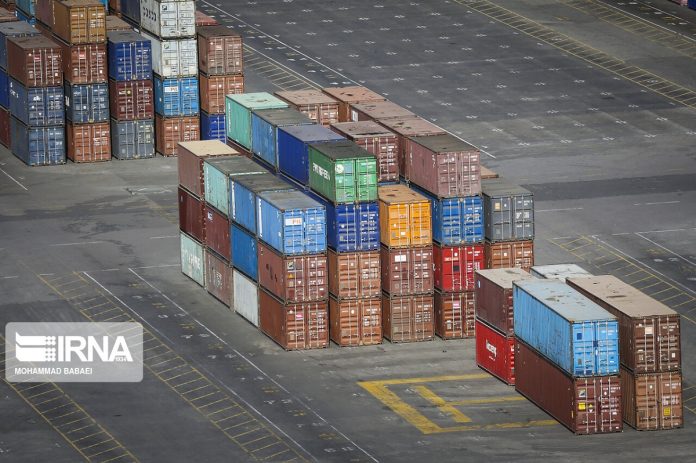
Figures released on Saturday by a subsidiary of Iran’s ministry of trade (MIMT) showed that trade between the country and its 15 neighbors, including states with which Iran shares maritime borders, had increased by 19.2% year on year in April-January to reach $59.7 billion.

The figures showed that Iran’s trade with its neighbors had increased by 16.2% in volume terms to reach 93.5 million metric tons in the 10 months to late January.

Trade with neighbors accounted for nearly 60% of Iran’s total trade in April-January, according to the data.

Iran’s exports to neighbors rose by 28% to $29.7 billion in the 10 months to late January, said the MIMT department.

It said that Iraq had been the largest buyer of Iranian goods and commodities over the period with some $10.175 billion worth of purchases, followed by the United Arab Emirates (UAE) at $5.961 billion and Turkey at $5.535 billion.

Exports to Iraq, the UAE, and Turkey rose by 31%, 12%, and 43%, respectively, in April-January, the trade figures showed.

The data showed that Iran’s imports from neighbors had reached a total of $29.875 billion in the 10 months to late December, up 11.5% compared to the same previous period.

The UAE, which is the main re-exporting hub in the Persian Gulf, was the largest exporter to Iran in April-January with some $16.9 billion worth of shipments while imports from Turkey and Russia reached $9.9 billion and $1.2 billion, respectively, over the same period, according to the figures.

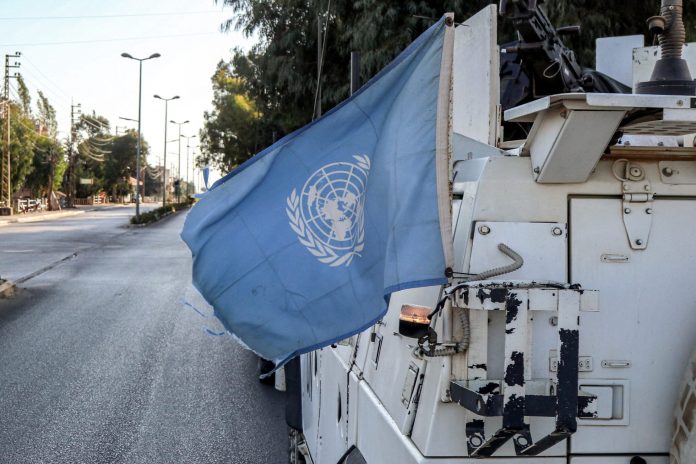
More than two dozen detained after attack on UN peacekeepers in Lebanon

UNIFIL

UN and Lebanese officials have condemned Friday’s attack, which came as Hezbollah supporters blocked the road to the country’s only international airport for a second night in protest against a decision barring two Iranian planes from landing.

“More than 25 people have been arrested by Lebanese army intelligence”, with another person detained by the security services, Interior Minister Ahmad al-Hajjar told reporters after an emergency security meeting Saturday.

“This does not mean these detainees carried out the attack… but the investigations will show who is responsible,” he said.

The United Nations Interim Force in Lebanon (UNIFIL) has demanded a “full and immediate investigation” after one of its vehicles was set on fire in the attack, which wounded outgoing Deputy Commander Chok Bahadur Dhakal and a second Nepalese peacekeeper.

President Joseph Aoun vowed “the attackers will receive their punishment” and said that “security forces will not be lenient with any party that tries to upset stability and civil peace”.

Tensions have been high this week since Lebanon halted Iranian flights to Beirut after the Israeli military accused Tehran of using civilian aircraft to smuggle cash to Beirut to arm Hezbollah.

The decision sparked protests in the Lebanese capital since late Thursday, with a crowd of Hezbollah supporters blocking the airport road and burning tyres.

Tehran has described Israel’s accusations as a pretext for potential attacks, while Hezbollah and Lebanese officials have denied that the airport is being used to arm the group.

Iran said on Saturday that it was ready for “constructive talks” with Lebanon on resuming Tehran-Beirut flights, a day after it barred Lebanese planes from repatriating dozens of nationals stranded in Iran.

On Friday, several areas around the airport saw demonstrations, acts of vandalism and clashes between protesters and security forces, according to the Lebanese army.

Hezbollah issued a statement on Saturday calling on its supporters to join a mass sit-in near the airport to protest “Israeli interference, diktats and the violation of national sovereignty”.

Lebanese security forces cracked down on the demonstration, firing tear gas and dispersing the crowd in the early evening.

US team heading to Saudi Arabia for talks with Russia: Politico

Ukrainian officials later denied reports that a Ukrainian delegation would participate in the meeting, as was initially reported, adding that the announcement came as a surprise to Kyiv, and that there are no plans to send a Ukrainian delegation.

Mykhailo Podolyak, an advisor to President Volodymyr Zelensky, echoed comments from officials, stating that Ukraine will not participate in an upcoming meeting between Russia and the United States in Saudi Arabia.

“There is nothing on the negotiating table that would be worth discussing,” Podolyak said on Ukrainian TV, adding that “Russia is not ready for negotiations.”

Bloomberg reported on Feb. 15 that the talks in Saudi Arabia will only include US and Russian officials as a means to pave the way for a potential leaders’ summit between US President Donald Trump and Russian President Vladimir Putin later this month.

Trump has previously said he is ready to meet Putin in Saudi Arabia for peace talks.

The two unnamed US officials did not provide to Politico specific details about timelines for the start of negotiation. However, Mike McCaul, a Republican congressman confirmed to Politico that National Security Adviser Mike Waltz and Middle East envoy Steve Witkoff will joining State Secretary in Riyadh in the coming days.

US special envoy for Ukraine and Russia Keith Kellogg will not be present. The official is currently at the top European security conference and is expected to visit Ukraine.

Earlier in the day, President Volodymyr Zelensky and Western leaders attended the Munich Security Conference focused on Ukraine.

During a meeting between President Volodymyr Zelensky and US Vice President JD Vance at the Munich Security Conference on Feb. 14, Zelensky stated that Ukraine was “ready to move towards real and guaranteed peace as quickly as possible.”

“We sincerely appreciate President Trump’s determination to help stop the war and provide Ukraine with justice and security guarantees,” Zelensky added.

European officials will not be present at the upcoming peace talks in Saudi Arabia, US officials noted, echoing previous statements by Kellogg.

Speaking at the Munich Security Conference earlier in the day, Kellogg said that Europe will not be directly involved in negotiations to end Russia’s war in Ukraine, but its interests will be considered.

Polish Foreign Minister Radoslaw Sikorski has announced European leaders are set to gather in Paris for an emergency summit over concerns that the US is advancing peace talks with Russia without Europe.

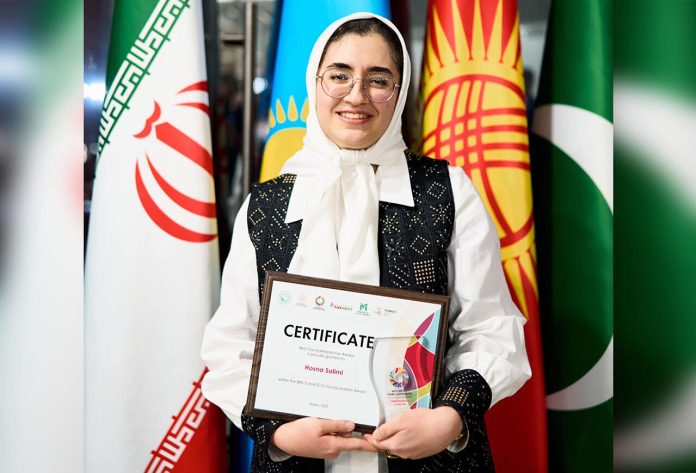
University of Tehran student named BRICS, SCO Young Researcher of the Year

Salimi, who was nominated by the Asian Mayors Forum, where she is an intern, was recognized for her outstanding contributions to research.

The award ceremony took place in Kazan, Russia, where she was among 10 winners selected from over 400 participants representing 13 countries, including Iran, India, China, Russia, South Africa, and Brazil.

The BRICS and SCO Young Leaders Award is an annual event honoring young leaders in five categories: Best Public Diplomacy Project, Influential Media Personality, Social Entrepreneur of the Year, Environmental Initiatives, and Young Researcher of the Year.

The University of Tehran celebrated her success, noting that it reflects the institution’s commitment to fostering global talent and promoting cross-cultural collaboration.

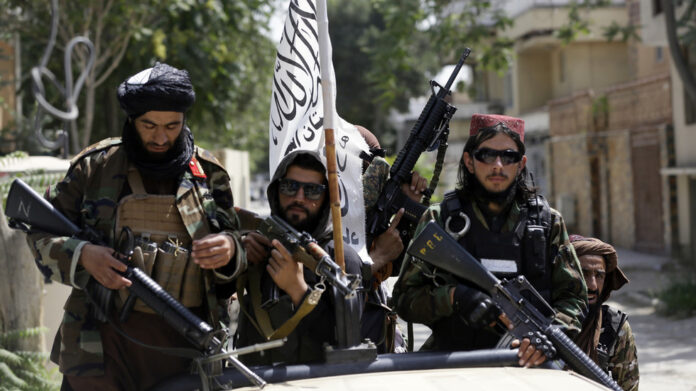
Iranian paper bashes Taliban for ‘unfulfilled promises, ongoing threats’

In an editorial on Sunday, the Iranian newspaper Jomhouri-e Eslami labeled the “Taliban’s actions and the influx of unauthorized migrants and Taliban infiltrators” into Iran as substantial threats to the nation.

The article emphasized that Iran’s officials responsible for Afghanistan affairs appear either to be unaware of or unwilling to address the serious threats.

It pointed out that the Taliban, despite their promises during recent talks, have not upheld previous Afghan governments’ legal commitments, including the allocation of water rights to Iran.

During a visit to Kabul on January 26, Iran’s Foreign Minister received assurances from the Taliban leadership that Iran’s water rights would be respected. However, environmental experts reported that satellite images show significant water flow in the Helmand River from January 12 to February 1, which the Taliban diverted away from Iran towards the Goud-e-Zereh basin, contradicting their promises.

The editorial urged the Iranian government to adopt a more robust and intelligent approach to regional and international issues and stressed the need for restructuring of Iran’s diplomatic framework to protect its national interests and prevent regression on the international stage.

Palestinians burn shirts after release from Israeli jails

On Saturday, 369 Palestinians were released in exchange for three captives in Gaza following days of tense negotiations.

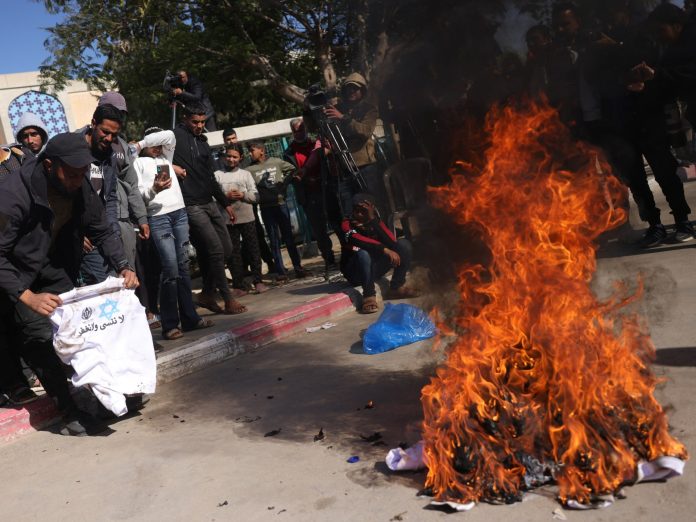
Before the exchange, the Israel Prison Service released photos of a few of the Palestinians dressed in those provocative shirts. As the Palestinians were being returned, a number of them wore their shirts inside out in order to cover the messages.

Footage shot in Gaza by Al Jazeera showed a few Palestinians setting fire to the shirts upon their arrival at the European Gaza Hospital in Gaza’s Khan Younis.

“We condemn the occupation’s crime of placing racist slogans on the backs of our heroic prisoners, and treating them with cruelty and violence, in a blatant violation of humanitarian laws and norms,” Hamas said in a statement.

It added that this is “in contrast to the resistance’s firm commitment to moral values ​​in treating the occupation’s prisoners”.

The Palestinian Islamic Jihad group also condemned the shirts as a “racist crime”.

According to the Israeli Broadcasting Authority, quoting an Israeli source, there was criticism in Israel over the uniforms as well. A source was quoted as saying that Israel’s political echelon was not informed of the move.

The decision to have the Palestinians don the shirts was made by Israel’s Prison Commissioner Kobi Yaacobi, the source told the broadcaster.

Mohamad Elmasry, a professor in the media studies programme at the Doha Institute for Graduate Studies, told Al Jazeera that this was “another method” under which Israel intends to “dehumanise” Palestinians.

The International Committee of the Red Cross (ICRC), which is facilitating the exchange, called on all parties for more “dignified” releases.

“Despite repeatedly calling for all transfers to be carried out in a dignified and private manner, more must be done by all sides, including the mediators, to improve future transfers,” the ICRC said in a statement on Saturday.

The furore surrounding the provocative shirts underscores a long policy of “humiliation”, according to Xavier Abu Eid, a political analyst speaking to Al Jazeera from Bethlehem in the occupied West Bank.

“We’ve been analysing throughout these past weeks the humiliation of Palestinian prisoners,” Abu Eid said. He noted this was “nothing new” but not only damaged the prisoners but also their families.

A total of 24 captives and 985 Palestinians have been released since the ceasefire began in January, according to the ICRC.

Iran, Lebanon say ready for ‘constructive talks’ to resume passenger flights

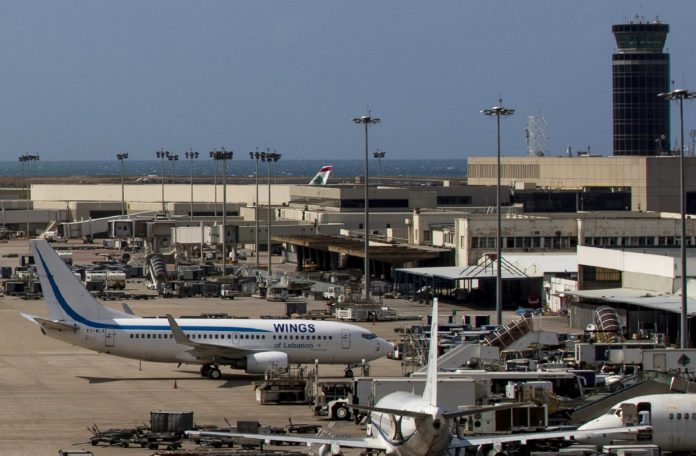
Rafik Hariri International Airport in Beirut

In a phone conversation on Saturday, Iranian Foreign Minister Abbas Araghchi and his Lebanese counterpart Youssef Rajji discussed ways to settle the issue.

The cancellation was ordered by the Lebanese Roads Minister under pressure from the Israeli regime, which claimed that the plane was transferring funds to the Hezbollah resistance movement.

In a statement on Friday, Iranian Foreign Ministry spokesman Esmaeil Baghaei said the Israeli regime’s threat against the passenger plane transporting Lebanese citizens is a blatant violation of principles and rules of international law and Lebanon’s sovereignty.

He emphasized that the Israeli regime’s threat has “disrupted normal flights to Beirut Airport.”

The top Iranian and Lebanese diplomats also exchanged views about mutual relations and the latest developments in the region.

Araghchi extended his facilitation to Rajji over his appointment as the Lebanese foreign minister and wished success for him and the new government in the Arab country.

The two ministers stressed the importance of improving bilateral relations in various political, economic, commercial, and cultural fields based on mutual respect to serve common interests.

Iran’s Ambassador to Beirut Mojtaba Amani said on Friday that Tehran would certainly agree to the Lebanese government’s offer of alternative flights for Iranian planes only if Beirut “does not create obstacles for Iranian airliners.”