Monday, January 19, 2026
Home Blog Page 516

Zelensky claims Putin will wage war against NATO

NATO

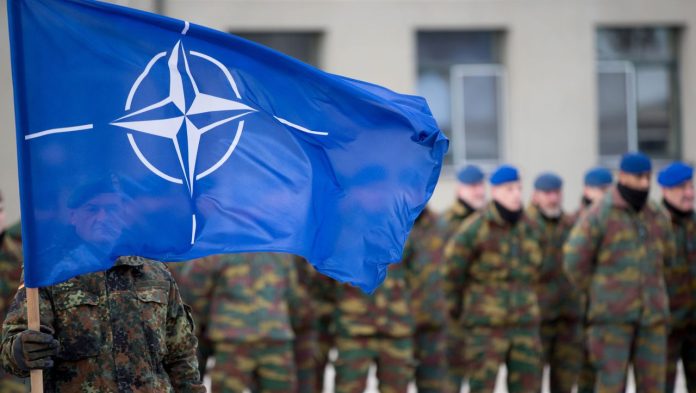
In an interview on NBC News’s “Meet the Press,” Zelensky said his country has intelligence that Putin is planning to conduct a military training operation with 150,000 people, “mostly on the territory of Belarus.”

He warned that it could be a similar precursor to the military forces on Ukraine’s border that Putin claimed were for training purposes before launching the full-scale invasion.

“We know for sure that he is preparing that from the territory of Belarus this year. It can happen in summer, maybe in the beginning, maybe in the end of summer. I do not know when he prepares it. But it will happen,” Zelensky added.

Zelensky warned that NATO countries could be next.

“And at that moment,” Zelensky continued, “knowing that he did not succeed in occupying us, we do not know where he will go. There are risks that this can be Poland and Lithuania because we believe — we believe that Putin will wage war against NATO.”

Zelensky said he thinks Putin is waiting for the NATO alliance to weaken.

“That is why I told you that, ‘What is he waiting for?’ For a weakening of NATO by, for instance, policy of the United States of America, for example, that the United States of America will think to take its military from Europe. Yes, Putin thinks of that. But I will believe that the United States will not take its forces, its contingents from Europe because that will severely weaken NATO and the European continent. Putin definitely counts on that. And the fact that we receive information that he will think of the invasion against former Soviet republics. And forgive me, but today these are NATO countries.”

Zelensky spoke to the Munich Security Conference on Saturday and noted, “I really believe that the time has come” to create “the armed forces of Europe.”

His remarks came as U.S. officials seek to negotiate an end to the nearly three-year war between Russia and Ukraine. Defense Secretary Pete Hegseth stressed earlier this week that the possibility of Ukraine joining NATO was unrealistic at this time. While Hegseth later softened his stance, President Trump’s moves to end the war have rattled critics and allies.

Several Iraqi banks to be banned from US dollar transactions: Reuters

Iraq is working with the United States to ban more local banks and financial firms from engaging in US dollar transactions, says a report, amid efforts by the new government in Washington to restrict Iran’s access to international banking services.

The Sunday report by Reuters news agency said that Iraq’s central bank was going to ban five banks and three financial companies from providing dollar-based banking services to its customers.

The report added the move had been agreed in a meeting last week in Dubai between officials of the Central Bank of Iraq and US Treasury and Federal Reserve officials.

It claimed that the new bans are in line with US President Donald Trump’s so-called “maximum pressure” policy towards Iran as Tehran earns considerable revenues from its exports to Iraq.

Iraq had banned eight banks from US dollar transactions last year.

Reuters reported the new bans would cover Al-Mashreq Al-Arabi Islamic Bank, United Bank for Investment, Al Sanam Islamic Bank, Misk Islamic Bank and Amin Iraq For Islamic Investment and Finance as well as payment services of Amawl, AL-Saqi Payment and Aqsa Payment.

US wants Ukraine ceasefire by Easter: Bloomberg

Russia Ukraine War

A US peace plan could be forthcoming within weeks or even days, Keith Kellogg, Trump’s special envoy on Russia and Ukraine, said on the sidelines of the Munich Security Conference on Saturday.

”The Trump administration has told European officials that it wants to secure a ceasefire in Ukraine by Easter,” Bloomberg said, citing sources briefed on the talks. According to the outlet, some European officials felt the pace of the negotiations was ambitious and possibly unrealistic. Talks are reportedly set to kick off with a meeting of Russian and US representatives in Saudi Arabia in the coming days.

Europe will not be given a place in the negotiations, Kellogg told top European diplomats on Saturday. Despite this, UK and EU officials fear the US expects them to shoulder the burden of Ukraine’s post-war security, Financial Times wrote on Thursday.

The envoy justified the exclusion of Europe, citing the legacy of the Minsk-2 agreement between Ukraine and now Russian Donetsk and Lugansk People’s Republics in 2015. Germany and France stood as guarantors to the failed accord, which then German chancellor Angela Merkel later admitted was just meant to buy Kiev time to strengthen itself.

“When you looked at Minsk-2, there was a lot of people at the table that really had no ability to execute some type of peace process, and it failed miserably. So we are not gonna go down that path,” Kellogg stated.

Moscow has similarly underscored that it will not accept a temporary freeze of hostilities, like the Minsk accords, and insists on a permanent solution that addresses the fundamental causes of the conflict.

Just days prior, Russian President Vladimir Putin and Trump held a phone conversation in the first such interaction since the escalation of the Ukraine conflict in February 2022. The two leaders could meet in Saudi Arabia by the end of this month, Newsweek wrote on Sunday, citing reports.

Putin has previously stressed that Moscow has never shied away from peace talks, but emphasized that they have to be based on terms previously agreed in Istanbul in 2022, modified for the territorial “realities on the ground.”

Russia has demanded that Ukraine embrace neutrality, demilitarize, denazify and remain free of nuclear weapons, among other points.

Iranian president criticizes Western hypocrisy on human rights

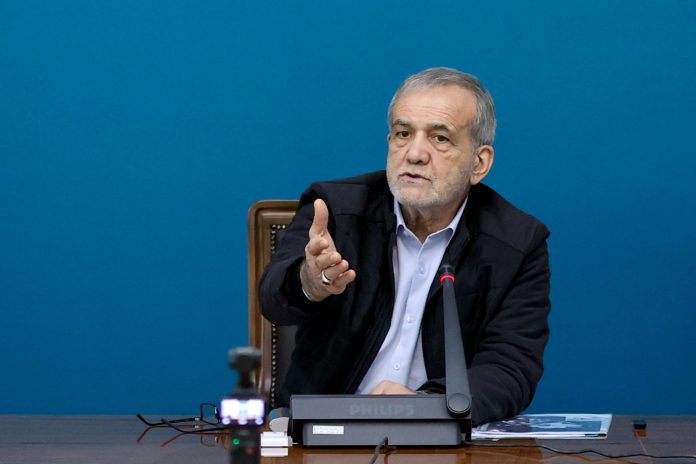
In a speech during the closing ceremony of the “Tabriz Cultural Week in Tehran,” President Massoud Pezeshkian pointed out that Iran has consistently sought peace, brotherhood, and unity.

He said Western nations support oppressive regimes, such as Israel, while falsely claim to champion human rights.

“They bury women, children, and the elderly under rubble in Gaza, yet dare to speak of human rights,” he added.

The president also reflected on Iran’s historical struggles, including the eight-year imposed war and the loss of thousands of young lives due to enemy conspiracies.

He praised the resilience of the Iranian people, particularly highlighting the pivotal role of the northeastern Iranian city of Tabriz in the 1979 Islamic Revolution.

Pezeshkian reaffirmed his commitment to serving the Iranian people and overcoming challenges through national unity.

He vowed to thwart any attempts by enemies to destabilize the country, expressing confidence in Iran’s ability to emerge stronger.

Iran dismisses G7 ‘unfounded’ claims

Esmael baghaei

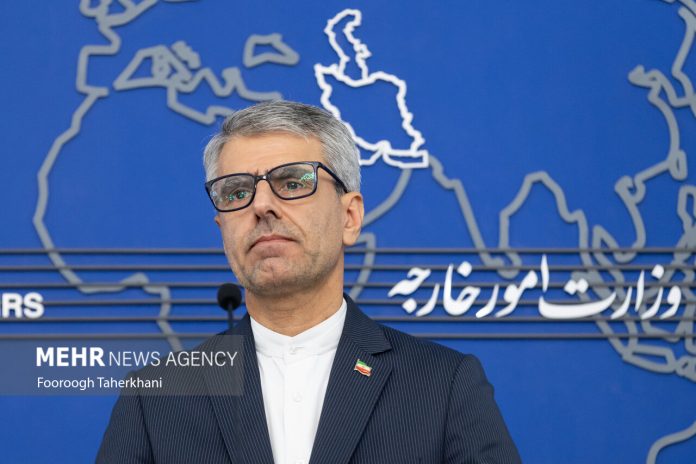
He dismissed the claim that Iran engages in destabilizing activities in the region as absurd. Highlighting the actions of G7 member states—particularly the United States, Canada, and three European nations—Baqaei pointed to their military, financial, and political support for the genocidal Zionist regime, as well as their broader military and political interventions in the region.

He asserted that restoring stability and security in West Asia requires an end to the interventionist policies of these countries.

Baqaei reiterated the Islamic Republic of Iran’s legitimate right and legal responsibility to defend its people, territorial integrity, and national sovereignty against any threats or aggression.

He emphasized that Iran’s military-defense capabilities are developed in accordance with international rights and norms, not only to ensure national security but also to contribute to regional peace and stability in West Asia.

He further rejected any doubts regarding the peaceful nature of Iran’s nuclear activities and enrichment program.

The spokesman stated that Iran’s nuclear activities are designed and implemented in accordance with the country’s technical and industrial needs and in full compliance with its rights and international obligations under the Nuclear Non-Proliferation Treaty (NPT) and its Safeguards Agreement.

He also recalled Iran’s longstanding initiative to establish a nuclear-weapon-free Middle East, emphasizing that the only obstacle to achieving this goal is the occupying Zionist regime.

Baqaei condemned the regime’s continued development of weapons of mass destruction, facilitated by unwavering support from G7 countries, at a time when it is engaged in genocide in Gaza and aggression against regional nations. He warned that these actions pose a grave threat to international peace and security.

Over 46k Ukrainian soldiers killed since start of Russia’s war: Zelensky

Russia Ukraine War

Zelensky previously revealed the total casualty count in early Febriary, claiming that Ukraine had lost over 45,000 soldiers.

Nearly 380,000 Ukrainian soldiers have been injured since the start of the all-out war, Zelensky told NBC.

“Ten of thousands” of Ukrainian troops are currently missing in action or being held in Russian captivity, according to the president.

According to Ukraine’s General Staff estimates, Russia has lost a total of 859,920 troops since the start of the war. The figures do not specify killed or wounded, though the overall consensus is that it includes dead, wounded, missing, and captured.

Moscow does not disclose its casualty figures, though a Defense Ministry official in recent months let slip that the department received 48,000 requests to identify missing soldiers.

Ukraine will “never accept any decisions between the United States and Russia” regarding the outcome of peace negotiation without Ukraine’s participation, Zelensky stated during the interview.

Zelensky’s comments come amid reports that a U.S. delegation is set to meet with its Russian counterparts in Saudi Arabia for the start of negotiations aimed at ending the war in Ukraine.

“We have this place at the table at the very beginning, and we are the first who are at this table because the war is in Ukraine,” Zelensky added, noting that Ukrainians would never accept a peace deal that was negotiated on their behalf.

“We are thankful for all the support, unity in the U.S. around Ukraine support – even bipartisan support – we are thankful for all of this, but there is no leader in the world that can make a deal with (Russian President Vladimir) Putin without us, about us.”

Concerns have been raised about Ukraine’s role in the negotiations, with European officials emphasizing that Kyiv must not be sidelined. Kyiv has not received an invitation to attend the meeting in Riyadh, with Zelensky telling reporters that he found out about the meetings through media reports.

US drops wording on not supporting Taiwan independence

US State Department

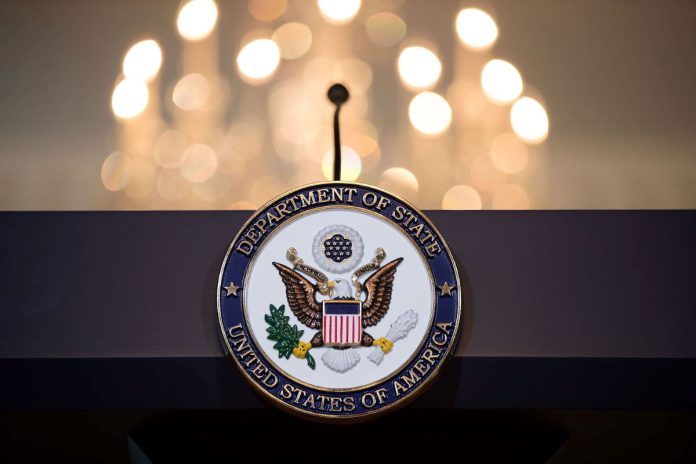
The State Department latest “fact sheet” on its website about Taiwan, a self-governing island claimed by China, does not include the phrase “we do not support Taiwan independence,” which was previously featured on the page.

The fact sheet also modifies a passage about Taiwan’s inclusion in international organisations, by dropping references to “where statehood is not a requirement”, and adds that Taiwan’s dispute with China should be resolved “free from coercion, in a manner acceptable to the people on both sides of the Strait”.

A sentence has also been added describing the Pentagon’s cooperation with Taiwan’s National Science and Technology Council.

The State Department described the changes to the website as “routine” following queries from the media.

“As is routine, the fact sheet was updated to inform the general public about our unofficial relationship with Taiwan,” a spokesperson told multiple media outlets.

The spokesperson was quoted as saying that the US remains committed to its “One China Policy”, which acknowledges China’s position that there is only one Chinese government, and “preserving the peace and stability of the Taiwan Strait”.

“We oppose any unilateral changes to the status quo from either side. We support cross-Strait dialogue, and we expect cross-Strait differences to be resolved by peaceful means, free from coercion, in a manner acceptable to people on both sides of the Strait,” the spokesperson added.

Taiwan, whose formal name is the Republic of China, is a self-governed democracy, but is officially recognised by just a handful of countries, though it maintains unofficial ties with much of the international community, including the US.

Though Taipei considers itself to be a de facto independent state, it has never formally declared independence from Beijing, which has warned that doing so would lead to war.

Under the 1979 Taiwan Relations Act, Washington is obliged to help Taiwan defend itself, but the law does not stipulate that it would necessarily intervene militarily in the event of a Chinese invasion or blockade.

Even minor changes to how US officials refer to Taiwan are closely watched by both Beijing and Taipei.

Former US President Joe Biden stated several times that the US would “defend Taiwan” from China in the event of a conflict, but his remarks were walked back each time by the US State Department.

On Sunday, Taiwan’s Ministry of Foreign Affairs welcomed the State Department’s “positive and friendly” updated wording as a sign of the “close and friendly Taiwan-US partnership”.

Taiwanese Foreign Minister Lin Chia-lung also thanked the US for its “support and positive stance on US-Taiwan relations” and “commitment to peace and stability in the Taiwan Strait, Taiwan-US economic, trade, and technology partnership and Taiwan’s international space”.

Lin’s remarks followed a pledge by Taiwanese President Lai Ching-te on Friday to deepen Taiwanese investment in the US, in a move seen as a bid to keep US President Donald Trump from imposing further tariffs on Taiwanese goods.

Lai described Taiwan as an “indispensable partner” to help the US rebuild its high-tech manufacturing sector.

Israeli gunfire kills woman in Lebanon border town

Israeli Army

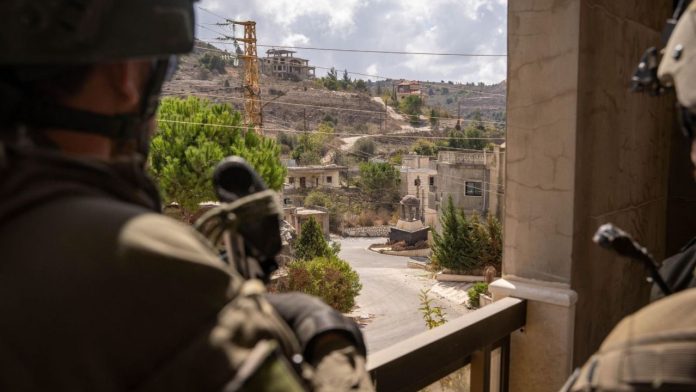
Lebanon’s National News Agency (NNA) reported that Israeli forces opened fire on residents returning to their neighbourhoods in Hula, killing a woman and wounding three others. Israeli troops also abducted four citizens, including a rescue worker, in the town.

A fragile ceasefire between Israel and Hezbollah took effect on 27 November following more than a year of fighting, including two months of full-scale war.

According to the agreement between Lebanon and Israel, Lebanon’s military was to deploy in the south alongside UN peacekeepers while Israeli forces withdrew over 60 days.

Hezbollah was also expected to retreat north of the Litani River, about 30 kilometres from the border, and dismantle any military infrastructure in the area.

The initial deadline was extended to 18 February after Israel failed to meet the original timeframe. Both parties have accused each other of violating the ceasefire terms.

In late January, when the initial ceasefire deadline passed, Israeli soldiers opened fire on residents returning to their border villages, killing 26 people over two days.

The Lebanese army issued a statement on X urging citizens not to head towards the southern regions where military deployment had not been completed, warning of dangers such as unexploded ordnance and the potential presence of Israeli forces.

On Saturday, an Israeli air raid on a vehicle in the Iqlim al-Tuffah region killed two people, the NNA reported.

Israeli Defense Minister Israel Katz stated on Sunday that the strike killed Abbas Hammoud, one the leaders of Hezbollah’s air unit that is responsible for launching drones into the occupied territories.

A senior Israeli security official said on Thursday that Israel was prepared to withdraw from Lebanese territory within the agreed timeline of the ceasefire deal.

However, Lebanese parliamentary speaker Nabih Berri stressed that the US had informed him that while Israel would leave by 18 February, it would retain a presence in five strategic points on high ground in southern Lebanon, a demand that Lebanese officials have rejected.

The five locations are spread along their shared border, including areas near the towns of Khiam, Odaisseh, Naqoura, and Ramyeh.

Israel receives shipment of heavy bombs amid regional tensions

Gaza War

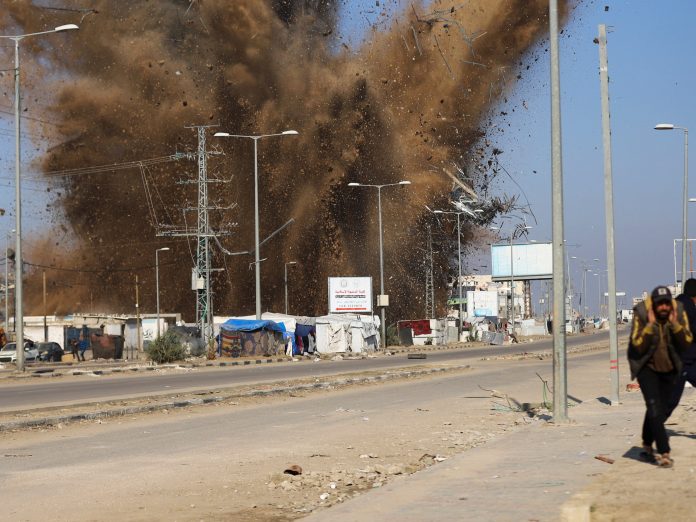
The MK-84 is an unguided 2,000 pound bomb, which can rip through thick concrete and metal, creating a wide blast radius.

The Biden administration declined to clear them for export to Israel out of concern about the impact on densely populated areas of the Gaza Strip.

The Biden administration sent thousands of 2,000-pound bombs to Israel after the Oct. 7, 2023 attack by Palestinian Hamas fighters from Gaza but later held up one of the shipments. The hold was lifted by Trump last month.

“The munitions shipment that arrived in Israel tonight, released by the Trump Administration, represents a significant asset for the Air Force and the IDF and serves as further evidence of the strong alliance between Israel and the United States,” Defence Minister Israel Katz stated.

The shipment arrived after days of concern about whether a fragile ceasefire in Gaza agreed last month would hold, after both sides accused each other of violating the terms of the accord to halt fighting to allow the exchange of hostages held in Gaza for Palestinian prisoners and detainees in Israeli jails.

Washington has announced assistance for Israel worth billions of dollars since the war began.

Iran’s Makran coast should become future economic hub in West Asia: FM

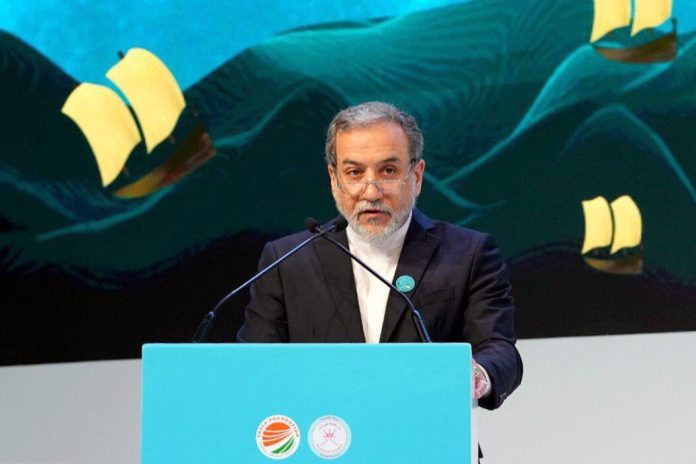
He made the remarks in an address to the 8th Indian Ocean Conference in the Omani capital of Muscat on Sunday.

“The Makran coast holds a special place,” said Arqaghchi during his speech.

“These shores, whose natural and economic potential had been overlooked for centuries, have now become a national development priority.

“The lost paradise of Makran must transform into the future economic hub of Iran and the region,” he added.

The foreign minister further stated that the Islamic Republic believes that its coasts are not merely natural borders but gateways connecting the country to the global economy.

Iran has placed a “maritime-oriented” policy at the forefront of its strategic development, he said, adding that the government has devised a plan for the development of ports, maritime transportation, and the establishment of a regional supply chain.

“A country with over 5,800 kilometers of coastline – 4,900 kilometers of which stretch across the south along this vast ocean – cannot remain indifferent to its future. Developing a maritime-based economy is not just an option for Iran; it is an imperative,” he noted.

As a member of the Indian Ocean Rim Association (IORA) and the Indian Ocean Naval Symposium (IONS), Iran emphasizes its commitment to multilateralism, as well as economic and security cooperation in the region.

In his speech, Araghchi also stressed the importance of ensuring maritime security through cooperation between the countries in the region, saying the issue should not be used as leverage by outside powers.

“We believe that maritime security should not be used as a lever for pressure or influence by extra-regional powers; rather it should be the outcome of cooperation among regional nations.”

He also noted that Iran’s Navy, in cooperation with regional states, has consistently played a part in anti-piracy operations, combating drug trafficking and organized crime, and ensuring navigational security.

The top Iranian diplomat further warned that certain extra-regional powers seek to exploit political, economic and security gaps in the region, and undermine natural cooperation among regional countries.

“We cannot allow the geopolitical rivalries of global powers to determine the future of this region,” he said, adding, “Decisions about the destiny of the Indian Ocean must be made by the countries of this region and shall serve the interests of their people.”

Hosting participants from over 60 countries and international organizations, the two-day conference began on Sunday under the theme “Voyage to New Horizons of Maritime Partnership,” aimed at highlighting the importance of inclusivity and building new partnerships in the maritime sector.

Araghchi stated that the theme of the conference is not a mere slogan and reflects a historical necessity for all countries in the region.