Monday, January 19, 2026
Home Blog Page 515

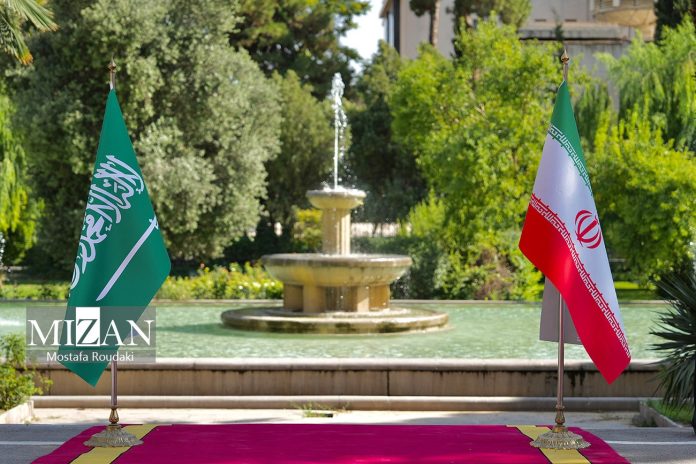
Iranian, Saudi economy ministers discuss bilateral ties

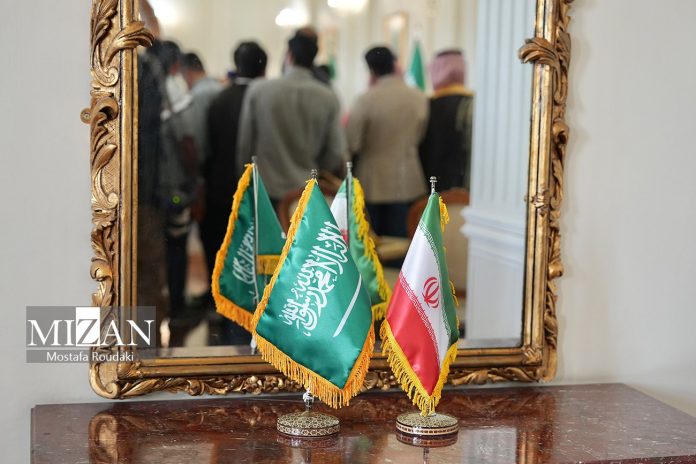
Iran and Saudi Arabia Flags

Iran’s Economy Minister Abdolnaser Hemmati and his Saudi counterpart Mohammed Aljadaan have discussed ways to expand economic cooperation between their countries.

The two ministers met on Sunday evening on the sidelines of the Conference for Emerging Market Economies, which is held in the Saudi city of AlUla on February 16-17.

Hemmati and Aljadaan emphasized the importance of developing trade and customs cooperation, bilateral investment and avoiding double taxation.

They also emphasized facilitating financial processes related to Iranian Hajj pilgrims.

The Iranian economy minister traveled to Saudi Arabia on Saturday to attend the AlUla Conference for Emerging Market Economies co-organized by the Saudi Finance Ministry and the International Monetary Fund (IMF).

Iran and Saudi Arabia restored their relations in March 2023 under a China-brokered deal, following a seven-year hiatus. The two sides have ever since worked on expanding their ties in various sectors including politics, economy and culture.

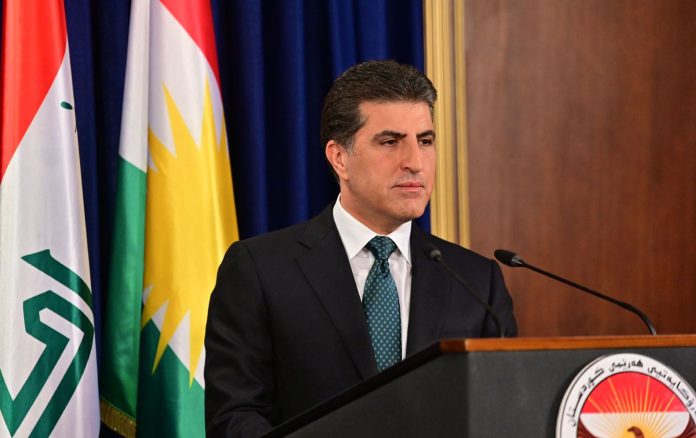
President: Kurdistan will not be used as launchpad for threats against neighbors

Nachirvan Barzani

Nachirvan Barzani was speaking at a joint press conference with Iranian Deputy Foreign Minister Majid Takhte Ravanchi in Erbil.

Barzani described Iran as an important ally of Kurdistan, saying having strong ties with Iran is necessary for stability in the region.

Barzani said the Kurdistan-Iran ties are historical and based on the principles of good neighborliness and mutual interests.

Takhte Ravanchi also said Iran and Iraq’s Kurdistan region have many common values that connect them to each other.

Takhte Ravanchi pointed to his talks with Barzani about regional developments and ways of strengthening ties between Tehran and Erbil.

The Iranian deputy foreign minister described his talks with Barzani as cordial and good.

Earlier, the Iranian deputy foreign minister met with Iraqi officials in Baghdad including his Iraqi counterpart.

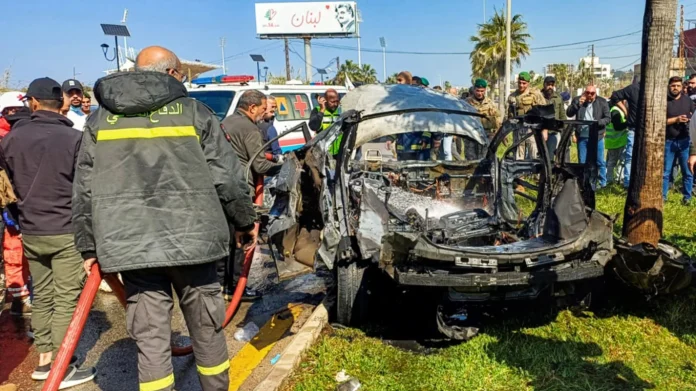
Hamas leader killed in Israeli air raid on south Lebanon

While mourning him, Hamas’ armed wing, the Qassam Brigades, said he had a “pioneering role and special fingerprints” in their fight against Israel, including during the war on Gaza.

From its end, the Israeli army announced that Shaheen was a leading Hamas figure in Lebanon, and that he was involved in firing rockets towards Israel.

The assassination comes as Israel is accused of hundreds of ceasefire violations in both Lebanon and the Gaza Strip.

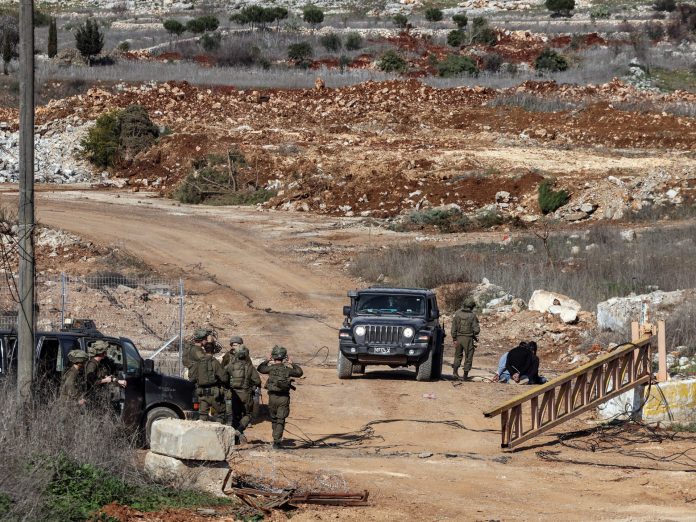
In Lebanon, the Israeli army is supposed to fully withdraw its forces by Tuesday according to the ceasefire agreement, but insists on keeping control over five “strategic” positions in southern Lebanon.

Lebanese President Joseph Aoun expressed on Monday his concern that Israel may not fully withdraw from his country and said he will work on getting Israel to leave through “diplomatic means”.

“The Israeli enemy cannot be trusted, and we are afraid that the complete withdrawal will not be achieved tomorrow,” he said following his meeting with the editors’ syndicate.

“The Lebanese response will be through a unified and comprehensive national position.”

Israel claims it must retain these positions to make sure Hezbollah, which it fought a two-months war with last year, does not rearm itself near its border. It claims the Lebanese state has so far failed to disarm the group.

Aoun stresses the priority must be Israel’s withdrawal, “and Hezbollah’s weapons come within the solutions agreed upon by the Lebanese”.

Israel’s attacks on Lebanon killed over 4,000 people since Hezbollah launched a limited “solidarity front” with Gaza in October 2023.

Most of the dead were killed during Israel’s escalation against Lebanon, which started in late September and was paused with a truce in November.

As of 14 February, at least 57 Lebanese people had been killed by Israel since the truce went into force.

Israel says its soldiers will stay in five locations across southern Lebanon

Israeli military spokesperson Nadav Shoshani said on Monday that the five locations in Lebanon provide vantage points or are located across from communities in northern Israel.

“We need to remain at those points at the moment to defend Israeli citizens, to make sure this process is complete and eventually hand it over to the Lebanese armed forces,” Shoshani told reporters.

He added the “temporary measure” was approved by the United States-led body monitoring the ceasefire, which came into effect in late November.

Lebanon had expressed concern earlier on Monday that Israel would not move all of its forces out of the country by Tuesday’s agreed deadline.

“We are afraid that a complete withdrawal will not be achieved tomorrow,” Aoun said in a statement.

“The Lebanese response will be through a unified, comprehensive national position,” the Lebanese president added.

Lebanon’s concerns over the Israeli army’s plans illustrate the fragility of the ceasefire between Israel and the Lebanese group Hezbollah.

They also come after several reports of attacks across Lebanon, a common tactic of the Israeli military on the eve of a cessation of hostilities.

Israel and Hezbollah agreed to the ceasefire to bring an end to months of all-out war, during which Israel launched ground operations against Lebanon and assassinated a wave of top Hezbollah figures, including chief Seyyed Hassan Nasrallah.

Under the deal, the Israeli army was to withdraw from southern Lebanon over a 60-day period while Lebanon’s military deployed in the Hezbollah heartland alongside United Nations peacekeepers.

The 60-day deadline, which fell in late January, was later extended to Tuesday.

Hezbollah was to pull back north of the Litani River, about 30km (20 miles) from the Lebanon-Israel border, and dismantle any of its remaining military infrastructure in the south.

However, last week, Israel accused the Lebanese armed group of failing to abide by the deal and claimed it did not plan to fully withdraw in the short term.

Speaker of Lebanon’s Parliament Nabih Berri, a Hezbollah ally, stated he had received word from Washington that Israel would remain in those five locations, a plan Lebanon rejected.

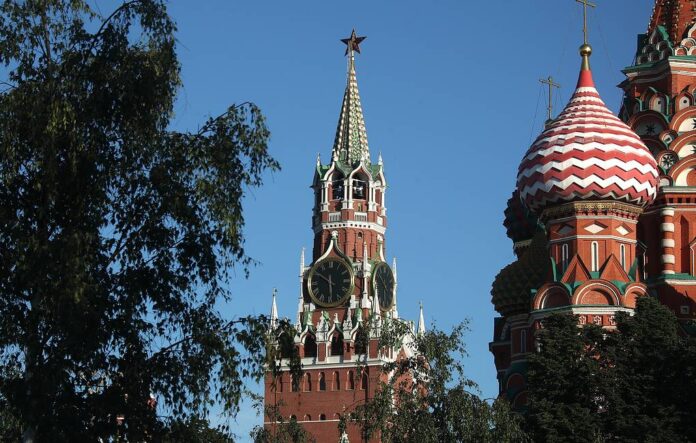
Russia’s FM traveling to Saudi Arabia to prepare Trump-Putin meeting: Kremlin

Kremlin

Last week, Trump held his first phone call with Putin since returning to office. Following the 90-minute conversation, Moscow and Washington announced that the two leaders would soon meet face to face, and later revealed that the summit would take place in the Saudi capital, Riyadh.

Speaking to journalists on Monday, Peskov stated that Lavrov and Ushakov, at the instruction of Putin, are traveling to Riyadh to meet with an American delegation on Tuesday. The talks will be dedicated to the rebuilding of bilateral ties, including upcoming talks on resolving the Ukraine crisis and the organization of the Putin-Trump summit.

Peskov explained that Saudi Arabia was chosen as the location for the high-level talks because it “suits both the American and Russian sides.”

The spokesman noted that it is not yet clear when or if the talks on ending the Ukraine conflict would take place, stressing that the possibility of holding such negotiations will only be discussed on Tuesday between the Russian and American delegations.

However, he stressed that “everyone is trying to talk about what needs to be done to stop the war at all costs,” claiming it was not long ago that many in the West wanted to prolong the fighting instead.

Throughout his election campaign, Trump repeatedly vowed to quickly resolve the Ukraine conflict should he return to office. While initially promising to end the fighting in “24 hours,” Trump has since instructed his special envoy on Russia and Ukraine, Keith Kellogg, to find a solution within the first 100 days of his presidency.

According to a Bloomberg report on Sunday, Trump’s administration is now pushing to establish a ceasefire in the conflict by April 20. Kellogg has also stated that a US peace plan could be unveiled in the near future.

Moscow, meanwhile, has stressed that it has never shied away from peace talks but has emphasized that it would not accept a temporary freeze of the hostilities and would stick to its demands of resolving the root issues of the conflict, including Ukraine’s neutrality and demilitarization.

Saudi Arabia reopens consulate general in Mashhad, northeastern Iran

Iran and Saudi Arabia Flags

Head of the Iranian Foreign Ministry’s office in the northeast of the country welcomed the new Saudi consul general in Mashhad, expressing hope that bilateral relations will improve.

Ahmad Masoumifar further described the new Saudi consul general as an experienced diplomat and noted that both countries’ leaders are determined to expand bilateral ties.

Addressing the Saudi diplomat, Masoumifar said, “You have been appointed to an important mission”.

He added that Mashhad is an important city, which is visited by 30 million visitors each year including 5 million foreigners.

Masoumifar also welcomed the establishment of flights between Mashhad and Dammam, Saudi Arabia, voicing hope that direct flights between Mashhad and Jeddah and Medina will also be resumed.

The new Saudi consul general for his part thanked Iranian official for their efforts to help the Saudi diplomatic mission resume its activities in Mashhad.

Mohammed bin Nawar al-Otaibi said he hopes that the brotherly relations between the two countries will expand through bilateral cooperation.

The Saudi side has already reopened its embassy in Tehran. Tehran and Riyadh normalized diplomatic relations in 2023 following mediation by China.

Riyadh cut ties with Tehran in January 2016 after a protest rally outside the kingdom’s embassay in Tehran. The protesters were angry at the execution of a Shia Muslim cleric by Saudi Arabia back then.

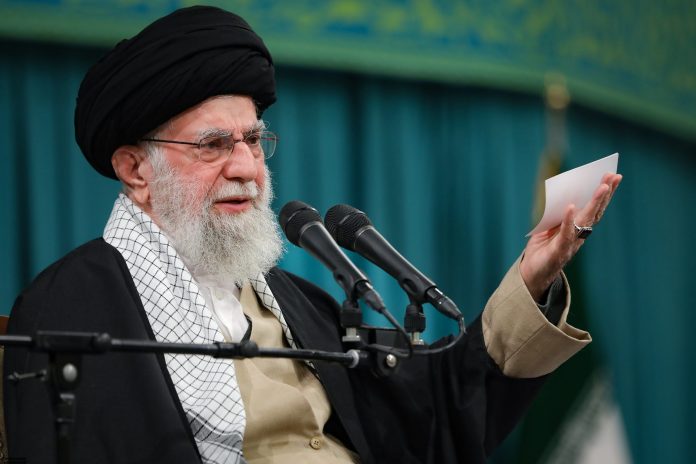
Ayatollah Khamenei says enemy’s soft war failed to dampen Iran’s resolve

”The massive march of the nation on February 10th showed that the enemy’s software threats have been ineffective against this country and this nation,” Ayatollah Khamenei said in the capital Tehran on Monday, the anniversary of a historic and influential uprising by the people of the province’s capital Tabriz, which played a pivotal role in the success of the country’s historic 1979 Islamic Revolution.

The Leader was pointing to the nation’s monumental turnout in the marches and celebrations that marked the 45th anniversary of the Revolution, which overthrew the country’s former United States-backed tyrannical Pahlavi regime.

“Software threats mean manipulating the public opinion; it means creating division; it means creating doubt in the fundamental principles of the Islamic Revolution; it means creating doubt about steadfastness against the enemy. They are doing this.” Ayatollah Khamenei stated.

“By God’s grace [however], they have not succeeded until today; until today, the enemy’s temptations have not been able to shake the hearts of our people or deter our youths from their resolve and moving [forward],” the Leader added.

Ayatollah Khamenei again cited the case of the extensive commemoration events that took place during the anniversary of the Revolution’s victory this year.

“Where else in the world does such a thing exist? After forty-some years since the victory of the Revolution, on the anniversary of the Revolution’s victory, the entire nation, not the Armed Forces, not the officials, but the masses of the people, honor the day in such a way and enter the field with such a massive turnout, despite all the problems that exist.”

“What does this mean? It means that the enemy’s software threats have not been effective in this country and on this nation until today,” the Leader stated.

Ayatollah Khamenei advised the people functioning within the country’s media industry, including broadcast apparatuses, authors, knowledgeable figures, cyberspace specialists, and authorities serving the education, science, and arts sectors across the nation as well as the country’s youths to “focus their efforts on confronting the enemy’s software threats.”

The Leader commended the country’s sufficient capability to fend off the enemies’ “hardware threats,” noting, “Today, we have no concerns or issues regarding hard defense and the enemy’s hardware threats.”

“Our ability to counter hard threats is at an excellent level, and the people feel secure in this regard.”

Elsewhere during the speech, the Leader acknowledged that the Iranian people had some legitimate problems and expectations.

The predicaments, though, do not prevent the people from defending their Revolution, Ayatollah Khamenei stressed.

Ayatollah Khamenei, meanwhile, identified “the reason for the anger of the [world’s] arrogant powers and colonialists towards the Islamic Republic” as “the steadfastness and resistance of the Iranian people.”

The Leader was pointing to the nation’s unfaltering march towards the country’s betterment and welfare in the face of illegal economic sanctions and mounting political pressure by the US and its allies.

The Leader also hailed the Islamic Revolution for having managed to maintain and preserve itself as an “independent identity” and a “vast and hopeful base for the peoples of the region and even beyond the region.”

Britain open to deploying soldiers for Ukraine peacekeeping campaign

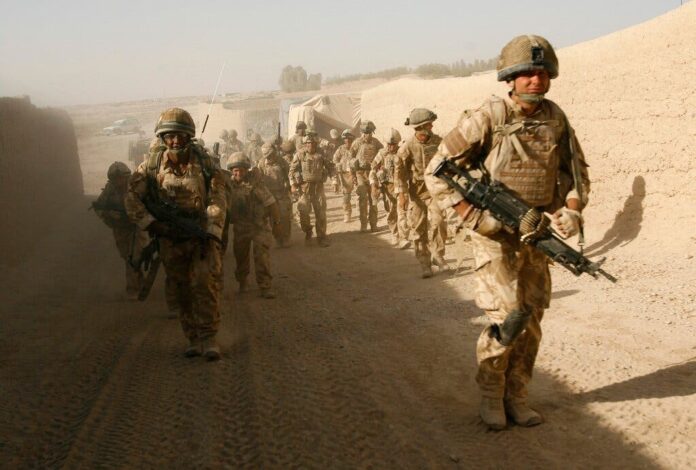
British troops

In an article for the Telegraph, Starmer acknowledged the gravity of such a decision, emphasizing that he did not take lightly the idea of placing British servicemen and women in harm’s way: “But any role in helping to guarantee Ukraine’s security is helping to guarantee the security of our continent, and the security of this country.”

His remarks come ahead of a key meeting in Paris, where European leaders will discuss security commitments for Ukraine amid growing concerns over reduced U.S. involvement in European defense.

The Paris summit, convened by French President Emmanuel Macron, was prompted by the exclusion of European nations from early peace talks between the U.S. and Russia, as well as indications that a future Donald Trump administration would scale back security guarantees for Europe.

“I am heading to Paris with a very clear message for our European friends. We have got to show we are truly serious about our own defense and bearing our own burden. We have talked about it for too long – and President (Donald) Trump is right to demand that we get on with it,” Starmer wrote.

Starmer’s statement is expected to increase pressure on allies, particularly Germany, to support a European-led initiative aimed at ensuring Ukraine’s long-term security. He also suggested that the U.K. could serve as a crucial link between Europe and the United States in brokering sustainable peace.

While Russia and the U.S. are set to begin peace discussions in Saudi Arabia, Ukraine has been seemingly left out of the negotiations—a move Starmer strongly criticized. Drawing parallels to the U.S. withdrawal from Afghanistan, he warned that sidelining Kyiv could lead to a fragile ceasefire that fails to deter future Russian aggression.

The prime minister reiterated Britain’s long-term support for Ukraine, including its pledge of three billion ($3.6 billion) pounds annually for military aid until at least 2030, and said that the U.K. is willing to contribute troops to ensure security guarantees.

“We must be clear that peace cannot come at any cost. Ukraine must be at the table in these negotiations because anything less would accept Putin’s position that Ukraine is not a real nation,” Starmer wrote.

The specifics of a European peacekeeping force remain uncertain, but one proposal under discussion involves deploying European troops behind Ukrainian forces rather than directly along the front lines of a potential ceasefire. Some estimates suggest that as many as 100,000 soldiers may be required to make such a mission effective, raising questions about whether European nations would commit sufficient forces.

Iran says to attend Hezbollah chief’s funeral at highest level

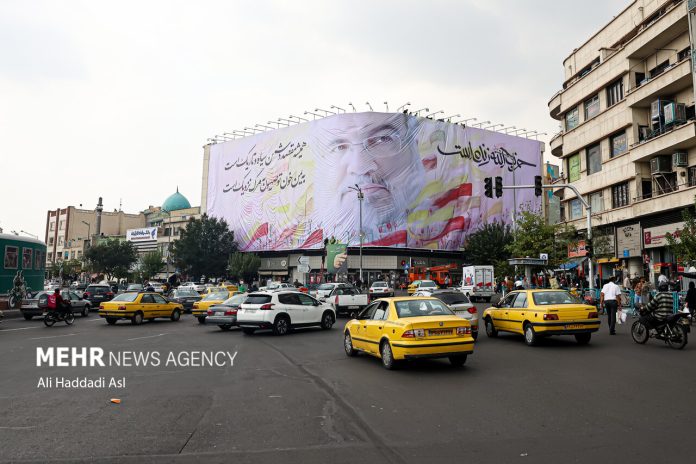
Hezbollah Nasrallah

Foreign Ministry spokesperson Esmail Baqaei said Iran will participate in the funeral ceremony for former Secretary General of the Lebanese Hezbollah Hassan Nasrallah at the highest level.

During a regular press briefing on Monday, he stated that Nasrallah’s funeral would be very important and Iran will therefore attend at the highest level. He did not provide details.

Asked about a recent dispute with the Lebanese government in which Beirut did not permit Iranian passenger aircraft to fly to Lebanon, and a phone conversation between Foreign Minister Abbas Araghchi and his Lebanese counterpart, Baqaei noted Araghchi had emphasized that third parties should not be allowed to affect decision making.

“Conversations continue on, and we hope to reach a rational solution that would meet the interests of Iranian and Lebanese people,” he added.

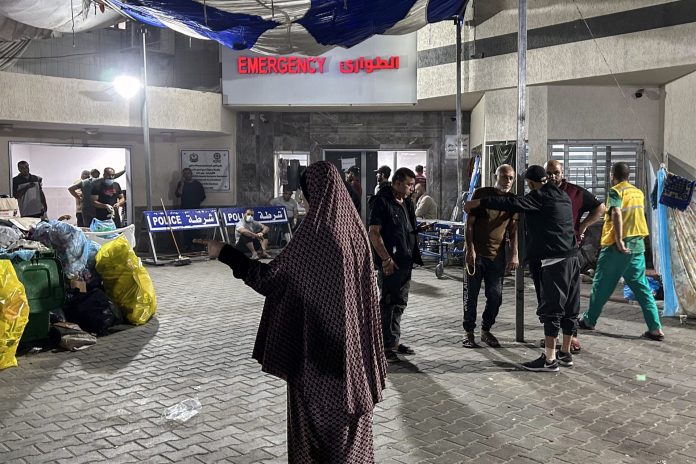
Health ministry warns of severe oxygen shortage in Gaza hospitals after Israeli war

Gaza War Hospital

“Many hospitals are unable to meet their oxygen needs,” the ministry said in a statement.

The ministry warned that Israel’s refusal to allow access to oxygen generators in Gaza “will exacerbate the crisis to levels that threaten the lives of patients.”

The Israeli army has systematically targeted hospitals, schools, and shelters during its destructive offensive in Gaza.

According to figures released by Gaza’s government media office, 34 out of 38 hospitals in Gaza were destroyed by the Israeli army since Oct. 7, 2023. The other four hospitals are offering services at a limited capacity, amid a severe shortage of medicine and medical equipment.

Palestinian authorities also said that 80 healthcare centers stopped services while 162 others and 136 ambulances were destroyed in Israeli attacks.

A ceasefire agreement has been in place in Gaza since Jan. 19, halting Israel’s genocidal war, which has killed more than 48,200 Palestinians, most of them women and children, and left the enclave in ruins.

The International Criminal Court issued arrest warrants in November for Israeli Prime Minister Benjamin Netanyahu and his former Defense Minister Yoav Gallant for war crimes and crimes against humanity in Gaza.

Israel also faces a genocide case at the International Court of Justice for its war on the enclave.