Tuesday, December 23, 2025
Home Blog Page 5085

Iranian artists express regret over Gaza massacre

karimi-ebtehaj

Gaza war Eminent Iranian contemporary poet, Houshang Ebtehaj, expressed deep sorrow over the children’s massacre in Gaza Strip.

However, talking about these bloodsheds will not solve anything. In this battle, one side is armed to the teeth and the other side is almost defenseless. This is while the international society shows total indifference to Gaza’s bloodbath – Houshang Ebtehaj

Commenting on the Zionist regime’s crimes in the occupied territory, the poet said, “I feel great grief over the violence used against the innocent Palestinian children. However, talking about these bloodsheds will not solve anything. In this battle, one side is armed to the teeth and the other side is almost defenseless. This is while the international society shows total indifference to Gaza’s bloodbath,”.

Some of the world’s politicians only seek to maximize the benefits of their national and trade companies and do not show any willingness to stop the mass murder, he said.

Ebtehaj noted that throughout the history, whenever humanity wanted to do or achieve something substantial to do away with crime and war, those who only seek their own interests have caused problems.

Meanwhile, Iranian movie star, Niki Karimi, also expressed regret over the relentless slaughter of Palestinian people by Israeli forces.

Ordinary citizens are being killed in Gaza everyday. I wonder what the United Nations is doing on the ground? And where the human rights advocates are? – Niki Karimi

She said, “I wonder how such disasters can occur in telecommunication era when most of the people have access to the internet and know how to use it. How is it possible that the Zionist regime does whatever it wants, while the international society shows no strong reaction?.”

What is currently going on in Gaza is an international disaster, she warned. “Ordinary citizens are being killed in Gaza everyday. I wonder what the United Nations is doing on the ground? And where the human rights advocates are?”

Karimi recalled that, “After the World War II came to an end, those who collaborated with Adolf Hitler to commit all those bloody and brutal crimes were executed. People still talk about Nazi party’s slaughter. However, at present, in 2014, despite the current unprecedented universal media coverage, we still see that such a brutal mass murder goes unnoticed which is very regrettable.”

Hushang Ebtehaj, (born 1928 in Rasht-Iran) with the pen name of H. E. Sayeh (lit. Shade) is an eminent Iranian poet of the 20th century, whose life and work spans many of Iran’s political, cultural and literary upheavals.
In 1987, he moved to Cologne-Germany, with his family and lives there.

Niki Karimi, (born 1971 in Tehran) is an Iranian actress, director, and screenwriter.
Niki has won many awards nationally and internationally such as San Sebastian film festival award for best actress. She has also recently been on the jury for renowned film festivals, including the Locarno International Film Festival and Thessaloniki International Film Festival and Berlin Film Festival and also the 60th Cannes Film Festival.

Millions observe International Quds Day across Iran

Quds Day in Tehran 2014

Iranians from all walks of life numbering in the millions have taken to the streets in the capital Tehran and more than 770 other towns and cities throughout the country to once again vent their anger at the Israeli regime’s brutal oppression of Palestinians over the past decades.

The ralliers are also carrying placards and chanting anti-Israel slogans, condemning the Zionist regime’s fresh bloody offensive against the besieged Gaza Strip amid the silence of the international community.

Thousands of local and foreign journalists are covering the anti-Israeli rallies across Iran.

Meanwhile, millions of people in different countries the world over will also be holding massive rallies on Friday to express their support for the Palestinian resistance against Israel and voice their outrage at the policies of the Tel Aviv regime and its allies.

This year’s anti-Israel rallies are being held as Israeli warplanes and tanks have been pounding numerous sites inside the Gaza Strip and killing innocent residents of the impoverished Palestinian enclave over the past 18 days.

More than 816 Palestinians have so far been killed and over 5,200 wounded since the Israeli military first launched its onslaught on the Palestinian enclave on July 8.

In 1979, Imam Khomeini, the late founder of the Islamic Republic, designated the last Friday of the lunar fasting month of Ramadan as International Quds Day, during which Muslims across the world hold rallies in solidarity with Palestinians.

Iranian finds interruption wipes out short-term memory

memory-brain

A study conducted by an Iranian scientist Cyrus Foroughi and his colleagues at George Mason University, Virginia, has found that if you are bothered for 60 seconds while trying to focus on something then you will have to start afresh because you can’t recall what you were doing.

The researchers said that their findings should be a warning to anyone with a smartphone as users check the devices around 125 times a day. It shows that humans are more similar to goldfish than they might think as the animals have a memory that lasts just three seconds.

The researchers asked test participants to outline an answer to an exam and then write their response under three conditions. Firstly they had to write uninterrupted, secondly they were disrupted three times whilst writing the outline and thirdly they were interrupted three times whilst writing the answer.

During each of the one-minute interruptions, the test subjects had to do maths problems. The findings showed that the breaks caused 95 percent of people taking part to write poorer quality answers. They also wrote less. For those planning to write a paragraph with five points, they only managed to include three even if they did not realize it.

The study has been hailed as ‘breaking new ground’ as it is the first to show the impact that distractions have on the quality of work somebody is trying to carry out.

Foroughi, a doctoral student at George Mason University, Virginia, who led the research, said: “One minute is more than enough to wipe your short-term memory. Most interruptions in the real world can last from 10 to 15 minutes to 10 to 15 seconds.”

Dr. Gary Small, a professor of psychiatry at UCLA Semel Institute for Neuroscience and Human Behavior, who did not take part in the research, likened our brains to a computer and said that you have to ‘boot it up’ if you flit between tasks. He said, “Our brains are hardwired to like things that are new. The new electronic devices offer us this opportunity for novelty.”

Iranian inventor moves from Google to Amazon

Babak Parviz - Iranian Inventor

Babak Parviz, the Iranian architect of Google Glass, has confirmed reports that he’s leaving Google for Amazon. Parviz, who was born in Tehran, moved to the US after getting a bachelor’s degree in electrical engineering from Sharif University of Technology. In the United States, he secured another degree in electrical engineering, this time a Ph.D., from the University of Michigan. The following is an excerpt of a report Haft-e Sobh (Seven-Thirty AM) newspaper ran on the Iranian genius:

Babak Parviz, the man who is credited with the development of Google Glass, has announced the move to Amazon via his Google+ page. Parviz, a heavyweight in the Silicon Valley giant, has said he seeks new goals in moving to Amazon, which is going from strength to strength thanks to the presence of Jeff Bezos at its helm. […]

Six years ago Parviz was named as one of top 35 inventors in the world thanks to his involvement in “smart lens”, another Google project.

Six years ago Parviz was named as one of top 35 inventors in the world thanks to his involvement in “smart lens”, another Google project.

Parviz, who is “super excited” about the move, has not mentioned anything about his exact role at the e-commerce company. However, The Verge website speculates that Parviz might help Amazon with the Fire Phone.

Parviz, a postdoctoral fellow in chemistry and chemical biology at Harvard, has also taught courses at the University of Washington in Seattle and holds several key positions in research centers in Washington State. He has won several awards, among other things, for his innovativeness in genetics and for his development of a single-engine plane back home.

Actions speak louder than words

David Kreps
David Kreps

David Kreps is a professor at the Graduate School of Business at Stanford University. His book on microeconomics is taught in Iran’s post-graduate economics schools. A 94th issue of Tejarat-e Farda (Tomorrow’s Trade), out on July 12, 2014, featured an interview with the American economist in which he had fielded 10 questions posed by the weekly magazine’s Ehsan Barin, who admits that the short answers Kreps has provided to his questions are as informative as spending hours listening to lectures on economics. We have chosen the last two questions and answers which are less technical in nature and thus widely understandable.

There are pressure groups both in Iran and in the US trying to prevent President Rouhani and President Obama from reestablishing diplomatic relations between the two countries. As an expert, what do you think is the best strategy for the two presidents?

I’m not an expert on the specifics, and I certainly would not want to offer the presidents any concrete advice. Based on my own expertise, I would offer two insights from theory blended with my observations: A. Actions nearly always speak louder than words. B. In particular, one builds credibility by being credible.

reputation-management is tricky business: X’s reputation with Y is a product of the long-term interactions between X and Y, but it also depends on how X behaved and is behaving with Z and W. – David Kreps

These days, diplomats from Iran and P5+1 (five permanent members of the UN Security Council plus Germany) are trying to work out an agreement on Iran’s nuclear program. Are these talks a repeated game in which the reputation of the countries involved has an important role to play?

The situation is not a repeated game in the formal sense, but to change your phrasing a bit, I think it is obvious that the credibility of the parties to carry out their portions of any agreement is an essential element in reaching an agreement, and reputation is very often a key to obtaining credibility. That said, reputation-management is tricky business: X’s reputation with Y is a product of the long-term interactions between X and Y, but it also depends on how X behaved and is behaving with Z and W. Y, in trying to assess what X will do in the future, looks closely at what X did in the past with Z and W and, at the same time, thinks hard about what X may be called upon to do in the future in re Z and W.


David Kreps
David Kreps

David Marc “Dave” Kreps (born 1950, New York) is a game theorist and economist and professor at the Graduate School of Business at Stanford University. He is known for his analysis of dynamic choice models and non-cooperative game theory, particularly the idea of sequential equilibrium, which he developed with Stanford Business School colleague Robert B. Wilson. – Wikipedia

A tour of the largest private arts museum in Iran

Pasargad Bank Museum at Saba Museum

The top floor of Tehran’s Saba Museum is home to precious works of arts. The following is an excerpt of a report published in the 94th issue of Tejarat-e Farda weekly on the museum, which was acquired by Pasargad Bank almost a decade ago:

Saba Museum in downtown Tehran is so magnificent, as far as architecture is concerned, that one cannot walk past the building without feasting their eyes on it.

Saba Museum in downtown Tehran is so magnificent, as far as architecture is concerned, that one cannot walk past the building without feasting their eyes on it. If you are into arts and culture, you have definitely visited the exhibitions the building plays host to every once in a while. However, you may not know that the top floor of this building is home to a collection worth billions of dollars. In the museum Pasargad Bank, which owns one of the most exclusive collections of paintings in Iran, puts on display visual arts items it has acquired over the past decade. The permanent expo admits visitors free of charge.

After the Islamic revolution [of 1979] Pasargad was the first institution to invest in arts. The bank has described investment in arts as a very profitable venture for financial institutions.

The visual arts museum of Pasargad Bank reopened in October 2009, putting 140 works of art including bas-reliefs, Impressionist paintings and statues, pub art, calligraphy and calligrams by modernist artists on display. Valuable works of art by prominent artists, both living and deceased, along with those of young artists are being displayed at the expo.

After the Islamic revolution [of 1979] Pasargad was the first institution to invest in arts. The bank has described investment in arts as a very profitable venture for financial institutions. For instance, a Persepolis statue has fetched Pasargad an unprecedented $2.8 million at a Christie’s auction in Dubai. And the most expensive item sold at Tehran’s grand auction this year belonged to Pasargad.

The museum is ranked Iran’s second best only after the Contemporary Arts Museum. Visitors will find at least one work of art by 65 percent of all Iranian contemporary artists in this museum.

World Qods Day under Shadow of Holocaust in Gaza

gaza

They call this day “Jum’at-al-Weda” or the Farewell Friday. There are special supplications prescribed for this day. No doubt, in view of the importance of this day, the Father of the Islamic Revolution, Imam Khomeini (RA) had declared the Last Friday of Ramadhan as World Qods Day.
It was a farsighted move in order to mobilize the ummah to rally to the support of the oppressed people of Palestine for the eventual liberation of Islam’s former qibla, al-Aqsa Mosque in Bayt al-Moqaddas – at a time when Arab reactionary regimes had ganged up with the West to confer legitimacy on the illegal Zionist entity, following the Egyptian traitor Anwar Saadaat’s signing of the scandalous Camp David Accord in 1978.
The Founder of the Islamic Republic’s dynamic move in 1979 checkmated the conspirators’ plot to dampen the aspirations of world Muslims. At the same time, it busted the myth of the holocaust which the Zionists and their godfathers allege happened in Europe during World War 2.
To be fair and frank, no holocaust occurred last century in Europe, where the total population of the Jews on the entire continent (Russia included) was far below six million.
Actually holocaust was being planned on a gigantic scale in Palestine – a land to which European Jews have no connection since they are ethnic Khazars without any link to the Israelites of the past, the majority of whose descendants today are Muslims and some Christians.
For the information of our readers, Holocaust is a Greek word referring to horrible burning of humans with fire, as was done in the ancient times by the Israelites to the Christians for refusing to follow their beliefs. It also refers to what the illegal Zionist entity is doing in Gaza today by raining fire upon Palestinians and burning men, women, and children alive.
This year’s Qods Day Rallies are being held at a crucial juncture. Hamas, which rules Gaza, finds itself in an awkward position, both because of the unprovoked aggression of the illegal Zionist entity and its own strategic blunder in having sympathized with the Takfiri terrorists trying to destabilize Syria and Iraq.
Nonetheless, the Palestinians in Gaza are putting up brave resistance against heavy odds. This SPIRIT of resistance, spearheaded by Islamic Jihad and ordinary Gazan Muslims, should make Hamas review and rectify its mistakes by returning to the fold of the Islamic Resistance.
Hamas should take note that Seyyed Hassan Nasrollah, the leader of Lebanon’s legendry anti-terrorist movement, the Hezbollah, has been magnanimous to reaffirm support in direct talks with its leaders.
On the other hand, the cowardly Takfiri terrorists have exposed their Zionist roots by saying they have no quarrel with the Israelis who are “People of the BOOK”, and their enmity is with all those who (in obedience to God’s commandment in the holy Qur’an) revere the blessed Ahl al-Bayt of Prophet Muhammad (SAWA).
The Ummah is in quest of a united Islamic stand, and as Islamic Iran has shown the way over the past three-and-a-half decades, only Islamic solidarity, and not sectarianism or narrow Arab nationalism will liberate Palestine.
As for the importance of the Last Friday of fasting Ramadhan, the venerable scholars of the past, such as Seyyed Ibn Tawous and Shaykh Sadouq have cited a report that Jaber ibn Abdullah al-Ansari said, “I visited the Messenger of Allah (SAWA) on the last Friday of the month of Ramadhan. When the Prophet saw me, he said:
“O Jaber, this is the last Friday of the month of Ramadhan. Bid it farewell and say: “O Allah, make this not my last opportunity of fasting in it, and should You make it such, grant me Your mercy and do not let me be deprived!”
The Prophet then added: “Indeed! Whoever recites this supplication on this day will partake of one of the two virtues: either he will reach the next Ramadhan, or attain God’s mercy and forgiveness.’ ”
So let us earnestly pray to God Almighty for the deliverance of the Ummah from the plots of the enemies of humanity, including the dastardly Takfiris who are terrorizing Iraq, Syria, Lebanon, Pakistan, AFGHANISTAN, and other lands.
We should never be disappointed or lose hearts. If 8 centuries ago, when Kurdish, Turkish, Arab and Iranian Muslims had closed ranks to liberate Bayt al-Moqaddas by ending the 88-year occupation of Palestine by the Crusaders state, we can make history repeat by again solidifying Muslim ranks from Africa to the Philippines to end the illegal existence of Israel.
This is the message of the World Qods Day, and this is what the Islamic Republic of Iran firmly believes for the sake of peace, and safeguarding of humanitarian values.

Muslim MPs Discuss Gaza Tragedy

Rouhani

The agenda of the one-day meeting was to discuss the occupying regime of Israel’s ongoing offensive against the Gaza Strip and study ways to defend the rights of the Palestinians.

Addressing the opening, PUIC Secretary General Mahmoud Erol Kilic pointed to the massacre of the defenseless children and women in Gaza, and said, “Women and children are the main victims of these attacks and the Muslim Ummah should pay prime attention to the Palestinian cause as its main agenda.”
He noted that 19 lawmakers and seven parliament speakers were attending the meeting, showing the importance of the event. He urged the meeting to think of ways to put an immediate end to the massacre of the Gazans by the occupying regime of Israel.
Parliament speakers from Mali, Palestine, Syria, Qatar, Turkey and Sudan along with three parliamentary delegations from Oman, Lebanon and Pakistan attended the event.
Iran’s Parliament Speaker Ali Larijani as the former chairman of the PUIC, Speaker of the National Assembly of the Republic of Mali Issaka Sidibé as the current PUIC chairman, and Sudanese Parliament Speaker Fateh Ezzedin Mansour as the next PUIC chairman were in the meeting.
Larijani hailed regional resistance groups for their achievements in the fight against the Zionist regime, saying resistance is now creating a new Middle East.
“Today, it is the power of the resistance which is creating a new Middle East and the U.S. and its affiliates don’t want to recognize this power but try to undermine the current by accusing it of terrorism,” he said.
The speaker said resistance groups such as Hezbollah, Hamas and Islamic Jihad have proved their efficiency in confronting the Zionist regime. “This resistance is like a medal on the chest of the Muslims; compromise will not produce any result.”
He called on the PUIC to use its power to support the Palestinian people and asked the Egyptian government to open the Rafah border crossing for humanitarian and medical aid to the Gaza people.
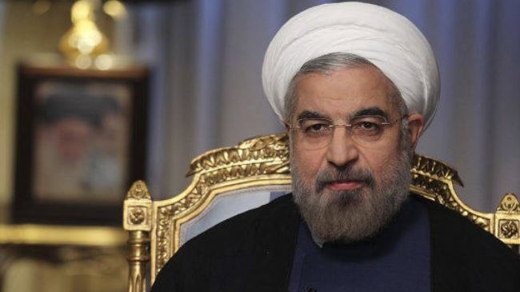
Earlier on the day, President Hassan Rouhani expressed grave concern over the plight of the Palestinian people in the Gaza Strip and called on the international community not to remain silent toward the massacre of women and children by the occupying regime of Israel.
The siege of the Gaza Strip has deprived the Palestinians of food and medical supplies, President Rouhani said.
“If we remain indifferent to the plight of others, we will have no right to expect them to commiserate with us in our own plights,” Rouhani added.
The president said, “The human society should come to the understanding that we all share a common fate.”
He also commented on the major problems in the region and the world like the spread of terrorism, stressing that all countries need to contribute to tackling such challenges.

Handicraft, resistance economy and employment

handicraft

According to art experts, Iran ranks among the top three countries in the world for handicraft activities. Researchers and art lovers consider Iran as the birthplace of handicrafts and arts such as carpet, metalwork, and potteries and ceramics, according to IRNA.

Iranian handicrafts can be studied from artistic and economic aspects.

The artistic aspect is of high importance because it involves Iranian-Islamic values and culture, and relies on Iranian tastes, dynamism, thinking and creativity.

From the economic point of view, handicrafts should have a higher standing for exports to global markets, increase non-oil revenues, and play a great role in the country’s economic and social development.

One of the major concerns of officials in the handicrafts sector is the modesty of artisans. They have insurance problems.

Furthermore, presence of exporters from rival countries, which have copied Iranian designs and made products similar to Iranian ones, is another bitter reality. Despite the rapid development of the industry coupled with the onset of modern technology, handicraft is still considered central to Iranian culture and art.

If it is applied as a consuming commodity by Iranian families, it could have a promising future.

Head of Iran Cultural Heritage, Handicrafts, and Tourism Organization (ICHHTO) contends that the organization has a special role in country’s economic and cultural development during the current Iranian year which has been designated by Leader of Islamic Revolution Ayatollah Seyyed Ali Khamenei as the ‘Year of Economy and Culture With National Determination and Jihadi Management’.

Massoud Soltanifar added that out of 460 fields of handicraft, 352 are active in Iran.

Followed by India and China, Iran is considered as third handicrafts hub worldwide, he pointed out. Some two million people are involved in the handicrafts sector, he added.

Carpet weaving is considered as the most important field of the handicraft sector, he said. He noted that handicraft sector has high potentials for generating jobs.

“Some two million square meters of carpets are woven annually in Iran, of which 1.5 million are exported.”
Soltanifar said the country earned $150 million by exporting handicraft items in the last Iranian year (ended March 20, 2014).

It also fetched $1 billion from the export of 1.5 million square meters of hand-woven carpets during the mentioned period, he added.

ICHHTO can generate 300,000 jobs in the handicrafts sector once bank loans and financial resources are made available, he said.

He called carpet weaving, kilim weaving, giveh weaving, darning, traditional dying, jajim weaving, woodwork, copper smithing, whitesmith’s art, ironwork and chelengari, mirrorwork, plasterwork, needlework, local garments, potteries and sculpture, bamboo weaving, cutting precious and semi-precious stones, gilding, miniature, and doll making as major handicrafts of Markazi province.

Also, director general of Markazi Cultural Heritage, Handicrafts and Tourism Department, said ascertaining the preferences of customers and upgrading the quality of the products are the top priorities of the department.
Seyyed Mohammad Hosseini added that promoting home-based jobs could help remove unemployment.

Based on assessments, over 7,920 people are involved in various handicraft fields in the province, of whom 2,320 have been insured, he said.

He said 110 disciplines of handicraft are active across the province including traditional textiles, roodoozi (exterior needlework), traditional textile printing, potteries and ceramic, engraving, copper smithing, straw plaiting, footwears such as giveh, and cutting semi-precious stones.

Meanwhile, deputy head of Markazi Cultural Heritage, Handicrafts, and Tourism Department said 10 artworks of Markazi province have so far received the UNESCO seal of excellence.

Qasem Kazemi added that Vahid Keshavarz (for traditional musical instrument of ‘kamancheh’), Abdollah Geleh Sanjani (‘giveh’), Ali Ghaffari ( pendants made with precious and semi-precious stones), Amin Keshavarz (traditional musical instrument of ‘gheichak’), Hamidreza Ashtari (musical instrument of sehtar), Ehsan Tayyebi (dohol (drum)), Mohammad Shams (earthen sootak (whistle)), and Milad Rafiee (gilding) have received the seal of excellence.

Birthplace to hit the screen after a six-year ban

Iran-Cinema-Birthplace movie

Birthplace, a movie which was directed by Abulhassan Dawoodi and remained banned for six years, has secured the official go-ahead to hit the screen without a single scene of the movie ending up on the cutting room floor.

Birthplace, which was bankrolled by the Artistic Department and was shot six years ago, is likely to be screened over the next few days. What is interesting about Birthplace is that it secured the best award for a movie from a nationalistic perspective at Fajr Film Festival. But when the festival was over, authorities moved to prevent its screening, a ban that lasted for six years.