Wednesday, April 8, 2026
Home Blog Page 5015

Deviant and reactionary currents are too dangerous

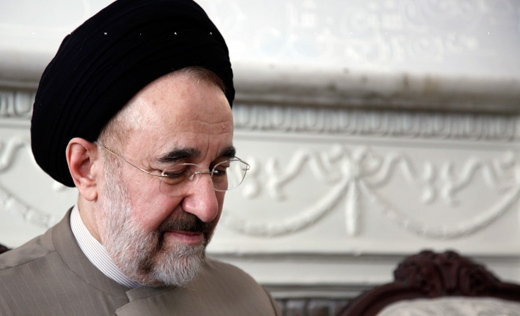
Mohammad Khatami

Aftab-e Yazd, a reformist daily, on December 14 reported the remarks of former President Mohammad Khatami and the founder of BARAN [Foundation for Freedom, Growth and Development of Iran] on the need for the portrayal of a kind, constructive and pioneering face of the Islamic Republic. What appears below is a partial translation of what the reformist president had to say in a meeting with the family of martyr Mostafa Mousavizadeh:

Efforts should be made to show a neat, kind, constructive and pioneering face of the Islamic Republic to the whole world. This is what the late Imam Khomeini, martyrs and people have called for.

We are now at a critical juncture. There are groups in the region which commit unspeakable crimes in the name of Islam. They are perverse, devious and reactionary currents which walk down the path already taken by big powers.

Over-reactionary and suspicious currents have tightened the screws [on people in the region] and this is dangerous.

Iran’s revolution introduced an Islam which sought honor, glory, progress and welfare for people, one which tried to help serve justice. We need to respect such an Islamic mindset and its achievements.

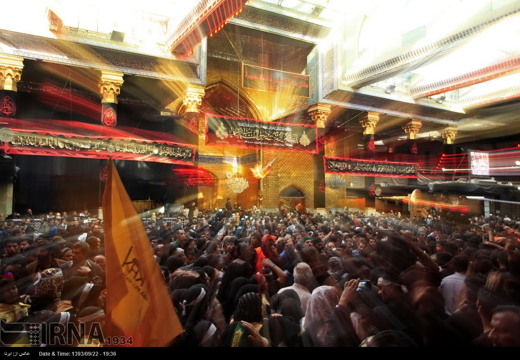
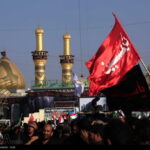
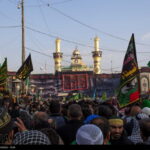
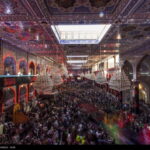
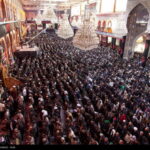
Arba’een in the holy city of Karbala in photos

Karbala-Arbaeen

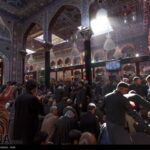
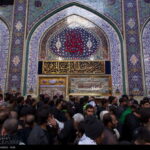
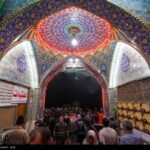
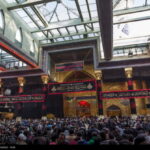
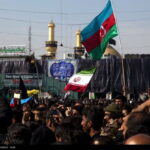
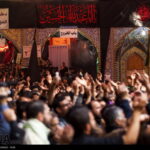
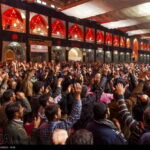
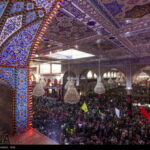
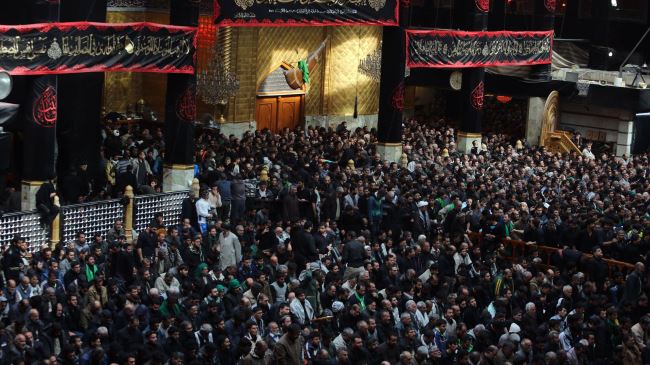
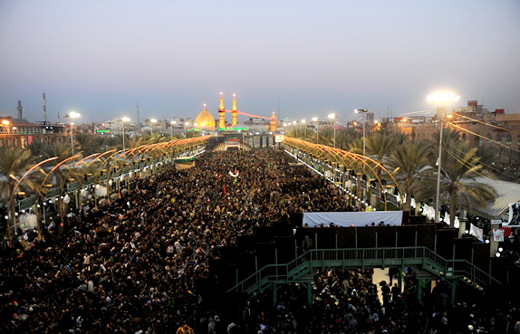
The Iraqi city of Karbala on December 13, which marked Arba’een, the 40th day after Ashura, the anniversary of the martyrdom of Imam Hussein, played host to the largest annual Shiite gathering. The following is a photo gallery of the religious ceremony that the Islamic Republic News Agency (IRNA) posted on its website:


The uprising of Karbala won’t be forgotten; Islam is a religion of compassion

Mohammadi Golpaygani

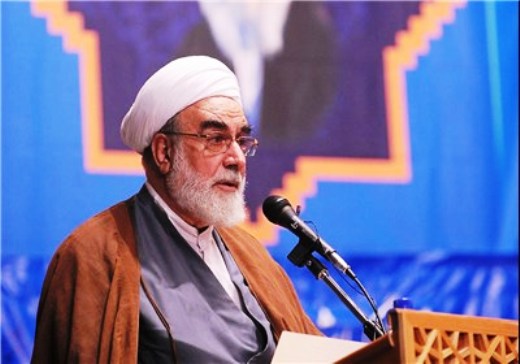
The Chief of Staff of the Supreme Leader has said the fact that as many as 20 million people, 4.5 million of them from overseas, are in the Iraqi holy cities of Najaf and Karbala to take part in Arba’een ceremonies and honor the memory of Prophet Muhammad’s grandson shows that the Messenger of God and his infallible household have been very successful in capturing the hearts and minds of the faithful.

According to Tasnim News Agency Hojatoleslam Mohammad Mohammadi Golpayegani made the comment at a function at Shahcheragh Shrine in the southern Iranian city of Shiraz. The following is the translation of what else the leader’s chief of staff told the service Friday evening:

Many pilgrims have walked long distances on their way to the Iraqi holy cities. […] The uprising Imam Hussein launched in Karbala [centuries ago] won’t drift into oblivion. On the contrary, its glory and loftiness are bound to increase by the year.

[…]

Today IS terrorists and their American and Israeli masters pose the gravest threat to the Muslim faith. Islam is a religion of compassion and love, but the stooges of Global Arrogance, including IS and other Takfiri groups around the world, are portraying it as a violent religion.

[…]

Iran test-flies nine new drones during war games

Drones

Iranian military forces’ aerospace technicians flew nine new types of drones during Toward Beit ul-Muqaddas (occupied Jerusalem) War Games in Dashtestan desert of Bushehr province on Friday.

Basiji Pilot General Mohammad Ja’farabadi told IRNA on the sidelines of the war games that film-taking from the operation field of the war games, land control of the drones, and real-time dispatching of images to the control center were among drone capabilities tested on Friday.

“Among the nine drones flown on Friday there was a hexacopter capable of taking images and real-time transferring of them as well as an electronic glider with innovative capabilities.

[…]

UN must play real role in Syria crisis: Iran diplomat

Hossein-Amir-Abdollahian

A senior Iranian diplomat has stressed the importance of adopting a realistic approach to the developments in Syria, saying the United Nations should play a real role in settling the conflict in the war-torn country.

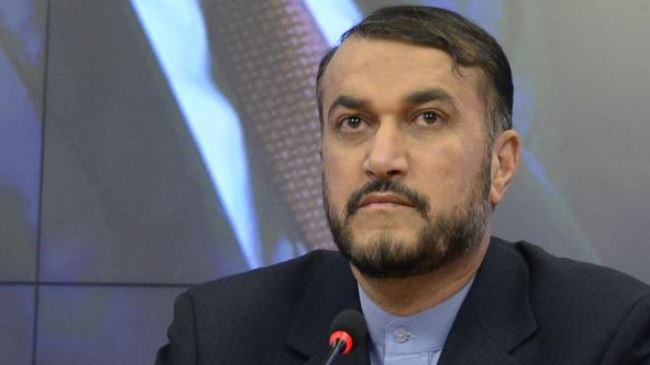
“The Islamic Republic of Iran wants to see the United Nations [playing its] real role between the sides for and against [the Syrian government],” Iran’s Deputy Foreign Minister for Arab and African Affairs Hossein Amir-Abdollahian said in a meeting with Deputy UN Special Envoy to Syria Ramzy Ezzeldin Ramzy in Tehran on Friday.

The Iranian diplomat hailed efforts made by UN Special Envoy to Syria Staffan de Mistura to settle the conflict in the country and expressed Iran’s willingness to help advance a UN proposal for the suspension of fighting in the northern city of Aleppo.

Amir-Abdollahian also slammed the United States and its regional allies for their attempts to train and arm the Takfiri groups operating against the Damascus government, saying such a move violates the UN plan to establish a ceasefire in Aleppo.

On October 30, the UN envoy proposed an action plan for areas where Syrian forces are fighting Takfiri terrorists, and said the proposal includes “freeze zones” in Syria to allow deliveries of humanitarian aid, starting with the country’s largest city, Aleppo.

Syrian President Bashar al-Assad on November 10, expressed his readiness to study the UN initiative, saying Aleppo, which has been divided into militant and government-held territories since July 2012, has been cited as a potential opening stage.

Ezzeldin Ramzy, for his part, called for Iran’s support for the UN-proposed plan in Aleppo and expressed hope that it would be implemented in the near future.

He said the proposal, should it succeed, could serve as a model for the implementation of similar plans in other parts of Syria.

The diplomat also pointed to a four-point plan devised by the Islamic Republic earlier this year to help settle the Syria crisis, calling for the implementation of the proposal’s first article, which calls for the establishment of a truce in Aleppo.

Iran’s proposed peace plan stresses a political resolution to the Syrian crisis, the territorial integrity and independence of the Arab country as well as its people’s right to self-determination.

Syria has been grappling with a deadly crisis since March 2011. The violence fueled by Takfiri groups has so far claimed the lives of over 200,000 people, according to reports.

Australia liable for Iranian asylum-seeker’s death

Iran-Australia-Khazaei

A newly-leaked document shows that the Australian government is liable for the death of a young Iranian asylum-seeker by delaying his transfer from an offshore detention camp to hospital, Press TV reports.

The document, which was revealed on Friday, showed that the 24-year-old Iranian did not receive proper medical attention because the Australian government had delayed issuing a visa for his evacuation.

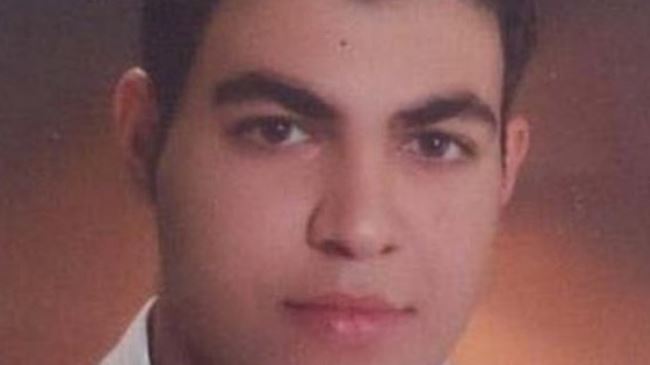
Hamid Khazaei was suffering from septicemia caused by an infection spreading as a result of a cut in the foot and had sought medical attention for days. However, he was denied treatment despite his repeated pleas in the Australian detention center on Papua New Guinea’s Manus Island.

The 24-year-old Iranian national was medevaced for emergency treatment from the detention camp on Manus Island to intensive care at Mater Hospital in Brisbane on August 27. He was later declared brain dead at the hospital.

The new report revealed that the Australian government officials had ignored the urgent request of medical staff even though they were told that Khazaei’s condition was life threatening.

In February, Reza Barati, 23, was bashed to death as a result of a “brutal beating” by an Australian guard on the same island. He sustained fatal head injuries after hundreds of asylum-seekers tried to break out of a camp on Manus Island.

Refugee groups say the Australian government is responsible for the death of Khazaei and Barati and have called for the resignation of the Immigration Minister Scott Morrison. However, with Morrison’s newly acquired powers and Australia further distancing itself from the UN Refugee Convention, that seems to be an unlikely outcome.

The developments come as Australia’s lower house of parliament on December 5 narrowly approved amendments to the country’s controversial immigration laws by introducing temporary visas for refugees, which do not grant settlement in Australia.

Iran criticizes IAEA unofficial rejection of offer over Marivan site

Iran-IAEA

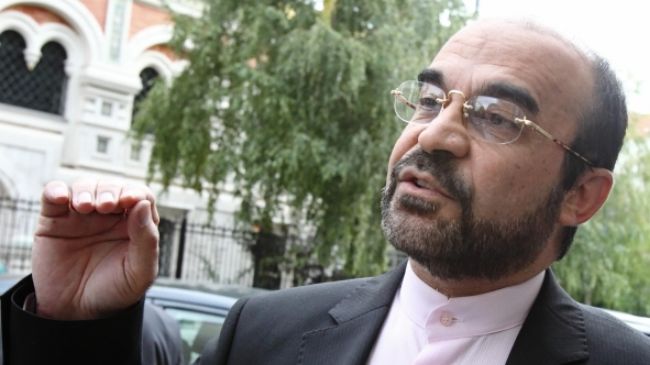
Iranian Ambassador to the IAEA Reza Najafi said Thursday night that the Agency has acted unprofessionally by apparently rejecting Iran’s proposal through an e-mail to the Reuters news agency.

“The Agency (IAEA) cannot evade its responsibility just by sending an e-mail to a news agency,” he added.

The IAEA claimed on Thursday that Iran’s offer does not help address the agency’s concerns pertaining to the issue of alleged high-explosive experiments at the Marivan site.

“The Agency explained clearly to Iran – on more than one occasion – that an offer of a visit of Marivan does not help address specific concerns related to the issue of large-scale high-explosive experiments,” said the IAEA’s public information director, Serge Gas, in an email.

Najafi said that the UN nuclear body’s unofficial refusal to send its inspectors to the site proved that the IAEA’s November 2011 claims about large-scale high-explosive experiments at the Marivan site were baseless.

The only solution now is that the Agency declares impartially and professionally that information provided by certain IAEA member states about high-explosive experiments at the Marivan site has been fabricated and, thus, the IAEA cannot act to verify the claims, he added.

Number of Karbala pilgrims to hit new record in Arba’een

Karbala-shrine

More Shia pilgrims from around the world are pouring into Karbala to commemorate the religious ceremony, which marks the 40th day after the anniversary of martyrdom of Prophet Mohammad’s grandson, Imam Hossein.

Black-clad pilgrims are walking toward Karbala, where they will take part in the mourning ceremonies around Imam Hossein’s shrine. According to Iraqi authorities, some 17 million people have already arrived in the holy city and a three million more are expected for Saturday.

The Arba’een ceremony, which is one of the largest religious gatherings in the world, falls on December 13 this year.

Iraqi forces have tightened security to protect the pilgrims against terrorist attacks. The Iraqi government has also adopted measures for an easier evacuation of pilgrims from Karbala.

Of around four million pilgrims who have come to Iraq this year, some1.3 million are Iranians – an unprecedented figure which many attribute to the sensitive security situation in Iraq and the rise of Takfiri terrorists in the Arab country.

The procession would mark Iranian Shias’ solidarity with the Iraqis as they are struggling to cope with terrorist attacks which are particularly aimed at their holy sites. Over the past months, the ISIL Takfiri terrorists have managed to take control of parts of Iraq.

This year, the Iraqi government has scrapped normal visa fees needed for Iranian nationals for entering Iraq. Iranian officials have also made efforts to facilitate the pilgrims’ journey to Karbala.

Imam Hossein and his 72 companions were martyred in the battle of Karbala on the day of Ashura in 680, after refusing to pledge allegiance to the tyrant ruler of his time.

No Iranian pilgrims injured in Thursday night explosions in Karbala

Karbala-Arbaeen

No Iranian was among the victims of multiple explosions Thursday night in the Karbala suburbs, the cause of which is said to be mortar or mini Katyusha shelling.

The director of Iran Hajj and Pilgrimage Organization’s office in Iraq Mostafa Qasemi told IRNA that a few people have been reported injured, but noted that none of them were Iranian.

He said that Iranian pilgrims could not have been injured in the attacks because they were not based in the suburbs of Karbala.

Last night at least six heavy explosions were heard in Karbala and nearby areas.

The attacks on the largest peaceful gathering of Shiite Muslims occurred at a time that according to Iraqi sources millions of pilgrims had arrived in Karbala as of Thursday to participate in Arba’een rituals – to be held on Saturday — and the number is still increasing.

Arba’een is a Shiite religious observance that occurs 40 days after Ashura, the day of martyrdom anniversary of Imam Hussein (AS), the third Shiite Imam and the grandson of Prophet Muhammad (Peace Be upon Him).

Development through national management helps solve Afghan problems: Expert

afghanistan presidency palace

On December 10, Aftab-e Yazd, a daily, carried a report on the comments of Pir Mohammad Molazehi, an Afghanistan expert, on the reasons behind some of the problems the Central Asian country is grappling with. The following is a partial translation of what he said:

Molazehi blamed the present woes of Afghanistan on a lack of integrity on the part of countries which supposedly help it, as well as on wrong investment policies, insecurity and corruption.

As for foreign aid to the country, he said, “The countries which offer aid to Afghanistan have failed to demonstrate the kind of sincerity which could inject dynamism into the economy and address the problems Afghan people are dealing with.”

Instead of investment in Afghanistan or direct financial aid to the Afghan government, America and some European countries have offered aid to private firms. Not only has it not resulted in injecting dynamism into the economy or helping the government but it has given rise to massive corruption. The case involving Kabul Bank is an illustrative example of such corruption.

Following the influx of cash by private American and European firms, some political Afghan elites raked in legendary fortunes and accumulated wealth by setting up economic institutions and corruption gangs and investing in banks in Dubai and elsewhere overseas.

As a result, foreign currency funds allocated to resolving Afghan problems flowed out of the country and in some cases returned to the countries from which they had come.

Over the past 13 years, as much as $15 billion has been injected into Afghanistan. But that has had no impact on its economy, nor has it tackled the woes that Afghan people are faced with.

As for the 2014 London Conference on Afghanistan, and other gatherings with similar purposes, he said, “No country has made progress through charity aid and a country’s economy won’t turn dynamic through the infusion of corrupt cash like what has taken place in Afghanistan. The solution to the crisis lies at the heart of this land. In terms of natural resources like oil, natural gas, iron ore and copper the country is extremely rich.”

“NATO countries and America entered Afghanistan in 2001 under the pretext of the war on terrorism. They, however, have failed to defeat militias in the country. Maybe they have not sought to drive them out of the picture in the first place. The insecurity that emanates from acts of terror in Afghanistan is one of the obstacles in the way of the nation’s development.

During the 13-year presence of foreign troops there which kept thousands of military forces on the ground, no positive step has been taken to take on terrorism and ensure security. Terrorist cells of the Taliban and Gulbuddin Hekmatyar [the founder of the Hezb-e Islami political party] still keep operating there. In the absence of security, no progress will be made,” the analyst stated.

Molazehi is of the opinion that by keeping Afghan security forces dependent on themselves, foreign troops in Afghanistan interfere with anti-terrorism activities.

In terms of the Afghan election and US role in it he said, “The intervention by US Secretary of State John Kerry, which resulted in the appointment of Ashraf Ghani as president and his contender Abdullah Abdullah as CEO after months of dispute and allegations of rigging, was in fact skirting the vote.

The current National Unity Government is made up of only two political groups and other political tribes and factions do not play a role in the government. The tribes which have been excluded from the Afghan political landscape are likely to take up arms against the central government, and the country might once again descend into chaos.

If that came to pass, the country would be gripped by more problems than ever. Besides, under the US-Afghan security agreement, which was signed by the Afghan government and later passed by parliament, America has guaranteed its military presence in the country until 2024.”