Saturday, April 11, 2026
Home Blog Page 4995

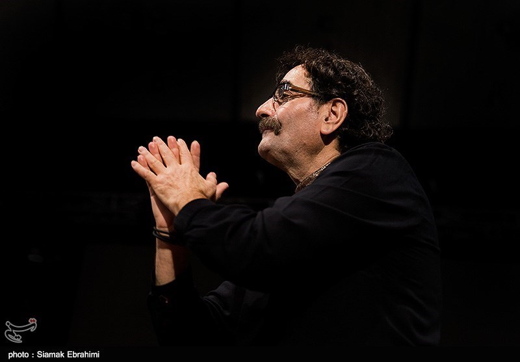
An interview with Shahram Nazeri about Mawlana and Iranian society

Shahram Nazeri-1

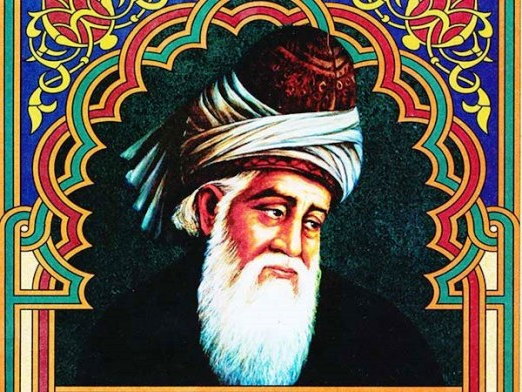
MowlanaShahram Nazeri is widely known to be the greatest vocalist who has set Rumi’s poetry to [Persian] music. Each year, fans of well-known poet Mawlana Jalaleddin Rumi invite Nazeri to Konya, Turkey to sing at a ceremony which marks the birth anniversary of Rumi.

Throughout his singing career, Nazeri has always taken account of the conditions of society in his artwork. His historical look at music as a key part of Iranian culture has been indicative of his efforts to trace the roots of art in different historical periods.

That is why some view Nazeri as a pioneer of modern classical music in Iran. Nazeri has been among first vocalists to stage benefit concerts for people suffering from leprosy and a group of young girls who suffered severe burns after their classroom caught fire in Shinabad, West Azerbaijan Province.

He thinks of artists as a segment of society that speaks on behalf of the public and says he believes he and his fellow artists should make the most of the trust people have placed in them.

The 6th of Rabi’ al-Awwal – the third month in the Islamic calendar – marks the birth anniversary of Rumi. To commemorate the occasion which fell on December 29 this year, Shahrvand, a daily, interviewed Shahram Nazeri, among other things about, the thought-provoking aspects of social art. What comes next is a partial translation of the interview which appeared in the daily on December 30:

Today marks the birth anniversary of Rumi. As the first and perhaps the only Iranian vocalist who has set Rumi’s poetry to music, why do you think the world attaches so much significance to this Persian poet?

To learn about Rumi, one needs to explore his worldview which is so broad and comprehensive that his masterpiece Masnavi has become as a major reference in modern psychology in the US. I lay emphasis on the word “modern” to indicate the importance of the matter. It’s no mean feat!

Rumi is like an ocean only a drop of which can be explored. You know what that means? Centuries ago, a man from the Orient talked about issues that are today a reference for modern psychology. I have not sought to promote mysticism or mystical music by singing Rumi’s poems, rather I have wanted to present the approach of the mystical literature which covers the struggles and movements pioneered by Iranian ethnic groups for thousands of years.

What attracted you to Rumi and his thoughts?

Since I was a teenager, I have been infatuated with Rumi and profoundly impressed by him. I am so mesmerized by him that at the mention of his name, I get excited. I remember that I spent the whole night outside my uncle’s residence in Kermanshah talking until dawn about him with two likeminded poets who were friends of mine.

However, today, things have changed. The fast pace at which so-called artworks are cranked out does not leave any room for such infatuation and enthusiasm, nor does it give you an opportunity to devote attention to psychological and sociological aspects of great figures like Rumi.

Such enthusiasm has disappeared, and lots of things are fake. We live in an era that with a click of a mouse works which are in effect detrimental to arts are created in the name of art and fed to the public. A look back at architectural works in Iran and the rest of the world would be enough to help us realize what is going on. The masterpieces of the past have ceased to exist today.

The reason why we have ended up in this mess is that the atmosphere for creation is non-existent. Take a look back at the list of distinguished Iranian and world authors of the past. Today, they are sorely missed. They all emerged at a certain period and disappeared together. How many giants could possibly emerge in the world of art in a century? Today the stage has been set for the presence of dwarves whose number is actually very big. There used to be a hundred big authors in the world, but now we have three million dwarves who run the show.

Let me bring up the measures that you have taken to help patients suffering from leprosy and victims of the tragedy that happened in Shinabad. Do you believe that an artist is a representative of his society?

I believe that arts and artists represent their society. So I and people like me should make the most of the trust that people have placed in us. As for the concerts you pointed out, I must say that in fact society and those in authority do not pay much attention to those suffering from leprosy.

In such conditions, the presence of an artist on the scene could spur others into action. An opportunity to eradicate this disease has presented itself and we should make the most of it.

As far as I know about 60 years ago, French philanthropist and writer, Raoul Follereau, named the last Sunday of January as World Leprosy Day. Back then, there were 15 million people suffering from this disease.

Thanks to the intense battle fought against the disease over the years, the number of people suffering from leprosy across the world has plunged to two million. It’s a great pity that the number of those affected by this disease has increased in Iran.

In such conditions, as an artist of this land, I just want to speak on behalf of those suffering from this disease and say that they live among us. What else could be done rests with healthcare authorities. I just want to remind them as well as the public of what is going on. That’s all.
Iranian translator Roshan Vaziri has died at 81

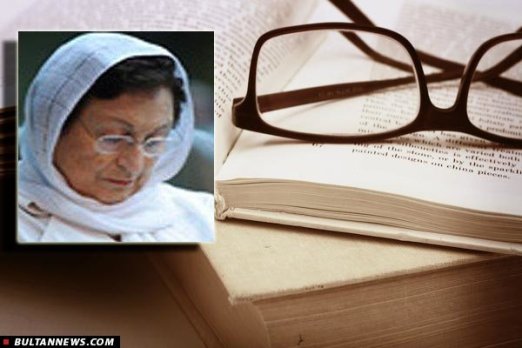
Roshan Vaziri

Roshan Vaziri, an Iranian translator of Polish literary works, has died at 81. She lost her battle against a brain tumor several days ago.

Her daughter who lives in the US broke the news Monday night in emails to her friends and relatives, saying her mom had passed away at a US hospital without mentioning the exact time of Vaziri’s death.

Some media sources have reported that Leshek Wozniak, her husband of Polish origin, will make a trip to Tehran in coming days to hold a commemorative ceremony for his deceased wife.

Roshan Vaziri studied medicine in the University of Warsaw many years ago. She married a Polish man there and developed a liking for Poland and its people. Vaziri translated several Polish books into Farsi, including The Heavenly Lady, a collection of short stories by Polish writers.

On August 2, 2014, Iran Front Page (IFP) released the translation of an interview Andisheh Pouya (Dynamic Thought) magazine had conducted with the late Vaziri, in which the culture and lifestyle of the Poles and their long-rooted ties with the Iranians had been brought up.

IFP staff offer their heartfelt condolences to her family and all literature lovers, hoping the loss of Vaziri – who built bridges between the two cultures – will not interfere with interaction between the two nations.

She will be sorely missed.

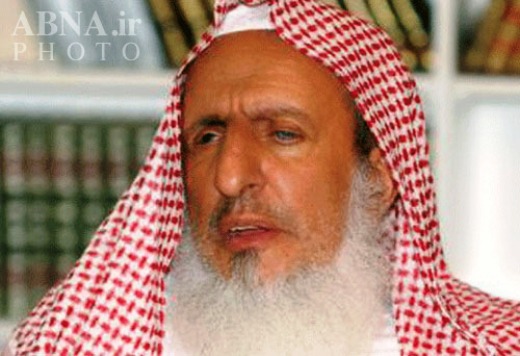
Celebrating Prophet Muhammad’s birthday is superstition and heresy

Top Saudi Mufti

In a surprise fatwa (religious edict), Saudi Arabia’s top Islamic scholar has urged Muslims to stop staging ceremonies to mark the birthday of the Prophet Mohammed (Peace Be upon Him), saying such celebrations amount to heresy.

Sheikh Abdul Aziz bin Abdullah Al Shaikh, the Persian Gulf kingdom’s Grand Mufti and head of the seven-man Islamic Scholars Authority, said Muslims had acquired the habit of organizing ceremonies on the eve of the birthday of the Prophet Mohammed (Peace Be Upon Him) over the past three centuries and that it had spread to most Arab and Islamic nations.

This habit is a heresy and superstition, which must stop,” the Mufti said in a sermon during Friday’s open air prayers in the Saudi capital Riyadh, according to the official Saudi press agency (SPA).

2015, year of economic boom for Iran: IMF

Iran-Economy

The International Monetary Fund has predicted a prosperous economic year for Iran in 2015.

In its latest report, the organization has outlined the prospects of the Iranian economy in 2015, predicting seven improving infrastructure indicators for the country.

The IMF projected a 2.2% real GDP growth for the Islamic Republic of Iran in 2015.

The figure shows a drop from 2.3% that was predicted in its earlier report in April.

The Iranian economy which experienced growth in 2014 after two years of recession is now to have a better year ahead.

Iran’s Gross National Growth is predicted to increase by $53 billion in 2015 compared with the last year. Based on consumer price index in the previous year, the GNP rate which stood at 402 billion dollars in 2014 will rise to 417 billion dollars this year.

Iran’s real GDP growth picked up in 2014 with 1.5% growth and is expected to grow 2.2% in 2015, after two years of negative economic growth, the IMF said.

In the report, the IMF has also published its downward revisions for the World’s economic growth.

Iran to celebrate “nuclear victory” soon

Salehi

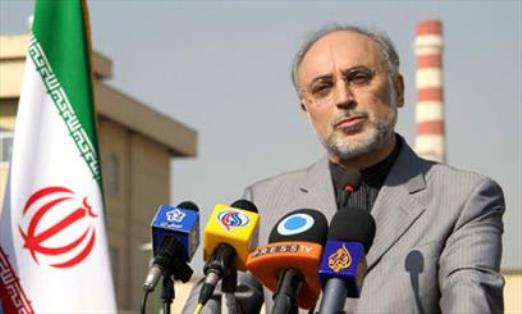
Head of Atomic Energy Organization of Iran (AEOI) Ali Akbar Salehi says that talks with P5+1 will conclude in Tehran’s favor in the near future.

Salehi made the remarks during a speech before Friday prayer sermons at Rudbar-e Qasran District in Tehran’s Fasham region.

“Rest assured that the nuclear issue will resolve in favor of Iran and we will celebrate Tehran’s victory in the near future,” the AEOI chief told worshippers.

Salehi maintained that Iran had shown great resistance and patience in the face of 35 years of pressure, restrictions and sanctions imposed by imperialist powers, and would soon achieve its desired results, Mehr news agency reported.

Failing to reach an agreement by Nov. 24, 2014, Iran and the P5+1 – Russia, China, Britain, the US, France plus Germany – decided to extend their discussions for seven more months. They also agreed that the interim deal they signed in the Swiss city of Geneva last November remain in place during the remainder of the negotiations until July 1, 2015.

At the end of the first round of talks after the seven-month extension on Dec. 15, Iran’s Deputy FM and senior negotiator Seyyed Abbas Araghchi expressed satisfaction with the positive atmosphere during the talks in Geneva.

According to Iran’s FM spokeswoman Marzieh Afkham, the next round of nuclear talks will be held on January 15 at deputy foreign ministerial level in Geneva. There is no plan for other talks ahead of that date, she has clarified.

Sunni Basiji, Shia teacher killed in Iran terror attack

Iran-Systanjpg

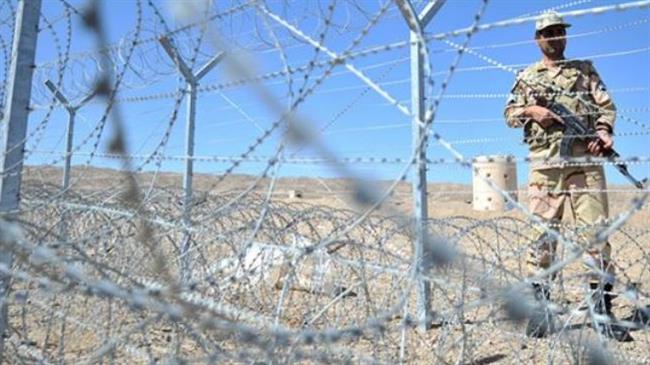
The terror attack happened in the city of Sarbaz Thursday night, said Sistan and Baluchestan Police Chief Brigadier General Hossein Rahimi.

“Last night, two masked motorcyclists carried out a terrorist attack in the city of Sarbaz, killing two people,” the police commander said on Friday.

He said that the first victim was a Sunni Basiji who was killed on his way back home from shopping, adding that the second attack occurred when terrorists opened fire on a Shia teacher some 200 meters from the site of the first attack.

The gunmen fled the scene following the terror incident.

Rahimi said that police, forces from the Islamic Revolution Guards Corps (IRGC) as well as the Intelligence Ministry are working to identify the perpetrators of the crime.

Sistan and Baluchestan Province has been the scene of a number of terrorist attacks in recent years.

In late November 2014, three Iranian security forces were shot dead by unknown gunmen in the province.

Three Iranian police officers were also killed in early October last year when they came under attack at nighttime by armed bandits while on a mission in the provincial city of Saravan.

Another police officer was killed after an explosives-laden car taken to the police station by terrorists went off hours after the first incident.

Expert calls Obama’s Iran remarks realistic

Barak Obama
Barak Obama

The comments President Obama made in an interview with NPR in late December continue to draw reaction from the Iranian media, including principlist dailies such as Resalat.

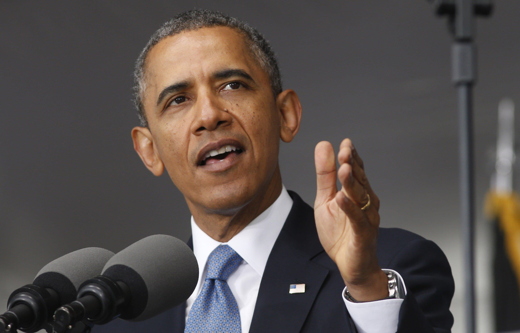
In the interview President Barack Obama said that Iran could become a very successful regional power after a long-term nuclear deal. He also said, “The strategic importance of Tehran is different from what we face with Cuba.”

On December 31, Aftab-e Yazd, a reformist  daily, published the comments of Mehdi Motaharnia, a university professor and international affairs expert, in an interview with Fararu news website. In the interview Motaharnia said President Obama’s comments show he is a realistic, pragmatic, and visionary leader. The following is the translation of Motaharnia’s remarks:


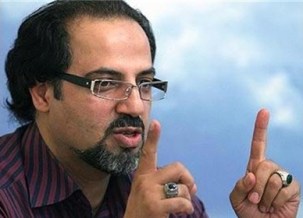
Mehdi MotahariniaThose comments are realistic because they show President Obama has accepted the fact that Iran has become an influential power in the region and on the international stage. Such acceptance is a realistic step forward when it comes to optimal decision-making.
I believe that the United States is redefining its strategic partnerships in the world with an eye to the Eastern Hemisphere which includes countries such as Japan, South Korea and Australia as well as the Persian Gulf region.

In the 21st century, the geographical position of Iran makes it a very important country for the future of the world order. That is why Obama has a special interest in Iran and his comments are indicative of such interest.

President Obama’s comments were pragmatic too. He is trying to base his roadmap to political interaction with Iran on realism, rather than on ambitious policies.

The US president was quite right in saying that Iran is fundamentally different from Cuba. Iran is a big country in one of the 19 geostrategic regions of the world. That means his comments were pragmatic.

His remarks also suggest that his people at the State Department, the Central Intelligence Agency and the Pentagon who analyze Iran along with his national security team are far better in their analysis than those who worked for previous US presidents.

[Six] years ago after he was elected president, I said Obama was a dangerous opportunity. Today that statement has indeed materialized. He is using pragmatic approaches to act like a visionary leader as far as Iran is concerned. A visionary leader seeks to paint a pleasant picture of the future as part of an ideal outlook.

In this interview [with NPR] Obama looks through the eyes of a visionary at the future of ties between Iran and the United States. In addition to being realistic and pragmatic, he tries to have in mind a pleasant picture of the future of Iran-US ties. In other words, his comments were realistic, pragmatic and visionary at the same time.

President Obama has seen the paradoxes in question and is trying to manage them in a way that serves American interests, rather than Israeli interests.

The world of politics is full of paradoxes today and top politicians are those who pinpoint those paradoxes and manage them in the best way possible. President Obama has seen the paradoxes in question and is trying to manage them in a way that serves American interests, rather than Israeli interests. The US well knows that Israel can no longer survive as a militaristic regime.

Israel is no longer a vital partner of the United States. Geographically, Israel is as important to the US as other regions. That the security of Israel is talked about more is because the [partnership] transition period is being managed.

In the 21st century, the importance of Israel to the West is not the same as it used to be in the 20th century. It should brace for another tsunami in the region. The US knows that the new heartland, that is to say Iran and the wider Persian Gulf, holds the key to regional stability. Stability in this part of the world can lead to stability in the Mideast which could in turn replicate itself on the international stage.

To be good humans, we need to render grudges a thing of the past

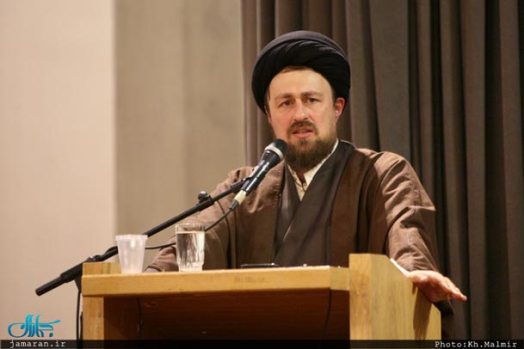
ketabkhaneh-Seyed Hassan Khomeini

“Let’s make big efforts and start goodness from the inside. The first step on the path to goodness is to let go of grudges, because grudges, lies and slanders are part of what happens in our society.”

This is part of the remarks made by the grandson of the late founder of the Islamic Republic in a weekly session on Mawlana’s Masnavi at the National Library of Iran where he also congratulated the Christians on the birth of Jesus (PBUH).

A society which is not prepared for the reappearance [of the savior], will gain nothing if thousands of Imam Mahdi-like saviors come to their help.

The following is the partial translation of what else a January 3 edition of Ettela’at newspaper quoted Seyyed Hassan Khomeini as telling the gathering to mark the start of Imam Mahdi’s leadership:

One of the big dreams of Muslims, Shiites included, is the reappearance of the Savior. Throughout history people have set their sights on human well-being, waiting for the emergence of a savior. However, one key question arises here: why doesn’t the savior reappear? The clear answer can be found in Mawlana’s words.

A society will reach perfection after the reappearance of Imam Mahdi (PBUH) only if it has strived for perfection and elevation beforehand;

A society which is not prepared for the reappearance [of the savior], will gain nothing if thousands of Imam Mahdi-like saviors come to their help […].

A society will reach perfection after the reappearance of Imam Mahdi (PBUH) only if it has strived for perfection and elevation beforehand; otherwise the imam will be like a scholar who finds no room among the ignorant or he will be hurt by the ignorant.

So we can draw a lesson from Mawlana’s words that if we are waiting [for Imam’s second coming], we should work on ourselves. That applies to every single individual in society.

[…]

Those who tie their goodness to the coming of another person are looking for excuses, because goodness should come out from inside of a society and its members.

The goodness of a society is nothing beyond the goodness of people living in that society. Those who tie their goodness to the coming of another person are looking for excuses, because goodness should come out from inside of a society and its members.

[…]

To become good humans, we should first trample upon our inner self. A society and individuals that are awaiting [the second coming of Imam] should take a step forward. To rise up and take a step for the sake of God, one does not need to take any lesson. It needs perseverance and endeavors.

If we open our hearts, God Almighty will definitely help us. In so doing, we can wait for the arrival of the Savior and the creation of a Utopia. If not, the twelfth imam will be left alone in society.

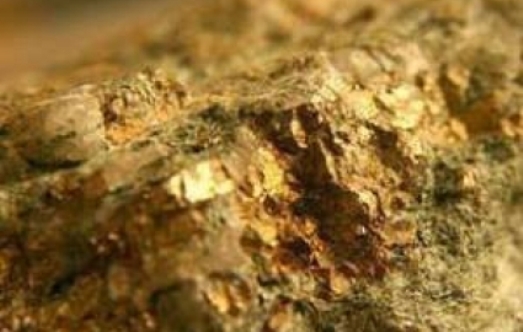
Ninety thousand tons of ore extracted from Khomein Gold Mine

ore
ore

On December 30, Mehr News Agency quoted the head of the Department of Industry, Mines and Trade in Khomein as saying that between March 21 and December 21, 2014, some 90,000 tons of ore was extracted from Khomein Gold Mine. The following is a partial translation of what Mohsen Basardeh had to say to the agency:

The experimental stage of processing and extracting gold from ore through heap leaching – a method which extracts precious metals, copper, uranium, and other compounds from ore via a series of chemical reactions that absorb specific minerals and then re-separates them after their division from other earth materials – has been successful. As of late January the extraction of gold will get underway on an industrial scale.

Over the last year, 170,000 tons of ore has been extracted from Khomein Gold Mine. In light of the fact that the mine is an invaluable reserve, adoption of an industrial method to process gold will turn Khomein – a city in Markazi Province – into a hub for production of precious metals.

The license for the exploitation of the mine was issued three years ago and its exploitation got officially underway with about $1.6 million in investment two years ago.

Khomein Gold Mine holds 1.5 million tons in reserves with a purity grade of 36.03 gram per ton which is a high grade compared to those of other gold mines in the world.

The monthly extraction capacity of the mine is projected to stand at 180,000 tons of minerals.

[…]

So far, exploration licenses for gold and copper have been issued for ten regions in Markazi Province, of which two in Delijan, and one in Zarandieh, in the vicinity of Saveh have produced good results.

[…]

Iran rejects AP report of nuclear deal with P5+1

Marziyeh-Afkham
Marziyeh-Afkham

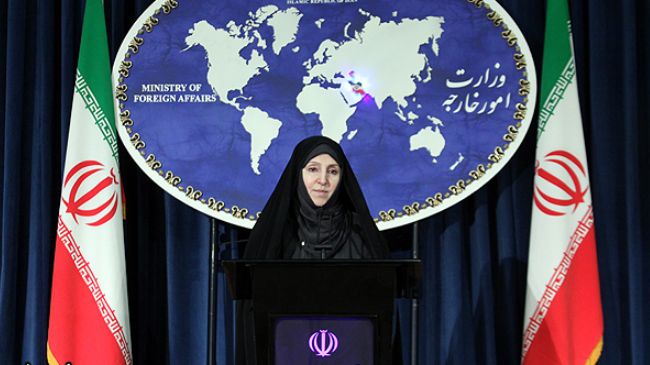
“No agreement has been reached yet on any of the issues [being discussed] during nuclear talks” between the Islamic Republic and six world powers, said Iran’s Foreign Ministry spokeswoman, Marzieh Afkham, on Saturday.

The reaction came after The Associated Press quoted two unnamed diplomats as claiming that “negotiators at the December round of nuclear talks drew up for the first time a catalog outlining areas of potential accord and differing approaches to remaining disputes.”

The diplomats added that “both sides in the talks are still arguing about how much of an enriched uranium stockpile to leave Iran.”

Afkham, however, said that such “politically-motivated” speculations by certain foreign media outlets are aimed at “harming the atmosphere of the talks and complicating any settlement of the [nuclear] issue.”

The next round of nuclear talks between Tehran and P5+1 will be held at the deputy level on Monday.

Iran and the five permanent members of the United Nations Security Council — Russia, China, France, Britain and the United States — plus Germany wrapped up talks on Iran’s nuclear energy program in the Swiss city of Geneva on Wednesday.

The three-day discussions were organized three weeks after Tehran and the six countries failed to reach a final agreement by a November 24 deadline.

Despite making progress, Iran and the six countries failed to clinch a final nuclear deal during their previous talks in the Austrian capital of Vienna.

However, Tehran and P5+1 agreed to extend their discussions for seven more months until July 1, 2015. They also agreed that the interim deal they had signed in Geneva last November should remain in place during the negotiations.