Monday, December 29, 2025
Home Blog Page 4990

Twin sisters, joined at heart and liver, are born in Shiraz (photos)

Twin sisters

In Shiraz, twin girls who share aortas, hearts and livers have been born. Doctors say the conjoined newborns are likely to undergo surgery to have their hearts separated when they turn three months. Their livers could be disjoined when they become one year old.

The following are the photos Tasnim News Agency released of the conjoined twins on December 20:


There is no place for subverters in society

ebtekar daily-khatami

On December 20, Ebtekar, a daily, quoted former President Mohammad Khatami as telling representatives of 70 student organizations affiliated to public and private universities that a security atmosphere does not necessarily ensure security. What appears below is the translation of his remarks which cover a wide range of questions:

Highlighting the fact that university students need to be equipped with the means of critiquing and evaluate themselves as well as society, the founder of BARAN [Foundation for Freedom, Growth and Development of Iran] Mohammad Khatami said that a security atmosphere won’t ensure security.

Referring to the fact that the Islamic Republic has originated from a revolution, Khatami said, “The Islamic Republic the founder of the revolution approved of respects the public as well as their vote, privacy and rights. While it wants the public to be free and the country to be developed, it also seeks to offer values that render life gentle and progressive; the values whose absence in today’s world has given rise to plenty of problems. To embrace such lofty ambitions, we need to put up with some pressures and shortcomings. That is not too hefty a price for such a cause.”


Acquiring knowledge and skills is the major mission of university students

Urging university students to reflect on and delve deeply into their present position [in society], what their objectives in life are and where they are heading for, Khatami said, “University is a hub of knowledge, research, thinking and innovation. Today, knowledge is the driving force behind the creation of a developed human society on economic, political and cultural fronts. The major mission of university students is to acquire knowledge and skills. Students as well as others at universities should redouble their efforts to make up for our historical underdevelopment, so that we could compete with major players in today’s competitive world.”


Unbridled power leads to dictatorship and corruption

“If you don’t want to get sidetracked, you should equip yourself with the means of critiquing in order to evaluate yourselves as well as society. If unbridled power remains un-critiqued, it will lead to dictatorship and massive corruption,” Khatami advised university students. […]

“Reformists and university students should critique themselves. Evaluation of society is also necessary. Have we ever wondered whether every single individual of society meets the requirements for democracy? Have you thought about the reasons why such factors are absent? Critiquing is not the same as fault-finding. Far from that, it is intended to expound on weaknesses and strengths.


Advantages of republicanism which is coupled with morality and Islamic justice

“We want all advantages associated with republicanism, including freedom, freedom of speech and assembly, the decisive role of public vote and the right to self-determination. Also, we want morality and justice which are the core principles of Islam. That is the kind of Islamic Republic we are after, the republic in which people are free and morality reigns supreme, not the one where the most immoral behaviors and deeds are imposed on society in the name of Islam and revolution, where liars lie with impunity. Such behaviors run counter to human nature and [after a while] those who come under fire and are libeled will gain popularity, while liars and those who slander will fall from public grace,” Khatami said.


Common objectives of universities and seminaries

Recalling the Unity between Seminaries and Universities Day, he said “Seminaries and universities cannot be integrated into one entity. Their missions are different. However, they share a number of objectives. Seminaries can tap into the up-to-date knowledge of universities and issue appropriate rules. Likewise, universities can use the experience of seminaries which represent the spiritual aspect of Islam. […] Seminaries shoulder a heavy burden to bring universities and seminaries together to build a better society.”


A security atmosphere won’t ensure security

Stressing that Islamic associations at universities have to be at the forefront of preserving public rights and consider key freedoms enshrined in the Constitution a yardstick, he denounced despotism as a major historic problem and said, “We should lay emphasis on what is said against dictatorship in the Constitution of the Islamic Republic and the parts which focus on public rights. Despotism is a trap that people and rulers might be caught in if they fail to remain vigilant.”

Khatami stated that no society deserves to be under a security and military atmosphere, let alone [Iran’s] society whose revolution has been Islamic and popular.

“In today’s world, a security and military atmosphere cannot ensure genuine security. Freedom and prevalence of an open atmosphere in universities are more essential than the air for breathing. University students should define their activities within the framework of the establishment. When some unfair measures are taken, it’s because the establishment is subjected to injustice.

Those who pass off their own tendencies and taste as those of the establishment and try to repel everyone are doing injustice to the establishment. We are the ones who back the establishment; we support its values and want to move down the same path which is in line with the Constitution. We should hold dialogue with others and reach the conclusion that the security of the country cannot be ensured by fostering a security atmosphere,” Khatami added.


The government has stayed committed to its mottos

In response to a question about the performance of the government, Khatami stated, “Although you are not restricted and you can critique the government as well as those in power, you should take into consideration that the government is wrestling with major issues. It’s true that what is pledged has not been fully fulfilled, but those promises are not expected to be honored overnight. President Rouhani and his government are committed to their vows and they should be helped. There are numerous problems and in fact the damage caused in the past – which I do not want to say was done wantonly – has caused many problems for the country. The efforts of the government to clear those hurdles are up to par.


When solved, outside problems will remove inside woes

He went on to say that if foreign problems are solved, many problems we face at home will be ironed out, but dealing with outside problems should not prevent us from attending to what is problematic inside the country.

“A government which has risen to power as a result of popular vote follows people’s demands. Moderation is a method and reform is a discourse. Although the formation of the latter dates back to 200 years ago, people – with different tastes and demands – have stood by it.

“Over the past two centuries people have disapproved of despotism, dependence, underdevelopment, discrimination and corruption, calling for freedom, independence, progress and justice instead. What they called for was in line with their historical identity which has manifested itself in Islam, an Islam which has created the revolution and lives in conformity with freedom, independence and progress. Those versions of Islam which are in conflict with freedom and progress have nothing to do with Iran’s revolution and the reformist movement. […]”


Stage should be set for moderation, interaction and dialogue

Khatami further said, “The reforms discourse has its roots in the conscience of people. Reformists confirm moderation. The stage should be set for the materialization of moderation which is exactly what people are calling for. The way should be paved to have moderation, interaction, dialogue and discussions.

“Reformists have repeatedly said that they oppose subversive measures. Subversive elements have no place in society. We are seeking the progress of the country and the establishment, and we are all moving in line with the Constitution. The Constitution may come in for criticism, but it’s the base on which society moves forward. It is not a disposable to be thrown away after single use. We fully abide by the Constitution, and whoever respects it is a citizen of the Islamic Republic of Iran and is entitled to all civic rights regardless of their beliefs. If some people claim otherwise, we need to exercise patience and have dialogue”.


On the sidelines

The students present in the ceremony called on Khatami to pay more visits to cities across the country and have face-to-face dialogue with people and students. They also took a swipe at the current state of affairs in universities where, as they said, a security atmosphere prevails. They also criticized the government’s treatment of students. The students expressed concern about the upcoming parliamentary election and asked the former president to have a more active presence in politics.

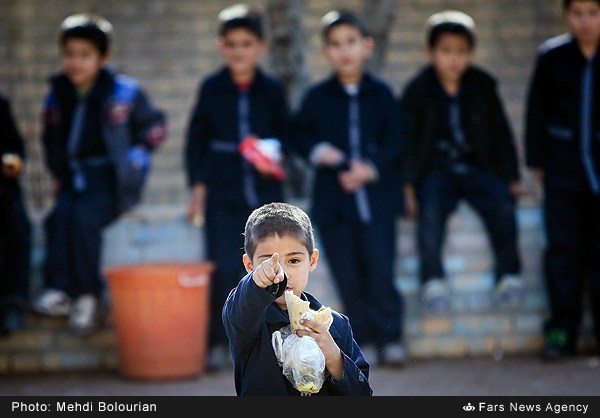
Iran to offer free education services to Afghan children

Afghan children

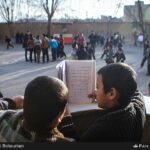
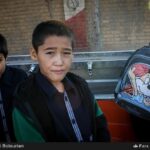
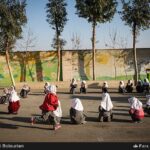
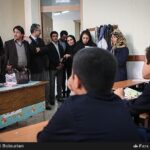
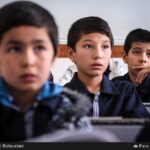
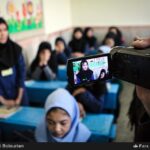
Alireza RajaiThe eleventh government has decided to implement the so-called education gift to Afghan nationals – a proposal by President Rouhani’s government which allows Afghan students to study in schools across Iran without paying any tuition.

The Iranian Students News Agency (ISNA) on December 20 quoted Alireza Rajaei, an official with the Presidential Office, as saying that the plan calls for equal treatment of Iranian and Afghan students. What comes below is the partial translation of his remarks:

The Afghan population who are living in Iran should not be ignored from cultural and behavioral aspects. A person who does not receive training is likely to get involved in crime; but if they are properly protected, they will lean toward positive things, something which would change violent behaviors to positive ones.

According to the United Nations Convention on the Rights of the Child, children from other countries should be given the same services their peers in the migrant-recipient country get. No discrimination is acceptable when it comes to Iranian schools and those for non-Iranian students. Selective treatments which happen every now and then will be dealt with.

Children born to an Iranian mother and Afghan father are legally considered Afghan nationals up to the age of 18, after which point they can choose either one of the nationalities. When they are still under-18 they should be trained because they cannot return home due to the war and violence in their country of origin. They need to be given identity cards. Iran is exploring ways to solve legal questions in this regard before it can come up with a mechanism for issuing permanent ID cards for the Afghans.

Iran is currently home to 350,000 Afghan students and an additional 500,000 children who have missed the chance to attend school. The Islamic Republic is trying to include them in its macro-educational programs.

Also, some 500 Afghan students are to be given scholarship to study in Iranian universities. Iranian universities are to absorb foreign students, Afghans in particular.

Mistreatment of Afghan nationals by police is totally unacceptable: Official

General Saeed Montazer al-Mahdi

On December 20, Tasnim News Agency quoted Deputy Police Chief for Social AffairsBrigadier General Saeed Montazer al-Mahdi as saying that mistreatment of Afghan nationals at the hands of the police is unacceptable. His comments came after the release of a video in which a police officer mistreats a group of Afghan nationals triggered a backlash. The following is the translation of what the website posted:

Immediately after the news emerged, Iran’s police chief ordered a thorough investigation into the incident to determine where and when it had happened. He also wanted those involved to be identified so that they receive punishment fitting their misconduct.

“What is worth contemplating is that on no account is such approach by police forces acceptable, because police are there to serve the public, and promote abidance by the law,” said the deputy police chief.

“Based on such ideology and in keeping with human principles, we believe that Afghan people are respectable individuals. In fact, they are hardworking people who have got a lot in common with us in terms of religion, culture and history. We always view them as refugees and try to preserve their dignity,” stressed Montazer al-Mahdi.

“Unfortunately, in spite of wonderful services offered by police forces on different fronts and the emphasis laid by the police chief on constant supervision, at times in some parts of the country incidents as such happen. No doubt, those who violate the law and take it into their own hands will be disciplined and punished,” he concluded.

Persian leopard hunter ends up in jail; 42 months behind bars

Persian leopard hunter

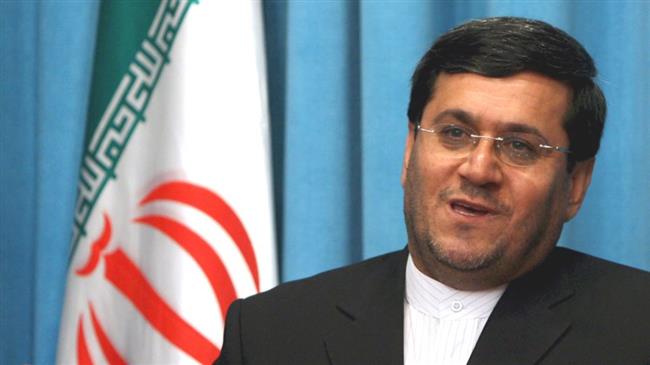
A man who killed a Persian leopard has been given 42 months in prison. Keyvan Hooshmand, the head of Iran’s Environment and Wildlife Watch, broke the news, saying that the poacher has been sent to prison after his sentence was upheld by an appeals court in the northern province of Gilan.

The following is a partial translation of his remarks on the court verdict as reported by Mehr News Agency on December 19:

The environment police identified and arrested the poacher two months after reports came out in June that a Persian leopard had been illegally hunted in the forested areas of Talesh in Gilan Province.

The offender was first sentenced to three years of imprisonment after he admitted to wrongdoing following the discovery of a leopard tale and unlicensed rifle in his residence, and to an additional six-month jail term for carrying a weapon on his person. He was also fined five million tomans [roughly $1,600] for damaging the environment, with his rifle being confiscated.

The poacher appealed the court’s decision. The appeals court in the province rejected the convict’s claims and upheld the verdict handed down by the court of first instance.

Iran’s changed flight routes benefit neighboring countries

airplane

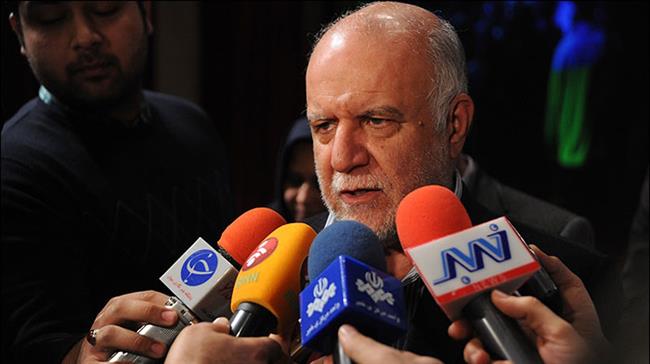
Mohammad Ali IlkhaniIranian aviation authorities have changed some flight paths in keeping with a decision by the Supreme National Security Council, Managing Director of the Iranian Airport Holding Company (IAHC) Mohammad Ali Ilkhani, told Mehr News Agency on December 19. The following is the translation of what else the IAHC chief had to tell the news agency:

The Supreme National Security Council has recently agreed to change the air routes along which planes fly and this has helped the neighboring countries, including Iraq and Turkey.

The decision which has come into effect over the past few months cuts the flight time on certain domestic routes by 11 to 12 minutes.


Purchase of radar systems

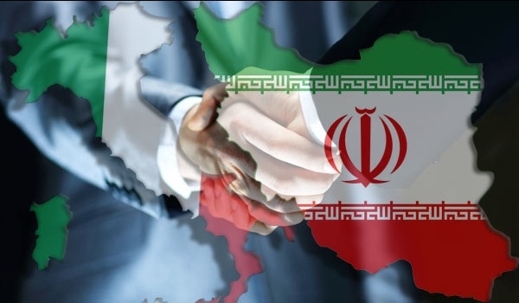
Talks between Tehran and P5+1 have seen foreign companies head to Iran. Three European giants have entered talks with Tehran to that end. Iran is planning to buy radar and aid-to-navigation systems from France, Italy and Spain.

Countries which were unwilling to talk to Iran until last year, are now voluntarily coming here to pitch their products. That gives us the opportunity to purchase higher quality items at international tenders.

Western countries cannot ignore Iran. A small country like the UAE purchases a radar system which covers its entire territory as well as part of Saudi Arabia and Iran. Thanks to the vastness of our land, we need to purchase 11 more radar systems. That is many times over the demand of countries located to the south of the Persian Gulf.

We estimate that within the next three years we’ll have to spend between $250 million and $300 million dollars to modernize our radars.

Presently, there are three airports in Tehran and Alborz provinces. We seek to pick an international consultant to help us with the development of Imam Khomeini International Airport and plan a railway network that links Imam Khomeini Airport to Mehrabad Airport which is within Tehran city limits.
A second phase of Imam Khomeini Airport features a new terminal capable of handling 20 million passengers. That is estimated to require as much as $1 billion in investment. We need private capital to complete the project. French and Malaysian companies have put forth expansion plans whose implementation requires international consultation.

Iran condemns Boko Haram’s deadly attack in Nigeria

boko haram-militants

According to Thursday reports, Boko Haram militants raided a small village in northeastern Nigeria, killing 35 people and abducting about 185 others, mostly women and young girls.

Afkham lamented the death of civilians in the raid and urged the immediate release of all the abductees.

The news of the incident in the remote farming village of Gumsuri emerged on Thursday but the attack had taken place a few days earlier.

“The terrorists were armed to the teeth,” said a village resident who survived the attack. “They had AK-47 rifles and other weapons. They also had petrol bombs, which they used in setting the village ablaze.”

The village of Gumsuri is 20 kilometers from the northeastern town of Chibok, where Boko Haram militants kidnapped 276 schoolgirls in April. Dozens of the students escaped that attack, but more than 200 of the girls are still held captive.

The mass kidnapping in April drew international outrage and condemnation.

Boko Haram, whose name means “Western education is forbidden,” says its goal is to overthrow the Nigerian government.

Since the beginning of its operation five years ago, Boko Haram militants have raided a number of towns and villages, kidnapping hundreds of people. Their attacks have also left many others killed.

International researchers begin to document evidence about the emergence of modern humans in Iran

modern humans in Iran

On December 10, www.richt.ir, the website of the Research Center of Iran’s Cultural Heritage, Handicrafts and Tourism Organization reported that an archeological project centering on the origin of modern humans has just gotten underway in Lorestan Province in cooperation with international experts. What appears below is the translation of the report the website posted:

On December 10, 2014, a team of international experts launched archeological excavations at Kaldar Cave in Khorramabad Valley in Lorestan to document the emergence of first modern humans in Iran and shed light on why the Neanderthals went extinct.

“There are different theories as to where modern humans in Europe have originated from. One such theory points at Iran as a likely place for the origination of modern humans. The current excavation has a multidisciplinary nature and includes advanced analysis of stone tools and what remains of flora and fauna,” said the head of the archeological team Behrooz Bazgir.

Reiterating that such excavations are part of a bigger research project, he said, “During the project, archeological sites which could help us broaden our knowledge about the Paleolithic era will be studied.”

“The major objective of this massive project is to learn about the global position of this region in Paleolithic studies. Over the past few decades, there have been significant findings involving preliminary evidence about human settlement in West Asia which has shed further light on the developments of Stone Age in neighboring countries. That in turn has highlighted Iran’s position as a bridge connecting Asia to Africa and Europe,”

The international team brings together researchers from different universities and research centers. Professor Eudald Carbonell of the University of Rovira and Virgili in Tarragona, Spain, Jan van der Made from the National Museum of Natural Sciences in Madrid, Andrea Piccin from the University of Jena in Germany, Marcel Otte from the University of Liege, Belgium, the Max Planck Institute for Evolutionary Anthropology, Italy’s University of Bologna, and the Institute for Human Studies in Burgos, Spain contribute to the project.

The 5-year archeological excavation project at Kaldar Cave is based on a memorandum of understanding (MoU) signed between Director of the Research Center of Iran’s Cultural Heritage, Handicrafts and Tourism Organization Seyyed Mohammad Beheshti and Director of the Catalan Institute of Human Paleoecology and Social Evolution Professor Eudald Carbonell.

Iranian scientific achievements unveiled during National Research Week

Iranian Researchers

On December 17, Mehr News Agency, filed a report about the 15th Exhibition of Iranian Technological and Research Achievements, held between 14th and 17th of December, to mark National Research Week.

During the exhibition, scientific products ranging from a communications satellite simulator, a smart digital seismograph, and a multipurpose nano-anti-pollution mask to a robotic talking face were on display. The following is a partial translation of the report:

The opening bell of the National Research Week rang out at Palestine Vocational School in Tehran with the ministers of education, the interior and science attendance. At the ceremony, six student researchers were awarded.

Over 350 research centers from different science and technology parks and knowledge-based firms presented their latest achievements in the 15th Exhibition of Technological and Research Achievements of Iran. Also, over 500 technological projects with the potential to be commercialized were presented by different research centers and universities.


talking robotAmong other inventions on display in the exhibition, was a robotic talking face. Inventor of the device Morteza Moradi said, “The robotic face can talk and is mainly used in tourist centers in order to introduce items such as famous statues to visitors. The talking face is able to answer impromptu questions.”


wavesThe intelligent digital seismograph was another device showcased at the exhibition. The equipment is designed to warn people at home to take shelter just before an earthquake hits. Ahmad Pazooki, an expert representing the manufacturer of the device said, “Given that Iran sits on a fault line and is in ever-present danger of being struck by earthquake, the equipment was made. This instrument is a first in Iran and around the world and does not have a similar copy. The equipment which is going through the process of mass production and commercialization will cost less than $200.”

IAEA confirms Iran’s commitment to interim nuclear deal

IAEA-Iran-report

The monthly update report by the IAEA indicated on Friday that the Islamic Republic had not made “any further advances” in its activities at the country’s enrichment facilities and at Arak heavy water reactor.

The report also noted that Tehran’s uranium enrichment did not exceed a fissile concentration of five percent.

On November 25, Iran “temporarily stopped the operations for conversion and fuel manufacturing” at a facility that was checked by the agency from December 14 to 16, the report added.

Despite making progress, Iran and the five permanent members of the United Nations Security Council — China, Russia, Britain, France, and the United States — plus Germany failed to clinch a final nuclear deal by a November 24 deadline during their talks in Austrian city of Vienna.

However, Tehran and the P5+1 agreed to extend their discussions for seven more months until July 1, 2015. They also agreed that the interim deal they had signed in Geneva last November remain in place during the negotiations.

Under the Geneva deal, dubbed the Joint Plan of Action, the six countries undertook to provide Iran with some sanctions relief in exchange for the Islamic Republic agreeing to limit certain aspects of its nuclear activities during a six-month period.

As part of the interim deal, Iran suspended 20-percent uranium enrichment as of January 20 when the agreement came into force. Iran then started to dilute and oxidize its 196-kg stockpile of 20-percent-enriched uranium.