Sunday, December 21, 2025
Home Blog Page 4979

Symphony of Volleyball

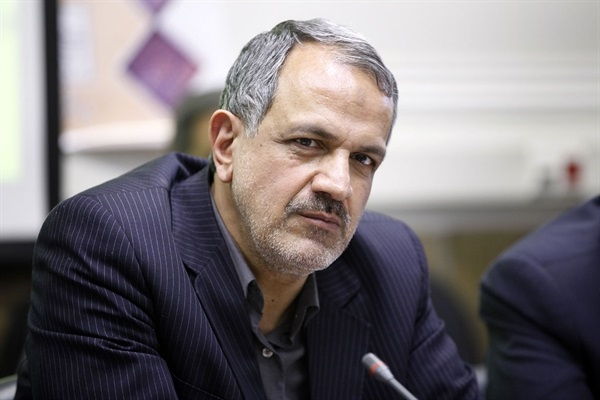
Ahmad Masjed-Jamei

Ahmad Masjed Jamei, who heads Tehran City Council and is a former minister of culture and Islamic guidance under ex-President Mohammad Khatami, has written an op-ed in Sharq newspaper – July 1, 2014 – in which he praises the stellar performance of Iran’s volleyball squad in the FIVB World League and recalls the lingering absence of esprit de corps among Iranians. The article regards the recent victories of the volleyball team as a harbinger of better days to come as far as teamwork in Iran is concerned.

“[…] Recent weeks have seen our athletes put their enormous capabilities on display at a world event. In the past, Iranian athletes were rarely able to prevail against global heavyweights in team sports. The victory [the Iranian volleyball squad] secured came with a kind of civil mentality and collective confidence that could set the stage for a greater push for teamwork excellence down the line.

The victory [the Iranian volleyball squad] secured came with a kind of civil mentality and collective confidence that could set the stage for a greater push for teamwork excellence down the line.

“A few years back, the industry ministry hired a foreign adviser to train its managers. What is remarkable about that adviser was that he held up a musical example to demonstrate that ‘Important projects do require teamwork to come off.’ Although in a symphony, different instruments are at play, the euphonious end-product comes across as one, he said. […]

“In the words of that adviser, Iranians are talented but success often eludes them when it comes to teamwork. That argument applies to the country’s management as well. Successful teamwork is not much in evidence. The victory of the Iranian volleyball team is a new development as far as teamwork is concerned. A closer look at the performance of our players shows that they selflessly strove for collective success without focusing much on individual excellence. Their looks, their words and their deeds were all indicative of eastern ethics which electrified the fans, who, in turn, displayed national zeal and etiquette. No foul language was used in the arena. […] Last week I met with Davarzani, the head of the Volleyball Federation, who said such victories are rooted in specific training designed to promote teamwork. […] Iranian female volleyball players are also expected to make their presence felt in regional and international events. […] Talent along with beefed-up national spirits and teamwork holds the key to success on every front. Iranian players including […] showed that it is possible to forget about themselves and focus on collective success. Let’s hope more such victories down the line will fill the hearts of Iranians both at home and abroad with joy.”
I’m neither the mayor, nor the president, but I can …

Iran environment

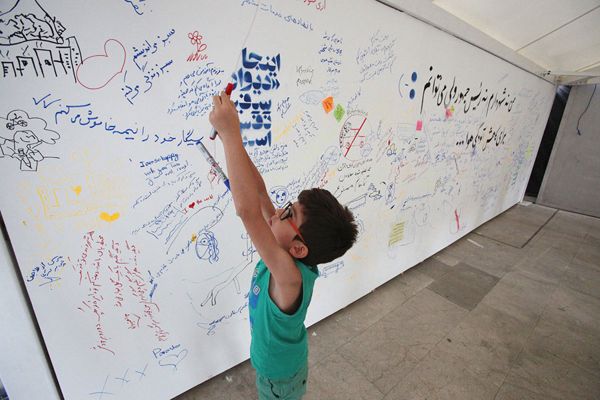
“It’s a herculean task, but it’s not impossible.” “Turn off the engine during the 90-second wait at traffic lights.” “Let’s standardize the pavements to promote walking.” “Single-occupant cars” were some of the statements written – some obliquely – on the white board. Those seemingly unrelated sentences were in fact answers to a single question: “How we can prevent environmental pollution and degradation?”

They featured various handwriting styles, some of them childish; one was actually written by a child whose share of the environment is no less than you and me; a child whose lungs are as vulnerable, if not more vulnerable, to pollution as yours and mine. Children’s lungs are not made of steel.

These sentences were part of the White Wall of Breath, which among other things, featured the viewpoints of both experts and ordinary people on how members of the public could contribute to efforts to prop up and protect the environment and stop its degradation. By the why, what do you think should be done to stop that spiraling trend?

Araghchi: Iran to accept any curb in N-deal temporarily

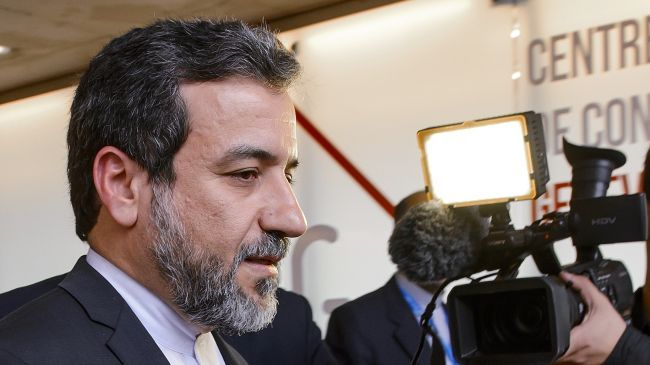
Abbas Araghchi

On the 3rd day of the 6th round of political-level nuclear talks between Iran and the 5+1 group – US, France, Russia, China, UK plus Germany – Iran’s Abbas Araghchi and US Deputy Secretary of State William Burns met in Vienna.

The 3rd day of negotiations started with Sayed Abbas Araghchi and Helga Schmidt, Deputy EU Foreign Policy Chief, meeting to start drafting comprehensive nuclear agreement.

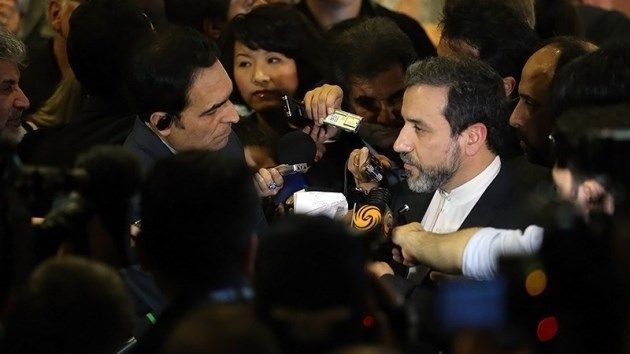
Abbas Araghchi, Iran’s deputy-FM for Legal and International Affairs and the senior negotiator on Tehran nuclear program, held bilateral and multilateral meetings with Schmidt and Burns.

In a press conference on Thursday Araghchi told reporters that any stimulation broadcasted on centrifuges are mere media propaganda; asked about the new limitations in the probable nuclear deal Araghchi said “it is not new saying that in the case of new limitations Iran will accept them temporarily and what media propagates about number of centrifuges should not be paid much attention to.”

The 6th round of nuclear negotiations between Tehran and Powers started on Wednesday with Zarif, Iran’s foreign Minister and Ashton, EU’s Foreign Policy Chief meeting in Vienna.

This is the last round of Iran-5+1 Group before the July 20 deadline for the end of the Geneva Deal; it is aimed at achieving a comprehensive nuclear agreement between the two sides.

The previous such meetings in Vienna did not have much achievements in building on the landmark interim nuclear deal both sides clinched last November in Geneva.

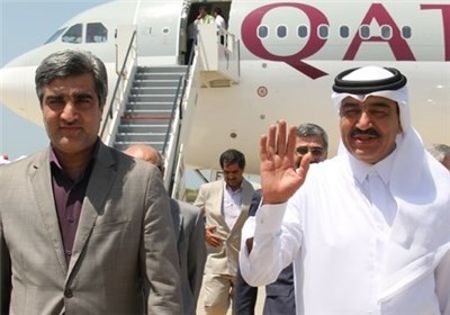
Iran’s Bushehr Province, Qatar Become Economic Partners

Iran’s Bushehr Province, Qatar Become Economic Partners
Iran and Qatar

The agreement was signed during a visit to the Qatari capital of Doha by an Iranian trade delegation headed by Bushehr Provinceˈs Governor-General Mostafa Salari.

Based on the deal, Qatar will invest in Bushehr province in different fields such as agriculture, mining, port operations, and agricultural processing industries.

Salari’s trip to Qatar came after last month’s visit to Bushehr by a Qatari economic delegation.

The Qatari delegation in that visit learned about the economic potentials of the southern Iranian province and the possibility of importing agricultural products and construction materials from the province.

Iran’s ties with the Persian Gulf littoral states has been growing recently as the Islamic Republic is willing to upgrade relations with the Arab states to the highest level.

Iran Calls for OIC Reaction to Zionist Regime’s Aggressions

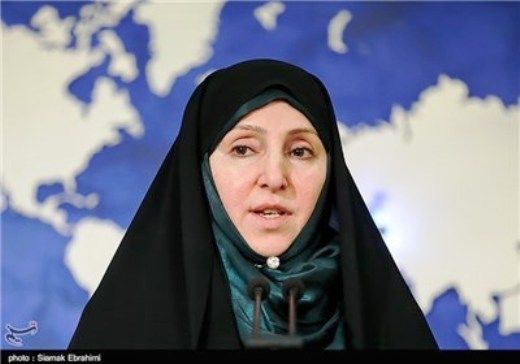
Iran - Marzieh Afkham

Marziyeh Afkham rapped the continuation of Israeli attacks against Palestinians and called on international bodies, especially the organization of Islamic Cooperation (OIC), to take effective measures to stop the occupying regime’s atrocities.

She further underlined that the Zionist aggressions and war crimes will only strengthen the resistance of the heroic Palestinian nation.

Israel stepped up attacks on the Palestinians as part of a military search operation for three Israeli settlers it said had disappeared on June 12.

Reports said on June 30 that the bodies of the Israeli teenagers were found in a field near the village of Hilhul, north of the city of al-Khalil (Hebron), in the occupied West Bank.

The Tel Aviv regime also attacked the besieged Gaza Strip and the West Bank hours after the three bodies were found.

Israel claims Hamas is responsible for the deaths, but the Palestinian resistance movement rejects the allegation.

On Thursday, the Zionist regime’s army launched a number of airstrikes in the Gaza Strip, leaving at least ten Palestinians injured.

Tel Aviv also mobilized troops to border areas near the Gaza Strip on Thursday, reports said.

Destruction of nation’s trust worse than killing the deal

Iran Flags

Iranians have three predominant approaches toward the West.
One approach maintains that negotiation is the best solution to solve all problems. The second approach believes that the West is arrogant and it is not possible to make peace or forge all-out relations with them.
But the third approach adopted by the current Iranian administration believes peace with the United States is tenable, provided the West recognizes Iran’s rights. However, there are still authorities and officials who are not optimistic about the outcome of the ongoing nuclear talks in Vienna.
Nuclear talks between Iran and the West offer a historic opportunity for the West, particularly the United States.
It is historic because of a very important reason: Although the deal itself is important, what is more important than the deal is the way the US and other P5+1 members present themselves in the process of talks that will have a direct impact on the confidence of Iranian nation and government.
Iran’s Foreign Minister Mohammad Javad Zarif has warned that excessive demands of the United States or any other member of the Western negotiating team would kill the deal.
Iran has already been a victim of excessive demands of the West, particularly those of the US and Britain. Iranians have more than once lost their confidence in the United States and its allies during the 1953 coup, after the Islamic Revolution and on many other occasions.
The nuclear talks are now a good test of the West’s intentions and plans. We have already a Joint Plan of Action and a draft comprehensive plan, whose main themes are quite clear.
On the one hand, Iran will reduce uranium enrichment level to 5 percent, give access to all its nuclear facilities and assure that its nuclear program will not deviate from its civilian objectives. On the other, all sanctions must be lifted and Iran should continue its nuclear activities with all rights accorded to a signatory of the Non-Proliferation Treaty (NPT) under the supervision of the International Atomic Energy Agency. The Iranian nation will verify the intention of the West in this process. If the West tries to follow domineering policies under any veneer, then the Iranian nation would not trust it in future.

The excessive demands will definitely kill the deal, but the destruction of the confidence of Iranian government and nation in the West, which could have irreparable impacts, will be worse than the scuttling of the deal.
Under such circumstances, the renewed vigor of attacks by hardliners will be backed by the estranged chunk of the population as well as by the advocates of the second approach mentioned above. The outcome is clear: isolation of the advocates of the first and third approaches.
Iran has adopted dialogue and negotiation as the best means to settle the nuclear problem. When a state accepts negotiations and opens the doors of its nuclear facilities to eligible international agencies, it means that its policies are transparent.
The West should recall that sanctions and punitive policies it pursued during the past eight years were against the NPT provisions.
Therefore, the West not only failed to reduce the number of Iranian centrifuges and level of uranium enrichment, but on the contrary increased both.
According to religious teachings, production of a nuclear bomb is prohibited.
It will not be in the interest of the West to ignore Iranian assurances in this regard and follow Israeli wishes and aspirations. It will also not be in the interest of some European countries to sell their nations to Israel or any other nation at any cost.
To win the confidence of the Iranian nation should be more important to the West than the deal itself.

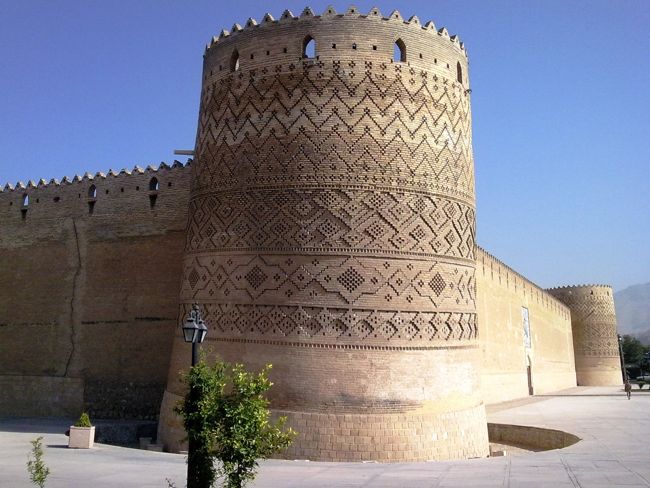
Preserving Shiraz Historical Core Necessary: UN official

Preserving Shiraz Historical Core Necessary: UN official

A greater amount of attention must be paid to the city’s historical core to provide the required conditions for keeping it a residential area with people living in it, – Siamak Moqaddam said after visiting the old texture of a Shiraz district.

He said that in order to improve the ratio of that districtˈs residents remaining living in it while the required rural facilities must be constructed, the lifespan of the old city structure needs to be increased by adopting the required measures, which will in turn add to the cityˈs tourist attractions.

Using the past experience and benefitting from the peopleˈs participation we can achieve a good amount of success in preserving the tourist attractions of Shiraz, – said Moqaddam.

He said that in order to achieve that objective public training of that districtˈs residents is necessary.

The head of Fars Province Old Textures Office, too, said in the meeting with the head of the UNHSP Office in Iran that the issue of strengthening the old textures of Shiraz has been in the agenda as a high priority ever since the year 2000.

Mohammad Reza Taleban said that presently nine offices have been established to monitor the project in over 200 hectares of Shiraz old districts, which provide a bright perspective for the future of the historical core of Shiraz.

Taleban said that after launching onion polls the first district home of Shiraz, together with a school, a library, and other rural infrastructures and service facilities have been constructed in the old Shiraz district.

The historical core of Shiraz is an area of some 360 hectares that comprise some %2.8 of the total city area situated in the heart of Shiraz.

The initial core of the cityˈs formation is in that district and throughout various eras it has gone through various developments and evolving, including the construction of a defense wall around it together with entrance gates in it during the Zand Dynasty era.

The historical monuments in the old district include the major religious centers of Shiraz and a major part of the historically precious structures of Shiraz.

In fact the Shiraz old district has its own special features, including 400 precious monuments, eight gates, and 12 cultural centers.

The preservation and safeguarding of the monuments in that distinct will in addition to its revival give new life to those monuments, and from the economic and social points of the view, revive the historical-cultural identity of Shiraz.

The district with some 75,000 residents is home to some 37,500 non-native dwellers. Also there are 11,147 homes in this old Shiraz district.

Shiraz is the fifth most populous city of Iran and is the capital of Fars Province. In 2009 the population of the city was 1,455,073. Shiraz is located in the southwest of Iran on the Roodkhaneye Khoshk (Dry River) seasonal stream. It has a moderate climate and has been a regional trade center for over a thousand years. It is regarded as one of the oldest cities of ancient Persia.

In the 13th century, Shiraz became a leading center of the arts and letters, due to the encouragement of its ruler and the presence of many Persian scholars and artists. It was the capital of the Persia during the Zand dynasty from 1750 until 1781, as well as briefly during the Saffarid period. Two famous poets of Iran, Hafez and Saadi, are from Shiraz.

Shiraz is known as the city of poets, literature, love and flowers. It is also considered by many Iranians to be the city of gardens, due to the many gardens and fruit trees that can be seen in the city.

Shiraz has had major Jewish and Christian communities. The crafts of Shiraz consist of inlaid mosaic work of triangular design; silver-ware; pile carpet-weaving and weaving of kilim, called gilim and jajim in the villages and among the tribes.

In Shiraz industries such as cement production, sugar, fertilizers, textile products, wood products, metalwork and rugs dominate.

Shiraz also has a major oil refinery and is also a major center for Iranˈs electronic industries: 53% of Iranˈs electronic investment has been centered in Shiraz. Shiraz is home to Iranˈs first solar power plant. Recently the cityˈs first wind turbine has been installed above Babakoohi Mountain near the city.

Iran team optimistic about nuclear deal

Iran team optimistic about nuclear deal
Senior Iranian nuclear negotiator Seyyed Abbas Araqchi

“We as diplomats are hopeful and have the necessary determination, seriousness and instructions to make the negotiations come to fruition,” Iran’s Deputy Foreign Minister for Legal and International Affairs Abbas Araqchi told ISNA on Wednesday.

The Iranian official said that Iran and the P5+1 group could reach a comprehensive deal if “the Iranian nation’s nuclear rights are consolidated and respected.”

He went on to say the final deal would have a specified time frame, adding that this fact has been mentioned in the Geneva interim deal reached between the two sides last November.

“Should we accept certain limitations for the sake of confidence-building, that will be for a certain, temporary period of time,” said the negotiator.

Representatives from Iran and the six world powers – the US, the UK, France, China, Russia and Germany – are currently in Austria’s Vienna to strike a comprehensive nuclear deal over Iran’s nuclear energy program.

Iran’s Foreign Minister Mohammad Javad Zarif has described the current round of talks as a unique opportunity to make history.

Iran and the six countries have been discussing ways to iron out their differences to achieve a final deal that would end the decade-old dispute over Tehran’s nuclear energy program.

The two sides inked an interim accord in Geneva, Switzerland, on November 23, 2013. Under the deal, the six countries agreed to provide Iran with some sanctions relief in exchange for Tehran agreeing to limit certain aspects of its nuclear activities during a six-month period. The deal expires on July 20 but can be extended depending on the agreement of all parties involved.


Iranian Hydroelectric Power Plants’ Output Rises by 9%

Iranian hydroelectric power

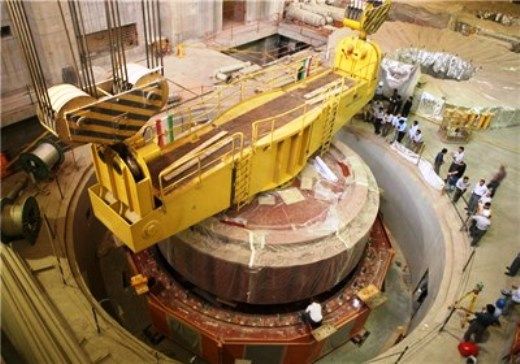
The amount of energy produced by hydroelectric power plants since the beginning of this year, has reached 4,584,898 megawatt hour (MWh), which is 9.4 percent higher, compared to the same period last year, the Ministry of Energy said in a report on Wednesday.

According to the report, the amount of power produced by the country’s hydroelectric power plants in operation currently stays at 10,529 MWh.

In recent years Iran has put greater emphasis on participation of domestic and foreign investors in electricity generation sector, with projects underway to add 40,000 MWh more capacity to the national grid.

After the 1979 Islamic Revolution, the construction of hydroelectric power plants in Iran became both a popular private and public venture.

Earlier on Tuesday, the Azerbaijani president approved the agreement based on which Iran will construct two hydroelectric power plants over the Aras River, which flows along the border between the two countries.

President Ilham Aliyev officially approved the deal signed by Iranian and Azerbaijani officials back in April. The agreement was ratified yesterday by the Parliament of Azerbaijan back in June.

Iran-P5+1 deal possible through joint efforts: Russia

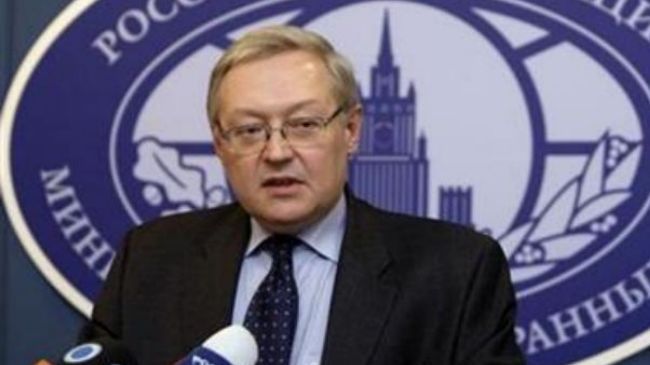
Russian Deputy Foreign Minister Sergei Ryabkov

“Much work should be done. But our joint efforts aimed at searching for compromises can allow us to work out a final document till July 20,” Russian Deputy Foreign Minister Sergei Ryabkov said in the Austrian capital, Vienna, on Wednesday.

Representatives from Iran and the six world powers – the US, the UK, France, China, Russia, and Germany – are currently holding talks in Vienna to strike a comprehensive nuclear deal over Iran’s nuclear energy program.

“The final document will be submitted to the P5+1 and Iran ministers. However, there is no such document,” Ryabkov added.

The Russian diplomat also asserted that the current round of talks will last until July 20.

“Some colleagues will stay in Vienna during the whole round. Maybe the US delegation, as well as Iranians, will be represented at the highest level,” he said.

The Russian deputy foreign minister, however, noted that he has to leave Vienna for Brazil to attend a BRICS (Brazil, Russia, India, China, and South Africa) summit, scheduled for July 15-17.

Iran’s Foreign Minister Mohammad Javad Zarif has described the current round of talks as a unique opportunity to make history.

Iran and the six countries have been discussing ways to iron out their differences to achieve a final deal that would end the decade-old dispute over Tehran’s nuclear energy program.

The two sides inked an interim accord in Geneva, Switzerland, on November 23, 2013. Under the deal, the six countries agreed to provide Iran with some sanctions relief in exchange for Tehran agreeing to limit certain aspects of its nuclear activities during a six-month period. The deal expires on July 20 but can be extended depending on the agreement of all parties involved.