Sunday, December 21, 2025
Home Blog Page 4980

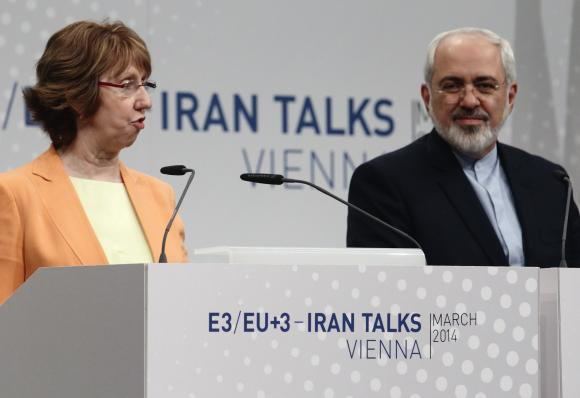
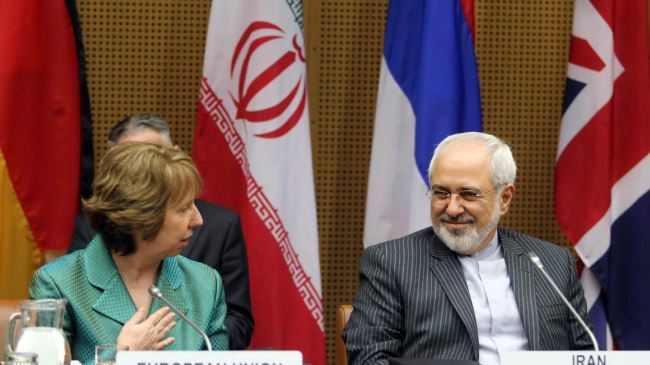
Zarif, Ashton, meet ahead of Vienna 6 talks

Zarif, Ashton, meet ahead of Vienna 6 talks
Zarif and Ashton Vienna 6

Mohammad Javad Zarif and Catherine meeting is a prologue to set the axes of this round of talks.

On the document drafted in the previous round in Vienna, Zarif told reporters that it would not definitely be said that there was a jointly-agreed text. “Agreement would be on only parts of a text; however, in the majority of cases, differences are in content and the manner of drafting the agreement,” Zarif was quoted to say.

This round of talks is reportedly the most complex, technical, and at the same time, longest round, where both sides are resolved to bring the negotiations to a concrete result.

Final nuclear deal to spur Iran economy: CBI official

Final nuclear deal to spur Iran economy: CBI official

The prediction by Akbar Komijani, deputy governor of Central Bank of Iran (CBI), comes as Iran and the six powers – the United States, France, Britain, Russia, China and Germany – started their current round of talks on Wednesday in search of a final deal.

“If the negotiating process is sped up, the country can have access to increased oil revenues and better access to overseas assets,” The Wall Street Journal quoted Komijani as saying.

The central banker said he regularly receives foreign investors willing to enter the Iranian market amid hopes of an ease in sanctions slapped on Iran.

“[If a final accord is achieved,] we will have the opportunity to import the necessary inputs for our industrial capacity,” Komijani said.

He added that illegal sanctions imposed by the United States and the European Union (EU) have blocked Iran’s access to as much as USD 150 billion in oil revenues.

Iran and the six world powers wrapped up their latest round of talks over Tehran’s nuclear energy program in Vienna on June 20.

The two sides have been discussing ways to iron out their differences to achieve a final deal that would end the decade-old dispute over Tehran’s nuclear energy program.

Iran and the six countries inked an interim accord in Geneva, Switzerland, on November 23, 2013. Under the deal, the six countries agreed to provide Iran with some sanctions relief in exchange for Iran agreeing to limit certain aspects of its nuclear activities during a six-month period. The deal expires on July 20 but can be extended depending on the agreement of all parties involved.

E3/EU+3 determined to reach comprehensive agreement: EU

E3/EU+3 determined to reach comprehensive agreement
Michael Mann

The high profile negotiations are expected to continue until at least July 15.

Michael Mann, spokesperson for the EU foreign policy, says both Iran and the major powers should show seriousness to narrow differences in order to strike a final deal.

“Both sides will have to come determined to narrow the differences,” Mann told the Tehran Times and Mehr News Agency.

The two sides have set July 20 as the deadline to reach a final deal.

Mann said the European Union trio (Britain, Germany and France) along with the U.S., Russia and China were working hard to make the talks bear fruit.

“The E3/EU+3 is determined to reach a comprehensive agreement,” he noted.

The spokesman also claimed there were “no” differences between the six powers in their approach toward Iran.

He also refused to comment on differences between Iran and the major powers on the content of the final deal. “We do not talk publicly about the content of the negotiations.”

He also confirmed reports that the Western countries in six-nation group want Iran cut down the number of uranium centrifuges in operation, saying, “That will be part of the negotiations.”

Iranian researcher develop cancer-resistant nanoparticles

Iranian researcher cancer-resistant nanoparticles

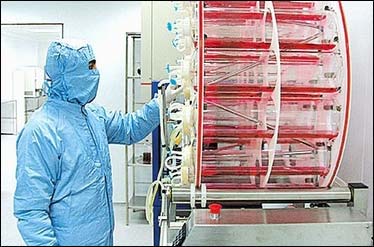
They used nanoparticles of cationic liposome in their project. Seyed Amir Jalali and his colleagues in Immunology Department, Mashhad University of Medical Sciences developed a component which activates the body’s immune system against an important caner marker, Her2/neu. It would find wide applications in pharmaceutical industry especially in developing of medications for breast, ovarian, and lung cancers.

The research group designed the mice oncogene peptides and investigated the effect of peptides encapsulated in liposome-polycation-DNA complex (LPD) nanoparticles to induce immunity in BALB/c mice.

“We first designed, thanks to bioinformatics, immunogenic peptides from Her2/neu; then it was encapsulated by liposome-polycation-DNA complex (LPD) nanoparticles and injected to mice tumors, and examined the size of tumor,” Jalali said.

“These peptides survive enzymic activity of proteases and since nanoparticles are cationic, they are delivered in an improved manner to dendritic cells,” he asserted, and that “peptides encapsulated in this manner are used in far less doses than when it is injected freely.”

Jalali also said that they found that peptides induced a strong immune response against cancer markers, still stronger when encapsulated in liposome.

Iran self-sufficient in production of radiopharmaceuticals

Iran self-sufficient in production of radiopharmaceuticals
Iranian researcher

The Islamic Republic of Iran has worked to gain command in using nuclear technology through investments in peaceful technologies including production of radiopharmaceuticals and energy to meet domestic needs in line with Development and Vision Plan for the future 20 years. These attempts made Iran a leading country in the region in the field, despite the cruel sanctions hitting its economy and imports of foreign pharmaceuticals.

Amir Reza Jalilian, a researcher of Radiopharmaceutical Research and Development Lab (RRDL) ,Nuclear Science and Technology Research Institute told Mehr News the developed radiopharmaceuticals had immediately clinically successfully tested and sent to the Ministry of Health to be given necessary production permits by the Ministry’s Ethics Committee. “Only after the process completed, had the radiopharmaceuticals been distributed to pharmacies across the country,” he said, “the producer had not merely produced radiopharmaceuticals; rather, it had planned for commercialization of the products in line with the President’s science and technology deputy.”

“The special view, along with close cooperation of Minister of Health, helped development and production of 15 radiopharmaceuticals; two other radiopharmaceuticals are under process of being introduced to country’s health sector,” Jalilian added.

First green school to open in September

green school in Iran

The Iranian Department of Environment is the authority for the green school establishment in the country.

Cooperation between the Iranian Department of Environment and the Ministry of Education would help for implementation of such plans.

Deputy-head for the Department of Environment said that environment “means life, merriment, and environmental educations should be based on the same principles.”

Mahnaz Mazaheri said that the office would teach 56,000 teachers on environmental issues.

Students will be taught to learn about environmental issues and promoting the green culture, she was quoted to say.

Green Schools are the most effective agents for enacting significant positive environmental and educational change in schools and communities, the earth day official website says.

A green school aims to improve the health and energy-efficiency of the school facility and ensures science-based environmental and civic education in the classroom.

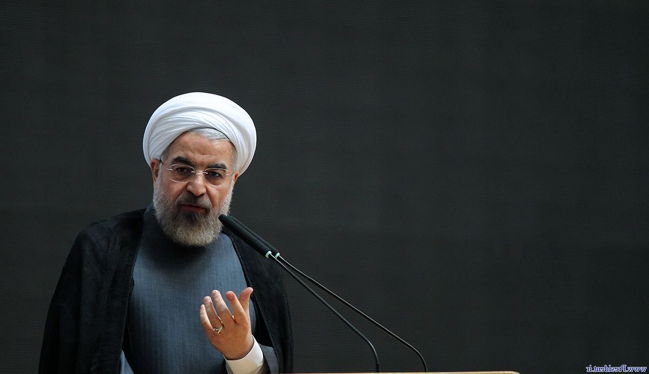
President says sanctions regime crumbled, will not be rebuilt

Hassan Rouhani
Hassan Rouhani

He made the remarks in a ceremony to celebrate the Mining and Industry Day.

Sanctions have already been eased and Tehran is committed to reach a conclusion out of its nuclear talks with the world powers, president added.

He promised to facilitate private sectorsˈ interactions with the world and support their investment.

Referring to the investorsˈ problems during the eight years of hardliner Mahmoud Ahmadinejadˈs presidency, Rouhani noted that its administration is keen to open a new chapter in governmentˈs collaboration with the private sectors.

President Rouhani pointed to the geopolitical situation of Iran as well as its rich natural resources, underlining that the government is determined to reduce inflation rate and make an economic boom.

Russia builds 5 power plants for Iran

Iran and Russia Russia builds 5 power plants for Iran
Russia builds 5 power plants for Iran

Two months after signing an agreement between Islamic Republic and Russia, Technoprom and ministry of energy met in the new rounds of talks on planning, installing, and operating of 5 power plants commissioned in Tehran- Moscow $ 10b agreement.

A Technoprom deputy-Director General who was visiting Eastern Azerbaijan province power plants told the press that the firm had constructed Ahvaz’s Ramin 2100 mW and Isfahan’s Shahid Montazeri 1600 mW power plants. “Russia is prepared to construct a new 1725 mW power plant in the province,” he said. “If the talks are positive, Technoprom will construct 5 power plants in the vicinity of Sahand power plant in Bonab and Tabriz power plant,” he said, asserting that “the province is an industrially-growing region, which necessitates adding to the number of power plants.”

Technoprom official also assessed Iran as a ‘pioneer’ country in the Middle East in terms of power plant technology and facilities. “Russian Technoprom has the technical capability to construct natural gas-fired combined-cycle power plant, steam, geothermal turbines, boilers, and supply of spare parts and small units,” the official said.

‘Ganjineh’ teaches ‘proper social behavior’

Iranian Ganjineh animation

The animation (Persian for ‘treasure’) is a product of Saba Animation Center. Each episode of the animation focuses upon social maladies, and tries to rectify the social vice through delineation of good and bad behaviors.

The animation is a silent 2D work where it conveys messages through audio, music, and image to the audience. Small simple paper characters are the main cast of the animation which depicts great concepts in simple words.

The animation uses simple, ironic, and symbolic graphics, and would be appealing for both children and adults alike. It features a host of topics including respecting the law, security, social discipline, solidarity, productivity, social equality, cooperation, education, welfare, class conflict, street traffic, science and technology, economics, and capital.

Produced by Saba Animation Center, Ganjineh targets the public audience. It has participated in main section of 30th Short Film Festival and 100-second very short film festival. The animation was awarded with the first prize in 1404 Arts Festival.
 

US Demands Flexibility from Maleki, not Resignation

John Kerry
John Kerry

Why doesn’t the US enter into a war with Daesh? Is it because, based on statements made by Senator Rand Paul, one of the influential faces of the US Republican Party, this terrorist group is supported by the US and according to him “We have been united with Daesh in Syria”?

There are two reasons behind the US’ unwillingness to enter into a direct war with Daesh. The first is that the Obama administration’s policy, in general, is defined based on not entering into a direct war with the developments of the region. Contrary to the Bush administration, which pursued an aggressive approach in its foreign policy in the Middle East and sought preemptive wars, the Obama administration attempts to be less involved in the crises of the Middle East. As a result, in 2011, it withdrew the US’ forces from Iraq and did not insist on the continuation of the presence of these forces in this country. In another case, it was obvious that the US was not interested in direct military confrontation in other crises including the crisis in Syria. That is why it did not pursue such an approach with regard to Iraq either. Despite the fact that the US has considered Daesh as a terrorist threat and it is ready to give ammunitions, advice and intelligence information to the government of Iraq, they are not interested in becoming directly involved in a war with Daesh with the presence of its military forces. The other point is that the US sees this issue as going beyond the presence of Daesh in Iraq, because Daesh is not merely the Daesh in Iraq and many of the regional countries including Saudi Arabia and Turkey and some Arab states consider themselves involved in the developments of Iraq. This issue has somehow been transformed into a Shiite-Sunni issue. That is why any type of expanded US intervention could have a negative impact on the relations of this country with its regional allies such as Saudi Arabia and Turkey. That is why they are less interested in taking direct military measures.

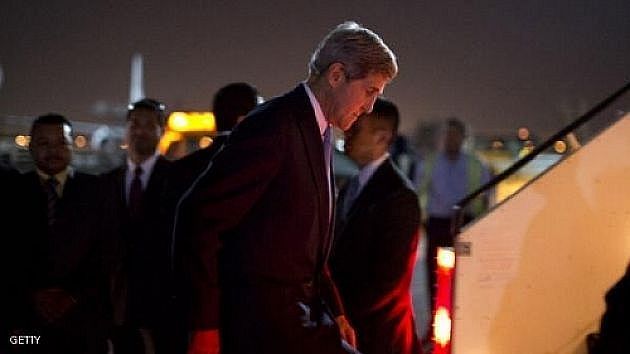
During the past few days, some of the news media have talked about the possibility of the US’ removal of its support for Noori al-Maleki and some of them have even claimed that John Kerry has proposed the issue of him stepping down in his visit. Is Maleki still the best choice for the US in Iraq or are they thinking about bypassing him?

The US’ criticisms are against Maleki and his policies and they were increased after the crisis. Nonetheless, the US did not directly mention Maleki’s resignation, because under the present conditions, the change of the prime minister might affect the arrangement and the actions of the armed forces in Iraq. That is why the removal of Mr. Maleki in the short run is a difficult decision and they are not emphasizing that he should step down in a short period of time. But the US believes that the political forces and Mr. Maleki must be more flexible and form the government of national reconciliation through political dialogue and solutions so that they would be able to act more successfully in their military measures against Daesh based on the alignment between political forces.

To what extent would the fatwas of the Shiite scholars, particularly Ayatollah Sistani, and the enlistment of two and a half million people in the army to fight against Daesh impact the US’ approach with regard to Iraq?

The US approach in Iraq after 2003 was to emphasize democratic political solutions. On one hand, considering the fact that the majority of the Iraqis are Shiites, the US believes that it cannot easily ignore the Shiites in this country and doing so would practically lead to the defeat of the political process in this country. Now they consider this point and believe that the situation and the interests of the Shiites cannot be ignored. Nevertheless, they attempt to establish some type of balance between the ethnic and religious groups so that the minorities would somehow have an effective presence and serious participation in the political trends of this country. Certainly, the Maraje’ and the fatwas and statements that are issued impact the decisions made by the US. The US is well aware of the impacts of the viewpoints of the Shiite scholars on the people of Iraq and the developments of this country.

One Republican senator has said that the US becomes less involved in this region because, although Ghaddafi was overthrown in Libya, this country became the land of the terrorists. Is the decision to not directly get involved in Iraq made due to this viewpoint?

The US involvement in Libya was not similar to France’s direct intervention. In fact, they did not become directly involved in Libya as they did in Iraq in 2003 or Afghanistan in 2001. This is the dominant viewpoint of the Obama administration which is shown in the region. Right now, the US is more inclined towards eastern Asia and balancing itself against China and believes that it is not clear whether the issues will be resolved through their involvement in the Middle East. The reason is that these crises are very complicated and deep and must somehow be coped with.

It seems that the Sunni countries of the region are not interested in fighting against the Daesh forces. Even Vali Nasr, in an interview with CNN, has stressed that the Sunnis are satisfied with the killing of the Shiites by Daesh. Meanwhile, Barack Obama has said that he is not solely able to contain Daesh. In such an atmosphere, is cooperation with Iran the only option?

There is no united viewpoint among the Arab states. Some countries like Saudi Arabia and to some extent Turkey and Qatar consider Daesh as a force which could disrupt the balance in the region against Iran. At the same time, considering the situation which existed in Syria and their failures, they intend to use the Daesh forces at a regional level. Therefore, they consider Daesh as one of the opposition groups and the Sunni revolution against Mr. Maleki and his policies as the reason behind the crisis in Iraq. Some countries are concerned about the threat of Daesh and terrorism in Iraq. Kuwait is one of them which the Daesh forces could rapidly move closer to. The same holds true for Jordan and Egypt. There are such viewpoints with regard to Daesh among the Sunnis.

Could the deepening of the crisis in Iraq force the US to return to this country within the framework of supportive and not aggressive military forces?

This seems impossible. The US will, at most, engage itself in air strikes in order to target the positions of the Daesh forces; unless the conditions change and the threat of Daesh increases to the point that the threat of the downfall of the government would be imminent. In that case, they might make new decisions. But it seems impossible that, under the present conditions, the US would be willing to enter its military forces into Iraq, even supportive ones.