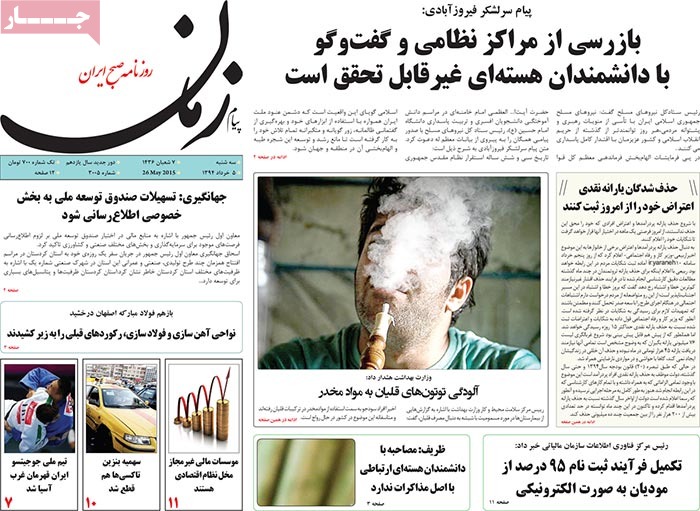
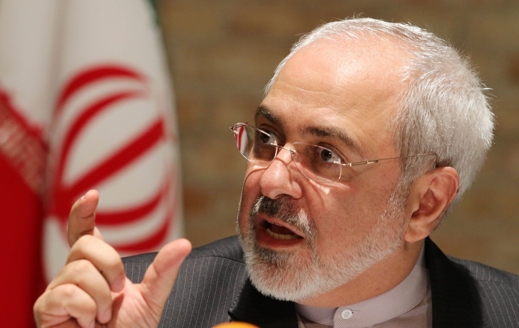
Police in Tehran have discovered around 100 kg of narcotics and arrested 90 drugs dealers.
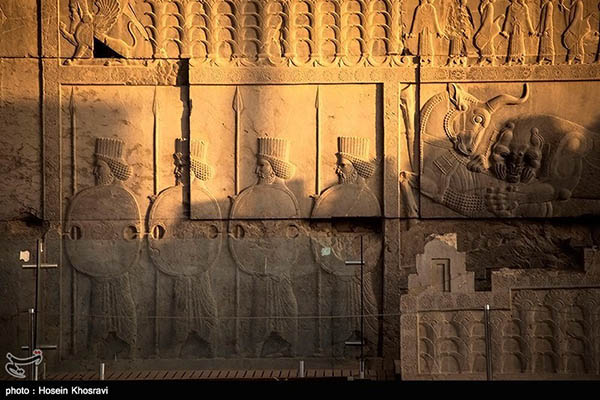
The following are the pictures Tasnim News Agency posted online of the operation by the anti-drugs police on Tehran streets on Wednesday:
Police in Tehran have discovered around 100 kg of narcotics and arrested 90 drugs dealers.
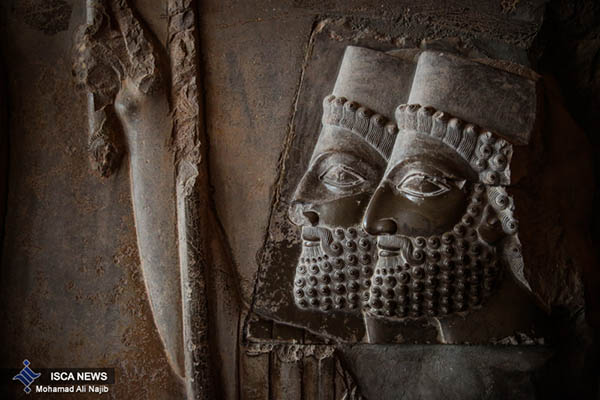
The following are the pictures Tasnim News Agency posted online of the operation by the anti-drugs police on Tehran streets on Wednesday:
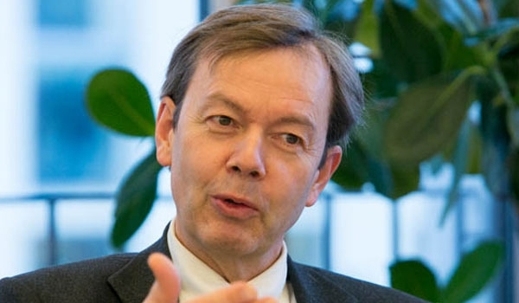
The governor of the Central Bank of Iran says the country’s economy will continue to improve no matter what happens in the nuclear negotiations.
“Regardless of what the outcome of the negotiations will be, we have planned our economy in such a way that its gradual improvement will continue,” Valiollah Seif has told China Central Television (CCTV).
Iran’s economy turned a corner in 2013 and started to experience modest growth after two years of recession and runaway inflation.
The governor, who is in Washington to take part in the seasonal meetings of the World Bank and the International Monetary Fund, said Iran’s economy is “on the right track”.
“We have a highly-educated young population. We are sure that we can create capacities in the economy which will make the situation much better than it is,” he said.
Seif touted the “big achievements” under President Hassan Rouhani, saying the government had managed to bring the inflation rate down to 15% from 40% by applying “appropriate monetary policies and fiscal discipline”.
The administration is now working to bring the inflation further down to single digits.
“This may not be achieved next year, but we are pretty confident that we will be able to bring it down to single digits in two years,” Seif said.
The government, he said, has planned for the scenario of the economy under sanctions as the fate of the ongoing negotiations between Iran and P5+1 remains unclear.
The two sides hope to reach a final agreement by the end of June but the pace of lifting sanctions on the Islamic Republic remains a bone of contention.
“Of course, we have to admit if we have a successful conclusion to these negotiations, we would see more of a positive impact in terms of higher growth, lower inflation and lower unemployment,” Seif said.
Lifting sanctions will also benefit others, including the Middle East, helping return stability to the highly volatile region.
“Iran has a high capacity to interact with its neighbors. Lifting of sanctions could bring stability to the region. Any delay will have negative consequences for the region as a whole,” Seif said.
The central bank governor also invited Iranians abroad to bring home their investments and expertise.
“I want to give the assurance that we have the potential to encourage Iranians abroad to return to their country.
“It’s good to have these people in our country so that they could put their capacities at the service of their country,” Seif said.
During the Iran-Iraq war, Colonel Seyyed Noureddin Hosseini juggled two jobs: He flew a Cobra helicopter and promoted Islam as a cleric.
Hosseini, who suffered 53 percent disability in the Iraqi-imposed war, has a liking for poetry and has written some Ruba’is [Persian quatrain] about the Prophet Muhammad’s household.
On April 18, Iran’s Army Day, Shahinna.ir, a news website, posted online an interview with Hosseini. The following is a partial translation of the interview:
[…]
“I joined the Army Air Force in 1975 because I was passionately interested in flying. I became a Cobra helicopter pilot after completing a training course. However, my father did not want me to serve the Pahlavi regime, so he asked me to give up the force and sign up at the seminary.
Following the Islamic Revolution, I was about to abandon my flying career and start studying religion at a seminary, when the war erupted. Given the country needed pilots to defend itself in the face of Iraqi aggression, I stayed with the Army on the advice of my father.
However, I did not give up the seminary. Whenever, there was no military operation and I was free, I studied. Finally I was bestowed the clerical garb in 1982,” the retired colonel said.
As for his retirement plans, he said “A cleric never gets retired”, adding after his retirement from the Army, he set up 23 religious congregations and still runs some of them. He also teaches ethics courses to the youth.
He said that he had two sons and five daughters who are all highly educated and have done courses at the seminary.
When asked about his advice to the youth he said, “The world is heading toward purity and every one should try to purge his/her soul of impurity and try to reform society.”

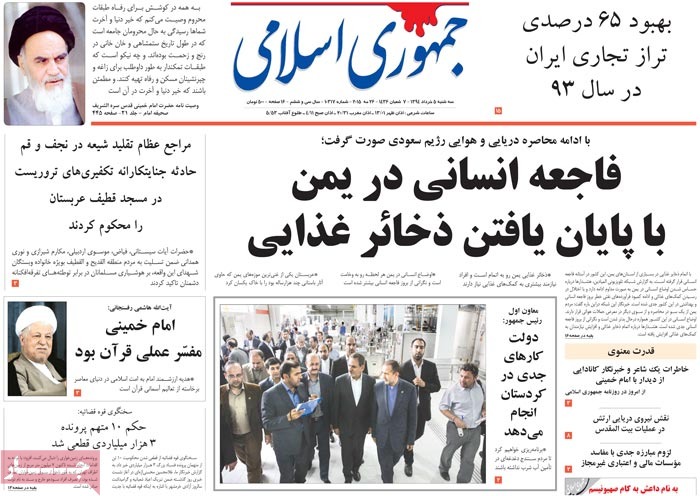
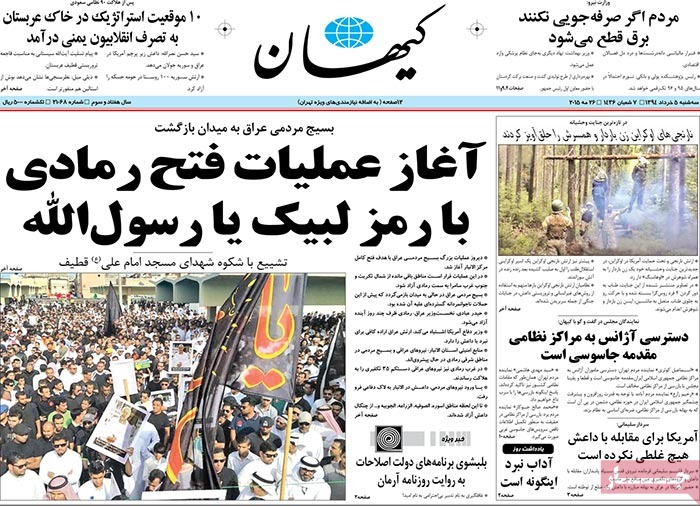
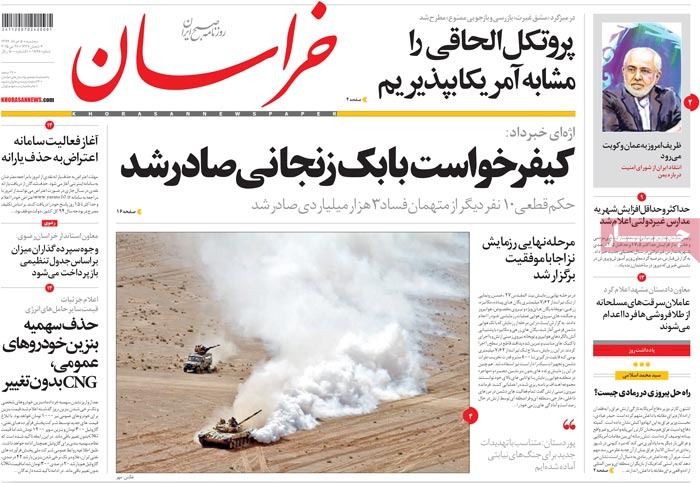
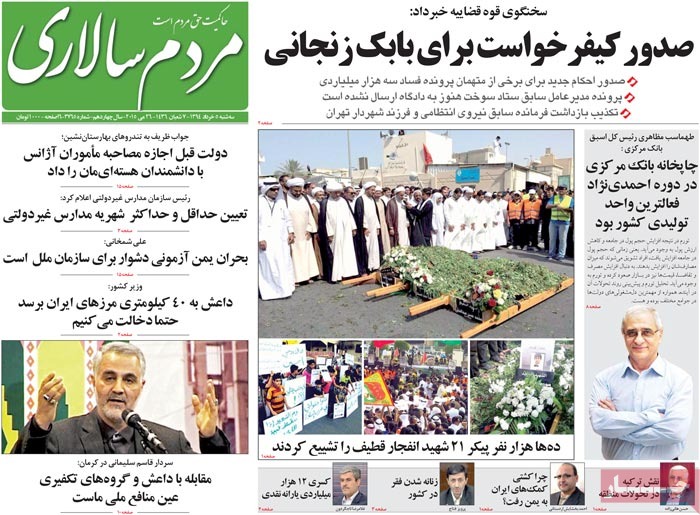
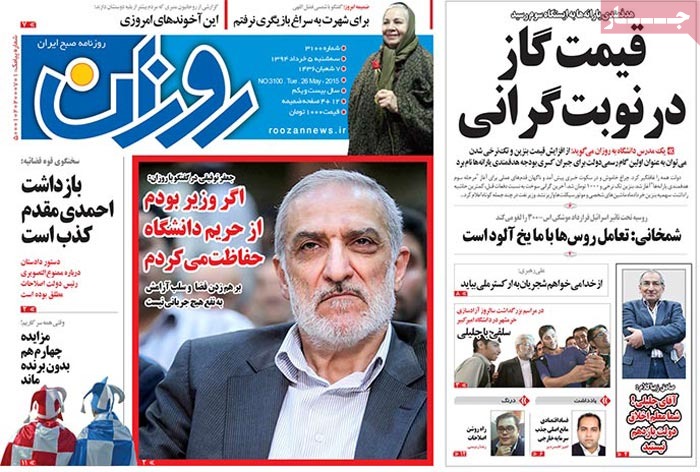
Comments by President Rouhani in Indonesia on Iran’s nuclear talks and his call for a serious international campaign against terrorism dominated the front-page headlines of Iranian newspapers on Thursday. Nuclear talks between Iran and P5+1 and their efforts to draft a final nuclear agreement were in the spotlight too. Also in the news was the defeat of the Saudi-led coalition in Yemen.
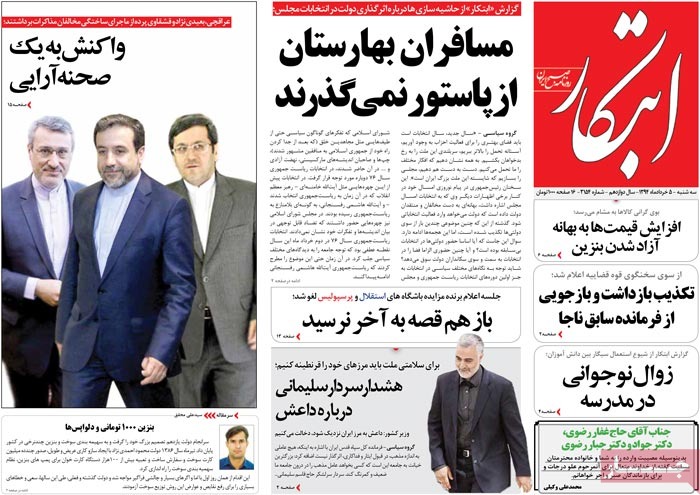
Abrar: [Former Tehran Prosecutor] Saeed Mortazavi will appear in court next week [as a defendant, though].
Abrar: “A motion to question the president is likely to be floated if the Iranian fact sheet is not released,” said an MP.

Abrar-e Eghtesadi:European companies are paving the way for Americans to return to Iran’s petrochemical market.

Afkar:“Military intervention is the not the right mechanism to defuse crises,” President Rouhani told an Asian African Conference meeting in Indonesia.
Aftab-e Yazd:“People will put radicals in their place,” said Seyyed Hassan Khomeini, the grandson of the architect of the Islamic Republic.
Aftab-e Yazd: Ayatollah reappears on a program on IRIB [national broadcaster]. Experts weigh in.
Mohammad Hashemi: IRIB was forced to air his comments.
Abdollah Nasseri: The change at IRIB is novel.
Sadegh Zibakalam: IRIB was forced to retreat.
Gholamali Rajaei: It was thanks to pressure in the court of public opinion.

Arman-e Emrooz:The Islamic Consultative Assembly took the first step toward holding the [early 2016] parliamentary elections at a provincial level.
The executive branch is opposed to the move.
Arman-e Emrooz:Some 1,160 Iranian girls married Afghan nationals.
Around 1,500 illegal Afghan migrants enter Iran on a daily basis.

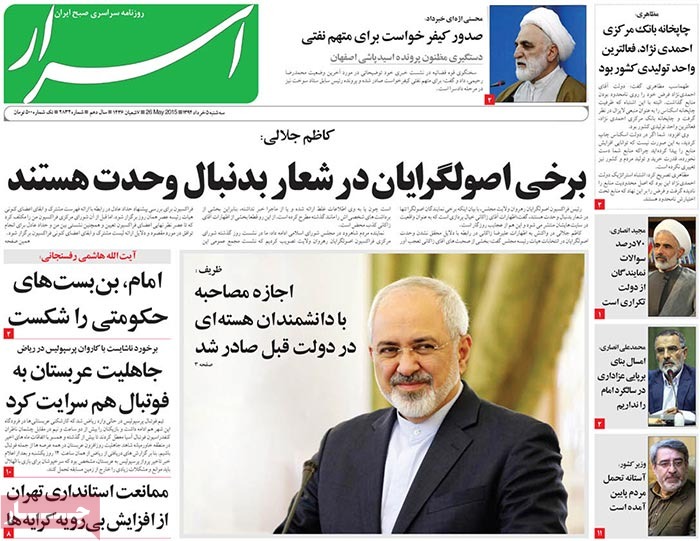
Asrar:The drafting of the final nuclear agreement got underway.

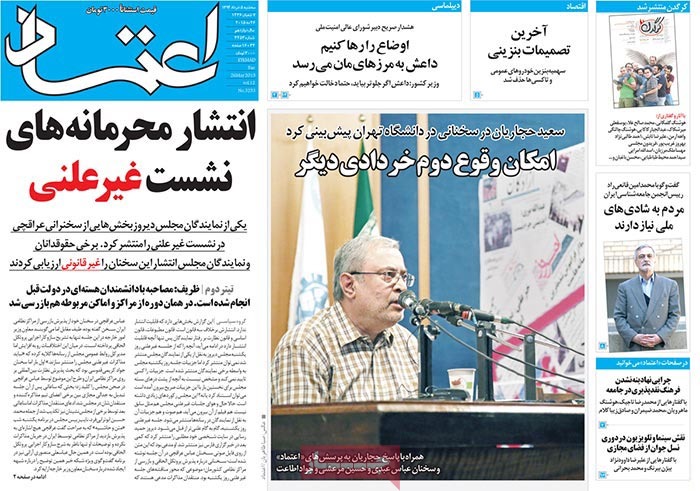
Etemad:“We are entitled to be worried about the nuclear case,” said [principlist MP] Gholamali Haddad Adel.
Etemad: The architect of Abenomics [Shinzo Abe] has welcomed expansion of Japan’s ties with Iran.
It came at a meeting between the Japanese PM and Iranian President in Jakarta, Indonesia.
Etemad:Seyyed Hassan Khomeini [the grandson of the founder of the Islamic Republic] has criticized the Interior Ministry for its weakness in dealing with those behind the Shiraz incident.
[In March, Tehran MP Ali Motahari was in the southern city to deliver a speech when he was attacked by hardliners].

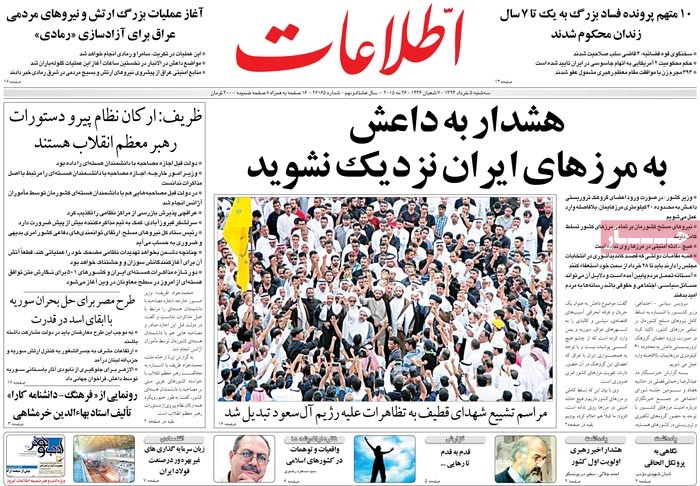
Ettela’at:A scientific article penned by the Supreme Leader has been published by Encyclopedia Islamica [the Encyclopedia of Islam].

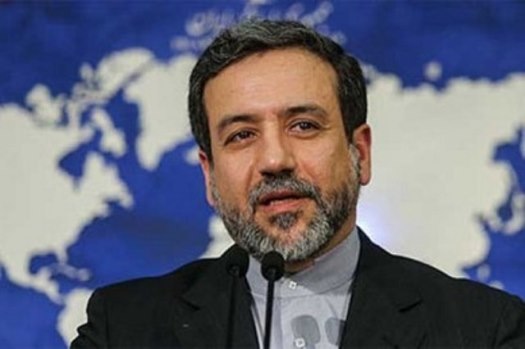
Hemayat: “Sanctions are our top priority in the Vienna talks,” said Iranian nuclear negotiator Abbas Araghchi.
Hemayat:“The crimes Saudis are committing in Yemen are similar to Zionist crimes in Gaza,” said Judiciary Chief Ayatollah Sadegh Amoli Larijani.

Iran Daily: Saudis resume bombardment of Yemen cities.

Iran News: IAEA urged to focus on technical aspect of nuclear deal.

Kayhan: In the Asian-African Conference, President Rouhani has described the fake Israeli regime as the gravest threat to regional security and peace.
Kayhan: The defeat of the House of Saud in a proxy war
Ansarullah in Yemen humiliated the US and Israel.

Khorasan: Iran has taken the presidency of the Asian-African Conference; Iran has put forward a four-point plan on elimination of terrorism.

Rah-e Mardom: Behind the scenes of ceasefire in Yemen
From Iran’s warning to the failure of the [Saudi-led] coalition

Resalat: The empowerment of women breadwinners, from talks to action

Sharq: “True Shiites and Sunnis have no links with terror,” said Judiciary Chief Ayatollah Sadegh Amoli Larijani.

Siasat-e Rooz: “The final deal should guarantee the lifting of all economic sanctions,” said President Rouhani in the Asian-African Conference in Jakarta.

Tehran Times: Iran will award “Ali Daei Prize” to best international goal scorer

President Hassan Rouhani and his Indonesian counterpart Joko Widodo discussed issues of mutual interest as well as international developments on Thursday.
In a meeting on the sidelines of the 60th Asia-Africa Summit Meeting in the Indonesian capital, the two presidents discussed issues of mutual interest, as well as the latest regional and international developments.
Rouhani and Widodo called for enhanced cooperation between Tehran and Jakarta on economic issues.
According to the statistics, Iran-Indonesia trade hit $2 billion in 2012 from $600 million in 2010.
Trade between Tehran and Jakarta once again shrank to $600 million in 2013 as a result of imposition of illegal Western sanctions on Iran.
Iranian and Indonesian officials hope that an emerging comprehensive deal between Iran and the six world powers over Tehran’s nuclear program that guarantees Iran’s right to peaceful nuclear technology and results in the lifting of all sanctions, would lead to a significant rise in trade between Tehran and Jakarta.
Iranian President Hassan Rouhani expressed Tehran’s willingness to expand its relations with Tokyo in all fields, saying that Japan can seize the opportunities for economic cooperation with Iran.
“Tehran is keen on the development of cooperation with Tokyo in matters of interest, especially in scientific, technological, ecological, and economic areas,” Rouhani said in a Wednesday meeting with Japanese Prime Minister Shinzo Abe in Indonesia’s capital, Jakarta.
Rouhani further referred to the extensive presence of large companies from Europe and other countries in Iran, and said that Japan can also avail itself of the opportunities for economic cooperation with Iran.
The Iranian president also underscored the necessity for joint efforts against terrorism and extremism, saying that poverty and lack of development are the key roots of terrorism in the region.
“Through mutual cooperation, Iran and Japan can work together toward the advancement and development of the countries of the region and diminish the grounds for poverty through mutual economic cooperation,” he stated.
Abe, for his part, said that Tokyo-Tehran relations have improved significantly and that Japan welcomes the expansion of mutual cooperation.
He also expressed hope that Tehran can keep playing its “constructive” role in the region, urging that Iran and Japan should continue their talks on regional and international issues.
President Rouhani last met Abe in September on the sidelines of the United Nations General Assembly in New York.
After 12 years of talks, Iran and world powers on April 2 eventually managed to agree on a framework for a final deal over Iran’s nuclear crisis, with the two sides announcing that they are willing to arrive at a final deal in the next three months of intensive talks.
Iran newspaper on April 21 published an opinion piece by Hossein Mousavian, a former Iranian nuclear negotiator, on what happened behind the scenes of the nuclear talks which brought about a tentative agreement. The following is a partial translation of the piece:
[…]
The framework agreement has not been an ideal option of either side; neither will be a [possible] final comprehensive deal.
The fact of the matter is that Iran and six world powers got major concessions from and granted major concessions to each other in the Lausanne agreement. […] In one sense of the word, both sides of the talks have been winners, in another, they have been both losers.
What Iran got from world powers were: Removal of sanctions and assertion of its right to peaceful nuclear technology, including enrichment. The share of world powers were: First, the most intensive verifications in the world nuclear history, and second, significant limitations on Iran’s heavy water and enrichment [capacity].
It was also the first time in the world that big powers officially accepted the right to “enrichment” in a country. […]
The current debates in Tehran, Washington and elsewhere in the world mainly focus on enrichment capacity, lifting of sanctions, Arak heavy water [reactor], Natanz and Fordow enrichment sites, R&D, inspections regime, and Iran’s enriched uranium stockpiles. But none of this is the main bone of contention behind the scenes in the US and Israel. The topics above are all the façade.
It goes without saying that “regime change” has been the core of the US strategy in post-revolution Iran. Past disputes over human rights, terrorism, weapons of mass destruction and the like have all been an excuse to pile pressures [on Iran] and topple the establishment.
[…] I have always said that Washington has supported the corrupt, totalitarian and undemocratic regimes in the Middle East. Its current allies are not on a par with Western-championed democracy and human rights standards; rather, they support Takfiri terrorism [a reference to IS]. These are undeniable facts for the West.
When Iran’s nuclear crisis was sparked off back in 2003, many in Iran – me included – were concerned saying that the US should not be allowed to make arbitrary use of the [nuclear] dispute for advancing its own goals. We did not want to see Iran’s nuclear case referred to the UN Security Council and subjected to Chapter Seven. Neither did we want to see Iran regarded as a threat to international security and peace and be subjected to unjust sanctions.
Time passed and all these things happened. Following a global consensus – developed for the first time in the world – unjust sanctions were slapped on Iran. Was Iran’s nuclear program the only US target in orchestrating such a massive global measure? No. It aimed to arbitrarily use the nuclear case for tapping into global potential and international mechanisms to implement its regime-change strategy.
What is the reason behind the dispute in Washington today? Does it center on an immediate or gradual removal of sanctions, on limited or unlimited enrichment, or on Iran’s mastery of industrial-scale nuclear fuel cycle in five, 10 or 15 years? No, they are all part of the dispute, but the clandestine friction in Washington is over continuing or changing a policy of regime change.
Netanyahu and a group of US congressmen say that “nuclear agreement and removal of sanctions” followed by opening the doors to “future cooperation between Iran and the US” on the issues the two sides have common interests in – for instance, the fight against ISIL and Alqaeda – translate into “the end of the regime-change strategy” and marks the beginning of “interaction with Iran”.
The new strategy [interaction] will amount to de facto recognition of “the Islamic Republic” and Iran’s “regional position”. It took the US 35 years to test its regime-change policy in Iran and 10-25 years to build trust [as manifested] in the Lausanne agreement. US insistence on the latter [talks leading to the Lausanne agreement] is ostensibly for confidence-building in the nuclear case, but it is in fact an opportunity for America to put is “interaction-with-Iran” policy to the test.
Opponents in Washington insistently say that the new strategy will weaken or eliminate US regional allies such as Israel and Arab states. “The Iran deal threatens Israel’s survival” is what Netanyahu said about the Lausanne agreement.
In September 2013, Obama became the first US president to say in [his address to] the UN [General Assembly] that regime change in Iran is not his administration’s policy. He recognized the Supreme Leader’s religious decree on the prohibition of nuclear weapons.
Following the Lausanne agreement, Obama said that the policy of sanctions has failed and the continued policy of isolating Iran is far from reasonable.
During the years I was in the US, I told media outlets, former politicians and university professors from the US and Europe that regime-change, pressures and sanctions are wrong policies in dealing with Iran, stressing that they need to have cooperation with Iran. What I did also improved my knowledge of the US.
The most tenuous, heated debate – both covert and overt – in the US over the past few decades is not over the nuclear case; rather, the challenge which has triggered the fiercest debate ever between the US governments and Israel and anti-Iran Arabs is over changing the strategy of regime change.
This challenge has fuelled bitter hatred – on the part of Republican hawks, hardline Zionists and certain spiteful Arab countries – for Obama. When it comes to US, Israeli and Arab hardliners, the hatred is much deeper for Obama’s interaction with Iran and the Lausanne agreement.
If Obama’s interaction with Iran results in a final [nuclear] deal, it will open a new chapter in Iran’s political history and the Middle East’s political equation. For sure, Obama will not easily negotiate “the pass of a changed US strategy on Iran”; the political life of those from the two sides who are moving along a path which is likely to lead to a nuclear agreement will not remain immune to risks.
I think Iranians too are surmounting the rockiest political pass of the post-revolution era. […]
Some 220 Iranian MPs released a statement Wednesday in support of the comments by the Supreme Leader on nuclear talks and called on officials to make sure Iran’s red lines are not crossed in the negotiations.
The following is a partial translation of the statement read out by a member of the chamber’s presiding board as reported by Fars News Agency:
[…]
We, members of the Islamic Consultative Assembly, thank the Iranian negotiating team and at the same time call on them to base their negotiating tactics on the useful instructions and dos and don’ts issued by the Supreme Leader.
[…]
We draw the attention of the Executive branch and the negotiating team to the following points which are inspired by the comments of the Supreme Leader:
The final deal should not entail any commitment on the part of the Islamic Republic to special inspections which go above and beyond the requirements of the NPT; neither should it enshrine any inspections that endanger the security of Iranian nuclear scientists.
Research and development in technology, enrichment and nuclear science should not be subjected to any restriction. Military facilities and other places whose inspection might hurt our national pride or result in the humiliation of the Iranian nation should be off-limits to inspectors.
In light of the fact that the Islamic Republic of Iran has repeatedly proven its commitment to international contracts and the other side has proven unreliable, all sanctions should be immediately lifted [once a deal is struck].
The government should view critics as friends of the establishment and consult with them. It should also see the nation as its confidant. The nuclear achievements of the nation are an inseparable part of the country’s overall progress; no one should downplay these achievements simply to justify their own measures.
Talks should only focus on nuclear issue, and the negotiating team should make sure military issues as well as international and regional questions related to defense of the oppressed, which is part of our revolution’s identity, should remain off the table.
In drafting the final agreement, officials should close the door to any arbitrary interpretation, misuse and diversion.
[…]
Looking after an ailing parent is not all that strange, but when people with disabilities do that, their work takes on additional importance.
The following is a partial translation of a report by Mehr News Agency on April 20 about two caring sisters who can neither see nor hear but look after their ailing mother.
Zahra, 55, and Fatemeh, 44, are two sisters who hold each other’s hands every day and jog in a park near their house. Razieh Hosseini, who has been their only friend and trainer for a few years, drops by daily to see how they and their old mother are and give them a hand if necessary.
As for abilities, the only difference between the two sisters is that unlike Zahra who is totally blind, Fatemeh has very poor eyesight. The slight vision helps her take care of housework.
The only way of communication between the two sisters goes through their palms. To convey a message to them, you have to write the words on their palms. When you make yourself understood, it’s your turn to build on their body language and decode their response.
When the sisters want to talk together, they hold each other’s hands and make some movements that others don’t understand, but each movement has a meaning for them.
They also go shopping and do the cooking. Their house is always filled with the pleasant smell of home-made food at noon.
Fatemeh wanted to get married and start a family when she was young, but she no longer thinks about it. All she wants is to put all her efforts into looking after her mother.
The mother had never let her girls feel depressed because of their disabilities. When she was young, she would take them to school and gym and emotionally support so that they wouldn’t feel down. Now it’s the girls’ turn to repay their mother’s kindness.
Zahra and Fatemeh have a small green garden in their yard. It’s hard to understand what their perception of natural beauty is, but it’s obvious that they truly appreciate beauty; at least their garden reflects their deep understanding of aesthetics.
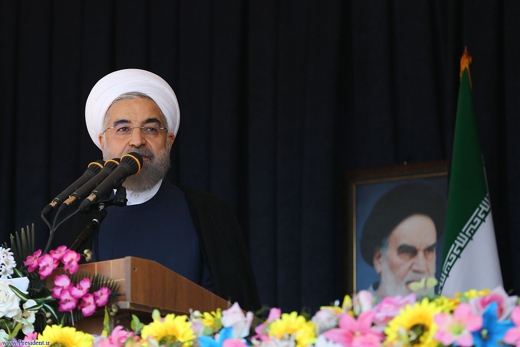
President Hassan Rouhani has rejected as unlawful and unjust the sanctions imposed against the Islamic Republic of Iran, saying that the resistance by the Iranian nation together with the accelerated pace of the country’s technological and peaceful nuclear progress finally brought the other side [P5+1] to the negotiating table.
The Iranian president made the remark Wednesday in an Asian-African Conference (AAC) in Jakarta, Indonesia. The following is a partial translation of what else the president said in his speech as reported by the Islamic Republic News Agency:
Rouhani said that P5+1 opted for talks with the Islamic Republic knowing that threats, disrespect and sanctions fail to create peace and security [in the world].
“Intensive, complicated and prolonged talks were held and now I am happy to announce that the constructive interaction which has been established in the talks can culminate in a final nuclear deal,” he added.
The Iranian president further said that the final deal should guarantee Iran’s right to peaceful nuclear energy as well as the removal of all economic sanctions.
“Here I announce that Iran aims to have constructive interaction [with the rest of the world] and I insist that such interaction will serve our interests and those of all world nations,” he said.
Rouhani went on to say that in addition to efforts to seriously combat extremism and terrorism, measures should be taken to identify and eliminate the elements by which terrorist groups lure and recruit people [from around the world] to their ranks.
The cultural and economic root causes of such aggressiveness [terrorist acts] and desire for violence should be identified, he said, adding that honest, well-intentioned measures are needed to solve economic problems, dispense justice, and counter efforts which promote violence among the youth in order to deny terrorists the opportunity to provoke tension and misuse people.
The president said that we have to stem the tide of terrorism by cutting the financial, political and intelligence supply lines of the terrorists, adding that the global message of fighting international terrorism will not catch on as long as certain governments distinguish between good terrorism and bad terrorism.
International terrorism will stay undeterred and unharmed so long as it emerges under a different name and is supported by a different government, he added.