Monday, December 29, 2025
Home Blog Page 4846

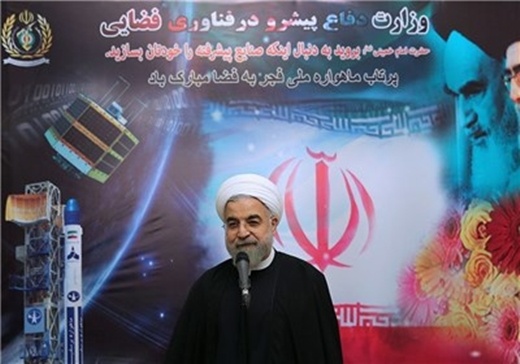
Iranian scientists enter new stage in space science: President Rouhani

Rouhani-Space

Iran’s President Hassan Rouhani in a message on Monday hailed the recent space accomplishment by Iranian scientists, and said the country would be able to supply all its aerospace needs in the near future.

Earlier on Monday, Iran successfully sent the domestically-made Fajr (Dawn) satellite into orbit as the fourth homegrown satellite successfully launched into space by the Iranian experts.

In his message, Rouhani expressed his congratulations on “the major achievement”, and said, “Prominent Iranian scientists and thinkers have entered a new stage in space sciences.”

The satellite indicated Iran’s continued scientific growth in the field of advanced technologies, Rouhani added.

“The government is determined to continue the path toward national progress,” he said, promising that in a couple of years, Iran’s space needs will be completely fulfilled by domestic technology.

Iran has in recent years made great headways in manufacturing satellites thanks to the efforts made by its local scientists.

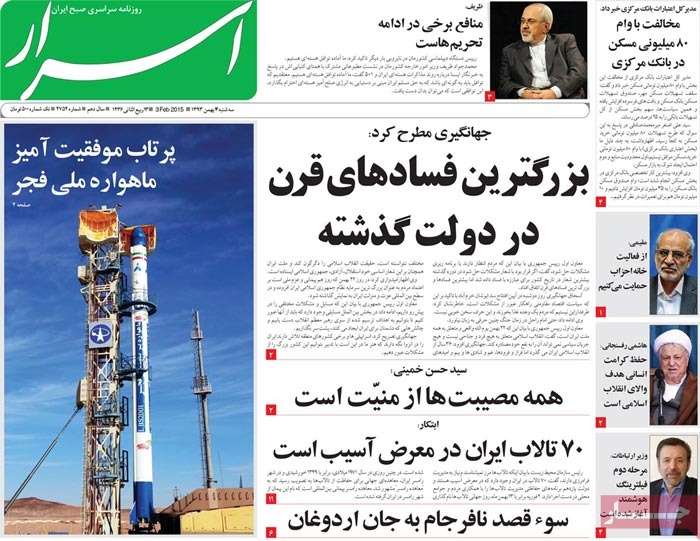
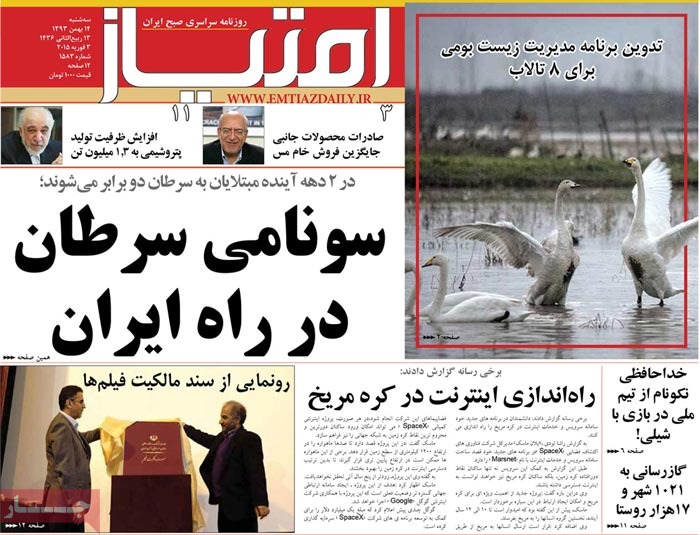
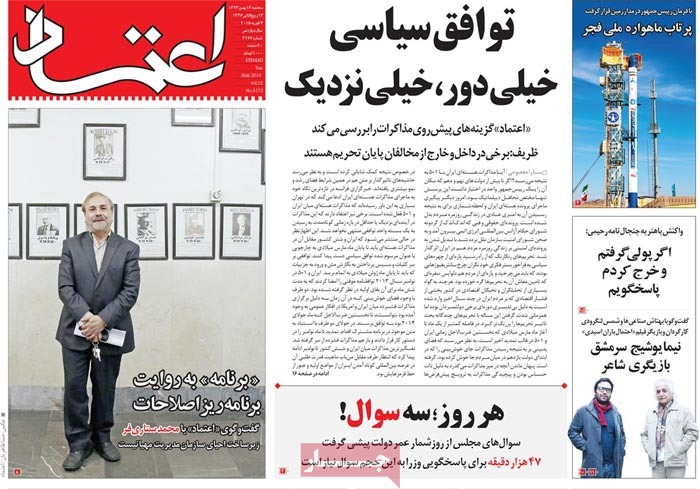
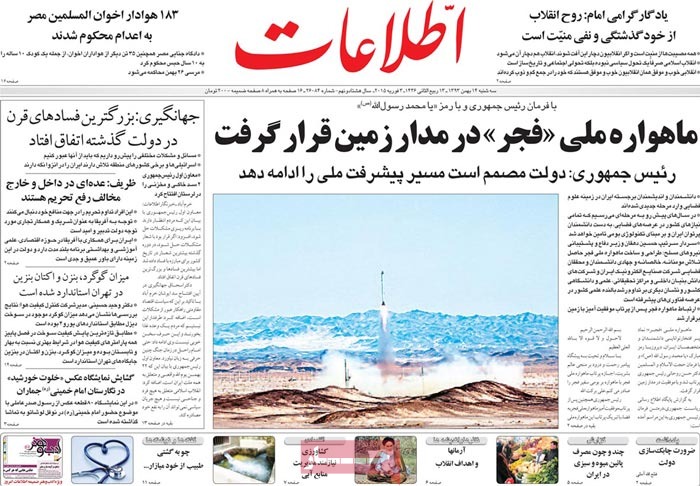
A look at Iranian newspaper front pages on Feb. 3

Iranian Newspapers Headlines

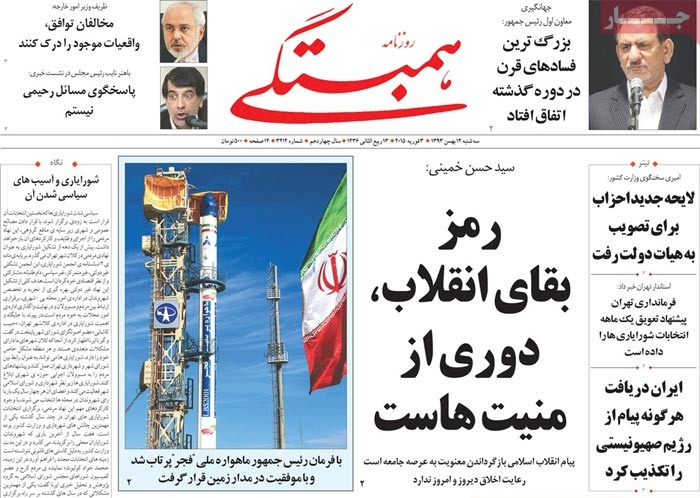
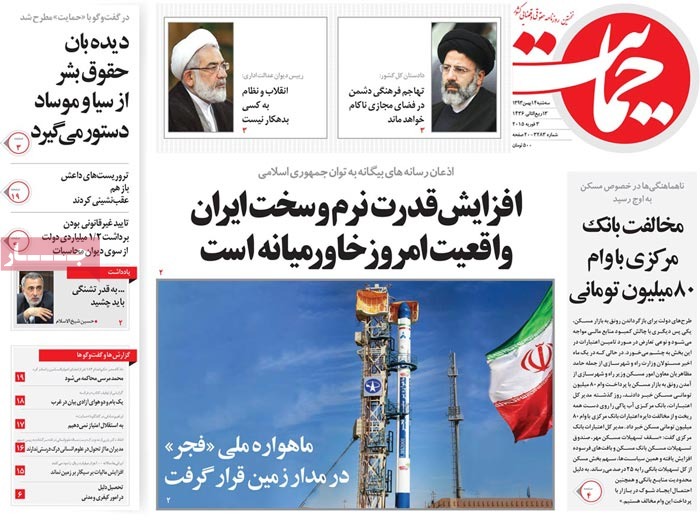
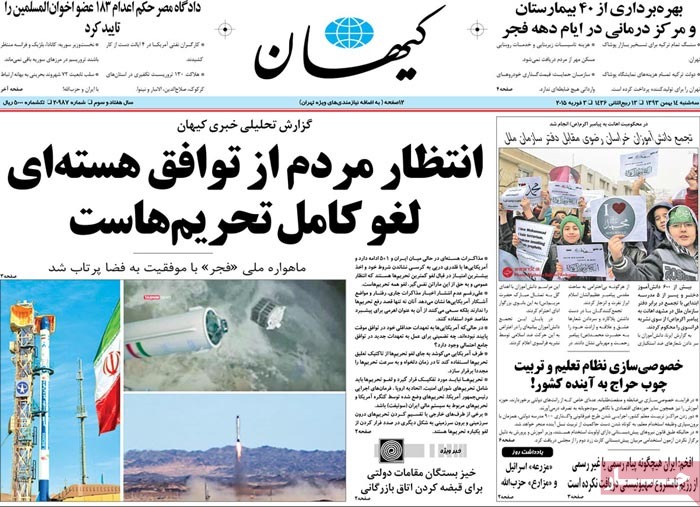
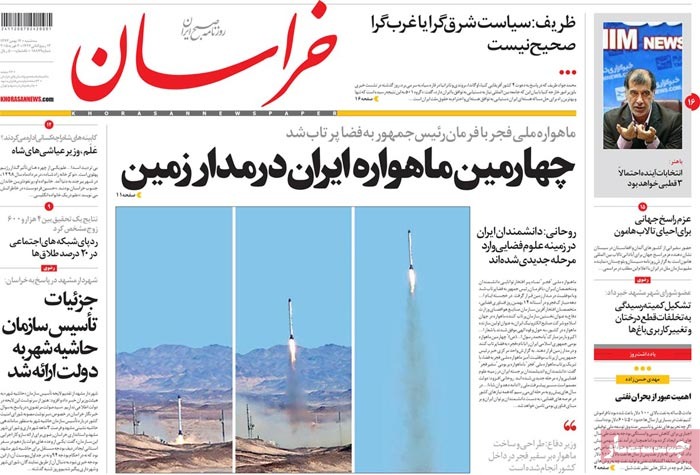
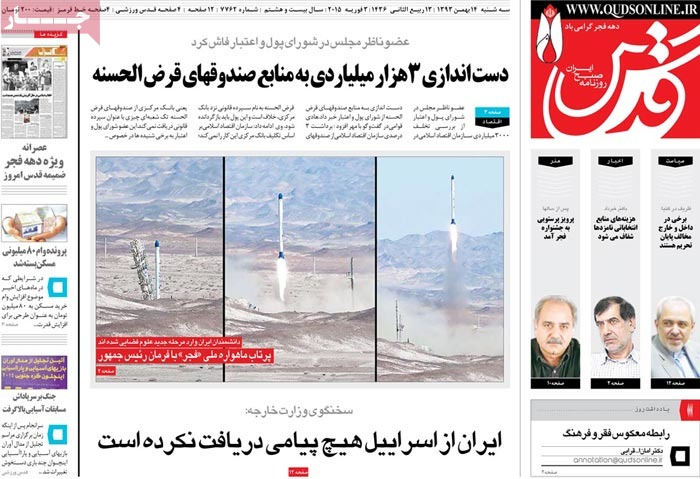
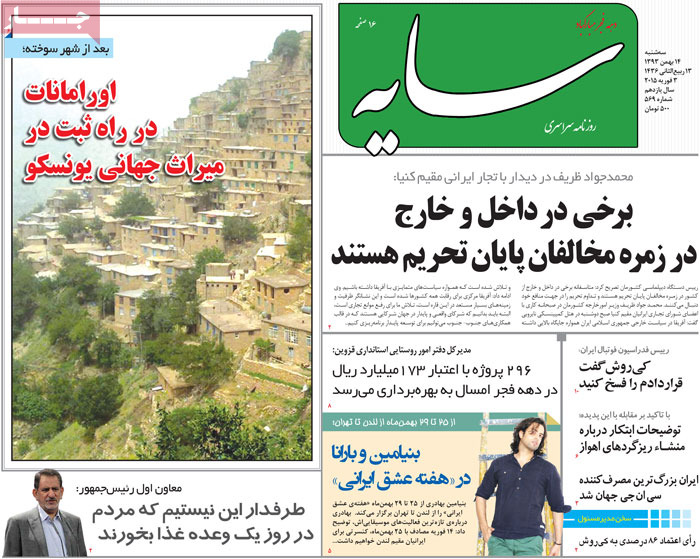
The successful launch of a domestically-developed satellite dominated the front pages of Iranian newspapers on Tuesday. Also on the cover of the dailies was the Iranian foreign minister’s criticism of those at home who don’t want the sanctions to be lifted.


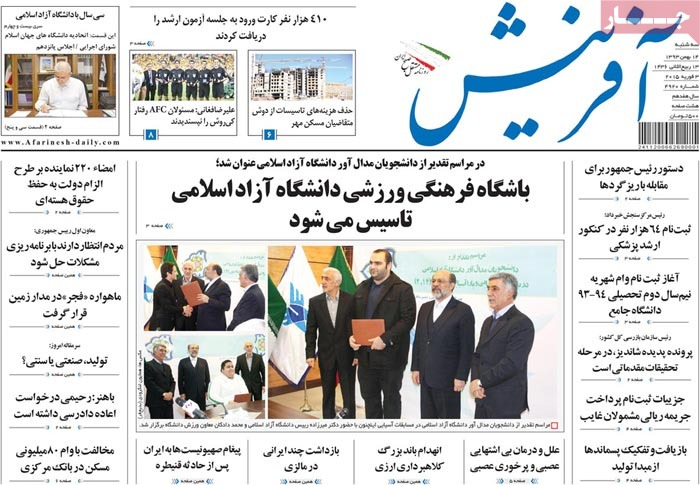
Afarinesh: A ring that defrauded potential foreign exchange buyers has been busted.


A look at Iranian newspaper front pages on Feb. 3


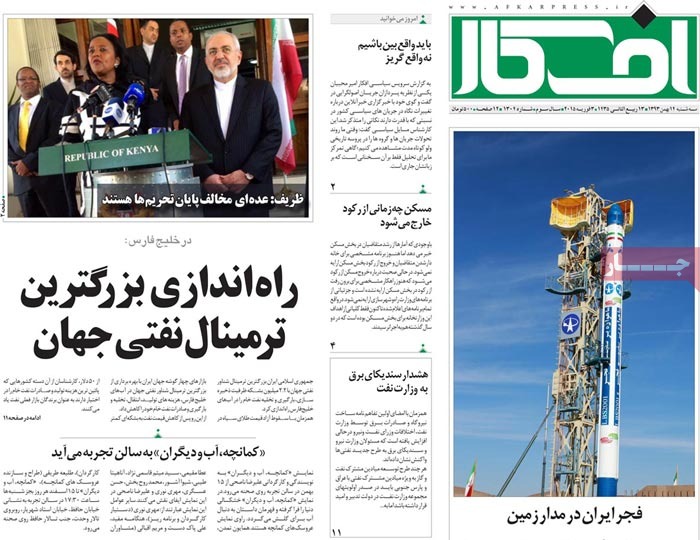
Afkar: Iran has launched the world’s biggest floating oil terminal in the Persian Gulf.


A look at Iranian newspaper front pages on Feb. 3


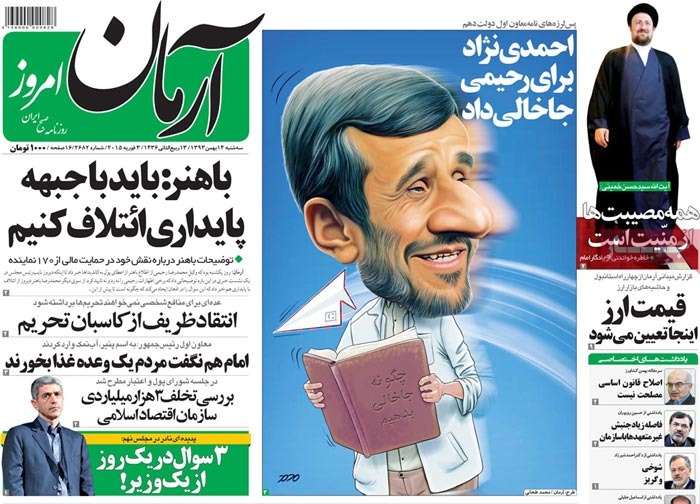
Arman-e Emrooz: Foreign Minister Mohammad Javad Zarif has lashed out at those who benefit from continued sanctions and thus don’t want them to be lifted.


A look at Iranian newspaper front pages on Feb. 3


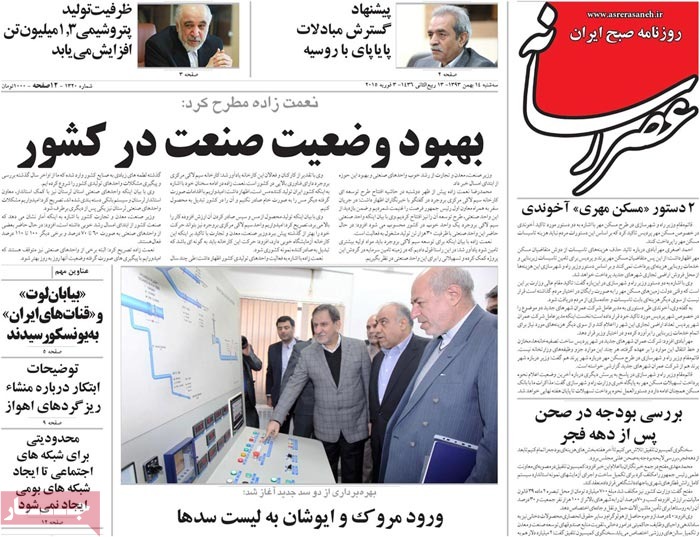
Asr-e Rasaneh: Iran’s petrochemical production capacity is to rise by 1.3 million tons.


A look at Iranian newspaper front pages on Feb. 3


Asrar: Some 70 Iranian marshlands are under threat.


A look at Iranian newspaper front pages on Feb. 3


Emtiaz: The national soccer team captain Javad Nekoonam is to hang up his boots after a friendly with Chile.


A look at Iranian newspaper front pages on Feb. 3


Etemad: “If I have received any money, I am ready to account for what I have done,” said Mohammad Reza Rahimi in reaction to a letter in which former First Vice-President Mohammad Reza Rahimi alleged he has offered cash to 170 MPs.

Etemad: “The infrastructure needed to revive the Management and Planning Organization is not there,” said Mohammad Sattarifar, a former director of the organization.


A look at Iranian newspaper front pages on Feb. 3


Ettela’at: “The biggest corruption of the century took place when the previous government was in office,” said First Vice-President Eshagh Jahangiri.


A look at Iranian newspaper front pages on Feb. 3


Hambastegi: “Avoidance of self-centeredness holds the key to the survival of the revolution,” said the grandson of the founding father of the Islamic Republic.


A look at Iranian newspaper front pages on Feb. 3


Hemayat: The Supreme Audit Court has announced that withdrawal by the government of $1.2 billion is against the law.


A look at Iranian newspaper front pages on Feb. 3


Kayhan: Forty hospitals and clinics will open during 10-Day Dawn [marking the victory of the Islamic Revolution in 1979].


A look at Iranian newspaper front pages on Feb. 3


Khorasan: “Iranian scientists have opened a new chapter in space science,” said President Rouhani after Fajr, a domestically-built satellite, was placed in orbit.


A look at Iranian newspaper front pages on Feb. 3


Qods: “Iran has received no message, official or unofficial, from Israel,” said the Foreign Ministry spokeswoman.


A look at Iranian newspaper front pages on Feb. 3


Sayeh: Avroman, a mountainous area in western Iran, is on course to being registered as a UNESCO World Heritage Site.


A look at Iranian newspaper front pages on Feb. 3


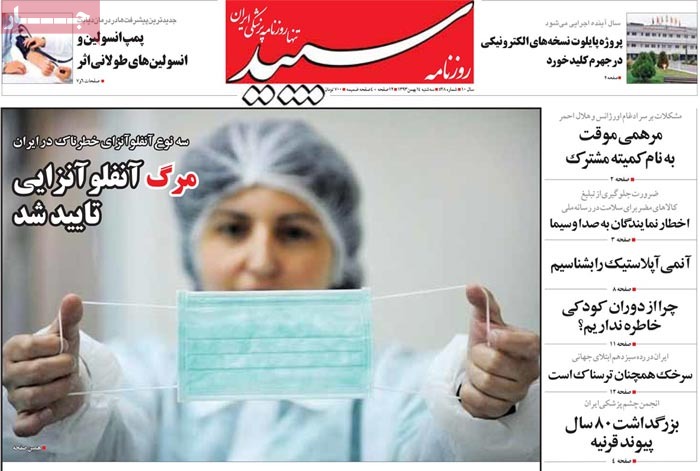
Sepid: MPs have warned Islamic Republic of Iran Broadcasting (IRIB) not to air commercials for items which are harmful to health.

Sepid: A first case of influenza death has been confirmed in Iran.


A look at Iranian newspaper front pages on Feb. 3


Top MP: Iran is growing at a fast pace

Larijani-Qom

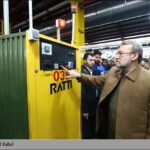
The speaker of the Islamic Consultative Assembly says that the lack of working capital is one of the challenges the country’s production sector is facing.

Ali Larijani made the remarks in a ceremony Monday to open Atrin Nakh Qom Company in Qom. The following is a partial translation of a report the Islamic Students News Agency filed on the top MP’s remarks there:

The Islamic Revolution brought about development for Iran from many aspects. The enlightenment the revolution has caused has manifested itself in Iran and some other countries.

Despite enemy attempts to downplay the achievements of the revolution, the Iranian nation has gained a lot of experience.

Iranian youth have commanded sophisticated technologies. The Supreme Leader paid special attention to domestic production on all fronts during his inspection tour of a nanotechnology exhibition [a few days ago].

The country had not done much in the steel industry before the revolution, but after the revolution steel and petrochemical products accounted for the bulk of Iran’s non-oil exports.

This is not enough. To make still more progress, the country needs to take a leap.

Proposals by economists are needed in order to make optimal use of the production sector. The industry sector in Qom province needs to attract more investment. If so, more jobs will be created and unemployment will be beaten.

The province’s agriculture is limited, so its industry and tourism sectors should be boosted.

The prospect is bright for Iran. During one of my recent foreign trips, a regional leader told me, ‘The speed of Iran’s development is like that of a missile.’ It may sound exaggerated, but one can say that Iran is growing at a satisfactory pace thanks to its human resources.


Egypt’s Al-Azhar urges Iran to ban movie “Muhammad (PBUH)”

Iranian Muhammad (PBUH) Movie

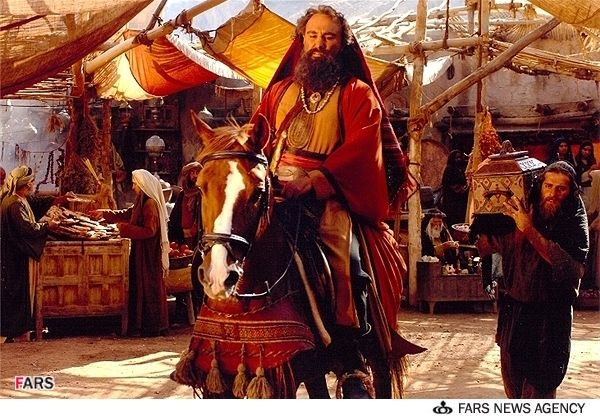
Egypt’s Al-Azhar Islamic Center issued a statement calling on Iranian officials to ban the movie “Muhammad (PBUH), Messenger of God”.

While Oscar-nominated Iranian filmmaker Majid Majidi’s religious blockbuster is scheduled to premiere in this year’s Fajr International Film Festival in Tehran, Al-Azhar and some Egyptian religious figures have called for a ban on the film, al-Bawaba news website reported.

Al-Azhar in its statement claimed that production of such movies undermines the sanctity and the lofty status of the messengers of God.

The center and some Egyptian scholars who are against the film say it depicts the Holy Prophet (PBUH) in image and voice, while Majidi has previously denied this.

“Because of my own beliefs, I am not, and was never, planning to depict his holy image in my film. These rumors are completely unfounded,” he had said in an interview before.

Produced by Mohammad Mehdi Heidarian, the film has been set to be released in Persian, Arabic and English.

A number of internationally-acclaimed professionals, including Academy Award winning visual effects supervisor and filmmaker Scott E. Anderson, three-time Oscar-winning Italian director of photography Vittorio Storaro and renowned Croat production designer Milijen Kreka Kljakovic collaborated in the project.

Majidi has been quoted as saying that the main aim behind his grand cinematic project was to denounce the extremist moves by those who resort to violence in the name of Islam.

He said that movie goers have high expectation of his new project, and that the Iranian Muslims have asked him to battle against the wave of violence and extremism with this art.

Muslims are awaiting the message of love and kindness endowed by Prophet Muhammad (PBUH), Majidi noted, and said his new movie could be a manifestation of opposition to the extremists who spawn violence in Iraq, Syria, Lebanon, Pakistan and elsewhere.

Rahimi, a link in the chain of offenses committed by the Ahmadinejad gov’t

Ahmadinejad-Rahimi-1

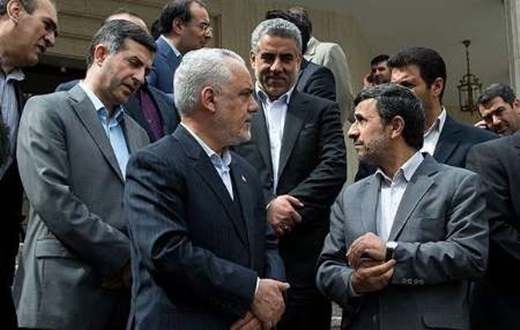
Complicity of former First Vice-President Mohammad Reza Rahimi in massive corruption is simply a single page in a chapter of failures to comply with rules and regulations by a government whose leader claimed he was at the helm of the most immaculate administration in Iranian history.

The following is a partial translation of an analytical report the Islamic Republic News Agency released on the glaring offenses committed by the Ahmadinejad government:

In late January the Supreme Court partly upheld the conviction of former First Vice-President Mohammad Reza Rahimi and sentenced him to five years and 91 days in prison. Under the Supreme Court ruling, the former veep, who was initially sentenced to 15 years in jail by the Court of First Instance, has to pay the equivalent of $950,000 dollars in misappropriated money and an additional $330,000 in fines.

Experts suggest the verdict of the Supreme Court amounted to confirmation that when the seventh parliament’s term came to an end, Rahimi who served as the head of the Supreme Audit Court illegally distributed hundreds of thousands of dollars and was complicit in a massive corruption case involving Iran Insurance Company.

Ahmadinejad, who had previously said, “If it is established that Rahimi has misappropriated a single rial, I will appear on TV to apologize to the public and tell them that ‘I don’t deserve to serve as president,’” released a statement to suggest that the conviction of his former right-hand man had nothing to do with the ninth and tenth governments [which he led between 2005 and 2013] and once again hailed the officials who served under him as “immaculate servants”.

That was not the end of the story, though. In a letter, Rahimi revealed that he deposited as much as $400,000 in the bank accounts of 170 candidates running for seats in the 8th parliament. “I fell victim to your obstinacy and measures to bring shame upon others,” he said in the letter.

The case and the finger-pointing that ensued have prompted us at IRNA to take a look at other offenses officials of the ninth and tenth governments committed.


Pending Cases

On August 19, 2014 Khaneye Mellat News Agency released a list of offenses the ninth and tenth governments had committed. The report focused on unclassified correspondence between the legislature and the judiciary on offenses committed by executive officials under Ahmadinejad. It said, “The legislature has established that offenses have been committed by executive officials, but the final decision on how to deal with those offenses lies with the judiciary.”

President Ahmadinejad himself is implicated in a case which is being dealt with at Branch 76 of Tehran Provincial Criminal Court.

The report catalogued the executive offenses that the judiciary had to deal with. Chief among them was government failure to pay off the money it owed to Tehran Municipality which was described by the chamber as non-compliance with the law that governed the use of the Foreign Exchange Reserve Fund to promote railway and mass transit.

The far-from-perfect performance of the government in offering the stocks of state firms, withdrawal of money by the Central Bank from the accounts of banks, the way the stocks of Saipa Automaker were sold, multiple state positions for Hamid Baghaei, Ahmadinejad’s vice-president for executive affairs, and the use of foreign exchange at a government rate to import luxury cars were some other offenses mentioned in the report.

President Ahmadinejad himself is implicated in a case which is being dealt with at Branch 76 of Tehran Provincial Criminal Court. One of the charges he faces is built on a complaint filed by the Islamic Consultative Assembly.

Still, supporters of the former president say his claims of immaculacy are valid as they continue to support him. Last month his deputy for parliamentary affairs Mohammad Reza Mir-Tajjedini said, “Ahmadinejad is one of the most popular figures in the history of the country. He is not history. During his presidency managers who cherished values and the governance of the jurisprudence climbed the ladder.” His comments came in response to Ayatollah Alam al-Hoda [a member of the Assembly of Experts who had said Ahmadinejad was history].

According to the Attorney General, individuals have pressed charges against Ahmadinejad too.

In an interview Mir-Tajjedini said, “No corruption has taken place under Ahmadinejad and the former president faces no charges.”

The comments of Ahmadinejad’s deputy came despite the fact that a senior official with Tehran Provincial Criminal Courts said last month that a judicial panel was investigating the case involving the former president.

According to the Attorney General, individuals have pressed charges against Ahmadinejad too. There are widespread speculations as to who has filed a complaint against Ahmadinejad. Some media have reported that the name of a Yaghoub Khalilnejad appeared next to the name of the parliament speaker in a summons sent to the presidential office when Ahmadinejad was still in power.

Apparently, the complaint by Khalilnejad is not similar in nature to that of MPs. He has filed a court case against Ahmadinejad for the words and expressions the former president used in a public speech. According to unconfirmed reports, Khosro Shahin, a Tehran resident who has identified himself as a disabled veteran of the Sacred Defense, is another plaintiff who has filed a complaint against Ahmadinejad for high fatality rates in road accidents.


Budgetary slip-ups of the Ahmadinejad administration

In 2006, the Supreme Audit Court revealed that $1.5 billion in public funds had gone missing and that the government had failed to comply with the provisions of the budget. One year later, the same court reported that $2.3 billion had gone missing and that the executive branch failed to comply with 54 percent of what it was required to do in the spending package. In 2008, the failure margin climbed to 72 percent, but there was no mention of any missing funds.

In 2009 and 2010 government failed to comply with 64 percent of budgetary requirements and according to the budget report of 2011, the figure stood at 65 percent.

In 2006, the Supreme Audit Court revealed that $1.5 billion in public funds had gone missing and that the government had failed to comply with the provisions of the budget.

Another report the Supreme Audit Court released in 2013 [in the final six months of Ahmadinejad’s presidency] suggested that the president kept violating the laws until the final days of his presidency. But the principlist-majority parliament which keeps touting its supervisory role these days had opted for silence back in those days.

Illegal hiring of individuals is another offense the Ahmadinejad administration committed.

Over-the-top bonuses to certain individuals are mentioned in all reports by the court about the budgetary violations of the Ahmadinejad administration. The court has also reported that the provision of the budget law, that caps pay raises and bonus increases and other payments, cash or non-cash to the Cabinet by the national oil and gas companies, has been violated.

Illegal hiring of individuals is another offense the Ahmadinejad administration committed. The head of the Supreme Administrative Justice Court slammed the hiring as illegal and said, “In the absence of permission any hiring by the presidential office is illegal and we have made our opinion known in this regard.”

It should be noted that during the second term of Ahmadinejad’s presidency some 650,000 people were offered permanent, long-term and short-term contracts. In light of the fact that there were no advertisements or tests before the hiring, the employment of some 450,000 of them was illegal. The deputy chief of the presidential office described the new hires as a “provincial corps”.

One can no longer capitalize on populist slogans to draw the public to the polling stations. People build on the practical measures of officials and politicians to pass judgment, not on their words.

The ninth and tenth governments were in office during eight eventful years in the history of the Islamic Republic. Violation of rules and regulations, pervasive financial offenses despite claims to immaculacy and justice, populist measures and the special language executive officials used in that period led to the emergence of a new political insight and popular demands in the country.

One year on, each day a new scandal dating back to Ahmadinejad presidency emerges. One can no longer capitalize on populist slogans to draw the public to the polling stations. People build on the practical measures of officials and politicians to pass judgment, not on their words.

Rahimi paid money to MPs to prevent impeachment: Deputy

Avaz Heydar pour

An Iranian MP has called on the Judiciary to deal with Mohammad Reza Rahimi [a convicted former first vice-president under Ahmadinejad] for his recent letter [which has implicated as many as 170 MPs in a corruption case].

Entekhab, a news website, on February 1 ran an interview with Avaz Heydarpour, who represents Shahreza in the chamber and holds a seat on the Press Supervisory Board. The following is the translation of the interview which exclusively focused on the former vice-president’s letter claiming that he had paid some $400,000 in contribution to the campaigns of 170 parliamentary candidates:

Rahimi has made a mistake by taking the Iranian people for fool. He was handed down sentences in a court of law for his wrongdoings.
Rahimi insulted the Islamic Republic in the letter he released, alleging that he had given funds to candidates running for the eighth parliament. The biggest error a vice-president can do is to make irrelevant comments.
Back in 2008, the Iranian MPs were trying to impeach the late [Ali] Kordan [the then interior minister]. Rahimi, who had set his sights on higher positions, sought to kill the impeachment motion by providing certain MPs with five million tomans (over $1,500) in financial contribution.

He paid no money for election. In fact, he used the pretext of helping mosques to pay money – by order of Ahmadinejad – to keep Kordan in his job as interior minister.

A handful of deputies accepted that money, but – I repeat myself – the amount paid by Rahimi was not by any means for election [campaign].

Through his comments, this gentleman has disputed the [2008 parliamentary] elections. That’s why another file should be lodged against him and the prosecutor general should deal with the case in order not to allow others to do such a damn thing.

The allegations Rahimi have made are a gross insult to the [Islamic] establishment. He is claiming that his ill-gotten money has played a role in the outcome of the election. As far as I am concerned, he should be taken to court again.

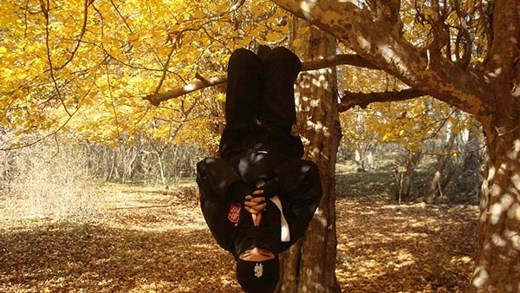
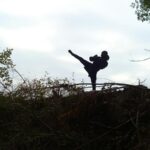
Ninja girls take their training sessions to nature

Female ninjas

Besides practicing at the gym, Ninja girls at Mazandaran Provincial Martial Arts Department hold training sessions in nature.

The following is a photo gallery Shomalnews.com has filed on its website of the girls practicing outdoors:


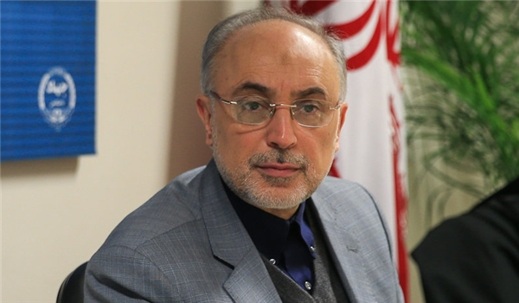
Tehran ready to ink regional convention on power plant safety: Iran nuclear chief

Salehi

Director of the Atomic Energy Organization of Iran (AEOI) Ali Akbar Salehi underlined the country’s preparedness to sign a convention with regional countries on safety of nuclear power plants.

“The regional countries, especially the Persian Gulf littoral states, have stepped into the arena of peaceful nuclear activities and for instance, the UAE is building four nuclear power plants and other countries have also announced plans to build nuclear power plants,” Salehi said in Tehran on Saturday evening.

“We are ready to create a regional safety convention for the supervision of the regional countries’ power plants operations in a way that such activities will be supervised and controlled permanently within the framework of a regional safety convention,” he added.

In earlier remarks in December, Salehi had underscored that Iran welcomed acquisition of civilian nuclear technology by its Arab neighbors in the Persian Gulf, and announced the country’s preparedness to share its experience with them to this end.

Salehi was asked by reporters to comment on the UAE and Saudi Arabia’s efforts to build nuclear power plants, and said, “We will be happy if the Islamic and developing countries, including the UAE and Saudi Arabia, can gain access to this technology based on their rights enshrined in the NPT (Non-Proliferation Treaty) and the (International Atomic Energy) Agency’s statute and we don’t have any concerns in this regard.”

Describing Iran as a pioneer in efforts to restore the developing countries’ rights to use peaceful nuclear technology, he said, “If they want to enter the arena of civilian nuclear activities, we will welcome and will be happy.”

“We are ready to transfer our experience to these countries and we are prepared to set up a joint nuclear energy council in the Persian Gulf (region),” Salehi underlined.

His remarks came after Mohammed Al Hammadi, the chief executive officer of the Emirates Nuclear Energy Corporation, announced that construction of the first of the four units of the UAE nuclear power plants was progressing fast and 61 percent of the work is complete.

The UAE is building four 1,400 MW units to produce nuclear energy in Baraka area bordering Saudi Arabia. The units will start coming up online one by one from 2017 through 2020, adding 1,400 MW of electric power to the Abu Dhabi power grid.

Also, Saudi Arabia has announced plans to construct 16 nuclear power reactors over the next 20 years at a cost of more than $80 billion, with the first reactor on line in 2022.

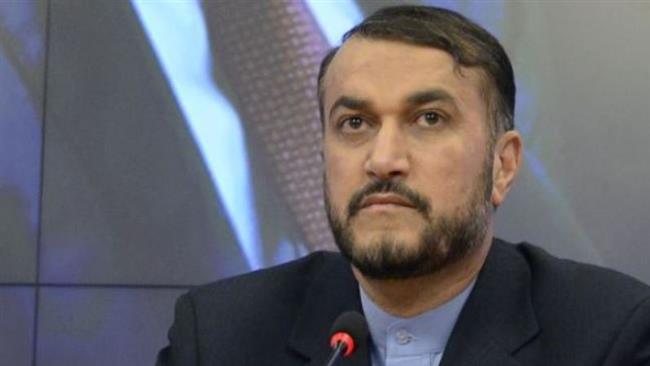
Iran, Egypt hold common anti-terror stance: Iran diplomat

Amir Abdollahian

Iran’s Deputy Foreign Minister for Arab and African Affairs Hossein Amir Abdollahian made the remarks in a Sunday meeting with Egyptian President Abdel Fattah el-Sisi on the sidelines of the 24th Summit of the African Union (AU) in Addis Ababa, Ethiopia, IRNA reported.

The Iranian envoy urged Muslim countries to close ranks in countering Takfiri groups operating in the region.

Amir Abdollahian also censured the recent terrorist attack in Egypt’s volatile Sinai Peninsula and underlined the need for cooperation among all Egyptian political groups and national conciliation.

At least two children were killed in Egypt’s Sinai Peninsula on Friday, a day after at least 44 people were killed and dozens of others injured in a series of militant attacks across the volatile region.

The latest fatalities come as a massive car bomb on Thursday detonated outside the headquarters of the 101st Brigade of the Egyptian army in the city of el-Arish, situated 344 kilometers (214 miles) northeast of the capital, Cairo, late on Thursday, leaving scores of people dead and wounded.

Separately, an office of Egypt’s most-widely-circulated daily, al-Ahram, was “completely destroyed” in an assault by gunmen on Thursday.

Two Egyptian army officers were also injured when an army convoy was targeted with mortar shells in the border town of Rafah on the same day.

Over an hour later, there were reports of another ambush on an army convoy just south of Rafah. Gunmen also reportedly attacked a checkpoint in Rafah.

The so-called Ansar Bait al-Maqdis militant group claimed responsibility for the Thursday attacks.

Meanwhile, Iranian Foreign Minister Mohammad Javad Zarif embarked on a diplomatic tour to East Africa in what is seen as the beginning of a new chapter in Tehran’s ties with African countries. He is now in Kenya on the first leg of the tour that will also take him to Uganda, Burundi and Tanzania.

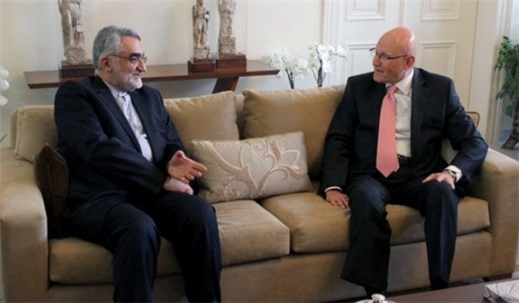
Lebanese PM asks for Iran’s assistance in settlement of presidency crisis

broujerdi-lebanon

Lebanese Prime Minister Tammam Salam in a meeting with Chairman of the Iranian parliament’s National Security and Foreign Policy Committee Alaeddin Boroujerdi called for Tehran’s continued support for efforts to settle the crisis in his country over the election of a new president.

“We insist on the establishment of the best relations with Iran and hope that these relations will be established with all Lebanese groups,” Salam said during the meeting as reported by the London-based al-Hayat newspaper on Sunday.

“As you supported the formation of a cabinet during the complicated conditions that existed before, we hope that you will also help the progress of affairs towards ending the political vacuum and election of a new president,” he added.

Boroujerdi traveled to Beirut on Thursday to attend the commemoration ceremony of Hezbollah members who were killed in the Israeli airstrike on Syria’s Golan Height on January 18.

Besides his meeting with the Lebanese prime minister, Boroujerdi held meetings with Lebanon’s Foreign Minister Gebran Bassil and Lebanese Parliament Speaker Nabih Berri.

During his meeting with Salam, Boroujerdi underscored Iran’s continued support for security and stability in Lebanon.

Iran “is fully ready to play a vital, practical and serious role in support of efforts to strengthen and develop relations between Iran and Lebanon”, he told reporters on Friday after the meeting.

He also added that Tehran considers that Beirut plays an exceptional and prominent role in both the regional and global political developments.