Wednesday, December 24, 2025
Home Blog Page 4830

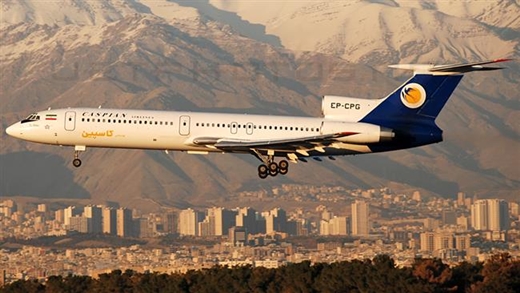
Iran needs 400 passenger planes in next 10 years: Minister

5d94d610-001d-41ca-bb12-c9fe2905e72f

Iran’s minister of roads and urbanization says the country will need 400 new passenger planes in the next 10 years in order to renovate its civil aviation fleet.

Abbas Akhoundi, who is currently in the French capital, Paris, to take part in Le Bourget Airshow 2015, added that purchasing this number of planes will cost the country at least $20 billion.

“At present, the average age of Iran’s civil aviation fleet stands at about 20 years and it will be over 30 years in the next ten years, and many of our passenger planes will not be able to fly by that time,” he added.

The Iranian minister said the Islamic Republic attaches special importance to development of its civil aviation fleet, noting, “In addition to the fleet, development of airports and passenger terminals also needs special attention.”

Akhoundi stated that Iran created 6,000 km of new air corridor last year, adding that the Paris Air Show is a good opportunity to get familiar with modern air traffic and control systems.

“Right now, there are nine passenger terminals under construction in various Iranian airports, which will enable those airports to handle 50 million passengers per year,” he said.

During his stay in France, Akhoundi has already met with Airbus Chief Executive Fabrice Bregier and is also expected to meet and confer with French Minister of Territorial Equality and Housing Sylvia Pinel.

On May 10, Akhoundi announced that Iran has added a number of new planes less than 10 years old to its civil aviation fleet in order to renovate the sector.

Earlier in April, he said Iran has been negotiating with companies supplying airplane parts, adding, “The current situation of the air fleet is not becoming to the Iranian nation and the air fleet needs major investment. Therefore, we have conducted extensive negotiations with companies supplying passenger planes.”


“In parallel with renovating the fleet, we must be able to restructure major Iranian airlines because there are many airlines operating in Iran, but not all of them are fit for international competition,” he said.


Iran rejects report of US Congress approval of nuclear deal before UN action

583a9386-6f31-4f81-98a9-1eb8f411d010

A senior member of Iran’s nuclear negotiating team has dismissed a Reuters report that the UN Security Council will lift sanctions against Tehran after the US Congress gives its green light.

Reuters on Monday quoted Western officials, speaking on condition of anonymity, as saying that if Iran and P5+1 reach a final nuclear deal, the Security Council will likely delay for at least one month action to lift UN sanctions on Tehran so the US Congress can review the agreement.

It also claimed that Iran appears to be reluctantly accepting the delay.

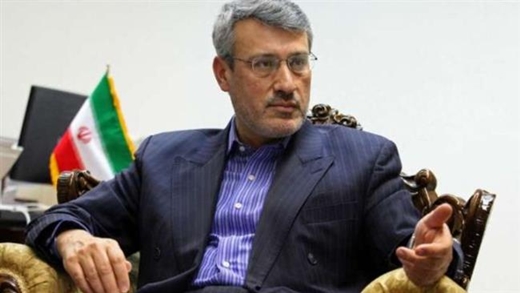
However, director general for political affairs at the Iranian Foreign Ministry Hamid Baeidinejad on Tuesday rejected the report and said, “I think this news is totally fabricated.”

Baeidinejad’s comment came as Iran and P5+1 are set to resume another round of nuclear talks in the Austrian capital of Vienna ahead of a self-imposed June 30 deadline.

Iran and P5+1 – the United States, Britain, France, China and Russia plus Germany – are seeking to finalize a comprehensive deal on Tehran’s nuclear program by June 30.

Tehran and its negotiating partners have been working on the text of a final agreement since they reached a mutual understanding on the key parameters of a final deal in the Swiss city of Lausanne on April 2.

A look at Iranian newspaper front pages on June 16

Iranian Newspapers Headlines

There was no single story dominating the front pages of Iranian newspapers on Tuesday. Formation of a new party by the inner circle of Ahmadinejad which was immediately dismissed as unauthorized by the Interior Ministry, and the continued debate on whether women should be allowed to enter stadiums were among top stories of the day.


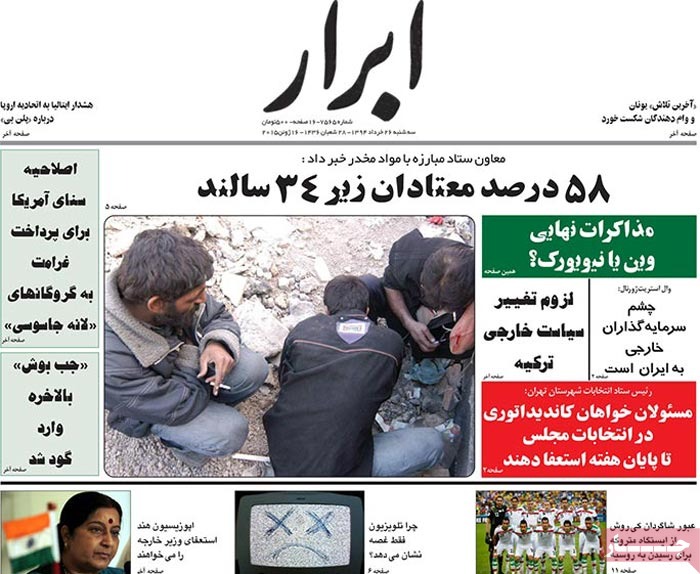
Abrar: “Up to 58 percent of addicts in Iran are under the age of 34,” said the deputy director of the center that leads the fight against illicit drugs.

Abrar: “Officials who seek to run for parliament have until the end of this week to tender their resignation,” said the head of Tehran Electoral Commission.


A look at Iranian newspaper front pages on June 16


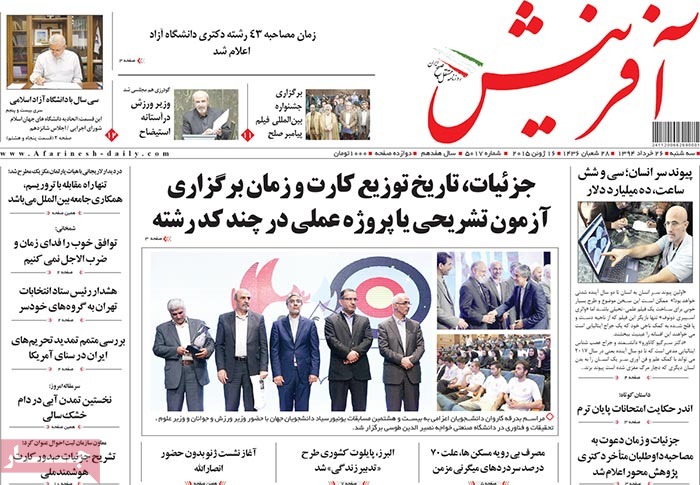
Afarinesh: “Cooperation among members of the international community is the only way to effectively crack down on terrorism,” said Parliament Speaker Ali Larijani in a meeting with a visiting Mexican parliamentary delegation.

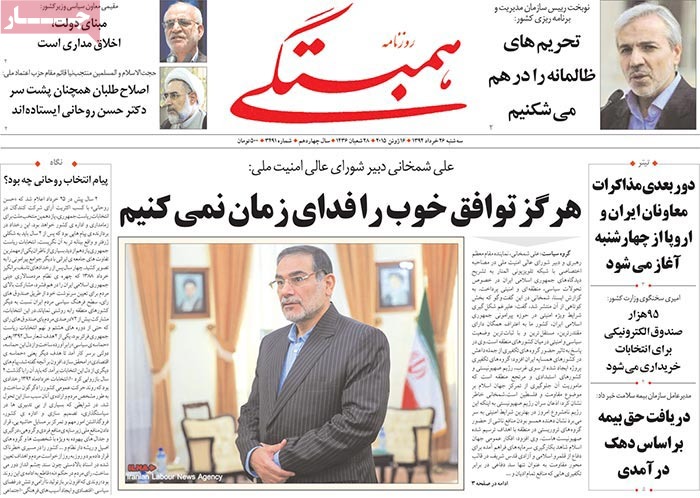
Afarinesh: “We won’t sacrifice a good deal simply to meet a deadline,” said the secretary of the Supreme National Security Council.


A look at Iranian newspaper front pages on June 16


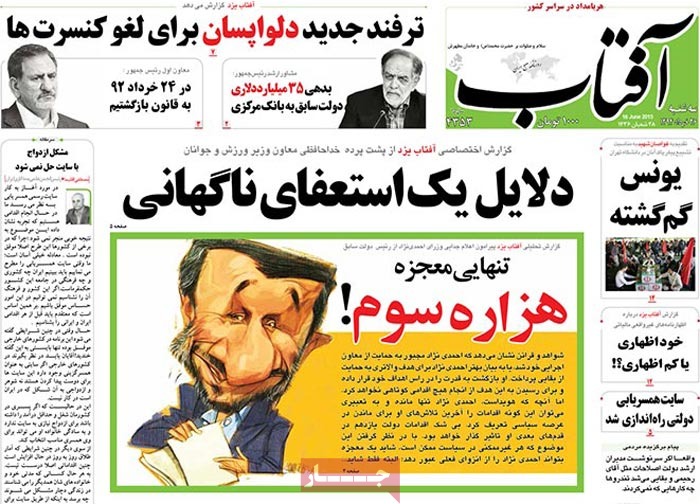
Aftab-e Yazd: “The former government owed $35 billion to the Central Bank of Iran,” said Ali Akbar Torkan, a senior advisor to the president.

Aftab-e Yazd: A government-run match-making website has been launched.


A look at Iranian newspaper front pages on June 16


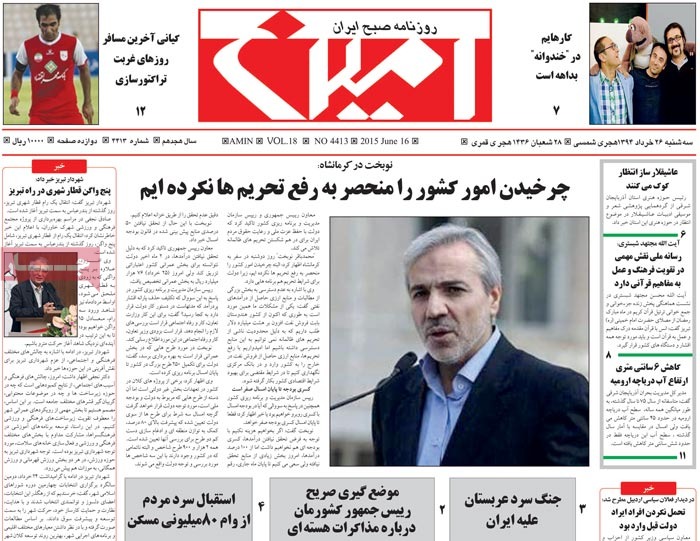
Amin: “We have not based the day-to-day administration of affairs on the removal of sanctions,” the government spokesman said.


A look at Iranian newspaper front pages on June 16


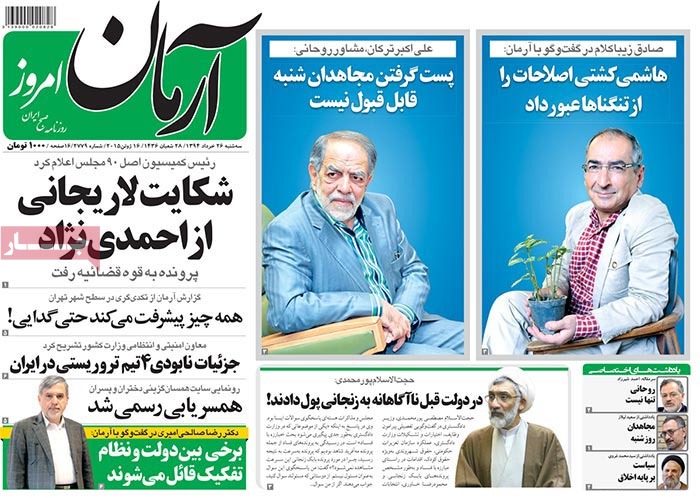
Arman-e Emrooz: [Parliament Speaker Ali] Larijani’s complaint against [former President Mahmoud] Ahmadinejad has been presented to the Judiciary by the chamber’s Presiding Board.

[Reports suggest the complaint is not personal in nature and stems from the failure of the former president to comply with the acts passed by the Islamic Consultative Assembly.]


A look at Iranian newspaper front pages on June 16


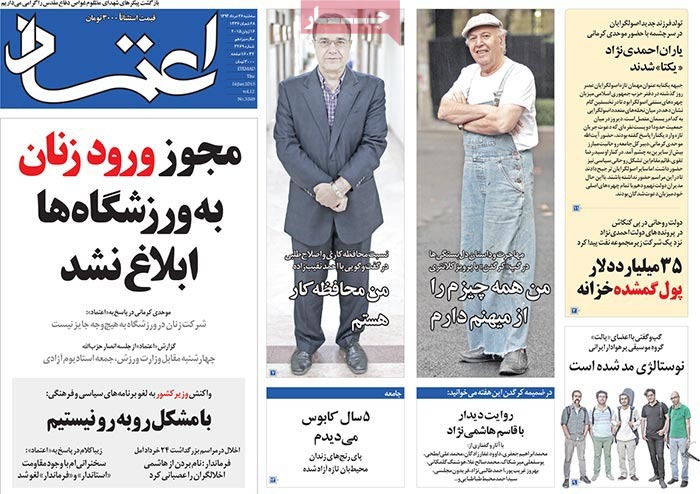
Etemad: The directive that allows women to enter sporting arenas has yet to be communicated.

Etemad: Supporters of Ahmadinejad have formed a party called Yekta [an acronym for a Persian phrase that translates into “comrades for the effectiveness and transformation of Islamic Iran].


A look at Iranian newspaper front pages on June 16


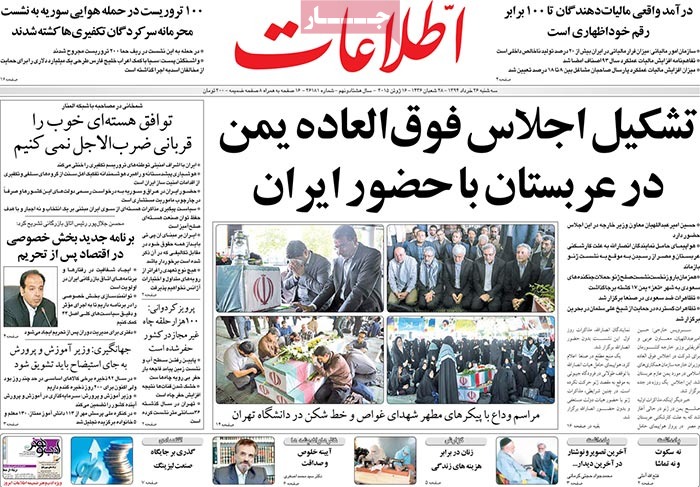
Ettela’at: “The real income of taxpayers is up to 100 times more than they declare in their tax returns,” said the National Tax Administration.

Ettela’at: An extraordinary session on Yemen has been held on Saudi soil with Iran [representative] in attendance.

Ettela’at: The private sector has plans to set up a management office for the post-sanctions era.


A look at Iranian newspaper front pages on June 16


Hambastegi: A new round of nuclear talks between deputy Iranian foreign ministers and the EU representative will open on Wednesday.


A look at Iranian newspaper front pages on June 16


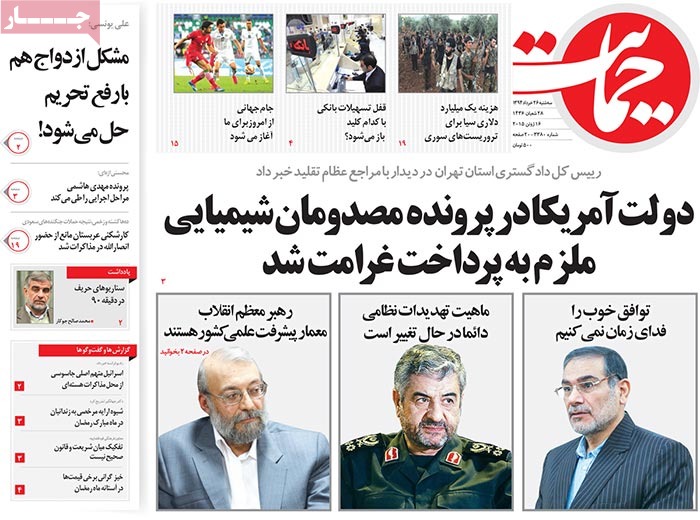
Hemayat: The Central Intelligence Agency spends $1 billion on [training] terrorists in Syria.


A look at Iranian newspaper front pages on June 16


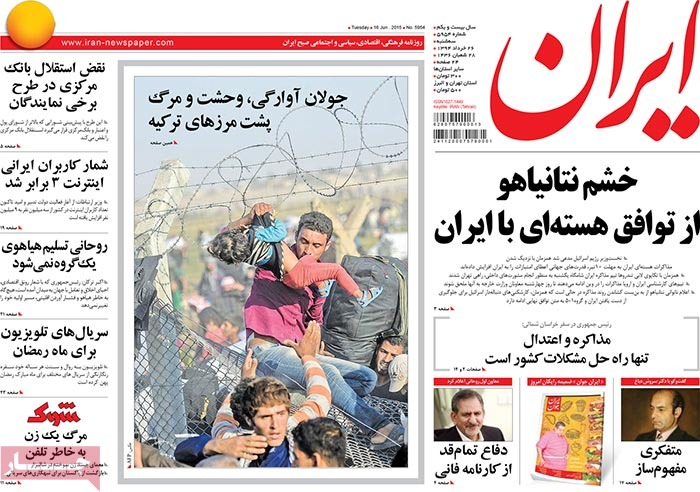
Iran: The number of Internet users in Iran has increased 3-fold.

Iran: “Dialogue and moderation are the only way to settle the country’s problems,” said President Rouhani.

Iran: Displacement, fright and death reign supreme behind the Turkish border.


A look at Iranian newspaper front pages on June 16


Kaenat: The deputy interior minister has expounded on how four terrorist gangs have been busted in eastern Iran.


A look at Iranian newspaper front pages on June 16


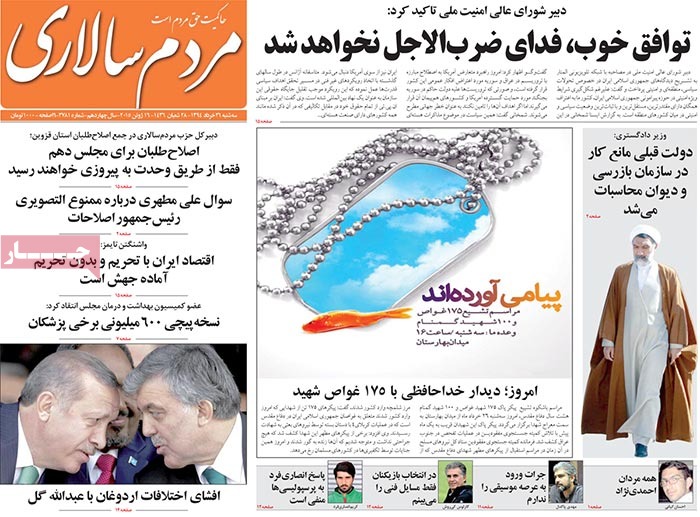
Mardomsalari: Iranians will bid a final farewell to 175 divers who were martyred during the Iran-Iraq war in the 80s.

The remains of the martyrs were recently brought home.


A look at Iranian newspaper front pages on June 16


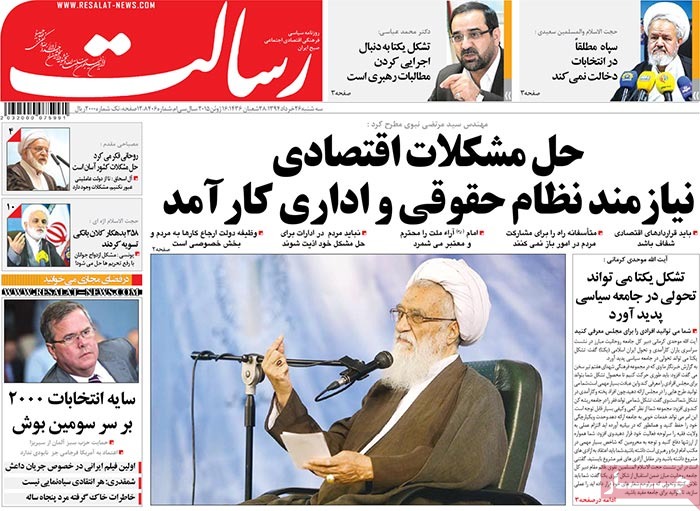
Resalat: “Revolution Guards won’t get involved in elections,” said the representative of the Supreme Leader at the Islamic Revolution Guards Corps.


A look at Iranian newspaper front pages on June 16


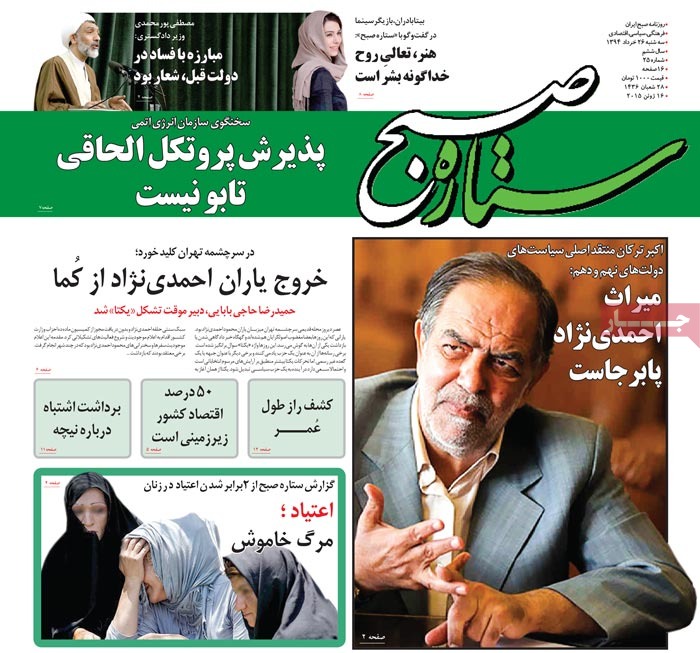
Setareh Sobh: “Crackdown on corruption was a mere slogan in the previous government,” said Justice Minister Mostafa Pour-Mohammadi [who was a Cabinet member under Ahmadinejad].


A look at Iranian newspaper front pages on June 16


IRGC Commander warns of shifting nature of threats

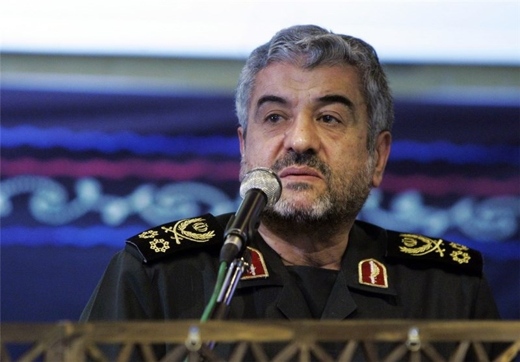
Major General Mohammad Ali Jafari

Commander of the Islamic Revolution Guards Corps (IRGC) urged steady and up-to-date military preparedness in the face of threats, whose nature, he said, is changing continuously.

Addressing a group of IRGC personnel in Tehran on Monday, Major General Mohammad Ali Jafari cautioned against continuous changes in the nature of military threats in the contemporary world.

Such changes, he stressed, necessitate upgrading the country’s military readiness, organizational tactics, equipment, training and capabilities.

The commander also warned of the threats with non-military origins, known as soft threats.

“Apart from keeping the military preparedness updated, the soft threats should also be predicted, prevented and thwarted,” Major General Jafari stressed.

Since most threats against the Islamic Revolution are of the soft type, working on spiritual aspects – the major component of the IRGC’s power – is of great significance, he went on to say.

Soft war is a term used by Iranian officials to refer to the cultural invasion and soft intelligence tactics used by foreign countries deemed hostile.

Back in February 2014, Supreme Leader of the Islamic Revolution Ayatollah Seyyed Ali Khamenei called on the Iranian university students to gain a thorough understanding of the hegemonic system and its plots, and to gear up to confront the enemies in the soft war arena.

In a message, the Supreme Leader described the Iranian students as “the young officers of the soft war,” adding that they should “prepare themselves to the utmost” for confrontation in the soft warfare.

No Place for military issues in Iran nuclear talks: Official

shamkhani

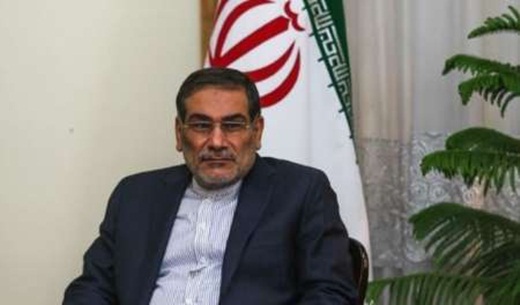
Secretary of Iran’s Supreme National Security Council (SNSC) Ali Shamkhani reiterated that negotiations between Tehran and six major world powers solely focus on nuclear topics, dismissing any talk of military subjects in the talks.

Non-nuclear subjects, including the country’s military issues, have no place in the negotiations at all, Shamkhani said in an interview with Arabic-language Al-Manar TV.

He also noted that Tehran continues the path of talks vigilantly and with a sense of “distrust”, given the record of US hostility toward Iran and imposition of “illegal, cruel sanctions” against the Iranian nation.

Back in April, Supreme Leader of the Islamic Revolution Ayatollah Seyyed Ali Khamenei underscored that the talks with the US revolve only around the nuclear issue and nothing else, but at the same time noted that the nuclear negotiations provide an experience to test the possibility of talking on other subjects.

Iran criticizes opposition to Additional Protocol

كمالوندي: شراء اجهزة لمفاعل اراك لایتعارض واتفاق جنیف

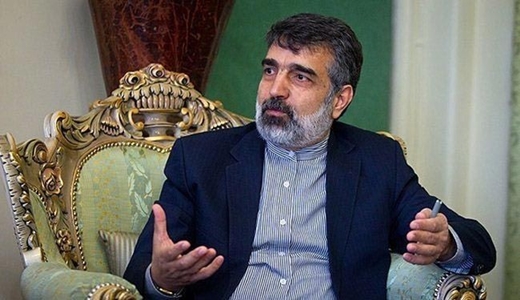
Spokesman of the Atomic Energy Organization of Iran (AEOI) Behrouz Kamalvandi on Monday criticized oppositions to the Additional Protocol, regretting that certain people make a taboo out of the Additional Protocol and interpret it broadly.

Kamalvandi who was speaking at a ceremony in Tehran to unveil a book titled From Sa’adabad to Lausanne, said these oppositions have created difficulties both for Iran and other negotiating countries in the course of nuclear negotiations.

‘From Sa’adabad to Lausanne’ is a book written by Mohammad-Saeed Ahadian, managing editor of Khorasan newspaper, which focuses on the conduct of Iranian nuclear negotiators over the years.

Kamalvandi said the author has tried to keep an impartial and unbiased view to the nuclear negotiations.

Kamalvandi also hailed the importance the author attached to the role of the Supreme Leader in the nuclear issue.

He said that the author rightfully differentiated between US President Barack Obama and the US government.

‘I don’t mean to approve of Obama because he has admitted he wants to dismantle Iran’s nuclear facilities, but it should be noted that Obama’s positions are different from those of the US government on the whole,’ Kamalvandi said.

However he said he disagreed with the author that it was former president Mahmoud Ahmadinejad and Ali Akbar Salehi who proposed direct talks with the US.

He said Salehi called for direct talks with the US and the Supreme Leader accepted his proposal.

‘If Ahmadinejad made further cooperation in these talks, things would have been much better,’ Kamalvandi said.

Iran, Pakistan launch joint fiber optic project

iran-pakistan

Iran and Pakistan have set up a fiber-optic network which connects the two neighboring countries.

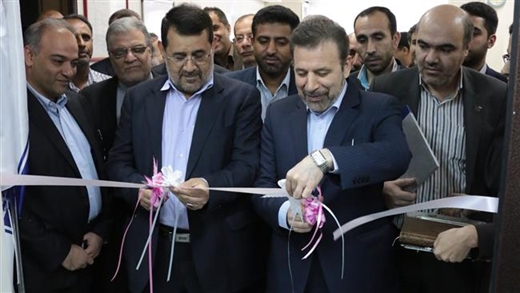
The project was inaugurated by Iran’s Minister of Communications and Information Technology Mahmoud Vaezi in the southeastern Iranian province of Sistan and Baluchestan on Monday.

The network was established with the aim of expanding the bandwidth of Pakistan and international information transit.

Known as “IT Silk Road” the fiber-optic network is also seen as part of an international transit route connecting Iran, Pakistan and China to Turkey and Europe.

The Silk Road project has been initiated by China and aims to connect Asia to Europe and Africa through a network of roads, railways, ports and airports.

The ambitious project includes building infrastructure across Central and Southeast Asia, the Persian Gulf, the Middle East and Europe.

Iranian official rejects reports on energy talks with US companies

e5506202-b847-4b14-b7fb-84f2c880f8ce

An Iranian petroleum official says there have been no energy talks between Iran and US companies.

Seyyed Mehdi Hosseini, the head of a team of experts established at the Ministry of Petroleum to devise the new Iranian oil contracts, made the comments in reaction to reports that representatives from US oil giants have met with Iranian officials to review investment opportunities in the country after the possible removal of sanctions against Tehran over its nuclear program.

Hosseini said Iranian officials have already held negotiations with major European energy giants.

He said the mechanism of new oil contracts were the most important issue discussed in the talks.

The talks were held at expert level and had nothing to do with political issues, he was reported as saying by the Iranian media.

Iranian officials have already announced that Tehran plans to unveil a new model of oil contract dubbed Iran Petroleum Contract or the IPC.

The IPC will be a modification of the traditional buy-back risk service contracts and has been specifically designed to increase the attractiveness of Iranian oil projects for foreign investors.

It offers different stages of exploration, development and production to the contractors as an integrated package.

Seyyed Mehdi Hosseini, who is known in Iran as the as the architect of buybacks, said “constructive” energy talks also underway with Asian countries.

Foreign companies, including energy giants, have been keeping a close eye on Iran, waiting for the removal of sanctions against the country, to reach its lucrative markets.

With eyes set on the removal of US-engineered sanctions in light of the progress in nuclear talks with P5+1, the country is already preparing for a potential influx of investors – specifically in its oil and gas projects.

A look at the performance of the Iranian nation throughout history

Bojnourdi-book

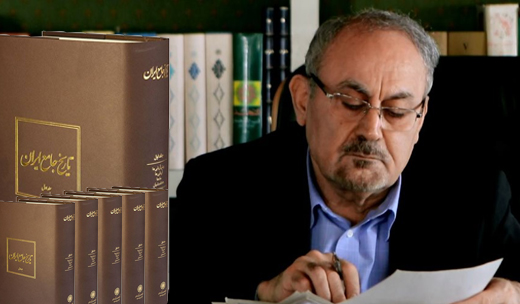
Every once in a while we would get together with a bunch of philosophers. One evening Gholamhossein Ebrahimi Dinani, a famous philosopher and member of our group, showed up late. When we inquired about the reason why he was late, he said the cabdriver lost his way in the maze of streets. I said, ‘You are not good at geography and maps. That’s why you lost your way.’ In response, he said, ‘Coincidentally, the cabdriver told me that we have lost our history.’ That was what motivated us to start compiling The Comprehensive History of Iran.

That was what generated resolve and motivation in us for an uphill task. Fourteen years later, thanks to tireless efforts of several researchers and authors, The Comprehensive History of Iran emerged in 20 volumes.

The following is what else Seyyed Mohammad Kazem Mousavi Bojnourdi, the founder of the Center for the Great Islamic Encyclopedia, said in an interview with Shahrvand daily’s Peyman Samandari. The interview appeared in a Monday (June 15, 2015) edition of the newspaper, one day ahead of the planned launch of The Comprehensive History of Iran. In translation, IFP has changed the format of the interview.

Like many similar books, The Comprehensive History of Iran features research and scientific articles. Since this multi-faceted book covers Iran’s political, cultural and social history, it has been dubbed “comprehensive”.  […]

[…] The Comprehensive History of Iran narrates the history of Iranians over several thousands of years. It covers everything Iranian and is not limited to what is modern-day Iran. […] To reflect every single angle of Iranian history is too difficult or maybe so impossible a task. We have tried to go as far as we have been able to. We don’t want to consign this book into history. We will edit it before any reprint hits the bookstore shelves.         

The Comprehensive History of Iran is the report card of the Iranian nation. It is the story of joy, sadness, victories, defeats, achievements and setbacks. What we have tried to do has been to dust off many historical events and render them presentable.

This book will help Iranians and people around the world to learn about Iranian achievements and the role this great nation has played in the evolution of human knowledge. As a historian and part of a cultural body, we cannot initiate fundamental research; rather, what we do is to tap into all scientific articles which have been written on cultural and social issues of this nation and its politics.

Although The Comprehensive History of Iran is a national document with a unique status, we need to treat it as an encyclopedia which is constantly updated and edited before any reprint once every few years. […]    

The Center for the Great Islamic Encyclopedia (CGIE) has a supreme council that brings together around 45 prominent professors. All major decisions of the center are made by these individuals. They are in fact the nerve center of CGIE. As chairman of the council and top editor, I implement the decisions of the council. Every project has its own scientific council and a number of advisors. The supreme council oversees the workings of all scientific councils. At CGIE different projects are underway, one of the most important of which is The Comprehensive History of Iran.

[…] The main objective here is to introduce our country to others. We are seeking to talk with the rest of the world through the language of logic and science, something Iranians deserve. What we seek to do is an organized collective measure the structure of which has been seriously contemplated. It is constantly evolving. […]

As yesterday’s warriors*, we are trying today to bolster the country’s national might by employing scientific and cultural tools and raising public awareness. This gives us self-satisfaction and we view it as the goal of our lifetime. […]

[…]  As the scientific manager of the center, I go out of my way to make sure we act in keeping with scientific methodology. What we extract from different reports and sources is presented without any bias or prejudgment.

[…] My role is to make sure scientific methods are fully complied with. I remember when an author was writing an article on Abu Bakr, I had a couple of meetings with him to make sure that our article would not draw any objection to a historical event from people of different religious leanings.

In the end, we decided to include the views of different groups based on reliable references. That was meant to remain on the scientific path and not hurt the religious feelings of any group.

The final version featured the views of Shiites and Sunnis of different denominations. In other words, it included different views without any prejudgment. We conducted sufficient research and included some historical facts which had nothing to do with religious and ethnic beliefs.

[…]

Of course, there are many issues we were unable to touch. As for some, we did not have enough resources at our disposal. For others, we could not reach the authors. For instance, on issues related to land ownership and how it was affected by water scarcity, thorough research was needed. We did conduct our own studies, but the article would have been more accurate if it had involved more details about the lifestyle of rural people whose lives were dominated by landholders. […]

Iranians today should know what their ancestors have gone through. […] This book does not fully reflect the hardships of the people of this land. In the future, we have to complete that, and it is on our agenda.

[…] This book could be of great use to Iran experts, because it is the result of hundreds of years of research. It reflects all the studies of western researchers, orientalists, Iranologists and Iranian scholars. When you have The Comprehensive History of Iran, you have access to all their findings. […]

When compiling this book and reviewing its different parts, I found Iranians a great nation with their position higher than what it currently is. The Iranian nation deserves to have the highest national production rate. Iranians deserve to have the largest and best national library. Iranians should not lag behind other nations, God forbid.

The image I found of Iranians is magnificent, because they have displayed patience, resistance and steadfastness over the course of history. They have ridden out tough times and have stood on their own feet.

These people have managed to stay in this land, live life and create a civilization thanks to their strikingly determined resistance. Iranians are the ones who spread culture and science. This is what we have portrayed in one big scientific document called The Comprehensive History of Iran. It may be the biggest single job in my professional career, and I will take pride in it forever.

[…] I hope we can try our best to remove the shortcomings and complete what is left.

 

BojnoordiSeyyed Mohammad Kazem Mousavi Bojnourdi is an Iranian historian, theologian and writer. He was the curator of the National Library of Iran from 1997 to 2005 and founder of the Center for the Great Islamic Encyclopedia.

* Mousavi Bojnourdi founded and led a group that sought to topple the Pahlavi monarchy. He spent years in jail prior to the victory of the 1979 Islamic Revolution.

Will Yemen’s peace talks run into Saudi bottlenecks?

Yemen-map

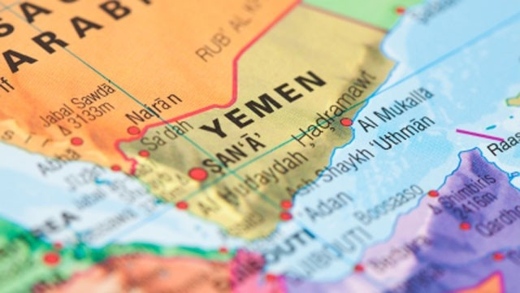
Yemen’s Houthis and exiled government have agreed to attend UN-brokered peace talks in Geneva. But will efforts to defuse the Yemeni crisis through dialogue be fruitful? Will the first UN-brokered Geneva peace talks – no matter what they will produce – be held [to solve the Yemeni crisis]? Will the friends of ousted President Abd Rabbuh Mansur Hadi wait to see the success of the fighter jets of the loose Saudi coalition on the battlefield? Realities on the ground bring no hope to the Al Saud regime and its Yemeni agents to secure victory [on the battlefield].

Tasnim News Agency on June 14 published an analysis on the UN-sponsored talks on the Yemeni crisis and Saudi Arabia’s efforts to derail the peace talks which are expected to end more than two months of conflict in the Arab country. The following is the translation of excerpts from the analysis:


[…]

Originally, the warring parties involved in the Yemeni crisis were scheduled to hold talks in Geneva on Sunday [June 14], but UN officials said the talks will be held on Monday, citing the late arrival of some [negotiating] teams.

[…]

There are also conflicting reports on the participation of the Ansarullah Movement in the Geneva talks. This comes as a spokesman of Ansarullah Zeifollah al-Shami has emphasized that the movement will attend the Geneva talks.

[…]

Fugitive President Mansur Hadi, who rejected any dialogue until a few weeks ago, was to send his representatives to Geneva. In fact he was forced to take part in the talks in the wake of the failures of the Saudi aggressors.

[…]

The camp of warmongers goes to Geneva empty-handed, but the camp of revolutionaries and their like-minded groups will have a confident and powerful presence in the meeting.

As many as 41 Yemeni national figures have put their signatures to a letter by Ansarullah to agree to the talks. Ansarullah has stressed the importance of broader participation of [all] Yemeni groups in the Geneva meeting. This shows that the movement is not after spreading its domination in Yemen – despite the advertising blitz by the enemies of the Yemeni people – and is seeking a diplomatic solution to the Yemeni crisis and participation of all national and popular groups in the country’s administration of affairs.

[…]

Saudi efforts to derail the talks

Ever since rumors circulated that talks were to be held – thanks mainly to Iran’s tireless efforts – between all Yemeni political and factional groups to tap into diplomacy to settle the Yemeni crisis and stop the Saudi war machine which has left death and destruction in its wake, the Saudi media openly rejected dialogue on the Yemeni crisis and insisted on continued military aggression against the Southwest Asian nation to bring the anti-Saudi groups in Yemen to their knees. This saw the Saudi fighter jets and artillery fire target the country’s residential areas and infrastructure and such attacks have continued to date.

Another delay in the Geneva talks, which has come against a backdrop of warnings by Yemeni sources about Saudi efforts to stymie the Geneva talks, shows the Saudis are fearful of the results of the talks and view the Geneva conference as yet another setback, this time around on the diplomatic front.

According to Reuters, the Yemeni sources have quoted foreign diplomats as underlining that Saudi Arabia is not willing to see the Geneva conference held, because it [Saudi Arabia] is in a weak position in Yemen. [“The US is pushing the Saudis to accept talks but they are reluctant because they are in such a weak position on the ground in Yemen,” said a diplomat who follows the matter closely.]

Yemeni sources have also said that consultations with UN secretary-general’s special envoy Ismail Ould Chiekh Ahmed are still ongoing, adding no definite decision has been made on the presence in the conference.

The same sources say that Saudi Arabia is behind efforts to introduce Ansarullah as the party which hampers the talks, whereas the kingdom is throwing a wrench into the works [of the UN-initiated peace talks] by setting conditions and trying to score political points following its failure on the ground in Yemen.

They [the sources] have also pointed out that the fate of the Geneva conference on Monday lies in the hands of the UN, which is to act as an intermediary, not to impose preconditions.

All things considered, if this conference is held – regardless of how it is defined: consultative or non-consultative – Saudi Arabia and its Yemeni followers will gain nothing from the Geneva conference.

The reason: around 80 days have passed since the Saudis waged a destructive and unequal war in Yemen and they have so far failed to force the Yemeni Army and forces of the Popular Committees to submission. Ground realities show that the Army and popular forces in Yemen have repeatedly launched missiles on the Saudi positions inside the kingdom, sending chills down the spine of the Saudis.