Thursday, December 25, 2025
Home Blog Page 483

Suspects in Tehran University student murder case arrested, under investigation, judiciary confirms

Crime Scene

Asghar Jahangir told the Iranian state TV on Saturday that the judiciary acted swiftly following the incident. “Immediately after the crime, the prosecutor’s office intervened, and the suspects were identified,” he stated.

He further assured the public that the judiciary would handle the case with utmost seriousness, adding, “The security of the people is our red line. Any disruption to social or individual security will be dealt with decisively and in accordance with the law.”

The tragic incident occurred on Wednesday evening, when Khaleghi was attacked by two motorcycle-riding assailants while returning to his university dormitory. He succumbed to his injuries the following morning.

The case has sparked widespread public outrage and criticism of Iran’s security apparatus, particularly regarding the safety of students and university dormitories.

In response to the incident, President Masoud Pezeshkian tasked the interior minister with conducting a thorough investigation into the case.

The Minister of Science, Hossein Simaie, apologized over the incident and the director of the Tehran University dormitories resigned.

Israel still destroying Gaza homes despite ceasefire: Al-Jazeera

Gaza War

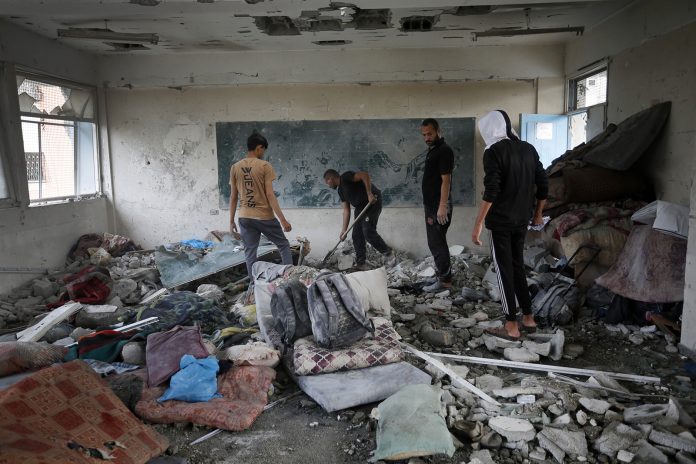
The crossing between Egypt and Gaza at Rafah, which has served as a critical lifeline into the enclave for decades, was closed by Israel in May 2024.

Since seizing control of the border area, in breach of its 1979 peace agreement with Egypt, Israel has been digging in in the Philadelphi Corridor, a 14-km (8.7-mile) strip of land along the boundary between Egypt and Gaza.

Israeli Prime Minister Benjamin Netanyahu has emphasised the importance of remaining in the corridor, despite the illegality.

According to Sanad, the images, taken between January 19 and 21, show the Israeli army to have built sand fortifications across the Rafah crossing.

Additionally, the agency said, a new military outpost has been established just to the north of the crossing.

The army has also constructed a 1.7 km (1.1-mile) road surrounding the crossing, running parallel to the sand fortifications.

Israeli forces have also kept thousands of Rafah residents from their homes, Israeli military vehicles shooting at dozens of people trying to go home, injuring and killing them.

Israel, in essence, is constructing “a buffer zone that allows you to push any kind of fighters or, in technical terms, any hostile within an otherwise friendly environment away from you”, Palestinian defence analyst Hamze Attar stated.

As part of the ceasefire, which began on January 19, Israel agreed to reduce its forces in the area before completely withdrawing its troops by the 50th day of the agreement.

However, analysis carried out on satellite images taken between January 19 and February 1 shows the Israeli army has continued construction in the area, demolishing and bulldozing 64 buildings within the city of Rafah, specifically in the as-Salam, Idari, and Tel Zaarab neighbourhoods.

The demolitions occurred only 700 metres (766 yards) from the Egyptian border. At the same time, Sanad also identified at least six homes razed in Tal as-Sultan, west of Rafah, a little more than 750 metres (820 yards) from the Egyptian border.

“This is a war crime because they are destroying residential houses,” Attar said, referring to the fourth Geneva Convention, which prohibits the destruction of private property.

Meanwhile, Munir al-Bursh, director-general of the Ministry of Health in Gaza, noted on Tuesday that Israeli attacks, unexploded ordnance, or fatal injuries sustained earlier have killed 118 people since the ceasefire agreement took effect.

In addition to military breaches of the ceasefire, Israel has not allowed in sufficient amounts of essential humanitarian aid, such as food, fuel, tents, and emergency shelters.

Rafah Mayor Ahmed al-Sufi said most of the city’s residents remain displaced, with an estimated 200,000 people sheltering in the al-Mawasi Khan Younis area and other locations across Gaza, unable to come home.

According to him, initial estimates indicate that 90 percent of Rafah’s homes have been damaged, with approximately 52,000 units suffering various degrees of destruction.

Israel frees hundreds of Palestinians after captives in Gaza released by Hamas

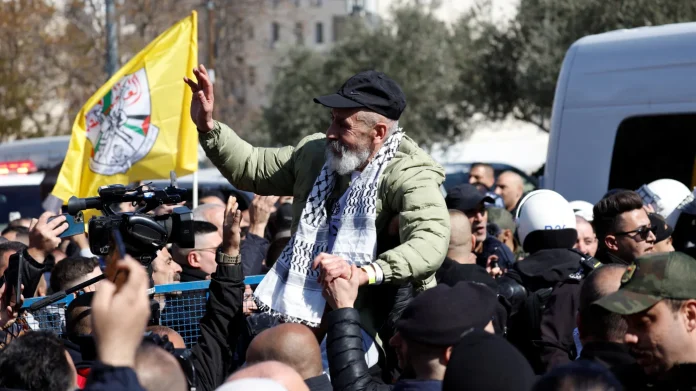
In return, Israel began returning 369 Palestinian prisoners held in Israeli jails on Saturday, most without any charges or convictions. It is the largest number of Palestinians to be freed since the beginning of the truce.

Footage showed a busload of Palestinian prisoners from Ofer Prison arriving in Ramallah in the occupied West Bank, where they were met by relatives and cheering supporters. More buses full of Palestinians pulled out of an Israeli prison in the Negev desert heading towards Gaza.

At least four of those freed were immediately brought to a hospital for treatment. Among the most prominent to be released is Ahmed Barghouti, 48, a close aide of iconic Palestinian political figure Marwan Barghouti.

Most of the prisoners were arrested in Gaza and will be sent back to the besieged enclave. About 10 will be released in the occupied West Bank, one in occupied East Jerusalem, with the others being sent to Egypt and later to other countries that will accept them.

The three captives in Gaza – identified as American-Israeli Sagui Dekel-Chen, Russian-Israeli Alexander Sasha Trufanov, and Argentinian-Israeli Yair Horn – were freed to members of the International Committee of the Red Cross during a brief ceremony in Gaza’s southern city of Khan Younis.

All three were among those taken by Hamas following its October 7 attack on southern Israel.

Dekel-Chen, Trufanov and Horn were seen carrying certificates for their release and maps of Palestine. They were transported back to Israel for medical examinations before reuniting with their families.

A crowd gathered in Tel Aviv’s “Hostages Square” to watch the exchange, with many carrying Israeli flags and posters with messages including “Sorry and welcome back” and “Complete the ceasefire.”

With Saturday’s handover, the number of captives released by Hamas and Palestinian Islamic Jihad has reached 25 since the ceasefire began on January 19.

Dozens of armed Hamas and Islamic Jihad fighters guarded the square where the handover took place. Hundreds of Palestinian civilians, including women, children and the elderly, gathered behind the security cordon trying to witness the release.

Hamas issued a statement after the release stating it was “a renewed message” to Israel.

“The release of the sixth batch of enemy prisoners confirms there is no way to free them except through negotiations and by adhering to the requirements of the ceasefire agreement,” the group announced.

Oil minister: Russian companies collaborate on oil field development in Iran

Iran Oil Gas

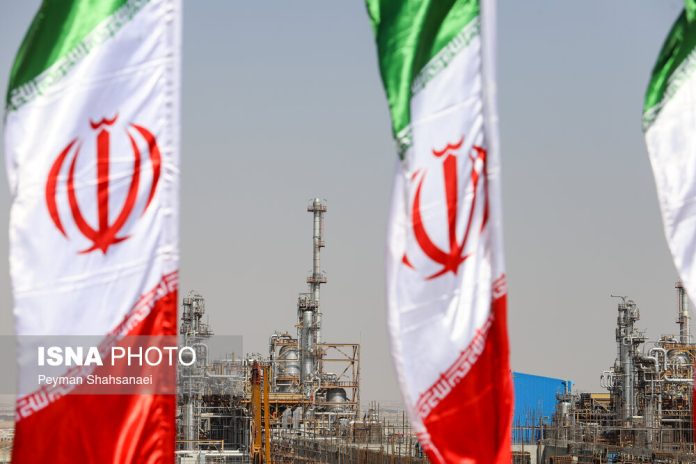
Emphasizing the significance of international presence, Paknejad stated, “We seize every opportunity for international engagement to realize our interests through energy diplomacy.”

Paknejad mentioned that the Secretary-General of OPEC recently visited Iran for an extensive meeting to discuss mutual assistance. He highlighted Iran’s reciprocal support within OPEC, encouraging other member states to aid Iran.

Discussing the Iran-Russia cooperation in shared oil markets, Paknejad revealed ongoing projects in oil field development and trade with Russian companies, without delving into specifics.

When asked if similar collaborations exist with other countries, Paknejad confirmed, “Certainly, yes,” but refrained from naming them, citing confidentiality.

Addressing the benefits of increased tariffs on Canadian imports, Paknejad noted that Iran is keen to leverage emerging opportunities, particularly in the oil sector.

Paknejad concluded by affirming Iran’s dedication to utilizing every chance to advance its interests through energy diplomacy, solidifying its presence in the international arena.

Iranian officials investigate murder of Tehran University student amid public outcry

Khaleghi was fatally stabbed by motorcycle-riding thieves while returning to his dormitory on Wednesday night.

Despite being critically injured, he chased the assailants before collapsing and succumbing to his wounds the following morning.

First Vice President Mohammad Reza Aref issued a special directive to the interior minister, demanding a thorough and urgent investigation into the incident.

Meanwhile, Minister of Science, Research, and Technology, Hossein Simaei Saraf, publicly apologized for the security lapse, acknowledging the failure to address long-standing safety concerns around the university dormitories.

Simaei Saraf announced the resignation of the director of Tehran University’s dormitories and revealed that two police kiosks have been installed near the campus, with additional lighting and security cameras to be operational within days.

He also emphasized that no students were detained during a recent protest at the dormitory, urging against actions that could escalate tensions.

Students have long complained about the lack of security in the area. They say, despite repeated appeals to university officials, no significant measures have been taken to address the issue.

Russia, Iran expand aviation cooperation through new agreements

Russia Airport

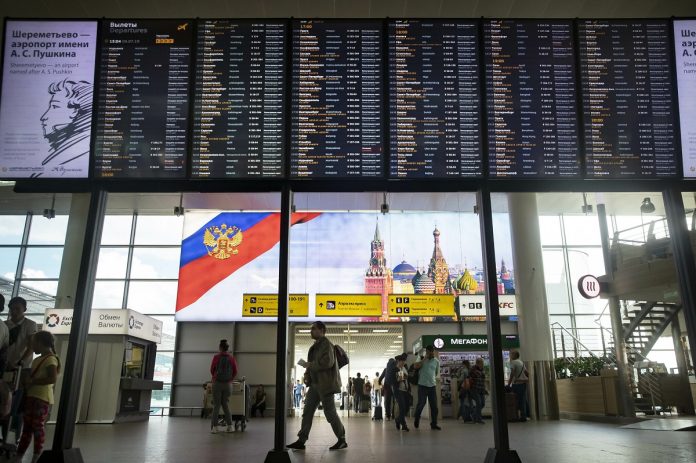
In an interview with IRNA news agency, Dmitry Yadrov, Head of the Federal Air Transport Agency of Russia, highlighted the signing of a new cooperation document with Iran’s Civil Aviation Organization, which will facilitate the approval process for Iranian maintenance and design companies seeking to operate in Russia.

Yadrov stated, “We are awaiting requests from Iranian companies through Iran’s Civil Aviation Organization to begin the review and licensing process for their activities in Russia.”

He also noted that since 2021, three Iranian aviation companies have obtained the necessary certifications to provide services for maintaining the airworthiness of Russian aircraft.

Praising Iran’s capabilities in the aviation industry, Yadrov expressed admiration for the products displayed at Iran’s national exhibition in Moscow.

He expressed confidence that Iranian companies, leveraging their expertise and innovative products, could undertake significant projects in Russia’s aviation and airport sectors. “I foresee a bright future for this cooperation,” he added.

Yadrov also emphasized the impact of the Comprehensive Strategic Partnership Treaty signed between Iranian President Massoud Pezeshkian and Russian President Vladimir Putin on January 17, 2024.

He affirmed that the treaty would undoubtedly strengthen collaboration in the aviation industry, among other sectors, marking a new chapter in bilateral relations.

Tehran condemns Washington’s ‘inappropriate behavior’ against Iranian nationals

White House

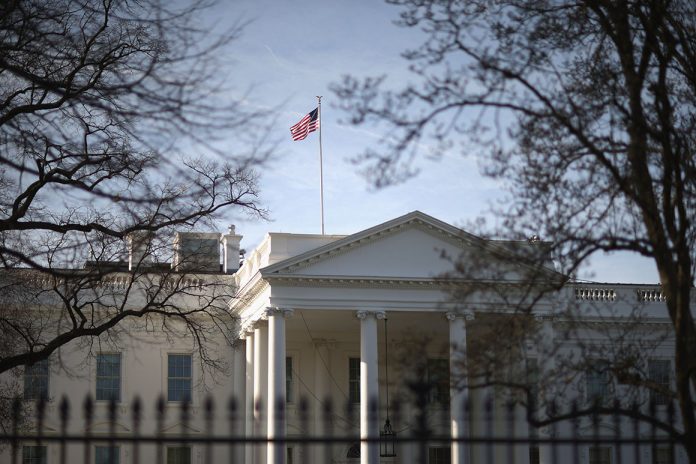
In his reference to the US government’s “inappropriate” treatment of immigrants, Baqaei stressed the importance of adhering to international norms, describing the “inhumane actions” of the US government against Iranian nationals as “unacceptable.”

He emphasized that the Iranian Ministry of Foreign Affairs, in line with its legal obligations, will take all necessary measures to protect the rights of Iranian citizens abroad.

He also noted that instructions have been issued to Iran’s Interests Protection Office in Washington, D.C., as well as to diplomatic and consular missions across South America, to provide assistance to Iranian nationals deported from the US.

“Iran is the homeland of all Iranians, and our compatriots can freely return to their homeland,” Baqaei stated, reiterating the Foreign Ministry’s readiness to facilitate their return and resolve related issues.

The remarks come as the first flight carrying migrants from Iran, Afghanistan, China, India, Nepal, Pakistan, Sri Lanka, Turkey, Uzbekistan, and Vietnam arrived in Panama on Wednesday.

UN chief condemns attack on peacekeeping mission in Lebanon

António Guterres

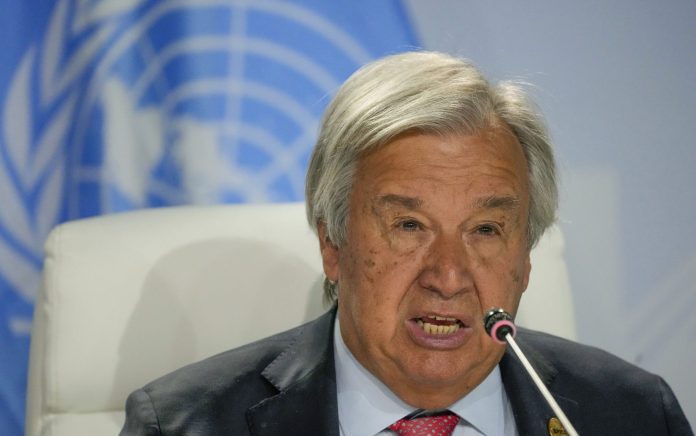
“The secretary general strongly condemns the attack on a UNIFIL convoy near Rafik Hariri International Airport, Beirut, on 14 February, in which several peacekeepers were injured by a group of protestors on the main road to the airport. A UNIFIL vehicle was also set ablaze,” said a statement by the spokesperson’s office.

Noting that “such attacks are absolutely unacceptable,” the statement stressed that “the perpetrators must be held accountable.”

“The safety and security of UN personnel and property must be respected at all times. Attacks against peacekeepers are in breach of international law, including international humanitarian law as applicable, and may constitute war crimes,” it added.

It noted that UNIFIL personnel are in Lebanon as part of its mandate under Security Council Resolution 1701.

“Pursuant to resolution 1701 (2006), UNIFIL must be allowed unrestricted freedom of movement throughout Lebanon in the implementation of its mandated activities.”

Resolution 1701, adopted Aug. 11, 2006, mandates a ceasefire between the Lebanese resistance group, Hezbollah, and Israel and establishes a weapons-free zone between the Blue Line (marking Israel’s 2000 withdrawal from Lebanon) and the Litani River, with exceptions for the Lebanese army and UNIFIL forces.

Guterres urged “the parties to uphold their obligations and work towards the full implementation of UN Security Council Resolution 1701 and its ultimate goal, a permanent ceasefire between Lebanon and Israel.”

A fragile ceasefire has been in place since Nov. 27, ending a period of mutual shelling between Israel and Hezbollah that began Oct. 8, 2023, and escalated into a full-scale conflict on Sept. 23.

Since the ceasefire took effect, Israel has committed at least 672 violations, killing and injuring dozens in Lebanon, including women and children.

Israel was supposed to complete its army’s withdrawal from southern Lebanon by Jan. 26 under the ceasefire deal, but it refused and the deadline was extended to Feb. 18.

Ukraine needs 1.5 million soldiers in absence of NATO membership: Zelensky

Russia Ukraine War

The remarks come amid ongoing uncertainty around possible alternative workable security guarantees for Ukraine given the reluctance of some NATO members to invite Ukraine to join the alliance.

Previously floated ideas have included the presence of European troops on the ground in Ukraine, but without an open signal from Washington backing the idea, little progress has been made.

“It doesn’t matter what country these forces are from. In any case, we need 1.5 million troops if we are not in NATO,” Zelensky said.

“If we really want not to be afraid of a new occupation or a new Russian invasion, these are real security guarantees. (Vladimir) Putin will know that he has a 1.5 million army, and Ukraine has a 1.5 million army. If he wants to come and die (in Ukraine), he is welcome to do so,” Zelensky added.

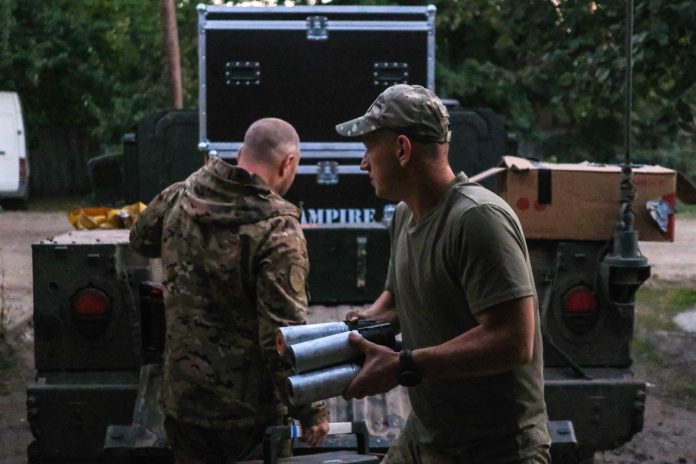
Ukraine currently has 110 combat brigades, while Russia has 220, according to Zelensky. “So, we need 220.”

Ukraine officially applied to join NATO in September 2022 following Russia’s full-scale invasion. While NATO members asserted at the 2024 summit in Washington, D.C., that Ukraine’s path to membership is “irreversible,” they have yet to extend a formal invitation.

Ukraine has relied on NATO member states for military aid in its defense against Russia’s full-scale invasion. Ukraine regularly holds visits and summits with NATO leaders.

Zelensky has also stated that President Vladimir Putin is the only Russian official he is prepared to negotiate with, ruling out any format that would involve any other of Moscow’s representatives.

Zelensky issued a decree in 2022 expressly banning any interaction with the Russian head of state. However, earlier this month, the Ukrainian leader appeared to flip-flop on the issue, telling British journalist Piers Morgan that he would meet Putin if that proves to be the “only setup in which we can bring peace to the citizens of Ukraine.”

Addressing Munich Security Conference attendees on Friday, Zelensky insisted that he was “not going to meet with Russians. I will meet with one Russian only – with Putin.” The official hastened to add that it is only after Ukraine, the US and the EU have devised a “common plan,” that he “will sit down with Putin, and we will stop the war.”

Zelensky emphasized that he would not accept “any other compromise arrangements” and expressed his hope that US President Donald Trump would side with Kiev and “really help us,” as opposed to being a mere mediator.

Speaking of his country’s long-standing aspirations to join NATO, Zelensky acknowledged that he has “never heard during conversations at the presidential level that we will be in NATO. Ever.” The Ukrainian leader suggested that Trump’s skeptical stance does not differ from that of his predecessors.

American soldiers in Europe won’t stay ‘forever’: US defense chief

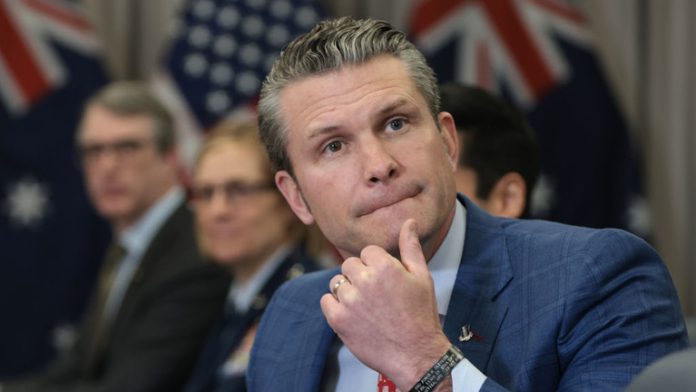
“The American troop levels on the continent are important,” he said, alongside his Polish counterpart, Władysław Kosiniak-Kamysz.

“What happens five, 10, 15 years from now is part of a larger discussion that reflects the threat level, America’s posture, our needs around the globe, but most importantly the capability of European countries to step up,” he added.

“That’s why our message is so stark to our European allies — now is the time to invest because you can’t make an assumption that America’s presence will last forever,” he continued.

Hegseth’s comments come on the heels of a two-day meeting at NATO’s Brussels headquarters that marked his debut on the European stage. He had already hinted then that Europeans would eventually have to provide most of the conventional deterrence against Russia.

The US is currently reviewing its global military presence, but no decision has been made yet on changing force deployments.

Hegseth’s visit to Poland was his first bilateral meeting since he was confirmed by the US Senate. There was a lot of love in the air between him and Kosiniak-Kamysz.

Poland is historically one of America’s closest European allies, seeing the US as a bulwark protecting it against Russia. Poland, which spent centuries under Russian domination, is the top spender in NATO as a percentage of economic output; this year’s defense budget will be 4.7 percent of GDP. That makes it the closest ally to reaching US President Donald Trump’s call for military spending to hit 5 percent of GDP.

“Poland is a country that understands threats. It sees, it feels, because it has its own history, where these threats often resulted in war in our territory, in our beloved homeland,” Kosiniak-Kamysz said, adding, “Freedom needs strength; peace needs strength. There is no such strength without spending.”

Warsaw has also been a big buyer of US weapons, from M1 Abrams tanks to General Dynamics F-16 Fighting Falcon and Lockheed Martin F-35 Lightning II jet fighters.

After years of pressure, Poland has succeeded in getting 8,000 US troops permanently stationed in the country.

That got Hegseth to again call Poland a “model ally.”

He said the “level of partnership is unmatched in Europe, the common bond is unlike others in Europe.” He also praised Poland for investing in local infrastructure for US troops.

“The invitation we receive here, if anything, would make me want to have more troops to Poland — that’s not a policy statement, that’s just how I feel,” Hegseth told reporters.

The two defense chiefs pledged to enhance cooperation.

Poland and the US will set up joint ventures to boost “capacity to produce ammunition, armament,” stated Kosiniak-Kamysz. Poland “wants to be a service hub for the American equipment used on NATO’s eastern border,” he added.

In a testament to the special bond between Warsaw and Washington, Kosiniak-Kamysz announced that the Polish armed forces would be exempt from Trump’s recent freeze of the US State Department’s Foreign Military Financing program, which enables eligible partner nations to purchase American gear.